
Orange and Brown Kitchen Ideas: 13 Ways to Get It Right
Orange and brown kitchen ideas with expert tips: the best shades, where the orange should go, the materials to use and the mistakes that make it look dated.
By Magda Callery, interior designer and florist
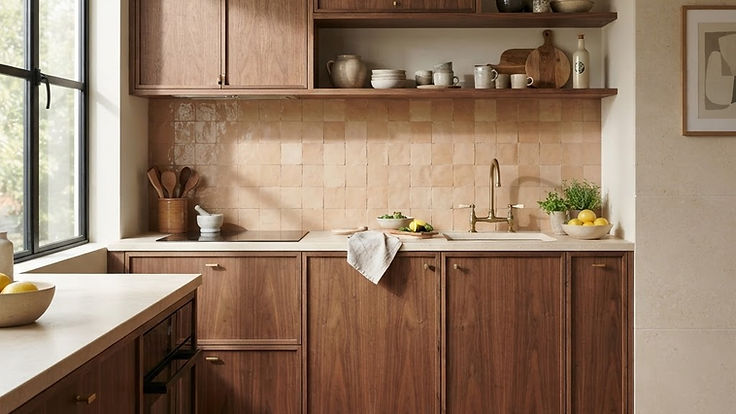
Orange and brown is one of the warmest colour combinations you can choose for a kitchen. Done well, terracotta, rust and apricot against walnut, oak and chocolate feel earthy, relaxed and very current. Done badly, the same colours can tip straight back into a 1970s time capsule. To find out where the line falls, I asked interior designers, an architect, a contractor and a master plumber for their advice.
In this guide I'll share 13 orange and brown kitchen ideas, the best shades and materials to use, where the orange should go, the third colour that balances the scheme, and the most common mistakes to avoid.
The quick answer: To make an orange and brown kitchen feel modern, let the brown come from natural wood such as walnut or oak, and use a muted orange like terracotta, rust or apricot in one or two places, such as the splashback, an island or a few accessories. Add cream as a breathing space on the walls or worktop, choose matte, textured materials like handmade tile and honed stone, and keep warm brass or copper for the metal details. Avoid using orange and brown at equal strength on every surface.
Why Orange and Brown Kitchens Can Look Dated
The combination itself isn't the problem. It's how much of it there is, and where. Todd Harmon puts it simply:
The 1970s problem is usually too much orange in too many places, and often a glossy one.
Mendi McCord suggests a change of mindset: "My favorite way to make orange and brown feel current is to treat them as earthy, natural tones rather than a retro color scheme."
Architect Julia Stafi's rule is to "let only one colour lead," adding: "My preference is to make brown dominant and add a few small, glossy orange accents for freshness."
13 Orange and Brown Kitchen Ideas
1. Let the wood be the brown. Rather than painting brown onto cabinets, use real wood. Walnut, medium oak or stained white oak give depth and grain that paint can't. Tamara Gavrilenko's advice is to "let the wood provide the brown and use orange as an accent."
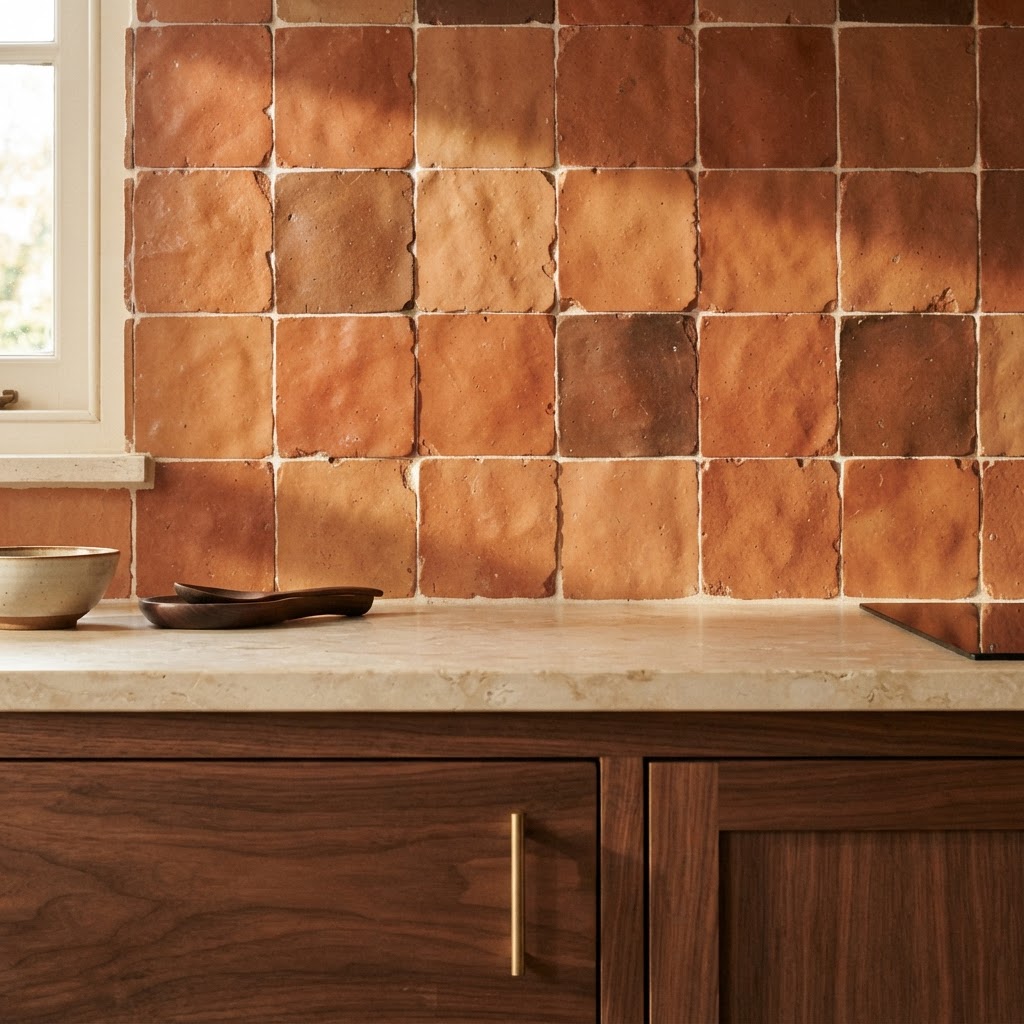
2. Put the orange on the splashback. A terracotta splashback gives warmth at eye level, and it's one surface to change if you tire of it. Todd Harmon recommends "terracotta tile on a splashback, a clay lamp or vessel, maybe one wall," and suggests you "leave the cabinets in wood."
3. Paint the island. A muted burnt orange island against wood or cream cabinets is a confident way to use the colour without overwhelming the room. Mendi McCord loves orange "on a backsplash, a painted island, a section of lower cabinets, or through details like upholstered counter stools, pottery, art, or pendant shades."
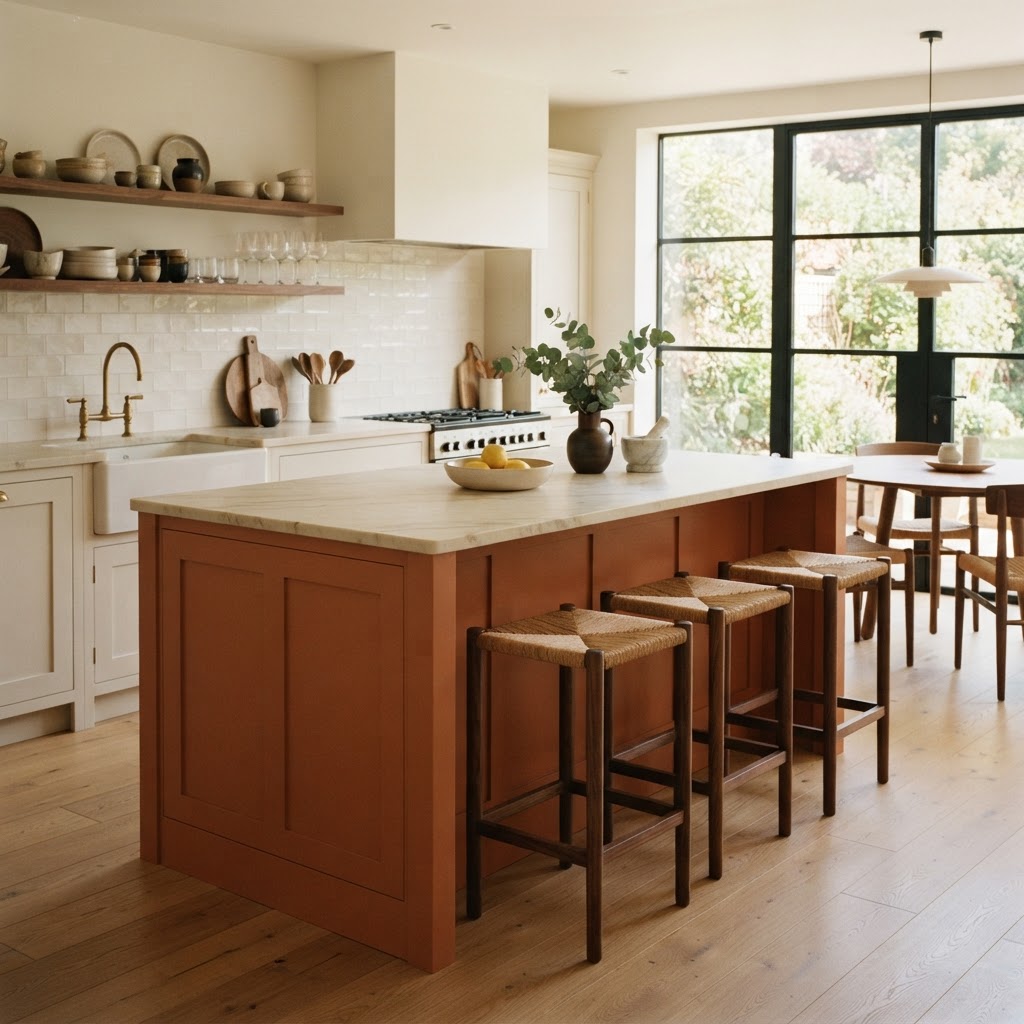
4. Try orange lowers and cream uppers. Painting only the base units in rust or burnt orange keeps the room grounded, while cream wall units keep it light.
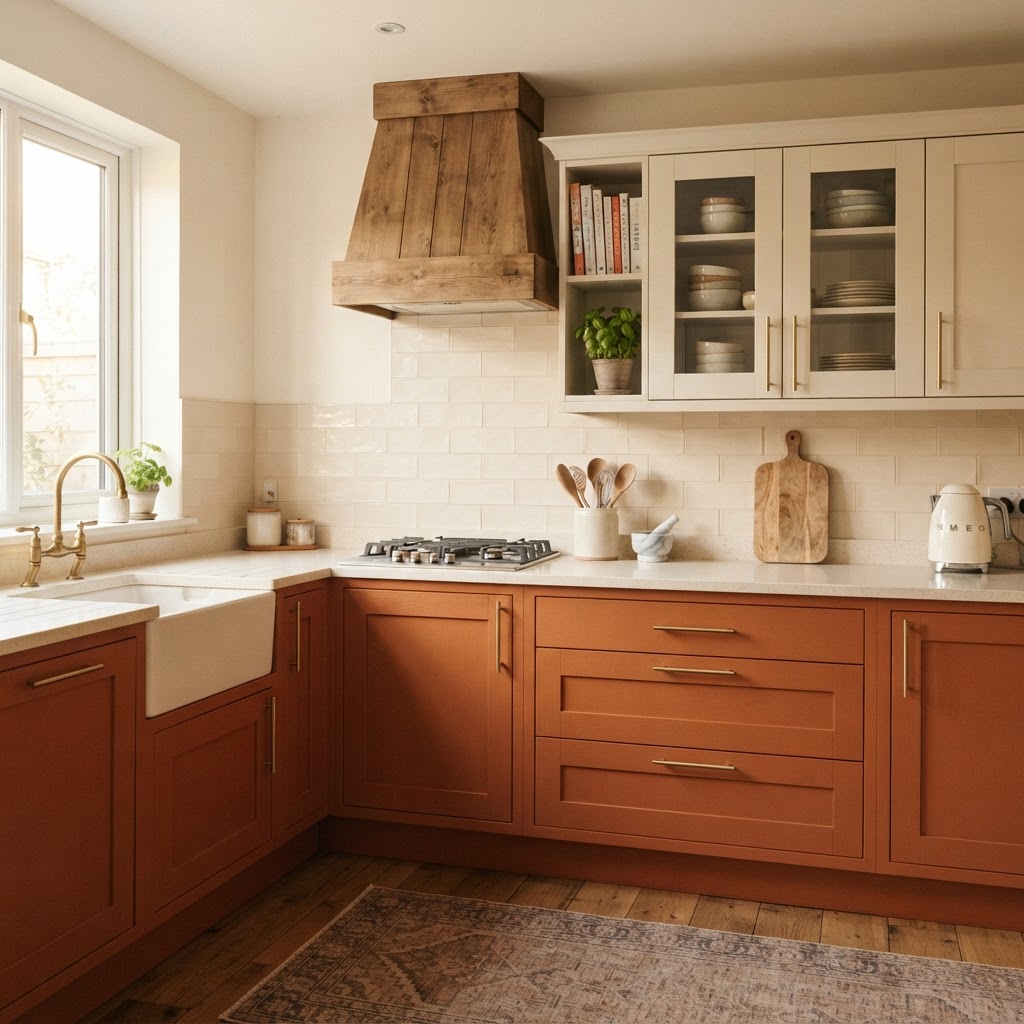
5. Keep the worktop light. A cream quartz, pale stone or light porcelain worktop is the breathing space the scheme needs. Todd Harmon says to "keep the worktop light, cream or a pale stone, so the warmth has a place to stop."
6. Choose matte and textured finishes. Handmade tiles, honed stone and natural wood feel modern, while high gloss tends to feel retro. Mendi McCord says: "The key is textural contrast: handmade tile, honed stone, woven shades, aged brass, and natural wood keep the palette dimensional and relaxed."
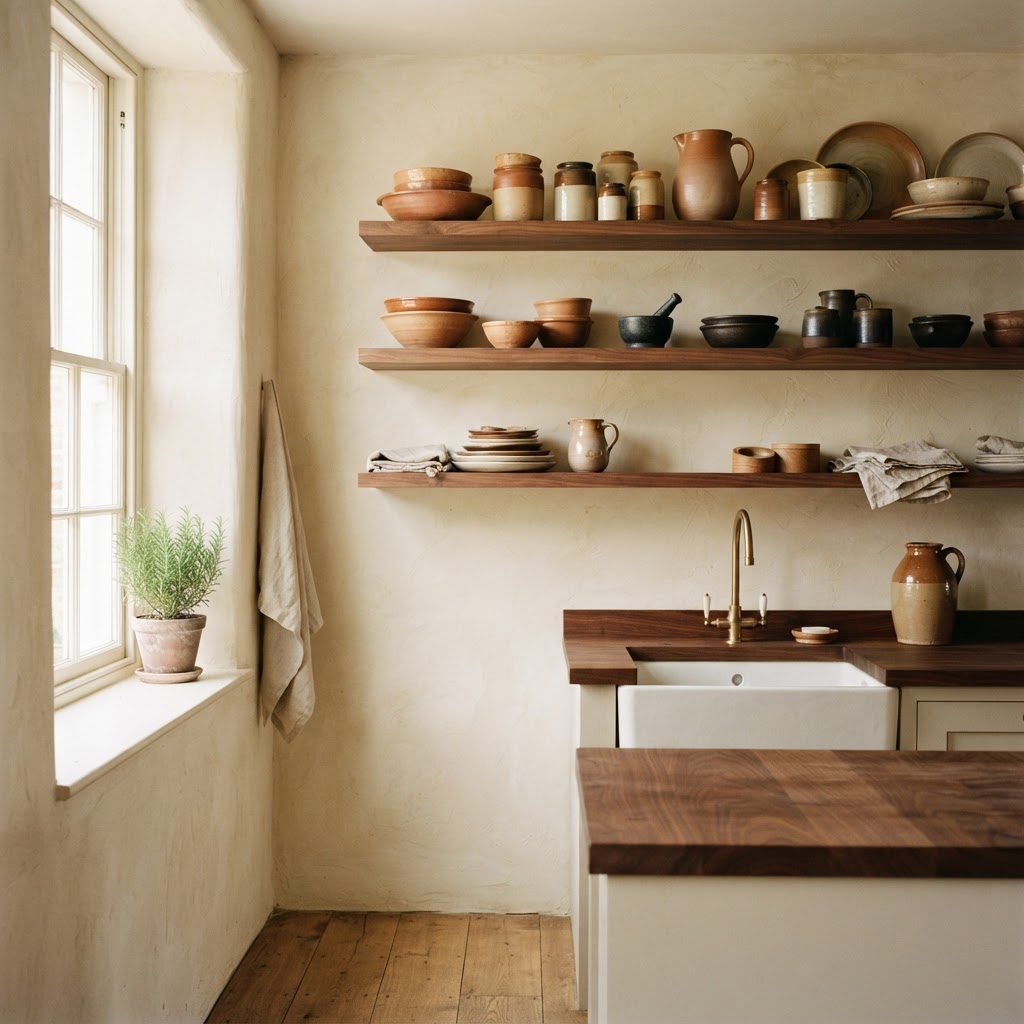
7. Add cream walls. Cream walls let warm wood and orange tile stand out without the room feeling heavy. Tamara Gavrilenko adds a useful warning: "Avoid a very yellow cream if the wood already has golden tones, it will make space look outdated."
8. Bring in a soft green. A muted olive, sage or moss green is the natural partner for terracotta and wood. Mendi McCord says green "brings the whole scheme back to nature and feels especially beautiful against terracotta and warm wood," and Todd Harmon agrees: "go to a muted olive, not a bright green." These sage green kitchen cabinets show how well it works.
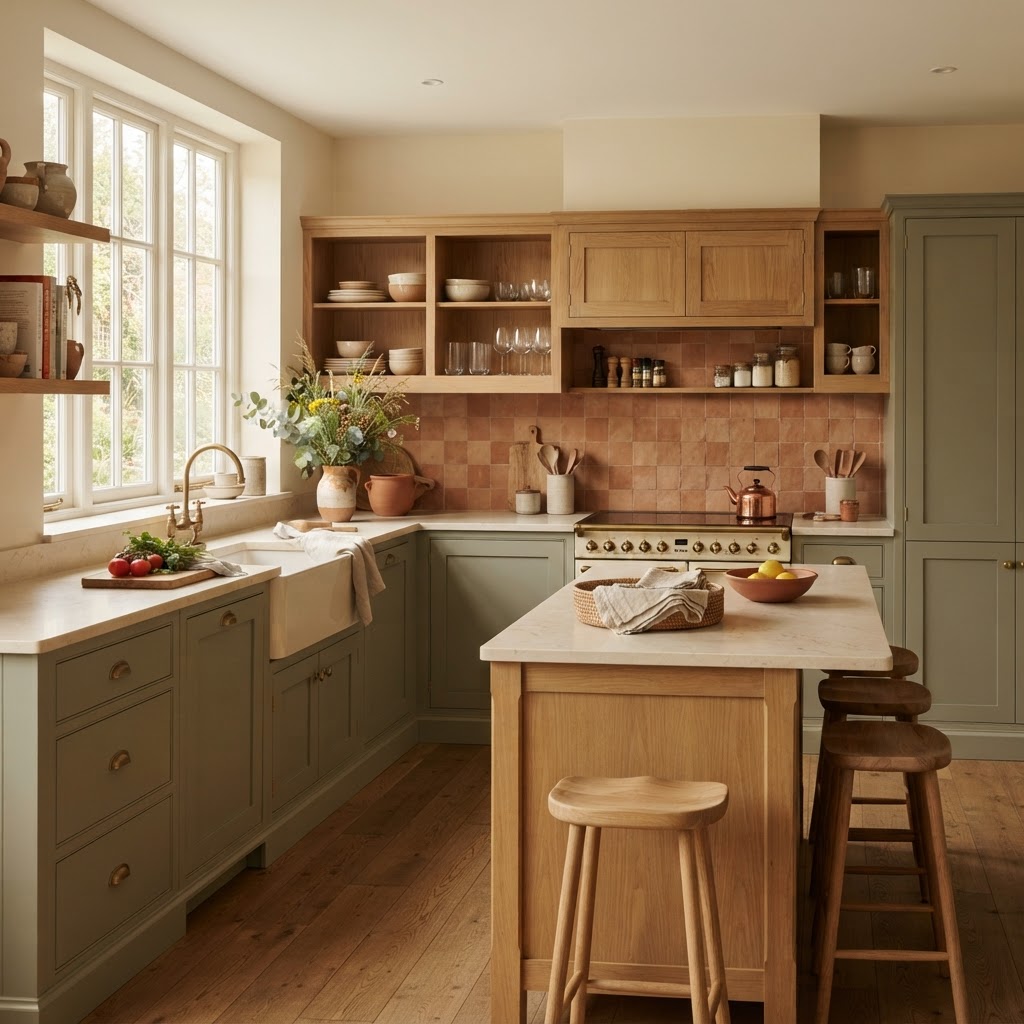
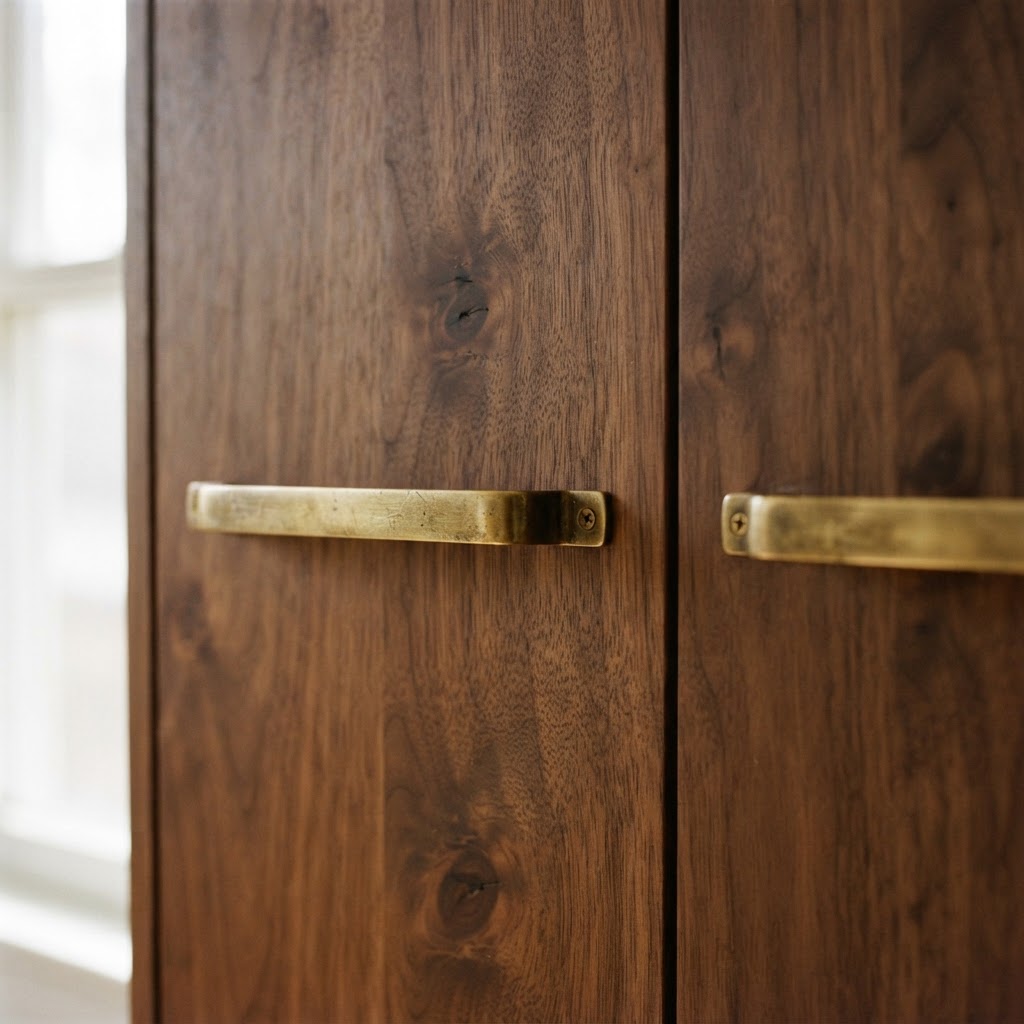
9. Choose warm metals. Brushed brass, aged brass and copper suit an orange and brown kitchen. Steven Morgan recommends copper because it "will give you those rusty browns you're after," adding that raw copper or aged brass "only get better with time and won't make your kitchen look like a 70's flashback."
10. Hang copper or clay pendants. Pendant lights in copper, brass or terracotta add warmth above an island. Tamara Gavrilenko's tip is to "keep the actual task lighting white; the orange should come from the fitting, not the light itself."
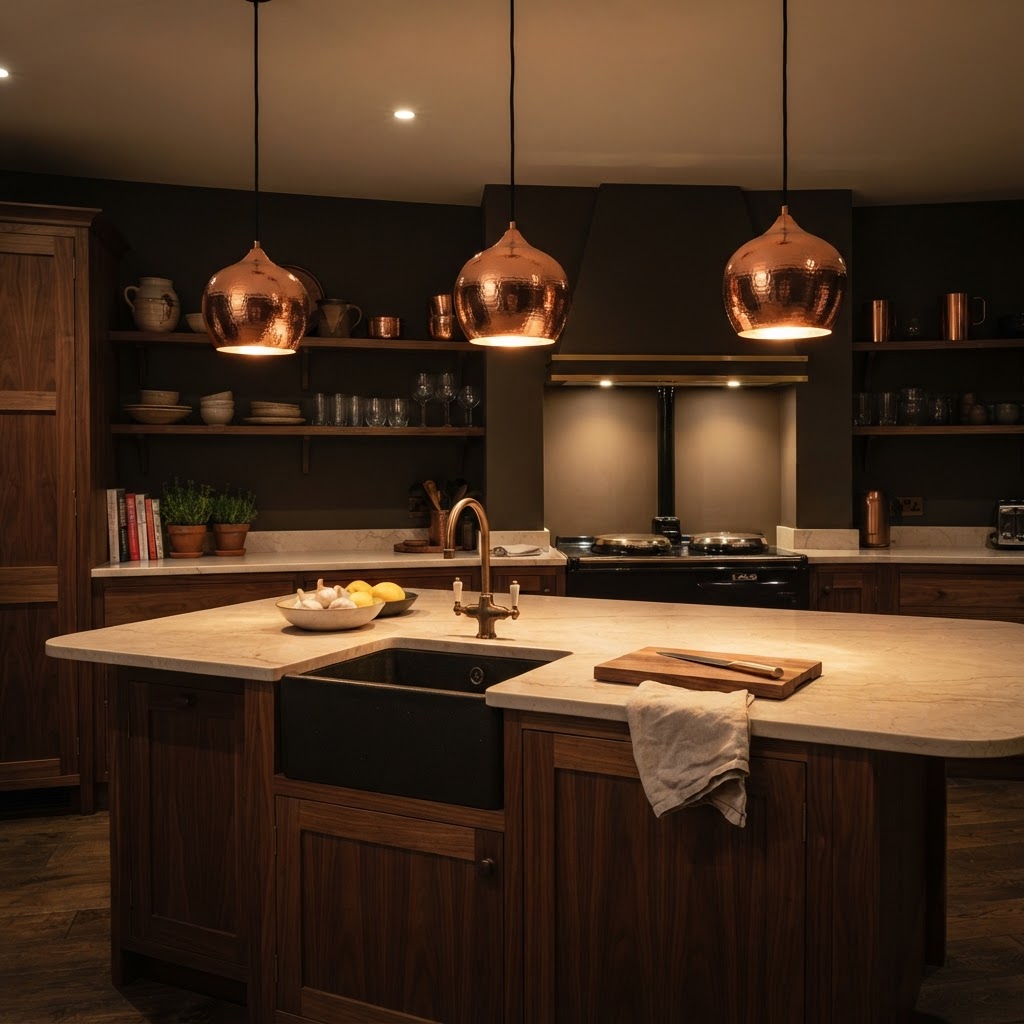
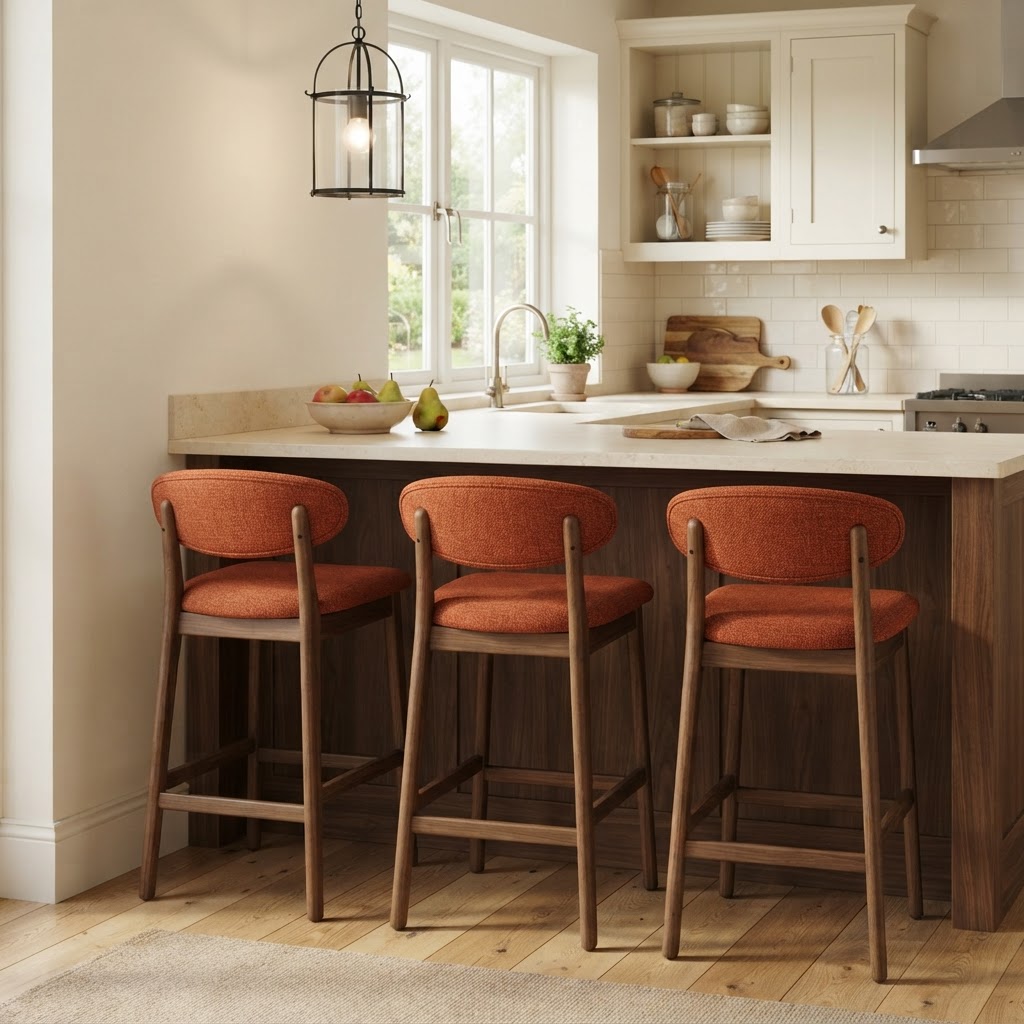
11. Add orange through stools and textiles. Upholstered counter stools, a runner or linen blinds in rust or apricot are an easy, low-commitment way to try the colour.
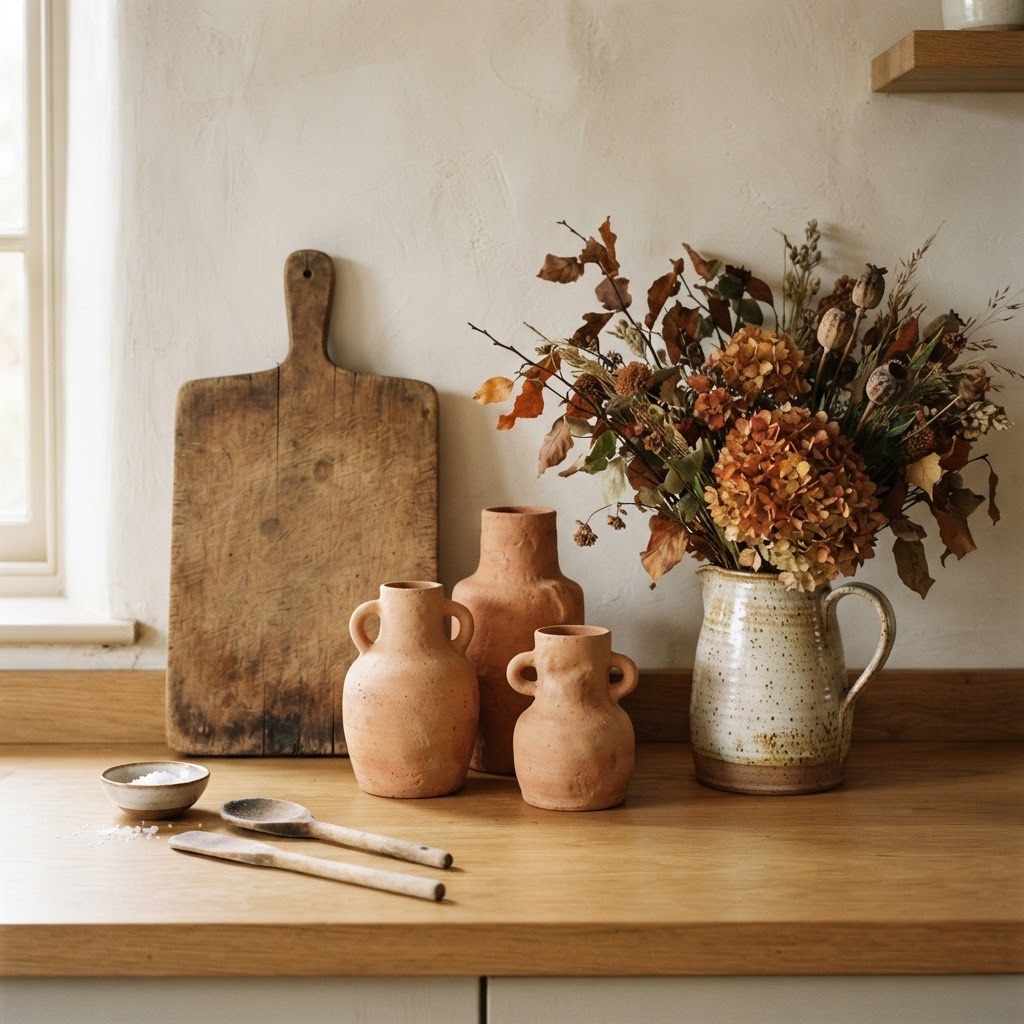
12. Style with pottery and flowers. Terracotta vases, a wooden board and a jug of dried flowers bring the palette together on open shelves and worktops.
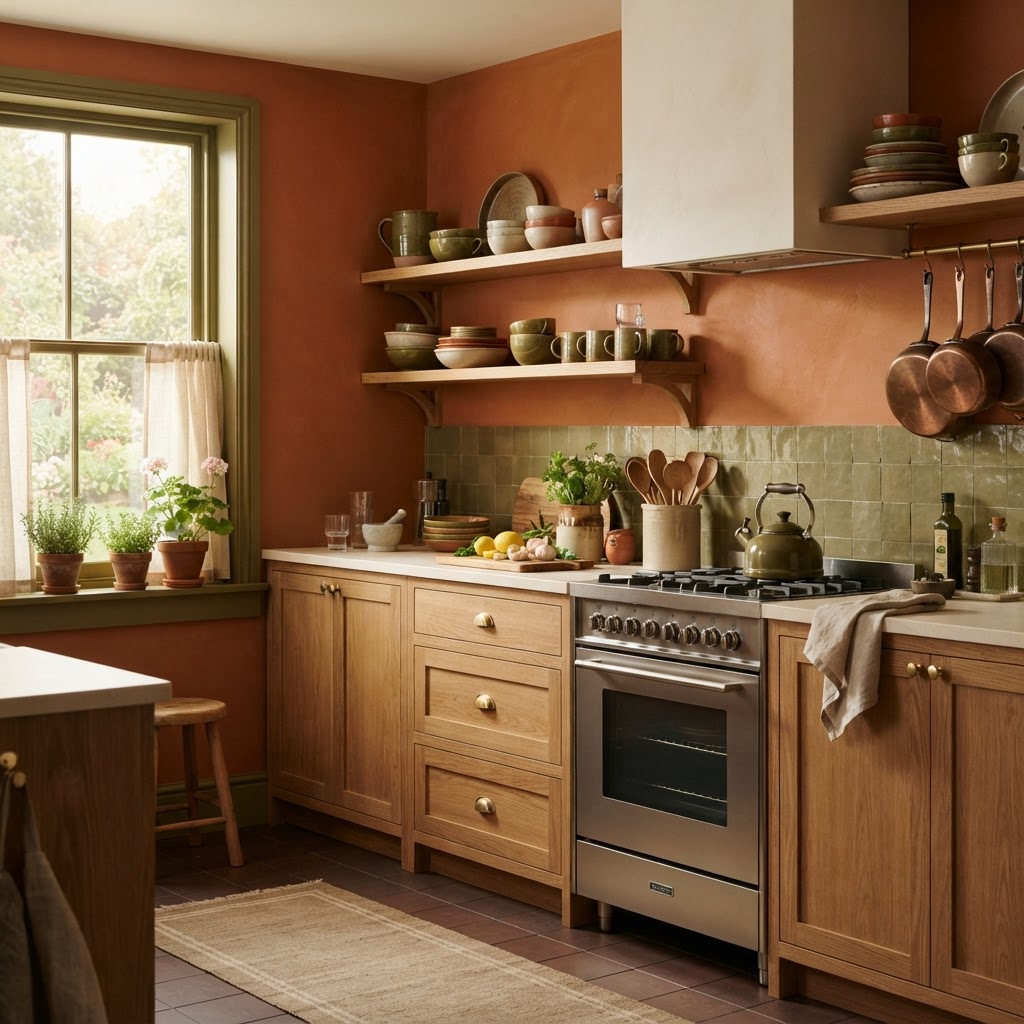
13. Paint one wall. A single burnt orange or terracotta wall, away from the sink, adds warmth without committing the whole room. Pair it with oak cabinets and olive accents for a relaxed look.
The Best Shades of Orange and Brown
| Orange | Brown | Feel |
|---|---|---|
| Terracotta | Walnut | Earthy and Mediterranean |
| Burnt orange | Chocolate brown | Rich and cosy |
| Rust | Medium oak | Rustic and relaxed |
| Dusty apricot | Pale oak | Soft and light |
| Clay | Stained white oak | Calm and modern |
Todd Harmon would "skip a bright true orange, and any red-brown that fights the grain," choosing terracotta, rust or dusty apricot instead. For specific paint colours, Tamara Gavrilenko, who works in North America, suggests: "For paint, I'd start with Sherwin-Williams Cavern Clay SW 7701 or Benjamin Moore Firenze AF-225." There are plenty more shades of terracotta colour to try.
Julia Stafi prefers a cool contrast: "Add blue: Pale King's Blue, Antwerp Blue, even Tiffany Blue." For inspiration, she points to Sanzo Wada's A Dictionary of Color Combinations, a classic Japanese book of colour pairings.
Where Should the Orange Go?
| Place | Commitment | Good for |
|---|---|---|
| Accessories and stools | Low | Trying the colour first |
| One painted wall | Low | Renters and quick updates |
| Splashback | Medium | Warmth at eye level |
| Island | Medium | A confident focal point |
| Lower cabinets | High | A bold, grounded look |
| All cabinets | Very high | Rarely recommended |
For a surprise, Julia Stafi has a favourite trick:
In a kitchen, my favourite trick is to paint the insides of the cabinets orange. When you open the doors, the whole scene changes in an unexpected way, and it lifts your spirits.
Best Materials for an Orange and Brown Kitchen
- Wood. Walnut, medium oak or stained white oak for cabinets and shelves.
- Worktops. Cream quartz, porcelain, honed limestone or pale stone.
- Tiles. Matte or glazed terracotta, handmade zellige-style tiles in clay tones.
- Metals. Aged or brushed brass and copper for warmth, or brushed nickel for a cooler contrast.
- Details. Tamara Gavrilenko reminds us: "Don't overlook grout and tile edging; those small details need to work with the palette too."
Common Mistakes to Avoid
| Mistake | Why it's a problem | What to do instead |
|---|---|---|
| Orange everywhere | The room has no quiet surface | Use orange in one or two places |
| Equal amounts of orange and brown | Nothing rests, and it looks dated | Let brown lead, orange accent |
| Too many golden tones | Wood, copper and yellow cream overwhelm | Add a cool cream or pale stone |
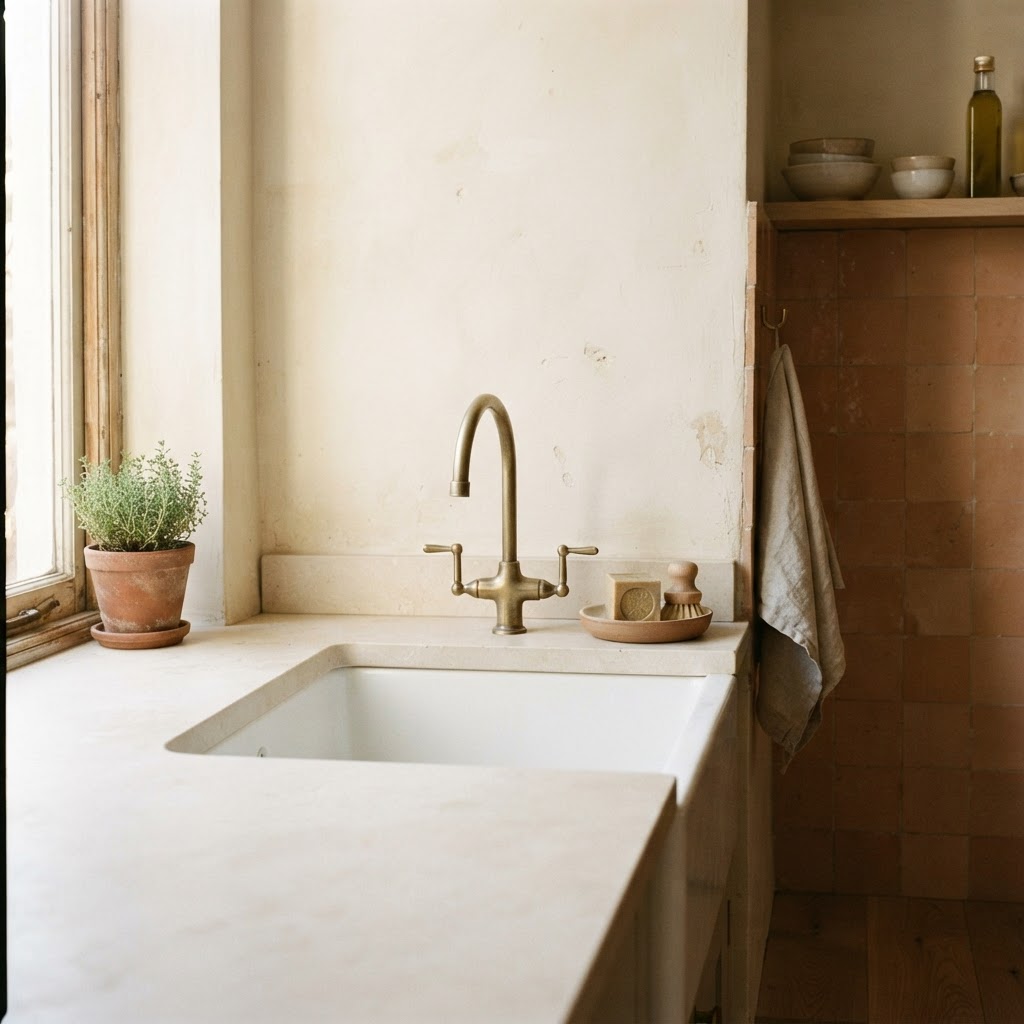
| Dark colour behind the sink | Water marks show quickly | Keep the sink wall cream or light tan |
| Not testing samples together | Colours change in different light | Check samples in daylight and lamplight |
Todd Harmon sees one mistake more than any other:
Painting the cabinets orange, then doing the walls and the accessories in the same family. Now the room has no quiet surface. Orange belongs in one or two places, not everywhere.
Steven Morgan adds a practical point from years of working under sinks: "When water hits dark colors or colors that have high saturation they show every drop. Your wall will look dirty within a few weeks." His advice is to "use a cream or light tan color behind your sink."
Tamara Gavrilenko also warns against piling on warmth: "Golden wood, orange tiles, copper fittings and yellow cream can quickly overwhelm the room."
Not everyone agrees on the classic splashback approach. Julia Stafi says: "The most common mistake is taking the predictable route: classic dark-wood cabinets with an orange tiled splashback. Nothing could be more boring, and this combination inevitably ends up looking dated." She also warns about lighting: "Avoid uniform, overly bright illumination; it destroys the effect you are trying to create."
How I Use Orange and Brown in Kitchens
After more than 15 years of designing homes, pubs and restaurants, I love this palette in hospitality spaces as much as homes, because it feels instantly welcoming.
- I start with the wood. I choose the cabinet or shelf timber first, then build the orange around it.
- I test everything together. Tile, worktop, paint and wood samples go side by side, in daylight and in the evening.
- I keep one quiet surface. A cream wall or pale worktop gives the eye somewhere to rest.
- I finish with flowers. As a florist, I love a jug of dried orange flowers, rust chrysanthemums or autumn branches on the worktop; it ties the whole scheme together.
If your kitchen is an IKEA one, new doors for IKEA kitchens in walnut or a painted rust finish are a simple way to get the look.
Frequently Asked Questions
Do orange and brown go together in a kitchen?
Yes. Orange and brown are natural partners, especially when the brown comes from real wood and the orange is a muted terracotta, rust or apricot used in one or two places.
How do you make an orange and brown kitchen look modern?
Use matte and textured finishes, keep a light worktop and cream walls, add a soft green or brass detail, and avoid using orange and brown at equal strength on every surface.
What colour goes with orange and brown in a kitchen?
Cream is the most popular third colour, because it gives the scheme breathing space. Muted olive, sage and moss green also work beautifully, and blue is a bolder, more modern choice.
Where should orange go in a kitchen?
The splashback, an island, lower cabinets, one wall or accessories such as stools, pottery and pendant shades are the best places for orange.
What wood goes with terracotta in a kitchen?
Walnut, medium oak and stained white oak all pair well with terracotta tiles and paint.
What worktop goes with brown and orange?
A cream quartz, light porcelain or pale stone worktop balances darker wood and orange tones.
What is the biggest mistake with an orange and brown kitchen?
Using too much orange in too many places, so the room has no quiet surface to rest the eye.
A Warm Kitchen That Feels Current
The secret to an orange and brown kitchen is balance. Let natural wood carry the brown, give a muted orange one or two places to shine, add cream and a touch of green, and choose matte, textured materials, and the result feels warm, earthy and completely of today.
And if you'd like help planning a warm, welcoming kitchen of your own, you can book a one-hour online interior design consultation with me.
About the author
Magda Callery is a UK interior designer and florist with more than 15 years' experience designing homes, pubs, restaurants and bars, and her expert commentary has featured in Homes & Gardens, The Mirror and The Spruce. Explore more of the interior design articles.
Continue reading

Small Bathroom Ideas: 17 Ways to Make Yours Feel Bigger
17 small bathroom ideas from an interior designer: layouts, fittings, tiles, colours, storage and lighting to make a small bathroom feel bigger, plus budget tips.

Doors for IKEA Kitchens: 13 Ideas for Replacement Fronts
Your options for doors for IKEA kitchens: IKEA and specialist fronts, how to make sure replacement doors fit, discontinued FAKTUM kitchens and 13 door ideas.


IKEA Campervan Furniture: 13 Hacks for a Budget Van Build
The best IKEA campervan furniture for a UK van build: 13 hacks for kitchens, kitchen pods, beds and storage, what to avoid, and how to keep it light and secure.