
Sage Green Kitchen Cabinets: Paint Colours and Ideas
A designer's guide to sage green kitchen cabinets: the best sage paint colours, what worktops, handles, walls and floors to pair them with, 10 kitchen ideas, how to paint your cabinets properly, rough costs and mistakes to avoid.
By Magda Callery, interior designer and florist


Sage green kitchen cabinets have become a modern classic. The colour is soft enough to live with every day, warm enough to feel welcoming, and natural enough to sit beautifully with wood, stone, brass and plants. It suits a traditional shaker kitchen just as well as a sleek handleless one, and it's one of the colours I'm asked about most by clients planning a kitchen refresh.
In this guide I'll explain why sage works so well in kitchens, the best sage green paint colours for cabinets, what worktops, handles, walls and floors to pair with them, ten sage kitchen ideas, how to paint your existing cabinets properly, rough costs and the mistakes to avoid.
Why Sage Green Works So Well in Kitchens
- It's calm but not cold. Sage is a grey-green with a hint of yellow, so it feels restful without the chill of grey or blue.
- It connects to nature. Green kitchens feel fresh and alive, especially with plants, herbs and views of the garden.
- It suits most styles. Shaker, cottage, Scandi, modern, Mediterranean and period kitchens all work in sage.
- It flatters natural materials. Oak, walnut, marble, terracotta, brass and linen all look better next to it.
- It's timeless. Unlike some trend colours, soft greens have been used in kitchens for over a century, from Edwardian sculleries to today's design-led homes.
| Question | Quick answer |
|---|---|
| What is sage green? | A soft, muted grey-green, named after the leaves of the herb |
| Warm or cool? | Can be either; warm sages have yellow undertones, cool sages lean grey or blue |
| Best finish for cabinets | Eggshell or satin, or a dedicated cabinet paint |
| Best worktops | White quartz, marble, oak, soapstone and terrazzo |
| Best handles | Brushed or unlacquered brass, aged bronze or matt black |
| Best walls | Warm white, cream or a paler tone of the cabinet colour |
The Best Sage Green Paint Colours for Kitchen Cabinets
Sage is a broad family, so it's worth sampling a few. These are well known, widely used shades on both sides of the Atlantic.
| Paint | What it's like | Good for |
|---|---|---|
| Farrow & Ball Lichen No. 19 | A soft, muted grey-green | Shaker kitchens and period homes |
| Farrow & Ball Mizzle No. 266 | A light, misty grey-green | Bright kitchens and upper cabinets |
| Farrow & Ball Vert de Terre No. 234 | A gentle, earthy sage | Cottage and country kitchens |
| Little Greene Sage Green | A classic mid sage | Islands and full kitchens |
| Sherwin-Williams Evergreen Fog SW 9130 | A grey-green; Sherwin-Williams' 2022 Colour of the Year | Modern and transitional kitchens |
| Sherwin-Williams Clary Sage SW 6178 | A warmer, slightly yellow sage | Farmhouse and shaker kitchens |
| Benjamin Moore Saybrook Sage HC-114 | A rich, warm historic sage | Traditional and cottage kitchens |
Sherwin-Williams named Evergreen Fog its 2022 Color of the Year, as noted by Architectural Designs, and it remains one of the most popular cabinet colours in the US.
For a wider look at greens, from sage and eucalyptus to bottle green, the best green paint colours by room are a useful starting point. If you want something warmer and deeper than sage, olive green cabinets have a similar natural feel with more richness.
Light matters more in kitchens than anywhere else. Kitchens often have a mix of daylight, under-cabinet LEDs and pendants. Test samples on a cabinet door, not just a wall, and check them under your actual lighting at night. In a north facing kitchen, choose a warmer sage with yellow undertones so it doesn't look grey.
What to Pair With Sage Green Cabinets
Worktops
| Worktop | The effect |
|---|---|
| White quartz | Clean, bright and practical |
| Marble or marble-look quartz | Elegant and timeless, especially with brass |
| Oak or walnut butcher block | Warm, rustic and natural |
| Soapstone or dark granite | Moody and grounded |
| Terrazzo | Playful and contemporary |
| Concrete or microcement | Modern and industrial |
Handles and taps
- Brushed or unlacquered brass: the classic partner for sage; warm, elegant and develops a lovely patina.
- Aged bronze: softer and more rustic than brass.
- Matt black: crisp and modern, especially with handleless or slim shaker doors.
- Polished nickel or chrome: cooler and more traditional.
- Leather pulls: relaxed and tactile in a Scandi or country kitchen.
Walls, splashbacks and ceilings
Keep walls warm and light so the cabinets stand out. A soft warm white such as Wimborne White, cream zellige tiles, white marble or a pale plaster pink all suit sage. For a cosier look, paint the walls a paler version of the cabinet colour. A white painted tongue and groove ceiling adds country warmth above a sage kitchen.
Floors
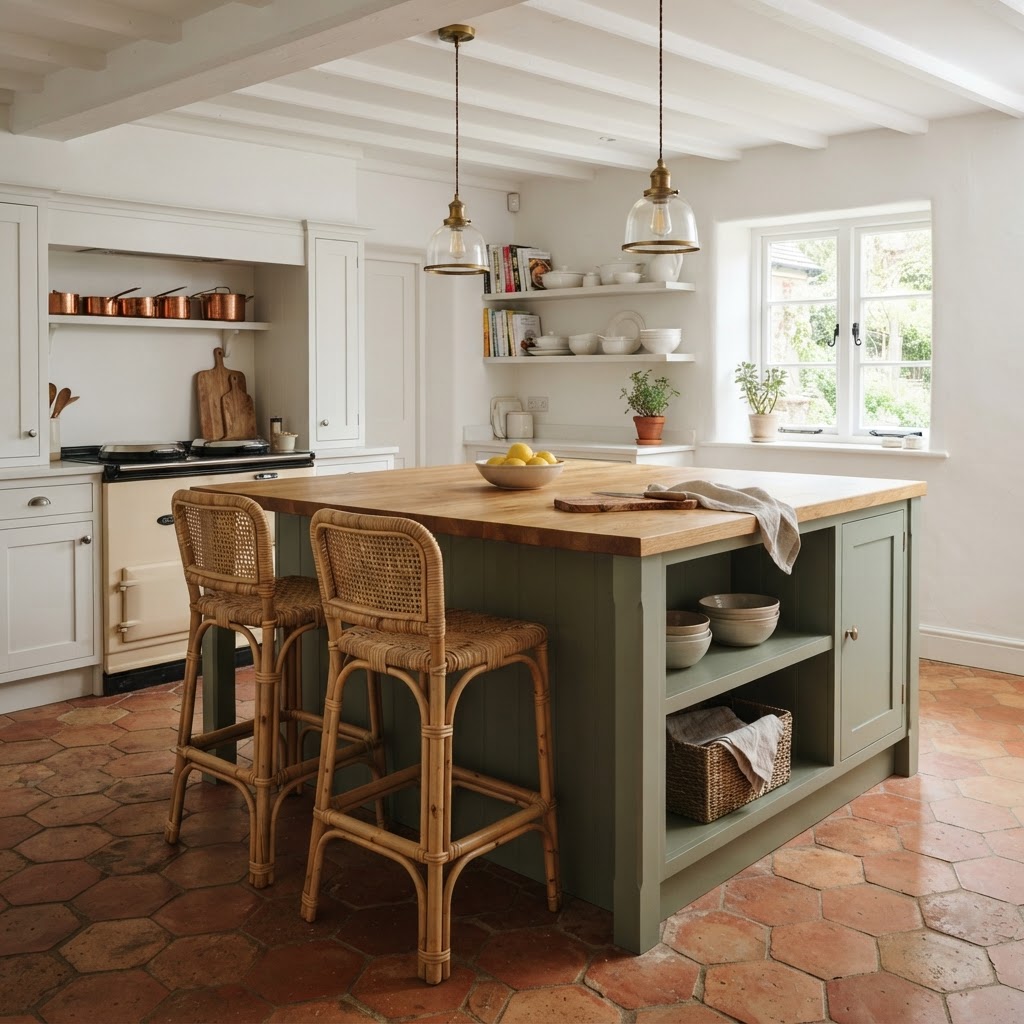
Oak and engineered wood, terracotta tiles, natural stone, checkerboard tiles and warm microcement all work with sage. Terracotta floors are a particularly lovely match, warm against the cool green.
10 Sage Green Kitchen Ideas
1. Classic sage shaker with marble and brass. The most timeless combination: sage shaker doors, white marble worktops and splashback, and brushed brass handles.
2. Sage and oak. Sage cabinets with an oak worktop, open oak shelves and an oak floor feel warm, natural and Scandi.
3. A sage island only. Keep the main run white or cream and paint just the island sage for colour without commitment.
4. Two-tone sage and white. Sage lower cabinets with white uppers or open shelves keep a small kitchen light.
5. Full colour drench. Paint cabinets, walls and even the ceiling in tones of sage for a calm, enveloping kitchen.
6. Sage with terracotta floors. A Mediterranean kitchen with sage cabinets, terracotta tiles, rattan stools and plenty of plants.
7. Sage handleless kitchen. Flat, handleless doors in a deeper sage, with a concrete or terrazzo worktop, feel contemporary.
8. Sage and black. Black handles, a black tap, and black pendant lights add graphic contrast.
9. Sage with pink. A pale plaster pink wall or splashback with sage cabinets is soft, modern and unexpectedly pretty.
10. Period sage kitchen. In-frame sage cabinets, a butler's sink, a dresser and white metro tiles suit Victorian and Edwardian houses, where in-frame kitchens look at home.
How to Paint Kitchen Cabinets Sage Green
Painting existing cabinets is one of the most cost-effective ways to transform a kitchen, as long as you prepare properly. Most failed painted kitchens fail because of poor preparation, not poor paint.
What you'll need
- Screwdriver, masking tape and labels
- Sugar soap or a degreaser
- 120 and 180 to 240 grit sandpaper or sanding sponges
- A primer suited to your cabinets: a bonding primer for laminate or vinyl wrap, or a stain-blocking primer for wood
- A durable cabinet paint or eggshell in your chosen sage
- A good quality synthetic brush and a fine foam or microfibre roller
- Dust sheets and a tack cloth
Step by step
- Remove the doors, drawer fronts and handles, labelling each one so they go back in the same place.
- Degrease thoroughly. Kitchen cabinets carry invisible grease that stops paint sticking. Wash everything with sugar soap or a degreaser, rinse and let it dry.
- Sand. Key the surface with 120 grit, then smooth with a finer grit. You're not removing the old finish, just giving the primer something to grip.
- Clean off the dust with a vacuum and a tack cloth.
- Prime. Use a primer suited to the surface. Laminate, vinyl wrap and gloss finishes need a specialist bonding primer.
- Paint in thin coats. Apply two or three thin coats, sanding lightly between coats with fine grit for a smooth finish. Brush the shaker profiles first, then roll the flat panels.
- Let it cure. Paint may be dry to the touch in hours but takes much longer to harden fully. Rehang the doors carefully and treat them gently for the first few weeks.
- Refit the handles, or upgrade to new brass or black hardware for an instant lift.
A designer's tip: if your doors are a dated profile or badly damaged, replacing just the doors and drawer fronts with new shaker fronts in sage, while keeping the carcasses, often costs a fraction of a new kitchen.
How Much Does It Cost?
These are rough UK guide figures; prices vary with the size of the kitchen, your area and the finish.
| Option | Rough cost | Notes |
|---|---|---|
| DIY painting | Around £100 to £300 | Primer, paint, brushes, rollers and sanding supplies |
| Professional hand painter | Often around £1,000 to £3,500 | Depends on the number of doors, location and finish |
| Replacement doors and drawer fronts | Often around £1,500 to £5,000 | Keeps existing carcasses and worktops |
| New sage green kitchen | From several thousand pounds upwards | Depends on size, materials and appliances |
Styling a Sage Green Kitchen
- Bring in wood: chopping boards, bowls, open shelves and stools warm the green.
- Add plants and herbs: a pot of rosemary or basil on the windowsill echoes the cabinets.
- Use warm lighting: warm white bulbs keep sage from looking grey in the evening.
- Display ceramics: cream, terracotta and white pottery look lovely against sage.
- Add flowers: as a florist, I think a jug of garden flowers is the finishing touch in any kitchen. Seasonal stems such as zinnias or cosmos in summer, or branches and berries in autumn, look wonderful against soft green.
Common Mistakes to Avoid
| Mistake | Why it's a problem | What to do instead |
|---|---|---|
| Skipping degreasing | Paint peels around handles and the hob | Clean thoroughly with sugar soap |
| Using wall emulsion on cabinets | Not durable enough for daily use | Use cabinet paint or eggshell |
| Testing on a wall only | Cabinets read differently on doors and under lights | Paint a sample door or board |
| Cool white walls | Makes sage look grey and flat | Choose warm whites or creams |
| Too many greens and greys | Room feels flat | Add wood, brass, terracotta or pink |
| Rushing the cure | Chips and marks in the first weeks | Treat doors gently while paint hardens |
Frequently Asked Questions
Are sage green kitchen cabinets still in style?
Yes. Sage has moved from trend to modern classic, because it's soft, natural and works with so many styles, materials and finishes.
What is the best sage green for kitchen cabinets?
Popular choices include Farrow & Ball Lichen, Mizzle and Vert de Terre, Little Greene Sage Green, Sherwin-Williams Evergreen Fog and Clary Sage, and Benjamin Moore Saybrook Sage. Always test in your own light.
What colour worktop goes with sage green cabinets?
White quartz, marble, oak or walnut butcher block, soapstone and terrazzo all work well. White and marble feel fresh; wood feels warm and rustic.
What colour handles go with sage green cabinets?
Brushed or unlacquered brass is the classic choice. Aged bronze, matt black, nickel and leather pulls also suit sage.
What wall colour goes with sage green cabinets?
Warm white, cream, a soft plaster pink or a paler shade of sage keep the kitchen light and let the cabinets stand out.
Can you paint laminate kitchen cabinets sage green?
Yes, as long as you degrease, sand lightly and use a bonding primer designed for laminate before applying a durable cabinet paint.
Does sage green go with a grey worktop?
Yes, especially warm greys, concrete or grey-veined marble. Add warmth with wood and brass so the scheme doesn't feel cold.
Is sage green good for a small kitchen?
Yes. Lighter sages such as Mizzle keep a small kitchen bright, especially with white walls, white worktops or sage on the lower cabinets only.
A Kitchen That Feels Calm Every Day
Sage green kitchen cabinets combine colour with calm. Choose the right shade for your light, pair it with warm whites, wood and brass, prepare carefully if you're painting, and you'll have a kitchen that feels fresh for years.
For more kitchen and colour inspiration, explore the interior design section, and if you'd like help choosing the right colours, finishes and layout for your kitchen, you can book a one-hour online interior design consultation with me.
About the author
Magda Callery is a UK interior designer and florist with more than 15 years' experience designing homes, pubs, restaurants and bars, and her expert commentary has featured in Homes & Gardens, The Mirror and The Spruce. Explore more of the interior design articles.
Continue reading

Tongue and Groove Ceiling: Ideas and How to Install
Everything you need to know about tongue and groove ceilings: how they differ from shiplap and beadboard, materials and profiles, 15 ideas, rough UK costs, the fire safety rules many guides miss, and a step by step installation guide.

Sofa Table Behind Couch: Sizes, Styling and Ideas
How to choose a sofa table to go behind your couch: the right height, length and depth, how much space you need, which style suits your room, 20 ideas for lamps, storage, desks and open plan layouts, and the mistakes to avoid.

What Is a Manor House? History, Features and Style
What is a manor house? A UK interior designer explains the history of the manor house, its key features, how it differs from castles, country houses and stately homes, famous examples to visit, lordship titles today and how to get the manor house look at home.