
Best Green Paint Colours: A Designer's Guide by Room
The best green paint colours for every room, from sage and olive to forest and emerald, with how to choose the right green for your light and the colours that go with it.
By Magda Callery, interior designer

Green has become one of the most popular colours in interior design, and it's easy to see why. It connects our homes to nature, feels calm and restorative, and comes in an almost endless range of shades, from the softest sage to the deepest bottle green. Yet choosing the best green paint colour can be surprisingly tricky, because greens change dramatically with the light.
As an interior designer, I use green more than any other colour apart from warm neutrals. In this guide I'll share the best green colours for every room, how to choose the right undertone for your light, what colours go with green, and a few well-loved paint shades to start your search.
Why Green Works So Well in Homes
- It's calming. Green is associated with nature, balance and rest, which makes it ideal for bedrooms, living rooms and home offices.
- It's versatile. Soft greens behave like neutrals, while deep greens feel rich and dramatic.
- It flatters natural materials. Wood, linen, rattan, stone and brass all look better next to green.
- It brings the garden in. Green walls make houseplants and garden views feel part of the room.
The Best Green Colours, Shade by Shade
These are the families of green I recommend most often, with approximate colour codes to help you compare shades on screen. Paint always looks different on the wall, so treat them as a guide only.
| Green | Character | Approximate HEX | Best rooms |
|---|---|---|---|
| Sage green | Soft, grey-green and calming | #9CAF88 | Bedrooms, kitchens, living rooms |
| Olive green | Warm, earthy and grounded | #708238 | Living rooms, studies, kitchens |
| Eucalyptus | Fresh, silvery blue-green | #A6BFAE | Bathrooms, bedrooms |
| Pistachio | Light, fresh and playful | #BFD8A8 | Kitchens, children's rooms |
| Moss green | Muted, natural yellow-green | #8A9A5B | Hallways, living rooms |
| Fern green | Mid-tone, lively and natural | #4F7942 | Kitchens, garden rooms |
| Forest green | Deep, rich and cosy | #2C4B33 | Snugs, dining rooms, studies |
| Bottle green | Very deep with a blue edge | #1F3B2D | Dining rooms, cabinetry, front doors |
| Emerald | Jewel-toned and luxurious | #1E6B52 | Dining rooms, cloakrooms, accents |
| Teal green | Blue-green and dramatic | #2E6F6A | Living rooms, bathrooms |
Sage green
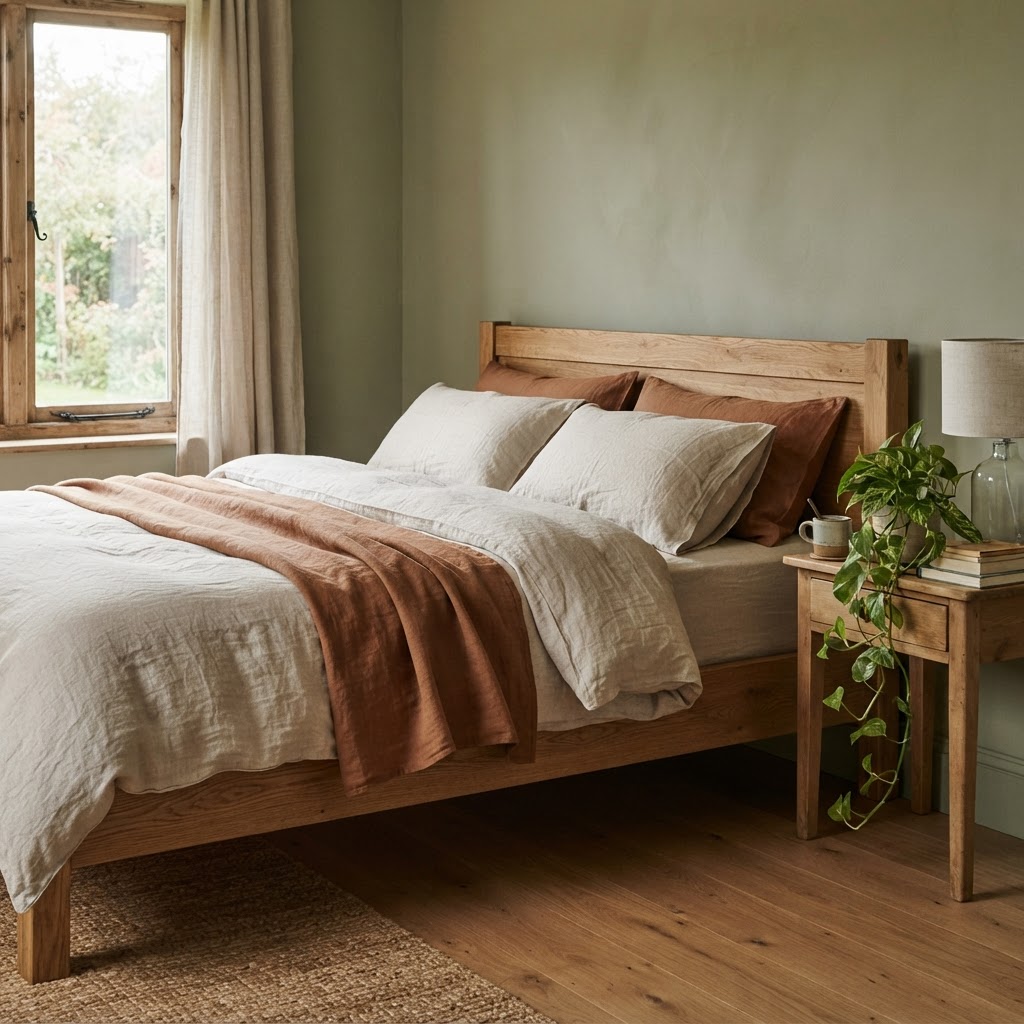
The most popular green of recent years, and for good reason. Sage is soft, slightly grey and incredibly easy to live with. It works beautifully with oak, linen and brass, and with warm accents such as terracotta. A pale sage feels airy in a small room, while a deeper sage gives a more grounded, heritage feel.
Olive green
Olive is warmer and more yellow than sage, with an earthy, slightly retro character. It's lovely in living rooms with leather, wood and rust coloured textiles, and it looks sophisticated on kitchen cabinets.
Eucalyptus and blue-greens
Silvery blue-greens feel fresh and spa-like, which makes them ideal for bathrooms and bedrooms. They suit south facing rooms where you want to cool the light slightly. My guide to the Japanese soaking tub shows how calming natural greens look in a bathroom.
Forest and bottle green
Deep greens create cocooning, intimate rooms, perfect for a snug, study, dining room or a small cloakroom. Paired with warm lighting, brass and natural wood, they feel rich rather than dark. They're also a brilliant choice for kitchen cabinetry and front doors.
Emerald and jewel greens
For drama, emerald is hard to beat. Use it on walls in a dining room, on a velvet sofa or on a statement piece of furniture. It looks wonderful with blush pink, gold and marble.
How to Choose the Right Green for Your Room
Green is particularly sensitive to light, so follow these steps:
- Check the direction of the room. North facing rooms make colours look cooler and greyer, so choose a green with warm, yellow undertones such as olive or a warm sage. South facing rooms can take cooler blue-greens.
- Decide on the mood. Light greens feel airy and fresh. Mid-tones feel calm and natural. Deep greens feel cosy and dramatic.
- Look at the undertone. Hold samples against a sheet of white paper to see whether they lean yellow, grey or blue.
- Test large samples. Paint A4 sheets or sample boards and look at them morning, afternoon and evening for a few days.
- Consider the light reflectance value (LRV). Paint brands list an LRV for each colour. A higher number reflects more light, so in a dark room choose a higher LRV, or go deliberately deep and cosy.
- Think about the finish. Matt finishes give greens a soft, velvety depth. Eggshell or satin is more practical for kitchens, woodwork and cabinets.
The Best Green Paint Colours by Room
Living room
Sage and olive are my go-to greens for living rooms because they're calm without being cold. For a cosy evening room, try a deep forest green colour drenched across walls, woodwork and ceiling. My small living room ideas explain how colour drenching can make a compact room feel bigger.
Kitchen
Green kitchens are timeless. Sage, olive or a deep bottle green look beautiful on cabinets, especially with brass handles, oak worktops or marble. For walls, a soft pistachio or pale sage keeps the room light.
Bedroom
Soft sage, eucalyptus and muted grey-greens are perfect for bedrooms because they feel restful. Pair them with oatmeal and rust bedding for warmth, and finish the bed with layered shams. My guide to what a bed sham is shows how to style them.
Bathroom
Blue-greens and eucalyptus tones feel fresh and spa-like. Deep green tiles or a dark green painted bath create a dramatic, luxurious look.
Home office
Green is one of the best colours for a workspace because it's calming but not sleepy. A mid sage or olive behind the desk works well on video calls too. See my home office design ideas for more.
Hallway
Hallways are a great place for a deeper green, especially below a dado rail, where it hides scuffs and makes a strong first impression.
Gaming room or den
Deep greens create an immersive, low-glare backdrop for screens. My guide to gaming room colour ideas explains why darker walls work so well.
What Colours Go With Green?
| Pair green with | The effect |
|---|---|
| Warm white and cream | Fresh and classic |
| Terracotta and rust | Earthy and warm |
| Blush and dusty pink | Soft and romantic |
| Navy and deep blue | Rich and tonal |
| Mustard and ochre | Retro and sunny |
| Charcoal and black | Modern and graphic |
| Natural wood, rattan and brass | Warm and organic |
Terracotta and sage are one of my favourite combinations of all. My guide to terracotta colour explains how to balance warm and cool shades. For help building a full scheme, see my step-by-step guide to choosing the perfect colour palette.
Popular Green Paint Shades to Look At
These well-known shades from UK paint brands are a good starting point. Ranges change, so always check the current colour cards and test samples at home.
- Soft sage greens: Farrow & Ball's Lichen and Green Smoke (a deeper, smoky blue-green), and Little Greene's Sage Green.
- Classic heritage greens: Farrow & Ball's Breakfast Room Green and Calke Green.
- Deep greens: Farrow & Ball's Studio Green and Card Room Green, and Little Greene's Obsidian Green.
- Blue-greens: Little Greene's Aquamarine.
- High street favourites: Dulux's Tranquil Dawn, its Colour of the Year for 2020, is a soft, pale green that still suits many homes.
Ways to Use Green Without Painting Every Wall
If you're not ready to commit to green walls, there are plenty of ways to bring it in:
- Paint the woodwork. Green skirting boards, door frames and window frames with warm white walls look fresh and characterful.
- Paint the ceiling. A soft green ceiling, sometimes called a "fifth wall", adds a gentle colour cast to the whole room.
- Colour block. Paint the lower half of a wall, an arch behind a bed or a band around the room.
- Paint furniture. A sage chest of drawers or an olive bookcase adds colour without redecorating. My guide to upcycled furniture has more ideas.
- Choose green textiles. Velvet cushions, linen curtains, throws and rugs.
- Use green tiles. Zellige or glazed tiles behind a sink or hob bring colour that lasts for years.
- Bring in plants. Nothing brings green into a room as naturally as houseplants.
Green Colour Schemes to Copy
- Calm and natural: sage walls, warm white woodwork, oak furniture, linen and rattan.
- Earthy and warm: olive walls, terracotta cushions, caramel leather and brass.
- Rich heritage: bottle green walls, cream ceiling, mahogany or walnut, and gold accents.
- Fresh and light: pistachio walls, white woodwork, pale wood and blush accents.
- Spa bathroom: eucalyptus walls, stone tiles, natural wood and white towels.
- Dramatic dining room: emerald walls, marble, blush velvet chairs and brass lighting.
Common Mistakes With Green Paint
- Choosing from a tiny chip. Greens look completely different on a wall.
- Ignoring the light. A cool green in a north facing room can look grey and flat.
- Pairing with cold, bright white. Warm whites and creams look far better with most greens.
- Using too many different greens. Stick to one main green and perhaps one deeper or lighter shade from the same family.
- Forgetting texture. Greens need natural materials, plants and soft textiles to feel warm.
Frequently Asked Questions
What is the best green paint colour?
There isn't one best green for every home, but sage green is the most versatile because it's soft, calming and works with almost any style. Olive suits warmer schemes, and deep forest or bottle greens are best for cosy, dramatic rooms.
What is the most calming shade of green?
Soft sage, eucalyptus and muted grey-greens are the most calming, which is why they're so popular in bedrooms and bathrooms.
What green looks best in a north facing room?
Choose a green with warm, yellow undertones, such as olive or a warm sage, so it doesn't look cold or grey in cooler light.
What colour goes best with sage green?
Warm white, cream, terracotta, blush pink, natural wood and brass all look beautiful with sage green.
Is dark green a good colour for a small room?
Yes. Deep greens can make a small room feel cosy and intentional, especially when the walls, woodwork and ceiling are painted in the same colour.
Is green still in style?
Green has been popular for years because it's rooted in nature rather than a passing trend. Soft sages, earthy olives and deep heritage greens all feel timeless.
Bring Nature Home With Green
The best green colour for your home is the one that suits your light, your room and the mood you want to create. Test large samples, pair green with warm neutrals and natural materials, and you'll have a room that feels calm and connected to nature.
If you'd like help choosing the perfect green for your home, you can book a one-hour online interior design consultation with me. For more colour inspiration, browse my decorating articles.
About the author
Magda Callery is a UK interior designer with more than 15 years' experience designing homes, pubs, restaurants and bars, and her expert commentary has featured in Homes & Gardens, The Mirror and The Spruce. Explore more of the decorating articles.
Continue reading

Dulux Ink Well: Review, Colour Pairings and Room Ideas
An interior designer's review of Dulux Ink Well: what colour it is, how it looks in different light, the colours that go with it, how it compares to Hague Blue, and the best rooms to use it in.


Cosy Autumn Bedroom Ideas for a Warm Fall Aesthetic
How to create a cosy autumn bedroom with a warm fall aesthetic: earthy colour palettes, layered bedding, warm lighting, texture, scent and five complete bedroom looks to copy.


Fresh Christmas Wreaths: Ideas, Care and Faux Alternatives
Fresh Christmas wreath ideas from an interior designer: the best greenery, how to keep a wreath fresh all season, and how to choose faux wreaths and Christmas faux floral arrangements that look real.