
Small Living Room Ideas: How to Make It Feel Bigger
An interior designer's small living room ideas: how to plan the layout, arrange furniture, choose colours and lighting, add storage and decorate so a small room feels bigger and cosier.
By Magda Callery, interior designer
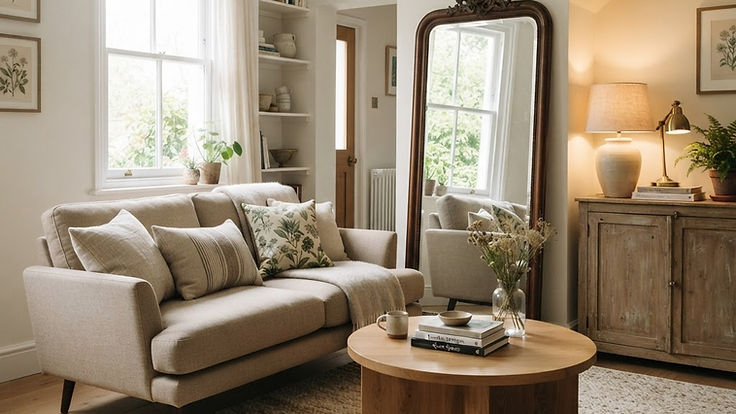
Small living rooms are the norm in Britain, from Victorian terraces and new build flats to cottages with low beams and awkward alcoves. The good news is that a small living room can feel every bit as comfortable and stylish as a large one. It just needs a little more thought about layout, light and scale.
As an interior designer, small living rooms are the projects I'm asked about most. In this guide I'll share the small living room ideas that make the biggest difference: how to plan the layout, arrange furniture, choose colours and lighting, add storage and decorate a small living room so it feels bigger, calmer and properly cosy.
Start With the Layout
Before you buy a single cushion, get the layout right. In a small living room, layout matters more than anything else, because it decides how easily you move around the room and how big it feels.
- Measure everything. Measure the room, the doorways, the radiators, the windows and the chimney breast. Draw a simple floor plan on squared paper (one square per 10cm works well) and cut out furniture shapes to scale.
- Decide on one focal point. Choose the fireplace, the window or the television, and arrange seating around it. Competing focal points make a small room feel chaotic.
- Protect the walkways. Aim for around 75cm to 90cm for the main route through the room, and about 45cm between the sofa and the coffee table so legs and drinks both have space.
- Keep doorways and windows clear. Nothing shrinks a room like a sofa that blocks the door or a cabinet that cuts off half the window.
Small Living Room Layout Ideas
There is no single right layout, but these arrangements work in most small British living rooms.
| Room shape | Layout that works | Why it works |
|---|---|---|
| Square | Sofa facing the focal point, one armchair at an angle, round coffee table | Creates a conversation circle and keeps paths open on both sides |
| Long and narrow | Sofa on the long wall, slim console or shelving opposite, two zones if space allows | Avoids a corridor feel and gives the room a purpose at each end |
| Open plan or through lounge | Sofa back facing the dining or kitchen area, rug to anchor the seating | The sofa becomes a soft divider without blocking light |
| Awkward or with lots of doors | Loveseat or two compact armchairs instead of a big sofa | Smaller pieces fit between doors and radiators more easily |
How to arrange furniture in a small room
- Float the sofa if you can. Pulling it a few centimetres off the wall makes the room feel more considered, and in a narrow room it can create a hidden storage spot behind.
- Put the biggest piece on the longest wall. It keeps the floor visually open.
- Use the corners. A corner sofa often seats more people in less floor space than a sofa plus an armchair.
- Group furniture closely. Seating spread out to every wall feels disconnected. A tighter group around a rug feels more intimate and leaves more open floor around the edges.
- Leave some empty space. A clear patch of floor is what lets the eye rest. It's the same idea I describe in Japanese house design, where empty space is treated as part of the design.
Choose Furniture That Fits the Space
Scale it to the room
Scale is the most common mistake I see. An oversized corner sofa will dominate a small living room, while lots of tiny furniture looks bitty. Choose a compact sofa (around 180cm to 200cm for most small rooms), slim arms, and one or two larger pieces rather than many small ones.
Show some leg
Sofas, armchairs and cabinets on raised legs let you see the floor underneath, which makes a room feel more spacious. Bulky skirted sofas and pieces that sit flat on the floor feel heavier.
Pick multifunctional pieces
- An ottoman that doubles as a coffee table, extra seat and storage box.
- Nesting tables that pull out when guests arrive.
- A storage bench under the window.
- A sofa bed if the living room also needs to work as a guest room.
- A drop leaf or extendable table if you eat in the living room.
Try see-through and reflective pieces
Glass, acrylic and mirrored furniture take up space without blocking the view. A glass coffee table or a slim acrylic side table can make a real difference in a very small living room.
Go for round shapes
A round or oval coffee table is easier to walk around than a rectangular one and softens a boxy room.
Colour Ideas for a Small Living Room
Colour has a huge effect on how big a room feels, but light colours aren't the only answer.
- Light and warm: soft whites, warm stone, pale greige and putty make a room feel airy without feeling cold, especially in north facing rooms.
- Colour drenching: painting walls, skirting, woodwork and even the ceiling in one colour blurs the edges of the room so it feels bigger and more cocooning. It works beautifully with mid tones and deeper shades.
- Dark and dramatic: a deep green, inky blue or chocolate brown can make a small living room feel intimate and luxurious, particularly one used mainly in the evening.
- Paint the ceiling: a ceiling a shade lighter than the walls lifts the room, while a coloured ceiling can make a low room feel deliberately snug.
The key is choosing a palette and sticking to it. My step-by-step guide to choosing the perfect colour palette walks you through it. If you'd rather use pattern, a subtle wallpaper on one wall or in an alcove adds interest without overwhelming the space, and our wallpaper calculator will tell you how many rolls you need.
Use Light to Make the Room Feel Bigger
Maximise daylight
- Hang curtain poles wider and higher than the window so the curtains stack back off the glass and the window looks taller.
- Choose light-filtering blinds or sheer linen rather than heavy curtains that block light during the day.
- Keep window sills clear and avoid placing tall furniture in front of windows.
Layer your lighting
A single ceiling light flattens a small room and leaves the corners dark. Instead, use at least three light sources at different heights:
- Ambient: a ceiling light or flush fitting on a dimmer.
- Task: a floor lamp by the reading chair or a lamp by the sofa.
- Accent: picture lights, shelf lighting, LED strips in alcoves or a candle.
Wall lights and plug-in wall lamps are brilliant in small living rooms because they free up floor and table space.
Add mirrors
A large mirror opposite or beside a window bounces light around the room and adds depth. A tall floor mirror leaning against the wall makes a room feel taller, while a mirror above the fireplace creates a classic focal point.
Small Living Room Storage Ideas
Clutter is the enemy of a small living room. The aim is a home for everything, ideally behind closed doors.
- Use the alcoves. Fitted cupboards with shelves above either side of a chimney breast are one of the best uses of space in British homes.
- Go vertical. Floor to ceiling shelving draws the eye upwards and stores far more than low furniture.
- Choose closed storage for everyday clutter. Open shelves look lovely styled with a few books and objects, but cables, remotes and paperwork belong in drawers and baskets.
- Make use of hidden space. Under the stairs, under the window and behind the sofa can all hold slim storage.
- Wall mount the television. It frees up floor space and removes the need for a bulky media unit.
For more ideas, my article on small details that make a space feel more organised shows how alignment, empty surfaces and closed storage make a room feel calmer. Less clutter also means less dust, which I cover in my guide on how to prevent dust in a room.
Small Living Room Decor Ideas
Once the layout and storage work, decorating is the fun part. In a small room, a few well chosen pieces always beat lots of small ones.
- Choose a large rug. A rug big enough for at least the front legs of all the seating makes the room feel bigger and pulls the furniture together. A tiny rug floating in the middle does the opposite.
- Hang art higher and bigger. One large artwork or a tidy gallery wall has more impact than lots of small frames dotted around. My article on why artwork matters explains how art shapes the way a space feels.
- Use vertical lines. Tall plants, floor length curtains and vertical panelling draw the eye up and make a low ceiling feel higher.
- Bring in greenery. A trailing plant on a high shelf or a single statement plant in a corner adds life without clutter. Fresh flowers do the same, and you'll find plenty of ideas in the art of decorating with fresh flowers.
- Keep accessories edited. Group objects in odd numbers on a tray, and leave some surfaces completely clear.
- Add character with one vintage piece. An upcycled cabinet or a reclaimed side table stops a small room looking like a showroom. See my guide to upcycled furniture for inspiration.
How to Make a Small Living Room Cosy
A small living room has a head start on cosiness. To make the most of it:
- Layer textures: wool throws, linen cushions, a chunky knit pouffe and a soft rug.
- Use warm bulbs (around 2700K) and lamps rather than bright overhead light in the evening.
- Add a reading corner with a comfortable chair, a lamp and a small side table.
- Bring in natural materials such as wood, rattan, stone and ceramics.
For seasonal ideas, have a look at my cosy autumn interior design trends.
Very Small Living Room Ideas
If your living room is genuinely tiny, these ideas make the most of every centimetre:
- Swap the sofa for a loveseat or two armchairs. You may lose a seat on paper, but gain space to move.
- Use wall mounted lighting and shelving to keep the floor as clear as possible.
- Choose a sofa with a low back so the room above it feels open.
- Skip the coffee table and use a pair of side tables or a cushioned ottoman with a tray.
- Built-in seating in a bay window or alcove gives extra seating and storage without taking up the middle of the room.
- Keep the palette tight, with two or three colours across walls, furniture and textiles.
My guide to smart interior design tips for small spaces has more ideas that work across the whole home.
Common Small Living Room Mistakes
- Pushing every piece of furniture against the walls.
- Choosing a sofa that is too big for the room.
- A rug that is too small.
- One overhead light and nothing else.
- Too many small accessories on every surface.
- Heavy curtains that block daylight.
- Open shelving full of everyday clutter.
Frequently Asked Questions
How can I make my small living room look bigger?
Use a light or colour drenched palette, layer your lighting, add a large mirror near the window, choose furniture on legs, use a large rug and keep surfaces clear. Storage that reaches up the walls frees up floor space, which makes the biggest difference.
What is the best layout for a small living room?
In most small living rooms, the best layout places the sofa facing one focal point, with one or two chairs grouped closely around a rug and clear walkways of around 75cm to 90cm. In a long, narrow room, put the sofa on the longest wall and create a second zone at the other end.
How do I arrange furniture in a small living room with a TV and a fireplace?
Place the television beside or above the fireplace so they form one focal point, then arrange the seating to face both. If you mount the TV above the fireplace, keep it low enough to watch comfortably and check the heat from the fire won't damage it.
What colour should I paint a small living room?
Warm whites and soft neutrals make a small living room feel light and airy, but darker colours can make it feel cosy and intentional, especially when you colour drench the walls, woodwork and ceiling. Consider the direction the room faces and when you use it most.
How do I decorate a small living room on a budget?
Start by decluttering and rearranging the furniture you already have. Then repaint, swap the lighting for lamps, add a larger rug and refresh cushions and throws. Secondhand and upcycled furniture adds character for much less than buying new.
Should a small living room have a big or small rug?
A big rug. It should be large enough for at least the front legs of the sofa and chairs to sit on it. A rug that is too small makes the room look disjointed and smaller.
Need Help With Your Small Living Room?
Small living rooms reward careful planning. Get the layout and lighting right, choose furniture at the right scale, give everything a home and then decorate with a few pieces you love.
If you'd like a designer's eye on your own space, you can book a one-hour online interior design consultation with me. We can plan the layout together, choose colours and find furniture that fits. For more ideas, browse my interior design articles.
About the author
Magda Callery is a UK interior designer with more than 15 years' experience designing homes, pubs, restaurants and bars, and her expert commentary has featured in Homes & Gardens, The Mirror and The Spruce. Explore more of the interior design articles.
Continue reading


Japanese House Design: 12 Key Elements and How to Bring Them Home
Calm, light and deeply connected to nature: the principles behind Japanese house design, from the genkan and shoji screens to the idea of ma, and how to borrow them for a British home.

How to Prevent Dust in a Room: 15 Designer-Approved Ways to Keep It Dust-Free
Dusted on Sunday, dusty again by Wednesday? Here's how to stop dust getting in, choose furnishings that don't hold on to it, and clean so it doesn't come straight back, from a UK interior designer.

Japanese Soaking Tub: A Complete Guide to Ofuro Baths for UK Homes
Deep, compact and made for slow evenings: everything you need to know about Japanese soaking tubs, from sizes and materials to fitting one in a British bathroom and styling the room around it.