
Living Room Rug Ideas: 30 Ways to Choose and Style
30 rugs for living room ideas from an interior designer, with a rug size chart in cm and feet, the three classic layouts, materials compared and styling tips.
By Magda Callery, interior designer
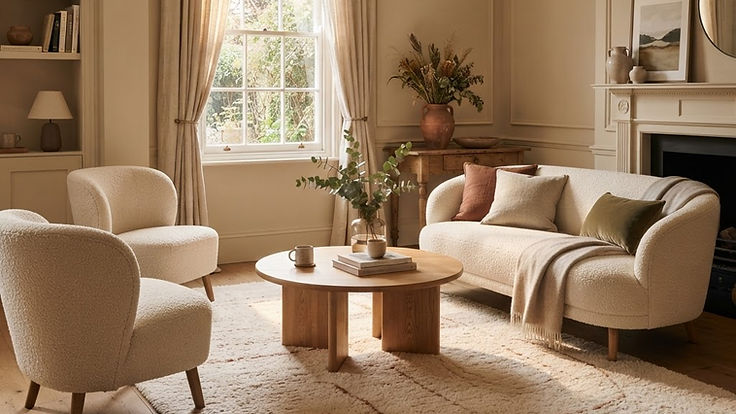
A rug is the quickest way to change how a living room feels. The right one pulls your furniture together, softens echoes, warms up a cold floor and brings in colour and pattern without a paintbrush. The wrong one, usually a rug that's too small, makes even a beautiful room look unfinished.
In this guide I'll share 30 rugs for living room ideas, from layout and sizing to colour, pattern, texture and layering, plus a rug size chart in centimetres and feet, the three classic furniture layouts, a guide to rug materials, ideas for small and open plan living rooms, rugs for homes with pets and children, and the mistakes I see most often as an interior designer.
Living Room Rug Size Chart
The number one rule: choose a bigger rug than you think you need. Here's a quick guide to common sizes.
| Rug size (cm) | Closest US size | Best for |
|---|---|---|
| 120 x 170 | 4 x 6 ft | Under a coffee table in a small living room, or a reading corner |
| 150 x 215 or 160 x 230 | 5 x 7 or 5 x 8 ft | A small living room, or a coffee table with two chairs |
| 185 x 275 | 6 x 9 ft | A small to medium living room with a two or three seater sofa |
| 200 x 290 | Roughly 7 x 9 ft | Most medium living rooms, with front legs of the furniture on the rug |
| 240 x 340 or 245 x 305 | 8 x 10 to 8 x 11 ft | A medium to large living room or a corner sofa |
| 275 x 365 and larger | 9 x 12 ft and up | Large and open plan living rooms with all the furniture on the rug |
Ruggable, which sells rugs in all of these sizes, recommends leaving a 30 to 45cm border of floor around the rug in a defined living room, and 45 to 90cm around its largest rugs in a big room.
The Three Classic Rug Layouts
| Layout | How it works | Best for |
|---|---|---|
| All legs on | Every piece of seating sits fully on the rug | Large and open plan rooms, creating a cosy zone |
| Front legs on | Only the front legs of the sofa and chairs sit on the rug | Most living rooms; it connects the furniture without needing a huge rug |
| Floating | No furniture legs on the rug, which sits under the coffee table | Small rooms, but only with a rug wide enough to reach the seating |
My rule of thumb: the rug should be wider than the sofa, ideally by around 15 to 20cm at each end, so the seating looks anchored rather than perched.
30 Rugs for Living Room Ideas
Size and layout ideas
- Go big. An oversized rug makes a room feel larger and more expensive, because it connects all the furniture into one generous zone. A small rug floating in the middle does the opposite.
- Use the front legs rule. If you can't find or afford a huge rug, choose one large enough for the front legs of every seat to rest on it.
- Mark out the room with tape first. Use masking tape on the floor to outline the rug size before you buy. It's the easiest way to avoid an expensive mistake.
- Centre it on the seating, not the room. The rug belongs to the furniture group. If your sofa faces the fireplace, centre the rug on the fireplace and sofa rather than the middle of the floor.
- Leave a border of floor. A frame of visible floorboards or carpet around the rug looks intentional and lets the flooring show off.
Colour and pattern ideas
- Take your colours from the rug. It's often easier to choose a rug first and pick the wall colour, cushions and throws from it. My step-by-step guide to choosing the perfect colour palette shows how.
- Choose warm neutrals. Oatmeal, sand, cream and soft greige rugs are calm and timeless, and they work with almost any sofa.
- Add earthy colour. Rust, terracotta, ochre and clay rugs bring instant warmth, especially in north-facing rooms. My terracotta colour guide has lots of ideas.
- Bring the garden in with green. Sage, olive and moss rugs feel natural and restful. See my guide to the best green paint colours for walls to match.
- Warm up a grey room. If your living room feels cold, a rug in rust, mustard or warm cream is the quickest fix. I explain why in my guide to the colour psychology of grey.
- Try a vintage or Persian-style rug. Faded reds, blues and ochres add character and history, and they're forgiving with everyday wear.
- Use pattern where the room is plain. A bold geometric or abstract rug works beautifully under plain sofas and walls. If your sofa and curtains are patterned, choose a calmer rug.
Material and texture ideas
- Choose wool for comfort and durability. Wool is soft, naturally hard-wearing and resists crushing, which makes it the classic choice for a living room.
- Use jute or sisal for natural texture. Natural fibre rugs look relaxed and suit coastal, rustic and Japandi rooms, although they're coarser underfoot.
- Try a flatweave or kilim. Flatweaves are thin, easy to vacuum and perfect where doors need to open over the rug.
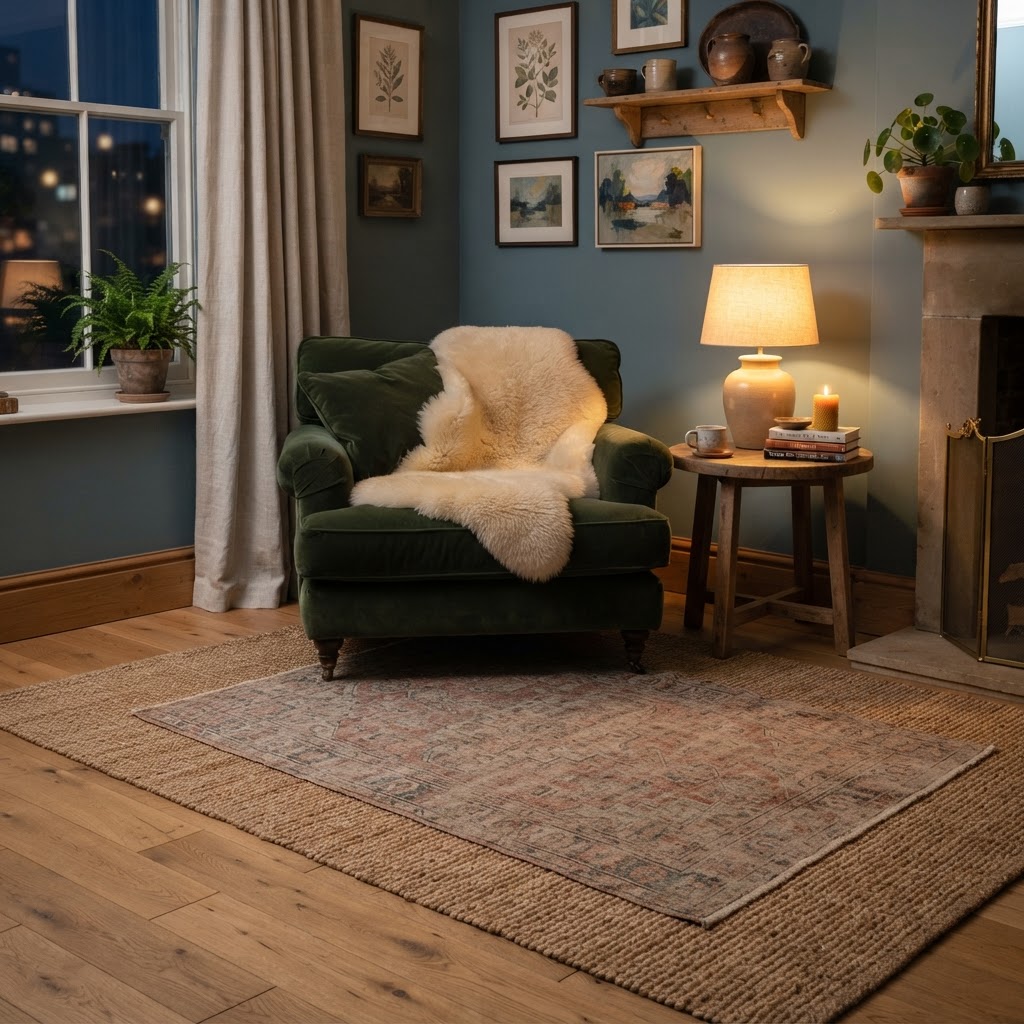
- Add a sheepskin. Draped over a chair or layered on a larger rug, it makes a corner feel instantly cosy.
- Go for texture in a calm scheme. A tonal rug with a high-low pile, loops or carved pattern adds interest without adding colour.
- Choose a washable rug if you have young children, pets or a light-coloured scheme. Many machine washable rugs now look surprisingly smart.
Shape and layering ideas
- Layer rugs. Place a smaller, patterned rug on top of a large natural jute or flatweave rug. It adds depth and lets you use a precious vintage rug that's too small on its own.
- Use a round rug under a round coffee table, in a reading corner or to soften a room full of straight lines.
- Try an organic or irregular shape for a modern, sculptural look.
- Use two rugs in a long room to create separate zones, such as a seating area and a reading or dining corner. Keep them in the same colour family so they feel connected.
- Add a runner in a through route, such as behind a sofa or along a walkway in an open plan room.
- Use a rug to disguise a tired floor. A large rug can cover tired carpet or worn boards while you save up for new flooring.
Rug ideas by interior style
- Japandi. A low-pile wool or jute rug in oatmeal, sand or soft charcoal, with a simple border or a subtle texture. My Japandi office guide and article on Japanese house design explain the calm, natural look.
- Scandinavian. A cream or pale grey rug with a soft geometric pattern or a chunky texture keeps the room light and cosy.
- Traditional and period homes. A Persian, Turkish or Oushak-style rug suits panelling, sash windows and antiques. In a period house, it's lovely to carry the same feeling through from the hallway; see my Georgian hallway ideas.
- Boho. Layer a colourful kilim over jute, and add floor cushions, rattan and plenty of plants.
- Modern and minimalist. A large, tonal rug in a single colour, or a bold abstract in two or three shades, keeps the look crisp.
- Cosy and seasonal. In autumn and winter, a thick wool or shaggy rug, a sheepskin and a pile of throws make the living room feel like a nest. My autumn decoration ideas have more ways to warm up a room.
Living Room Rug Materials Compared
| Material | Feel | Durability | Easy to clean | Best for |
|---|---|---|---|---|
| Wool | Soft and warm | Excellent | Good; naturally resists dirt | Most living rooms |
| Jute and sisal | Coarse and natural | Good | Fair; can stain with water | Relaxed, coastal and Japandi rooms, and for layering |
| Cotton flatweave | Light and thin | Fair | Good; some are washable | Small rooms, layering and changing with the seasons |
| Viscose | Silky with a sheen | Lower | Poor; marks easily with water | Low traffic rooms only |
| Polypropylene | Varies | Good | Very good | Busy family rooms, pets and outdoor style |
| Machine washable | Thin, usually flat | Good | Excellent | Homes with children and pets |
| Sheepskin | Very soft and fluffy | Fair | Fair | Layering and cosy corners |
Rugs for Small Living Rooms
- Still go as big as the room allows. In a small living room, a rug that reaches under the front legs of the sofa makes the space feel larger than a small rug in the middle.
- Choose a light colour to bounce light around, or a rug the same tone as the floor for a seamless look.
- Use a flatweave or low pile so doors open easily and the room feels less crowded.
- Try a round rug if the room is square and you have a round coffee table.
For more on making a compact room work, see my small living room ideas. If your living room is part of a one room home, my small studio apartment ideas explain how to use rugs to zone a studio.
Rugs for Open Plan Living Rooms
In an open plan space, a rug does the job of walls. Use one large rug to define the seating area, with every piece of furniture in the zone sitting at least partly on it. If you have more than one rug in the same space, link them with a shared colour, and keep them roughly parallel to each other and to the main furniture.
Rugs for Homes With Children and Pets
- Choose wool or polypropylene, which are hard-wearing and easier to clean than viscose or silk.
- Pick a mid-tone or patterned rug that disguises crumbs, hair and the odd spill.
- Consider a machine washable rug for the busiest rooms.
- Avoid long, loose shaggy piles where claws and small toys can get caught.
Don't Forget a Rug Pad
A good rug pad, or underlay, stops a rug slipping, which makes it safer on wooden or tiled floors. It also adds cushioning, protects the floor and helps the rug last longer. On carpet, a specific rug-on-carpet underlay helps stop the rug from creeping.
How to Care for a Living Room Rug
- Vacuum regularly, but switch off the rotating brush on delicate, natural fibre and shaggy rugs.
- Rotate the rug every few months so it wears and fades evenly.
- Blot spills straight away with a clean cloth rather than rubbing.
- Shake out smaller rugs outdoors to remove grit.
- Have valuable rugs cleaned professionally.
Rugs collect dust, so regular care also helps keep the air in your living room fresher. My guide on how to prevent dust in a room has more tips.
Common Living Room Rug Mistakes
- Choosing a rug that's too small. It's the most common mistake I see, and it makes a room look disjointed.
- Floating a small rug in the middle of the room with no furniture touching it.
- Ignoring door clearance, so a thick rug stops a door from opening.
- Matching everything. A rug that exactly matches the sofa disappears; choose one that contrasts in tone or texture.
- Choosing viscose for a busy room, where it can mark and flatten quickly.
- Skipping the rug pad, which can make a rug slip and wear faster.
Frequently Asked Questions
What size rug should I get for my living room?
For most living rooms, a 200 x 290cm or 240 x 340cm rug works well, as it lets the front legs of the sofa and chairs rest on it while leaving a border of floor. Small living rooms often suit 160 x 230cm, and large or open plan rooms 275 x 365cm or bigger. In US sizes, 8 x 10 ft is a popular choice for living rooms.
Should the sofa be on the rug?
Ideally, yes, at least the front legs. Placing the front legs of the sofa and chairs on the rug connects the furniture into one group. In a large room, all the legs can sit on the rug.
How far should a rug be from the wall?
In a defined living room, Ruggable suggests leaving around 30 to 45cm of floor between the rug and the walls, and more in a large room.
What colour rug goes with a grey sofa?
Warm colours such as rust, terracotta, mustard and cream look lovely with a grey sofa, as do sage greens and inky blues. A rug with a mix of warm tones stops a grey scheme from feeling cold.
Can you put a rug on carpet?
Yes. A rug on carpet adds colour, pattern and texture, or helps zone a room. Use a flat or low pile rug and a rug-on-carpet underlay to stop it from moving.
What is the best rug material for a living room?
Wool is the best all-round choice for a living room, as it's soft, warm and hard-wearing. Jute is great for natural texture, and polypropylene or washable rugs suit busy homes with children and pets.
Should a living room rug be lighter or darker than the floor?
Either can work, but contrast helps the rug stand out. On dark floorboards, a lighter rug brightens the room. On pale floors, a mid or darker tone grounds the furniture.
Ground Your Living Room
The right rug brings a living room together. Choose the biggest size your room allows, follow the front legs rule, pick a material that suits how you live, and use colour, pattern and texture to tie the whole scheme together.
If you'd like help choosing a rug, a colour scheme or a layout for your living room, you can book a one-hour online interior design consultation with me. For more ideas, browse my interior design articles.
About the author
Magda Callery is a UK interior designer with more than 15 years' experience designing homes, pubs, restaurants and bars, and her expert commentary has featured in Homes & Gardens, The Mirror and The Spruce. Explore more of the interior design articles.
Continue reading

Japandi Office: 25 Ideas for a Calm Home Office
25 Japandi office ideas from an interior designer: the principles, colours and materials, plus desks, storage, lighting and styling for a calm, uncluttered workspace.

Georgian Hallway Ideas: 25 Ways to Style a Period Hall
25 Georgian hallway ideas from an interior designer: what makes a hallway Georgian, floors, paint colours, panelling, staircases, lighting and restoration tips.


Kinetic Architecture: 15 Amazing Buildings That Move
What is kinetic architecture? 15 real buildings that move, from Paris to Abu Dhabi and London, how they work, and how to bring kinetic design home.