
Japandi Office: 25 Ideas for a Calm Home Office
25 Japandi office ideas from an interior designer: the principles, colours and materials, plus desks, storage, lighting and styling for a calm, uncluttered workspace.
By Magda Callery, interior designer
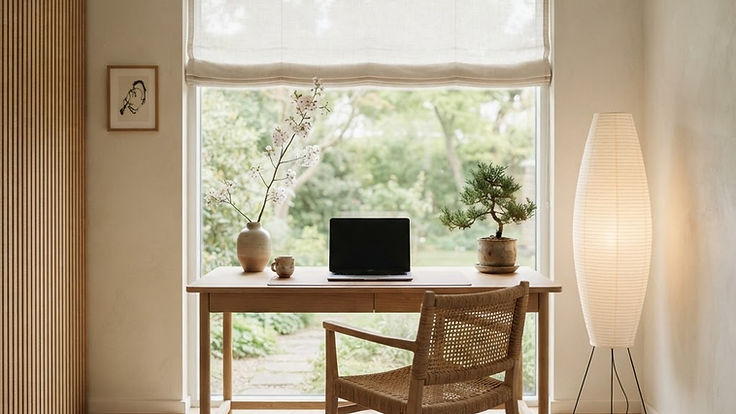
If your home office feels cluttered, noisy or stressful, a Japandi office might be exactly what you need. Japandi blends the calm minimalism of Japanese design with the warmth and practicality of Scandinavian style, and the result is a workspace that feels peaceful, uncluttered and genuinely pleasant to sit in all day.
In this guide I'll explain what Japandi is, the principles behind it, the colours and materials to choose, and 25 Japandi office ideas covering layout, desks, storage, lighting, textiles and styling. You'll also find ideas for small spaces, a budget guide, the most common mistakes and how Japandi compares with Scandi and minimalist style.
What Is a Japandi Office?
Japandi is a blend of two design traditions that share a love of simplicity, natural materials and craftsmanship.
| Japanese influence | Scandinavian influence |
|---|---|
| Minimalism and calm | Comfort and cosiness (hygge) |
| Wabi-sabi: beauty in imperfection and natural ageing | Practical, functional design |
| Low, grounded furniture | Light, airy spaces |
| Darker woods, charcoal and earthy tones | Pale woods and soft whites |
| Craftsmanship and handmade objects | Simple, timeless shapes |
A Japandi office brings these together: a clear, uncluttered desk, natural wood and textures, soft muted colours, and a few beautiful, useful objects. If you love Japanese design, my guide to Japanese house design explores the ideas behind it in more depth.
The 7 Principles of a Japandi Office
| Principle | What it means in your office |
|---|---|
| Less, but better | Only what you need, chosen carefully |
| Natural materials | Wood, linen, wool, paper, stone and clay |
| A muted, earthy palette | Warm whites, sand, clay, sage and charcoal |
| Clean lines | Simple, functional furniture without fuss |
| Hidden storage | Clutter kept out of sight |
| Soft, natural light | Diffused daylight and warm lamps |
| Imperfect beauty | Handmade ceramics, natural grain, textured walls |
Japandi Office Colours
Japandi colours are calm, warm and earthy. Choose a main neutral, a secondary tone and one or two darker accents.
| Role | Colours | Where to use them |
|---|---|---|
| Main neutral | Warm white, oatmeal, soft greige | Walls and ceiling |
| Secondary tone | Sand, clay, mushroom, soft sage | Feature wall, joinery, textiles |
| Dark accent | Charcoal, deep brown, black | Desk lamp, frames, ceramics, a single wall |
| Natural tones | Light oak, ash, walnut, bamboo | Desk, shelves, floor |
A soft, warm white is the perfect backdrop. My guide to Farrow & Ball Wimborne White explains why warm whites work so well. If you prefer grey, choose a warm one, as I explain in my guide to the colour psychology of grey. For a little more colour, soft sage greens and earthy clays work beautifully; see my guides to the best green paint colours and terracotta colour.
Japandi Office Materials
| Material | Where to use it | Why it works |
|---|---|---|
| Light oak or ash | Desk, shelves, floor | Warm, Scandinavian and calm |
| Walnut or dark stained wood | Accent furniture, frames | Adds Japanese depth and contrast |
| Linen and cotton | Curtains, blinds, cushions | Soft, natural texture |
| Rattan, rush and cane | Chairs, baskets | Handmade, tactile feel |
| Paper | Lampshades, screens | Soft, diffused light |
| Stone and ceramic | Pen pots, vases, bookends | Imperfect, earthy beauty |
| Wool | Rugs and throws | Warmth and comfort |
| Limewash or textured paint | Walls | Gentle movement and depth |
25 Japandi Office Ideas
Layout and desk
- Put the desk near a window. Light from the side is ideal for screen work. If you'd love to face the window and the view, as many people do, hang a linen blind to soften the light behind your screen and reduce glare.
- Choose a simple wooden desk. Look for clean lines, slim legs and a solid wood or wood veneer top.
- Keep the desk clear. Only keep what you use every day on the desk: a lamp, a notebook, a pen pot and a plant.
- Hide the cables. A cable tray under the desk, a wooden cable box and a single extension lead make a huge difference.
- Leave space around the desk. Empty space, known in Japanese design as "ma", is part of the look, so resist filling every corner.
Seating and comfort
- Choose a chair that's comfortable and beautiful. A woven, wooden or upholstered chair in a natural fabric looks Japandi, but if you work long hours, an ergonomic chair in a neutral colour is worth it.
- Set it up properly. As a general guide, keep your screen about an arm's length away with the top at or slightly below eye level, your feet flat on the floor and your elbows roughly level with the desk. In the UK, the Health and Safety Executive publishes a free workstation checklist for computer users.
- Add a reading corner. A low armchair or floor cushion with a throw and a side table gives you somewhere to step away from the screen.
Storage
- Use closed storage. Cabinets, drawers and cupboards in wood or a matt finish keep paperwork out of sight.
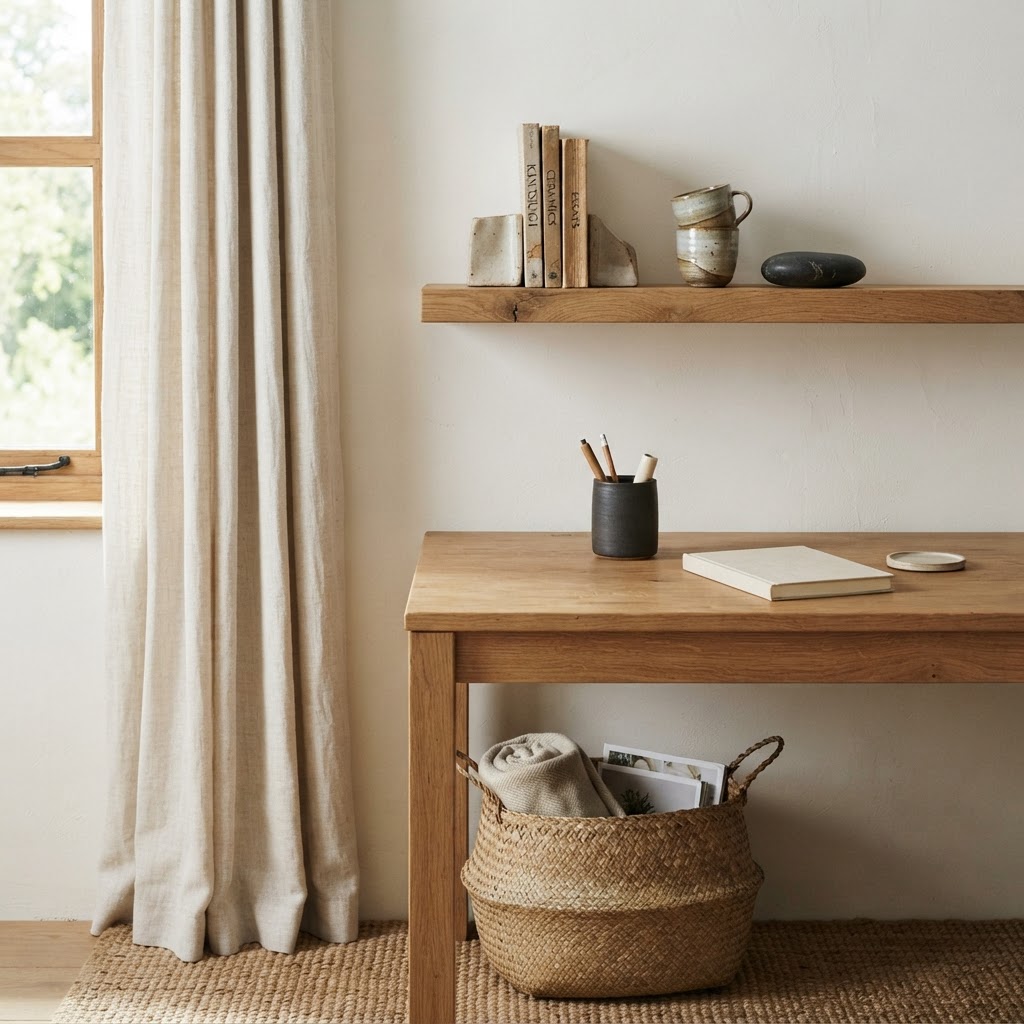
- Add a floating shelf. One simple oak shelf with a few carefully chosen books and objects is more Japandi than a wall of open shelving.
- Use woven baskets for paperwork, chargers and everyday clutter.
- Choose wooden desk organisers rather than plastic.
- Edit regularly. A Japandi office relies on letting go of what you don't need. My guide to small details that make a space feel more organised has easy ideas.
Lighting
- Diffuse daylight. Linen blinds or sheer curtains soften harsh light and reduce screen glare.
- Add a paper lantern or floor lamp. A paper shade gives a soft, warm glow, a classic Japanese touch.
- Use a good task lamp. Choose a simple design in wood, black or a soft neutral, with a bulb bright enough for working.
- Choose warm bulbs for the evening. Warm white bulbs make the room feel calm once the working day is over.
Walls, floors and textiles
- Try limewash or textured paint for gentle depth and a handmade feel.
- Add a slatted wood panel. Vertical wooden slats on one wall add warmth, texture and a little sound absorption.
- Lay a natural rug. Jute, wool or a flatweave in a neutral tone grounds the space and softens footsteps.
- Use linen. Linen curtains, a cushion on your chair and a throw for colder days add softness.
Plants, art and decor
- Choose one or two sculptural plants, such as an olive tree, a bonsai, a snake plant or a single branch in a vase.
- Add handmade ceramics, such as a pen pot, a mug or a small vase. Imperfection is part of the beauty.
- Hang one piece of art. A simple ink drawing, an abstract in earthy tones or a botanical print is enough. My article on why office artwork matters explains how art can change the way a workspace feels.
- Bring in scent. A diffuser with hinoki, cedarwood or green tea completes the calm.
A Japandi Office in a Small Space
You don't need a spare room to create a Japandi office.
- In a bedroom corner, choose a slim wooden desk and a linen curtain or folding screen to hide it at night.
- In a living room, use a console table as a desk and keep supplies in a closed cabinet.
- In a studio flat, a fold-down wall desk is perfect. My small studio apartment ideas show how to fit a workspace into one room.
- Under the stairs or in an alcove, built-in oak shelves and a fitted desk make the most of awkward space.
For more on planning any workspace, from where to put the desk to storage and lighting, see my home office design ideas.
Make It Work on Video Calls
A Japandi office makes a beautiful video call background. Position your desk so the camera faces a simple wall with a shelf, a plant or a single piece of art. Keep the background uncluttered, and use a soft light in front of you rather than behind.
Japandi vs Scandi vs Minimalist
| Japandi | Scandinavian | Minimalist | |
|---|---|---|---|
| Mood | Calm, grounded, warm | Light, cosy, airy | Clean and sparse |
| Colours | Earthy neutrals with dark accents | Whites and pale neutrals | Often white, grey and black |
| Wood | Light and dark woods together | Mostly pale woods | Any, often minimal |
| Texture | Handmade, imperfect, tactile | Soft and cosy | Smooth and sleek |
| Decor | A few meaningful, handmade pieces | Cosy textiles and candles | Very little |
Japandi Office on a Budget
| Budget | Ideas |
|---|---|
| Free | Declutter, clear the desk, hide cables, move the desk near the window |
| Under £100 | Linen curtains, a paper lamp, woven baskets, a plant, a ceramic pen pot |
| £100 to £500 | A solid wood desk, a woven chair, a wool rug, a floating oak shelf |
| Investment | A good ergonomic chair, fitted oak joinery, a slatted wall panel |
Secondhand wooden furniture is perfect for Japandi, as its slightly worn character fits the wabi-sabi idea of beauty in age. My guide to upcycled furniture has lots of ideas.
Common Japandi Office Mistakes
- Making it too cold. Without wood, texture and warm light, minimalism can feel sterile.
- Too many decorative objects. Choose a few meaningful pieces.
- Shiny or plastic finishes, which fight against the natural look.
- Ignoring comfort. A beautiful chair you can't sit in for long is a false economy.
- Visible cables and clutter, which undo the calm.
- Copying a showroom. Japandi should feel personal, lived in and slightly imperfect.
Frequently Asked Questions
What is a Japandi office?
A Japandi office is a workspace that blends Japanese minimalism with Scandinavian warmth and practicality. It uses natural materials, a muted earthy palette, simple functional furniture, hidden storage and soft natural light to create a calm, uncluttered place to work.
What colours are used in a Japandi office?
Japandi offices use warm whites, oatmeal, sand, clay, mushroom and soft sage, with darker accents of charcoal, deep brown or black, plus natural wood tones.
What furniture suits a Japandi office?
Simple wooden desks with clean lines, woven or wooden chairs, closed wooden storage, floating oak shelves, low armchairs and natural fibre rugs all suit a Japandi office.
How do I make my office Japandi on a budget?
Declutter, hide the cables, move your desk near a window, then add linen curtains, a paper lamp, woven baskets, a plant and a handmade ceramic. Look for secondhand wooden furniture.
Is Japandi good for productivity?
A calm, uncluttered, well-lit workspace with few distractions can help many people focus, and Japandi's emphasis on hidden storage and natural light supports that. The most important thing is a comfortable, well set-up desk and chair.
What is the difference between Japandi and Scandinavian style?
Scandinavian style is lighter and airier, with mostly pale woods and cosy textiles. Japandi adds Japanese influence, with darker woods, earthy tones, handmade imperfect pieces and an even stronger focus on calm and simplicity.
Create a Calm Place to Work
A Japandi office is about doing less, but better: a clear desk, natural materials, soft light and a few beautiful things that make you happy every time you sit down. It's a workspace that supports your focus rather than distracting from it.
If you'd like help designing a calm, functional home office, you can book a one-hour online interior design consultation with me. For more ideas, browse my interior design articles.
If your Japandi office will live in a converted garage, read my guide to the cost of replacing a garage floor before you start.
About the author
Magda Callery is a UK interior designer with more than 15 years' experience designing homes, pubs, restaurants and bars, and her expert commentary has featured in Homes & Gardens, The Mirror and The Spruce. Explore more of the interior design articles.
Continue reading

Baby Girl Nursery Ideas: 30 Rooms She'll Grow Into
30 baby girl nursery ideas from an interior designer: soft colour palettes beyond pink, wallpaper, furniture, lighting and storage, plus nursery safety and a room she'll grow into.


French Cafe Interior Design: Get the Parisian Look
How to bring French café interior design home, with the key elements, colours, a little history, 25 ideas for kitchens, nooks and gardens, and how to avoid a themed look.

Living Room Rug Ideas: 30 Ways to Choose and Style
30 rugs for living room ideas from an interior designer, with a rug size chart in cm and feet, the three classic layouts, materials compared and styling tips.