
Cost of Replacing a Garage Floor: 2026 Price Guide
What it really costs to replace a garage floor in the UK and US, with prices per square metre and square foot, cheaper alternatives, hidden costs and how long it takes.
By Magda Callery, interior designer
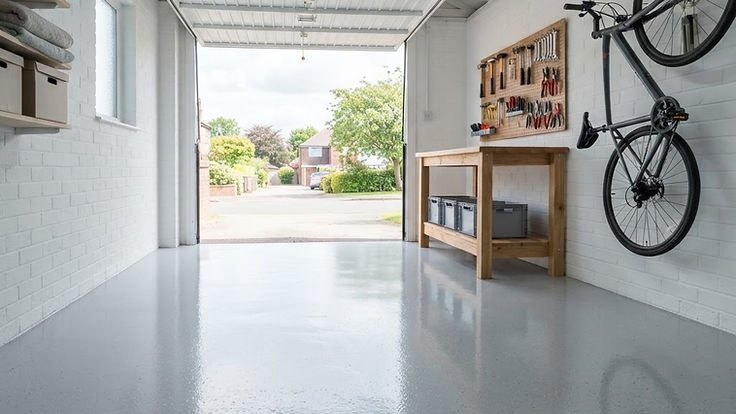
A cracked, stained or sinking garage floor is more than an eyesore. It can let in damp, trip you up and make it impossible to turn the garage into the gym, workshop or home office you've been dreaming of. But before you book a contractor to dig it all out, it's worth knowing what replacing a garage floor really costs, and whether you need to replace it at all.
In this guide I'll break down the cost of replacing a garage floor in both the UK and the US, with prices per square metre and per square foot, totals for single, double and larger garages, and every cheaper alternative from crack repair to resin coatings. You'll also find the signs that mean a floor needs replacing, the hidden costs most guides leave out, how long the work takes and how to save money. Every figure is linked to its source so you can check it.
Garage Floor Replacement Cost at a Glance
| UK | US | |
|---|---|---|
| Full replacement, per unit | About £105 to £220 per m² (breaking out plus a new slab) | $6 to $12+ per sq ft |
| Single or one-car garage | Roughly £1,800 to £4,600 | Roughly $1,440 to $2,880 |
| Double or two-car garage | Roughly £3,500 to £8,900 | $2,400 to $6,900+ |
| Resin or epoxy coating instead | £1,500 to £3,000 (single), £2,500 to £5,400 (double) | $4 to $10 per sq ft |
| Typical time | About a week of work and curing before you drive on it | About a week of work and curing before you drive on it |
Prices vary with location, access, slab thickness and the condition of the ground underneath, so always get at least three written quotes. Read on for where each figure comes from.
Repair or Replace? The Signs to Look For
Most garage floors don't need replacing. Angi suggests replacement is worth considering when the concrete is more than 20 years old, the cracks are long, deep or wide, or there are sinking slab or drainage problems. If the floor is younger and the damage is limited to individual cracks, a repair is usually enough. Angi also notes that attached garages tend to have more serious foundation issues than detached ones.
| What you see | What it usually means | Typical fix |
|---|---|---|
| Hairline cracks | Normal shrinkage as concrete cures | Seal the cracks |
| Surface flaking, pitting or dusting | A worn or weak top layer | Resurface or coat |
| Oil and tyre stains | Cosmetic only | Clean, then seal or coat |
| One section sunk or tilted | Soil settling underneath | Lift and level the slab |
| Wide cracks with one side higher | Movement in the ground or slab | Get a structural assessment |
| Water pooling or rising damp | Poor falls, drainage or no damp proof membrane | Often replacement |
| Large areas broken up | The slab has failed | Replacement |
If you're worried about movement or subsidence, get the floor checked before you spend money on a new surface. In the US, Angi puts a structural engineer's report at around $550. In the UK, a chartered structural engineer can assess it, and if subsidence is suspected, speak to your buildings insurer first.
UK Garage Floor Replacement Costs
Replacing a garage floor means two jobs: breaking out and removing the old concrete, then laying a new slab. Here are the published rates for each.
| Item | Typical UK cost | Source |
|---|---|---|
| Breaking out concrete up to 100mm thick | £45 to £60 per m² | BestBuilders |
| Breaking out concrete 100 to 200mm thick | £60 to £80 per m² | BestBuilders |
| Breaking out reinforced concrete | £75 to £90 per m² | BestBuilders |
| Skip for heavy rubble | £245 to £600, plus an overweight surcharge of £50 to £150 | BestBuilders |
| Grab lorry, per load | £180 to £350 | BestBuilders |
| New garage slab, installed | £60 to £140 per m² | MyBuilder |
| Reinforced slab | £90 to £120 per m² | MyBuilder |
Sources: BestBuilders concrete removal costs and MyBuilder concrete slab costs.
What that means for your garage
MyBuilder puts a typical single garage at 15 to 18m². A double garage is usually around 30 to 36m². Using the rates above, here's what a full replacement adds up to. These totals are my own estimates, calculated from the published rates, so treat them as a guide.
| Garage | Floor area | Break out (£45 to £80 per m²) | New slab (£60 to £140 per m²) | Waste removal | Estimated total |
|---|---|---|---|---|---|
| Single | 15 to 18m² | £675 to £1,440 | £900 to £2,520 | £180 to £600 | £1,800 to £4,600 |
| Double | 30 to 36m² | £1,350 to £2,880 | £1,800 to £5,040 | £350 to £1,000 | £3,500 to £8,900 |
The lower end assumes a thin, unreinforced slab, easy access and a simple new floor. The upper end covers thicker or reinforced concrete, tricky access and a stronger slab.
US Garage Floor Replacement Costs
According to Angi, the national average to replace a garage floor in 2026 is $4,300, with most homeowners spending between $2,400 and $11,200, or about $7 per square foot on average. Angi's figure includes different floor finishes, so it covers a wide range of projects.
For a straightforward concrete slab replacement, HomeGuide gives $6 to $12+ per square foot, and $2,400 to $6,900+ for a two-car garage.
| Garage | Typical size | Slab replacement at $6 to $12 per sq ft |
|---|---|---|
| One-car | 240 sq ft | $1,440 to $2,880 |
| Two-car | 400 to 576 sq ft | $2,400 to $6,900 |
| Three-car | About 600 to 864 sq ft | $3,600 to $10,400 |
The one-car and three-car totals are calculated from HomeGuide's per square foot rate. Larger garages, thicker slabs, reinforcement and difficult access all push the price up.
Cheaper Alternatives to Replacing a Garage Floor
If the slab itself is sound, you can transform it for a fraction of the cost of replacement.
UK options
| Option | Typical UK cost | Best for |
|---|---|---|
| Self-levelling compound | £10 to £20 per m² | Smoothing an uneven but solid floor before a finish |
| Bonded sand and cement screed | £20 to £40 per m² | Building up a worn or uneven surface |
| Resin or epoxy coating, installed | £30 to £150 per m²; £1,500 to £3,000 for a single garage and £2,500 to £5,400 for a double | A hard-wearing, easy-clean, stain-resistant finish |
| Grind and polish existing concrete | £40 to £80 per m² | A sleek, modern, industrial look |
| Microcement overlay | £70 to £150 per m² | A seamless designer finish for a converted garage |
Sources: Trade2Base for screed, levelling compound, polished concrete and microcement; MyBuilder for resin and epoxy.
US options
| Option | Typical US cost | Best for |
|---|---|---|
| Concrete sealing | $1 to $3 per sq ft | Protecting a sound floor from oil and damp |
| Minor crack repair | $200 to $1,000 | Hairline and small cracks |
| Rubber flooring | $1 to $2 per sq ft | Gyms, workshops and quick covering |
| Epoxy coating, installed | $4 to $10 per sq ft | A tough, glossy, easy-clean finish |
| Resurfacing a two-car garage | $1,200 to $3,000+ | A worn or flaking surface on a sound slab |
| Mudjacking a whole garage floor | $1,100 to $5,400+ | Lifting a sunken but intact slab |
Sources: HomeGuide, except rubber flooring from Angi.
What Affects the Cost of a New Garage Floor
- Size. The bigger the floor, the higher the total, although the price per square metre or square foot often falls slightly on larger jobs.
- Thickness and reinforcement. Thicker and reinforced slabs cost more to break out and more to lay.
- Access. If everything has to be barrowed through the house or a side gate rather than loaded straight onto a lorry, labour costs rise.
- Ground conditions. Soft or wet ground, tree roots or old drains under the slab add excavation and sub-base costs.
- Damp proofing and insulation. A damp proof membrane is cheap to add during replacement, but insulation adds depth and cost.
- Drainage. Correcting falls or adding a drainage channel at the door adds to the bill but stops water pooling.
- Minimum charges. Many trades charge a minimum for small jobs. MyBuilder notes minimum call-out charges of £500 to £800 for resin floors, and Trade2Base lists mobilisation charges for small screed jobs.
- The finish. A plain power-floated slab is the cheapest. Coatings, tiles or polishing add to the price.
Hidden Costs to Budget For
- Emptying the garage and storing your belongings, and finding somewhere else to park.
- A skip permit if the skip sits on the road. BestBuilders puts this at £30 to £80 per week, depending on your council.
- A structural or ground survey if there are signs of movement.
- Moving or protecting electrics, water pipes and the garage door.
- Raising or adjusting the garage door if the new floor sits at a different height.
- Making good the walls where the old slab met them.
Planning a Garage Conversion? Think About the Floor First
Many people replace a garage floor because they want to turn the garage into a room. If that's your plan, the floor is the most important part to get right.
In the UK, the Planning Portal advises that converting a garage into living space will normally require building regulations approval, even when planning permission isn't required. A habitable room typically needs a damp proof membrane, insulation and a floor level that works with the rest of the house, so a garage slab often needs to be raised, insulated and finished rather than simply replaced. Talk to your local building control team or an approved inspector before work starts. Planning permission may also be needed in some cases, such as listed buildings, conservation areas or where permitted development rights have been removed.
Once the floor is right, the fun part begins. A garage makes a brilliant home office, and my home office design ideas and Japandi office guides show how to make it calm and practical. If you're creating a self-contained annexe, my small studio apartment ideas will help you fit everything into one room. And for a games room, see my gaming room colour ideas.

Choosing the Right Floor Finish for How You Use Your Garage
| How you use the garage | Best floor finish | Why |
|---|---|---|
| Parking and storage | Sealed concrete or epoxy | Resists oil, tyre marks and damp |
| Workshop | Epoxy or polyaspartic coating | Tough, easy to sweep and resists chemicals |
| Home gym | Rubber tiles or mats over concrete | Absorbs impact and protects the slab |
| Utility or laundry area | Resin or tiles | Easy to clean and water resistant |
| Home office or studio | Insulated floor with engineered wood, vinyl or carpet | Warm and comfortable underfoot |
| Stylish multi-use space | Polished concrete or microcement | Sleek, durable and easy to style with rugs |
If you're decorating the walls too, our free wallpaper calculator shows how many rolls you'll need, and my guide to the best green paint colours is full of calm, earthy shades that suit a converted garage.
How Long Does It Take to Replace a Garage Floor?
| Stage | Typical time |
|---|---|
| Clearing the garage | A day, depending on how much you store |
| Breaking out and removing the old slab | One to two days for a typical garage |
| Preparing the sub-base and membrane | About a day |
| Pouring and finishing the new slab | About a day |
| Curing before light foot traffic | Usually a day or two |
| Curing before driving on it | Commonly around a week; check with your contractor |
| Full strength | Concrete is usually designed to reach its full strength at around 28 days |
Coatings take less time. MyBuilder says most residential resin floors take two to three days from start to finish, with foot traffic after 24 to 48 hours and a full chemical cure in around seven days. Angi notes that epoxy is typically applied in three coats, each needing about 24 hours. In the UK, remember that MyBuilder advises a minimum of 10°C for epoxy to cure, so a cold garage in winter may need to wait until spring.
DIY or Professional?
Replacing a slab is a job for professionals. Breaking out concrete is heavy, noisy and dusty work, and a new slab needs the right sub-base, membrane, levels and finishing to last. Mistakes are expensive to put right.
Coatings and repairs are more DIY-friendly. Sealing cracks, cleaning, sealing and painting a garage floor are realistic weekend jobs. Epoxy kits are available too, but the result depends on preparation. Angi warns that a DIY mistake can double the cost of the job, so if your floor is damp, dusty or flaking, a professional finish may be the better investment.
Before you coat any floor, check it for damp. A simple test is to tape a square of clear plastic sheet tightly to the floor and leave it for 24 hours. If moisture appears underneath, or the concrete darkens, deal with the damp before applying a coating.
How to Save Money on a New Garage Floor
- Repair rather than replace when the slab is sound. Fixing cracks and coating the floor can cost a fraction of a new slab.
- Get at least three written quotes that list breaking out, waste removal, sub-base, membrane, slab thickness and finish separately.
- Clear the garage yourself so you're not paying labour rates for moving boxes.
- Combine jobs. If you're also redoing a driveway, path or patio, one groundworks contractor can often do both for less.
- Choose the right season. Concrete and resin both work best in mild, dry weather, which can save on delays.
- Don't overspend on the finish. A sealed or painted floor is all most parking garages need. Save the premium finishes for a converted space.
- Reuse and upcycle. Fill your new garage with secondhand shelving and workbenches. My guide to upcycled furniture has lots of ideas.
Common Mistakes to Avoid
- Replacing the surface when the problem is underneath. A new coating won't fix a sinking slab or a drainage problem.
- Skipping the damp proof membrane on a new slab.
- Forgetting the falls. A garage floor should drain towards the door, not towards the house.
- Ignoring the door. A new floor at a different height can stop the garage door sealing or closing.
- Coating a damp or dirty floor, which can make the coating peel.
- Planning a conversion without building control, which can cause problems when you sell.
Frequently Asked Questions
How much does it cost to replace a garage floor?
In the UK, replacing a single garage floor typically costs roughly £1,800 to £4,600, and a double garage roughly £3,500 to £8,900, based on published rates for breaking out concrete and laying a new slab. In the US, Angi puts the national average at $4,300, and HomeGuide puts slab replacement at $6 to $12+ per square foot, or $2,400 to $6,900+ for a two-car garage.
Is it cheaper to resurface or replace a garage floor?
Resurfacing or coating is almost always cheaper, as long as the slab is sound. In the US, HomeGuide puts resurfacing a two-car garage at $1,200 to $3,000+. In the UK, a screed costs £20 to £40 per m², compared with around £105 to £220 per m² to break out and replace a slab.
How long does it take to replace a garage floor?
The work itself usually takes a few days, but the new concrete needs time to cure. Many contractors advise waiting around a week before driving on it, and concrete usually reaches its full design strength at around 28 days.
Can you pour new concrete over an old garage floor?
Sometimes. If the old slab is solid and stable, a bonded screed or concrete overlay can be laid on top. This raises the floor level, so check the garage door, the step into the house and the drainage first. A sinking or broken slab should be removed rather than covered.
What is the cheapest way to redo a garage floor?
Cleaning, repairing cracks and sealing or painting the concrete is the cheapest option. Rubber mats or interlocking tiles are another budget-friendly way to cover a tired floor, especially in a gym or workshop.
Do I need permission to replace a garage floor?
Replacing the floor of a garage you'll keep using as a garage doesn't usually need planning permission, but check if your home is listed or in a conservation area. In the UK, converting a garage into a habitable room will normally need building regulations approval, so contact your local building control team before you start.
How long does an epoxy garage floor last?
MyBuilder says a residential epoxy floor typically lasts 10 to 15 years, depending on preparation, traffic and how well it's looked after.
A Garage Floor That Works for You
The cost of replacing a garage floor depends far more on what's underneath than on the finish you choose. Check whether the slab is really failing, get a few detailed quotes, and if the concrete is sound, put the money into a great finish instead. And if you're turning the garage into a room you'll love spending time in, plan the floor, the light and the layout together from the start.
If you'd like help designing a garage conversion, home office or gym that flows beautifully from the rest of your home, you can book a one-hour online interior design consultation with me. For more outdoor and garden projects, see my guides to deck railing ideas and cheap garden fence ideas, or browse my decorating articles.
About the author
Magda Callery is a UK interior designer with more than 15 years' experience designing homes, pubs, restaurants and bars, and her expert commentary has featured in Homes & Gardens, The Mirror and The Spruce. Explore more of the decorating articles.
Continue reading


Deck Railing Ideas: 30 Stylish, Safe and Cheap Options
30 deck railing ideas, from timber and black metal to cable, glass and cheap DIY options, plus US and UK safety rules, a material comparison and maintenance tips.


Colour Psychology of Grey: What It Does to a Room
The colour psychology of grey explained by an interior designer: what the research really says, warm vs cool and light vs dark greys, and how to make grey feel calm, not cold.


Wimborne White Farrow and Ball: A Designer's Guide
Farrow & Ball Wimborne White No. 239 explained by an interior designer: undertone, how it looks in every light, how it compares with Pointing and All White, and what to pair it with.