
20 Cheap Garden Fence Ideas That Still Look Beautiful
Budget-friendly fence ideas for gardens and backyards, from pallet and bamboo fences to hog wire, hedges and climbers, plus a designer's tricks to make a cheap fence look expensive.
By Magda Callery, interior designer

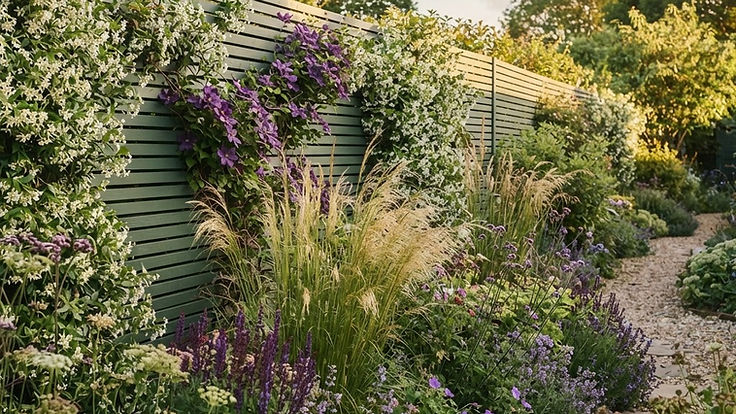
A new fence can be one of the most expensive parts of a garden makeover, but it doesn't have to be. Whether you need privacy from the neighbours, a boundary for the dog or simply a prettier backdrop for your planting, there are plenty of cheap garden fence ideas that look far more expensive than they are.
As an interior designer, I think of the garden as another room, and the fence as its walls. The same principles apply: choose a material that suits the style of your home, keep the palette cohesive and let texture do the work. In this guide I'll share 20 budget fence ideas for gardens and backyards, how they compare on cost and lifespan, and the tricks that make a cheap fence look beautiful.
Before You Start: 5 Things to Check
A little planning stops a cheap fence becoming an expensive mistake.
- Know your boundary. Check your property deeds or plot plan so you know exactly where your land ends and who is responsible for each boundary.
- Check the height rules. In England, you can usually put up a fence up to 2 metres high without planning permission, or 1 metre next to a road or a footpath beside a road. In the US, rules vary by city and many homeowners' associations (HOAs) have their own, so check local codes before you build. Listed buildings, conservation areas and HOA communities often have extra restrictions.
- Call before you dig (US). In the United States, call 811 a few days before digging post holes so underground utility lines can be marked.
- Talk to your neighbours. It's courteous, and they may even share the cost. Traditionally the "good side" of a fence faces outwards towards the neighbour or the street.
- Think about cost per year, not just the price tag. A fence that lasts 20 years can be cheaper overall than one you replace every five.
20 Cheap Garden Fence Ideas
1. Pallet fence
Wooden pallets are often free from local businesses and builders' merchants. Stand them upright between posts, sand them, and paint or stain them for a rustic fence that costs very little. Look for pallets stamped "HT" (heat treated) rather than "MB" (methyl bromide, a chemical treatment), and wear gloves when dismantling them. It's one of the best examples of the creative reuse I love in upcycled furniture and interior design.
2. Bamboo screening rolls
Bamboo rolls are inexpensive, quick to install and instantly soften a boundary. Fix them to an existing chain link or wire fence, or to simple posts and rails. They bring a calm, natural feel that suits Japanese-inspired gardens, a look I explore in my guide to Japanese house design.
3. Reed or brushwood screening
Like bamboo, reed and brushwood screening comes in rolls that can be fixed over an old fence or onto wires. It's one of the cheapest ways to add instant privacy, though it typically lasts only a few years.
4. Willow or hazel hurdles
Woven willow and hazel hurdles are a traditional country craft. Panels are more expensive than rolls, but they're beautiful, eco-friendly and need no paint. They're perfect for cottage gardens and for screening vegetable beds.
5. Hog wire or cattle panel fence
Welded wire livestock panels in a simple timber frame create a modern farmhouse fence that's affordable, sturdy and see-through, so it doesn't block light or views. It's a hugely popular backyard fence in the US and works well as a support for climbing plants.
6. Chicken wire or welded wire with timber posts
For a vegetable garden or to keep pets in, wire mesh stapled to timber posts is about as cheap as fencing gets. Add a top rail for strength and a neater finish.
7. Chain link with privacy slats
If you already have a chain link fence, slats woven through the mesh add privacy without replacing it. Choose a colour that blends with your planting, such as dark green, brown or charcoal.
8. Split rail fence
A split rail fence uses very little timber, so it's one of the cheapest ways to mark a large boundary. It won't give privacy or keep small pets in on its own, but it looks wonderful in rural and coastal settings and pairs well with wire mesh.
9. DIY picket fence
A low picket fence is a classic for front gardens. Building it yourself from standard timber boards and posts is much cheaper than buying ready-made panels, and you can choose the spacing and the shape of the tops.
10. Horizontal slatted fence
Horizontal slats look contemporary and expensive, but you can build one from inexpensive pressure-treated boards fixed to posts. Leaving small gaps between the slats saves timber, lets wind through and creates a lovely play of light and shadow.
11. Spaced board fence
If you need a taller fence, spacing vertical boards a few centimetres apart instead of overlapping them uses less timber while still giving partial privacy.
12. Corrugated metal panels
Corrugated steel sheets in a timber frame create an industrial look for relatively little money. They're durable and low maintenance, and they weather to an attractive patina over time. Cap the top edges and wear gloves, as cut edges are sharp.
13. Repurposed doors, shutters and windows
Old doors, shutters and window frames from salvage yards or online marketplaces make a quirky, characterful fence or screen. Paint them in one colour to make a mismatched collection look intentional.
14. Trellis panels
Trellis is cheaper than solid fence panels and, once covered with climbers, gives privacy that looks softer and more natural. Use it to add height on top of a low wall or existing fence, as long as you stay within the height limits.
15. A living fence
A hedge is the slowest option, but bare root hedging plants bought in winter are very affordable and a hedge is great for wildlife. Hawthorn, beech, hornbeam and privet are all popular choices. In the meantime, a simple wire fence can mark the boundary.
16. Climbers on wires
Rather than building a solid fence, run tensioned wires between posts and grow fast climbing plants such as jasmine, clematis, honeysuckle or ivy. It's cheap, beautiful and gets better every year.
17. Espalier fruit trees
Fruit trees trained flat against wires create a living fence that also gives you a harvest. Apples and pears are classic choices. It takes a few years to establish, but the plants themselves are inexpensive.
18. Repurposed scaffold boards
Reclaimed scaffold boards are thick, chunky and full of character. They can often be bought cheaply from reclamation yards and make a sturdy, rustic horizontal fence or raised bed edging.
19. Plant a "fence" of tall grasses or bamboo in planters
For a terrace, balcony or patio where you can't dig post holes, a row of large planters with tall grasses, bamboo or shrubs makes a movable green screen.
20. Refresh the fence you already have
The cheapest fence is the one you already own. Replace a few broken boards, straighten the posts and give it a coat of paint or stain, and it can look brand new. Dark colours such as charcoal, black or deep green make planting stand out and help a fence recede, while soft sage or warm grey give a lighter feel. My guide to choosing the perfect colour palette works outdoors as well as in.
Cheap Fence Ideas Compared
Prices vary widely by country, region and supplier, so here's a simple guide to how the options compare.
| Fence idea | Relative cost | Privacy | Typical lifespan | DIY difficulty |
|---|---|---|---|---|
| Pallet fence | Very low | Medium | Short to medium | Easy |
| Bamboo or reed rolls | Very low | High | Short | Very easy |
| Chicken or welded wire | Very low | Low | Medium | Easy |
| Split rail | Low | Low | Long | Medium |
| Hog wire or cattle panel | Low | Low | Long | Medium |
| Climbers on wires | Low | Grows over time | Long | Easy |
| Living hedge | Low | Grows over time | Very long | Easy |
| Trellis with climbers | Low to medium | Medium to high | Medium | Easy |
| Spaced or horizontal boards | Medium | Medium to high | Long | Medium |
| Corrugated metal | Medium | High | Long | Medium |
| Willow or hazel hurdles | Medium | High | Medium | Easy |
How to Make a Cheap Fence Look Expensive
These are the designer tricks that make a budget fence look high end:
- Stick to one colour. A consistent colour across the fence, shed and garden furniture makes everything look considered.
- Paint it dark. Charcoal, black and deep green make plants pop and help the boundary disappear into the background.
- Add a top rail or capping. A simple timber cap gives any fence a finished, custom look.
- Mix materials. Combine timber with wire, or bamboo with a sturdy timber frame.
- Layer planting in front. Climbers, tall grasses and shrubs soften the fence and add depth, just as plants do indoors. My guide to decorating with fresh flowers has more ideas for bringing colour and texture into your space.
- Light it. Solar spotlights or festoon lights along the fence turn it into a feature after dark.
- Hang things on it. Mirrors designed for outdoor use, planters, outdoor art or a potting bench make a plain fence feel like a garden wall.
Tips to Make Your Fence Last Longer
- Get the posts right. Posts take the most strain. Use posts rated for ground contact, set them in concrete or use metal post supports, and consider concrete posts and gravel boards for timber panels in the UK.
- Keep timber off the soil. A gravel board or gap at the bottom stops rot.
- Treat timber every few years with a stain or preservative.
- Cut back climbers and vegetation so the fence can dry out after rain.
- Check after storms and fix loose boards before they become bigger problems.
Frequently Asked Questions
What is the cheapest type of garden fence?
Wire mesh on timber posts, reed or bamboo screening rolls and pallet fences are usually the cheapest options. For the lowest cost over time, a hedge or climbers on wires can't be beaten, although they take a while to grow.
What is the cheapest way to get privacy in a garden?
Bamboo, reed or brushwood screening fixed to an existing fence or simple posts is the quickest and cheapest way to add privacy. Trellis panels with fast-growing climbers and tall plants in planters are attractive alternatives.
Is it cheaper to build a fence yourself?
Usually, yes, as labour can be a large part of the cost of a new fence. Simple designs such as wire, pallet, split rail and screening rolls are well within reach for confident DIYers. For tall fences, sloping gardens or concrete posts, a professional may be worth it.
How can I cover an ugly fence cheaply?
Paint or stain it in a dark colour, fix bamboo or reed screening over it, add trellis and climbers, or hang planters and outdoor mirrors on it. Layering planting in front of the fence also hides a multitude of sins.
Do I need permission to put up a fence?
In England, you usually don't need planning permission for a fence up to 2 metres high, or 1 metre next to a road, unless your home is listed or there are other restrictions. In the US, rules depend on your city, county and any HOA, so always check local codes before you build.
Which side of the fence should face my neighbour?
By convention, the "good side" with no visible posts or rails faces outwards towards your neighbour or the street. It's not a legal requirement everywhere, but it's good practice and keeps the peace.
Create a Garden You Love
A beautiful boundary doesn't need a big budget. Choose a material that suits your home, keep the colour consistent, and let planting and lighting do the rest.
Your garden is an extension of your home, so the same design thinking applies outside as in. If you'd like help creating a cohesive look from the inside out, you can book a one-hour online interior design consultation with me, and you'll find more ideas in my decorating articles.
About the author
Magda Callery is a UK interior designer with more than 15 years' experience designing homes, pubs, restaurants and bars, and her expert commentary has featured in Homes & Gardens, The Mirror and The Spruce. Explore more of the decorating articles.
Continue reading

Fall for These Interior Design Trends: Bringing Autumn into Your Home
As the air turns crisp, autumn invites a shift in our interiors: warm palettes, textured fabrics, hygge and a touch of the outdoors.

12 Cozy Autumn Interior Design Trends to Fall for in 2024
Twelve captivating design trends from top interior designers, from autumn-coloured textured throws to warm minimalism, fireplaces and fire pits.


Japanese House Design: 12 Key Elements and How to Bring Them Home
Calm, light and deeply connected to nature: the principles behind Japanese house design, from the genkan and shoji screens to the idea of ma, and how to borrow them for a British home.