
What Is Industrial Furniture Design? A Designer's Guide
What industrial furniture design is, where it came from, its key materials and design classics, the colours that suit it and how to use it at home without it feeling cold.
By Magda Callery, interior designer
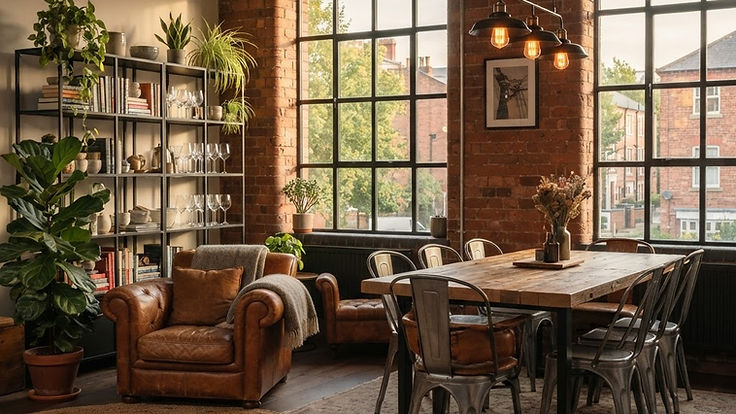
Exposed brick, steel-framed windows, a reclaimed wood table on black metal legs, a worn leather armchair and a row of enamel pendant lights. Industrial furniture design is one of the most recognisable looks in interiors, and one of the most enduring. But what exactly is it, where did it come from, and how do you use it at home without your living room feeling like a factory?
In this guide I'll explain what industrial furniture design is, its key characteristics and materials, the design classics that shaped it, how it compares with similar styles, the colours that suit it, how to use it room by room, what to look for when buying and how to keep it warm and welcoming.
What Is Industrial Furniture Design?
Industrial furniture design is a style inspired by factories, warehouses and workshops. It uses raw, honest materials such as steel, iron, reclaimed wood and leather, shows its construction openly through bolts, rivets and welds, and puts function before decoration.
Many of the most famous industrial pieces were originally made for working environments, such as metal chairs, workshop lamps, lockers and trolleys, and were later adopted for homes because they're tough, practical and full of character.
Key Characteristics of Industrial Furniture
| Characteristic | What it looks like |
|---|---|
| Raw materials | Steel, iron, reclaimed and distressed wood, leather, concrete |
| Visible construction | Exposed bolts, rivets, welds, pipe joints and metal frames |
| Function first | Simple, practical shapes with little ornament |
| Aged finishes | Patina, rust, scratches, worn paint and weathered wood |
| Mixed materials | Wood tops on metal bases, leather on steel frames |
| Utilitarian details | Castors, cranks, adjustable heights, drawers with metal pulls |
| Muted palette | Black, charcoal, grey, rust, brown and natural wood |
Where Did Industrial Design Come From?
Industrial style grew out of the furniture used in factories, workshops and offices in the late 19th and early 20th centuries. These pieces were built to be strong, mass-produced and easy to repair, so their makers used metal and timber and didn't hide the way they were put together.
The look moved into homes as old industrial buildings were converted into living spaces. In the second half of the 20th century, artists and creatives in cities such as New York began turning empty factories and warehouses into loft homes, keeping the brick, beams, pipes and big windows and filling them with salvaged furniture. Today, warehouse conversions and new build flats with exposed concrete and steel windows carry the same spirit. If you're interested in how industrial buildings shaped architecture, my guide to the types of architecture explores it further.
Three design classics with industrial roots
| Design | Story | Why it matters |
|---|---|---|
| Tolix metal chairs | Xavier Pauchard, who began as a roofer and zinc worker, was the first manufacturer of galvanised steel domestic goods in France and registered the Tolix name in 1927. Its A Chair sailed on the SS Normandie in 1935, according to Design Within Reach | The stackable metal café chair is now an industrial icon |
| Anglepoise lamp | Vehicle engineer George Carwardine developed his spring-balanced lamp in Bath, unveiling a 4-spring version by 1932 and the 3-spring Original 1227 in 1935, according to Anglepoise | Engineering turned into an enduring piece of design |
| Jieldé lamp | Jean-Louis Domecq, a workshop foreman in Lyon, designed sturdy, adjustable lamps for workstations, and launched Jieldé in the early 1950s, according to Pamono | A true workshop light that moved into homes |
Tolix-style metal chairs also appear in classic Parisian cafés; see my guide to French café interior design.
Industrial Furniture Materials
| Material | Where you'll see it | Character |
|---|---|---|
| Steel and iron | Table legs, chair frames, shelving, bed frames | Strong, slim, often black or raw |
| Galvanised steel | Chairs, stools, outdoor furniture | Silvery, weather-resistant |
| Reclaimed and distressed wood | Tabletops, sideboards, shelves | Warm, textured, full of history |
| Leather | Sofas, armchairs, stools, sling chairs | Ages beautifully into a soft patina |
| Concrete | Coffee tables, planters, worktops, floors | Cool, solid and sculptural |
| Glass | Cabinet doors, tabletops, pendant shades | Lightens heavy pieces |
| Copper and brass | Lighting, handles, accents | Adds warmth and a little glamour |
Key Industrial Furniture Pieces
- A wood and metal dining table. A thick reclaimed or oak top on black steel legs is the classic industrial table.
- Metal café chairs and bar stools. Stackable, hard-wearing and available in raw metal or bold colours.
- Open metal shelving. Black steel frames with wooden shelves display books, plants and objects.
- A leather sofa or armchair. A tan or cognac leather Chesterfield or club chair softens metal and wood.
- A metal and wood sideboard or TV unit. Often with sliding doors, mesh panels or drawers with metal pulls.
- A trunk or crate coffee table. Old trunks, crates or a wood top on castors make characterful coffee tables.
- Lockers and filing cabinets. Vintage metal lockers make brilliant storage in hallways, bedrooms and playrooms.
- Trolleys and carts. Metal trolleys on castors work as bar carts, side tables or kitchen storage.
- Industrial lighting. Enamel or metal pendants, cage lights, adjustable desk lamps and floor lamps with jointed arms.
Industrial vs Similar Styles
| Industrial | Modern industrial | Rustic | Scandinavian | |
|---|---|---|---|---|
| Feel | Raw, utilitarian, characterful | Cleaner, sleeker, more refined | Cosy, countryside, handmade | Light, calm, airy |
| Materials | Steel, iron, reclaimed wood, leather | Black steel, oak, glass, concrete | Rough timber, stone, natural fabrics | Pale wood, wool, linen |
| Finishes | Aged, distressed, patinated | Smooth, matt, powder-coated | Weathered and natural | Natural and simple |
| Colours | Charcoal, rust, brown, black | Black, white, grey, warm wood | Earthy browns, creams, greens | White, cream, soft grey |
| Best for | Lofts, warehouse flats, period homes with brick | New builds and modern flats | Cottages and farmhouses | Smaller, lighter homes |
Many homes today mix styles. Industrial pairs especially well with mid-century modern, Scandinavian and Japandi pieces. A soft, calm Japandi room, like the one in my Japandi office guide, can take one or two black metal pieces beautifully.
Colours That Suit Industrial Furniture
| Role | Colours | Where to use them |
|---|---|---|
| Base | Warm grey, greige, soft white, exposed brick | Walls and ceilings |
| Dark and moody | Charcoal, inky blue, black | Feature walls, kitchens, studies |
| Earthy accents | Rust, terracotta, tan, ochre | Leather, cushions, rugs, pots |
| Natural greens | Olive, deep green, sage | Plants, a painted wall, velvet |
| Metallics | Black steel, copper, brass, raw iron | Lighting, frames, handles |
Grey is the natural partner for industrial style, but choose a warm one so the room doesn't feel cold, as I explain in my guide to the colour psychology of grey. Terracotta and rust bring instant warmth; see my terracotta colour guide. For a dark, dramatic backdrop, try an inky blue like Dulux Ink Well, or a deep green from my guide to the best green paint colours.
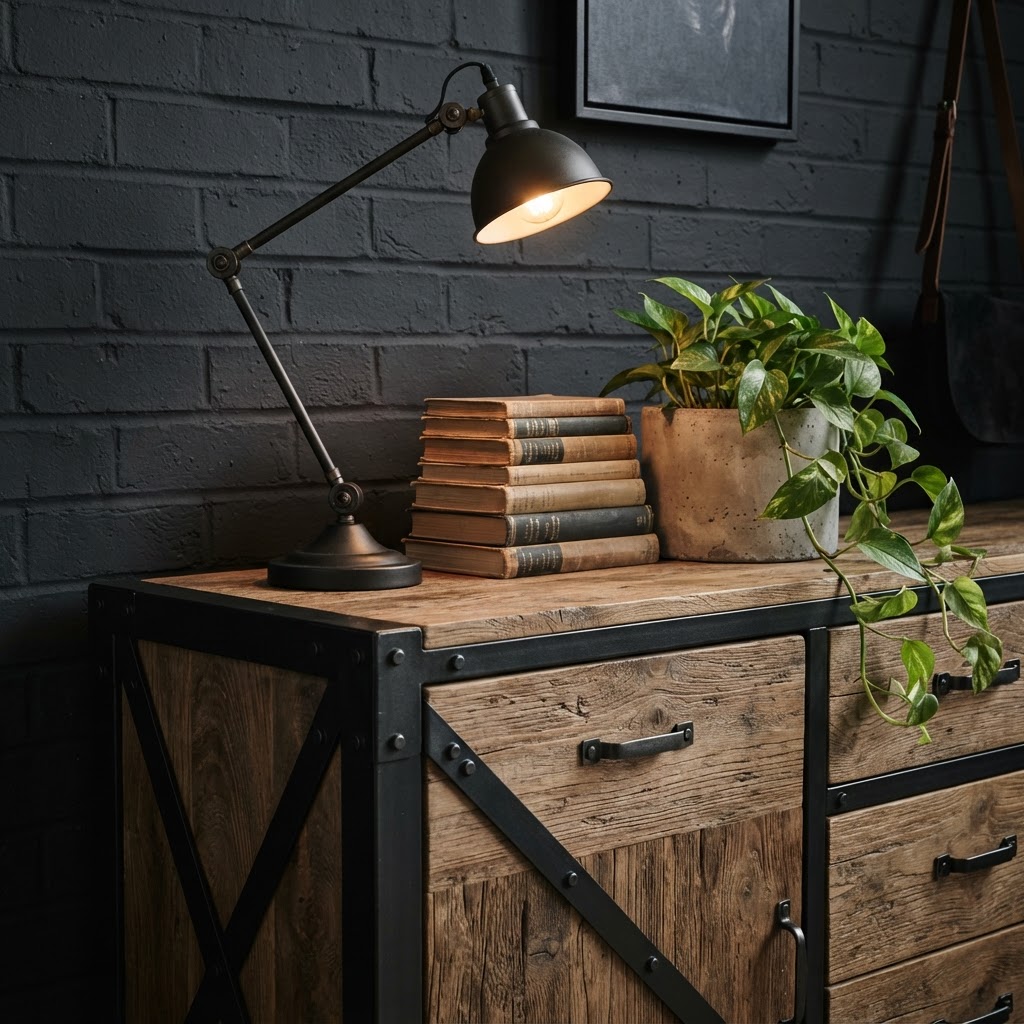
How to Use Industrial Furniture Room by Room
| Room | Ideas |
|---|---|
| Living room | A leather sofa, a metal and wood coffee table, open steel shelving, an arc floor lamp |
| Kitchen and dining | A reclaimed wood table on steel legs, metal chairs or bar stools, enamel pendants, open shelves |
| Home office | A steel and oak desk, an adjustable task lamp, a metal filing cabinet, pegboard storage |
| Bedroom | A black metal bed frame, a reclaimed wood bedside table, warm wall lights, soft linen bedding |
| Hallway | A metal coat rack, a bench with a steel frame, a vintage locker for shoes |
| Bathroom | Black taps and fittings, a metal framed mirror, a wood and steel vanity |
| Garage or workshop | Steel shelving, a sturdy workbench, a rolling tool trolley |
For more ideas for a workspace, see my home office design ideas. If you're turning a garage into a room, my guide to the cost of replacing a garage floor covers polished concrete and other industrial floor finishes. And for a games room with an industrial edge, see my gaming room colour ideas.
How to Stop Industrial Style Feeling Cold
The biggest mistake with industrial furniture is letting a room become hard and echoey. Balance metal and concrete with warmth.
- Add soft textiles. A large rug, linen curtains, wool throws and plenty of cushions. My rugs for living room ideas include a size chart.
- Use warm lighting. Choose warm white bulbs and layer pendants, wall lights and lamps rather than relying on one ceiling light.
- Bring in wood. Warm timber softens steel and adds natural texture.
- Add plants. Large leafy plants and trailing greenery soften hard lines.
- Mix in comfortable seating. A leather or velvet sofa, an upholstered armchair or a deep window seat.
- Include personal pieces. Art, books, ceramics and collected finds stop the room from looking like a showroom.
Buying Industrial Furniture: What to Look For
- Vintage or reproduction? Genuine vintage pieces show real wear, old fixings and makers' marks. Reproductions are cheaper and often more practical, but check the quality of welds and joints.
- Stability. Metal shelving and tall lockers should be secured to the wall, especially in homes with children.
- Finishes. Raw steel can rust and mark surfaces; look for a clear lacquer or powder-coated finish indoors, and galvanised or outdoor-rated metal for gardens.
- Edges. Check for sharp corners and rough welds, especially on reclaimed or salvaged pieces.
- Reclaimed wood. Look for signs of woodworm, damp or rot. If a piece smells musty, my guide on how to remove a musty smell from wood furniture explains how to freshen it.
- Upcycling. Old factory stools, trolleys and cabinets can be cleaned up and given a new life. My guide to upcycled furniture has lots of ideas.
Caring for Industrial Furniture
| Material | Care |
|---|---|
| Powder-coated metal | Wipe with a damp cloth and mild soap |
| Raw steel and iron | Keep dry; wax occasionally to protect against rust |
| Reclaimed wood | Dust regularly, re-oil or wax as needed, use coasters and mats |
| Leather | Dust, wipe and condition with a leather balm a few times a year |
| Concrete | Seal to prevent stains; wipe spills quickly |
Is Industrial Style Still in Fashion?
Yes, although it has evolved. The heavy, dark "factory" look has softened into what many people now call warm or soft industrial, with more natural wood, warm whites, greens and terracotta, plenty of textiles and curvier shapes alongside the steel and leather. Classic pieces such as metal café chairs, adjustable lamps and wood and steel tables remain timeless.
Frequently Asked Questions
What is industrial furniture design?
Industrial furniture design is a style inspired by factories, warehouses and workshops. It uses raw materials such as steel, iron, reclaimed wood and leather, shows its construction through exposed bolts, rivets and welds, and prioritises function over decoration.
What are the key features of industrial style furniture?
Raw and mixed materials, visible construction, simple practical shapes, aged or distressed finishes, utilitarian details such as castors and adjustable mechanisms, and a muted palette of black, grey, rust, brown and natural wood.
Where does industrial design come from?
It comes from furniture made for factories, workshops and offices in the late 19th and early 20th centuries, and became popular in homes as old industrial buildings were converted into loft apartments.
What colours go with industrial furniture?
Warm greys, soft whites, charcoal, black, rust, terracotta, tan and deep greens all suit industrial furniture, with black steel, copper and brass as metallic accents.
Can industrial furniture work in a small home?
Yes. Choose slim steel frames, glass or open shelving and lighter wood tones so pieces feel visually light, and use one or two statement industrial pieces rather than filling the room.
What is the difference between industrial and modern industrial?
Traditional industrial is raw and characterful, with aged finishes and reclaimed materials. Modern industrial is cleaner and sleeker, with smooth black steel, oak, glass and concrete.
How do you make industrial style feel cosy?
Balance metal and concrete with rugs, curtains, cushions, warm lighting, wood, plants and comfortable upholstered seating.
The Beauty of Honest Design
Industrial furniture design is about honest materials, practical shapes and pieces that get better with age. Choose a few good pieces, balance them with warmth and softness, and you'll have a home with real character that never goes out of style.
If you'd like help bringing industrial style into your home, or blending it with the rest of your interior, you can book a one-hour online interior design consultation with me. For more ideas, browse my interior design articles.
About the author
Magda Callery is a UK interior designer with more than 15 years' experience designing homes, pubs, restaurants and bars, and her expert commentary has featured in Homes & Gardens, The Mirror and The Spruce. Explore more of the interior design articles.
Continue reading

Baby Girl Nursery Ideas: 30 Rooms She'll Grow Into
30 baby girl nursery ideas from an interior designer: soft colour palettes beyond pink, wallpaper, furniture, lighting and storage, plus nursery safety and a room she'll grow into.


French Cafe Interior Design: Get the Parisian Look
How to bring French café interior design home, with the key elements, colours, a little history, 25 ideas for kitchens, nooks and gardens, and how to avoid a themed look.

Living Room Rug Ideas: 30 Ways to Choose and Style
30 rugs for living room ideas from an interior designer, with a rug size chart in cm and feet, the three classic layouts, materials compared and styling tips.