
How to Remove Musty Smell From Wood Furniture
A step-by-step guide to getting rid of a musty smell in old wood furniture and drawers, with the methods that work, what doesn't, mould safety and how to stop it coming back.
By Magda Callery, interior designer

You've found the perfect vintage chest of drawers, an inherited sideboard or a bargain wardrobe, but the moment you open a drawer, that damp, musty smell hits you. The good news is that in most cases you can get rid of it completely, without expensive products and without damaging the wood.
In this guide I'll explain what causes a musty smell in wooden furniture, how to check whether it's safe to treat, and a step-by-step method that works, from cleaning and airing to absorbing and, if needed, sealing the smell in. You'll also find a comparison of the most popular methods, what doesn't work, how to treat drawers, veneer and painted pieces, and how to stop the smell from coming back.
The Quick Answer
To remove a musty smell from wood furniture: empty it and take out the drawers, vacuum every surface, air it on a dry day, wipe it with a mild soap solution and then a diluted white vinegar solution, let it dry completely, and leave bowls of baking soda or activated charcoal inside for several days. If the smell remains in bare, unfinished wood, seal the inside with a clear dewaxed shellac.
| Step | What to do | How long |
|---|---|---|
| 1. Check | Look for mould, damp, pests or rot | 10 minutes |
| 2. Empty and vacuum | Remove drawers, contents and old liners; vacuum dust and debris | 20 minutes |
| 3. Air | Outside on a dry day, or in a well-ventilated room | A few hours to a day |
| 4. Clean | Mild soap solution, then diluted white vinegar | 30 minutes |
| 5. Dry | Completely, with drawers out and doors open | A day or more |
| 6. Absorb | Baking soda, activated charcoal or coffee grounds inside | Several days to a week |
| 7. Seal if needed | Clear dewaxed shellac on bare interior wood | A few hours plus drying |
What Causes a Musty Smell in Wood Furniture?
Wood is porous, so it soaks up smells from wherever it has been kept. That musty smell usually comes from one of these:
| Cause | Signs | What to do |
|---|---|---|
| Damp storage (garage, loft, shed, cellar) | General musty smell, slightly cool or damp feel | Clean, dry, air and absorb |
| Mildew or mould | Grey, white, green or black spots or fuzz, often inside drawers or on the back | Clean safely, dry thoroughly, then absorb |
| Old, unsealed wood inside drawers | Smell is strongest in drawers and carcass, not the outside | Clean, absorb, then seal with shellac |
| Smoke or cooking smells | Stale, smoky smell, yellowish film | Clean well, then absorb |
| Old paper, liners and contents | Smell comes from paper or fabric left inside | Remove and throw away liners |
| Mice or other pests | Droppings, nibbled edges, a sharp smell | Clean thoroughly with gloves, then seal |
Before You Start: Check for Mould and Stay Safe
If you can see mould, or the piece was stored somewhere very damp, take a few precautions.
- Work outside or in a well-ventilated space.
- Wear disposable gloves and a mask, and use disposable cloths, as Hounslow Council's damp and mould guidance advises.
- Take extra care if anyone in your home is more vulnerable. Hounslow Council notes that babies and young children, older people, pregnant people and those with asthma, allergies, eczema or long-term breathing conditions are more likely to be affected by mould.
- Check the structure. Press firmly on any soft or dark areas. Wood that's soft, crumbling or rotten, or chipboard that has swollen with water, is usually not worth saving.
If the mould is widespread, deep in upholstery or keeps coming back, it may be better to let the piece go.
How to Remove a Musty Smell From Wood Furniture, Step by Step
1. Empty it completely
Take out every drawer, shelf and loose part. Remove any old paper or fabric drawer liners and throw them away, as they often hold most of the smell.
2. Vacuum every surface
Use a soft brush attachment to vacuum inside and out, including corners, drawer runners, the back panel and underneath. This removes dust, spores and debris that hold odours. My guide on how to prevent dust in a room has more tips for keeping dust down afterwards.
3. Air it out
On a dry, breezy day, put the furniture and drawers outside in the shade for a few hours, or as long as a day. Fresh air and gentle daylight help clear musty smells. Avoid leaving antiques or fine finishes in hot direct sun for long, as strong sunlight can fade and dry out wood. If you can't take it outside, open windows and run a fan.
4. Clean with a mild soap solution
Mix a little washing up liquid in warm water. Wring a soft cloth out until it's just damp, never wet, and wipe every surface inside and out. Work with the grain, then wipe again with a cloth dampened in clean water.
5. Wipe with diluted white vinegar
White vinegar helps neutralise odours and is a popular choice for musty smells. Mix it with water, test it on a hidden spot first, then wipe the inside surfaces with a well wrung-out cloth. The vinegar smell fades as it dries. Don't soak the wood or use vinegar on delicate or damaged finishes.
6. Dry it thoroughly
This is the most important step. Leave drawers out and doors open until every surface is completely dry, ideally for at least a day in a warm, well-ventilated room. Any remaining damp will bring the smell straight back.
7. Absorb the remaining smell
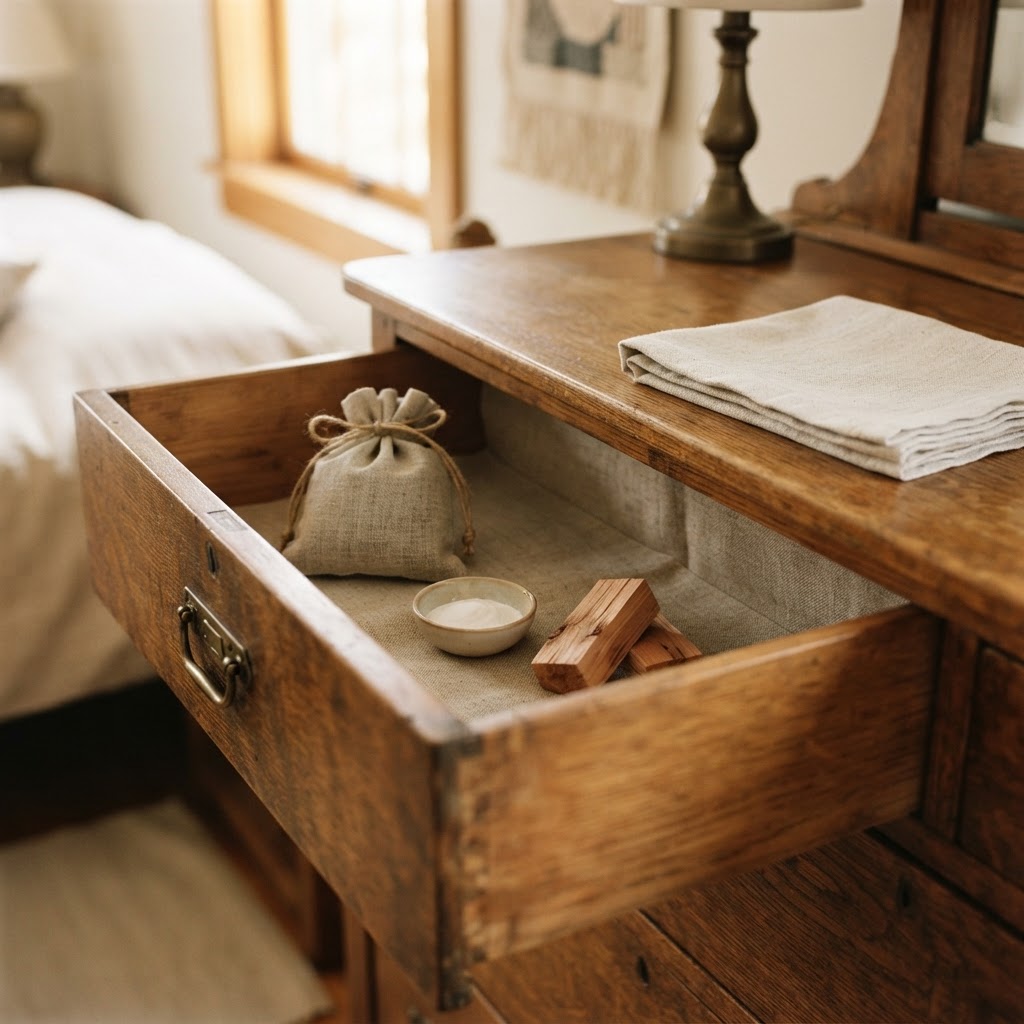
Put a shallow bowl of an odour absorber in each drawer and inside the cupboard, close it up and leave it for several days, or up to a week. Replace the absorber and repeat if needed.
- Bicarbonate of soda (baking soda) is cheap and easy to find.
- Activated charcoal is very effective and can be reused after drying it in the sun.
- Fresh, dry coffee grounds absorb odours but leave a coffee scent.
- Unscented clay cat litter in a breathable bag works well in large wardrobes.
- Crumpled newspaper absorbs moisture and smells; replace it every day or two.
8. Seal the smell in if it lingers
If the smell is still there after cleaning and absorbing, it's probably soaked deep into bare, unfinished wood inside drawers and the carcass. The answer is to seal it. Woodworker's Journal recommends brushing the inside of the drawers with a clear dewaxed shellac, such as Zinsser Bullseye SealCoat, which "sticks to almost anything" and helps lock in lingering smells. Because it's dewaxed, you can apply other finishes over it later. Apply it outside or in a well-ventilated room, and let it dry and air out fully before you use the drawers.
9. Freshen and line the drawers
Finish with new drawer liners, a cedar block or a sachet of dried lavender. These add a pleasant scent, but they work best on furniture that's already clean and dry, as they won't fix a damp problem on their own.
Musty Smell Removal Methods Compared
| Method | How well it works | Cost | Best for | Watch out for |
|---|---|---|---|---|
| Cleaning and drying | Essential first step | Very low | Every piece | Never soak the wood |
| Fresh air and daylight | Good for mild smells | Free | Drawers and carcasses | Avoid long periods in hot sun |
| White vinegar | Good | Very low | Inside surfaces | Test first; avoid delicate finishes |
| Baking soda | Good for mild smells | Very low | Drawers and cupboards | Takes several days |
| Activated charcoal | Very good | Low | Stubborn smells | Takes several days |
| Coffee grounds | Moderate | Very low | Small drawers | Leaves a coffee scent |
| Dewaxed shellac | Excellent for smells in bare wood | Low to medium | Drawer interiors and backs | Ventilate well while applying |
| Air fresheners and sprays | Poor | Low | Not recommended | Only mask the smell |
| Ozone generators | Not recommended | Medium | Not recommended | See below |
Why not use an ozone generator?
Ozone machines are sometimes sold for removing odours, but the US Environmental Protection Agency warns that ozone can damage the lungs, that it is "not effective at removing many odor-causing chemicals", and that it does not effectively remove mould. The EPA advises using proven methods instead: removing the source, ventilation and proven air cleaning. For furniture, that means cleaning, drying, absorbing and sealing.
How to Treat Different Types of Furniture
| Furniture | Best approach |
|---|---|
| Solid wood | Follow every step; seal bare interior wood with shellac if needed |
| Veneer | Use as little moisture as possible, as water can lift veneer; focus on airing and absorbing |
| Painted furniture | Clean gently, check for flaking paint, then absorb; repaint the inside with a stain-blocking primer if you're upcycling |
| Antiques | Be gentle, avoid vinegar on original finishes, and ask a restorer about valuable pieces |
| Pieces with fabric or upholstery | Vacuum, air and absorb; persistent musty upholstery often needs professional cleaning or replacing |
| Chipboard and MDF | Air and absorb, but swollen or mouldy boards are usually best replaced |
How to Stop the Musty Smell Coming Back
- Keep the room dry. Ventilate daily, especially in bedrooms and older homes, and use extractor fans in kitchens and bathrooms.
- Leave a gap behind furniture. Pushing wardrobes tight against cold external walls can trap condensation and lead to mould. A small gap lets air circulate.
- Don't store furniture in damp places such as garages, sheds or cellars without protection.
- Use moisture absorbers such as silica gel or a dehumidifier in damp rooms.
- Open drawers and doors regularly so the inside can breathe.
- Keep it clean. Dust and debris hold smells, so vacuum inside drawers now and again.
Bring Your Furniture Back to Life
Once the smell has gone, you're free to make the piece your own. A secondhand chest of drawers or sideboard can be painted, given new handles or lined with pretty wallpaper. My guide to upcycled furniture is full of ideas. A vintage chest makes a perfect changing station in a nursery, as I show in my baby girl nursery ideas, and old sideboards suit the warm, collected look of a French café interior. For a calm, organised home, see my guide to small details that make a space feel more organised.
Frequently Asked Questions
How do you get the musty smell out of old wooden furniture?
Empty and vacuum the piece, air it on a dry day, clean it with a mild soap solution and diluted white vinegar, dry it completely, and leave baking soda or activated charcoal inside for several days. If the smell lingers in bare wood, seal the inside with a clear dewaxed shellac.
How do you get a musty smell out of wooden drawers?
Remove the drawers and old liners, vacuum and clean them, dry them outside on a dry day, then leave a bowl of baking soda or activated charcoal in each drawer for several days. If the smell remains, brush the inside of the drawers with dewaxed shellac to seal it in.
Does vinegar remove musty smells from wood?
Diluted white vinegar can help neutralise musty smells on wood. Test it on a hidden spot first, use a well wrung-out cloth, and avoid soaking the wood or using it on delicate finishes.
Does baking soda get rid of musty smells?
Yes, baking soda absorbs musty smells well, especially in drawers and cupboards. Leave a shallow bowl inside for several days and replace it if needed. It works best after the furniture has been cleaned and dried.
How long does it take to get rid of a musty smell?
Mild smells often go within a few days of cleaning, airing and absorbing. Stubborn smells can take a week or two, and sometimes need sealing with shellac.
Is a musty smell in furniture harmful?
A musty smell often means damp, mildew or mould. Mould can affect health, particularly for babies and young children, older people, pregnant people and anyone with asthma, allergies or breathing problems, so clean it carefully with gloves and a mask, and speak to your GP if you're worried about symptoms.
When should I throw away musty furniture?
If the wood is rotten or soft, chipboard has swollen, the mould is widespread or keeps returning, or the smell remains after cleaning, drying, absorbing and sealing, the piece may not be worth saving.
Fresh, Clean and Ready to Love
Most musty furniture can be saved with patience: clean it, dry it thoroughly, let it air, absorb what's left and seal the wood if you need to. Then keep your home well ventilated so the smell doesn't come back.
If you'd like help working secondhand and vintage pieces into a beautiful scheme, you can book a one-hour online interior design consultation with me. For more ideas, browse my decorating articles.
About the author
Magda Callery is a UK interior designer with more than 15 years' experience designing homes, pubs, restaurants and bars, and her expert commentary has featured in Homes & Gardens, The Mirror and The Spruce. Explore more of the decorating articles.
Continue reading

Cost of Replacing a Garage Floor: 2026 Price Guide
What it really costs to replace a garage floor in the UK and US, with prices per square metre and square foot, cheaper alternatives, hidden costs and how long it takes.


Deck Railing Ideas: 30 Stylish, Safe and Cheap Options
30 deck railing ideas, from timber and black metal to cable, glass and cheap DIY options, plus US and UK safety rules, a material comparison and maintenance tips.

Colour Psychology of Grey: What It Does to a Room
The colour psychology of grey explained by an interior designer: what the research really says, warm vs cool and light vs dark greys, and how to make grey feel calm, not cold.