
Best Terrarium Plants: 19 Plants for Closed and Open Jars
The 19 best plants to grow inside a terrarium, from fittonia, moss and ferns for closed jars to succulents and air plants for open ones, plus how to make one.
By Magda Callery, interior designer and florist
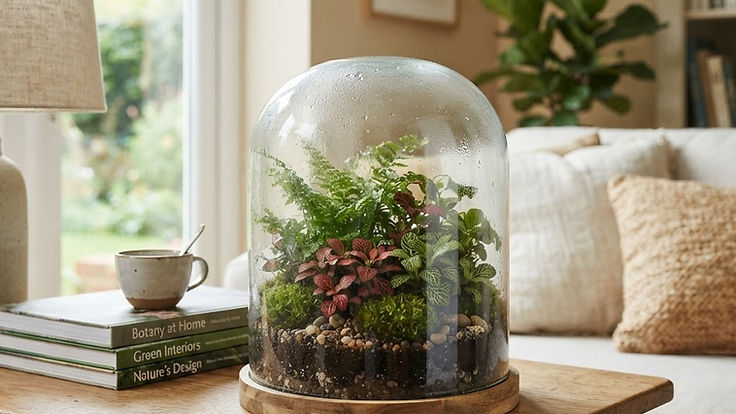
A terrarium is a tiny garden under glass, and it's one of the easiest ways to bring living green into a home without taking up space. A closed jar of ferns and moss on a bookshelf, a bowl of succulents on a desk or a cluster of air plants by a window can soften a room, add texture and give you something lovely to look after. The secret to a terrarium that thrives rather than rots is choosing the right plants for the right kind of terrarium.
In this guide I'll explain the difference between closed and open terrariums, share the 19 best plants to grow inside a terrarium, walk you through making one step by step, and explain how to care for it so it lasts for years.
The quick answer: for closed terrariums, choose small, slow-growing plants that love humidity, such as fittonia, mosses, selaginella, small peperomias, pileas, miniature ferns, creeping fig and baby's tears. For open terrariums, choose plants that like dry air and good light, such as succulents, cacti, lithops and air plants. Never mix the two groups in one container.
Closed vs Open Terrariums
| Closed terrarium | Open terrarium | |
|---|---|---|
| Container | Jar, bottle or cloche with a lid | Bowl, open vase or geometric frame |
| Humidity | High; water recycles as condensation | Low; air circulates freely |
| Best plants | Tropical and woodland plants, mosses, ferns | Succulents, cacti, air plants |
| Light | Bright, indirect light | Bright light, some direct sun for cacti and succulents |
| Watering | Rarely, sometimes only every few months | Sparingly, when the soil is completely dry |
| Look | Lush, green, mini rainforest | Sculptural, minimal, desert-like |
19 Best Plants for a Terrarium
Colourful foliage for closed terrariums
1. Fittonia (nerve plant). Fittonia is the classic terrarium plant, with leaves veined in pink, red or white. It loves humidity and wilts dramatically when dry, then perks up quickly after a drink, so it's easy to read.
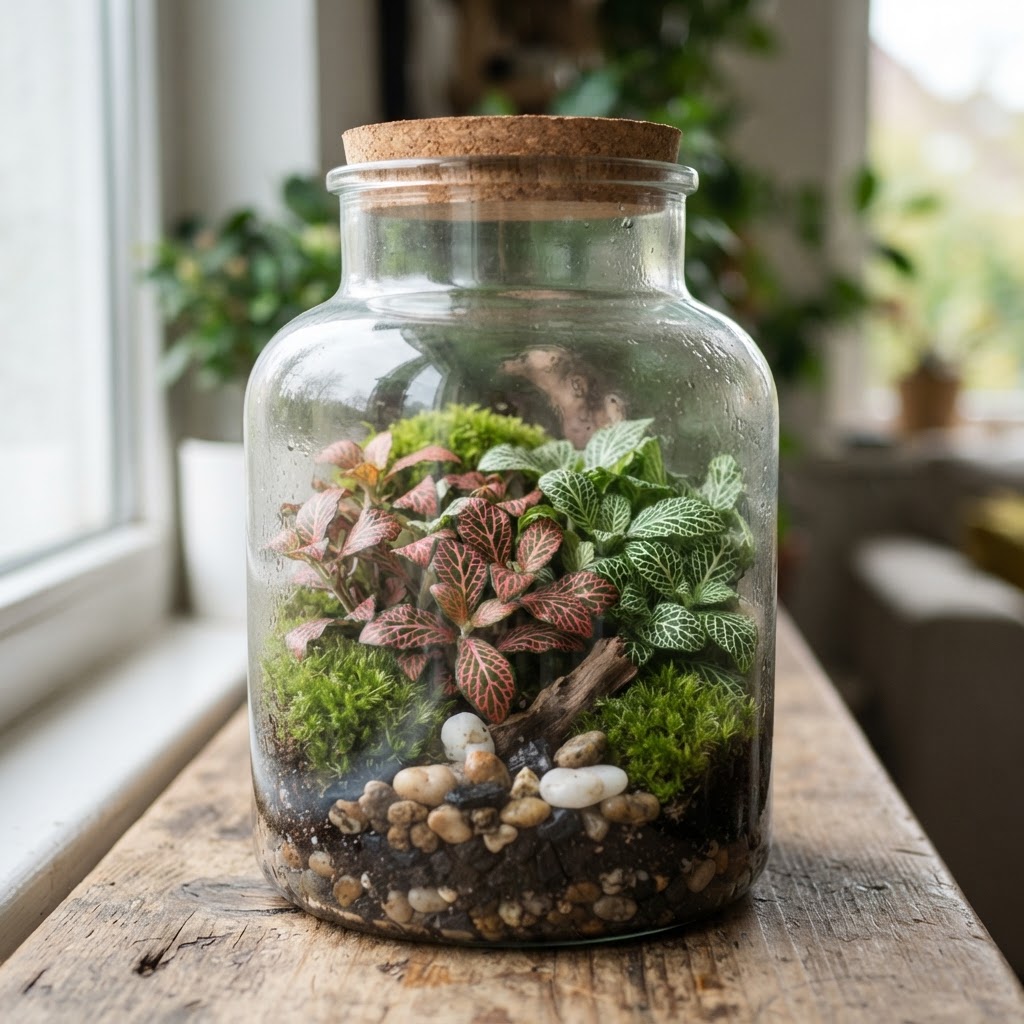
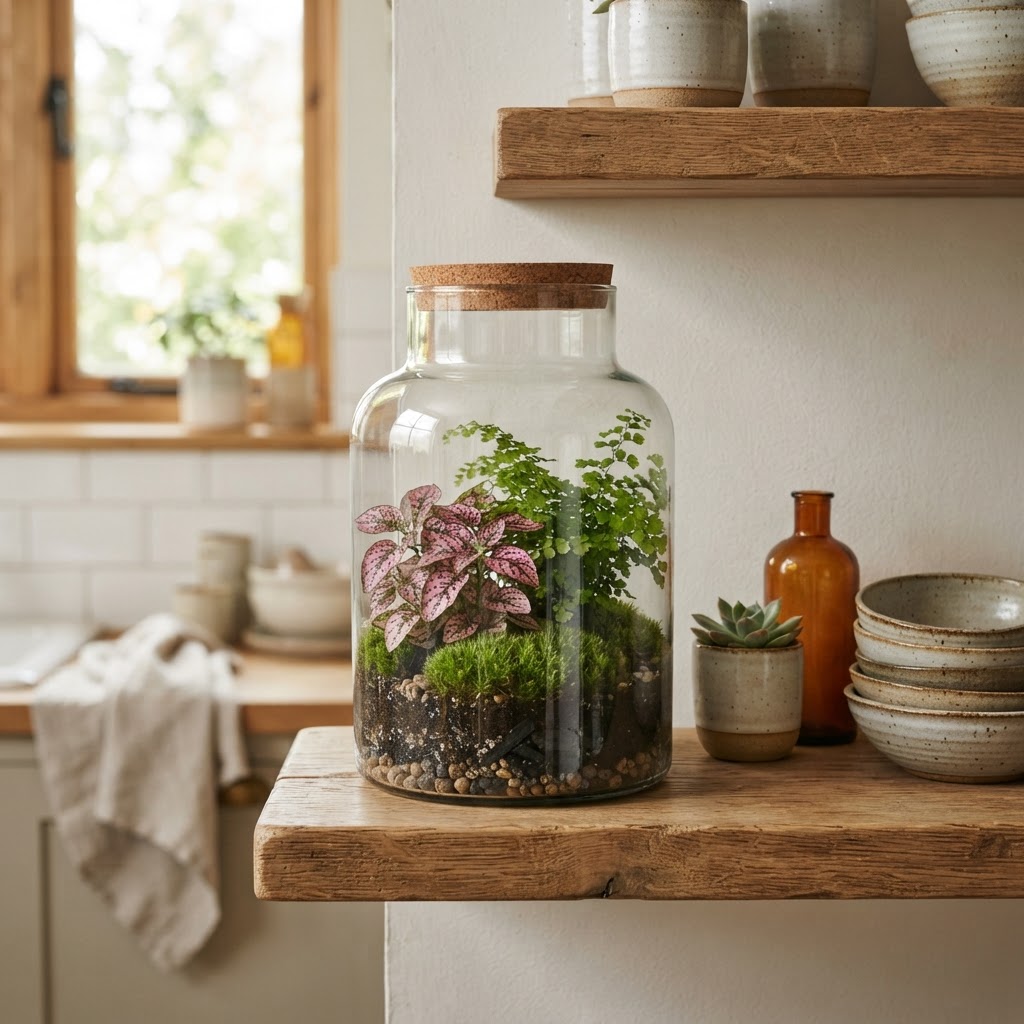
2. Polka dot plant (Hypoestes). Pink, white or red speckled leaves bring colour to a closed jar. It grows quickly, so pinch out the tips regularly to keep it small and bushy.
3. Small peperomias. Compact peperomias, such as Peperomia caperata and the trailing string of turtles (Peperomia prostrata), have beautifully textured leaves and stay small.
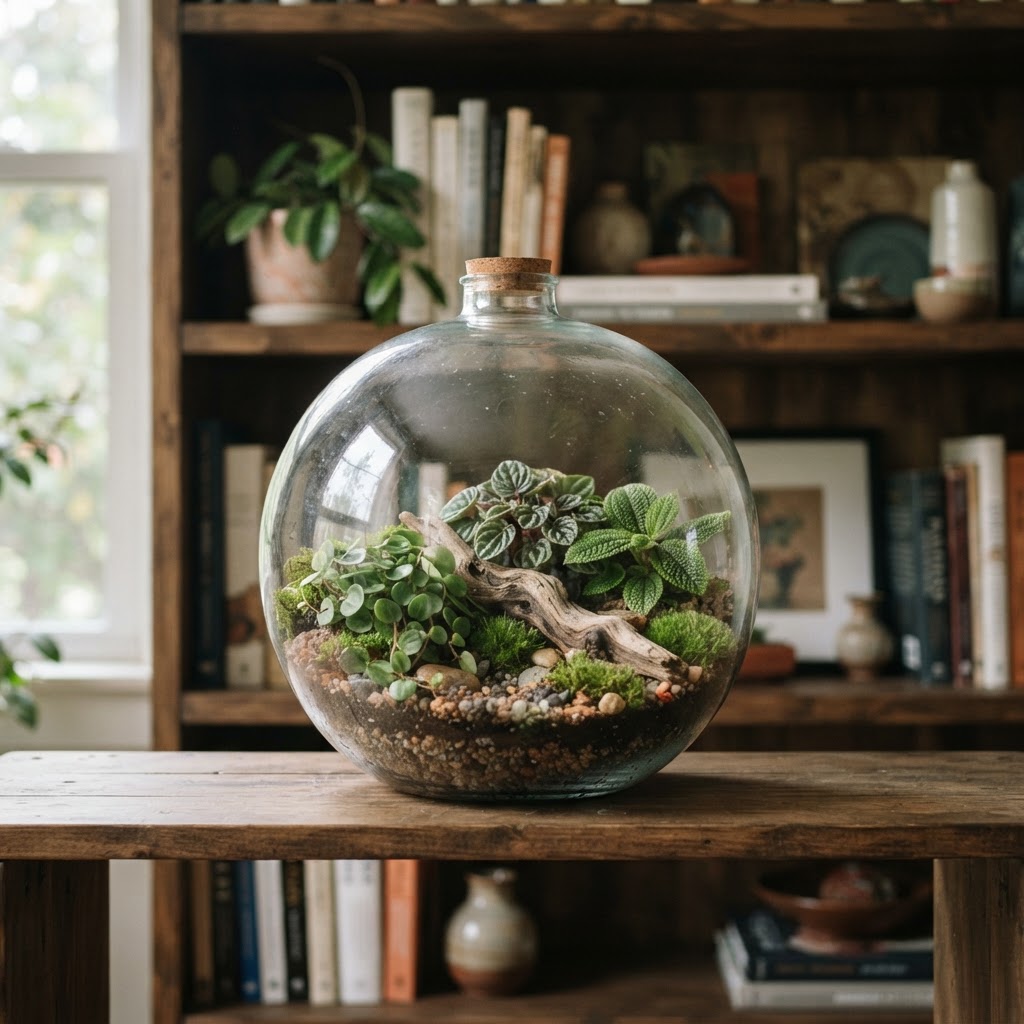
4. Pilea. Small, creeping pileas, such as Pilea glauca with its tiny silvery leaves or the quilted Pilea involucrata, fill gaps and spill gently over stones.
5. Earth star (Cryptanthus). These flat, star-shaped bromeliads come in pink, bronze and striped forms and look like little sculptures on the soil surface.
6. Jewel orchid (Ludisia discolor). Grown for its velvety, dark leaves with fine pink veins rather than its flowers, the jewel orchid loves the warm, humid conditions inside a large closed terrarium.
7. Miniature begonias. Small begonias with patterned or metallic leaves suit larger closed terrariums. Remove any fallen leaves quickly to prevent rot.
Mosses and ferns for closed terrariums
8. Cushion moss. Moss is the base of most closed terrariums. It forms a soft green carpet, holds moisture and makes everything else look natural.
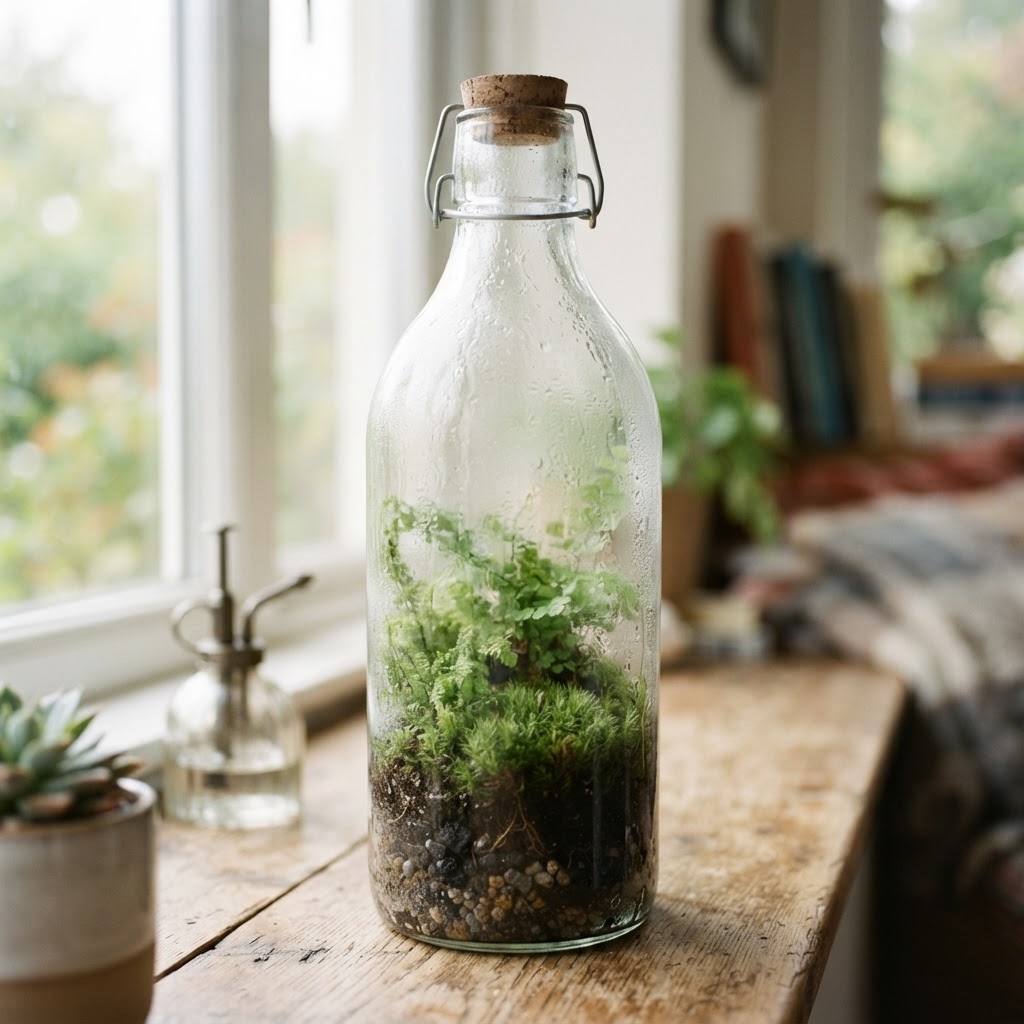
9. Selaginella (spike moss). Not a true moss, selaginella has feathery, fern-like fronds and thrives in the high humidity of a closed jar.
10. Lemon button fern. This compact fern with small, rounded fronds is one of the best ferns for terrariums, especially a large bottle or carboy.
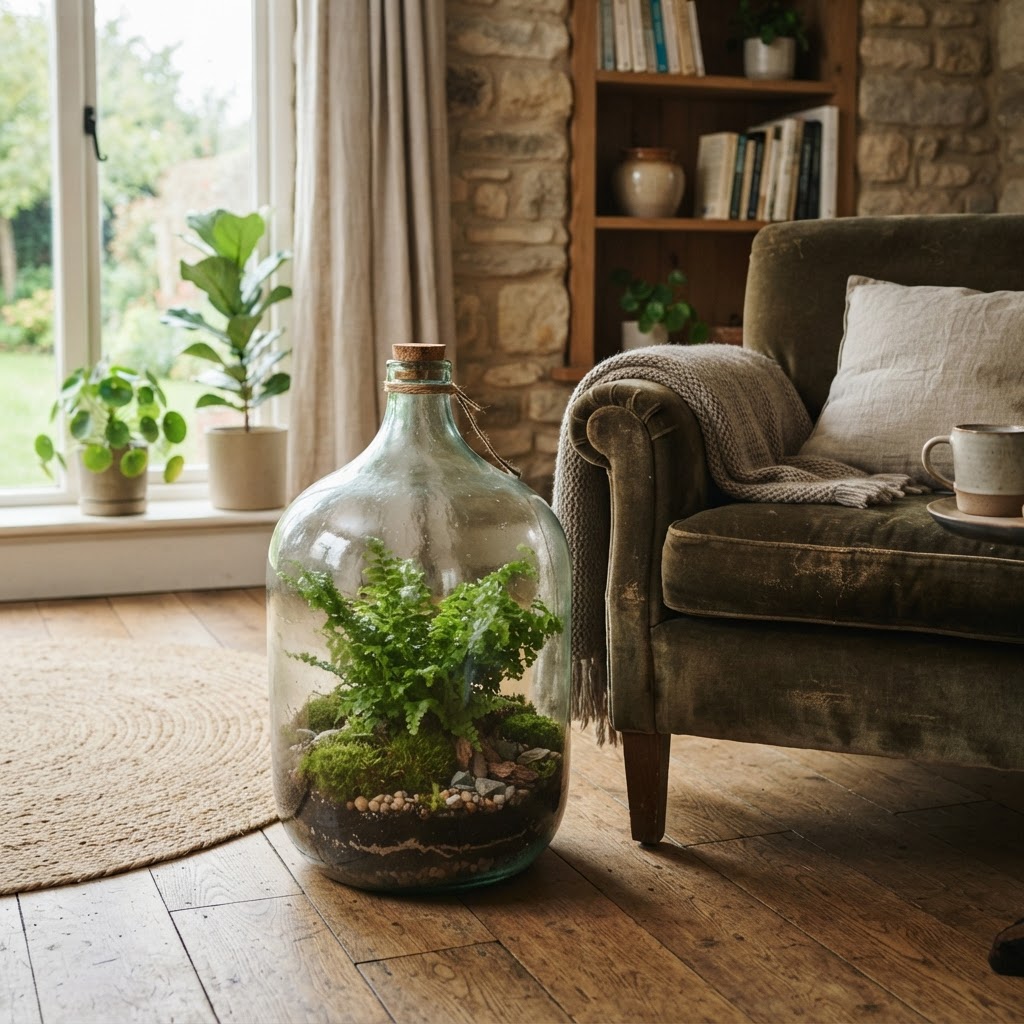
11. Miniature bird's nest fern. A small Asplenium nidus has glossy, bright green fronds that form a neat rosette, giving height to the centre of a terrarium.
12. Creeping fig (Ficus pumila). Tiny leaves on trailing stems climb over stones and up the glass. Trim it regularly so it doesn't take over.
13. Baby's tears (Soleirolia soleirolii). A mound of minute, bright green leaves that spreads like a cushion. It loves moisture and looks lovely between stones.
14. Prayer plant (Maranta). In a large closed terrarium, a small prayer plant adds patterned leaves that fold up at night. It needs space, so save it for a big container.
Plants for open terrariums
15. Small succulents. Echeveria, crassula and sedum form neat rosettes and come in soft greens, blues and pinks. They need an open container, bright light and very little water.
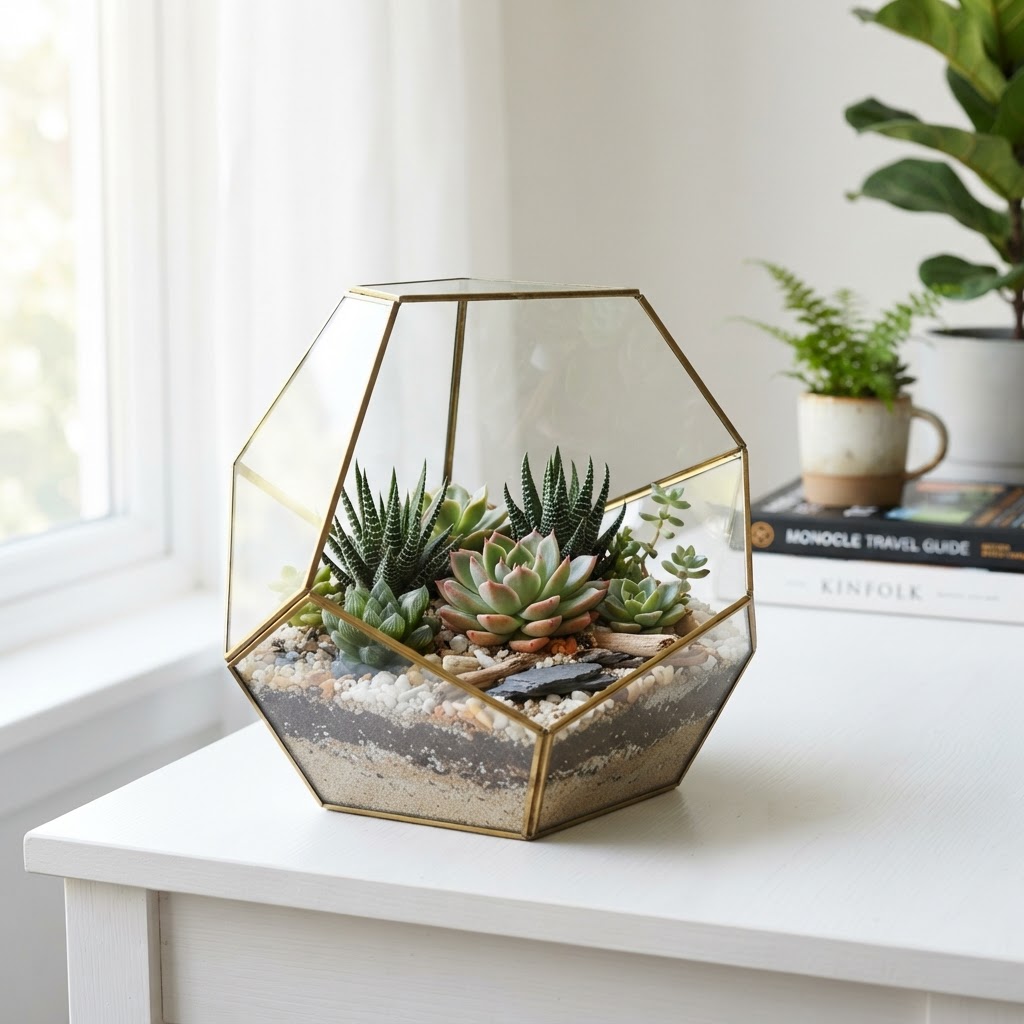
16. Haworthia. Striped, spiky haworthias tolerate a little less light than most succulents, which makes them ideal for an open terrarium on a desk.
17. Cacti. Small cacti look sculptural in an open bowl of sand and pebbles. They need the brightest spot you have and hardly any water.
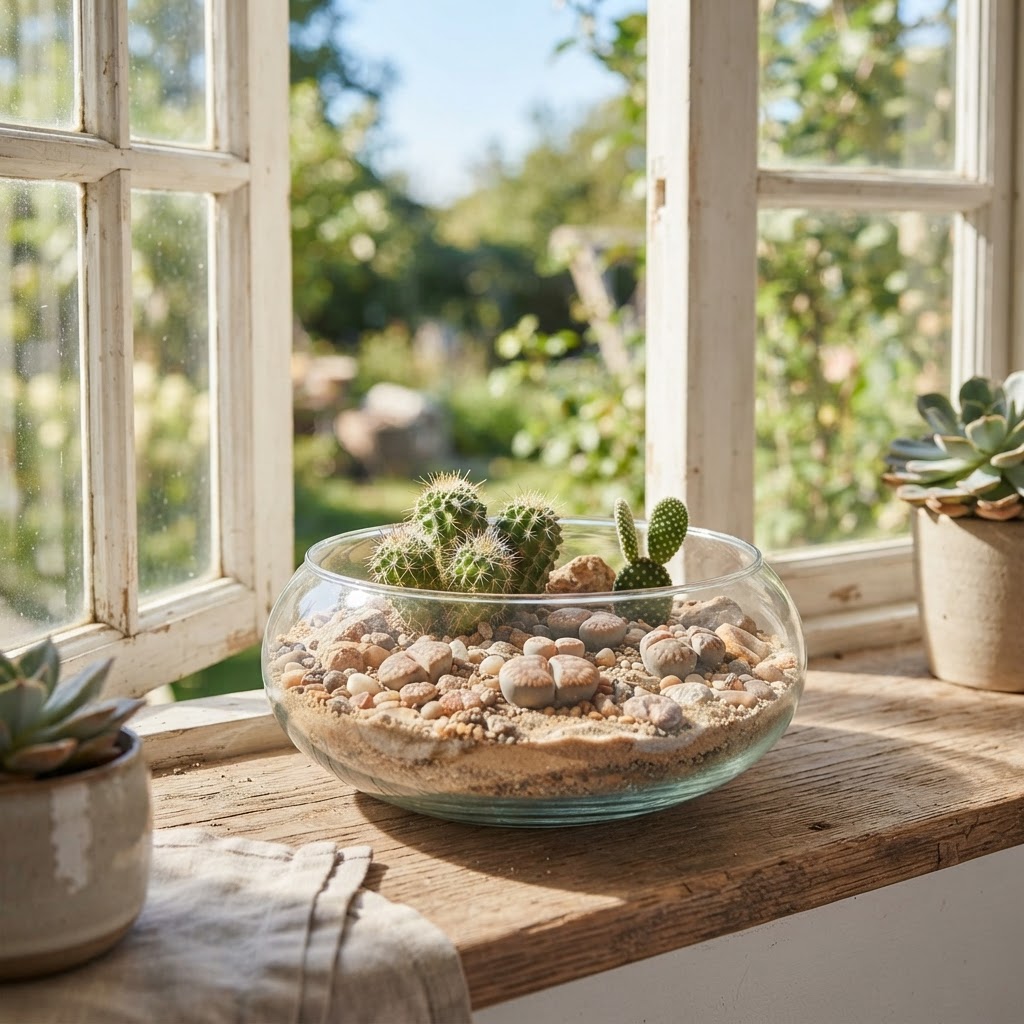
18. Lithops (living stones). These extraordinary pebble-like succulents blend into gravel and are perfect for a minimal open terrarium. Water them very rarely.
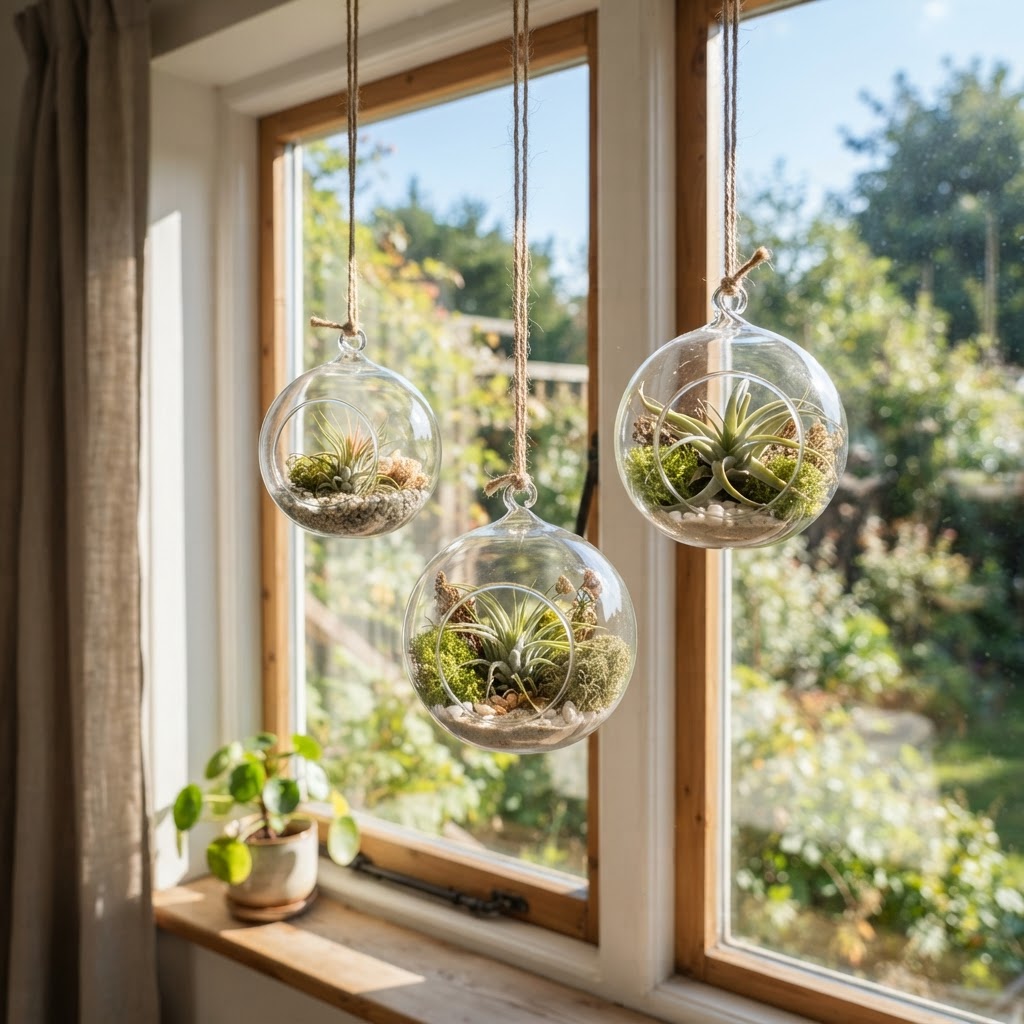
19. Air plants (Tillandsia). Air plants don't need soil at all. Rest them on moss or pebbles in open or hanging glass globes, and soak or mist them regularly.
How to Make a Terrarium
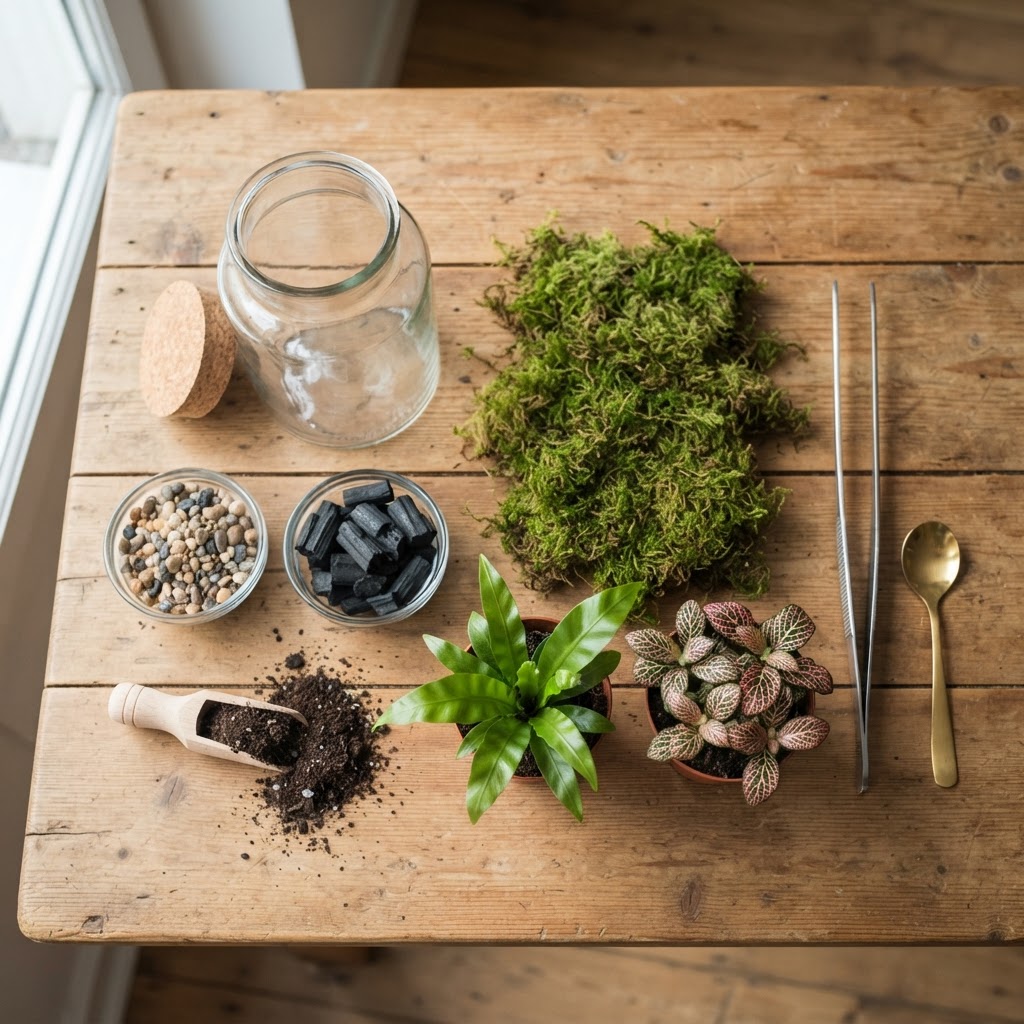
- Choose your container. A jar with a lid for a closed terrarium, or an open bowl for succulents and cacti. Make sure your hand, or long tweezers, can reach inside.
- Add a base layer. Many people add a layer of pebbles, but Penn State Extension's guide to creating a closed terrarium notes that "it is no longer thought that a layer of rocks improves drainage." Its advice is to mix a small handful of charcoal into the potting mix instead, and to water carefully.
- Add the potting mix. Use a light, low-fertility mix, with enough depth for the largest root ball. Use a gritty cactus mix for an open succulent terrarium.
- Plant from the back. Place the tallest plant first, then the smaller ones, leaving space between them to grow.
- Add moss, stones and wood. Press moss around the plants and add pebbles, bark or driftwood for a natural look.
- Water lightly. A gentle mist is often enough. It's easier to add water later than to take it away.
How to Care for a Terrarium
- Light. Place terrariums in bright, indirect light. Never put a closed terrarium in direct sun, because the glass magnifies the heat and cooks the plants. Open succulent terrariums need the brightest spot you have.
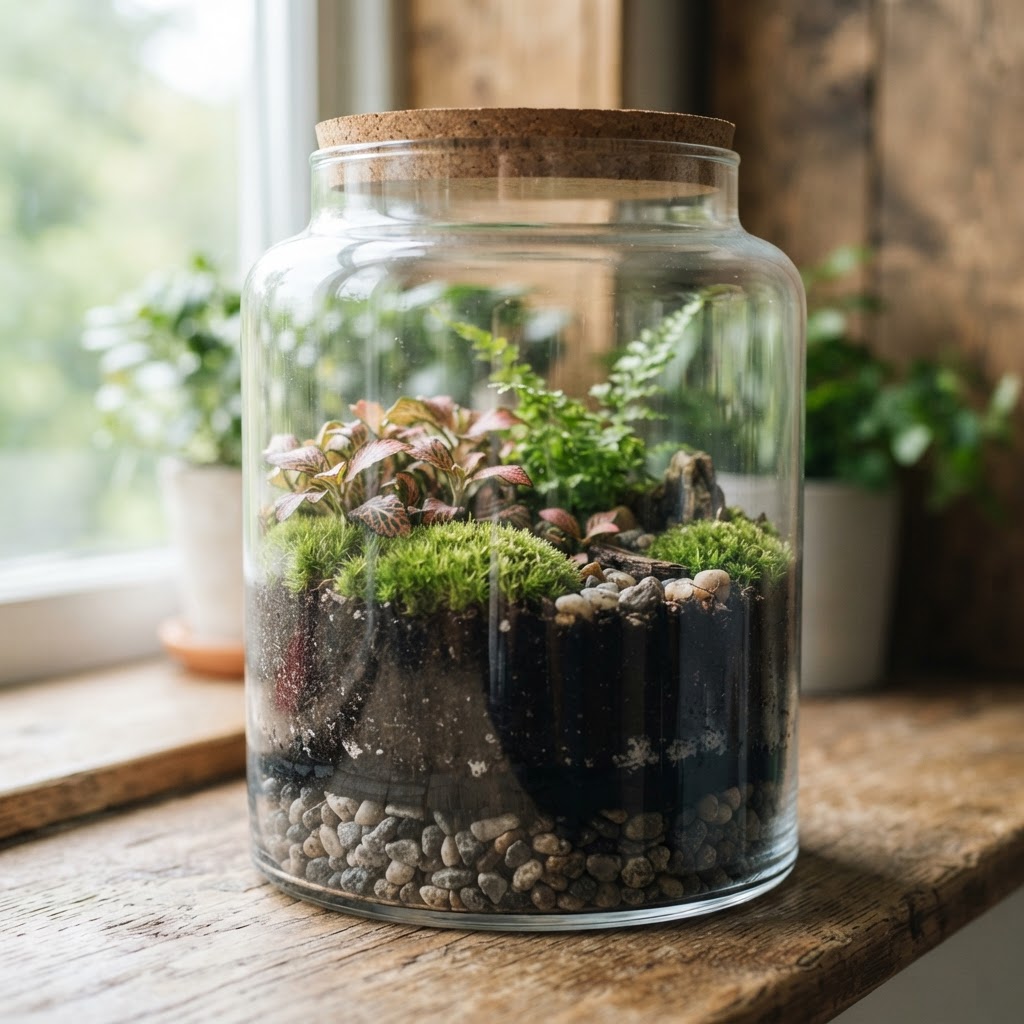
- Watering. A healthy closed terrarium produces condensation that runs back down into the soil. A light mist on the glass in the morning is ideal; if it's heavily fogged all day, remove the lid for a day or two.
- Pruning. Trim plants that touch the glass or crowd their neighbours, and remove yellowing leaves straight away.
- Mould. A little white mould sometimes appears in a new terrarium. Remove it, and give the terrarium more air for a few days.
- Cleaning. Wipe the glass inside and out so the plants get as much light as possible.
A Little History: The Wardian Case
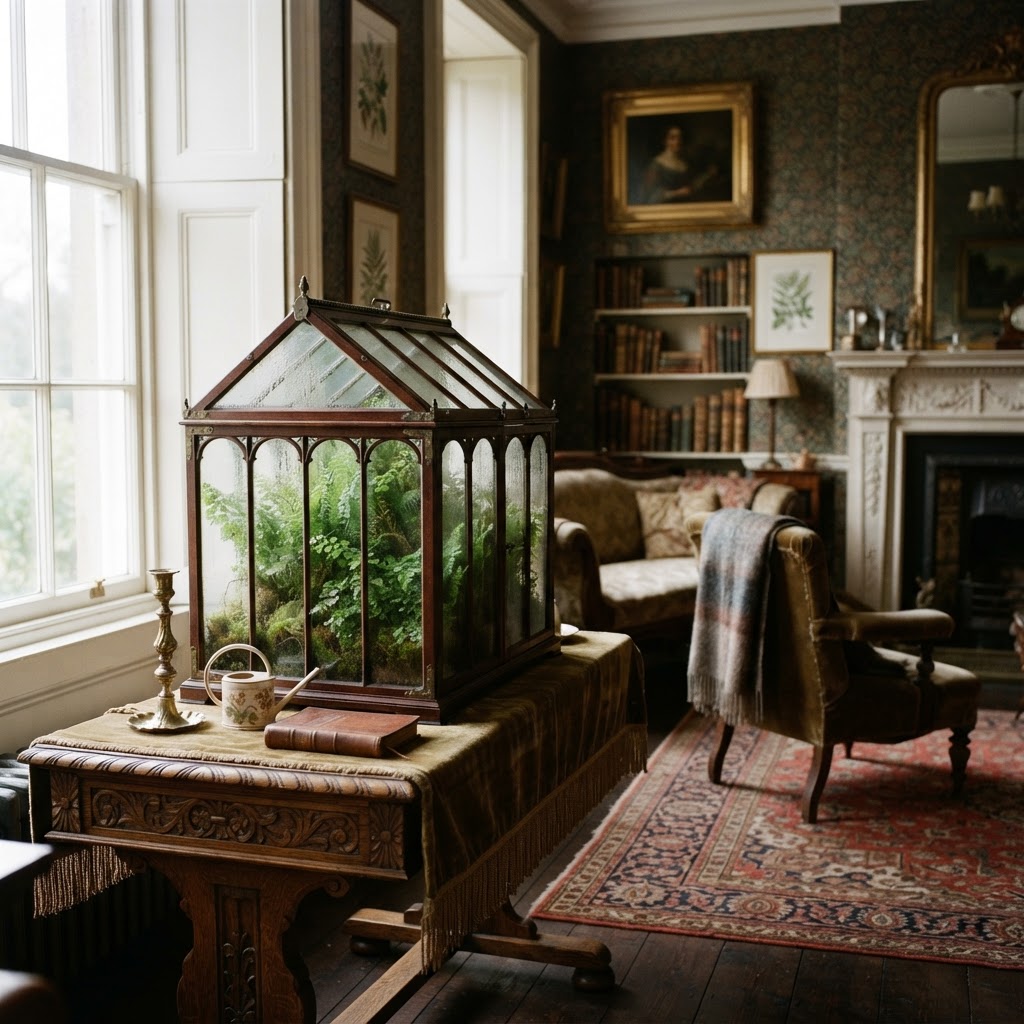
Terrariums began as a scientific accident. According to the Royal Botanic Gardens, Kew, Nathaniel Bagshaw Ward, "a medical doctor, rather than a botanist," made his "accidental discovery of a fern growing in a glass case, holding a cocoon of moths in 1829." His sealed glass boxes, known as Wardian cases, allowed living plants to survive long sea voyages for the first time, and they became fashionable features in Victorian drawing rooms.
Styling Terrariums at Home
- Group them. Three terrariums of different heights look more deliberate than one on its own.
- Use them on shelves. A closed jar brings life to a bookcase, especially among books and ceramics.
- Put one on your desk. A low succulent bowl or a small fern jar softens a home office, and suits a calm Japandi office perfectly.
- Make a centrepiece. A large cloche terrarium works beautifully on a coffee table or a console table behind a sofa.
- Use them in small spaces. Terrariums give you greenery without taking up floor space, which is ideal in a small studio apartment or a small living room.
Terrariums are a lovely partner to cut flowers, too. For seasonal displays, explore decorating with fresh flowers.
Common Mistakes to Avoid
| Mistake | Why it's a problem | What to do instead |
|---|---|---|
| Succulents in a closed jar | Humidity makes them rot | Use an open container for succulents and cacti |
| Direct sunlight on a closed terrarium | Overheats and scorches plants | Use bright, indirect light |
| Overwatering | Waterlogged soil and mould | Mist lightly and watch the condensation |
| Fast-growing plants | Quickly outgrow the glass | Choose small, slow-growing or dwarf plants |
| Overcrowding | Poor air flow and rot | Leave space between plants |
| Mixing dry and humid plants | One group always suffers | Group plants with the same needs |
Frequently Asked Questions
What plants are best inside a closed terrarium?
Fittonia, mosses, selaginella, small peperomias, pileas, lemon button fern, creeping fig and baby's tears all thrive in the humidity of a closed terrarium.
Can succulents go in a closed terrarium?
No. Succulents and cacti need dry air and good air flow, so they rot in a closed terrarium. Grow them in an open terrarium instead.
How often do you water a terrarium?
A closed terrarium may only need water every few months, when condensation stops forming or the soil looks dry. An open succulent terrarium needs a little water when the soil is completely dry.
How long do terrariums last?
A well-balanced closed terrarium can last for years, as long as you trim plants that outgrow the space and replace any that fade.
Do terrariums need sunlight?
They need bright light, but closed terrariums should be kept out of direct sun. Open terrariums with cacti and succulents can take some direct sun.
Do you need charcoal in a terrarium?
It's not essential, but a little charcoal mixed into the potting mix is commonly used to help keep a closed terrarium fresh.
What is the easiest terrarium plant?
Fittonia is one of the easiest for closed terrariums, and air plants are the easiest for open ones, because they don't need soil at all.
A Little Garden Under Glass
A terrarium is a small, living piece of nature that can brighten any room. Choose a closed jar for lush, humidity-loving plants or an open bowl for succulents and cacti, keep it in bright, indirect light, water sparingly, and it will reward you for years.
And if you'd like help bringing more life, texture and calm into your home, you can book a one-hour online interior design consultation with me.
About the author
Magda Callery is a UK interior designer and florist with more than 15 years' experience designing homes, pubs, restaurants and bars, and her expert commentary has featured in Homes & Gardens, The Mirror and The Spruce. Explore more of the flowers & garden articles.
Continue reading


Lily Flower Meaning: What Lilies Symbolize by Color
What lilies symbolise, the meaning of white, pink, red, yellow, orange and purple lilies, lily types from Easter to calla, and the best lilies for every occasion.

Lilac Tree: Types, Care and When Lilacs Bloom
Everything about the lilac tree: lilac tree vs lilac bush, when lilacs bloom, 13 beautiful varieties, and how to plant, prune and grow lilacs that flower.

What Is Hardscape Landscaping? Hardscape vs Softscape
What is hardscape landscaping? The built parts of a garden, how hardscape differs from softscape, 13 common features, materials compared and drainage tips.