
Georgian Hallway Ideas: 25 Ways to Style a Period Hall
25 Georgian hallway ideas from an interior designer: what makes a hallway Georgian, floors, paint colours, panelling, staircases, lighting and restoration tips.
By Magda Callery, interior designer
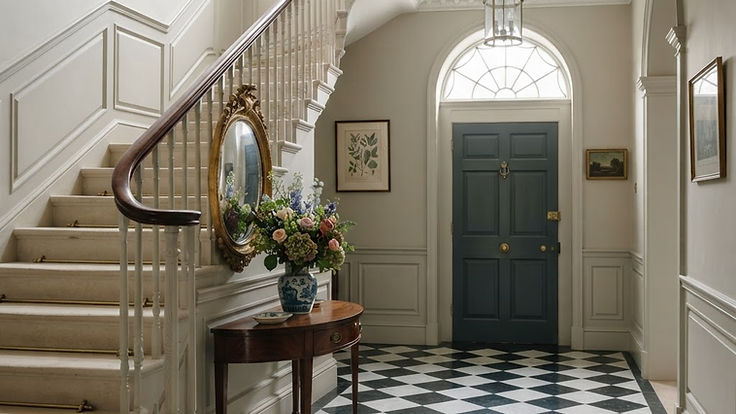
A Georgian hallway is one of the most beautiful entrances a home can have: a fanlight over the front door, a graceful staircase, tall ceilings and perfect proportions. It's also the first thing you and your guests see, so it deserves to be done well.
In this guide I'll explain what makes a hallway genuinely Georgian, how to restore and decorate one sympathetically, and share 25 Georgian hallway ideas covering floors, colours, panelling, staircases, lighting and styling. You'll also find a Georgian paint colour guide, the difference between Georgian and Victorian hallways, budget and renter-friendly ideas, and the mistakes to avoid.
What Makes a Hallway Georgian?
The Georgian period runs from 1714 to 1830, covering the reigns of George I to George IV. Georgian architecture was inspired by classical Greece and Rome, and it's all about symmetry, proportion and restraint. Hallways were designed to impress, but elegantly rather than showily.
| Feature | What to look for |
|---|---|
| Front door | Panelled door, often with a semicircular or elliptical fanlight above |
| Proportions | High ceilings, symmetry and balanced, classical proportions |
| Floors | Stone flags, timber boards or, in grander homes, black and white marble |
| Walls | Panelling or plaster walls with a dado rail, and cornicing at the ceiling |
| Staircase | Slim stick balusters, a polished handrail (often mahogany), and in grand townhouses, a cantilevered stone stair |
| Windows | Tall sash windows with slim glazing bars |
| Lighting | Hanging hall lanterns |
If you'd like to understand where Georgian fits among other styles, my guide to the types of architecture explains how it compares with Victorian, Edwardian and more.
Restore Before You Redecorate
The most beautiful Georgian hallways start with what's already there.
- Uncover original features. Look under carpet for stone flags or boards, and behind boxing for panelling, cornices and shutters.
- Repair rather than replace. Original joinery, plasterwork and balusters can almost always be repaired by a good carpenter or plasterer.
- Use breathable materials on old walls, such as lime plaster and breathable paints, so moisture can escape.
- Check if your home is listed. Many Georgian homes are listed buildings. In England, you usually need listed building consent from your local council for changes that affect the building's character, including removing original features. Speak to your council's conservation officer before you start.
25 Georgian Hallway Ideas
Floors
- Restore stone flags. Clean original flagstones gently and seal them with a breathable sealant to keep their character.
- Lay a black and white chequerboard. A marble or limestone chequerboard laid on the diagonal is the classic grand Georgian hallway floor.
- Celebrate timber boards. Sand and finish wide boards with a natural oil or a hard wax oil.
- Add a large rug. A flatweave or antique rug softens a hard floor and absorbs echo in a tall hallway. Use a non-slip underlay.
Walls and colour
- Choose stone colours. Warm stones, soft drabs and putty shades were hugely popular in Georgian hallways and create a calm, elegant welcome.
- Go for a soft, warm white. In a dark hallway, a warm off-white such as Farrow & Ball's Wimborne White bounces light without looking cold. Read my full guide to Wimborne White.
- Try a Georgian green. Muted greens look wonderful with polished wood and brass. My guide to the best green paint colours has shades to try.
- Paint below the dado darker. A deeper colour below the dado rail and a lighter one above is practical, hides scuffs and suits Georgian proportions.
- Use wallpaper with restraint. Stripes, small repeating patterns and damasks suit Georgian hallways. Use our wallpaper calculator to work out how many rolls you need for a tall hallway and staircase.
- Colour drench the hall, stairs and landing in one shade to make a narrow hallway feel taller and calmer.
Panelling and joinery
- Reinstate the dado rail. Fixed at around chair height, a dado rail protects the walls and instantly adds period character.
- Add simple panelling. Raised and fielded panels or simple applied moulding below the dado rail suit a Georgian hall.
- Restore the cornice and ceiling rose. Clean out old paint so the detail of original plasterwork shows again.
The staircase
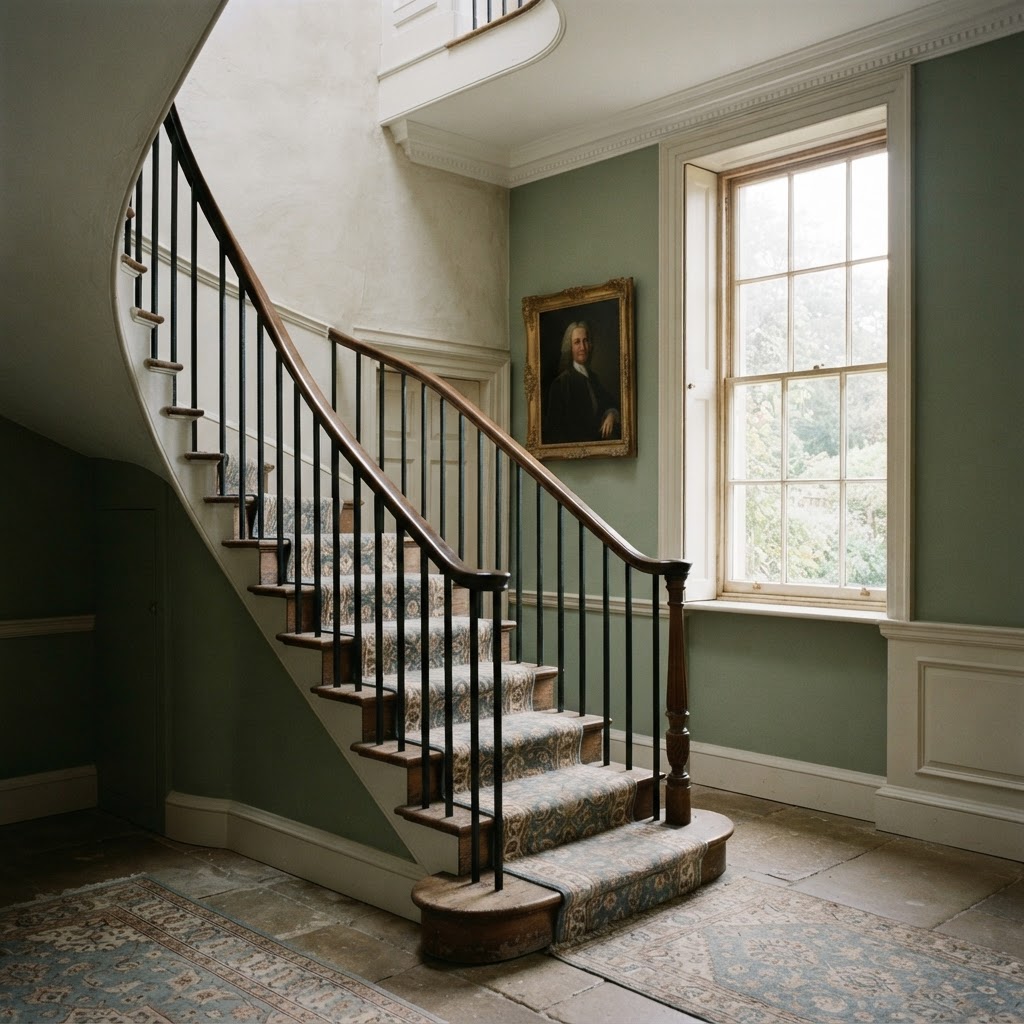
- Paint the balusters. Slim stick balusters in white, off-white or black look crisp and elegant.
- Polish the handrail. A dark, polished timber handrail is one of the most Georgian details of all.
- Add a stair runner. A runner with a bordered edge, held by stair rods, protects the treads and looks beautifully traditional.
- Hang art up the stairs. Oil portraits, landscapes and botanical prints suit a Georgian staircase. My guide to famous flower paintings explains how to find free, high quality prints.
Lighting
- Hang a hall lantern. A glazed, brass or bronze lantern is the classic Georgian hallway light. In a tall hallway, hang it so the bottom sits comfortably above head height.
- Add wall lights on the staircase or either side of a mirror for a soft, layered glow.
- Use a lamp on the console table to make the hallway feel welcoming at night. Choose warm white bulbs.
The front door
- Paint the front door a heritage colour. Black, deep green, navy and oxblood all suit a Georgian door. My review of Dulux Ink Well shows how a deep inky blue looks.
- Restore the fanlight and door furniture. Clean the glazing, and choose a traditional knocker, letterplate and knob in brass or black.
Furniture and styling
- Place a console table and mirror on the main wall. Keep it symmetrical, with a pair of lamps or candlesticks.
- Add seating. A hall chair or bench gives you somewhere to sit and take off your shoes.
- Bring in flowers. A generous vase of seasonal flowers on the console is the simplest way to make a hallway feel welcoming. See my guide to decorating with fresh flowers, or my autumn decoration ideas for seasonal touches.
Georgian Hallway Paint Colours
| Colour family | Why it works | Heritage colours to try |
|---|---|---|
| Stone and drab | The classic Georgian hallway colours, warm and calm | Farrow & Ball Drab, which it describes as a typical 18th-century colour, and Little Greene French Grey |
| Warm off-whites | Bounce light in a dark hall | Farrow & Ball Wimborne White, Lime White |
| Muted greens | Elegant with polished wood and brass | Soft, greyed greens from a heritage paint range |
| Soft greys | A cooler, calm backdrop | Farrow & Ball Hardwick White |
| Deep accents | For the front door, the dado or the stair balusters | Farrow & Ball Off-Black |
Always sample paint on large boards in your own hallway, as Georgian halls are often dark and colours look deeper than on a sample card.
Georgian vs Victorian Hallways
Many period hallway ideas online mix the two styles. Here's how to tell them apart.
| Feature | Georgian (1714 to 1830) | Victorian (1837 to 1901) |
|---|---|---|
| Overall feel | Restrained, symmetrical, classical | Rich, decorative, pattern on pattern |
| Floors | Stone flags, timber boards, black and white marble | Colourful encaustic and geometric tiles |
| Walls | Stone colours, panelling, simple dado | Deep colours, busy wallpapers, embossed papers |
| Staircase | Slim stick balusters, elegant handrail | Turned balusters and heavy newel posts |
| Front door | Fanlight above a panelled door | Stained glass panels and tiled porches |
So if your hallway has colourful encaustic tiles, they're probably Victorian. They're beautiful, but if you're aiming for a truly Georgian look, a stone, marble or timber floor is more authentic.
Georgian Hallway Ideas on a Budget
- Paint first. Paint is the cheapest way to change a hallway.
- Add a dado rail and simple moulding instead of full panelling.
- Buy antique and secondhand console tables, mirrors and hall chairs. My guide to upcycled furniture has lots of ideas.
- Choose a runner rug rather than a fitted stair carpet.
- Swap the light fitting for a lantern.
Renter-Friendly Georgian Hallway Ideas
- Use a large freestanding mirror and a console table.
- Lay a runner rug to cover a tired floor.
- Use a plug-in lamp rather than rewiring.
- Hang art with removable hooks where the walls allow.
- Try peel and stick wallpaper on one wall, after patch testing. Read my guide on whether you can reuse peel and stick wallpaper before you buy.
Always check your tenancy agreement and ask your landlord before making changes.
Common Georgian Hallway Mistakes
- Removing original features, such as panelling, cornices or balusters.
- Using modern, plastic-based paints on old lime plaster, which can trap moisture.
- Mixing too many period styles. Keep Victorian tiles and Georgian panelling for the right homes.
- Too much clutter. Georgian design is about calm and proportion.
- A single, small ceiling light in a tall hallway.
- Ignoring listed building rules, which can lead to costly enforcement.
Frequently Asked Questions
What makes a hallway Georgian?
A Georgian hallway has classical proportions, high ceilings, symmetry, a fanlight above a panelled front door, a dado rail and cornicing, stone or timber floors and a staircase with slim balusters and a polished handrail.
What colours did Georgians use in hallways?
Georgian hallways were often painted in stone colours, warm drabs, putty shades, off-whites and muted greens, with darker colours on the front door and sometimes below the dado rail.
What flooring is best for a Georgian hallway?
Stone flags, wide timber boards and, in grander homes, black and white marble or limestone laid in a chequerboard pattern are the most authentic choices.
Were Georgian hallways tiled?
Grand Georgian hallways often had stone or marble floors, but the colourful encaustic tiles many people associate with period hallways are mostly Victorian.
How do I make a Georgian hallway feel brighter?
Use a warm off-white, paint the ceiling and woodwork in light colours, add a large mirror, restore the fanlight and layer the lighting with a lantern, wall lights and a lamp.
Do I need permission to change a Georgian hallway?
If your home is a listed building, you usually need listed building consent for changes that affect its character, including removing original features. Check with your local council's conservation officer before starting work.
A Georgian Welcome
A Georgian hallway is all about proportion, restraint and quality. Restore what you can, choose calm, historic colours, celebrate the staircase and light it beautifully, and your hallway will feel as elegant as the day it was built.
If you'd like help restoring or decorating a period home, you can book a one-hour online interior design consultation with me. For more inspiration, browse my interior design articles.
About the author
Magda Callery is a UK interior designer with more than 15 years' experience designing homes, pubs, restaurants and bars, and her expert commentary has featured in Homes & Gardens, The Mirror and The Spruce. Explore more of the interior design articles.
Continue reading

Baby Girl Nursery Ideas: 30 Rooms She'll Grow Into
30 baby girl nursery ideas from an interior designer: soft colour palettes beyond pink, wallpaper, furniture, lighting and storage, plus nursery safety and a room she'll grow into.


French Cafe Interior Design: Get the Parisian Look
How to bring French café interior design home, with the key elements, colours, a little history, 25 ideas for kitchens, nooks and gardens, and how to avoid a themed look.

Living Room Rug Ideas: 30 Ways to Choose and Style
30 rugs for living room ideas from an interior designer, with a rug size chart in cm and feet, the three classic layouts, materials compared and styling tips.