
Can You Reuse Peel and Stick Wallpaper? An Honest Guide
Can you reuse peel and stick wallpaper? Sometimes, but don't count on it. How to remove, store and rehang panels, and clever ways to reuse them.
By Magda Callery, interior designer

Peel and stick wallpaper is sold as the commitment-free way to decorate: put it up, enjoy it, take it down when you move. So it's natural to wonder whether you can take it with you and hang it again in your next home.
The honest answer is: sometimes, but don't count on it. Peel and stick wallpaper is designed to be removable, not reusable. You can almost always reposition it while you're hanging it, but once it has been on a wall for a while, most panels won't stick or lie flat as well a second time. Some brands say so plainly. Hovia, for example, states that its self-adhesive wallpaper can be repositioned during installation, but once it has been installed it cannot be removed and rehung.
In this guide I'll explain why reuse is hit and miss, which types have the best chance, how to remove panels so they survive, how to store and rehang them, and the clever ways to reuse leftover or used panels around your home. And if you're buying new, I'll show you how to use our wallpaper calculator so you only buy what you need.
Can You Reuse Peel and Stick Wallpaper? The Short Answer
| Situation | Can you reuse it? |
|---|---|
| Repositioning while you're hanging it | Yes, that's what it's designed for |
| Moving a panel within a few days of hanging | Usually, if you peel it carefully |
| Rehanging panels after months or years on a wall | Rarely as well as the first time |
| Rehanging on a textured, matt or freshly painted wall | Unlikely to stick well |
| Reusing used panels on small surfaces, such as drawers and shelves | Often, with a little help |
| Using leftover, unused panels from the box | Yes, they're as good as new |
Why Peel and Stick Wallpaper Is Hard to Reuse
Peel and stick wallpaper uses a low-tack, pressure-sensitive adhesive. It's strong enough to hold the panel flat on a smooth wall, but weak enough to peel away without (ideally) taking the paint with it. That balance is what makes it removable, and it's also why reuse is tricky.
- The adhesive gets dirty. Once a panel has been on a wall, the adhesive picks up dust, paint particles and tiny fibres. When you peel it off, it also picks up fluff from anything it touches. A dirty adhesive grips far less well.
- Panels stretch. Pulling a panel off the wall, especially quickly, stretches it slightly. A stretched panel won't line up with its neighbours, so the pattern match is lost.
- Creases and curling. Thin panels crease easily when they're removed, and once creased, they rarely lie flat again.
- Adhesive weakens over time. Heat, sunlight and humidity all age the adhesive, so panels that have been up for years have less grip left.
- It sticks to itself. If a panel folds onto itself while you're removing it, it's often ruined.
Which Types of Peel and Stick Wallpaper Are Most Reusable?
| Type | Reuse potential | Why |
|---|---|---|
| Thick vinyl peel and stick | Fair | Tougher panels resist tearing and creasing |
| Fabric or woven peel and stick | Fair to good | Strong, flexible and less likely to stretch out of shape |
| Thin paper-based peel and stick | Poor | Tears, creases and stretches easily |
| Peel and stick murals in large panels | Poor | Large panels are hard to remove without creasing or stretching |
| Leftover panels still on their backing | Excellent | The adhesive has never been used |
A few other factors make a big difference:
- How long it's been up. The shorter the time on the wall, the better the chance of reuse.
- The wall it was on. Panels peel off a smooth, satin or eggshell wall more cleanly than a matt or textured one. Tempaper, for example, recommends smooth surfaces primed and painted with a satin or semi-gloss finish, and doesn't recommend matt, flat or low sheen paints, or textured surfaces.
- The room. Panels in steamy bathrooms or sunny rooms age faster.
- How you take it down, which brings me to the most important part.
How to Remove Peel and Stick Wallpaper So You Can Reuse It
If you want any chance of reusing your panels, remove them slowly and carefully.
- Prepare backing sheets first. Before you start, cut lengths of silicone baking parchment or keep the original backing paper, if you saved it. You'll need somewhere to stick each panel the moment it comes off.
- Number the panels. Write the order on the back of each panel with a pencil or a small piece of masking tape, so you can match the pattern again.
- Warm the adhesive. Run a hairdryer on a low setting over the top of the panel for 20 to 30 seconds. Warm adhesive releases more gently and is less likely to lift paint.
- Start at a top corner. Lift a corner with your fingernail or a plastic scraper, never a metal blade.
- Peel slowly and low. Pull the panel down slowly, keeping it close and almost parallel to the wall rather than pulling it straight out towards you. Tempaper's own instructions advise peeling slowly, parallel to the surface.
- Support the panel. For long panels, have a second person hold the loose end so it doesn't fold onto itself.
- Stick it straight onto the backing. Lay the adhesive side onto the parchment or backing as you go, smoothing it flat.
- Stop if the paint lifts. Warm the area again and peel more slowly. If paint is still coming away, the panel is bonded too well; carry on carefully, accepting you may need to touch up the wall.
How to Store Peel and Stick Wallpaper for Reuse
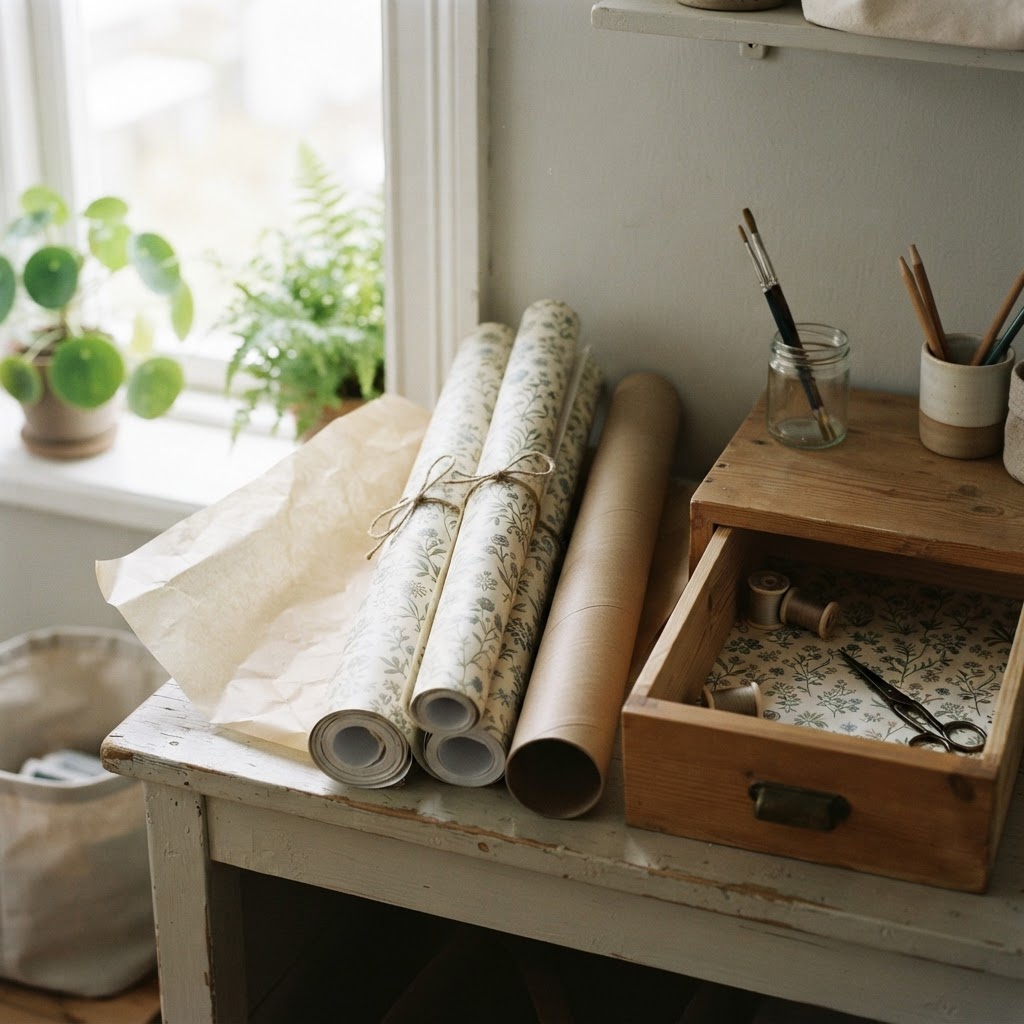
- Keep each panel on a backing sheet, adhesive side down, so it stays clean.
- Roll panels loosely with the pattern facing out. This helps the panel curl towards the wall when you rehang it, rather than away from it.
- Store rolls in a tube or box, standing upright so they don't flatten or crease.
- Keep them somewhere cool, dry and dark. Heat and sunlight age the adhesive.
- Label everything: the room it came from, the panel order and the size.
How to Rehang Used Peel and Stick Wallpaper
If your panels have survived, here's how to give them the best chance on their new wall.
- Check each panel. Hold it up to the light. If it's creased, stretched, torn or the adhesive is covered in fluff, use it for a smaller project instead.
- Test the tack. Press a corner onto the new wall for a few minutes. If it lifts away on its own, the adhesive is too weak for a full wall.
- Prepare the wall. It should be smooth, clean, dry and ideally painted in an eggshell, satin or semi-gloss finish. Avoid freshly painted walls: Angi warns that paint which hasn't fully cured may lift when the paper comes off again.
- Clean the wall. Wipe it with a damp cloth and let it dry completely. For low or zero VOC paints, Tempaper suggests wiping with a 1:1 mix of isopropyl alcohol and water first to help adhesion.
- Hang the panels in their original order, matching the pattern as you go.
- Smooth firmly from the centre outwards with a plastic smoothing tool.
- Help weak areas. If edges lift, a few small pieces of removable double-sided mounting tape behind the panel can help, but test them first, as some tapes can mark paint.
Be realistic: used panels rarely go back up as perfectly as new ones. They can work well for a smaller wall, an alcove or the back of a bookcase, where a slightly imperfect match is less noticeable.
Clever Ways to Reuse Peel and Stick Wallpaper
Even if your panels won't cover a full wall again, they're far too pretty to throw away. Smaller, flatter surfaces are much more forgiving.
- Line drawers. Cut panels to size for kitchen, bedroom or dressing table drawers. It's one of my favourite details, as I explain in small details that make a space feel more organised.
- Back a bookcase or shelves. A patterned back panel instantly makes open shelving look designed.
- Transform furniture. Cover drawer fronts, a side table or the inside of a wardrobe door. My guide to upcycled furniture has lots more ideas.
- Stair risers. Patterned risers are a lovely way to use up small offcuts.
- Make a headboard panel. Apply panels to a sheet of MDF or plywood and hang or prop it behind the bed. Layer it with cushions and pillow shams, as I explain in my guide to what a bed sham is.
- Frame it. A beautiful section of wallpaper in a large frame makes affordable art.
- Line a cupboard or pantry for a lovely surprise every time you open the door.
- Decorate a home office. Cover the back of a desk hutch or a pinboard. See my home office design ideas for more.
Will Peel and Stick Wallpaper Damage Your Walls?
On a smooth, well-prepared wall, good quality peel and stick wallpaper should come off cleanly, but it isn't guaranteed. Tempaper, for example, says its product has been tested on a range of surfaces, but that it can't be held responsible for damaged surfaces or difficulty of removal.
The risk is higher if:
- the paint was fresh when the paper went up;
- the wall has matt, flat or very cheap paint;
- the paint was applied without a primer;
- the wall is textured or uneven;
- the paper has been up for years, or in a hot or humid room.
If the paint lifts or there's residue
- Residue: wipe with warm, soapy water and a soft cloth. For stubborn spots, test a little isopropyl alcohol on a hidden area first.
- Small paint lifts: fill if needed, sand lightly, and touch up with matching paint.
- Larger damage: fill, sand, prime and repaint the wall.
Renting? Always patch test a small, hidden area first and leave it for a few weeks before covering a whole wall. Check your tenancy agreement too, because you may be responsible for any damage when you move out.
Buying Peel and Stick Wallpaper for Your Next Home
Since reuse isn't reliable, it's best to plan on buying fresh panels for your next wall, and to buy the right amount.
Peel and stick rolls are usually much shorter than traditional wallpaper. Many are around 52cm (20.5 inches) wide and only around 5m (16 to 18 feet) long, compared with 10.05m for a standard UK roll of traditional wallpaper. That means you'll need more rolls than you might expect.
Our free wallpaper calculator works for peel and stick too. Just enter the exact roll width and length from the label, in centimetres, plus the pattern repeat. To convert, 1 inch is 2.54cm and 1 foot is 30.48cm, so a 20.5 inch by 18 foot roll is about 52cm by 549cm. Always add the 10% allowance, as peel and stick is less forgiving of mistakes than pasted wallpaper.
If you're choosing a design, think about the whole room. My step-by-step guide to choosing a colour palette will help, and my small living room ideas explain how pattern can make a compact room feel bigger.
Common Mistakes to Avoid
- Ripping panels off quickly, which stretches and tears them.
- Throwing away the backing paper. Keep it if you think you might reuse the panels.
- Letting panels fold onto themselves during removal.
- Rehanging on a matt or textured wall and expecting it to stick.
- Hanging on fresh paint, which can peel away when the paper comes off.
- Not numbering panels, so the pattern can't be matched again.
- Assuming every brand is reusable. Check the manufacturer's guidance before you buy.
Frequently Asked Questions
Can you reuse peel and stick wallpaper?
Sometimes, but it isn't reliable. Peel and stick wallpaper is designed to be removable and repositionable while you're hanging it, not to be rehung after months on a wall. Thick vinyl or fabric panels removed carefully and stored on backing paper have the best chance, especially on a small area.
How many times can you reposition peel and stick wallpaper?
While you're hanging it, you can usually lift and reposition a panel several times to line up the pattern and smooth out bubbles. Each time, the adhesive picks up a little dust and loses some grip, so try to get it right within the first few attempts.
Can you take peel and stick wallpaper with you when you move?
You can try, but expect some panels not to survive. Remove them slowly, stick them onto baking parchment or their original backing, roll them pattern side out and use them for a smaller wall or furniture project in your new home.
How do you make peel and stick wallpaper sticky again?
There's no reliable way to fully restore the original adhesive. Small pieces of removable double-sided mounting tape can help a used panel stay up, but test them first, as they may mark paint.
Does peel and stick wallpaper come off easily?
On a smooth, properly painted and fully cured wall, good quality peel and stick wallpaper should peel off cleanly. Warming it with a hairdryer and peeling slowly, close to the wall, helps protect the paint.
How much peel and stick wallpaper do I need?
Measure the total width and height of your wall and enter them, with your roll's exact width, length and pattern repeat, into our free wallpaper calculator. Peel and stick rolls are often much shorter than traditional ones, so you'll usually need more rolls.
The Verdict
Peel and stick wallpaper is brilliant for renters and anyone who loves to change things up, but think of it as removable rather than reusable. You might get a second life out of thick vinyl or fabric panels if you take them down carefully, store them well and use them on a smaller area. For a full wall in a new home, it's usually best to start fresh.
Before you buy, measure up with our wallpaper calculator so you get the right amount first time. And if you'd like help choosing a wallpaper or planning a room around it, you can book a one-hour online interior design consultation with me, or browse more ideas in my decorating articles.
About the author
Magda Callery is a UK interior designer with more than 15 years' experience designing homes, pubs, restaurants and bars, and her expert commentary has featured in Homes & Gardens, The Mirror and The Spruce. Explore more of the decorating articles.
Continue reading

Behr Dry Plus vs Drylok: Which Waterproofer Is Better?
BEHR Dry Plus vs DRYLOK compared spec by spec from the official data sheets, with a clear verdict, prep and application steps, and UK alternatives.


Best Decorated Homes for Halloween: 35 Decoration Ideas
What the best decorated Halloween homes have in common, plus 35 indoor and outdoor Halloween decoration ideas, easy DIY projects and competition tips.


Autumn Decoration Ideas: 40 Ways to Decorate Your Home
40 autumn decoration ideas, room by room, plus five easy DIY projects, colour palettes, free foraged decorations, budget tips and pet safety advice.