
Bathroom Wallpaper Ideas: 18 Looks and What Works
18 bathroom wallpaper ideas for cloakrooms, family bathrooms and en suites, plus whether you can wallpaper a bathroom, which wallpapers cope with steam, where to avoid them and how to hang it so it lasts.
By Magda Callery, interior designer and florist
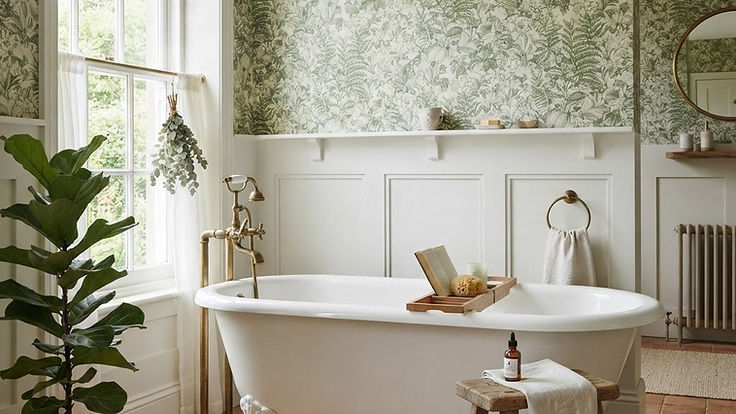
Wallpaper in a bathroom used to be a decorating taboo. Now it's one of the quickest ways to give a plain bathroom real personality: a big botanical print above panelling, a moody pattern in a tiny cloakroom, or a soft stripe in an en suite. The secret is choosing the right paper and putting it in the right place, because steam, splashes and poor ventilation are what make bathroom wallpaper peel, stain or go mouldy.
In this guide I'll answer whether you can wallpaper a bathroom, explain which wallpapers work and where to avoid them, share 18 bathroom wallpaper ideas for every size and style of room, and walk you through hanging it so it lasts for years.
Can You Wallpaper a Bathroom?
Yes, you can wallpaper a bathroom, as long as you use a moisture-resistant wallpaper, a mould-resistant adhesive, keep it away from direct water and the room is well ventilated. Cloakrooms and downstairs toilets are the easiest rooms of all, because there's no shower or bath. Family bathrooms and en suites work well too, with a little planning.
DIY expert Steve Jenkins told Homebuilding & Renovating, "If you are going to use wallpaper in a bathroom use a vinyl wallpaper as this will repel moisture." In the same article, James Mellan-Matulewicz of Bobbi Beck warns that "it's not recommended to install wallpaper on a bathroom wall that already suffers from damp", because moisture coming from the wall itself can turn the back of the paper mouldy.
So before you choose a pattern, check two things: is the wall dry and sound, and can the room get rid of steam quickly?
Which Wallpaper Works in a Bathroom?
| Wallpaper type | Suitable for a bathroom? | Notes |
|---|---|---|
| Solid vinyl | Yes, the best choice | Wipeable surface that repels moisture and steam |
| Paper-backed vinyl | Yes | Very water resistant, easy to clean |
| Non-woven (fleece) | Yes, with care | Breathable, so best in well-ventilated rooms; ask the supplier about a protective varnish |
| Peel and stick (self adhesive) | In low-steam rooms only | Steam resistant at best, not waterproof; good for cloakrooms |
| Traditional paper | Cloakrooms only | Absorbs moisture; only with a decorator's varnish the supplier approves |
| Grasscloth, silk or fabric | No | Stains, warps and holds moisture |
| Paintable papers such as Anaglypta and lining paper | Not recommended | Jenkins advises against them in bathrooms, except well away from a bath or shower |
| Waterproof wall panels with a printed pattern | Yes, even near water | Not true wallpaper, but a good option for wet zones |
Look for the symbols. Wallpaper labels use icons to show how washable or scrubbable a paper is. For a bathroom, choose at least "extra washable", and ideally "scrubbable".
Where to Put Wallpaper in a Bathroom
| Area | Wallpaper? | What to do instead |
|---|---|---|
| Inside the shower or enclosure | Never | Tile, microcement or waterproof panels |
| Directly behind the bath or basin taps | Avoid | A tiled splashback, a glass panel or tiles to dado height |
| Above tiles or panelling | Yes, ideal | Keeps the paper above the splash zone |
| Walls away from the bath and shower | Yes | The best place for a statement pattern |
| Behind the toilet | Yes | Keep the area well ventilated and wipe it regularly |
| Ceiling | Yes, with good ventilation | Steam rises, so the extractor fan matters even more |
| Cloakroom or downstairs toilet | Yes, the perfect room | Any washable paper, and you can be bold |
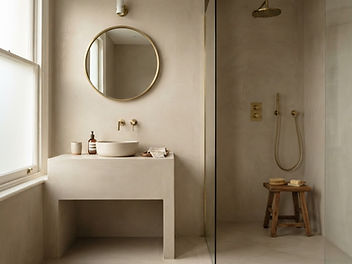
My rule of thumb: wallpaper goes where water can only reach it as steam, never as splashes. If you're planning seamless, splash-proof surfaces around the bath and shower, a microcement bathroom pairs beautifully with a patterned paper on the drier walls.
18 Bathroom Wallpaper Ideas
Small bathrooms and cloakrooms
1. Go bold in the downstairs loo. A cloakroom is the room to be brave. Big florals, dark grounds or a playful animal print feel joyful in a small space you only spend a few minutes in.
2. A dark, moody pattern. Navy, ink or forest green grounds with a small gold or cream pattern make a tiny room feel cocooning rather than cramped. If you love deep blues, an inky shade such as Dulux Ink Well on the woodwork ties it all together.
3. Wallpaper the ceiling too. Running the same pattern over the walls and ceiling blurs the edges of a small cloakroom and makes it feel like a jewel box.
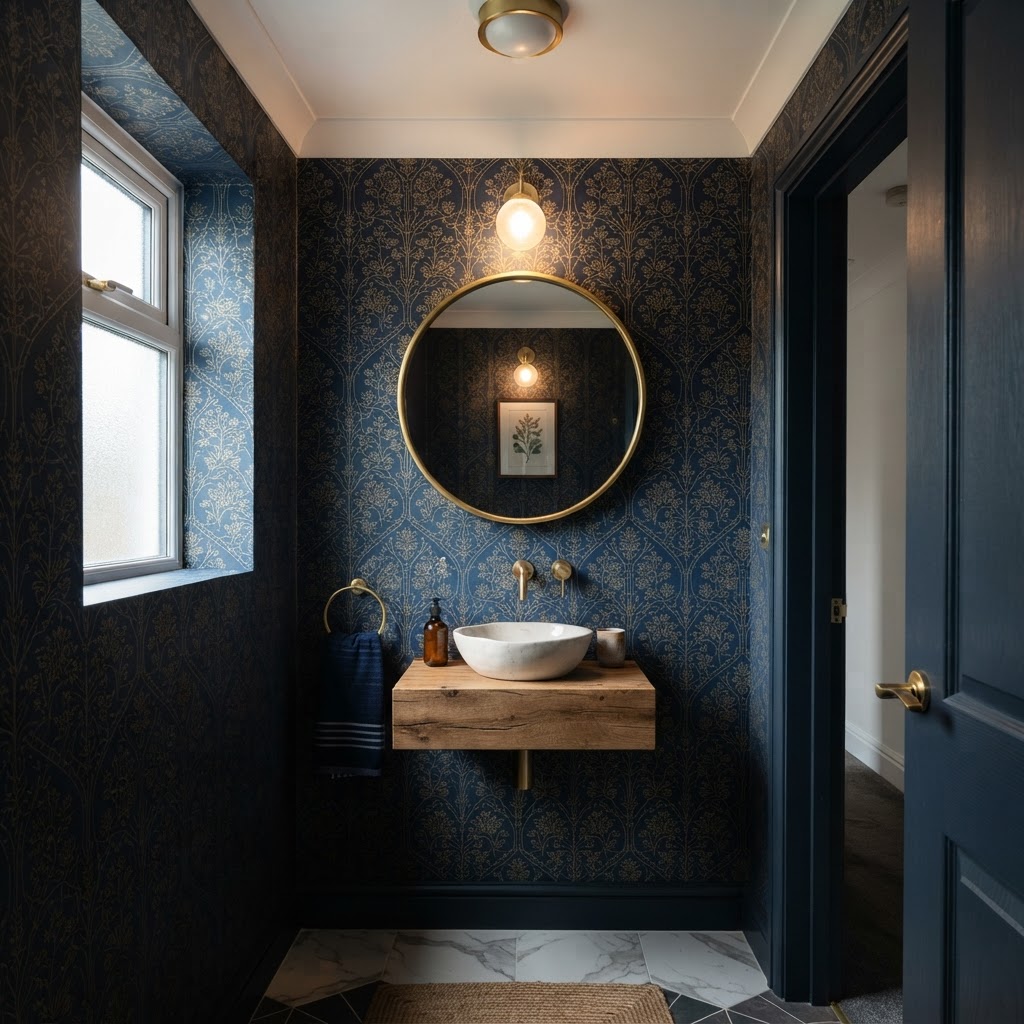
4. A small-scale print in a tiny bathroom. In a narrow bathroom, a ditsy floral, a small geometric or a fine stripe adds interest without overwhelming the space.
5. Vertical stripes for height. A stripe running from floor to ceiling makes a low bathroom or a loft shower room feel taller.
6. Peel and stick in a rented cloakroom. In a low-steam toilet, self adhesive wallpaper is an easy way to add pattern without paste, and it can come down when you move out.
Family bathrooms
7. Wallpaper above panelling. Wall panelling or tiles to dado height with wallpaper above is the most practical layout of all: the panelling takes the splashes and the paper brings the pattern. Painted tongue and groove boards work well here, much like those on a tongue and groove ceiling.
8. A large botanical print. Oversized palms, ferns and banana leaves make a bathroom feel like a spa or a glasshouse, especially with real plants on the windowsill.
9. A feature wall behind a freestanding bath. Keep the bath end tiled or panelled, then wallpaper the wall beyond it to frame the tub. It's a lovely backdrop for a deep tub such as a Japanese soaking tub.
10. Soft greens. Leafy, sage and olive greens feel calm and fresh in a bathroom. Match the woodwork to the paper with one of these green paint colours, or go a shade deeper with olive green.
11. A wipeable pattern for a children's bathroom. A cheerful scrubbable vinyl with fish, stripes or a simple geometric hides splashes and wipes clean after bath time.
En suites and main bathrooms
12. A calm, tonal paper. A textured vinyl in stone, linen or plaster tones gives an en suite a quiet, hotel-like feel without a loud pattern.
13. A mural. A painted landscape, a misty forest or a chinoiserie scene across one wall makes a bathroom feel bigger and turns it into the most memorable room in the house.
14. Warm terracotta and earthy tones. Rust, clay and ochre patterns feel warm and Mediterranean, especially with plaster pink or terracotta colour accents and natural wood.
15. Monochrome. A black and white pattern, from a classic toile to a graphic stripe, looks crisp with white sanitaryware and black taps.
Period and character homes
16. A William Morris style print. Traditional arts and crafts patterns suit Victorian and Edwardian interiors, especially above a painted dado rail with a roll top bath.
17. Chinoiserie. Birds, branches and blossom on a soft ground feel elegant and timeless in a period bathroom.
18. A heritage stripe or check. A ticking stripe or a soft check feels like a country house bathroom and pairs well with brass taps and a wooden bath mat.
How to Hang Wallpaper in a Bathroom
- Fix any damp first. Never wallpaper over a wall that's already damp or mouldy. If you can see black spots, follow the steps to remove black mould from wallpaper and the wall, and find the cause before you decorate.
- Prepare the wall. Strip old paper, fill cracks, sand smooth and wipe away dust. The surface should be clean, dry and sound.
- Prime or size. A primer or size helps the paste grip and makes the paper easier to remove later.
- Use the right adhesive. Choose a heavy-duty, mould-resistant paste made for kitchens and bathrooms, or the adhesive the manufacturer recommends.
- Work out how many rolls you need with the wallpaper calculator, buying them all from the same batch.
- Plan your seams so they fall away from the most visible spot, and start from the centre of a feature wall if the pattern is large.
- Hang and smooth each drop, wiping away any paste from the surface straight away.
- Seal the edges. Run a neat bead of clear or white bathroom sealant where the paper meets tiles, the bath or the basin.
- Varnish if needed. If you've used a non-vinyl paper, ask the supplier whether it can take a decorator's varnish and test it on an offcut first.
- Let it dry fully before you run a hot shower or bath. Keep the window open or the fan running during and after hanging.
How to Make Bathroom Wallpaper Last
- Ventilate. An extractor fan is the single most important thing. Building Regulations in England (Approved Document F) set a minimum intermittent extract rate of 15 litres per second for bathrooms, and a fan with an overrun timer keeps running after you leave the room.
- Open a window after baths and showers, and leave the door ajar so steam can escape.
- Wipe off splashes and condensation with a soft cloth rather than letting them dry on the paper.
- Keep spare rolls from the same batch for repairs.
- Check the edges every few months and re-seal any that start to lift.
Common Mistakes to Avoid
| Mistake | Why it's a problem | What to do instead |
|---|---|---|
| Wallpaper inside or beside the shower | Water gets behind the paper and it peels | Tile or panel wet zones |
| Ordinary paper wallpaper in a steamy bathroom | It absorbs moisture, stains and lifts | Choose vinyl or a washable non-woven paper |
| Standard paste | Weak bond and risk of mould | Use a mould-resistant bathroom adhesive |
| Hanging over damp or mould | Mould grows behind the paper | Fix the cause and treat the wall first |
| No extractor fan | Constant condensation | Fit a fan with an overrun timer |
| Grasscloth or fabric papers | Stain and warp in humidity | Save them for dry rooms |
Frequently Asked Questions
Can you wallpaper a bathroom?
Yes. Use a vinyl or washable, moisture-resistant wallpaper, hang it with a mould-resistant adhesive, keep it away from direct splashes and make sure the room is well ventilated.
What wallpaper is best for a bathroom?
Solid vinyl or paper-backed vinyl is best, because it repels moisture and can be wiped clean. Non-woven papers work in well-ventilated rooms, ideally with a protective varnish approved by the supplier.
Can you put wallpaper near a shower or bath?
Not where it will be splashed. Keep wallpaper out of the shower and away from the area directly behind the bath or basin taps, and use tiles, panelling or a splashback there instead.
Will wallpaper go mouldy in a bathroom?
It can if the room is poorly ventilated, the wall was already damp or the wrong paper or paste was used. A good extractor fan, vinyl wallpaper and a mould-resistant adhesive greatly reduce the risk.
Can you use peel and stick wallpaper in a bathroom?
Yes, in a cloakroom or a well-ventilated bathroom away from water. Most self adhesive papers are steam resistant rather than waterproof, so they're best in low-steam rooms.
Can you wallpaper a bathroom ceiling?
Yes, as long as the room is well ventilated. Steam rises, so a ceiling paper needs a good extractor fan, a washable vinyl and a strong, mould-resistant paste.
Pattern Where You Least Expect It
Bathroom wallpaper is one of the easiest ways to give a functional room real character. Choose vinyl or a washable paper, keep it above the splash zone, fit a good extractor fan and be as bold as you like, especially in a small cloakroom.
For more ideas, explore the interior design section, and if you'd like help choosing a wallpaper, colours and layout for your bathroom, you can book a one-hour online interior design consultation with me.
About the author
Magda Callery is a UK interior designer and florist with more than 15 years' experience designing homes, pubs, restaurants and bars, and her expert commentary has featured in Homes & Gardens, The Mirror and The Spruce. Explore more of the interior design articles.
Continue reading

Bedroom With a Big Mirror: 15 Ideas and Placement Tips
Ideas for a bedroom with a big mirror: the best and worst places to put one, how big it should be, what feng shui says about mirrors facing the bed, 15 styling ideas and how to hang or lean a heavy mirror safely.

Loft Bed Ideas: 15 Clever Ways to Save Space
Loft bed ideas from a designer: the different types of loft bed and high sleeper, how much ceiling height you need, 15 ideas for children, teenagers and adults, safety rules and mistakes to avoid.

Microcement Bathroom: Pros, Cons, Costs and Ideas
Everything you need to know about a microcement bathroom: what microcement is, how it compares with tiles and tadelakt, whether it's waterproof, applying it over tiles, UK costs per m², 12 design ideas, maintenance and how to choose an installer.