
What to Do With Leftover Wallpaper: 23 Clever Ideas
Don't throw away those spare rolls and offcuts. 23 clever ideas for leftover wallpaper, plus how much to keep for repairs, what to do with leftover paste and samples, and how to sell, donate or dispose of the rest.
By Magda Callery, interior designer and florist

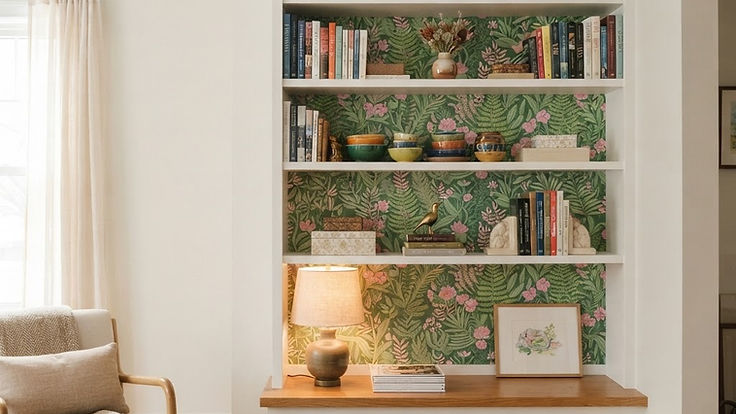
Almost every wallpaper project ends the same way: a roll or two left over, a pile of offcuts and half a tub of paste. It feels wasteful to throw them away, and the good news is that you don't have to. A beautiful wallpaper is just as lovely on the back of a bookcase, the risers of a staircase or a gift as it is on a wall.
In this guide I'll share 23 clever ideas for leftover wallpaper, from small home upgrades to quick crafts, plus how much to keep back for repairs, what to do with leftover wallpaper paste and samples, and how to sell, donate or dispose of what you can't use.
First, Keep Some Back for Repairs
Before you start crafting, set aside enough to fix a scuff, a tear or a water mark later. Patterns are often discontinued, and a new roll from a different batch can look noticeably different in colour.
- Keep at least a part roll, or a few full-length offcuts, for each room.
- Write down the batch number (sometimes called the lot or shade number) from the roll label, along with the room and the date you hung it.
- Store rolls loosely rolled or flat, never tightly creased, in a dry place indoors. Avoid lofts, garages and sheds, where damp and temperature changes can mark or yellow the paper. Damp is also what leads to black mould on wallpaper, so a dry cupboard is best.
- Keep it out of sunlight, which can fade it, so it no longer matches the wall.
23 Ideas for Leftover Wallpaper
Around the home
1. Line the back of a bookcase. Papering the back panel of a bookcase or open shelving is one of the most effective ways to use leftover rolls. It frames your books and ceramics and gives a plain piece of furniture real personality. Measure each section, cut panels slightly oversize and trim them in place, or paper a thin sheet of hardboard and slot it in so it's easy to remove.
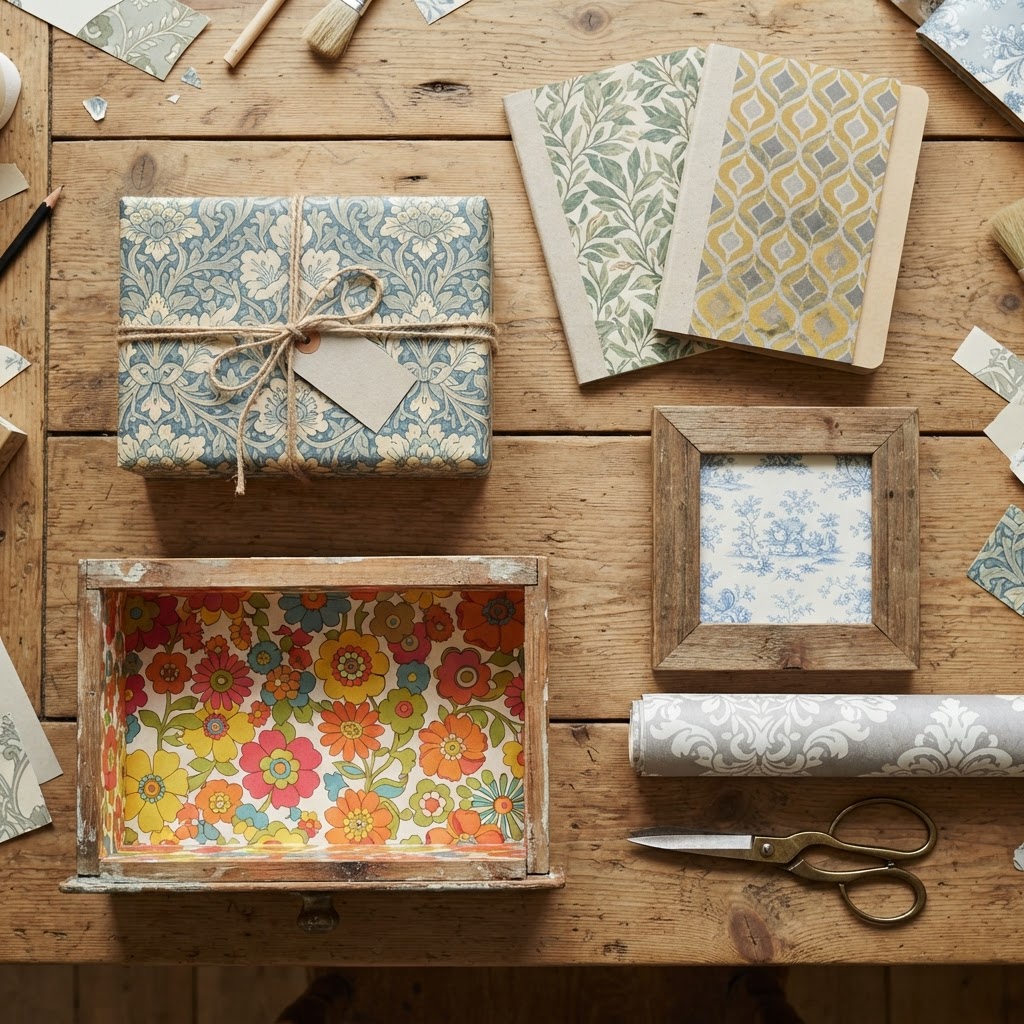
2. Line drawers. A pretty paper inside a chest of drawers, a dressing table or a kitchen drawer is a lovely surprise every time you open it. It's a nice finishing touch when you organise kitchen drawers, too. Use a wipeable vinyl paper in the kitchen and fix it with a little double-sided tape so you can change it later.
3. Paper the inside of a cupboard or wardrobe. The back wall of a glass-fronted cabinet, a larder or a wardrobe is the perfect size for offcuts, and it adds a touch of luxury to everyday storage.
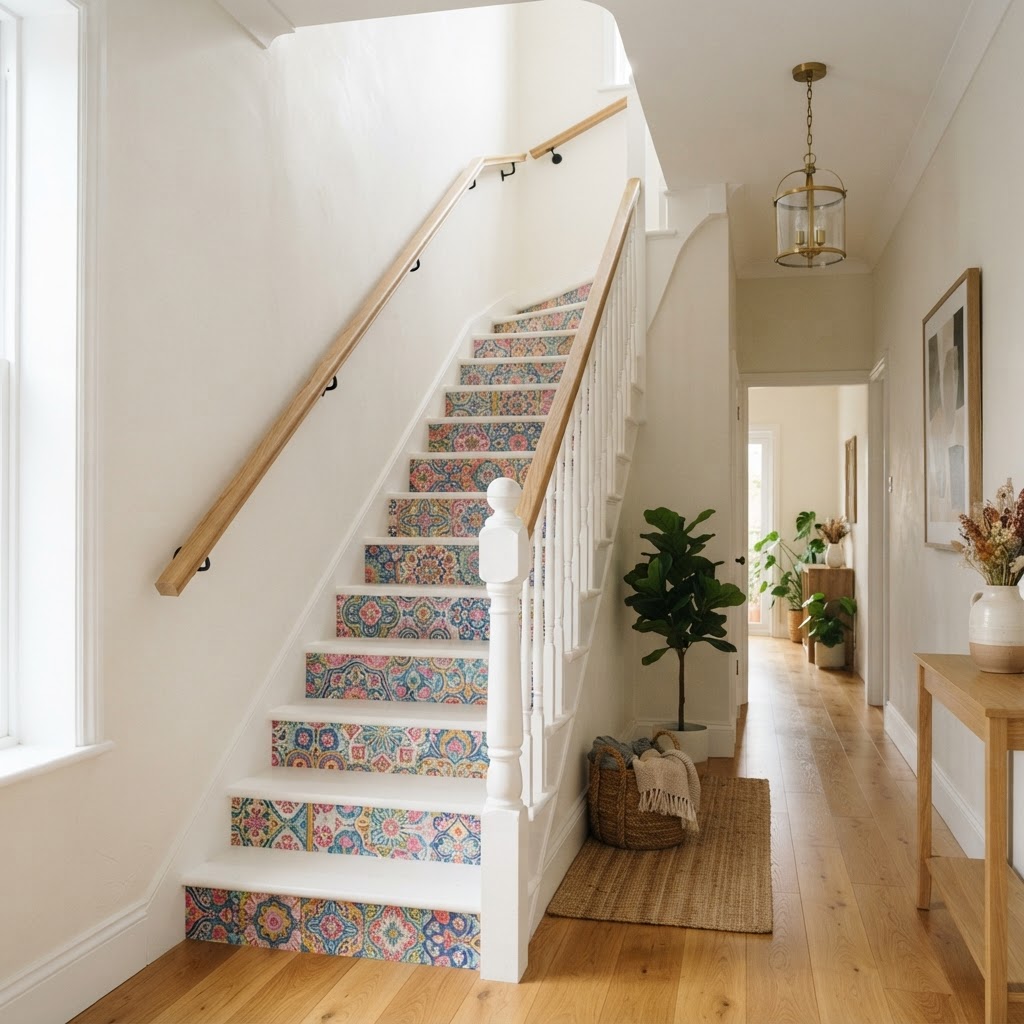
4. Cover stair risers. Papering the vertical risers of a staircase uses narrow strips beautifully and turns a hallway into a talking point. Choose a hard-wearing, washable paper, or a peel and stick one, and finish with a clear protective coat if the stairs get heavy use.
5. Create a headboard panel. Paper a rectangle of wall behind the bed, or a sheet of plywood, and frame it with a slim moulding for an instant headboard.
6. Add a feature to a door. Paper the recessed panels of a panelled door, or the back of a front door, for a playful, unexpected detail.
7. Paper a small space. The leftovers from a big room may be enough for a downstairs loo, a cloakroom, a niche or the back wall of an alcove. Small spaces are the place to be bold, and a dramatic pattern in a cloakroom is one of the most striking bathroom wallpaper ideas of all.
8. Paper a ceiling recess or niche. A coffered panel, a small ceiling or the top of a bay window can take a surprisingly small amount of paper and makes a room feel finished.
9. Frame it as art. A large panel of a striking pattern, or a set of three squares in matching frames, makes simple, inexpensive wall art that ties in with the rest of the room. It works especially well with bold designs such as gold wallpaper or a botanical print.
Furniture and accessories
10. Upcycle a chest of drawers. Cover the drawer fronts of a plain chest or bedside table with wallpaper, then seal with a clear, water-based varnish to protect it.
11. Refresh a side table or coffee table. Paper the tabletop and seal it with varnish, or simply lay a panel under a glass top so you can swap it whenever you like.
12. Line a tray. Paper the base of a wooden tray and protect it with varnish or a sheet of glass for a pretty serving or dressing table tray.
13. Cover a room divider or screen. A folding screen covered in wallpaper is a lovely way to hide a desk or a messy corner in a small flat.
14. Make a lampshade. Wallpaper can be used to cover a simple drum lampshade. For safety, use a kit designed for making lampshades, choose LED bulbs, which stay cool, and keep the paper well away from the bulb.
15. Wrap plant pots. Wrap plain plastic pots, or glass jars, in wallpaper for indoor plants or pens. Keep them away from water, or seal them first.
Quick crafts and gifts
16. Gift wrap. Thicker wallpaper makes beautiful, sturdy wrapping paper, especially for books and boxes. Finish with twine or ribbon.
17. Gift tags and cards. Cut tags and greetings cards from offcuts, or use a punch to cut shapes, hearts and stars.
18. Envelopes. Use an envelope template to make envelopes for cards and invitations.
19. Cover notebooks and books. Cover notebooks, folders, school books and photo albums for a matching desk set.
20. Make bunting or garlands. Cut triangles or circles and string them together for a party, a nursery or a child's bedroom.
21. Cover storage boxes. Shoe boxes, magazine files and storage boxes look far smarter covered in wallpaper, and they're perfect for shelves.
22. Make placemats. Cut rectangles and have them laminated, or put them under a glass table top, for washable, coordinated placemats.
23. Decorate a dolls' house. Small-scale patterns are perfect for papering a dolls' house or a child's play kitchen, and children love choosing them.
Which Leftover Wallpapers Work Best?
| Type | Best for | Good to know |
|---|---|---|
| Paper | Crafts, gift wrap, framing, lining drawers | Easy to cut and fold, but not water resistant |
| Vinyl | Kitchen drawers, trays, shelves, stair risers | Wipeable and hard-wearing, but harder to fold |
| Non-woven (paste the wall) | Bookcases, cupboards, panels | Strong and easy to remove later |
| Peel and stick | Drawers, stairs, furniture, renter-friendly projects | No paste needed; ideal for small projects |
| Grasscloth and textured papers | Framed panels, headboards, screens | Can't be wiped; best for low-touch areas |
Self-adhesive wallpaper is ideal for most of these ideas because you don't need paste. If you've taken it down from a wall, whether you can stick it up again depends on the product, and it's worth checking whether you can reuse peel and stick wallpaper before you plan a project around it.
What to Do With Leftover Wallpaper Paste
Leftover paste can often be saved for another day, as long as you store it properly.
| Type of paste | How long it keeps | How to store it |
|---|---|---|
| Ready-mixed paste, unopened | Often around two years from manufacture | Cool, dry and frost free, in its original tub |
| Ready-mixed paste, opened | Weeks to months if well sealed | Press cling film onto the surface, then replace the lid tightly |
| Powder or flake paste, mixed with water | Usually up to about a week | In a well-sealed container, somewhere cool |
| Powder or flake paste, unmixed | A long time if kept dry | In a sealed bag or box, away from damp |
As a guide, Everbuild's ready-mixed wallcovering adhesive data sheet gives a shelf life of "24 months from date of manufacture" and advises you to "Protect from frost", while A.S. Création's wallpaper paste data sheet says "Stirred paste can be used for up to 7 days in a well-sealed container." Always check the instructions on your own product.
Throw it away if it smells sour or musty, has separated and won't stir back together, or shows any sign of mould.
How to dispose of leftover paste: don't pour it down the sink or drain, where it can thicken and cause blockages. Let small amounts dry out in the tub or spread on newspaper, then put the dried paste in your general waste. A.S. Création notes that "Dried material residues can be disposed of with household waste." Rinse your brushes and tools in warm water straight after use.
Can you use wallpaper paste for papier-mâché? Many people do, but some wallpaper pastes contain a fungicide. If children are joining in, use a fungicide-free paste or a simple homemade flour and water paste instead.
What to Do With Leftover Wallpaper Samples
Samples and small offcuts are perfect for:
- Mood boards. Pin samples alongside paint swatches and fabric to plan the next room.
- Greetings cards, tags and bookmarks.
- Lining small boxes, trays and jewellery boxes.
- A framed collage of your favourite patterns.
- Collage and scrapbooking, or children's craft boxes.
- Testing a pattern in a different room before you commit to buying more.
Sell, Donate or Return Leftover Rolls
If you have whole rolls you won't use, give them a second life:
- Return unopened rolls. Many retailers accept unopened rolls within a set period, so check the returns policy and keep your receipt.
- Sell them. Full rolls, especially from well-known designers, sell well on marketplaces and local selling groups. Include the pattern name, batch number and number of rolls.
- Give them away. Local reuse groups, community scrap stores, schools, nurseries, playgroups and theatre groups often welcome wallpaper for crafts and set design.
- Offer them to neighbours. Someone with the same pattern may need a roll for a repair.
Can You Recycle Wallpaper?
Usually not. Most wallpapers are coated, printed or vinyl, or have paste on them, which makes them hard to recycle with ordinary paper. West Sussex County Council's guidance on wallpaper is typical: "Wallpaper can't be recycled, so please place it in your general waste bin." Rules vary from place to place, so check your own council or local recycling service, and reuse as much as you can first.
How to Avoid Buying Too Much Next Time
- Measure carefully, wall by wall, and subtract large windows and doors.
- Allow for the pattern repeat. Larger repeats need more paper for matching.
- Buy everything from the same batch, with one spare roll rather than several.
- Use a calculator. The wallpaper calculator works out how many rolls you need from your wall sizes and the pattern repeat.
Frequently Asked Questions
What can I do with leftover wallpaper?
Line the back of a bookcase or drawers, cover stair risers, paper a small space such as a cloakroom, frame it as art, upcycle furniture, or use it for gift wrap, cards, notebooks and storage boxes. Keep a part roll for repairs.
How much leftover wallpaper should I keep?
Keep at least a part roll, or a few full-length offcuts, for each room, and note the batch number. That's usually enough to patch damage later.
What do you do with leftover wallpaper paste?
Seal it well and store it somewhere cool and frost free. Mixed powder paste usually keeps for around a week, while unopened ready-mixed paste can last much longer. Let unwanted paste dry out, then put it in the general waste rather than down the drain.
Can you reuse leftover wallpaper on another wall?
Yes, if you have enough from the same batch. Small amounts work well for a feature wall in a small room, an alcove, a cloakroom or the inside of a cupboard.
What can I do with leftover wallpaper samples?
Use them for mood boards, cards, gift tags, bookmarks, lining small boxes and trays, collage or children's crafts.
Can wallpaper go in the recycling bin?
In most areas, no. Wallpaper is usually coated or has paste on it, so it goes in the general waste. Check your local council's rules.
Nothing Wasted
Leftover wallpaper is a gift: a small supply of a pattern you already love, ready to use wherever you need a little colour. Keep a part roll for repairs, then line a bookcase, paper the stairs or wrap a present, and you'll get far more joy from every roll you buy.
For more ways to use pattern at home, explore these lounge room wallpaper ideas and pink wallpaper ideas, and if you'd like help choosing a wallpaper and planning your scheme, you can book a one-hour online interior design consultation with me.
About the author
Magda Callery is a UK interior designer and florist with more than 15 years' experience designing homes, pubs, restaurants and bars, and her expert commentary has featured in Homes & Gardens, The Mirror and The Spruce. Explore more of the decorating articles.
Continue reading

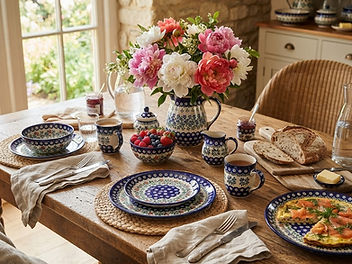
Boleslawiec Polish Pottery: History, Care and Styling
Everything you need to know about Boleslawiec pottery, from its 600-year history and hand-stamped patterns to quality grades, oven and dishwasher care, and how a Polish designer styles it at home.

Edgecomb Gray Review: Benjamin Moore HC-173 Explained
An honest Edgecomb Gray review: what colour Benjamin Moore HC-173 really is, its LRV and undertones, how it looks in different light, how it compares with Revere Pewter, Agreeable Gray and Pale Oak, the best trim whites and coordinating colours.

Is Self Adhesive Wallpaper Any Good? Honest Guide
An honest guide to self adhesive wallpaper: whether peel and stick wallpaper is any good, the pros and cons, where it works and where to avoid it, how it compares with traditional wallpaper, how to apply it and whether it can go over existing wallpaper.