
How to Organize Kitchen Drawers: 19 Clever Ideas
How to organize kitchen drawers in 7 simple steps, which drawer should hold what, the best drawer organizers, and 19 clever ideas for shallow, deep and IKEA kitchen drawers, plus how to keep them tidy for good.
By Magda Callery, interior designer and florist
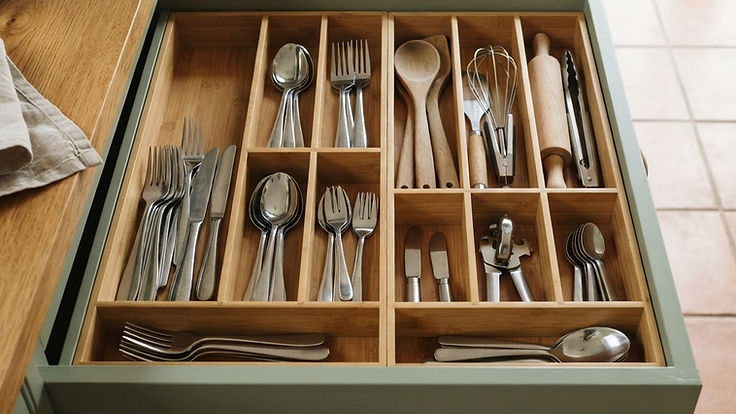
Few things make a kitchen feel calmer than opening a drawer and finding exactly what you need. Yet kitchen drawers are where clutter hides best: tangled utensils, lids without pans, takeaway menus, mystery keys and five bottle openers. The good news is that organising them is a one-afternoon job, and once each drawer has a clear purpose, it stays tidy with very little effort.
In this guide I'll show you how to organize kitchen drawers (or organise them, as we say in the UK) step by step, which drawer should hold what, the best types of drawer organisers, 19 clever ideas for shallow, deep and IKEA drawers, and how to keep everything tidy for good.
What You'll Need
- A tape measure, to measure the inside of each drawer
- A damp cloth and a mild cleaner
- Three bags or boxes: keep, donate and recycle or bin
- Drawer organisers, bought after you've measured and sorted, not before
- Non-slip drawer liner, if your drawers have a smooth base
How to Organize Kitchen Drawers in 7 Steps
- Empty one drawer at a time. Tackling the whole kitchen at once leads to chaos. Start with the drawer that annoys you most, usually the cutlery or utensil drawer.
- Clean it. Vacuum the crumbs, wipe the base and corners, and let it dry. If an old wooden drawer smells musty, it's worth removing the musty smell before you put anything back.
- Declutter. Be honest: keep what you use, donate duplicates, and recycle or bin anything broken. Most kitchens need one or two wooden spoons, not eight.
- Group like with like. Sort what's left into categories: cutlery, cooking utensils, baking tools, knives, wraps and foils, tea towels and so on.
- Decide where each group belongs. Store things where you use them (see the zone table below).
- Measure and choose organisers. Measure the drawer's internal width, depth and height, then choose dividers or trays that fit the categories you've made.
- Put everything back and keep it simple. Store the most used items at the front, and keep each drawer to one main purpose.
Which Drawer Should Hold What?
The easiest way to organise a kitchen is by zone: store things next to where you use them.
| Zone | Where | What goes in the drawers |
|---|---|---|
| Prep | Beside the main worktop space | Knives, chopping tools, peelers, graters, measuring spoons |
| Cooking | Next to the hob and oven | Spatulas, wooden spoons, tongs, ladles, oven gloves; pans in deep drawers below |
| Serving and eating | Near the dishwasher or dining table | Cutlery, serving spoons, napkins; plates and bowls in a deep drawer |
| Cleaning | Near the sink | Tea towels, cloths, sponges, bin bags |
| Storage and wraps | Near the fridge | Foil, cling film, food bags, containers and lids |
| Baking | Wherever you bake | Rolling pin, cutters, piping bags, scales, baking tins in a deep drawer |
| Odds and ends | One drawer only | Batteries, scissors, tape, pens, spare keys |
My designer's tip: put cutlery in the drawer nearest the dishwasher. Emptying it becomes a two-second job instead of a walk across the kitchen.
Types of Kitchen Drawer Organisers
| Organiser | Best for | Good to know |
|---|---|---|
| Fitted cutlery tray | Top drawers | Measure carefully; one that fits edge to edge stops sliding |
| Expandable bamboo tray | Odd-sized drawers | Adjusts to the drawer width |
| Adjustable dividers | Utensils and wraps | Can be moved as your needs change |
| Modular bins | Junk drawers and gadgets | Mix and match sizes like a puzzle |
| In-drawer knife block | Knives | Safer for blades and fingers than loose knives |
| Pegboard system | Plates and bowls in deep drawers | Pegs move to fit different sizes |
| Lid and pan racks | Deep pan drawers | Store lids and pans upright |
| Spice drawer inserts | Shallow drawers near the hob | Angled rows so you can read labels from above |
| Non-slip liner | Any drawer | Stops organisers and items sliding |
19 Clever Kitchen Drawer Ideas
Shallow and top drawers
1. A fitted cutlery tray. A tray that fills the drawer edge to edge stops cutlery sliding and makes the drawer look instantly calmer.
2. A separate utensil drawer. Keep cooking utensils out of the cutlery drawer and in their own drawer by the hob, with dividers for spatulas, spoons and whisks.
3. An in-drawer knife block. Store knives in a slotted insert so blades are protected and hands are safe.
4. A spice drawer. Angled inserts in a shallow drawer next to the hob let you see every jar at a glance, freeing up cupboard space.
5. A wraps and foil drawer. Upright dividers keep foil, baking paper, cling film and food bags neat and easy to grab.
6. A tea towel drawer. Roll tea towels and cloths like a hotel spa and store them upright, so you can see them all at once.
7. A tamed junk drawer. Every kitchen needs one odds and ends drawer. Small modular bins for batteries, tape, pens and scissors stop it becoming a black hole.
How to organize deep kitchen drawers
Deep drawers are wonderfully practical, but without a system they become a jumble of pans and lids. The secret is to store things vertically, so you can see and lift out each item without unstacking everything above it.
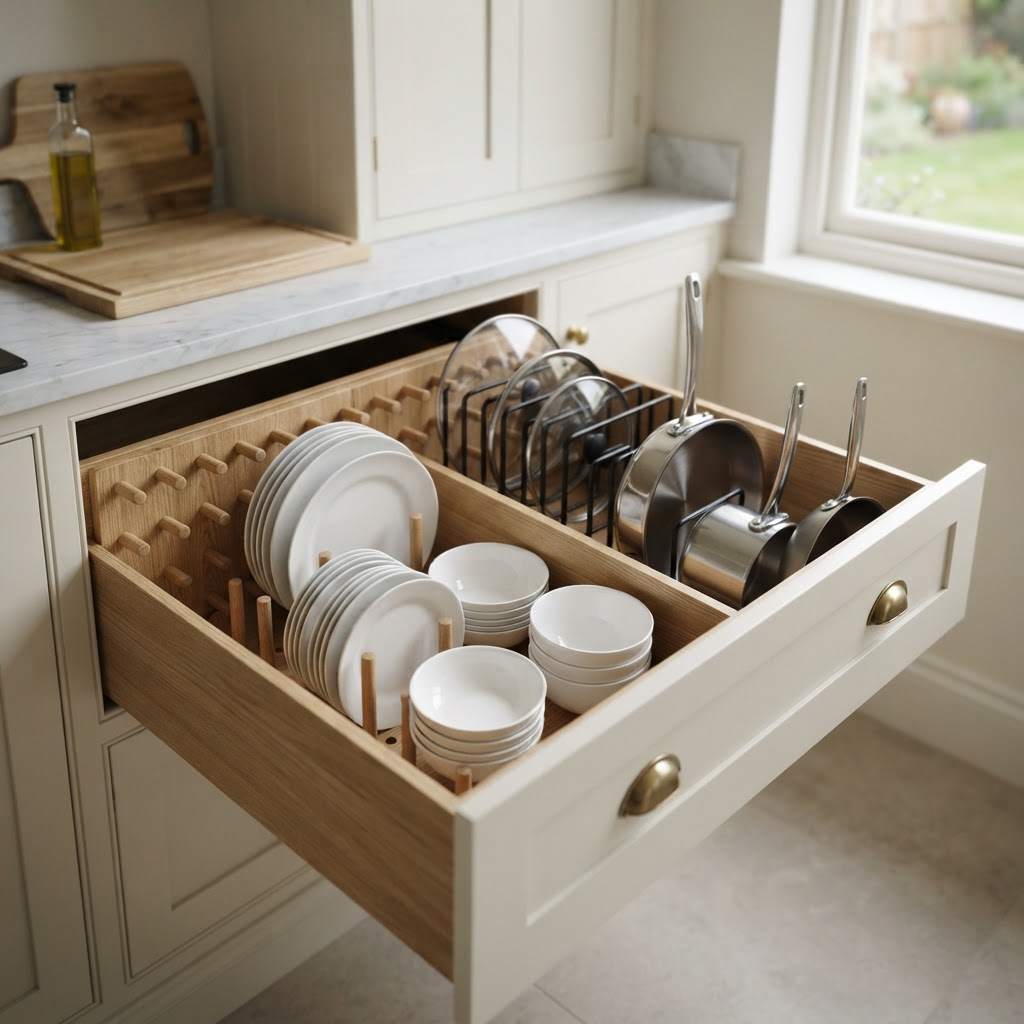
8. Plates and bowls on a pegboard. A pegboard organiser in a deep drawer holds plates and bowls securely and puts them at an easy height, which is ideal near the dishwasher.
9. Pans with their lids upright. Store pans side by side and lids upright in a lid rack, rather than stacked, so you can lift out the one you need.
10. Tins, jars and baking supplies. A deep drawer near the prep area makes a brilliant pull-out pantry. Store jars and tins with labels facing up.
11. Food storage containers. Nest containers by size and file lids upright in a divider. Recycle any that have lost their partner.
12. Baking trays and chopping boards on their side. Vertical dividers in a deep drawer stop heavy trays from stacking and scratching.
How to organize IKEA kitchen drawers
13. Use organisers designed for your drawer system. IKEA sells organiser ranges such as UPPDATERA and VARIERA made to fit its kitchen drawers, so check the size guide for your drawer width and depth before buying.
14. Add inner drawers. In tall IKEA-style drawer units, an inner drawer behind the front adds a hidden shallow layer for cutlery or utensils above deeper storage.
15. Mix brands with care. Third-party organisers can work in IKEA drawers, but measure the internal dimensions rather than the drawer front, which is always larger.
Kitchen cabinets and drawers together
16. Drawers below, cupboards above. Deep drawers are easier to use than low cupboards, so if you're planning a new kitchen, perhaps with sage green kitchen cabinets, choose drawers for base units wherever you can and keep everyday glasses and mugs in wall cupboards.
17. Give every cupboard and drawer a job. Decide on one purpose per drawer or cupboard and stick to it. A simple list taped inside a cupboard door helps everyone in the household know where things go.
Small kitchens
18. Use every centimetre. In a small kitchen, stackable trays and two-tier cutlery organisers double the capacity of a shallow drawer. It's one of the simplest tricks in a small studio apartment, where every drawer has to work hard.
19. Keep only what you use. In a small kitchen, the best organiser is a good declutter. Pare utensils back to the ones you reach for every week, and store occasional items such as cake tins and roasting trays elsewhere.
How to Keep Kitchen Drawers Organised
- One in, one out. When you buy a new gadget, let an old one go.
- Do a two-minute reset once a week, putting strays back in their place.
- Declutter seasonally, especially the junk drawer.
- Don't overfill. If a drawer jams, it's holding too much.
- Line drawers with a washable, non-slip liner to keep them clean and stop things sliding.
Organised drawers are one of those small details that make a space feel more organised every single day. If you're setting up a new home, use a home essentials checklist to buy only what you need for the kitchen in the first place.
Safety in Family Kitchens
If you have young children, plan drawer storage with safety in mind. Bradford Council's Safe at Home guide advises that you "Keep sharp knives, scissors and garden tools out of reach of children" and keep cleaning products, including liquid laundry capsules, "out of sight and out of reach, preferably in a locked cupboard."
- Store knives in a high drawer or an in-drawer knife block, and fit child safety catches to drawers within reach.
- Keep cleaning products in a high or locked cupboard rather than in a drawer by the sink.
- Put heavy items in low drawers so they can't fall from height.
Common Mistakes to Avoid
| Mistake | Why it's a problem | What to do instead |
|---|---|---|
| Buying organisers before decluttering | You organise things you don't need | Declutter first, then measure and buy |
| Measuring the drawer front | Organisers won't fit inside | Measure the internal width, depth and height |
| Stacking pans and lids in deep drawers | You have to unstack to find anything | Store items upright with dividers and racks |
| Mixing cutlery and utensils | Drawers overflow and jam | Give each its own drawer |
| Several junk drawers | Clutter spreads | Allow just one, with small bins |
Frequently Asked Questions
How do you organize kitchen drawers?
Empty one drawer at a time, clean it, declutter, group similar items, decide which zone each group belongs in, then measure the drawer and add dividers or trays that fit. Keep the most used items at the front.
What should go in the top kitchen drawers?
Everyday items you use most, such as cutlery, cooking utensils, knives in a knife block, and wraps or foils, ideally near where you use them.
How do you organize a deep kitchen drawer?
Store things vertically. Use a pegboard for plates and bowls, a lid rack for pans and lids, and upright dividers for baking trays and chopping boards, so you can lift items out without unstacking.
How do you organize IKEA kitchen drawers?
Use organisers designed for IKEA's drawer sizes, such as the UPPDATERA and VARIERA ranges, or measure the internal dimensions carefully before buying other brands. Inner drawers add an extra shallow layer in tall units.
Where should cutlery go in a kitchen?
In a shallow top drawer near the dishwasher or the dining table, so loading, unloading and laying the table are quick.
How do you stop kitchen drawers getting messy again?
Give every drawer one clear purpose, don't overfill it, follow a one in, one out rule and do a quick weekly reset.
A Place for Everything
Organising your kitchen drawers takes an afternoon, but you'll feel the benefit every time you cook. Work one drawer at a time, declutter first, store things where you use them, and choose organisers that fit your drawers and your habits.
For more ideas for a calm, practical home, explore the interior design section, and if you'd like help planning a kitchen that works beautifully, you can book a one-hour online interior design consultation with me.
About the author
Magda Callery is a UK interior designer and florist with more than 15 years' experience designing homes, pubs, restaurants and bars, and her expert commentary has featured in Homes & Gardens, The Mirror and The Spruce. Explore more of the interior design articles.
Continue reading


Contemporary Wallpaper for Living Room: 19 Modern Ideas
19 contemporary wallpaper ideas for a living room, from grasscloth, plaster and fabric-effect textures to painterly abstract murals, modern geometrics and muted botanicals, plus modern colour palettes and how to style the room.


Yellow and Grey Wallpaper: 17 Ideas and Colour Tips
17 yellow and grey wallpaper ideas for living rooms, bedrooms, kitchens, hallways and more, plus which shades of yellow and grey go together, what colour paint goes with yellow and grey wallpaper and how to keep the look current.

Wallpaper Ideas for a Lounge Room: 23 Stylish Looks
23 wallpaper ideas for a lounge room, from feature walls, chimney breasts and alcoves to ceilings, panelling and small lounges, plus which wall to paper, how to choose a pattern for your room and the mistakes to avoid.