
Is Self Adhesive Wallpaper Any Good? Honest Guide
An honest guide to self adhesive wallpaper: whether peel and stick wallpaper is any good, the pros and cons, where it works and where to avoid it, how it compares with traditional wallpaper, how to apply it and whether it can go over existing wallpaper.
By Magda Callery, interior designer and florist
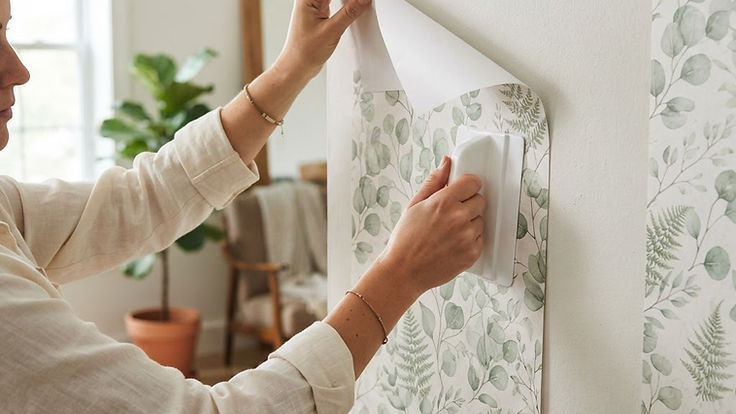
Self adhesive wallpaper, also called peel and stick wallpaper, promises a pattern-filled wall in an afternoon with no paste, no mess and no damage when you take it down. It's hugely popular with renters and anyone who loves to change their look, but it isn't right for every wall or every room. Used in the right place, it's brilliant. Used in the wrong one, it bubbles, peels at the seams and looks cheap.
In this guide I'll give you an honest answer to whether self adhesive wallpaper is any good, the pros and cons, where it works best and where to avoid it, how it compares with traditional wallpaper, how to apply it properly and whether you can put it over existing wallpaper.
What Is Self Adhesive Wallpaper?
Self adhesive wallpaper is a thin vinyl or fabric-effect wallcovering with a sticky back protected by a peel-off liner. Instead of pasting the wall or the paper, you peel back the liner, press the paper onto a clean, smooth wall and smooth it down. Most are designed to be removable, which is why they're often sold as "renter friendly".
Is Self Adhesive Wallpaper Any Good?
Yes, self adhesive wallpaper is good for feature walls, small spaces, rentals and furniture makeovers, on smooth, sound walls in rooms without much steam. It's less good on textured walls, in humid rooms, over very large areas and anywhere you want a high-end finish that lasts for decades.
That's broadly what the professionals say too. In a feature for Bob Vila, designer Zoe Grant of DBD Lifestyles points out that "Traditional works much better on textured walls than peel-and-stick does", while Nick Masengarb notes that "Peel-and-stick wallpaper is also much easier to repair", because you can simply replace one damaged panel.
Pros and Cons
| Pros | Cons |
|---|---|
| No paste, water or soaking | Struggles on textured or uneven walls |
| Quick to apply on a small wall | Can bubble, stretch or stick to itself if rushed |
| Usually removable, ideal for renters | Seams can be more visible than with good traditional paper |
| Easy to reposition while you're hanging it | Less durable over many years |
| Simple to repair by replacing a panel | Not waterproof; steam can lift the edges |
| Great for furniture, shelves and doors | Thin papers show every bump in the wall |
| Fun way to try a bold pattern | Can look less luxurious than premium wallpaper |
Where It Works Best, and Where to Avoid It
| Use it for | Avoid it for |
|---|---|
| A feature wall in a bedroom or living room | Heavily textured, Artex or woodchip walls |
| Rented homes | Freshly painted walls that haven't cured |
| Alcoves, the backs of shelves and cupboard insides | Inside showers or directly above baths |
| Children's rooms and nurseries | Walls with damp or flaking paint |
| Cloakrooms and low-steam toilets | Very large rooms where perfect seams matter |
| Furniture, doors and stair risers | Walls painted with chalky flat matt paint |
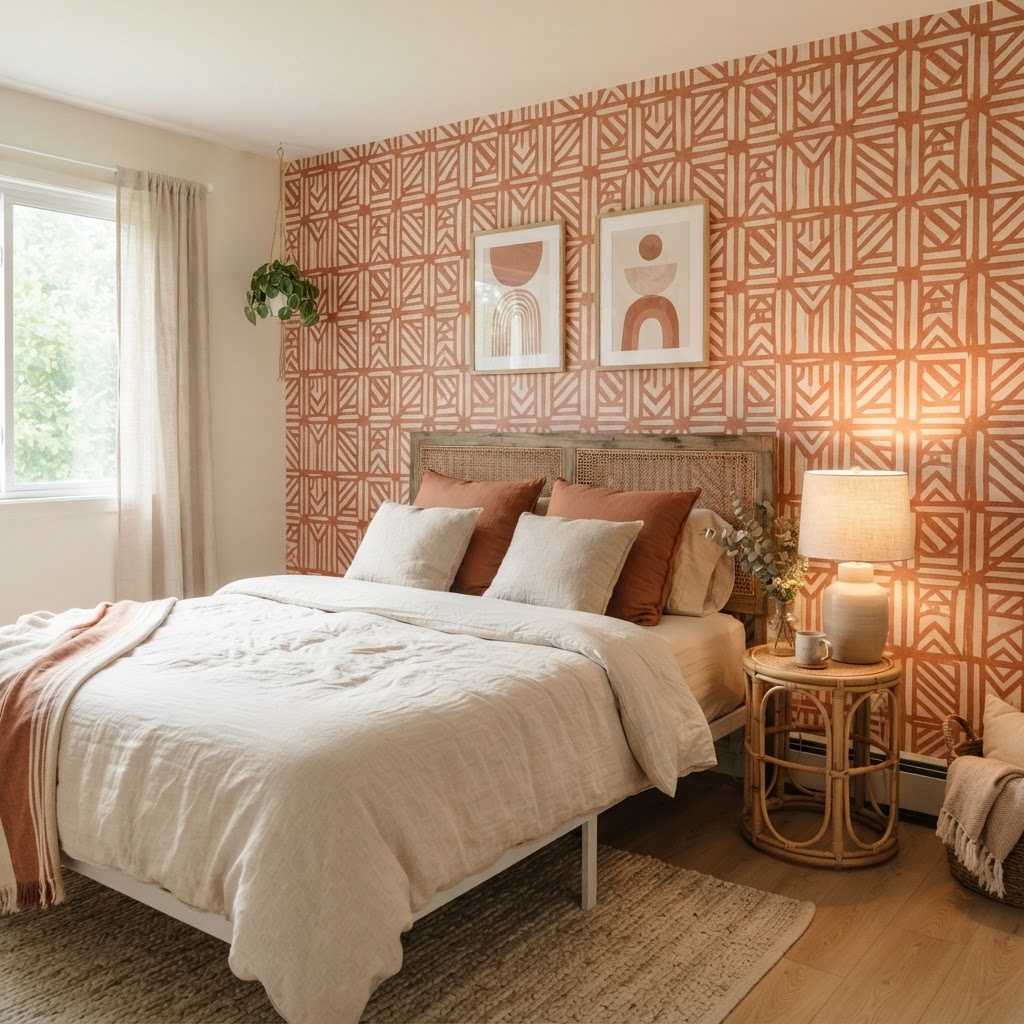
It's perfect for small, temporary changes, such as a pattern behind a bed in a rental, a playful wall in a nursery (some of these baby girl nursery ideas use exactly that trick), or a backdrop that zones the sleeping area in one of these small studio apartment ideas.
In bathrooms and kitchens, be cautious. Tempaper, one of the best known brands, describes its paper as steam and moisture resistant but "not waterproof" and doesn't recommend it near showers or splash zones, according to its guide to the pros and cons. In a steamy family bathroom, a proper vinyl with a mould-resistant paste is the safer choice for wallpaper in a bathroom.
Self Adhesive vs Traditional Wallpaper
| Self adhesive | Traditional (paste the wall or paste the paper) | |
|---|---|---|
| Installation | No paste; peel and press | Paste, soaking time and more tools |
| Best surfaces | Smooth, painted walls | Smooth or slightly imperfect walls |
| Removal | Usually peels off | Steaming or soaking, unless it's strippable |
| Lifespan | Shorter; can lift over time | Many years when hung well |
| Repairs | Easy: replace a panel | Harder; often needs a decorator |
| Choice of designs | Growing, often trend-led | Huge, including designer and heritage papers |
| Feel | Often thinner vinyl | Wide range, from heavy vinyl to textured papers |
My verdict as a designer: for a feature wall you might change in a couple of years, a rental, or a piece of furniture, self adhesive wallpaper is a great choice. For a whole room you plan to keep for ten years, a good quality paste the wall paper usually looks better and lasts longer.
How to Apply Self Adhesive Wallpaper
What you'll need
- Your wallpaper, plus about 10 to 15% extra for pattern matching and mistakes (the wallpaper calculator works out the number of rolls)
- A plastic smoothing tool or card
- A sharp craft knife with spare blades and a metal ruler
- A spirit level or laser level and a pencil
- A cloth and a mild cleaner
- A step ladder
Steps
- Prepare the wall. It must be smooth, clean, dry and sound. Fill holes, sand bumps and wipe away dust and grease. Tempaper recommends walls "primed and painted with an eggshell, satin, or semi-gloss paint" and advises against flat matt paint, as its chalky surface can affect how well the paper sticks and how cleanly it comes off.
- Let fresh paint cure. If you've just painted, check the wallpaper manufacturer's guidance on how long to wait, as paper hung too soon can stick to the soft paint or lift.
- Mark a straight line. Use a level to draw a vertical guide for the first panel. Walls and corners are rarely perfectly straight.
- Peel a little at a time. Remove about 30cm of the liner, line up the top of the panel with a small overhang at the ceiling and press it on lightly.
- Smooth as you go. Pull the liner down slowly at a low angle with one hand while smoothing from the centre outwards with the other, pushing out air bubbles.
- Match the pattern on the next panel, overlapping or butting the edges as the manufacturer advises.
- Trim the excess at the ceiling, skirting and around sockets with a fresh, sharp blade.
- Press the edges firmly and check for bubbles. Small bubbles can be pricked with a pin and smoothed flat.
Top tip: don't let the sticky side touch itself. Peel slowly, ideally with a second pair of hands for long drops.
Can You Put Self Adhesive Wallpaper Over Wallpaper?
Usually it's better not to. Self adhesive wallpaper needs a smooth, firm surface to grip. Over textured, embossed or peeling wallpaper it won't stick properly, the old pattern can show through, and when you remove it, it may pull the old paper off with it. It also isn't designed to grip glossy vinyl surfaces reliably.
If the existing paper is smooth, firmly stuck down and in good condition, it can work, but test a small piece somewhere discreet for a week first. For the best result, strip the old paper, make good the wall and paint it with a suitable primer or paint.
Can Self Adhesive Wallpaper Be Removed?
Yes, most self adhesive wallpapers are designed to peel off without damaging a well-prepared wall. Start at a top corner and peel slowly, close to the wall at a low angle. If it resists, warm it gently with a hairdryer to soften the adhesive. On walls with weak or flat paint, or on old plaster, there's a risk of lifting paint, so always test first.
If you're hoping to hang it again somewhere else, careful removal matters, because peel and stick wallpaper can sometimes be reused when the panels haven't stretched and the adhesive is still clean.
Self Adhesive Wallpaper Borders
Self adhesive borders are a quick way to add a band of pattern at dado or picture rail height, around a child's room or along the top of tiles in a cloakroom. Measure carefully, mark a level line and work in short lengths so the border stays straight.
Common Mistakes to Avoid
| Mistake | Why it's a problem | What to do instead |
|---|---|---|
| Applying to textured walls | Poor contact and peeling | Choose traditional paper or smooth the wall |
| Skipping the clean | Dust and grease stop it sticking | Wipe the wall and let it dry |
| Hanging on freshly painted walls | Can stick to or lift soft paint | Follow the manufacturer's waiting time |
| Removing all the liner at once | The paper sticks to itself | Peel about 30cm at a time |
| Using a blunt blade | Tears and ragged edges | Change blades often |
| Hanging it in a steamy shower room | Edges lift in humidity | Use vinyl wallpaper and a bathroom paste |
Frequently Asked Questions
Is self adhesive wallpaper any good?
Yes, for feature walls, rentals, small spaces and furniture, on smooth painted walls in low-humidity rooms. It's less suitable for textured walls, steamy bathrooms and long-term whole-room schemes.
Does self adhesive wallpaper damage walls?
On a smooth, well-prepared wall painted with a suitable paint, most peel off cleanly. On flat matt paint, poorly bonded paint or old plaster it can lift paint, so test a small area first.
Can you put self adhesive wallpaper over existing wallpaper?
It's best not to. It needs a smooth, firm surface and may not stick to textured or vinyl wallpaper. Strip the old paper and prepare the wall for the best results.
How long does self adhesive wallpaper last?
It depends on the quality, the wall and the room. On a smooth wall in a dry room it can last several years, but it's generally less durable than well hung traditional wallpaper.
Can you use self adhesive wallpaper in a bathroom?
In a cloakroom or a well-ventilated bathroom away from water, yes. Most are steam resistant rather than waterproof, so keep them away from showers and splash zones.
Is self adhesive wallpaper easy to apply?
It's easier than pasted wallpaper on a small wall, but it still takes care: prepare the wall, peel the liner slowly, smooth out bubbles and use a sharp blade.
The Easy Way to Try a Bold Look
Self adhesive wallpaper is a fantastic tool for feature walls, rentals, nurseries and quick makeovers, as long as you choose the right wall and prepare it well. For a long-lasting, high-end finish across a whole room, traditional wallpaper is still the winner.
For more decorating ideas, explore the decorating section, and if you'd like help choosing a wallpaper and colour scheme for your home, you can book a one-hour online interior design consultation with me.
About the author
Magda Callery is a UK interior designer and florist with more than 15 years' experience designing homes, pubs, restaurants and bars, and her expert commentary has featured in Homes & Gardens, The Mirror and The Spruce. Explore more of the decorating articles.
Continue reading

How to Remove Black Mould From Wallpaper Safely
How to remove black mould from wallpaper safely, the right method for vinyl, paper and peel and stick wallpaper, when to strip the paper instead, why wallpaper keeps going black and how to stop mould coming back.

How to Whiten Wood: Bleach, Limewash and Whitewash
How to whiten wood the right way: when to use two-part wood bleach, oxalic acid or chlorine bleach, how to whitewash, lime and white-oil wood, which woods work best and how to stop whitened wood turning yellow.

How to Antique a Mirror: 2 Easy DIY Methods
How to antique a mirror at home: why old mirrors look the way they do, an easy spray method on clear glass, how to age an existing mirror, safety rules and where antiqued mirrors look best.