
Edgecomb Gray Review: Benjamin Moore HC-173 Explained
An honest Edgecomb Gray review: what colour Benjamin Moore HC-173 really is, its LRV and undertones, how it looks in different light, how it compares with Revere Pewter, Agreeable Gray and Pale Oak, the best trim whites and coordinating colours.
By Magda Callery, interior designer and florist
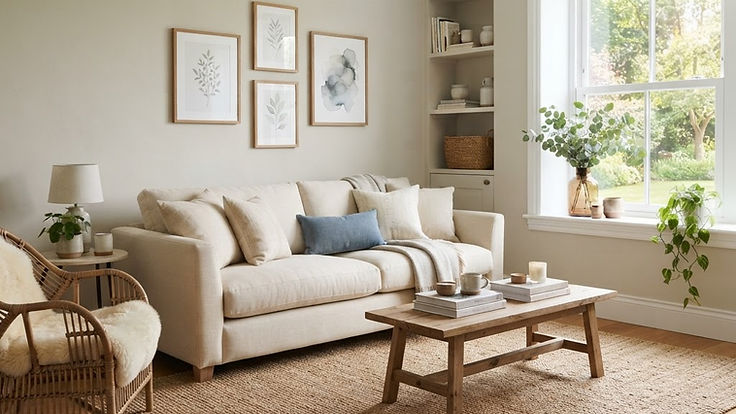
Edgecomb Gray is one of Benjamin Moore's best loved neutrals, and it's easy to see why. It's a soft, warm greige that sits somewhere between grey and beige, light enough to keep a room bright but with just enough warmth to feel welcoming rather than cold. It works in almost any style of home, from a modern farmhouse to a classic colonial, and it's a favourite with designers who need a neutral that simply behaves.
In this review I'll explain exactly what colour Edgecomb Gray is, its LRV and undertones, how it changes in different light, how it compares with Revere Pewter, Agreeable Gray, Pale Oak and Classic Gray, the best trim whites and coordinating colours, and whether it's still a good choice today.
Edgecomb Gray at a Glance
| Detail | Edgecomb Gray |
|---|---|
| Brand and code | Benjamin Moore HC-173 |
| Collection | Historical Colors |
| LRV | 63.09, according to Benjamin Moore |
| Hex code | #D9D3C4 |
| Colour family | Warm greige (Benjamin Moore lists it as a light beige) |
| Undertones | Warm, soft taupe; can lean slightly green or beige in some light |
| Best rooms | Living rooms, bedrooms, hallways, open-plan spaces |
| Best trim | Soft, warm whites |
Benjamin Moore describes it on its Edgecomb Gray colour page as "A go-to neutral that can refresh a space, while providing a warm, welcoming feeling." You may see an older LRV of around 63.9 quoted elsewhere; either way, it sits firmly in the light to mid-light range.
What Colour Is Edgecomb Gray? Beige or Gray?
Edgecomb Gray is a greige: a light warm grey with beige undertones. On the wall it usually reads as a soft, warm off-white grey in bright rooms and a gentle putty or mushroom tone in dimmer ones. It isn't a cool grey at all, so if you want a crisp, steely grey, this isn't it. If you want a neutral that feels warm without looking yellow, it's one of the safest choices there is.
Its warmth comes from a soft taupe undertone. In most homes it doesn't pull strongly pink or purple, but it can show a hint of green next to green planting or in north-facing rooms, and it can look more beige beside stark white.
LRV: How Light Is Edgecomb Gray?
LRV (light reflectance value) measures how much light a colour reflects, from 0 (black) to 100 (pure white). At around 63, Edgecomb Gray reflects a good amount of light, so it keeps rooms bright but still shows clearly as a colour against white trim. It's light enough for small or dark rooms, but not so pale that it disappears in a sunny one.
How Edgecomb Gray Looks in Different Light
| Room direction | How it looks | Tip |
|---|---|---|
| North-facing | Cooler, slightly greyer, can hint at green | Pair with warm whites and warm bulbs |
| South-facing | Warm, soft and creamy | Lovely all day; may look closer to beige |
| East-facing | Bright and warm in the morning, cooler later | Test morning and evening |
| West-facing | Cooler in the morning, glowing and warm in the evening | Good for living rooms used at night |
| Artificial light | Warmer under warm white bulbs | Choose warm white bulbs to keep it cosy |
Always test a large sample on two walls for a few days, ideally a peel and stick sample or a painted sheet of card, and look at it at different times of day.
Edgecomb Gray Compared With Similar Colours
| Colour | LRV (approx.) | How it compares with Edgecomb Gray |
|---|---|---|
| Revere Pewter (BM HC-172) | about 55 | Darker, deeper and more obviously greige; more likely to show green |
| Agreeable Gray (Sherwin-Williams SW 7029) | about 60 | Slightly darker and a touch cooler and greyer |
| Gray Owl (BM OC-52) | about 66 | Cooler, with a green-blue grey undertone |
| Balboa Mist (BM OC-27) | about 67 | Lighter and a little cooler and softer |
| Pale Oak (BM OC-20) | about 70 | Lighter, with a soft taupe that can lean pink or violet |
| Classic Gray (BM OC-23) | about 75 | Much lighter, almost an off-white, with less warmth |
LRVs vary slightly between sources and are updated by manufacturers from time to time, so treat these as a guide and check the current colour pages.
Edgecomb Gray vs Revere Pewter: these two sit side by side in Benjamin Moore's Historical Colors, and they're often used together. Revere Pewter is noticeably darker and richer, while Edgecomb Gray is lighter and softer. A popular approach is Revere Pewter in a dining room or on lower walls with Edgecomb Gray in the hallway and living areas, so the whole house flows.
Edgecomb Gray vs Agreeable Gray: both are warm, versatile neutrals, but Edgecomb Gray is a little lighter and warmer, while Agreeable Gray reads slightly greyer and cooler. If your room is dark, Edgecomb Gray is usually the brighter choice.
Does Edgecomb Gray Go With Honey Oak?
Yes, it's one of the better neutrals for honey oak floors, cabinets and trim. Its warm, beige-leaning undertone harmonises with the orange and yellow tones in oak rather than fighting them, which cool greys often do. For the best result:
- Keep the trim a soft warm white rather than bright white, which can make the oak look more orange.
- Add contrast with darker accents such as charcoal, navy or deep green.
- Balance the warmth with plenty of texture: linen, wool and woven baskets.
If you're thinking of updating honey oak furniture rather than living with it, limewash and liming wax can soften it, and it's easy to whiten wood at home.
Best Trim Colours for Edgecomb Gray
| Trim white | Effect |
|---|---|
| White Dove (BM OC-17) | Soft, warm and creamy; the classic, gentle pairing |
| Simply White (BM OC-117) | Bright and warm; crisp but not cold |
| Chantilly Lace (BM OC-65) | Clean and bright; maximum contrast |
| Dove Wing (BM OC-18) | A soft, warm white that Benjamin Moore lists as a coordinating colour |
| White Heron (BM OC-57) | A gentle, light white, also suggested by Benjamin Moore |
Soft, warm whites keep the look relaxed, while brighter whites make Edgecomb Gray look a little darker and more defined. Any of the softer white paint colours with a warm base will work too.
Colours That Go With Edgecomb Gray
Benjamin Moore's own coordinating colours for Edgecomb Gray include Boothbay Gray (HC-165), a soft blue grey, Pashmina (AF-100), a deeper greige, and the whites Dove Wing and White Heron. Beyond those, it pairs beautifully with:
- Navy, such as Benjamin Moore Hale Navy (HC-154), for doors, cabinets or an island. An inky blue like Dulux Ink Well works the same way in the UK.
- Charcoal, such as Kendall Charcoal (HC-166), for a front door or a moody accent wall.
- Sage and olive greens. Soft sage green kitchen cabinets or olive green velvet look lovely against warm greige walls.
- Blush, terracotta and rust in textiles and accessories, for warmth.
- Natural materials: oak, walnut, rattan, linen and stone.
If you're building a whole house palette, Edgecomb Gray makes an excellent anchor shade, and having one makes choosing a colour palette for the rest of the house far easier.
Where to Use Edgecomb Gray
- Living rooms: a calm backdrop for wood, linen and art. In a small living room, its LRV keeps the space light.
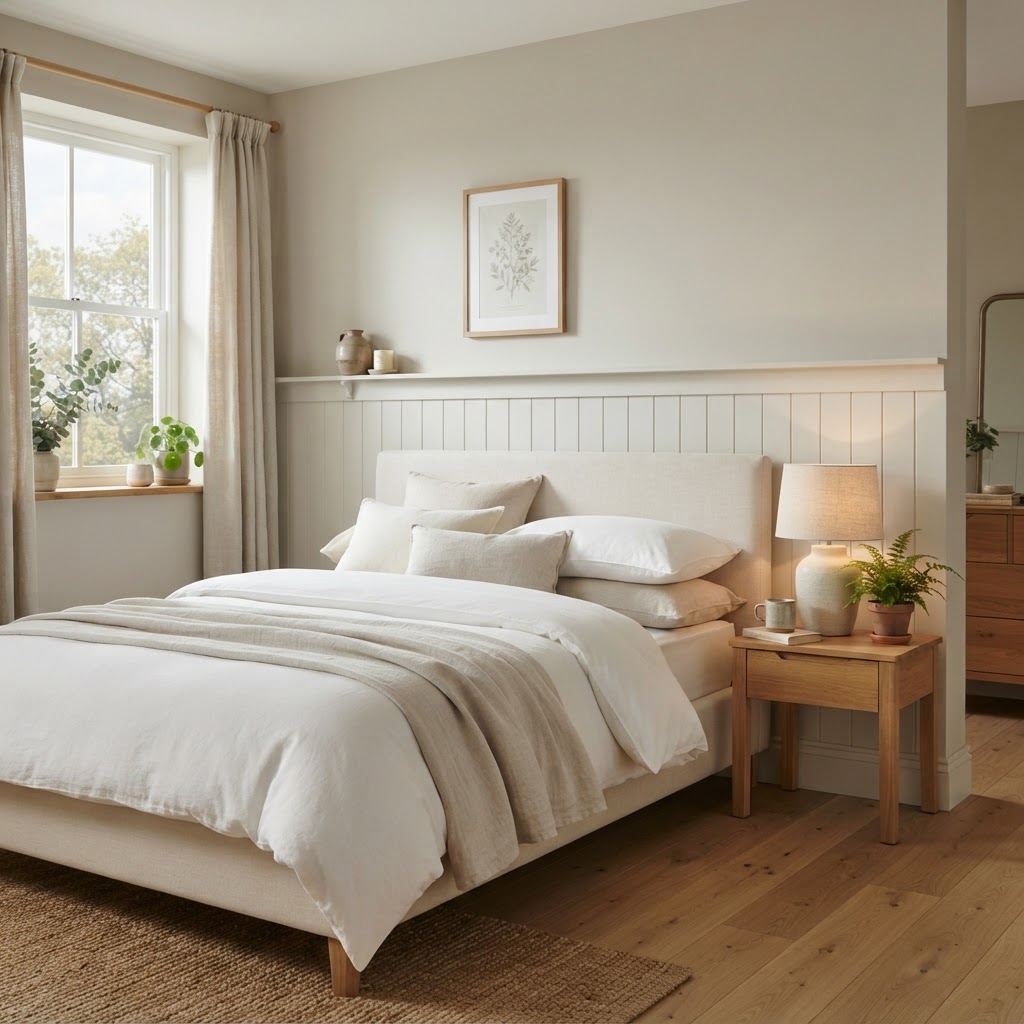
- Bedrooms: soft and restful, especially with white bedding and warm wood.
- Hallways and open-plan spaces: a reliable whole house neutral that links rooms.
- Kitchens: on walls with white or wood cabinets, or with a navy or green island.
- Exteriors: a soft, warm siding colour, often paired with white trim and a charcoal or navy door.
- Cabinets: a gentle alternative to white for kitchen or bathroom cabinetry, though it can look quite light on large runs.
Is Edgecomb Gray Dated or Still Popular?
Edgecomb Gray is still very popular, and it hasn't dated in the way that cool, flat greys have. Interiors have moved away from icy greys towards warmer neutrals, and Edgecomb Gray's soft beige warmth sits right in that sweet spot. The way to keep it feeling current is in how you style it: pair it with warm woods, natural textures, warm whites and an earthy accent colour, rather than with chrome, glossy white and cool grey furniture.
If you prefer the warmth of greige but want something a little more modern, consider using it with deeper accents such as olive, rust or ink blue, or explore the warmer side of grey.
Can You Buy Edgecomb Gray in the UK?
Yes. Benjamin Moore paint is sold in the UK through independent stockists, so you can buy Edgecomb Gray as it is rather than relying on a colour match. Colour matches at other paint counters can be close, but undertones often shift, so always compare a sample of the match next to a genuine swatch.
Common Mistakes to Avoid
| Mistake | Why it's a problem | What to do instead |
|---|---|---|
| Choosing from a tiny chip | Colours look darker and stronger on the wall | Test a large sample on two walls |
| Pairing with cool, bright white | Can make Edgecomb Gray look beige or dull | Choose a soft warm white |
| Using cool grey furniture | The room feels muddy and mismatched | Use warm woods and natural textures |
| Expecting a true grey | It's a warm greige, not a cool grey | Choose a cooler grey if that's the look you want |
| Ignoring the light | It can look greener in north-facing rooms | Test at different times of day |
Frequently Asked Questions
What colour is Edgecomb Gray?
Edgecomb Gray (Benjamin Moore HC-173) is a light, warm greige: a soft grey with beige undertones that reads as a warm off-white grey in bright light and a gentle putty tone in dimmer rooms.
Is Edgecomb Gray beige or gray?
It's both, which is why it's called a greige. It looks grey next to creams and beiges, and a little more beige next to cool, bright whites.
What is the LRV of Edgecomb Gray?
Benjamin Moore lists Edgecomb Gray's LRV as 63.09, with older sources quoting around 63.9. Either way, it's a light colour that reflects plenty of light.
Does Edgecomb Gray go with honey oak?
Yes. Its warm, beige-leaning undertone works well with honey oak floors and cabinets. Use a soft warm white on the trim and add darker accents for contrast.
Does Edgecomb Gray go with Revere Pewter?
Yes. They sit next to each other in Benjamin Moore's Historical Colors and work beautifully together, with Revere Pewter as the deeper shade and Edgecomb Gray as the lighter one.
Is Edgecomb Gray dated?
No. Warm neutrals are still very popular, and Edgecomb Gray's soft warmth keeps it current, especially when it's paired with warm woods, natural textures and warm whites.
What white goes with Edgecomb Gray?
Soft warm whites such as White Dove and Dove Wing give a gentle look, while Simply White and Chantilly Lace give a brighter, crisper contrast.
Is Edgecomb Gray Right for You?
If you want a light, warm, easy neutral that works in almost every room and with almost every style, Edgecomb Gray is a superb choice. Test it in your own light, pair it with a soft white and warm materials, and add one or two deeper accents to give it depth.
For more paint colour advice, explore the decorating section, and if you'd like help choosing the right neutral and building a colour scheme for your home, you can book a one-hour online interior design consultation with me.
About the author
Magda Callery is a UK interior designer and florist with more than 15 years' experience designing homes, pubs, restaurants and bars, and her expert commentary has featured in Homes & Gardens, The Mirror and The Spruce. Explore more of the decorating articles.
Continue reading

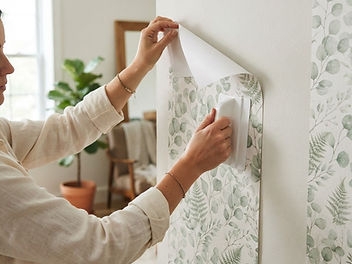
Is Self Adhesive Wallpaper Any Good? Honest Guide
An honest guide to self adhesive wallpaper: whether peel and stick wallpaper is any good, the pros and cons, where it works and where to avoid it, how it compares with traditional wallpaper, how to apply it and whether it can go over existing wallpaper.

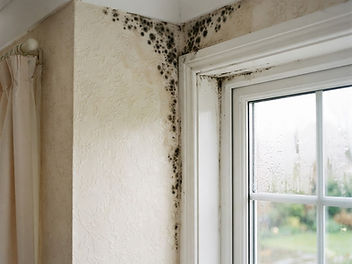
How to Remove Black Mould From Wallpaper Safely
How to remove black mould from wallpaper safely, the right method for vinyl, paper and peel and stick wallpaper, when to strip the paper instead, why wallpaper keeps going black and how to stop mould coming back.

How to Whiten Wood: Bleach, Limewash and Whitewash
How to whiten wood the right way: when to use two-part wood bleach, oxalic acid or chlorine bleach, how to whitewash, lime and white-oil wood, which woods work best and how to stop whitened wood turning yellow.