Shoji White vs Swiss Coffee: Which White to Choose?
Shoji White vs Swiss Coffee, compared by an interior designer: LRV, undertones, the difference between Behr and Benjamin Moore Swiss Coffee, how each looks in different light, trim colors, best rooms and exteriors.
By Magda Callery, interior designer and florist
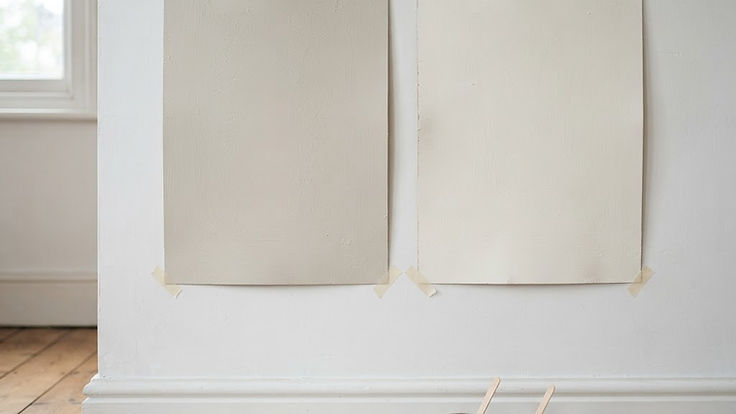
Shoji White and Swiss Coffee are two of the most popular warm whites in America, and they're often shortlisted for the same rooms. Both are soft, welcoming and far easier to live with than a stark, brilliant white. But side by side they're noticeably different: Shoji White is a deeper, gray-beige off-white, while Swiss Coffee is a brighter, creamier white. Choosing the wrong one can make a room feel either murky or too yellow.
In this comparison I'll explain exactly how Shoji White and Swiss Coffee differ in LRV, undertone and depth, which Swiss Coffee you might be looking at (there's more than one), how each behaves in different light, the best trim colours, which rooms and exteriors suit each one, and how to decide between them.
Shoji White vs Swiss Coffee at a Glance
| Sherwin-Williams Shoji White | Behr Swiss Coffee | Benjamin Moore Swiss Coffee | |
|---|---|---|---|
| Code | SW 7042 | 12 | OC-45 |
| LRV | 74 | 84 | 81.91 |
| Hex | #E6DFD3 | #F1EDE0 | #EEECE1 |
| Looks like | A soft, warm off-white with gray-beige depth | A creamy warm white | A soft, warm white, slightly less creamy |
| Undertone | Warm beige with a touch of gray; can hint at green in some light | Warm cream | Warm, with a slightly softer, grayer edge |
| Best for | Walls where you want warmth and gentle depth | Walls, cabinets and trims where you want a bright, cosy white | Walls, cabinets and trims |
Behr describes its Swiss Coffee as "a warm white color with an unmistakable cream base" on its Swiss Coffee colour page, while Benjamin Moore calls its version "An essential white paint color with just the right amount of warmth" on its Swiss Coffee OC-45 page.
Which Swiss Coffee Are You Comparing?
This is where a lot of confusion starts. "Swiss Coffee" is a colour name used by several paint brands, and the versions aren't identical:
- Behr Swiss Coffee (12) is the one most people mean in the US. It's the brightest and creamiest of the two main versions, with an LRV of 84.
- Benjamin Moore Swiss Coffee (OC-45) is a touch darker, at an LRV of 81.91, and slightly softer and less yellow.
Other brands have their own Swiss Coffee too, and paint counters will often colour-match one brand's version in another brand's paint. Always check the brand and code on the sample, not just the name.
The Key Differences
Depth and LRV
LRV, or light reflectance value, measures how much light a colour reflects, from 0 for black to 100 for pure white. Shoji White's LRV of 74 puts it around ten points below Behr Swiss Coffee, which is a big difference in whites. On the wall, Shoji White reads as a light neutral or off-white, while Swiss Coffee reads clearly as a white.
Undertone
- Shoji White has a warm beige base softened with gray. In some light, especially next to greenery or in north-facing rooms, it can show a subtle green tinge. It never looks pink or peachy.
- Swiss Coffee has a creamy, yellow-leaning warmth. Behr's version is the more obviously cream of the two; Benjamin Moore's is a little softer.
How warm they feel
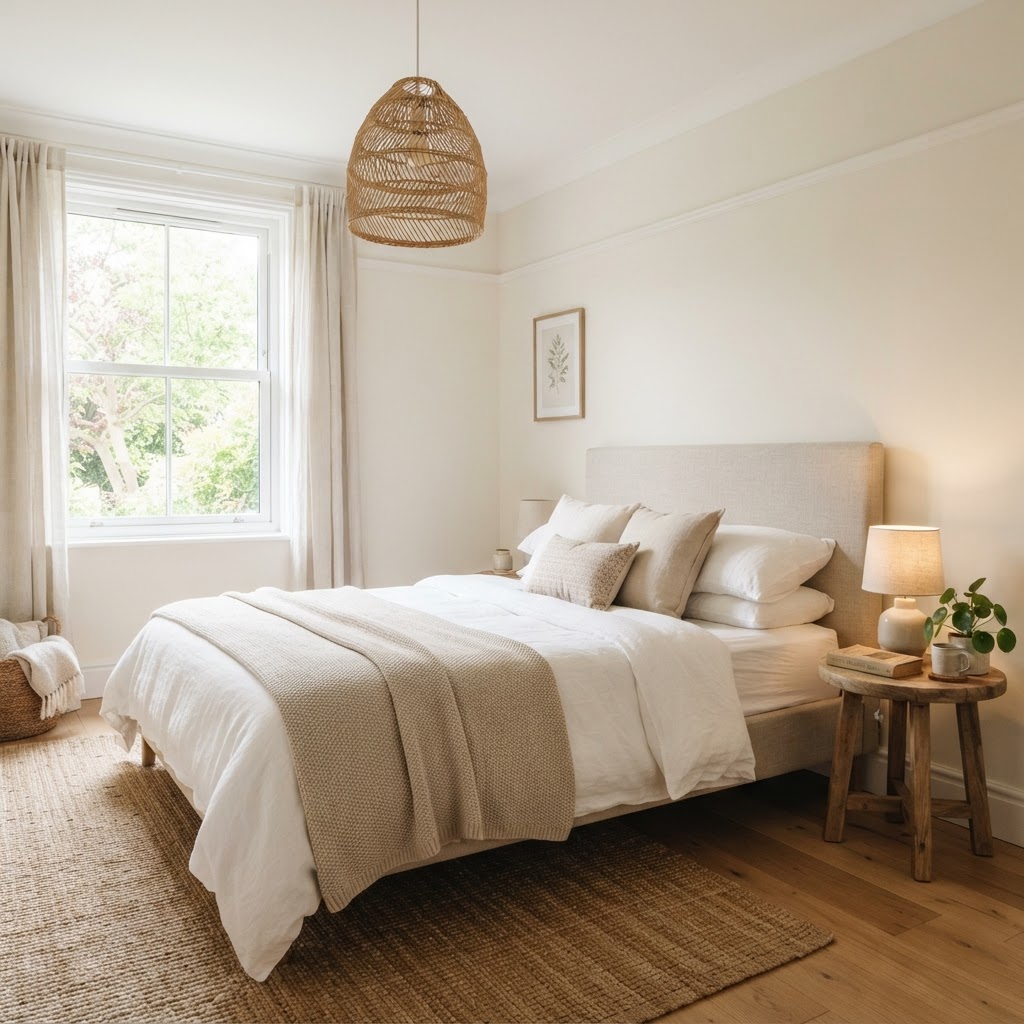
Both are warm whites, but in different ways. Shoji White feels earthy and calm, a little like natural plaster or linen. Swiss Coffee feels cosy and sunny, more like cream or buttermilk.
How They Look in Different Light
| Room direction | Shoji White | Swiss Coffee |
|---|---|---|
| North-facing | Can look grayer and occasionally slightly green | Stays warm and creamy, a good choice for cool light |
| South-facing | Glows warm beige, lovely and soft | Can look quite yellow in strong sun |
| East-facing | Bright in the morning, softer and grayer later | Fresh in the morning, creamy later |
| West-facing | Warm and golden in the evening | Very warm, almost golden, in the evening |
| Artificial light | Warm bulbs bring out its beige; cool bulbs its gray | Warm bulbs make it cosier; cool bulbs keep it cleaner |
Always test large samples on two walls and look at them morning, afternoon and evening before you decide.
Shoji White: Where It Works Best
- Living rooms and family rooms, where you want warmth with a little depth so the walls don't feel glaring.
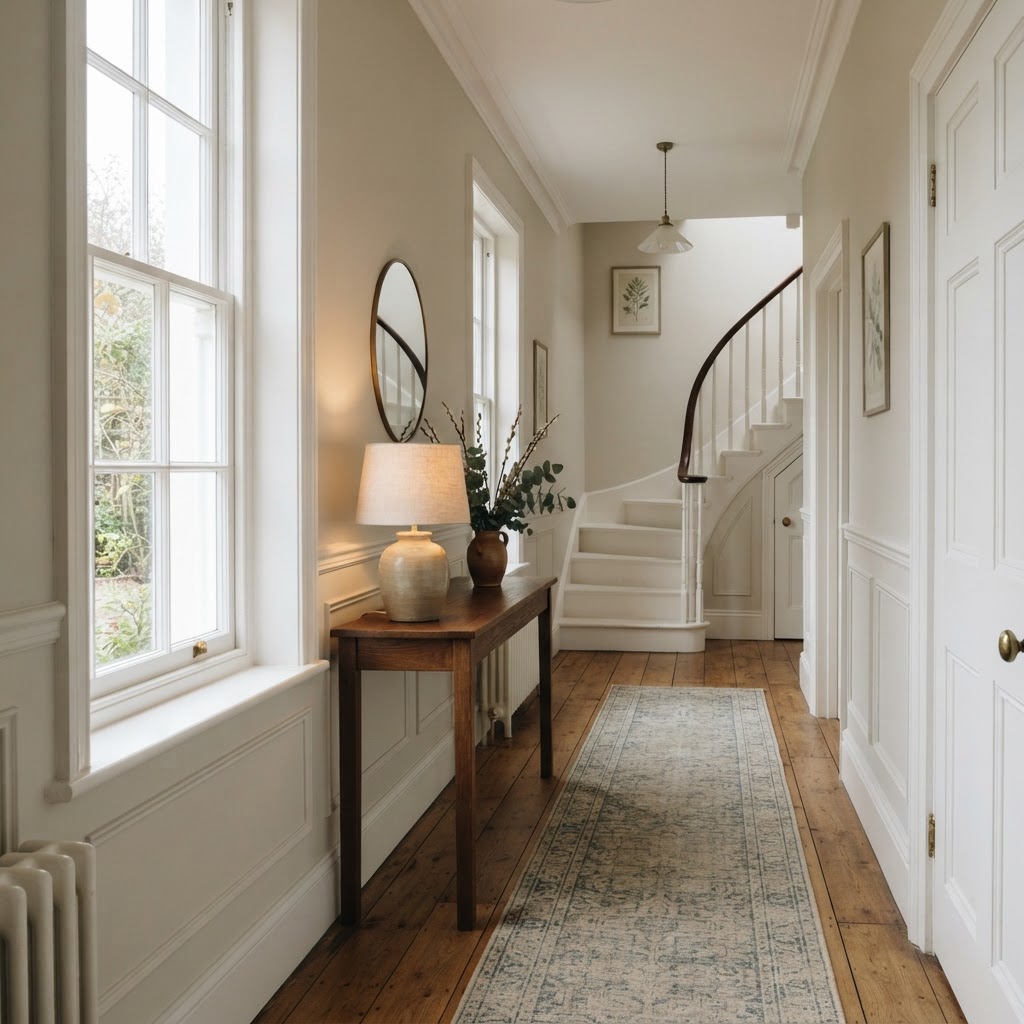
- Open-plan spaces and hallways, as a calm whole-house neutral that links rooms.
- Rooms with lots of light, especially south and west-facing, where it glows rather than washing out.
- Japandi, organic modern and minimal schemes with oak, linen, rattan and stone.
- Exteriors, as a soft, warm off-white that doesn't glare in bright sun.
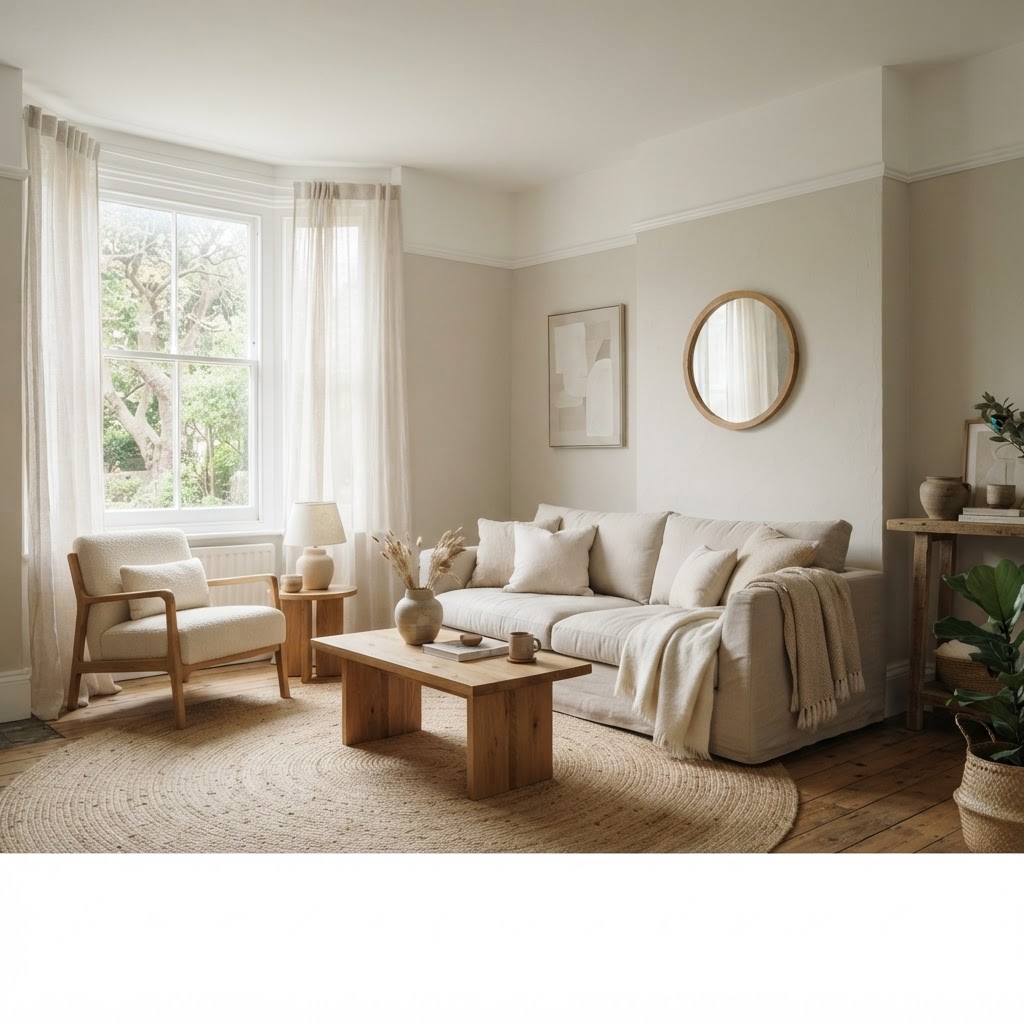
Be careful in dark, north-facing rooms, where Shoji White can look gray or flat, and next to strongly green surroundings, which can bring out a green tinge.
Swiss Coffee: Where It Works Best
- Kitchen cabinets, where its creamy warmth looks classic with brass, marble and wood.
- Bedrooms, for a soft, cosy white that feels restful.
- North-facing rooms, where its cream base keeps the room from feeling cold.
- Trim, doors and ceilings, especially in warm-toned houses.
- Traditional, cottage and farmhouse schemes.
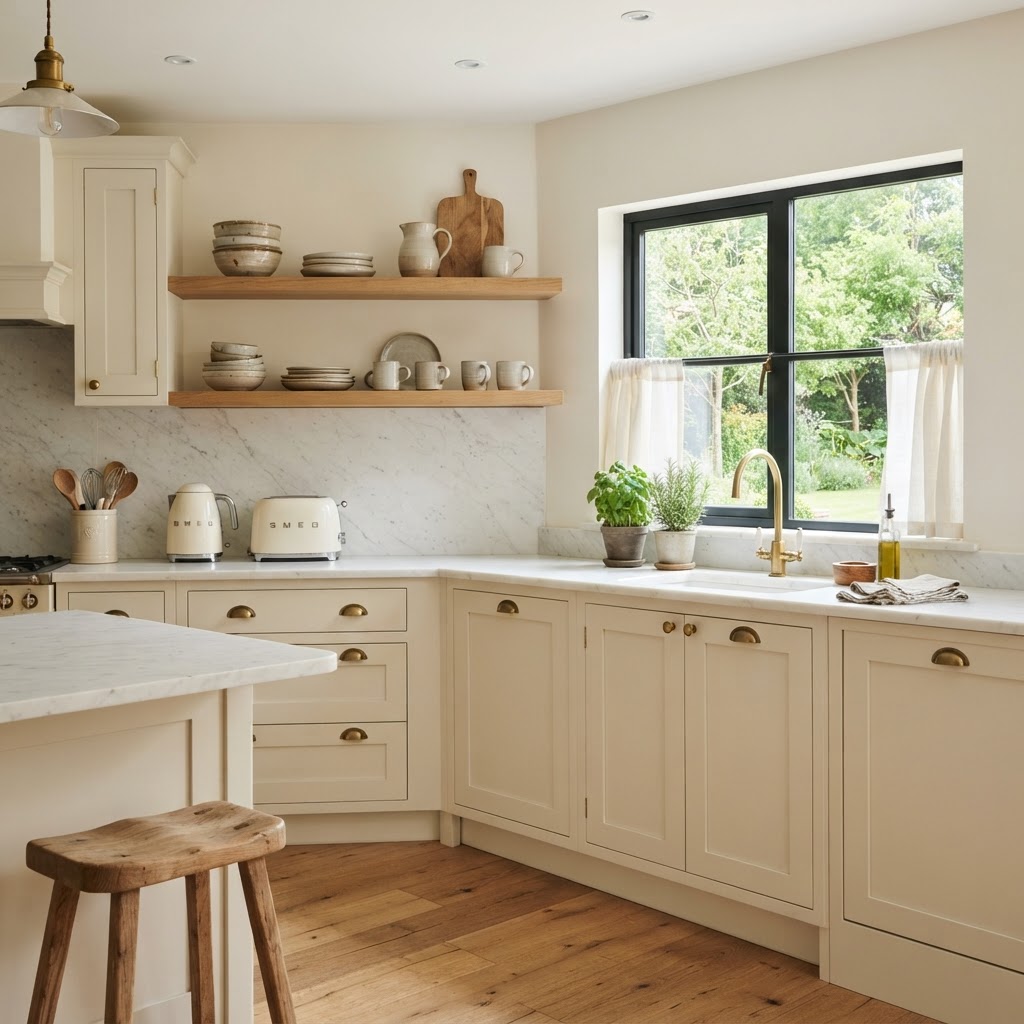
Be careful in very sunny south-facing rooms, where Behr Swiss Coffee in particular can tip into yellow, and next to cool, bright whites, which make it look more cream.
Best Trim Colors
| Wall colour | Trim options | Effect |
|---|---|---|
| Shoji White | Sherwin-Williams Pure White SW 7005 or Extra White SW 7006 | Clean, crisp contrast that makes the walls look intentionally warm |
| Shoji White | Swiss Coffee | Soft, low-contrast and cosy |
| Swiss Coffee | The same Swiss Coffee in semi-gloss | Seamless and calm; very popular in modern homes |
| Swiss Coffee | Benjamin Moore Chantilly Lace OC-65 | Brighter, crisper trim |
Can you use Shoji White walls with Swiss Coffee trim? Yes. Because Swiss Coffee is lighter and creamier, it reads as a soft white trim against Shoji White's deeper off-white, giving a gentle, layered look rather than stark contrast.
Shoji White vs Swiss Coffee for Exteriors
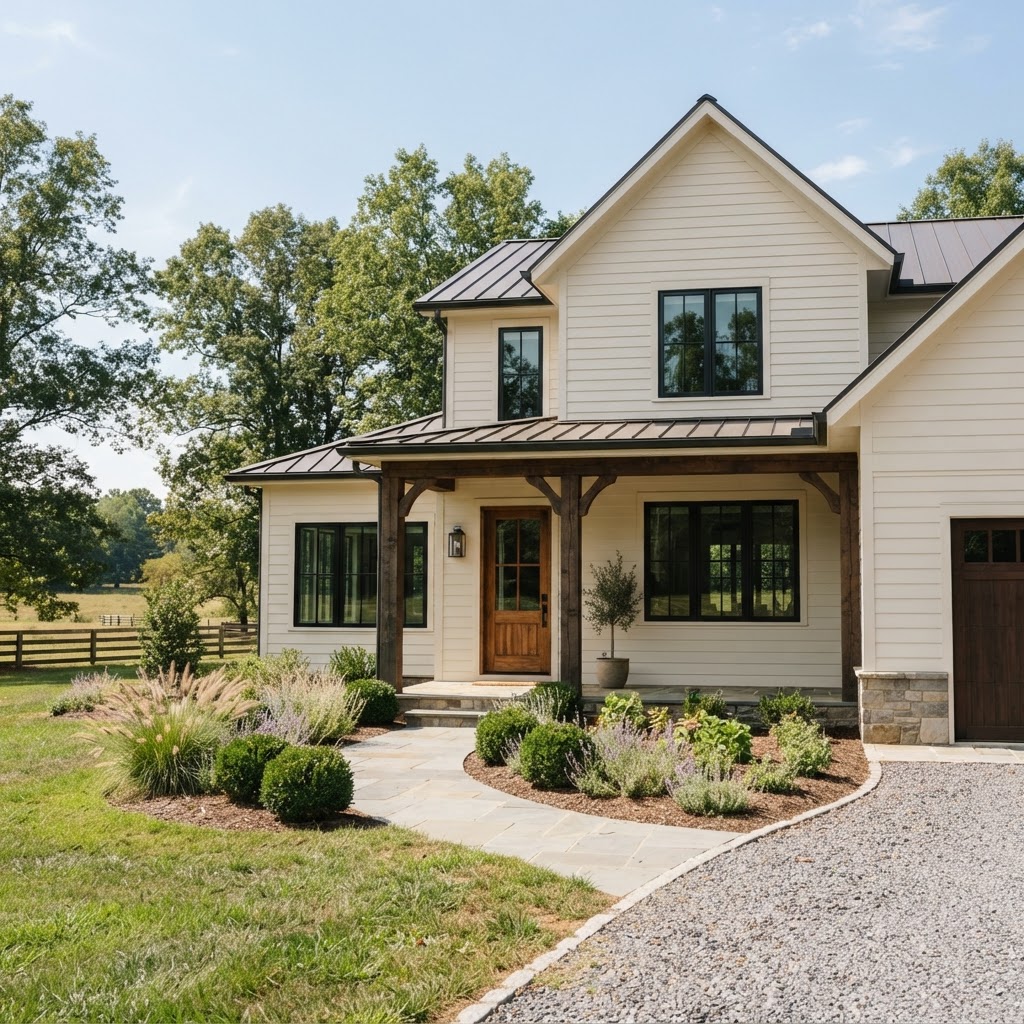
Both are popular exterior colours. Shoji White gives a soft, warm off-white that won't glare in strong sun and looks lovely with black or bronze windows and natural wood. Swiss Coffee gives a brighter, creamier white that suits farmhouses and traditional homes, again with black windows, as on a classic white house with black trim, or soft gray trim. Remember that exterior colours look much lighter outdoors, so a colour that feels slightly too dark indoors may be perfect on a house. For ideas on trim colours outside, a white house with gray trim is a soft, classic combination.
Colors That Go With Each
| Pairing | Shoji White | Swiss Coffee |
|---|---|---|
| Woods | Oak, ash, walnut | Pine, oak, cherry |
| Accent colours | Sage, olive, terracotta, charcoal | Navy, sage, terracotta, blush |
| Metals | Black, bronze, brushed brass | Brass, gold, antique bronze |
| Fabrics | Linen, bouclé, wool | Cotton, linen, velvet |
Both whites sit beautifully with soft greens, and if you're planning a kitchen, sage green kitchen cabinets with Swiss Coffee walls is a lovely combination.
Similar Colors to Consider
| Colour | How it compares |
|---|---|
| Sherwin-Williams Alabaster SW 7008 | A creamy white, close to Swiss Coffee in feel, and much lighter than Shoji White |
| Benjamin Moore White Dove OC-17 | Slightly brighter than Swiss Coffee, with a soft warmth (LRV 83.16) |
| Benjamin Moore Edgecomb Gray HC-173 | Much deeper than Shoji White; a true greige rather than an off-white |
| Farrow & Ball Wimborne White | A soft, warm UK white; Wimborne White is a good comparison for British readers |
For a wider view of whites and how undertones work, it's worth comparing more white paint colours side by side.
How to Choose Between Them
- Choose Shoji White if you want a warm neutral with a little depth, your room gets good light, and you love earthy, organic or Japandi-style interiors.
- Choose Swiss Coffee if you want a cosy, creamy white, your room is north-facing or a little dark, or you're painting cabinets or trim.
- If you can't decide, use both: Shoji White on the walls and Swiss Coffee on the trim, ceilings or cabinets.
Common Mistakes to Avoid
| Mistake | Why it's a problem | What to do instead |
|---|---|---|
| Not checking which Swiss Coffee | Brands' versions differ | Check the brand and code on every sample |
| Choosing from a tiny chip | Whites look darker and stronger on walls | Test large samples on two walls |
| Shoji White in a dark north room | Can look gray and flat | Choose Swiss Coffee or a lighter warm white |
| Behr Swiss Coffee in strong sun | Can look yellow | Test it in your light, or choose a softer white |
| Cool, bright trim with Swiss Coffee | Makes the walls look creamier | Use the same white in a higher sheen |
Frequently Asked Questions
Is Shoji White darker than Swiss Coffee?
Yes. Shoji White has an LRV of 74, while Behr Swiss Coffee is 84 and Benjamin Moore Swiss Coffee is 81.91, so Shoji White is noticeably deeper and reads more as an off-white or light neutral.
Is Shoji White warmer than Swiss Coffee?
Both are warm. Shoji White's warmth is beige and slightly gray, while Swiss Coffee's is creamier and more yellow, so Swiss Coffee usually looks warmer and cosier.
Does Shoji White look green?
It can show a subtle green tinge in some light, especially in north-facing rooms or next to lots of greenery outside. It never looks pink.
Is Swiss Coffee too yellow?
It can look yellow in strong sun or next to cool, bright whites, especially Behr's version. In north-facing rooms it simply looks warm and creamy.
What trim color goes with Shoji White?
Sherwin-Williams Pure White or Extra White give crisp contrast, while Swiss Coffee gives a softer, low-contrast look.
Can you use Swiss Coffee on kitchen cabinets?
Yes. It's one of the most popular creamy whites for cabinets, and it looks beautiful with brass hardware, marble and wood.
Which is better for exteriors?
Both work. Shoji White gives a softer, deeper off-white that won't glare, and Swiss Coffee gives a brighter, creamier white. Test both outside, as exterior light makes colours look much lighter.
The Verdict
Shoji White and Swiss Coffee are both beautiful warm whites, but they do different jobs. Shoji White is the calm, earthy off-white with a little depth; Swiss Coffee is the bright, creamy, cosy white. Check which Swiss Coffee you're comparing, test large samples in your own light, and you'll quickly see which one feels right for your home.
For more paint colour advice, explore the decorating section, and if you'd like help choosing the right white and building a colour scheme around it, you can book a one-hour online interior design consultation with me.
About the author
Magda Callery is a UK interior designer and florist with more than 15 years' experience designing homes, pubs, restaurants and bars, and her expert commentary has featured in Homes & Gardens, The Mirror and The Spruce. Explore more of the decorating articles.
Continue reading

White House With Black Trim: 19 Ideas and Paint Colors
19 ideas for a white house with black trim, from modern farmhouses and colonials to cottages and Victorians, plus how much black to use, the best white and black paint colors, black vs gray trim and tips for painting trim black.

Black House With Wood Accents: 19 Exterior Ideas
19 ideas for a black house with wood accents, from cedar-clad entrances and oak doors to timber porches and slatted screens, plus the best woods, black paint colors and how to keep exterior wood looking its best.

Blue House With Black Trim: 19 Ideas and Paint Colors
19 ideas for a blue house with black trim, from navy modern farmhouses and dark blue colonials to light blue cottages, plus the best blue and black paint colors, front doors, roofs and tips for painting a house dark blue.