
How to Whiten Wood: Bleach, Limewash and Whitewash
How to whiten wood the right way: when to use two-part wood bleach, oxalic acid or chlorine bleach, how to whitewash, lime and white-oil wood, which woods work best and how to stop whitened wood turning yellow.
By Magda Callery, interior designer and florist
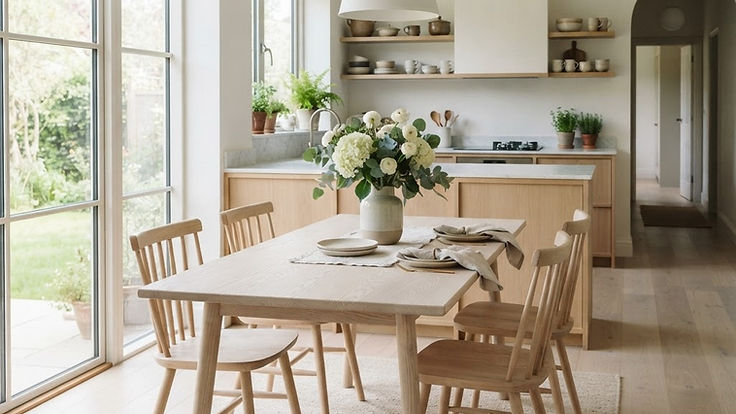
Pale, whitened wood is one of the defining looks of Scandinavian, coastal and Japandi interiors. Think limed oak floors, bleached dining tables and soft, chalky pine furniture. The good news is that you can whiten most wood at home, but the right method depends on whether you want to genuinely lighten the timber, remove a stain, or simply add a white finish on top.
In this guide I'll explain the different ways to whiten wood, from wood bleach and oxalic acid to whitewash, liming wax and white oils, which method suits which wood, step by step instructions, the safety precautions and how to stop whitened wood turning yellow.
Which Method Do You Need?
| Method | What it does | Best for | Difficulty |
|---|---|---|---|
| Two-part (A/B) wood bleach | Genuinely lightens the colour of the wood | Dark woods you want much paler | Moderate; very caustic |
| Oxalic acid | Removes black iron stains and grey weathering | Oak and other tannin-rich woods | Easy to moderate |
| Chlorine bleach | Removes dye-based stains | Furniture previously stained with dye | Easy |
| Whitewash or pickling | Adds a thin white layer that lets the grain show | Pine, oak, floors and furniture | Easy |
| Liming wax | Fills open grain with white wax | Oak and ash | Easy |
| White-tinted oil or hardwax oil | Adds a soft white tone and protection | Floors, tables and worktops | Easy |
| White wood stain | Adds a white tint that soaks into the wood | Pine and softwoods | Easy |
A common mistake is reaching for household bleach to lighten wood. According to Popular Woodworking, "Chlorine bleach will remove most dye-based stains from raw wood but will not lighten the wood itself." For genuinely paler wood, you need a two-part wood bleach or a white finish.
Before You Start: Prepare the Wood
Every method works best on bare, clean wood.
- Strip any existing finish, such as varnish, lacquer, wax or paint, with a stripper or by sanding. Bleaches and whitewashes can't penetrate a finish.
- Sand with the grain, finishing with around 120 to 180 grit.
- Remove dust with a vacuum and a slightly damp cloth.
- Test your chosen method on a hidden area or an offcut first.
Method 1: Two-Part Wood Bleach
Two-part bleach, usually sold as an A/B kit, is the only treatment that really takes the colour out of the wood. Popular Woodworking describes how it "turns red oak bone-white". Part A contains lye (sodium hydroxide) and part B contains hydrogen peroxide.
- Put on protective gear: long chemical-resistant gloves, goggles and an apron. Popular Woodworking warns that "A/B bleach is extremely caustic and will quickly burn your skin and eyes."
- Apply part A, then part B, with a synthetic brush or rag, following the manufacturer's instructions; some kits are mixed first.
- Let it work and dry, usually overnight. The wood may darken at first and foam as the peroxide reacts.
- Wash off the residue thoroughly with clean water.
- Let the wood dry completely, then lightly sand any raised grain before finishing.
Method 2: Oxalic Acid for Stains and Grey Wood
Oxalic acid isn't a general lightener, but it's brilliant for black water and iron stains on oak, and for reviving grey, weathered timber. Popular Woodworking suggests dissolving about an ounce of crystals in a pint of warm water, in a glass or plastic container, wetting the wood, letting it dry, and then washing off the residue thoroughly with clean water. Wear goggles and a mask, as the crystals and dust are irritating.
Method 3: Whitewash or Pickling
Whitewashing, sometimes called pickling, is the simplest way to get a soft, white look while letting the grain show through.
- Mix white water-based paint with water, roughly one part paint to one or two parts water, or use a ready-made whitewash or white stain.
- Brush on along the grain, a section at a time.
- Wipe back with a lint-free cloth after a minute or two, removing as much as you like.
- Build up more coats for a whiter effect.
- Seal with a clear, non-yellowing water-based finish.
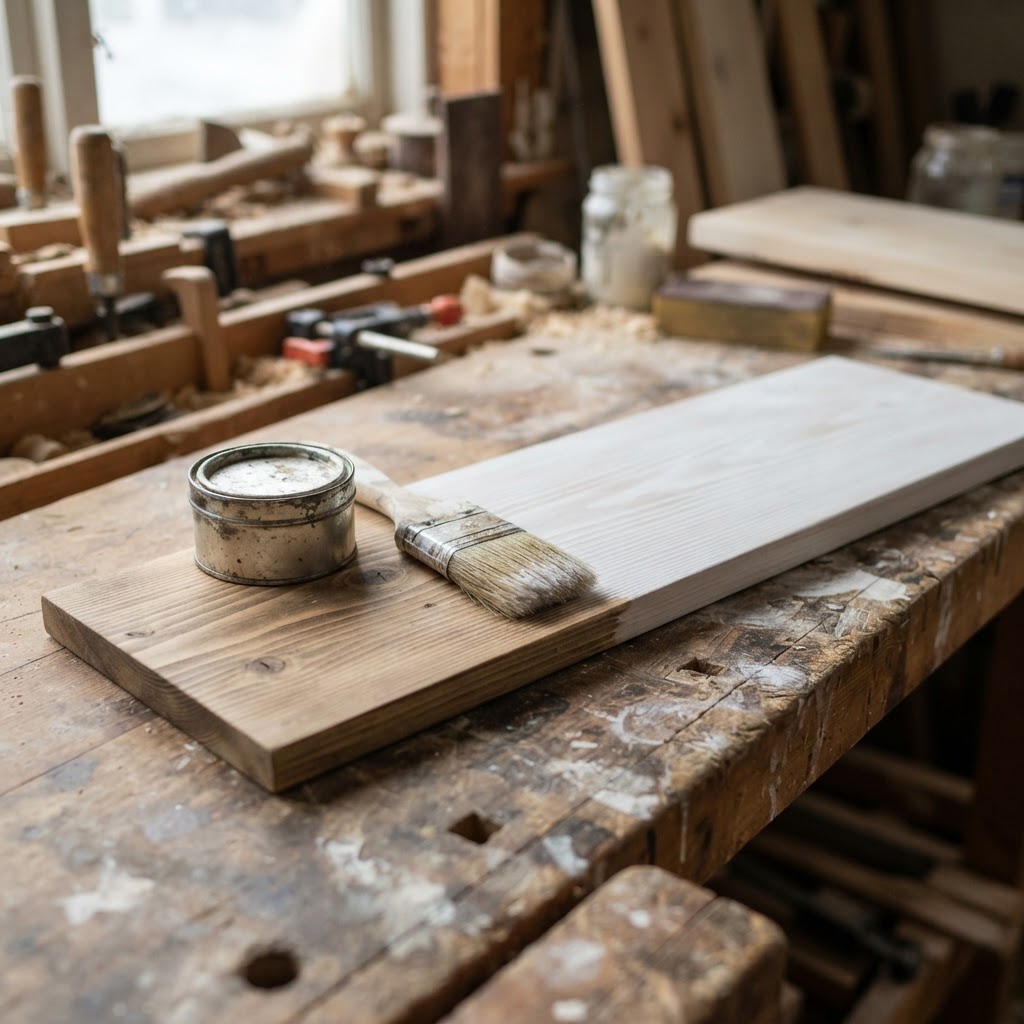
Method 4: Liming Wax
Liming wax gives the classic limed oak look, with white in the grain and the natural wood colour on the surface. It works best on open-grained woods such as oak and ash.
- Open the grain by brushing firmly along it with a brass or bronze wire brush.
- Rub liming wax into the grain with fine wire wool or a cloth, working across and along the grain.
- Wipe off the excess after a few minutes with a clean cloth, working across the grain so the wax stays in the pores.
- Buff with a soft cloth once dry, or seal with a clear wax.
Method 5: White Oils and Hardwax Oils
For floors, tables and worktops that need durability, a white-tinted hardwax oil is often the best choice. It gives a soft, natural, Scandi-style white tone, protects the wood and can be touched up easily. Apply thin coats with a brush or pad, wipe off excess and allow to dry between coats.
Which Wood Works Best?
| Wood | How it whitens | Tip |
|---|---|---|
| Oak | Beautifully; open grain takes liming wax and whitewash well | Use oxalic acid for black water stains |
| Ash | Very well, with a striking grain | Ideal for liming |
| Pine | Whitewash and white stains work well | Knots and resin can bleed or turn yellow; seal knots first |
| Beech and maple | Close grain, so liming is less effective | White oils and stains work better |
| Walnut and mahogany | Dark woods need A/B bleach to lighten | Test carefully; results can be patchy |
How to Stop Whitened Wood Turning Yellow
- Use a water-based, non-yellowing clear finish. Many oil-based varnishes amber over time and turn white wood creamy or yellow.
- Seal pine knots with a knot sealer or stain-blocking primer before whitewashing.
- Protect from strong sunlight, which can change the colour of both wood and finish.
Where Whitened Wood Looks Best
Whitened wood is at the heart of calm, natural interiors. Pale oak dining tables and limed floors suit Scandinavian and Japandi rooms, and a whitened oak Scandi console table is a lovely way to bring the look into a hallway. Whitewashed boards overhead give a fresh coastal feel to a tongue and groove ceiling, and limed or whitewashed beams look lighter and more modern than dark oak, as in these faux ceiling beams ideas. Whitening is also a brilliant way to refresh dated orange pine furniture, one of the simplest upcycled furniture projects you can do.
Pair whitened wood with soft white paint colours, linen, stone and greenery for a calm, natural scheme. If an old piece smells musty after stripping, it's worth removing the musty smell from the wood before you seal it.
Common Mistakes to Avoid
| Mistake | Why it's a problem | What to do instead |
|---|---|---|
| Using household bleach to lighten wood | It removes dye but doesn't lighten wood | Use A/B wood bleach or a white finish |
| Bleaching over a finish | The bleach can't penetrate | Strip and sand first |
| Skipping the rinse | Residue can affect the finish and irritate when sanded | Wash off thoroughly with water |
| Oil-based varnish on white wood | Turns yellow over time | Use a water-based, non-yellowing finish |
| Not testing first | Results vary between woods | Test on an offcut or hidden area |
| Mixing chemicals | Dangerous reactions | Use one product at a time and rinse between |
Frequently Asked Questions
How do you whiten wood?
Strip and sand the wood, then either lighten it with a two-part wood bleach, or add a white finish such as whitewash, liming wax, white stain or a white-tinted hardwax oil. Seal with a non-yellowing finish.
Can you use household bleach to whiten wood?
Not really. Household chlorine bleach removes dye-based stains but doesn't lighten the natural colour of the wood. Use a two-part wood bleach to genuinely lighten timber.
What is the difference between whitewash and limewash on wood?
Whitewash is usually thinned white paint or stain wiped onto wood. Liming uses a white wax or paste pressed into the open grain, giving a classic limed oak effect.
How do you whiten wood without bleach?
Use a whitewash, white stain, liming wax or white-tinted oil. These add a white tone on top of the wood rather than removing its colour.
Does whitewashed wood turn yellow?
It can, especially under oil-based varnishes or with resinous woods like pine. Seal knots first and use a water-based, non-yellowing clear finish.
What wood is best for liming?
Open-grained woods such as oak and ash are best, because the white wax settles into the grain and creates the classic limed look.
Soft, Pale and Natural
Whitening wood is one of the easiest ways to give furniture, floors and ceilings a fresh, calm, Scandi-style look. Choose the right method for your wood and the effect you want, prepare carefully, work safely and seal with a non-yellowing finish.
For more decorating projects, explore the decorating section, and if you'd like help choosing finishes and colours for your home, you can book a one-hour online interior design consultation with me.
About the author
Magda Callery is a UK interior designer and florist with more than 15 years' experience designing homes, pubs, restaurants and bars, and her expert commentary has featured in Homes & Gardens, The Mirror and The Spruce. Explore more of the decorating articles.
Continue reading

How to Antique a Mirror: 2 Easy DIY Methods
How to antique a mirror at home: why old mirrors look the way they do, an easy spray method on clear glass, how to age an existing mirror, safety rules and where antiqued mirrors look best.

Christmas Tree Trends 2026: 15 Ideas From a Florist
The Christmas tree trends for 2026 from a designer and florist: the return of the classic green tree, jewel tones, XL bows, heritage tartan, handmade and natural trees, colour palettes, how to decorate like a florist, which real tree to buy and real vs artificial.

Best White Paint Colours for Walls: A Designer's Picks
How to choose the best white paint colour for your walls: undertones and LRV explained, how light changes white, a designer's favourite UK and US whites with LRVs, the best whites by room, white on white trims, ceilings and exteriors, and how to test whites properly.