
How to Make Chalk Paint at Home: 3 Easy Recipes
How to make chalk paint at home with plaster of Paris, baking soda or calcium carbonate: exact recipes, how to apply, distress and seal it, colour ideas and mistakes to avoid.
By Magda Callery, interior designer and florist
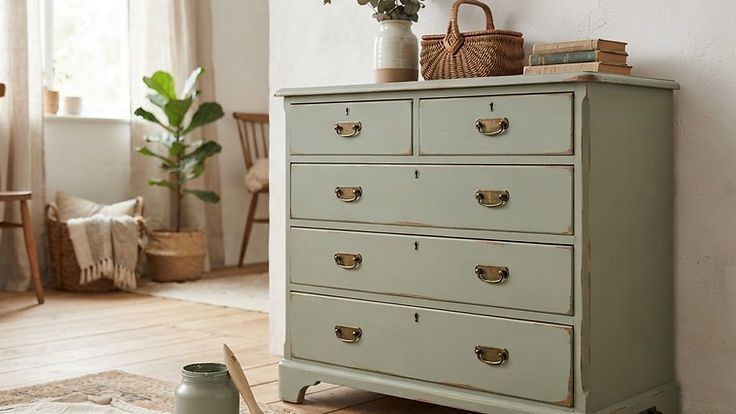
Chalk paint is one of the easiest ways to give tired furniture a new life. It grips almost any surface, dries to a soft, velvety matt finish and distresses beautifully, which is why I've used it on everything from old dressers and dining chairs to bar stools and side tables over the years. The only downside is the price of a small tin. The good news is that you can make your own at home for a fraction of the cost, in any colour you like.
In this guide I'll share three easy recipes for how to make chalk paint at home, with exact measurements, which one to choose, how to apply and seal it, and the mistakes to avoid. There's also a quick recipe for washable sidewalk chalk paint for children at the end.
The quick answer: to make chalk paint at home, mix 1 cup (about 240ml) of flat or eggshell latex paint with 1/3 cup of plaster of Paris that has first been dissolved in 1/3 cup of cool water. Stir until smooth and use straight away. You can also use 2 tablespoons of baking soda or 1/4 cup of calcium carbonate per cup of paint instead of plaster of Paris.
What Is Chalk Paint?
Chalk paint is a thick, matt, decorative paint that sticks to most surfaces with little or no preparation. It's made by adding a mineral powder to ordinary paint, which gives it its chalky texture, helps it grip shiny surfaces and makes it easy to sand back for a distressed, vintage look. Chalk Paint with capital letters is a trademark of Annie Sloan, who launched her paint in 1990, but homemade chalk-style paint works on the same principle.
| Feature | Chalk paint | Ordinary furniture paint |
|---|---|---|
| Preparation | Little or no sanding or priming | Usually needs sanding and primer |
| Finish | Velvety, ultra matt | Matt, satin or gloss |
| Distressing | Sands back easily | Harder to distress |
| Durability | Needs sealing with wax or top coat | Often durable on its own |
| Drying time | About 30 minutes to touch | Usually several hours |
What You'll Need
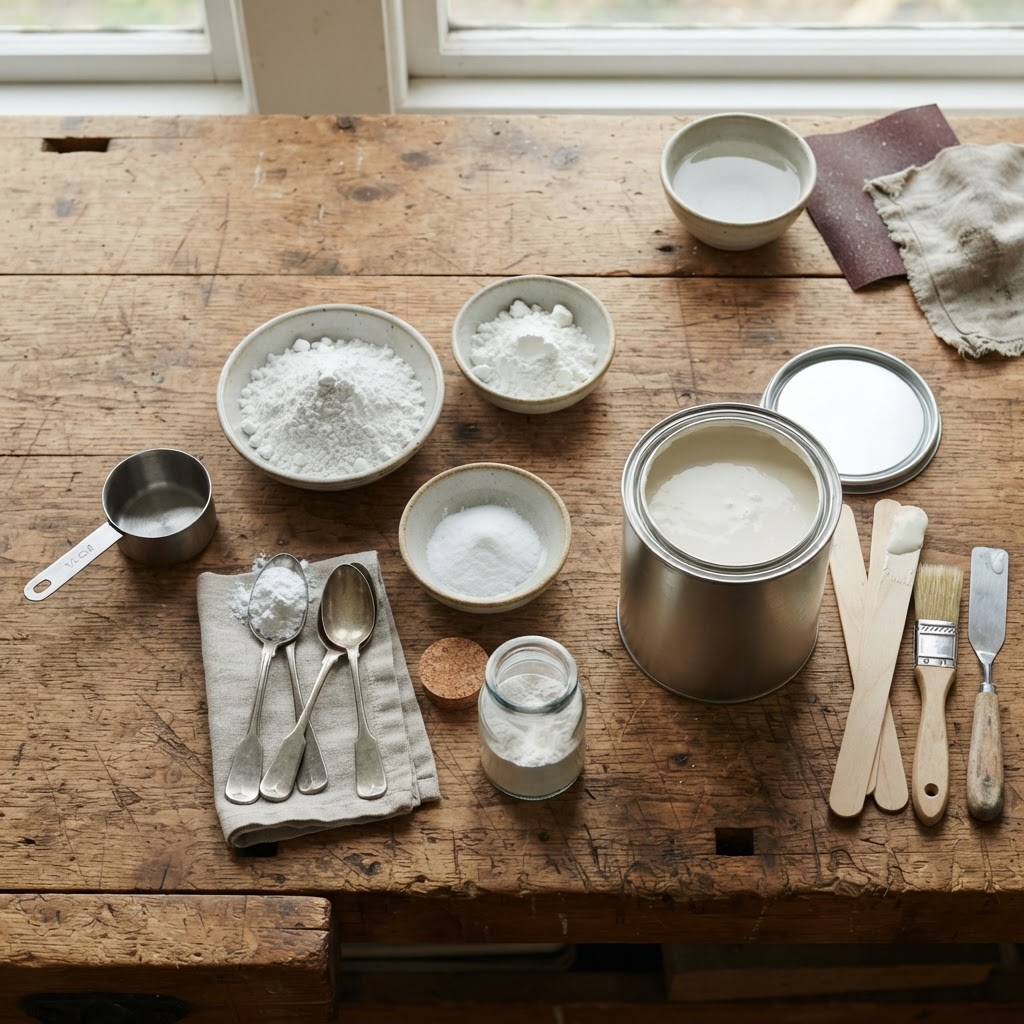
- Paint. Any water-based latex or acrylic paint in a flat, matt or eggshell finish. Leftover wall paint and sample pots are perfect.
- A mineral powder. Plaster of Paris, baking soda or calcium carbonate powder (also sold as whiting).
- Cool water.
- A mixing jar or tub with a lid, a measuring cup and tablespoons, and a stir stick.
- Brushes. A good synthetic or natural bristle brush, or a round chalk paint brush.
- Fine sandpaper, around 120 to 220 grit, for distressing and smoothing.
- A sealer. Clear furniture wax or a water-based polyurethane or polycrylic top coat.
3 Easy Recipes for How to Make Chalk Paint at Home
1. Plaster of Paris chalk paint (best all-rounder)
This is the most popular homemade recipe. It gives a smooth, chalky finish that distresses beautifully.
- 1 cup (about 240ml) of flat or eggshell latex paint
- 1/3 cup of plaster of Paris
- 1/3 cup of cool water
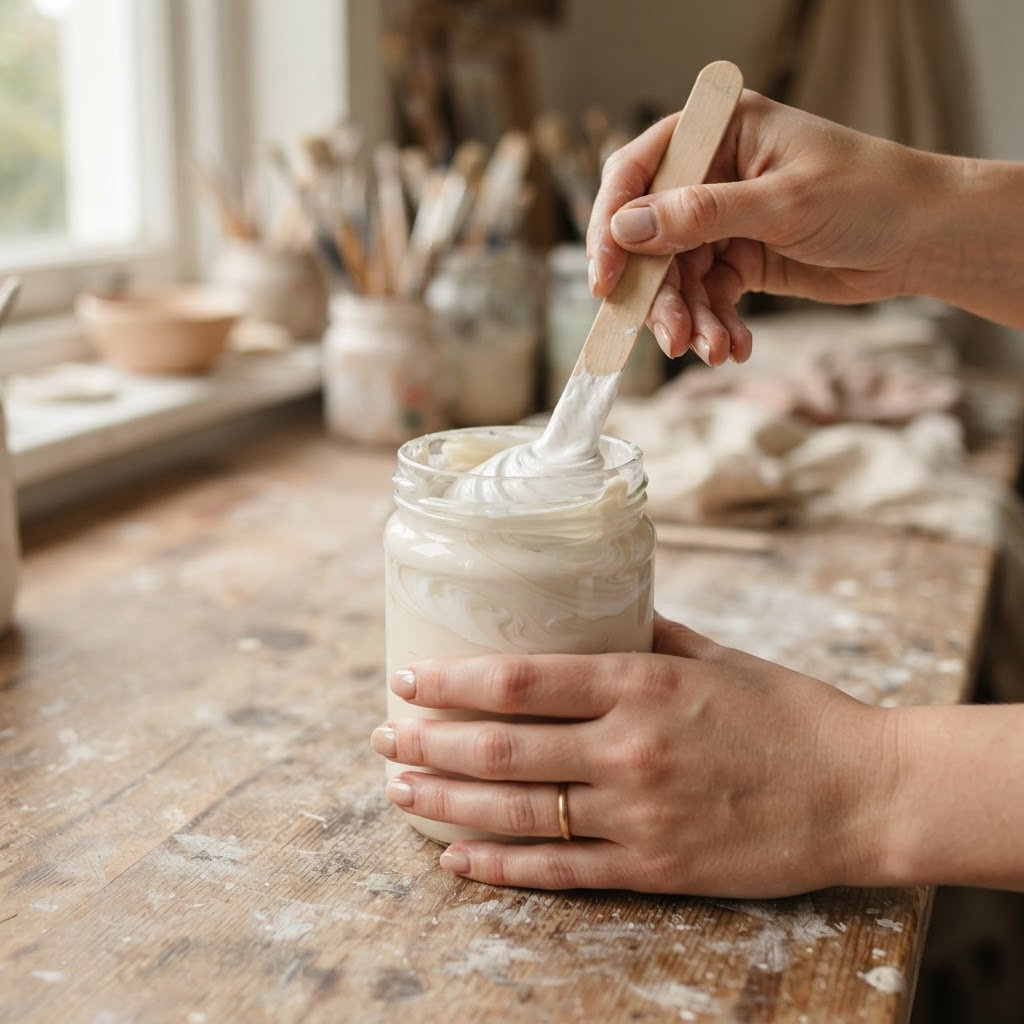
- Mix the plaster of Paris with the water in a separate cup and stir until it's completely smooth, with no lumps.
- Pour the mixture into the paint and stir well for a minute or two.
- Use straight away, as plaster of Paris starts to harden. Make only as much as you need for one session.
2. Baking soda chalk paint (quickest and cheapest)
Baking soda gives a slightly grittier, more textured finish, which is lovely if you want an aged, rustic look.
- 1 cup (about 240ml) of paint
- 2 tablespoons of baking soda
- Pour the paint into a jar and add the baking soda a little at a time.
- Stir thoroughly until it has dissolved. If it's too thick, add a splash of water.
- Mix small batches, as baking soda paint thickens as it sits.
3. Calcium carbonate chalk paint (smoothest finish)
Calcium carbonate is the closest to a shop-bought chalk paint. It's smooth, keeps better than plaster of Paris and is ideal for larger projects.
- 1 cup (about 240ml) of paint
- 1/4 cup of calcium carbonate powder
- 2 tablespoons of water
- Mix the calcium carbonate with the water to make a smooth paste.
- Stir it into the paint until fully combined.
- Store any leftovers in an airtight jar and stir well before using again.
Which recipe should you choose?
| Recipe | Finish | Texture | Shelf life | Best for |
|---|---|---|---|---|
| Plaster of Paris | Smooth and chalky | Fine | Use the same day | Most furniture projects |
| Baking soda | Rustic and textured | Slightly gritty | Use the same day | Small pieces and an aged look |
| Calcium carbonate | Very smooth | Silky | Keeps for a few weeks | Large projects and kitchen cabinets |
You can also use unsanded grout in the same way as plaster of Paris (about 2 tablespoons per cup of paint, mixed with a little water), but it's harder to get completely smooth.
A safety note: wear a dust mask and work in a well-ventilated space when you're mixing powders or sanding. The University of Calgary's sculpture safety guide notes that plaster of Paris is "slightly irritating to the eyes and respiratory system" and advises you to "wear a dust mask when mixing large quantities of plaster at one time." It also recommends that you "vacuum or wet mop/ wipe up plaster dust. Do not sweep."
How to Apply Homemade Chalk Paint
- Clean the piece. Wipe it down with warm, soapy water or a sugar soap solution to remove grease and dirt, then let it dry completely. If old wood smells musty, deal with that first, as paint won't hide it; the tricks for removing a musty smell from wood furniture work well.
- Remove handles and knobs. It's much quicker than painting around them.
- Lightly scuff very shiny surfaces. Chalk paint grips most finishes, but a quick rub with fine sandpaper helps on glossy varnish or laminate.
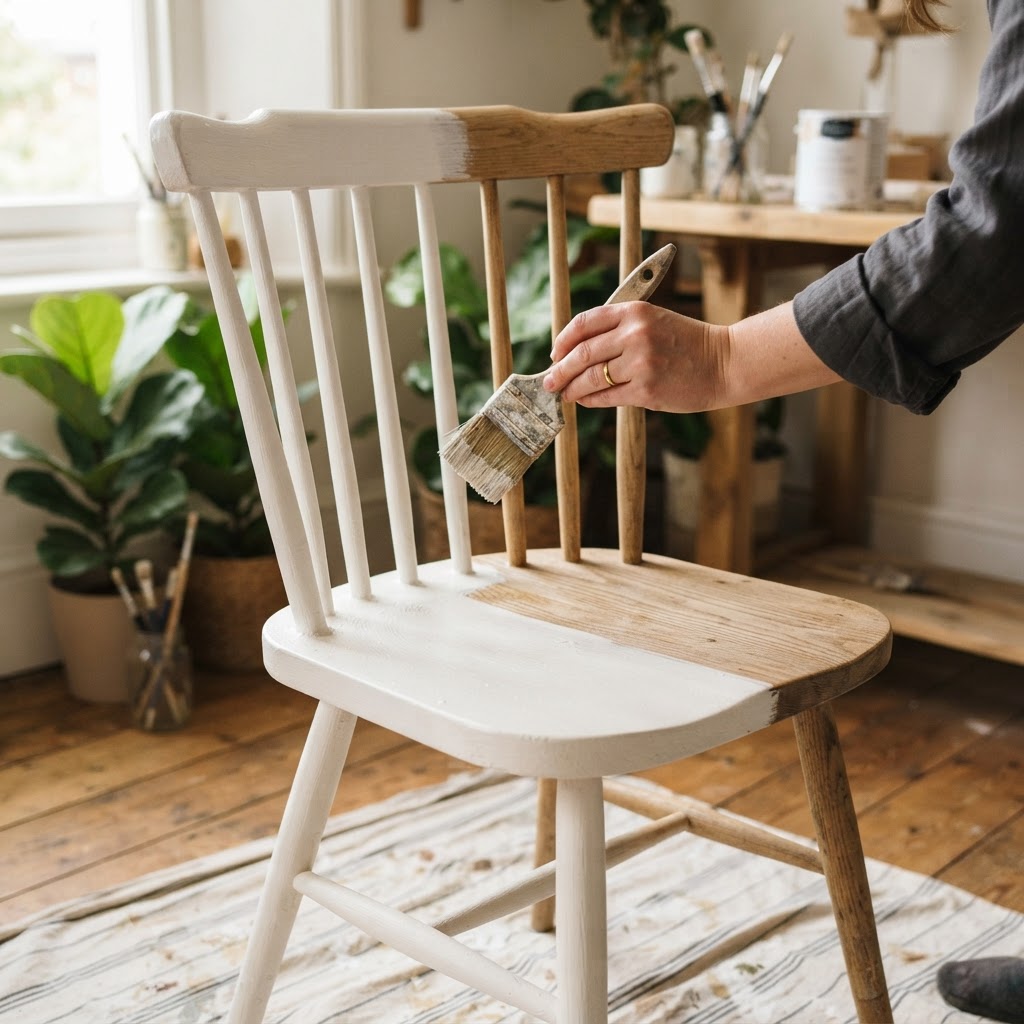
- Apply the first coat. Brush in different directions for a textured, hand-painted look, or in the direction of the grain for a smoother finish. Keep coats thin.
- Let it dry. Homemade chalk paint is usually dry to the touch in about 30 minutes to an hour.
- Apply a second coat. Most pieces need two coats for even coverage, and dark wood under a light colour may need three.
- Sand lightly for a smooth finish. A light pass with fine sandpaper once dry gives a silky, professional feel.
Tip: on old pine or mahogany, knots and tannins can bleed through as yellow or pink stains. If that happens, seal the area with a stain-blocking shellac primer before your next coat.
How to Distress Chalk Paint
The distressed, time-worn look is what chalk paint does best.
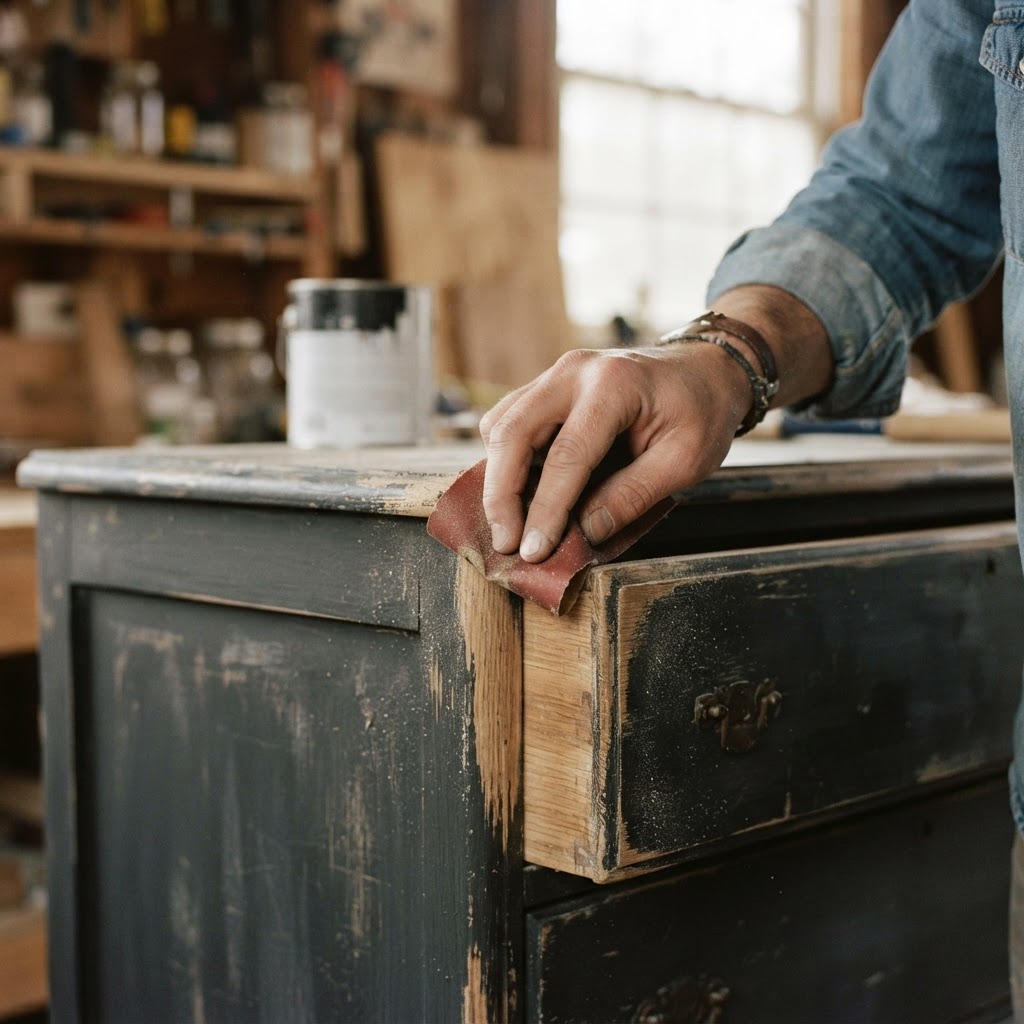
- Sand the edges. Use 120 to 150 grit sandpaper on corners, edges, around handles and anywhere that would naturally wear over time.
- Layer two colours. Paint a darker base coat, then a lighter top coat, and sand back gently to reveal the colour underneath.
- Use a damp cloth. For a softer effect, rub the paint away with a damp cloth before it fully cures.
- Less is more. Step back often. A little distressing looks authentic; too much looks deliberate.
If you love the aged look, it pairs beautifully with an antiqued mirror or a touch of gold leaf on carved details.
How to Seal Chalk Paint
Chalk paint is porous, so it needs sealing to protect it from marks, water and wear.
| Sealer | Finish | Durability | Best for |
|---|---|---|---|
| Clear furniture wax | Soft sheen, very traditional | Medium, needs re-waxing every year or so | Bedroom furniture, decorative pieces |
| Dark or antique wax | Aged, deepens the colour | Medium | Carved details and a vintage look |
| Water-based polycrylic or polyurethane | Matt or satin, clear | High | Tables, kitchen cabinets, chairs |
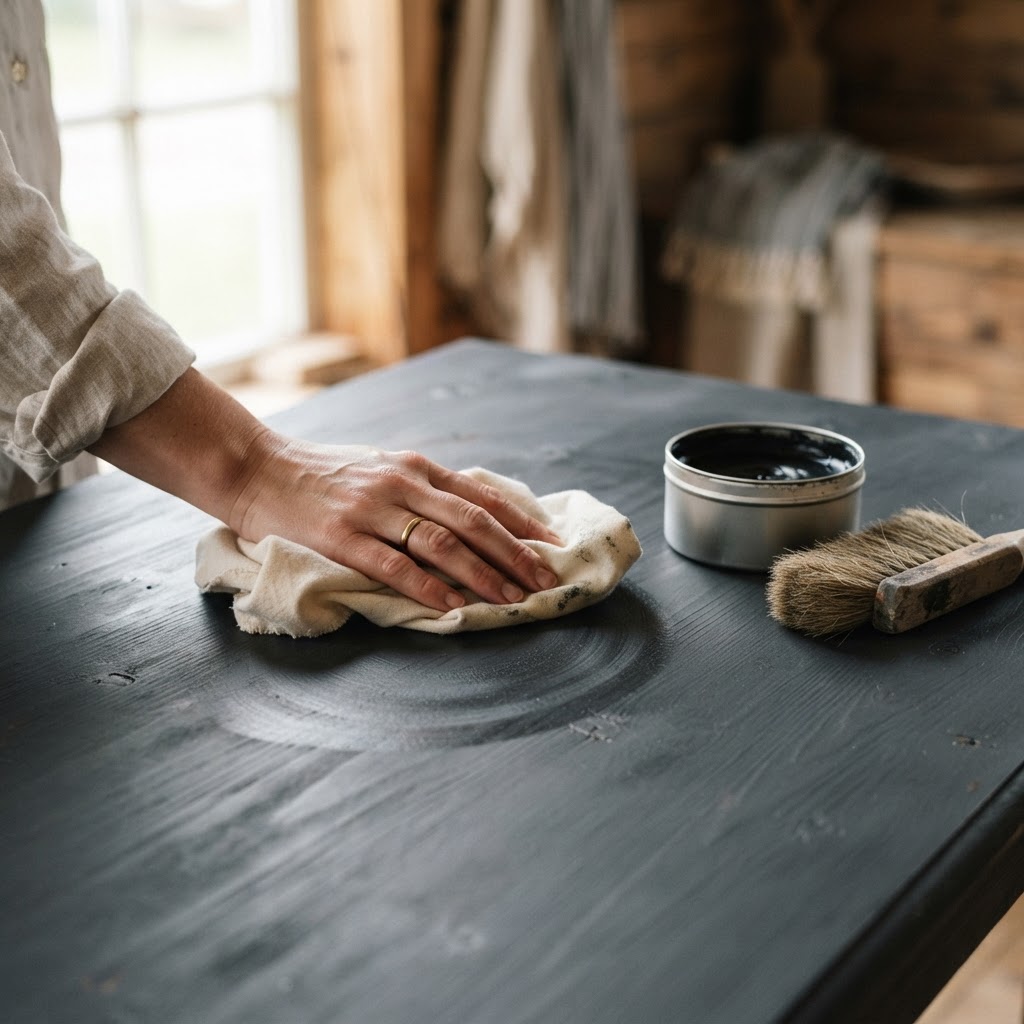
To wax, apply a thin layer with a wax brush or lint-free cloth, working it into the paint, then wipe off the excess and buff once dry. For a water-based top coat, apply two or three thin coats with a synthetic brush, sanding very lightly between coats. Choose a non-yellowing formula over white and pale colours.
How I Use Chalk Paint in My Projects
After more than 15 years of designing homes, pubs and restaurants, chalk paint is one of my favourite tricks for giving a space character on a budget. Here's what I've learnt.
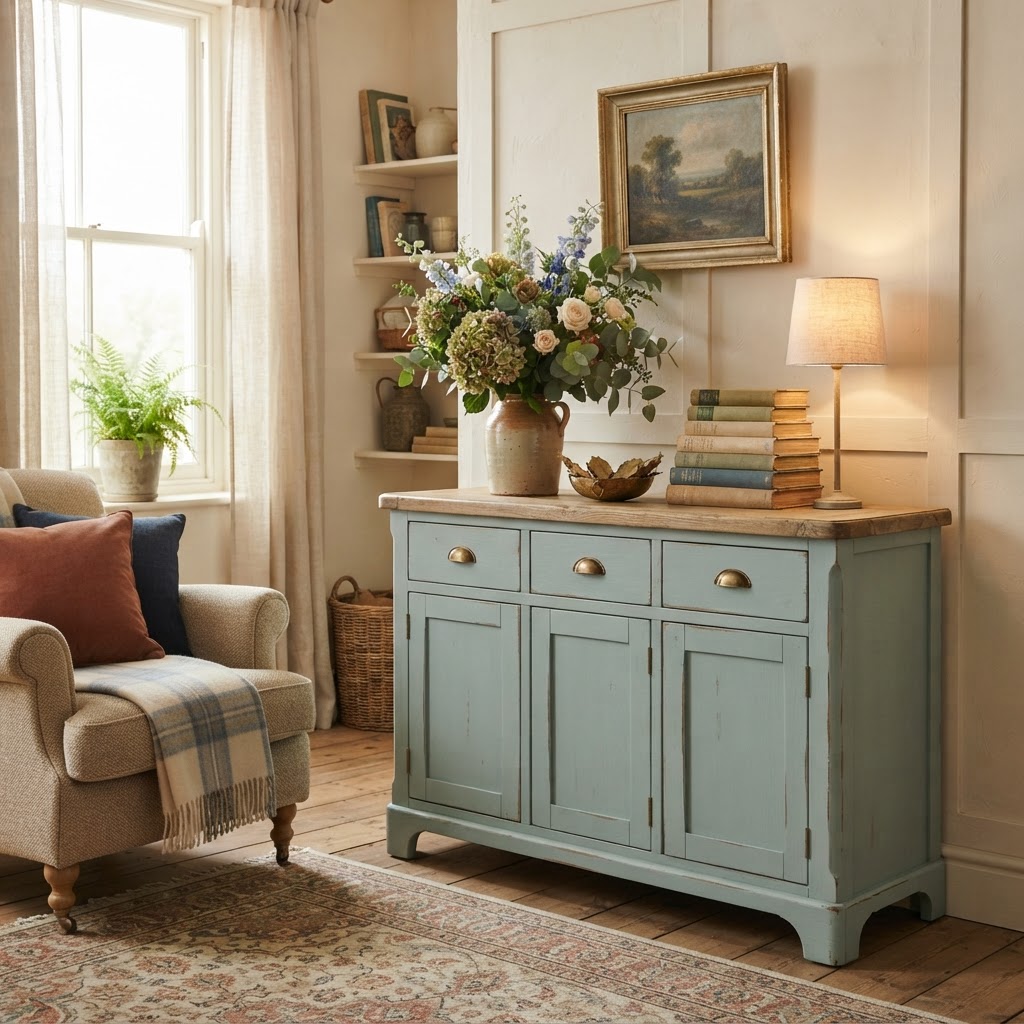
- Choose colours that suit the room, not just the piece. A painted dresser should pick up a colour already in the room, such as the green of a plant, the blue in a rug or the warm tone of the floor.
- Soft, muted colours always look the most expensive. Sage, duck-egg blue, putty, warm white and soft charcoal suit almost every interior, and many of the best green paint colours and best white paint colours work beautifully on furniture.
- For pubs and restaurants, always use a hard-wearing top coat. Wax looks lovely, but anything that will be wiped down every day needs a water-based polycrylic.
- Don't paint everything. A beautiful solid wood top on a painted base often looks better than a fully painted piece.
Chalk Paint Color Ideas
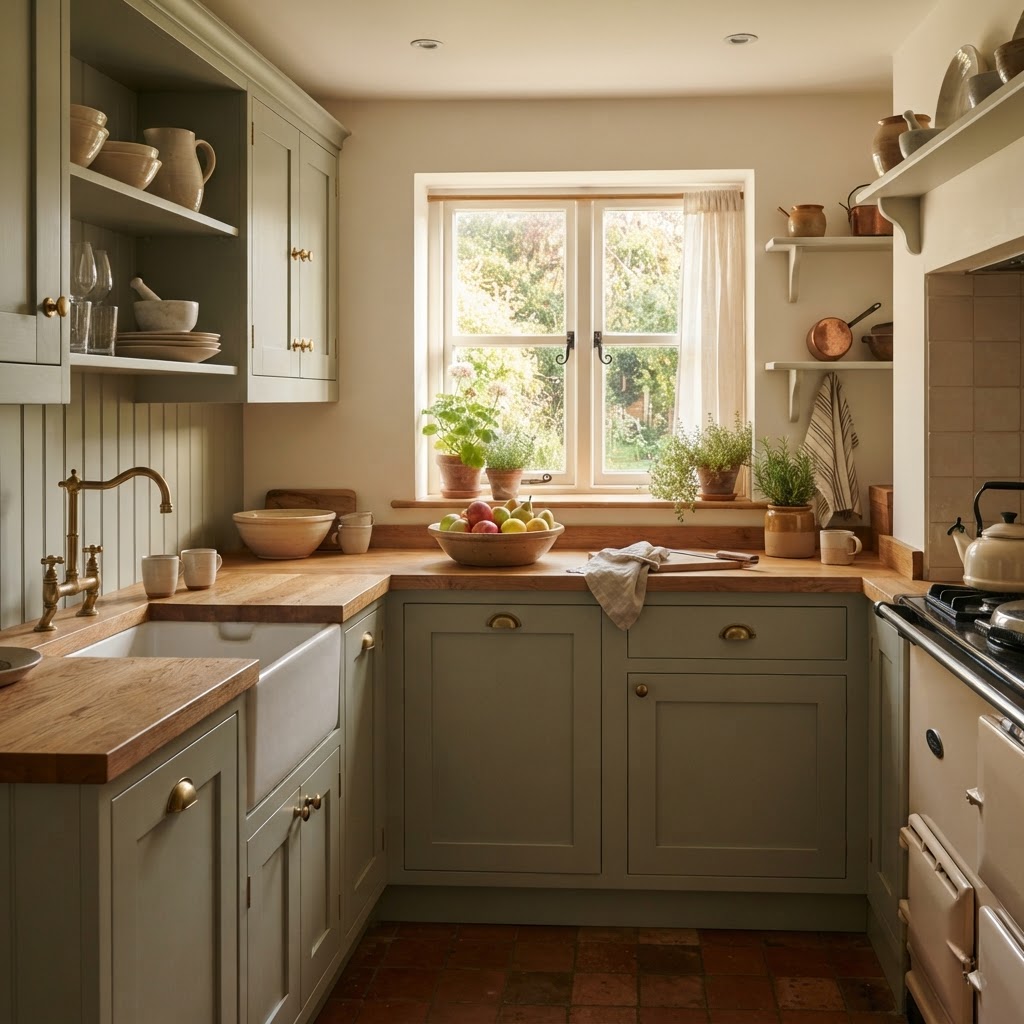
- Sage green is calm and timeless on dressers, kitchen cabinets and dining chairs, as in these sage green kitchen cabinets.
- Duck-egg blue is pretty and fresh on bedroom furniture and French-style pieces.
- Warm white is classic on Scandinavian and country furniture, especially a simple Scandi console table.
- Soft charcoal gives a sideboard or desk a smart, modern look, much like the graphite colour palette.
- Olive is earthy and grounded, and olive green pairs beautifully with natural wood.
- Terracotta adds warmth to small pieces, plant pots and accessories; terracotta works especially well with rattan and linen.
What Can You Chalk Paint?
- Wooden furniture, including dressers, chests of drawers, tables, chairs and writing desks.
- Kitchen cabinets, as long as you seal them with a durable top coat.
- Laminate and melamine, after a light scuff and a good clean.
- Metal, such as bed frames and lamps, if it's clean and rust-free.
- Glass, ceramics and terracotta pots, for vases, jars and planters.
- Fabric, such as an old upholstered chair, if the paint is watered down, although the finish feels stiffer.
Chalk paint is at the heart of upcycled furniture, and if you'd rather keep wood light and natural, whitening wood with a limewash or whitewash is a lovely alternative.
Common Mistakes to Avoid
| Mistake | Why it's a problem | What to do instead |
|---|---|---|
| Adding plaster of Paris straight to the paint | It forms lumps that won't mix out | Dissolve it in water first |
| Mixing too much at once | Plaster and baking soda paint thicken and set | Make small batches |
| Applying thick coats | It cracks and looks uneven | Use two or three thin coats |
| Skipping the cleaning | Grease stops the paint sticking | Wash with sugar soap first |
| Using gloss paint as the base | The finish is less chalky and matt | Use flat, matt or eggshell paint |
| Not sealing the paint | It marks and stains easily | Seal with wax or a water-based top coat |
| Over-distressing | It looks fake | Sand only where wear would happen naturally |
How to Make Sidewalk Chalk Paint for Kids
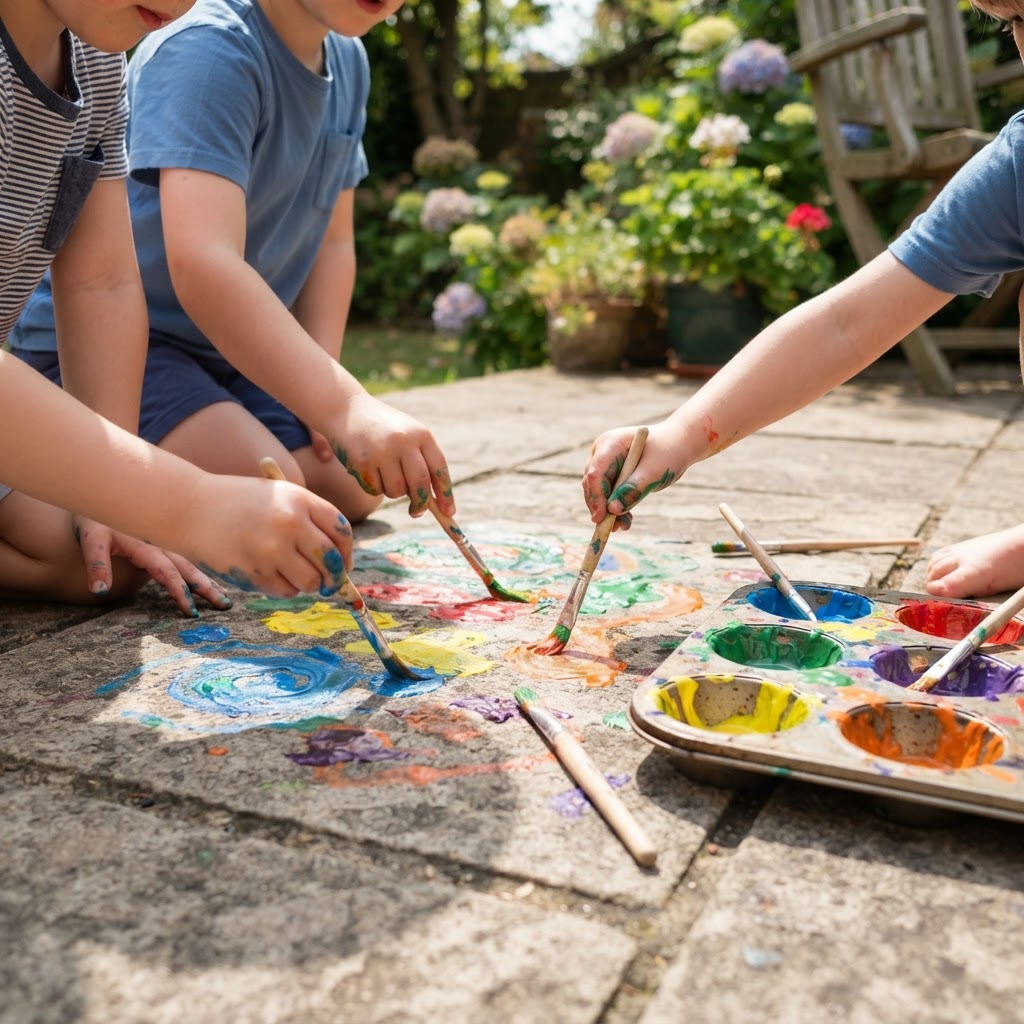
If you searched for chalk paint for children rather than furniture, this is a different, washable paint for patios, paths and driveways.
- 1 cup of cornstarch (cornflour in the UK)
- 1 cup of cool water
- A few drops of food colouring for each colour
- Whisk the cornstarch and water together until smooth.
- Divide the mixture between cups or a muffin tin.
- Add food colouring to each and stir.
- Paint with brushes, sponges or squeezy bottles, and wash away with a hose when you're done.
Stir it often, as the cornstarch settles, and test the food colouring on a hidden area first, as some colours can mark light paving.
Frequently Asked Questions
How do you make chalk paint at home?
Dissolve 1/3 cup of plaster of Paris in 1/3 cup of cool water, then stir it into 1 cup of flat or eggshell latex paint. You can also add 2 tablespoons of baking soda or 1/4 cup of calcium carbonate per cup of paint.
What is the best homemade chalk paint recipe?
Calcium carbonate gives the smoothest finish and keeps for a few weeks. Plaster of Paris is the most popular all-rounder, and baking soda is the quickest and cheapest for small projects.
Can you make chalk paint with any paint?
Use a water-based latex or acrylic paint in a flat, matt or eggshell finish. Gloss and oil-based paints don't work well.
Do you need to sand before using chalk paint?
Usually not. Clean the piece well, and lightly scuff very shiny surfaces such as varnish or laminate to help the paint grip.
How long does homemade chalk paint last?
Plaster of Paris and baking soda paints should be used the same day. Calcium carbonate paint keeps for a few weeks in an airtight jar.
Do you have to seal chalk paint?
Yes. Seal it with clear wax for a soft sheen, or a water-based polycrylic or polyurethane for a more durable finish on tables and cabinets.
Is homemade chalk paint cheaper than store-bought?
Yes, much cheaper. A sample pot of paint and a few tablespoons of powder cost a fraction of a branded tin, and you can use any colour.
A New Life for Old Furniture
Homemade chalk paint is cheap, easy and endlessly creative. Choose your recipe, keep your coats thin, distress gently and seal well, and even the most tired piece of furniture can become the star of the room.
And if you'd like help choosing colours and pieces that work together in your home, you can book a one-hour online interior design consultation with me.
About the author
Magda Callery is a UK interior designer and florist with more than 15 years' experience designing homes, pubs, restaurants and bars, and her expert commentary has featured in Homes & Gardens, The Mirror and The Spruce. Explore more of the decorating articles.
Continue reading


Shutter Colors for a Beige House: 13 Expert Picks
The best shutter colors for a beige house, with advice from an interior designer and a home improvement specialist: undertones, 13 picks, roof and brick, colours and finishes to avoid.

Front Door Colors for a Tan House: 13 Expert Picks
The best front door colors for a tan house, with advice from two interior designers and a front door specialist: undertones, 13 colour picks, colours to avoid, finishes, trim and shutters.


Tropical Christmas Decorations: 17 Bright, Festive Ideas
17 tropical Christmas decoration ideas, from palm tree Christmas trees and palm leaf wreaths to poinsettias, orchids and festive tropical tables.