
How to Antique a Mirror: 2 Easy DIY Methods
How to antique a mirror at home: why old mirrors look the way they do, an easy spray method on clear glass, how to age an existing mirror, safety rules and where antiqued mirrors look best.
By Magda Callery, interior designer and florist

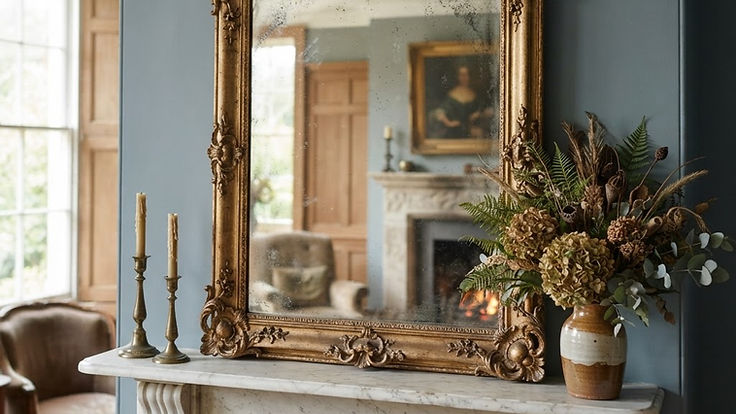
An antique mirror, with its soft, cloudy patina, dark speckles and gently foxed edges, adds instant age and romance to a room. Real antique mirrors are expensive and fragile, but the look is surprisingly easy to recreate at home, either by creating a mirror effect on clear glass or by ageing an existing mirror.
In this guide I'll explain why old mirrors look the way they do, two DIY methods for antiquing a mirror, the safety rules that matter, where antique mirrors look best and the mistakes to avoid.
Why Do Antique Mirrors Look Like That?
Early mirrors were made by backing glass with a tin and mercury amalgam, a toxic process that was eventually replaced in the 19th century by silvering, after the German chemist Justus von Liebig developed a way to coat glass with a thin layer of silver in 1835. Over time, moisture and air get behind the glass, the reflective backing breaks down, and you see the characteristic dark spots, cloudy patches and softened edges that make old mirrors so beautiful.
When you antique a mirror, you're simply recreating that breakdown on purpose, in a controlled way.
| Method | What you start with | Difficulty | Best for |
|---|---|---|---|
| Mirror effect spray on clear glass | Clear glass from a frame | Easy | Beginners, picture frames, small panels |
| Ageing an existing mirror | An old or inexpensive mirror | Moderate | Larger mirrors and a more authentic look |
| Buying antique mirror glass | Ready-made aged glass from a glazier | Easy, but costs more | Splashbacks, wardrobe doors, large walls |
Method 1: Antique Mirror Effect on Clear Glass
This is the easiest method and the safest, and it works brilliantly on thrift-shop frames. It's based on a popular technique shared by Maison de Pax, using a mirror-effect spray paint and a vinegar and water mist.
What you'll need
- A frame with clear glass
- A mirror-effect spray paint designed for glass
- A spray bottle with a 50/50 mix of white vinegar and water
- Kitchen roll or a soft cloth
- Black card, paper or a black painted backing board
- Gloves, a mask and a well ventilated space
Steps
- Remove the glass from the frame and clean it thoroughly with glass cleaner. Work on the back of the glass, which will face the wall.
- Mist the glass lightly with the vinegar and water mix, in random spots.
- Spray the mirror paint in light, even coats over the back of the glass.
- Mist again with vinegar water while the paint is still wet. The droplets stop the paint bonding in places, creating speckles and cloudy patches.
- Blot gently with kitchen roll to lift some paint and reveal the speckled effect. Work quickly, as the paint dries fast.
- Repeat in layers. Maison de Pax applied about five coats. More paint gives a more solid mirror; more vinegar and blotting gives a more aged, broken look.
- Back it with black. Place black card or a black painted board behind the glass. The dark backing shows through the gaps and creates the classic "de-silvered" look.
- Reassemble the frame.
A designer's tip: for a warmer, more antique tone, use a gold or bronze card behind the glass instead of black, or lightly mist the back with a soft gold spray before the backing goes on.
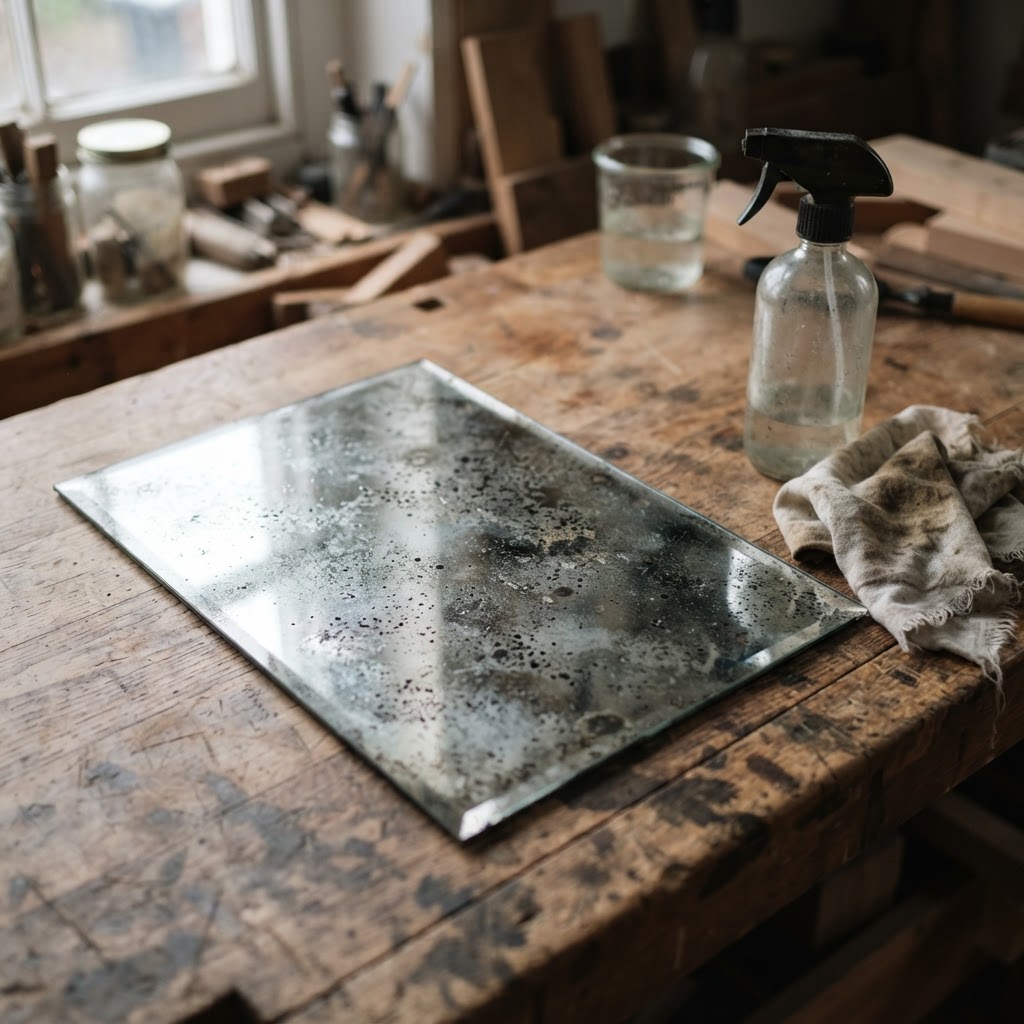
Method 2: Ageing an Existing Mirror
This method removes some of the real silver from the back of an ordinary mirror. It looks the most authentic, but it uses stronger chemicals, so take it slowly and work safely, ideally outdoors.
- Remove the mirror from its frame and lay it face down on a protected surface.
- Strip the protective backing paint on the back of the mirror with a paint stripper, following the product's instructions, and scrape it off gently with a plastic scraper.
- Remove some of the silver. Dab or lightly spray a diluted household bleach onto the exposed silver in patches, concentrating on the edges and corners where real mirrors age first. Watch carefully: the silver will start to dissolve in places.
- Rinse with clean water as soon as you like the effect, then let it dry completely.
- Repeat in more areas if you want a heavier effect.
- Seal and back the mirror with a coat of black or gold paint, or a black backing board, to protect the remaining silver and give depth to the clear patches.
Safety first
- Never mix bleach with vinegar, ammonia or acids. Mixing bleach with acids can release toxic chlorine gas, so never use Method 1 and Method 2 chemicals together, and rinse thoroughly between steps.
- Wear gloves and eye protection, and work outdoors or in a very well ventilated space.
- Handle glass carefully, especially old mirrors, which can have sharp or chipped edges.
- Dispose of stripper and residue according to the product instructions.
Where to Use an Antiqued Mirror
- Above a fireplace: a large antique mirror on the mantelpiece is a classic look in period homes, from Georgian rooms to an overmantel mirror in an Edwardian living room.
- In a hallway: an aged mirror adds light and character to a narrow hall. Many Georgian hallway ideas use a mirror above a console to bounce light around.
- On a café-style wall: antique mirror panels are a signature of Parisian bistros, and they're key to French café interior design.
- As a splashback or cabinet panels: antique mirror glass in a kitchen or drinks cabinet looks glamorous and reflects light softly.
- In a bedroom: a large aged mirror leaning against the wall feels romantic rather than stark, and the same placement and fixing rules apply as for any bedroom with a big mirror.
- On furniture: small antiqued panels on wardrobe doors or a dressing table add vintage charm.
Common Mistakes to Avoid
| Mistake | Why it's a problem | What to do instead |
|---|---|---|
| Spraying too much paint at once | The mirror looks solid and new | Build up thin coats with vinegar misting |
| Too much effect everywhere | Looks fake and uniform | Concentrate ageing at the edges and corners |
| Forgetting the backing | Gaps look grey and flat | Use black or gold behind the glass |
| Mixing chemicals | Dangerous fumes | Never mix bleach with vinegar or acids |
| Working indoors without ventilation | Fumes from spray paint and stripper | Work outdoors or in a ventilated space |
Frequently Asked Questions
How do you make a mirror look antique?
The easiest way is to spray the back of clear glass with a mirror-effect paint, mist it with a 50/50 vinegar and water solution while wet, blot it, build up several coats and back it with black card.
Can you antique an existing mirror?
Yes. Strip the protective paint from the back, then carefully remove some of the silver with diluted bleach, rinse, dry and seal the back with black or gold paint.
What do you spray on a mirror to make it look old?
On clear glass, a mirror-effect spray paint misted with vinegar and water creates an aged, speckled look. On an existing mirror, diluted bleach removes some of the silver once the backing paint is stripped.
Is it safe to antique a mirror?
Yes, with care. Work in a ventilated space, wear gloves and eye protection, handle glass carefully and never mix bleach with vinegar, ammonia or acids.
Can you buy antique mirror glass?
Yes. Many glaziers and mirror specialists sell ready-made antique or aged mirror glass, which is a good option for large areas such as splashbacks, wardrobe doors and walls.
A Little Age, A Lot of Charm
An antiqued mirror adds softness, light and history to any room, and it's one of the most satisfying DIY projects you can do in an afternoon. Start with the spray method on a small frame, build up the effect slowly, and you'll soon have a mirror that looks as though it's hung in the same house for a hundred years.
For more decorating projects, explore the decorating section, and if you'd like help styling mirrors and lighting in your own home, you can book a one-hour online interior design consultation with me.
About the author
Magda Callery is a UK interior designer and florist with more than 15 years' experience designing homes, pubs, restaurants and bars, and her expert commentary has featured in Homes & Gardens, The Mirror and The Spruce. Explore more of the decorating articles.
Continue reading

How to Whiten Wood: Bleach, Limewash and Whitewash
How to whiten wood the right way: when to use two-part wood bleach, oxalic acid or chlorine bleach, how to whitewash, lime and white-oil wood, which woods work best and how to stop whitened wood turning yellow.

Christmas Tree Trends 2026: 15 Ideas From a Florist
The Christmas tree trends for 2026 from a designer and florist: the return of the classic green tree, jewel tones, XL bows, heritage tartan, handmade and natural trees, colour palettes, how to decorate like a florist, which real tree to buy and real vs artificial.

Best White Paint Colours for Walls: A Designer's Picks
How to choose the best white paint colour for your walls: undertones and LRV explained, how light changes white, a designer's favourite UK and US whites with LRVs, the best whites by room, white on white trims, ceilings and exteriors, and how to test whites properly.