
Organic Bathroom Design: 17 Modern Organic Bathroom Ideas
Organic bathroom design explained, with natural materials, earthy colours, 17 modern organic bathroom ideas, budget tips and mistakes to avoid, plus advice from three experts.
By Magda Callery, interior designer and florist

An organic bathroom feels like a deep breath. Instead of glossy white tiles and chrome, it's built from stone, wood, clay and plaster in soft, earthy colours, with gentle curves, matte textures and plenty of natural light. It's calm without being bare, and warm without being cluttered, which is exactly what most of us want from the room where the day starts and ends.
In this guide I'll explain what organic bathroom design really is, the natural materials that work best, the colours and textures behind a modern organic bathroom, 17 organic bathroom ideas, how to get the look on a smaller budget and the mistakes to avoid. I asked three building and design experts to share their practical advice from real projects, too.
The quick answer: organic bathroom design uses natural and natural-looking materials, such as stone, wood, microcement, limewash and handmade tiles, in an earthy, neutral palette of clay, sand, greige, off-white, charcoal and soft green. It focuses on texture, simple shapes and natural light rather than pattern or shine. A modern organic bathroom keeps the lines clean and minimal while letting the materials bring warmth. To get it right, choose durable, water-resistant finishes, keep the palette tight, ventilate well and use non-slip floors.
What Is Organic Bathroom Design?
Organic design takes its cues from nature: natural materials, soft and irregular shapes, tactile surfaces and a calm, earthy palette. In a bathroom, it means swapping the hard, high-shine look of chrome and gloss for stone, wood, plaster and clay that feel good to touch and age gracefully.
Rubi Esmeralda describes it from a build-and-maintain perspective:
A calm, spa-like space that uses natural-looking materials and simple details that hold up well after the renovation is finished.
Rich Blanchard sums up the look in a few words: "Think clean lines. Natural textures. Sun light. Materials that are long lasting and not too artificial." And he adds an important reality check:
When designing build out bathrooms here in the Boston area I always try to keep it natural but remember that it's still a bathroom.
| Style | Key materials | Colours | Feel |
|---|---|---|---|
| Organic | Stone, wood, limewash, clay, microcement | Clay, sand, greige, off-white, green | Warm, earthy, tactile |
| Modern organic | The same, with cleaner lines and fewer details | Soft neutrals with charcoal accents | Calm, minimal, warm |
| Spa | Stone, glass, wood | Whites, greys, soft neutrals | Serene, hotel-like |
| Japandi | Light wood, paper, stone | Muted neutrals, black accents | Minimal, Zen |
| Scandinavian | Pale wood, white tiles | White, grey, pastels | Light, simple, practical |
Organic vs modern organic: a classic organic bathroom can be quite rustic, with rough stone, reclaimed wood and rounded plaster. A modern organic bathroom keeps those materials but uses them in a cleaner, more minimal way, with flat-fronted cabinetry, frameless glass and fewer accessories.
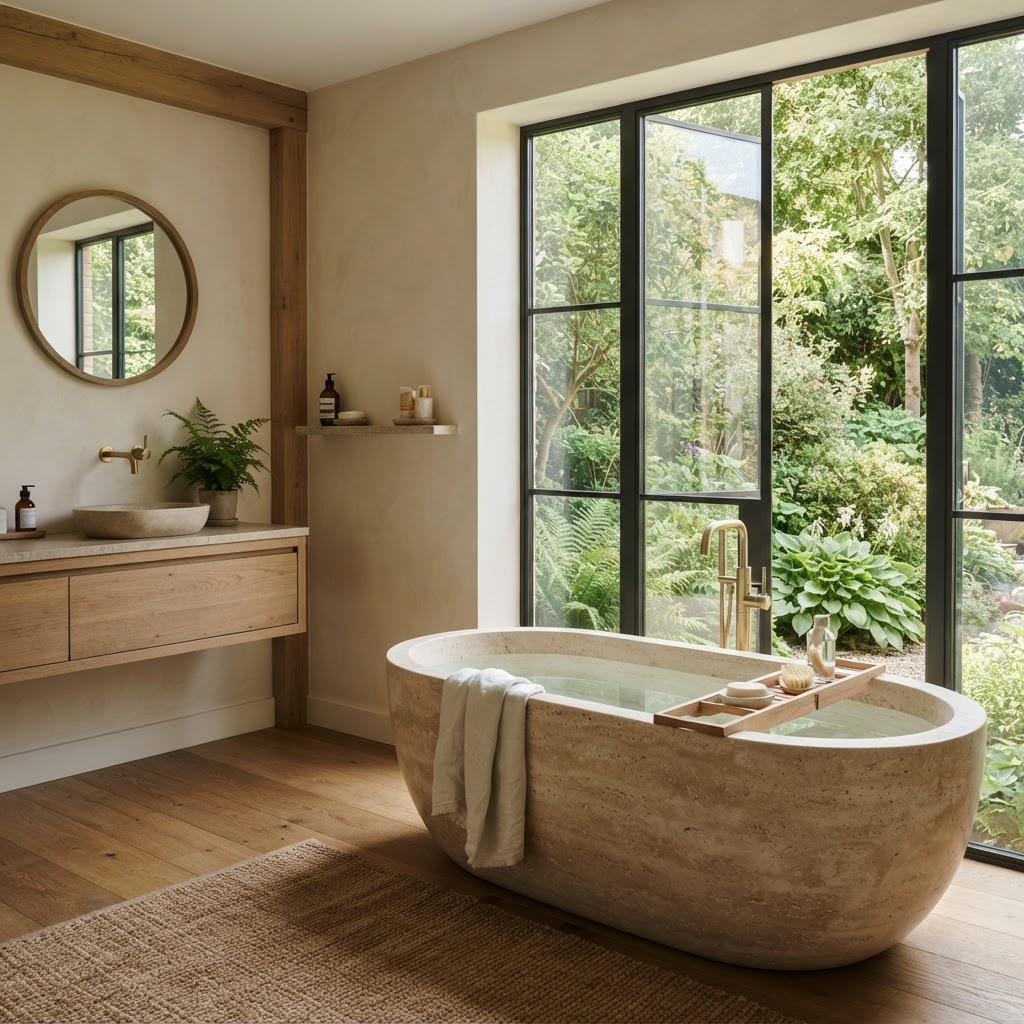
The Best Natural Materials for an Organic Bathroom
| Material | Best for | Pros | Things to know |
|---|---|---|---|
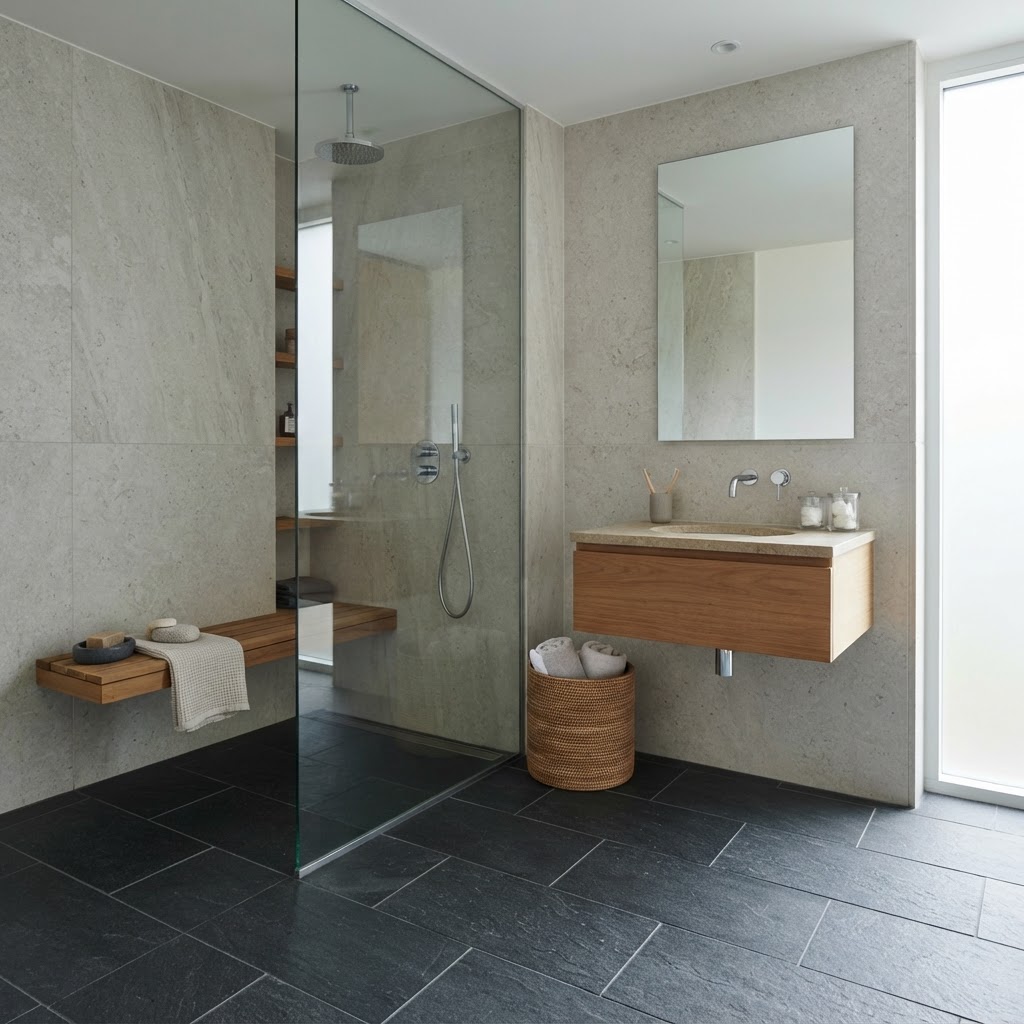
| Slate | Floors, shower walls | Durable, naturally textured, dark and dramatic | Choose a honed finish; needs sealing |
| Quartzite | Floors, worktops | Very hard and hard-wearing | Can be expensive |
| Marble | Vanity tops, walls | Classic and luxurious | Etches and stains; needs sealing |
| Limestone and travertine | Floors, walls, basins | Soft, warm and natural | Porous; needs sealing and develops a patina |
| Teak | Benches, shelves, bath mats | Naturally water-resistant | Oil occasionally |
| Oak and other hardwoods | Vanities, shelves | Warm and beautiful | Must be well sealed; keep out of the wet zone |
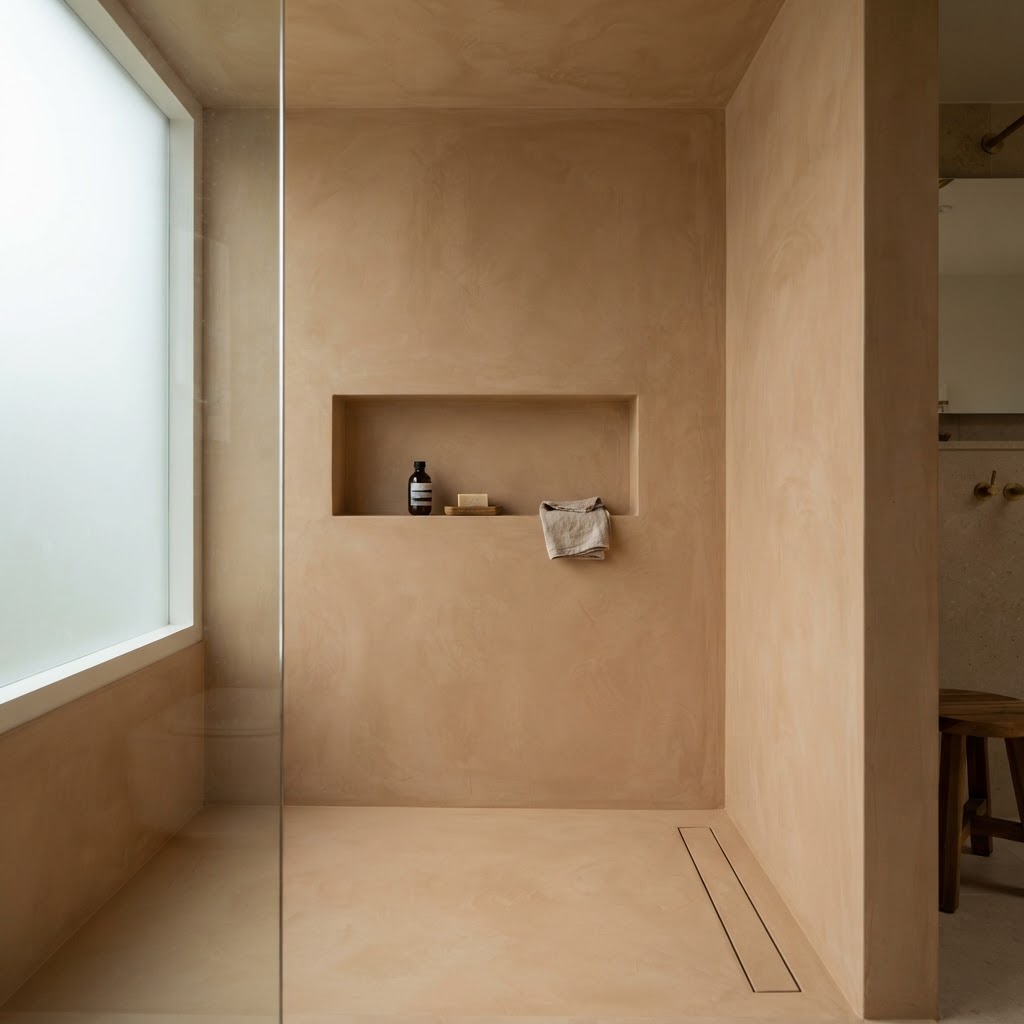
| Microcement | Walls, floors, showers | Seamless, few joints, matte | Needs skilled application and sealing |
| Limewash and clay paints | Walls outside the wet zone | Soft, cloudy texture | Not for inside the shower |
| Handmade or matte tiles | Walls, splashbacks | Texture and character | Grout lines need cleaning |
Rich's advice on stone and wood comes straight from his projects:
Use stones such as slate or quartzite for floors (honed finish). Teak for bench/shelves. Wood (sealed) for vanity tops marble and limestone are nice too just know that they will need to be sealed and accept the fact that it will patina over time.
That patina is part of the charm of an organic bathroom, but only if you're happy to live with it. If you want something seamless and low maintenance, microcement in the bathroom gives a soft, stone-like look with very few joints.
Colors and Textures for a Modern Organic Bathroom
Rich's palette is a perfect starting point:
Keep colors neutral with some warm earth tones. Clay, sand, greige (a gray/beige mix), charcoal, off white and greens.
For walls, soft greiges such as Balboa Mist or Edgecomb Gray work beautifully, while warm whites like Swiss Coffee and Alabaster keep a small room light. For a bolder, earthier look, terracotta and olive green bring real warmth.
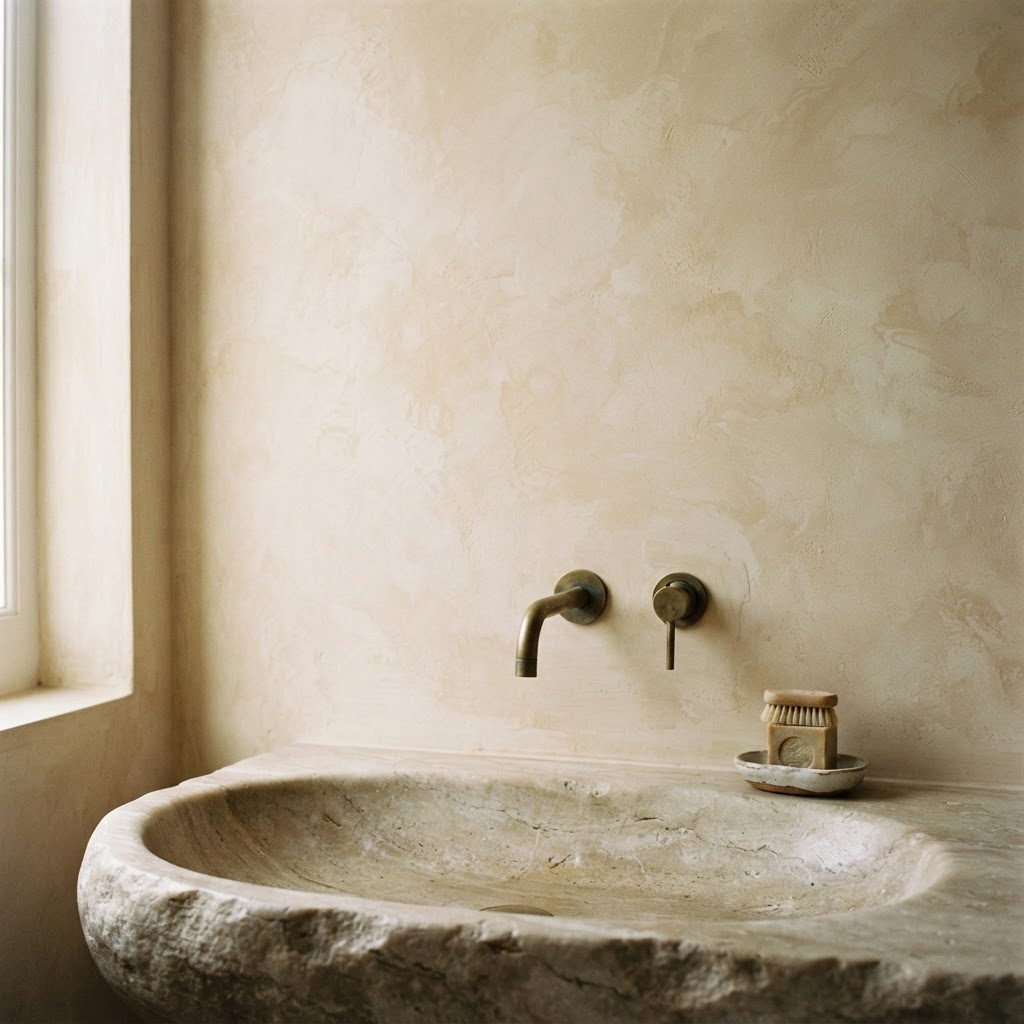
Texture matters just as much as colour. As Rich puts it, "You can also add texture to your space. Tile that has a matte finish. Paint outside of the wet area that gives a limewash effect. Textured glass, wicker baskets and stone tops are all ways to create a natural feeling space."
| Element | Organic choice | Avoid |
|---|---|---|
| Walls | Limewash, clay paint, microcement, matte tiles | High-gloss paint and shiny tiles |
| Floors | Honed stone, matte porcelain, textured tiles | Polished stone that's slippery when wet |
| Metal finishes | Brushed brass, bronze, matte black | Lots of polished chrome |
| Glass | Reeded, fluted or frameless | Heavy frames and patterned glass |
| Textiles | Linen, cotton, waffle weave | Synthetic, printed fabrics |
17 Organic Bathroom Ideas
Materials and surfaces
1. A honed stone floor. Slate, quartzite or limestone with a honed (matte) finish looks natural and gives better grip than polished stone.
2. Limewash walls. A limewash or clay paint outside the wet zone gives walls a soft, cloudy texture that changes with the light.
3. A seamless microcement shower. Microcement wraps walls, floor and niches in one continuous surface, perfect for a calm, minimal look.
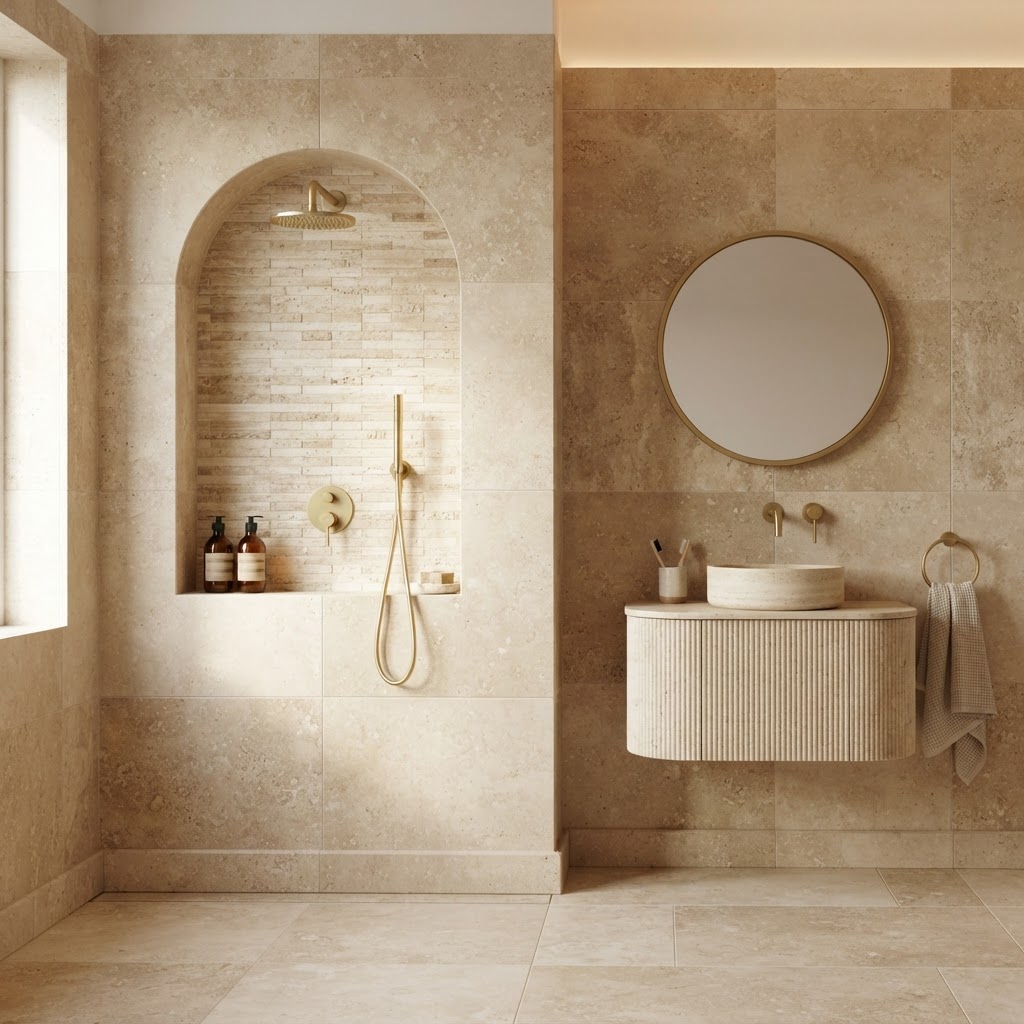
4. Travertine and arches. Warm travertine with an arched niche or doorway brings a gentle, Mediterranean softness.
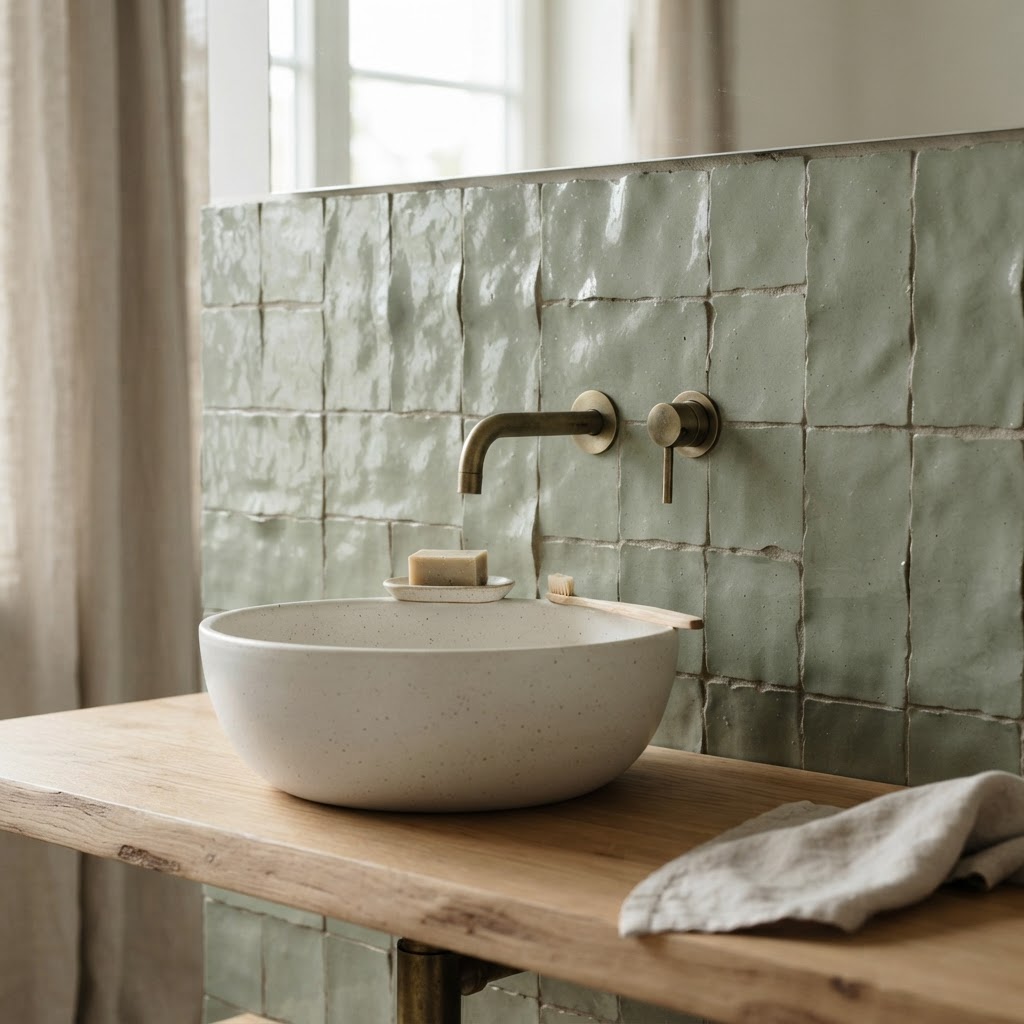
5. Handmade matte tiles. Zellige-style or handmade tiles with slightly uneven edges and a matte or soft-sheen glaze add character, especially in sage, clay or sand.
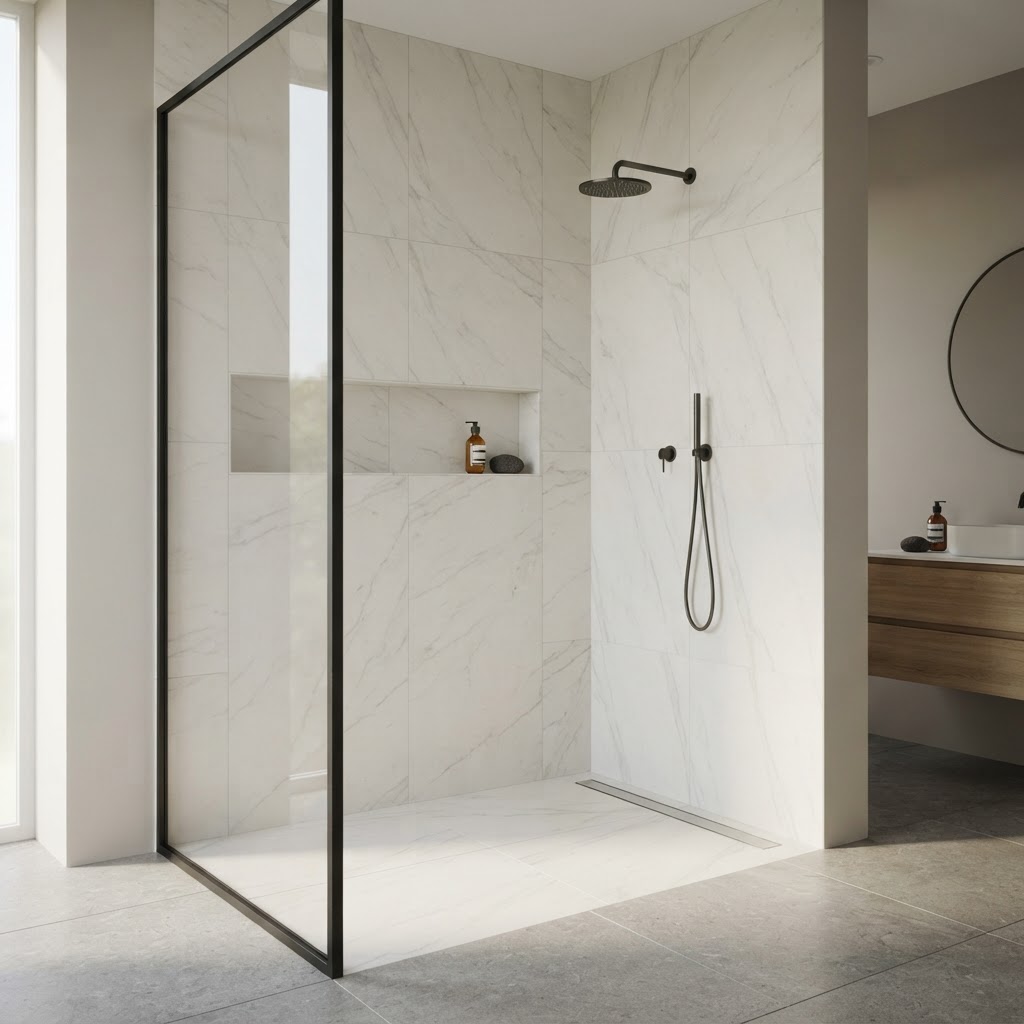
6. Large-format stone-look tiles. Rubi's favourite practical trick is simple: "One example I often recommend is larger format tile to reduce grout joints, which can lower cleaning and maintenance without changing the overall look."
Wood and furniture
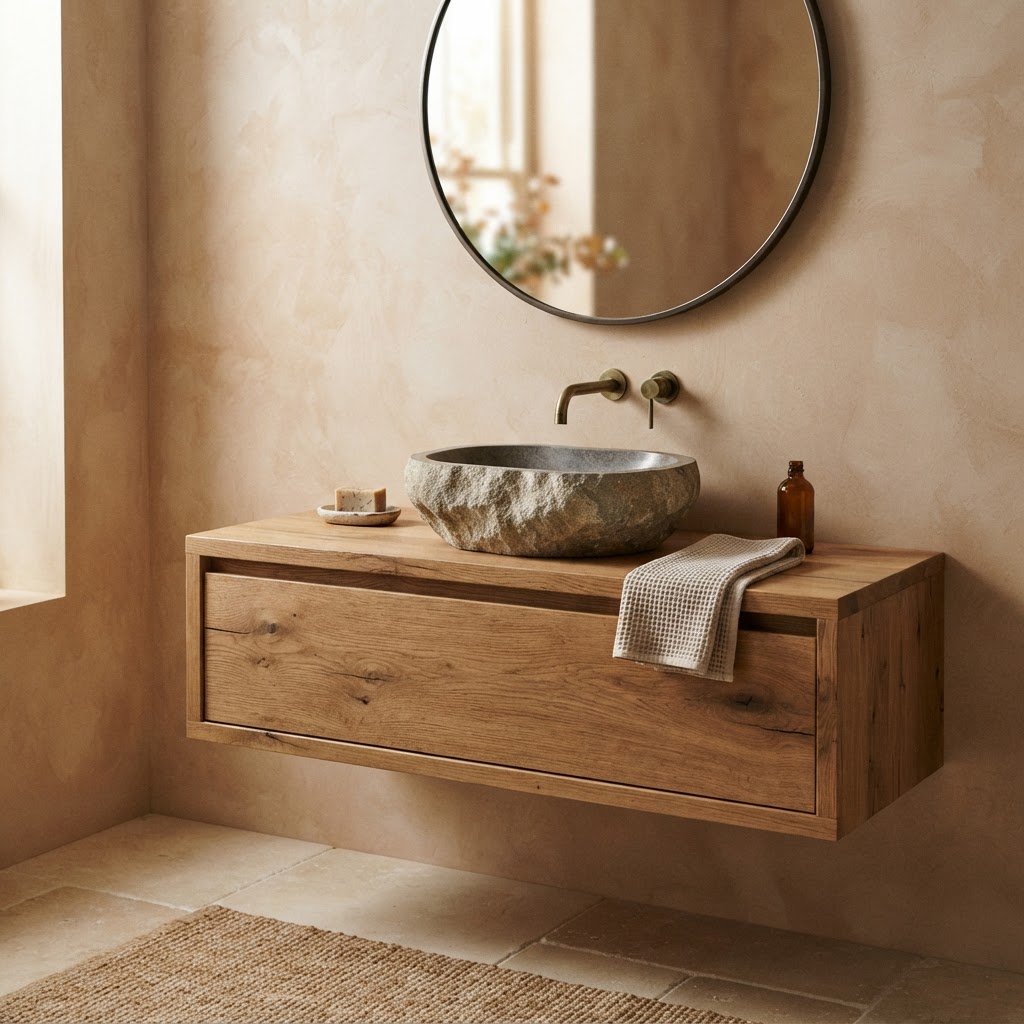
7. A floating oak vanity. A wall-hung vanity in oak or walnut, well sealed, brings warmth and keeps the floor clear, which makes a small bathroom feel bigger.
8. A teak shower bench. Teak is naturally resistant to water, so it's ideal for a bench, a stool or shelves inside or near the shower.
9. Open wooden shelving. A simple teak or oak shelf with rolled towels, baskets and a stone soap dish is practical and pretty.
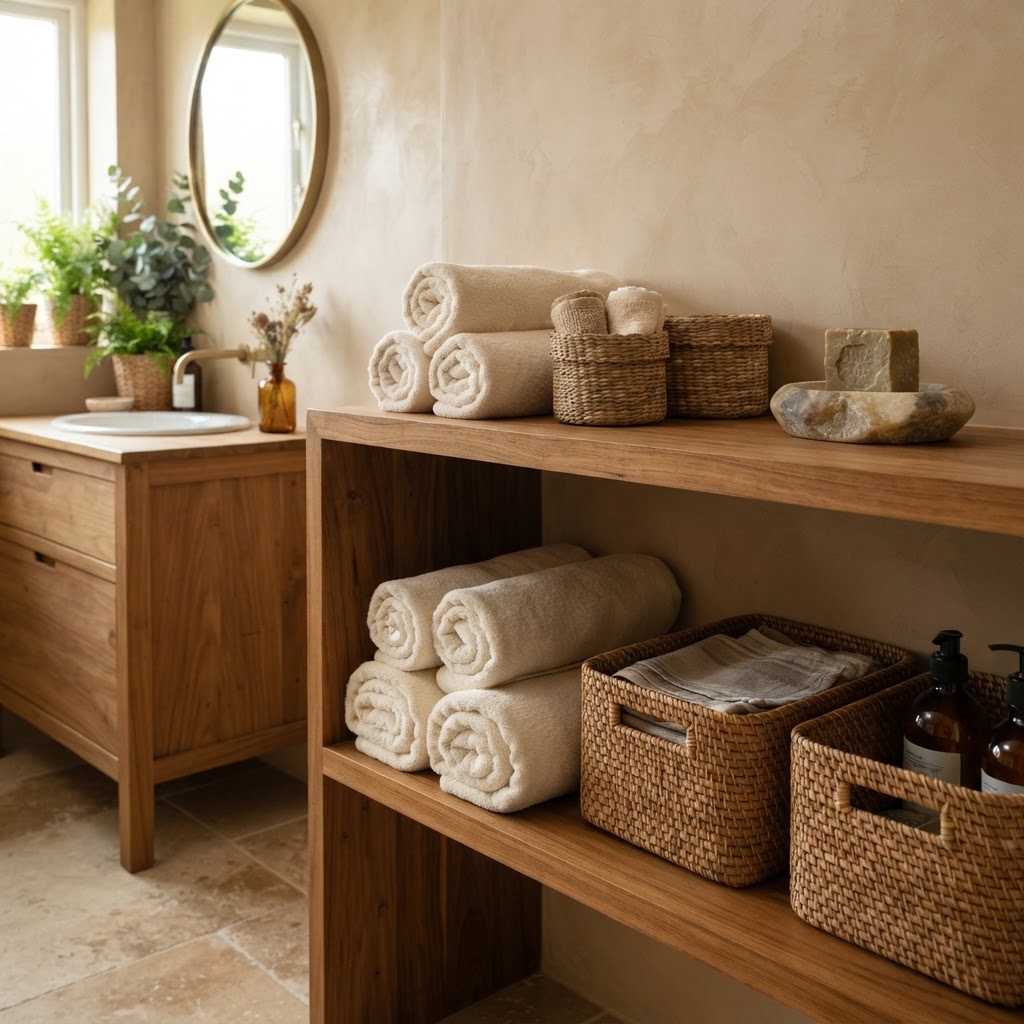
10. Wood on the ceiling. Timber cladding overhead, like a tongue and groove ceiling, adds warmth, as long as the room is well ventilated and the wood is sealed.
Fixtures and features
11. A stone or freestanding bath. A freestanding bath in stone, stone resin or a soft matte finish is the ultimate organic centrepiece. For a deeper soak, a Japanese soaking tub is another lovely option.
12. A vessel basin. A carved stone or ceramic vessel basin on a wooden vanity looks sculptural and handmade.
13. Reeded glass. A reeded or fluted glass shower screen with a slim bronze or black frame softens the light and adds privacy.
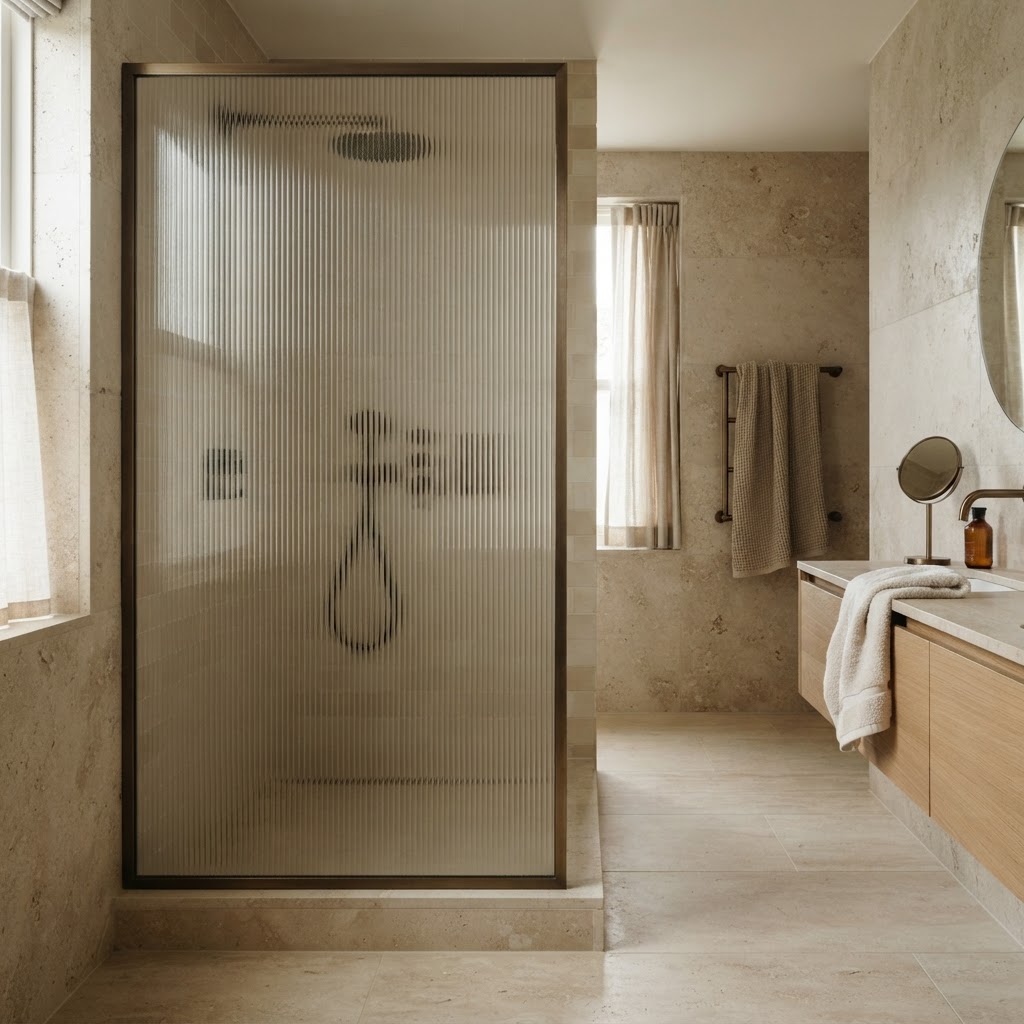
14. Brushed brass or bronze taps. Warm, brushed metals look softer and more natural than polished chrome, and they age gently.
Light, plants and finishing touches
15. Maximise natural light. Sunlight is part of the look, so keep windows as open as privacy allows, with frosted lower panes or light linen blinds.
16. Plants. A trailing pothos, a fern or a peace lily loves the humidity of a bathroom and instantly softens hard surfaces.
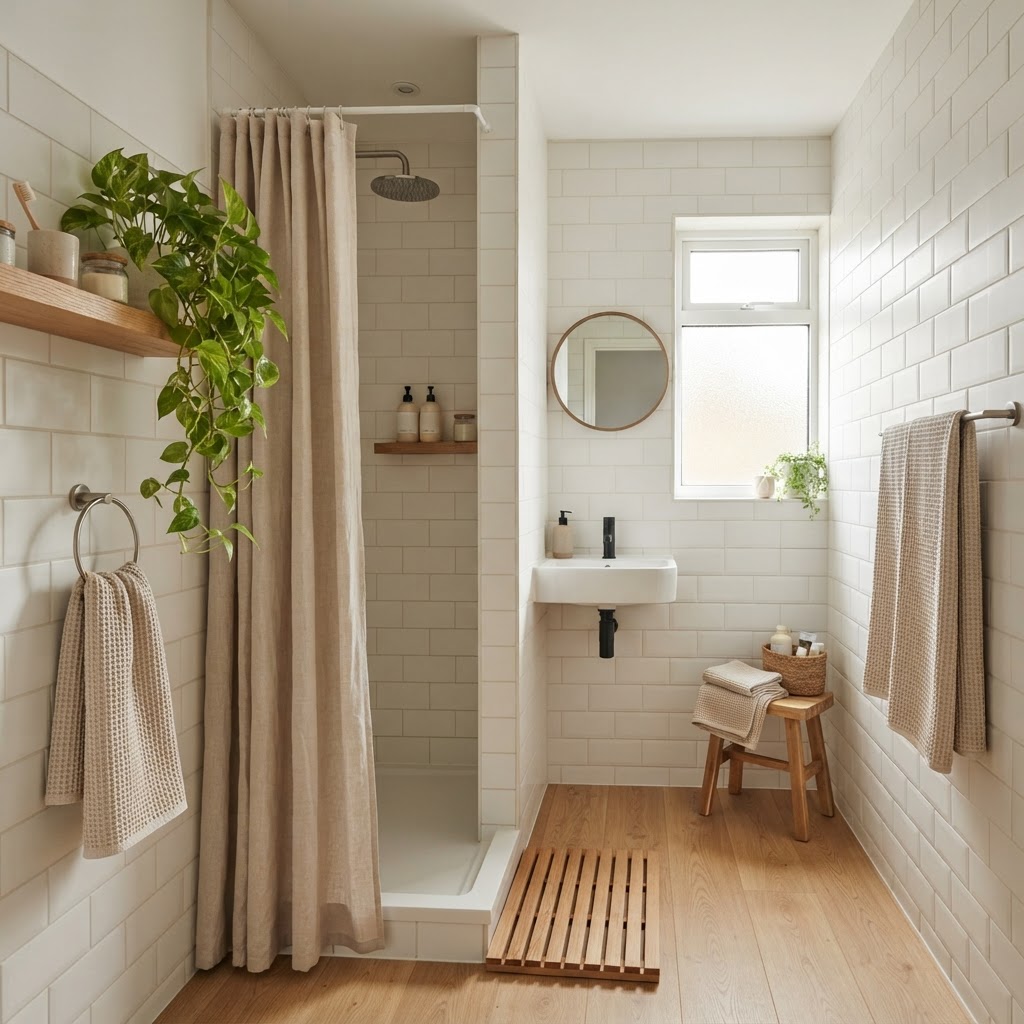
17. Natural textiles. Linen shower curtains, waffle-weave towels and a wooden or cotton bath mat finish the look.
How to Get the Look on a Smaller Budget
You don't need to rip out a whole bathroom to make it feel organic. Ahsan Jameel suggests starting with the soft layer:
On a smaller budget, change the soft layer and leave the hard surfaces alone. Swap a printed shower curtain for a linen or waffle-weave one, buy two or three towels in a single undyed shade such as oat or clay, and replace plastic accessories with wood, stone-look ceramic and glass. Add a wooden bath mat and one humidity-tolerant plant such as a pothos.
"Because every surface ends up in one warm, matte palette, the room reads as calm and natural without new tile," he adds.
Rich's advice for bigger renovations is to keep the layout: "Try to stay within your current floor plan when it comes to budget." Moving the toilet, shower or bath means moving pipes, and that's where costs climb quickly.
- Paint before you tile. A limewash or clay-coloured paint outside the wet zone changes the mood for very little.
- Swap the taps and handles. Brushed brass or matte black fittings make an instant difference.
- Change the vanity, not the whole room. A new wooden vanity and stone-look top can transform a dated bathroom.
- Use stone-look porcelain. It gives the look of natural stone without the sealing or the cost.
- Add wallpaper away from the water. A natural grasscloth-look or botanical bathroom wallpaper works well in a cloakroom or away from the shower.
Practical Essentials: Ventilation and Safe Floors
Natural materials and steam need careful handling. Rich is clear: "Make sure you have proper venting and non slick floors."
North Dakota State University Extension's advice on how to control mold growth in the bathroom is to "run the bathroom exhaust fan during, and for a few minutes after, showers to exhaust the moisture," and it adds that "a timer switch is an easy way to make sure your fan stays on for the desired length." Good ventilation protects wood, limewash and grout, and stops mould spoiling all that natural texture.
For floors, choose honed, tumbled or textured finishes rather than polished stone, and check the slip rating of tiles before you buy, especially in a wet room or walk-in shower.
How I Design Organic Bathrooms
After more than 15 years of designing homes, pubs and restaurants, I've learnt that the best organic bathrooms are about restraint as much as materials.
- Choose one hero material. A beautiful stone floor or a limewash wall should be the star; everything else supports it.
- Repeat, don't collect. I use one wood tone and one stone tone and repeat them, rather than mixing lots of different naturals.
- Think about touch. Matte tiles, soft towels and smooth wood are just as important as how the room looks.
- Bring in flowers and greenery. As a florist, I can't resist a small vase of foliage or a few stems on the vanity, which makes the room feel alive.
Common Mistakes to Avoid
Rubi warns about "common mistakes I see that add cost or maintenance later, like choices that ignore access to plumbing or finishes that are hard to keep clean." Ahsan's biggest warning is about too many textures:
The most common mistake is mixing too many natural textures. Rattan, jute, three wood tones and a busy tile fight each other, and the room looks cluttered rather than calm. Pick one wood tone and one stone or stone-look finish and repeat them.
He also adds: "The second mistake is putting untreated wood in the wettest zone: keep raw wood away from the shower and use teak, sealed bamboo or stone there."
| Mistake | Why it's a problem | What to do instead |
|---|---|---|
| Too many natural textures | The room looks busy, not calm | One wood tone, one stone tone, repeated |
| Untreated wood in the wet zone | It warps, stains and grows mould | Use teak, sealed wood or stone |
| Polished stone floors | Slippery when wet | Choose honed, tumbled or textured finishes |
| Ignoring sealing | Marble and limestone stain and etch | Seal regularly and accept a patina |
| Poor ventilation | Mould on grout, wood and walls | Fit a good extractor fan on a timer |
| Ignoring plumbing access | Repairs become costly | Plan access panels and keep the layout |
| Trying too hard for a spa look | Can feel themed | Keep it simple and practical |
Frequently Asked Questions
What is organic bathroom design?
Organic bathroom design uses natural and natural-looking materials, such as stone, wood, limewash and handmade tiles, in an earthy, neutral palette, with simple shapes, texture and natural light.
What is a modern organic bathroom?
A modern organic bathroom uses the same natural materials and earthy colours with cleaner lines, flat-fronted cabinetry, frameless or reeded glass and fewer accessories.
What colors are used in an organic bathroom?
Clay, sand, greige, off-white, charcoal and soft greens are the classic palette, often with brushed brass or bronze accents.
Can you use wood in a bathroom?
Yes, if it's sealed and kept out of the wettest zones. Teak is naturally water-resistant and ideal for benches and shelves, while oak and walnut suit well-sealed vanities.
Is microcement good for an organic bathroom?
Yes. It creates a seamless, matte, stone-like surface with very few joints, but it needs a skilled installer and proper sealing.
How do I make my bathroom look organic on a budget?
Change the soft layer: linen shower curtains, undyed towels, wooden and stone-look accessories, a plant and a limewash or earthy paint outside the wet zone.
How do you design an organic minimalist bathroom?
Choose one or two natural materials, a tight neutral palette, simple shapes and hidden storage, and keep accessories to a minimum so the textures can stand out.
A Calm, Natural Retreat
An organic bathroom brings the calm of nature into the busiest room in the house. Choose honest, durable materials, keep the palette earthy and simple, let texture and light do the work, and never forget the practical side: ventilation, sealing and safe floors.
And if you'd like help designing a calm, natural bathroom for your home, you can book a one-hour online interior design consultation with me.
About the author
Magda Callery is a UK interior designer and florist with more than 15 years' experience designing homes, pubs, restaurants and bars, and her expert commentary has featured in Homes & Gardens, The Mirror and The Spruce. Explore more of the interior design articles.
Continue reading


Girls' Bedroom Ideas: 17 Ideas From Toddler to Teen
17 girls' bedroom ideas for every age, from floor beds, canopies and woodland themes to bunk beds, cabin beds and grown-up teen rooms, plus colours, planning and safety tips.


Hallway Storage Ideas: 17 Clever Ways to Store More
17 hallway storage ideas for narrow and large hallways, from slim shoe cabinets and peg rails to floor-to-ceiling cupboards, under-stairs drawers and IKEA PAX hallway hacks.


Gothic Style Windows: History, Types and Home Ideas
What Gothic style windows are, 11 types from lancets and tracery to rose windows and Gothic Revival, and how to bring pointed arches into your own home.