Behr Dry Plus vs Drylok: Which Waterproofer Is Better?
BEHR Dry Plus vs DRYLOK compared spec by spec from the official data sheets, with a clear verdict, prep and application steps, and UK alternatives.
By Magda Callery, interior designer
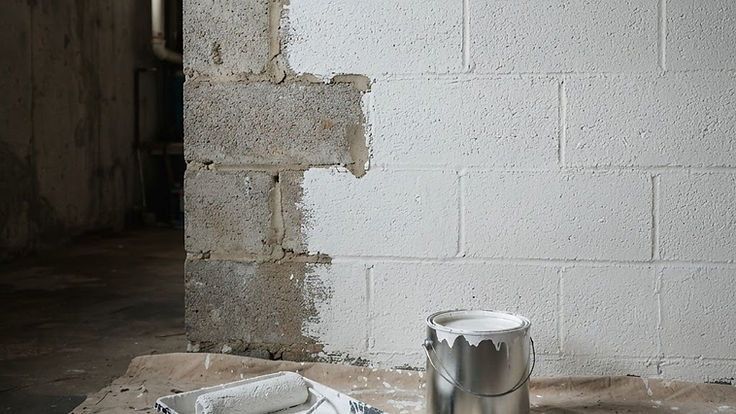
If you're trying to keep a basement, cellar or masonry wall dry, two names come up again and again: BEHR Dry Plus and DRYLOK. Both are water-based waterproofing paints for concrete and masonry, both go on with a brush or roller, and both promise to stop water seeping through your walls. But they're not identical, and choosing the wrong one, or using either on the wrong problem, can mean wasted money and a damp wall that comes back.
I've compared both products using the manufacturers' own product data sheets and labels, not hearsay, so every number below can be checked. You'll find a side-by-side comparison, a clear verdict for different situations, how to find out what's really causing your damp, how to apply either product properly and, if you're in the UK, what to use instead.
The Quick Answer
- Choose DRYLOK Extreme if you have a below-ground basement wall under real water pressure. It's rated to 15 PSI (Behr Dry Plus is rated to 12 PSI), it has the longer 15-year warranty, it contains a mildew-resistant biocide, and it's faster to recoat.
- Choose BEHR Dry Plus if you want more colour choice, need to apply it to a slightly damp wall, or want to spray it. It's also a strong option for above-ground masonry and moderate seepage.
- Choose neither if water is actively pouring or trickling through the wall, or if the damp is actually condensation. A coating can't fix either, as I explain below.
BEHR Dry Plus vs DRYLOK: Side by Side
| BEHR Dry Plus (No. 875 and 876) | DRYLOK Original | DRYLOK Extreme | |
|---|---|---|---|
| Water pressure rating | 12 PSI | 10 PSI (about 22 ft of water) | 15 PSI (about 33 ft of water), tested to ASTM D7088 |
| Wind-driven rain | Not stated | Tested to 98 mph | 140 mph, tested to ASTM D6904 |
| Coverage per US gallon | 75 to 100 sq ft rough, 100 to 125 sq ft smooth | 75 sq ft first coat, 75 to 100 sq ft second | 75 sq ft first coat, 75 to 100 sq ft second |
| Coats | Two minimum | Two | Two |
| Dry to touch | 1 hour | 1.5 hours | About 45 minutes |
| Recoat | 4 hours | 2 to 3 hours | About 2 hours |
| Before a latex topcoat | Not stated | 24 hours | About 24 hours |
| Full cure | 7 to 14 days | Not stated | Not stated |
| Application temperature | 10°C to 32°C (50°F to 90°F) | 10°C (50°F) or above | 10°C (50°F) or above |
| Damp surfaces | Dry or slightly damp | Dry | Dry, or use DRYLOK Wet Wall Bonding Primer |
| Colours | White and Basement Gray, tintable | White and Gray, light tints only | Bright White and Gray, light tints only |
| Mildew resistance | Not stated | Not stated | Yes, contains a biocide |
| Warranty | 10 years, vertical surfaces | 10 years, bare vertical masonry | 15 years, bare masonry |
| Cleanup | Soap and water | Soap and water | Soap and water |
| Floors | No | No | No |
| Active leaks | No | No | No |
Sources: BEHR Dry Plus label and product pages, DRYLOK Original and DRYLOK Extreme product data sheets. Specifications can change, so always check the label on the tin you buy.
A note on coverage: one US gallon is about 3.8 litres, so 75 to 125 sq ft per gallon works out at roughly 1.8 to 3 square metres per litre. Masonry is thirsty, and the first coat on rough block will always use more.
What Is BEHR Dry Plus?
BEHR Premium Dry Plus Basement and Masonry Waterproofer is a water-based waterproofing coating from Behr, the paint brand sold at The Home Depot in the US. It comes as No. 875 White and No. 876 Basement Gray, can be tinted, and has a flat finish.
According to its label, it withstands 12 PSI of water pressure and has VOCs of less than 100 g/L. It's designed for porous concrete and masonry such as basement and retaining walls, garage walls, cinder and concrete block, brick, stucco and foundations, inside or out, above or below ground.
What stands out:
- It can go on slightly damp walls, as long as you wipe off any visible moisture first.
- It can be sprayed with an airless sprayer, as well as brushed or rolled.
- Tintable, so you can choose a colour rather than living with grey or white.
- A wide temperature window of 10°C to 32°C.
The limitations: it isn't for floors or walls with active leaks, it needs four hours between coats and seven to 14 days to fully cure, and holes or cracks below ground must be filled with fast-setting hydraulic cement first. Behr's warranty covers properly prepared, previously uncoated vertical surfaces only.
What Is DRYLOK?
DRYLOK is a long-established range of masonry waterproofers, now part of Sika. The two products people usually mean are:
- DRYLOK Original, the classic latex waterproofer, rated to 10 PSI with a 10-year warranty. Its data sheet describes it as semi-impermeable, with a rating below 1 perm.
- DRYLOK Extreme, the upgraded version, rated to 15 PSI and tested to withstand 140 mph wind-driven rain, with mildew resistance and a 15-year warranty.
Both come in white and grey, can be tinted to light shades only, and clean up with soap and water. They need dry surfaces (unless you use DRYLOK's Wet Wall Bonding Primer first), at least 10°C, and new concrete must cure for 28 to 30 days first.
One interesting difference: the DRYLOK Extreme data sheet says it's suitable for bare concrete swimming pools but not fishponds or bird baths, and recommends DRYLOK Original for those instead.
Head to Head: How They Really Compare
Water pressure
This is the most important number for a basement. Hydrostatic pressure is the force of water in the soil pushing against a below-ground wall. DRYLOK Extreme is rated to 15 PSI, BEHR Dry Plus to 12 PSI and DRYLOK Original to 10 PSI. If your wall is below ground and gets damp after heavy rain, the higher rating gives you more margin. Winner: DRYLOK Extreme.
Warranty
DRYLOK Extreme carries a 15-year warranty, while BEHR Dry Plus and DRYLOK Original both offer 10 years. Read the small print, though: all three only cover bare, properly prepared masonry with two full coats, and none covers labour. Painting over an existing coating voids the DRYLOK warranty, and Behr only covers previously uncoated surfaces. Winner: DRYLOK Extreme.
Ease of application
BEHR Dry Plus is the more forgiving product. It can go onto slightly damp walls, can be sprayed, and has a clearly stated temperature range. DRYLOK Extreme is quicker to work with between coats (about two hours rather than four), so you can finish a wall in a day. Winner: a tie, depending on whether flexibility or speed matters more to you.
Colour and finish
Both have a flat finish, but BEHR Dry Plus is sold ready to use or tinted, while DRYLOK can only be tinted to light shades with a limited amount of colourant. If the wall will be on show, for example in a finished basement, a playroom or a utility room, Behr gives you more choice. Winner: BEHR Dry Plus.
Mould and mildew
DRYLOK Extreme includes a biocide that resists mildew growth on the paint film. Behr doesn't make the same claim. In a cool, humid basement, this matters. Winner: DRYLOK Extreme.
Value
Prices vary by store and change often, so compare the cost per square foot of coverage rather than the price per tin. Coverage is similar, so the deciding factor is usually which product suits your wall. Remember to budget for prep products, such as hydraulic cement, a masonry cleaner and efflorescence remover, which can cost as much as the paint.
Which Should You Choose?
| Your situation | Best choice |
|---|---|
| Below-ground basement wall, damp after heavy rain | DRYLOK Extreme |
| Basement that feels musty, with signs of mildew | DRYLOK Extreme, after treating the mould |
| Above-ground masonry or a garage wall | Either, BEHR Dry Plus for more colour choice |
| A wall that's slightly damp and can't fully dry out | BEHR Dry Plus, or DRYLOK with its Wet Wall Bonding Primer |
| A finished room where the wall colour matters | BEHR Dry Plus |
| Bare concrete swimming pool | DRYLOK Extreme |
| Fishpond or bird bath | DRYLOK Original |
| Concrete floor | Neither; use a dedicated floor coating |
| Water actively leaking through cracks | Neither; repair the cracks and fix the drainage first |
| Damp caused by condensation | Neither; improve ventilation and dehumidify |
| Old solid brick wall in a period home | Usually neither; see the UK advice below |
First, Find Out What's Causing the Damp
Waterproof paint only works on one type of damp: water seeping through porous masonry. Before you buy anything, work out which problem you actually have.
| Type of damp | Signs | Will waterproof paint fix it? |
|---|---|---|
| Seepage through the wall | Damp patches after rain, damp feels like it comes from inside the wall | Yes, this is what these products are for |
| Active leaks | Water trickling or pooling through cracks or joints | No, repair first |
| Condensation | Water droplets on cold walls, worse in winter, mould in corners | No, ventilate and dehumidify |
| Rising damp | A tide mark low on the wall, salts, crumbling plaster | No, needs a proper damp proof course |
| Leaking gutters or pipes | Damp in one specific spot, often below a downpipe | No, fix the leak |
The foil test
Tape a 30cm square of kitchen foil or plastic sheeting tightly to the wall on all four sides and leave it for two to three days.
- Moisture underneath the foil means water is coming through the wall. A waterproofer may help.
- Moisture on the surface of the foil means condensation from the air. Paint won't help; you need ventilation, heating and a dehumidifier.
Fix the outside first
The best basement waterproofing starts outside. Clear gutters and downpipes, make sure downpipes discharge well away from the walls, and check the ground slopes away from the house. These simple fixes often reduce damp more than any coating.
How to Prepare the Wall
Preparation is where most waterproofing jobs succeed or fail. Both manufacturers are clear that the products only perform, and the warranties only apply, on properly prepared, bare masonry.
- Remove old paint that's flaking or in poor condition. If the property is older, use lead-safe practices, as old paint can contain lead.
- Clean the wall of dirt, grease, dust and loose material with a stiff brush and a masonry cleaner.
- Treat mould and mildew with a suitable mould cleaner and let the wall dry.
- Remove efflorescence, the white powdery salt deposits on masonry, using an efflorescence remover or acid etch as directed by the manufacturer. DRYLOK says recurring efflorescence voids its warranty.
- Repair cracks and holes with fast-setting hydraulic cement. Behr requires this for below-ground walls.
- Let new concrete cure for at least 28 to 30 days.
- Check the conditions. Both products need air and surface temperatures of at least 10°C. Behr's upper limit is 32°C.
- Ventilate the space and wear gloves and eye protection.
How to Apply BEHR Dry Plus or DRYLOK
- Stir thoroughly. Don't thin either product.
- Use the right tools. A stiff nylon or polyester brush works the coating into pores best. Behr also recommends a 1/2 to 3/4 inch nap roller or an airless sprayer.
- Apply the first coat generously, working it into every pore, pinhole and mortar joint. This coat does most of the waterproofing.
- Wait about two hours for DRYLOK Extreme, two to three hours for DRYLOK Original or four hours for BEHR Dry Plus.
- Apply the second coat over the whole surface. Two coats are required by both manufacturers.
- Check for weeping spots. If any areas still show moisture after two coats, there are still open pores or pinholes; recoat those areas.
- Allow to dry fully before decorating. DRYLOK recommends about 24 hours before a latex topcoat, and Behr gives seven to 14 days for a full cure.
Common Mistakes to Avoid
- Painting over condensation. It won't help, and trapped moisture can make things worse.
- Skipping the hydraulic cement. Paint can't bridge open cracks.
- Spreading it too thinly. Both manufacturers warn against exceeding the spread rate. A thin coat leaves pinholes.
- Applying one coat. Two coats are essential, and the warranties depend on it.
- Painting over old paint, which can stop the waterproofer bonding and voids the warranties.
- Using it on floors. Neither is designed for foot traffic.
- Working in the cold. Below 10°C, the coating may not cure properly.
Using These Products in the UK
BEHR Dry Plus and DRYLOK are American products and aren't widely sold in UK shops, so it's worth understanding the British alternatives and one important difference in how our homes are built.
- For cellars and basements, UK builders usually use cementitious tanking slurries or waterproofing membranes rather than waterproof paint. For a basement you plan to live in, waterproofing is usually designed to British Standard BS 8102, and a specialist is worth it.
- For exterior masonry, breathable masonry water repellents are more common than waterproof paint.
- For older homes, be careful. Many period properties built before around 1920 have solid walls and lime mortar that need to breathe. Sealing them with an impermeable coating can trap moisture inside the wall and make damp worse. Get a survey from an independent damp specialist before sealing a solid wall.
After Waterproofing: Make the Space Feel Like Home
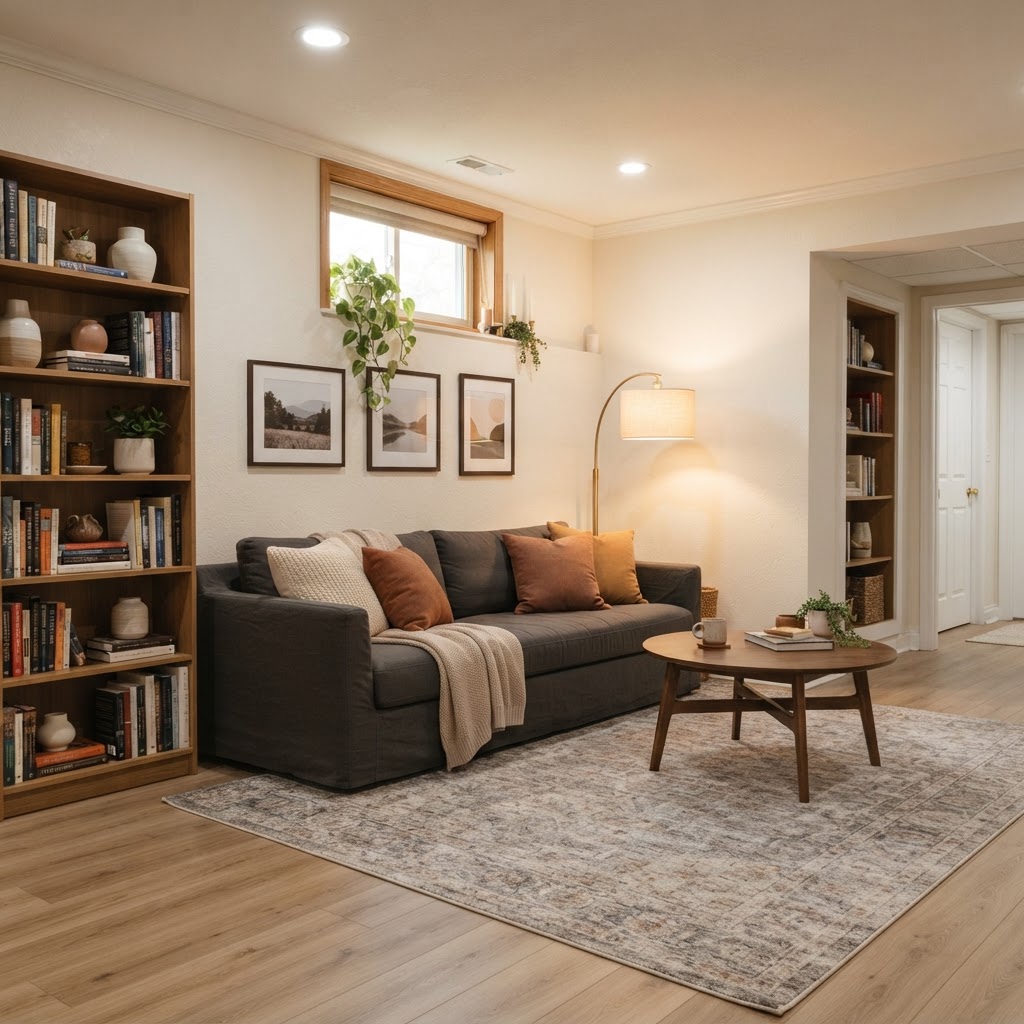
A dry basement is one of the best opportunities in a home: a playroom, a snug, a gym, a home office or a gaming den. A few designer tips:
- Keep it dry. A dehumidifier and good ventilation protect your investment.
- Choose warm, light colours to counter the lack of daylight. My guides to the best green paint colours and terracotta colour include shades that work brilliantly in low light, and my step-by-step guide to choosing a colour palette will help you plan the whole space.
- Layer the lighting. Several lamps with warm bulbs make a windowless room feel welcoming.
- Add softness. Rugs, curtains and upholstery absorb sound and add warmth.
- Plan the use. My home office design ideas and gaming room colour ideas are perfect starting points for a basement, and my small living room ideas work just as well for a compact snug.
Frequently Asked Questions
Is BEHR Dry Plus as good as DRYLOK?
BEHR Dry Plus outperforms DRYLOK Original on water pressure (12 PSI against 10 PSI), but DRYLOK Extreme is stronger still at 15 PSI and has a longer 15-year warranty. Behr's advantages are more colour choice, spray application and tolerance of slightly damp walls.
Which is better for a basement, BEHR Dry Plus or DRYLOK?
For a below-ground basement wall under water pressure, DRYLOK Extreme is the better choice thanks to its 15 PSI rating and mildew resistance. For above-ground walls or mild seepage, BEHR Dry Plus works well.
How many coats of BEHR Dry Plus or DRYLOK do I need?
You need two coats of both. The first coat works into the pores and does most of the waterproofing; the second completes the barrier. Both warranties require two coats.
Can you paint over DRYLOK or BEHR Dry Plus?
Yes. DRYLOK recommends waiting about 24 hours before applying a latex topcoat. Behr's coating takes seven to 14 days to fully cure, so allow it plenty of time.
Can you use BEHR Dry Plus or DRYLOK on floors?
No. Neither is designed for horizontal surfaces with foot traffic. DRYLOK makes a separate floor and wall product, or you can use a dedicated concrete floor paint.
Will waterproof paint stop an active leak?
No. Behr states its product isn't for walls with active water leaks, and both manufacturers say that if leaking continues after two coats, pores are still open. Repair cracks with hydraulic cement and fix drainage problems first.
Can you apply DRYLOK or BEHR Dry Plus to a damp wall?
BEHR Dry Plus can be applied to dry or slightly damp surfaces once visible moisture is wiped away. DRYLOK should go onto dry surfaces, or over its Wet Wall Bonding Primer on damp or wet areas.
The Verdict
For most below-ground basements, DRYLOK Extreme is the stronger product, with a higher pressure rating, mildew resistance, faster recoating and the longest warranty. BEHR Dry Plus is the better choice when colour, spraying or a slightly damp wall matter more, and it comfortably beats DRYLOK Original on paper.
Whichever you choose, the result depends on finding the real cause of the damp, preparing the wall properly and applying two generous coats.
Once your space is dry, I'd love to help you turn it into a room you'll actually use. You can book a one-hour online interior design consultation with me, or browse more ideas in my decorating articles.
About the author
Magda Callery is a UK interior designer with more than 15 years' experience designing homes, pubs, restaurants and bars, and her expert commentary has featured in Homes & Gardens, The Mirror and The Spruce. Explore more of the decorating articles.
Continue reading

Can You Reuse Peel and Stick Wallpaper? An Honest Guide
Can you reuse peel and stick wallpaper? Sometimes, but don't count on it. How to remove, store and rehang panels, and clever ways to reuse them.

Best Decorated Homes for Halloween: 35 Decoration Ideas
What the best decorated Halloween homes have in common, plus 35 indoor and outdoor Halloween decoration ideas, easy DIY projects and competition tips.

Autumn Decoration Ideas: 40 Ways to Decorate Your Home
40 autumn decoration ideas, room by room, plus five easy DIY projects, colour palettes, free foraged decorations, budget tips and pet safety advice.