
How to Grow Zinnias: Planting, Seeds and Cut Flowers
A florist's guide to planting zinnias in the UK: when and how to sow zinnia seeds, planting out, spacing, pinching, the best varieties for cutting and how to make cut zinnias last.
By Magda Callery, interior designer and florist
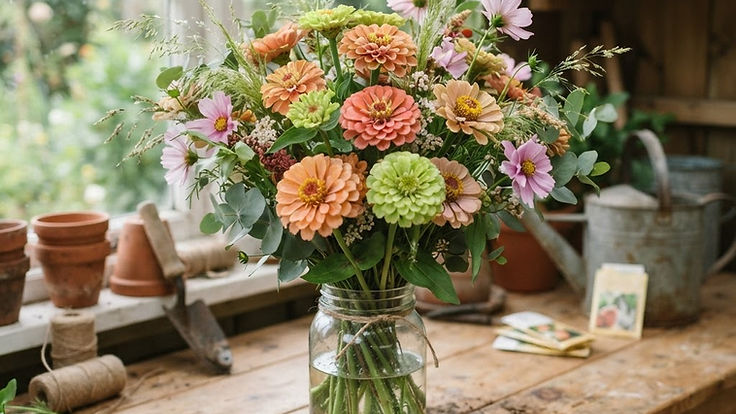
If I could grow only one cut flower, it might be the zinnia. Zinnias are easy to raise from seed, flower for months, come in almost every colour except blue, and the more you cut them, the more they flower. They're a favourite of florists and pollinators alike, and a single packet of seeds can fill a summer of vases.
The catch is that zinnias love heat, which makes timing everything in the UK. In this guide I'll explain exactly when and how to plant zinnias, from sowing zinnia seeds indoors to planting out, spacing, pinching, watering and feeding, the best varieties for cutting and for pots, how to cut zinnias like a florist so they last, common problems and what zinnias mean.
Zinnias at a Glance
| Zinnias | |
|---|---|
| Plant type | Half-hardy annual |
| Sow indoors | Late April to early May |
| Sow outdoors | Early June, in warm, sheltered spots |
| Plant out | After the last frost, usually June in the UK |
| Spacing | 30 to 40cm in a garden border; a little closer in a cutting bed |
| Position | Full sun, shelter and free-draining soil |
| Height | From about 30cm for compact types to around a metre for tall cutting varieties |
| Flowering | Mid summer until the first frosts |
| Pet safety | Non-toxic to dogs, cats and horses, according to the ASPCA |
When to Plant Zinnias in the UK
Zinnias are half-hardy annuals that hate cold, wet soil and any hint of frost, so there's no advantage in starting early.
- Sow indoors from late April to early May. The RHS recommends sowing at about 20°C, then growing seedlings on at 15 to 18°C.
- Sow outdoors in early June, but only in reliably warm spots on light soil.
- Plant out once all danger of frost has passed. The RHS says that's normally early June in the south and mid June further north.
Sowing too early is the most common mistake. Zinnias started in March often become leggy and root-bound before it's warm enough to plant them out, and a late spring sowing usually catches up and overtakes them.
How to Plant Zinnia Seeds Indoors
- Use modules or small pots. Zinnias dislike having their roots disturbed, so sow one or two seeds per module or 9cm pot rather than in a seed tray.
- Fill with seed compost, firm gently and water before sowing.
- Sow the seeds about 0.5cm deep and cover lightly with compost or vermiculite.
- Keep them warm. A windowsill or heated propagator at around 20°C works well. In warmth, zinnias usually germinate quickly.
- Give them plenty of light as soon as they germinate, or they'll stretch and become weak.
- Thin to one seedling per module once they have their first true leaves.
- Harden off for 7 to 10 days before planting out, putting them outside during the day and bringing them in at night.
How to Sow Zinnias Directly Outdoors
In warm, sheltered gardens, especially in the south, you can sow zinnias straight into the ground in early June. Rake the soil to a fine tilth, sow thinly in shallow drills, cover lightly and water. Protect seedlings from slugs, and thin them to their final spacing once they're a few centimetres tall. Direct-sown zinnias flower later than those started indoors, but they avoid root disturbance completely.
Planting Out and Spacing
Choose the sunniest, most sheltered spot you have, with free-draining soil. The RHS warns that heavy soils that stay cold and wet lead to poor growth.
| Where you're growing | Spacing |
|---|---|
| Garden border | 30 to 40cm apart, as the RHS suggests for growing in a block |
| Cutting bed | About 25 to 30cm apart, in rows you can reach from both sides |
| Pots | One plant per medium pot, or three compact plants in a large container |
Water seedlings in well after planting and protect them from slugs for the first couple of weeks.
Pinching Zinnias for More Flowers
When young plants are around 20cm tall with three or four pairs of leaves, pinch out the growing tip just above a pair of leaves. It feels brutal, but it encourages the plant to branch from the base, giving you many more long stems for cutting. Compact bedding types don't need pinching.
Watering and Feeding
- Water at the base in hot, dry weather. The RHS advises keeping the foliage dry to reduce fungal disease.
- Water in the morning so any splashes dry quickly.
- Feed lightly. A general-purpose feed every couple of weeks once flowering starts keeps cutting plants productive; too much nitrogen gives leaves rather than flowers.
- Mulch around established plants to hold moisture in summer.
The Best Zinnia Varieties
| Variety or series | What it's like | Best for |
|---|---|---|
| Benary's Giant | Tall plants with big, dahlia-like double flowers in a wide range of colours | Cutting and the back of a border |
| Queen Lime series | Double flowers in lime green, blush, red and antique shades | Sophisticated, florist-style bouquets |
| 'Zinderella Peach' | Frilly, scabious-like double flowers in shades of pink, orange and cream; holds an RHS Award of Garden Merit | Cutting and unusual texture |
| Oklahoma series | Smaller flowers on long, branching stems | Posies and jam jar arrangements |
| Profusion series | Compact, bushy plants covered in single flowers | Pots, edging and bedding |
| 'Red Spider' | Narrow, spidery red petals | Cottage gardens and pollinators |
If you're growing for the vase, start with tall, double varieties such as Benary's Giant or the Queen series. For pots and borders, compact types like Profusion flower nonstop without staking.
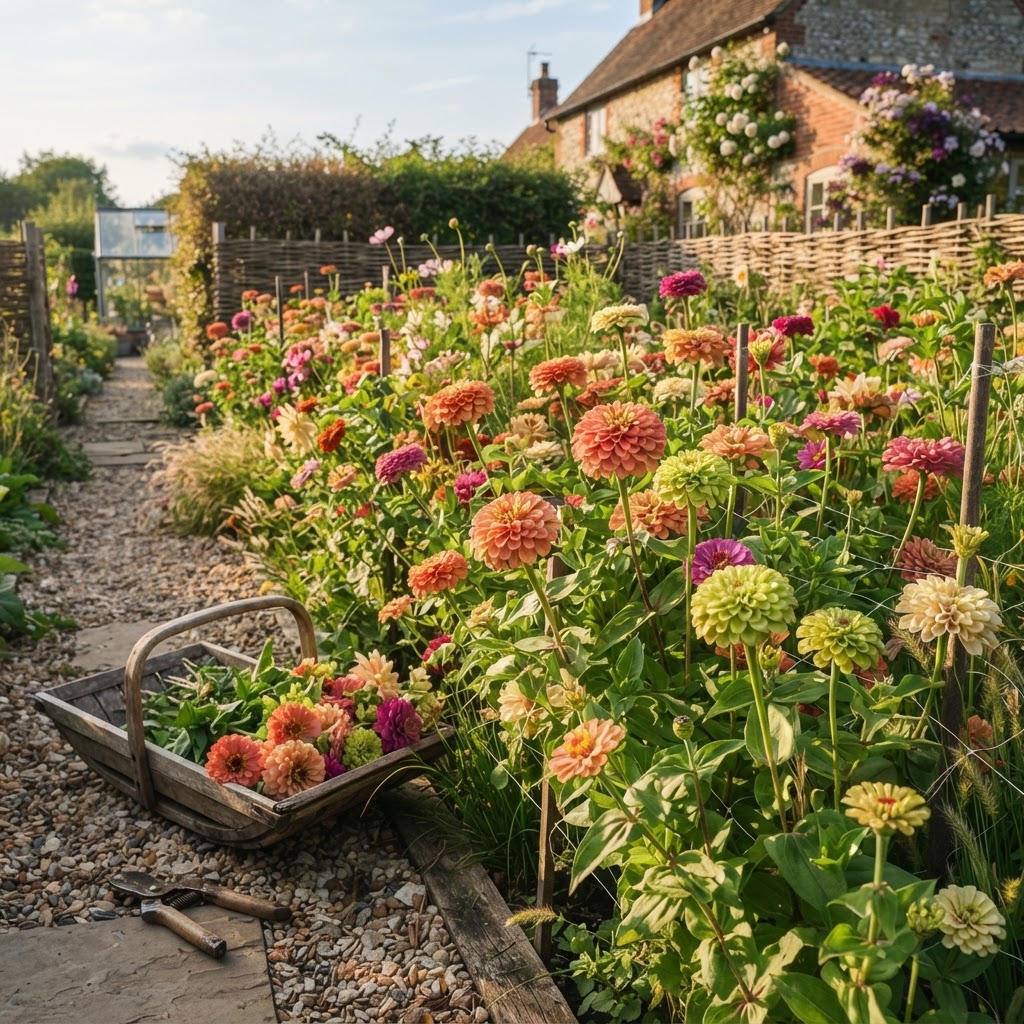
How to Cut Zinnias So They Last
Zinnias are true cut-and-come-again flowers: the more you pick, the more they produce. A few florist tricks make all the difference.
- Use the wiggle test. Hold the stem about 20cm below the flower and give it a gentle shake. If the stem is stiff, it's ready to cut. If it bends or droops, give it another day or two, or it will wilt in the vase.
- Cut long and low. Cut deep into the plant, just above a pair of leaves, to encourage long new stems.
- Pick in the cool of the morning or evening, and put stems straight into water.
- Strip the leaves that would sit below the waterline.
- Handle gently. The stems are hollow just below the flower head and snap easily.
- Change the water often. Zinnias like shallow, clean water, so refresh it every day or two.
- Deadhead anything you don't cut, back to a side shoot, so the plant keeps flowering.
Freshly cut zinnias usually last around a week in the vase, sometimes longer with clean water. For more ways to keep cut flowers fresh, the same principles apply to almost every bloom.
Common Zinnia Problems
| Problem | Signs | What to do |
|---|---|---|
| Damping off | Seedlings collapse at the base | Use fresh compost, clean pots and avoid overwatering |
| Botrytis (grey mould) | Fuzzy grey mould on flowers and leaves in damp weather | Remove affected growth and improve air flow |
| Leaf spot and blight | Brown spots on older leaves | Water at the base and keep foliage dry |
| Powdery mildew | White powdery coating on leaves, especially late in the season | Space plants well, water at the base and remove badly affected leaves |
| Slugs and snails | Seedlings eaten overnight | Protect young plants and check after rain |
| Leggy seedlings | Long, pale, floppy stems | Sow later and give more light |
What Do Zinnias Mean?
In Kate Greenaway's 1884 Language of Flowers, the zinnia stands for "Thoughts of absent friends", which makes a bunch of garden zinnias a lovely thing to give someone you miss. Today they're also associated with joy, endurance and lasting affection, thanks to their long flowering season. Golden and orange zinnias share the sunny symbolism of other yellow flowers, from friendship to new beginnings.
Zinnias for Pollinators and Pets
Single and semi-double zinnias, with an open centre, are especially good for bees and butterflies. They're also a safe choice for families with animals, as the ASPCA lists zinnias as non-toxic to dogs, cats and horses.
Styling Zinnias at Home
Zinnias look their best in simple, generous bunches. Mix three or four colours in a jug, or line up single stems in mismatched jam jars along a French café-style bistro table. They pair beautifully with cosmos, dahlias, rudbeckia and grasses, and a late summer bunch on a hallway Scandi console table is a wonderful welcome home. If you're planning a cutting patch, a simple garden fence or trellis behind the bed gives shelter as well as a backdrop.
Frequently Asked Questions
When should I plant zinnias in the UK?
Sow zinnias indoors from late April to early May, or outdoors in early June in warm, sheltered spots. Plant them out once all risk of frost has passed, usually early June in the south and mid June further north.
How do you plant zinnia seeds?
Sow one or two seeds about 0.5cm deep in modules or small pots of seed compost, keep them warm at around 20°C, give them plenty of light once they germinate, and thin to one seedling per module.
Can you sow zinnias directly outside?
Yes, in early June in a warm, sunny, sheltered spot with free-draining soil. Direct-sown zinnias flower later than those started indoors but avoid root disturbance.
How far apart should zinnias be planted?
The RHS suggests 30 to 40cm apart when grown in a block. In a dedicated cutting bed, many growers plant a little closer, around 25 to 30cm.
Do zinnias come back every year?
No. Zinnias are half-hardy annuals that flower for one season and are killed by the first frosts, so sow fresh seed every spring.
Should I pinch out zinnias?
Pinching tall varieties when they're around 20cm tall encourages bushier plants with more, longer stems for cutting. Compact bedding types don't need pinching.
Why are my zinnias not flowering?
The most common reasons are cold, shade, too much nitrogen or planting out too early. Zinnias need full sun and warmth, and they often sulk until the weather warms up.
How long do cut zinnias last?
Usually around a week, sometimes longer. Cut them when the stems pass the wiggle test, strip the lower leaves and change the water every day or two.
A Summer Full of Colour
Zinnias reward a little patience in spring with months of flowers. Sow them late, give them sun and warmth, pinch them once and keep cutting, and you'll have bright, joyful bunches until the first frost.
For more seasonal flower and garden ideas, explore the flowers and garden section, or if you'd like help designing a garden view or a home that shows off your flowers, you can book a one-hour online interior design consultation with me.
About the author
Magda Callery is a UK interior designer and florist with more than 15 years' experience designing homes, pubs, restaurants and bars, and her expert commentary has featured in Homes & Gardens, The Mirror and The Spruce. Explore more of the flowers & garden articles.
Continue reading

Cosmos Flower: How to Grow Cosmos From Seed
A florist's guide to the cosmos flower: when to sow cosmos seeds in the UK, caring for cosmos seedlings, pinching, staking and deadheading, the best varieties, chocolate cosmos and cutting for the vase.

November Birth Flower: Chrysanthemum Meaning and Gifts
The November birth flower is the chrysanthemum. A florist explains its meaning, colours and history, the types you'll find at a florist, November birthday bouquet ideas and how to make chrysanthemums last.

Yellow Flowers Meaning: Victorian vs Modern Guide
What do yellow flowers mean? A florist compares the Victorian and modern meanings of more than 20 yellow blooms, plus cultural traditions, the best yellow flowers for every occasion and season, and care tips.