
What Flowers Are Good for Landscaping? 21 Easy Picks
What flowers are good for landscaping? 21 easy, low-maintenance perennials, shrubs, annuals and bulbs, plus how to combine them for real kerb appeal.
By Magda Callery, interior designer and florist
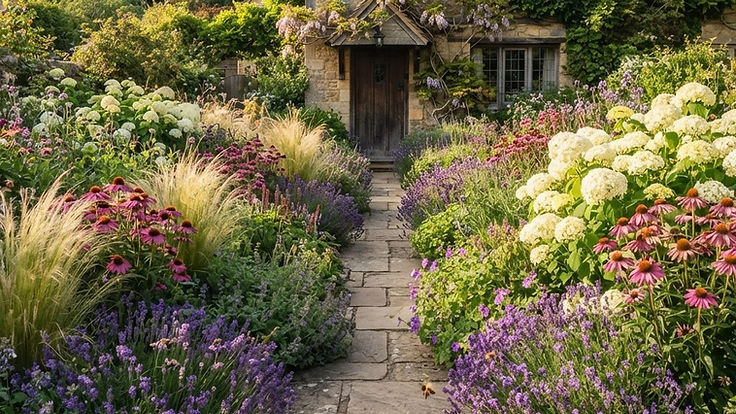
The right flowers can transform the front of a house. A few well-chosen plants soften hard edges, frame the front door, bring colour from spring to autumn and make a home feel cared for and welcoming. The wrong ones need constant watering, deadheading and replacing, and leave gaps by midsummer.
In this guide I'll explain what makes a flower good for landscaping, how to check what will grow where you live, 21 of the best easy, low-maintenance flowers for landscaping, how to combine them for real kerb appeal, which colours suit your house, and the mistakes to avoid.
The quick answer: the best flowers for landscaping are tough, long-flowering perennials and shrubs that come back every year, such as lavender, coneflowers, black-eyed Susans, daylilies, catmint, salvia, sedum, hostas for shade and panicle hydrangeas. Add a few annuals such as zinnias and cosmos for summer colour, and bulbs such as daffodils and alliums for spring.
What Makes a Flower Good for Landscaping?
- It comes back every year. Perennials, shrubs and bulbs form the backbone of a planting scheme, so you're not replanting every spring.
- It flowers for a long time. The best landscaping plants flower for weeks or months, not days.
- It's low maintenance. Little deadheading, staking, spraying or watering once established.
- It's hardy where you live. A plant that can't survive your winters will leave gaps.
- It suits the space. The right height and spread for the bed, so it doesn't swamp a path or a window.
- It looks good out of flower. Good foliage, seed heads or structure keep the garden interesting all year.
Check Your Hardiness Zone First
Before you choose plants, find out which ones will survive your winters. In the United States, the USDA Plant Hardiness Zone Map is the standard guide. As the USDA explains, "plant hardiness zone designations represent the average annual extreme minimum temperatures at a given location," and "each zone is a 10-degree Fahrenheit band, further divided into A and B 5-degree Fahrenheit zones." You can look up your zone online with your ZIP code.
In the UK, most gardens fall roughly within USDA zones 7 to 9, so almost every plant on this list will grow well, provided it has the right soil and light. Always check the label of the specific variety you're buying, as hardiness can vary.
21 Best Flowers for Landscaping at a Glance
| Flower | Type | Sun | Height | Flowers | Typical USDA zones |
|---|---|---|---|---|---|
| Lavender | Perennial | Full sun | 30 to 90 cm (1 to 3 ft) | Early to midsummer | 5 to 8 |
| Coneflower | Perennial | Full sun | 60 to 120 cm (2 to 4 ft) | Midsummer to autumn | 3 to 8 |
| Black-eyed Susan | Perennial | Full sun | 60 to 90 cm (2 to 3 ft) | Midsummer to autumn | 3 to 9 |
| Daylily | Perennial | Sun to part shade | 30 to 90 cm (1 to 3 ft) | Early to late summer | 3 to 9 |
| Catmint | Perennial | Full sun | 30 to 90 cm (1 to 3 ft) | Late spring to late summer | 3 to 8 |
| Salvia | Perennial | Full sun | 30 to 60 cm (1 to 2 ft) | Late spring to summer | 4 to 8 |
| Sedum | Perennial | Full sun | 30 to 60 cm (1 to 2 ft) | Late summer to autumn | 3 to 9 |
| Coreopsis | Perennial | Full sun | 30 to 90 cm (1 to 3 ft) | Early summer to autumn | 4 to 9 |
| Russian sage | Perennial | Full sun | 90 to 120 cm (3 to 4 ft) | Midsummer to autumn | 4 to 9 |
| Hardy geranium | Perennial | Sun to part shade | 15 to 60 cm (0.5 to 2 ft) | Late spring to summer | 4 to 8 |
| Hosta | Perennial | Part to full shade | 15 to 90 cm (0.5 to 3 ft) | Summer | 3 to 9 |
| Astilbe | Perennial | Part shade | 30 to 120 cm (1 to 4 ft) | Early to midsummer | 4 to 8 |
| Peony | Perennial | Full sun | 60 to 90 cm (2 to 3 ft) | Late spring to early summer | 3 to 8 |
| Panicle hydrangea | Shrub | Sun to part shade | 90 to 240 cm (3 to 8 ft) | Midsummer to autumn | 3 to 8 |
| Shrub rose | Shrub | Full sun | 60 to 150 cm (2 to 5 ft) | Late spring to autumn | 4 to 9 |
| Weigela | Shrub | Sun to part shade | 90 to 180 cm (3 to 6 ft) | Late spring | 4 to 8 |
| Zinnia | Annual | Full sun | 30 to 120 cm (1 to 4 ft) | Summer to first frost | Annual |
| Cosmos | Annual | Full sun | 60 to 150 cm (2 to 5 ft) | Summer to first frost | Annual |
| Lantana | Tender perennial | Full sun | 30 to 120 cm (1 to 4 ft) | Summer to first frost | Perennial in 9 to 11 |
| Daffodil | Bulb | Sun to part shade | 15 to 45 cm (0.5 to 1.5 ft) | Early spring | 3 to 8 |
| Allium | Bulb | Full sun | 30 to 120 cm (1 to 4 ft) | Late spring to early summer | 4 to 8 |
Heights and zones vary between varieties, so treat these as a general guide and check the plant label.
Sun-Loving Perennials
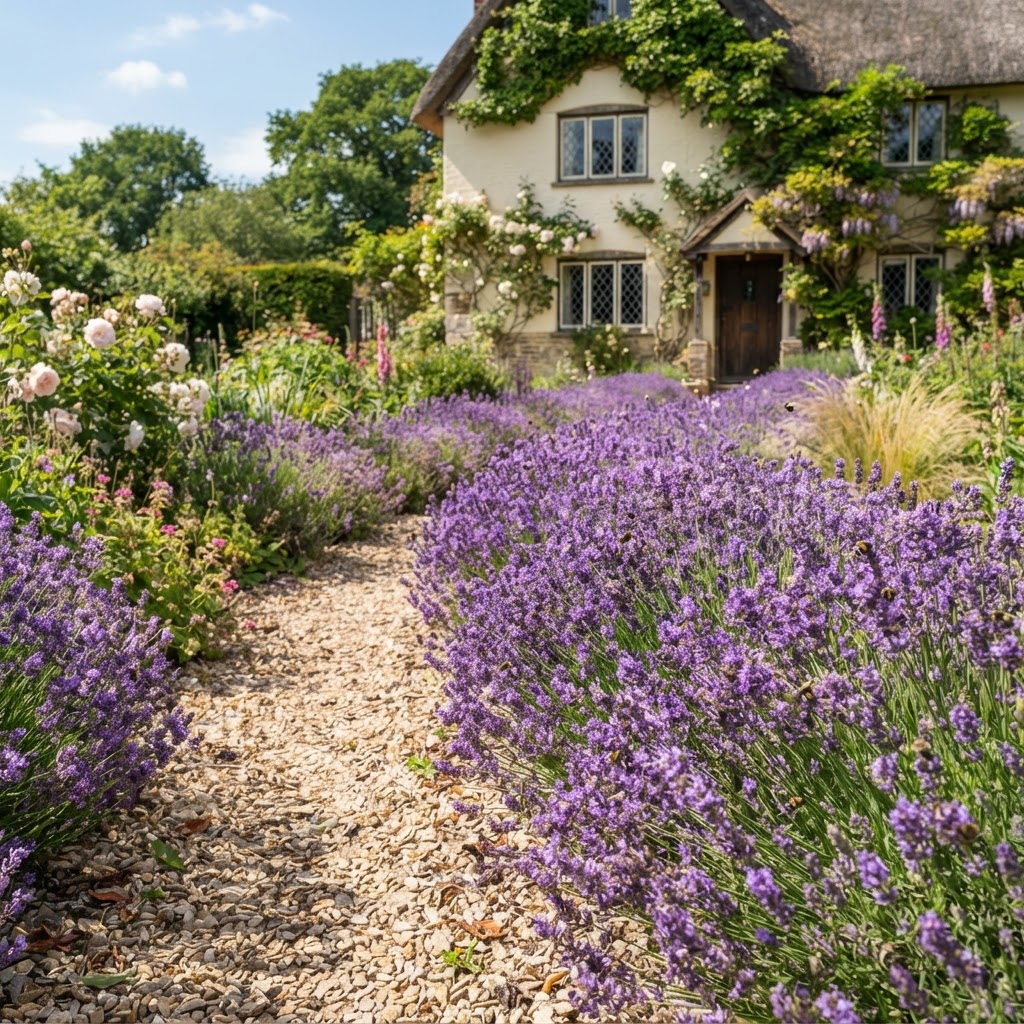
1. Lavender. Silver foliage, fragrant purple flowers and bees all summer. Lavender loves full sun and well-drained, even poor soil, and hates wet roots. It's perfect along a path, where you brush past it.
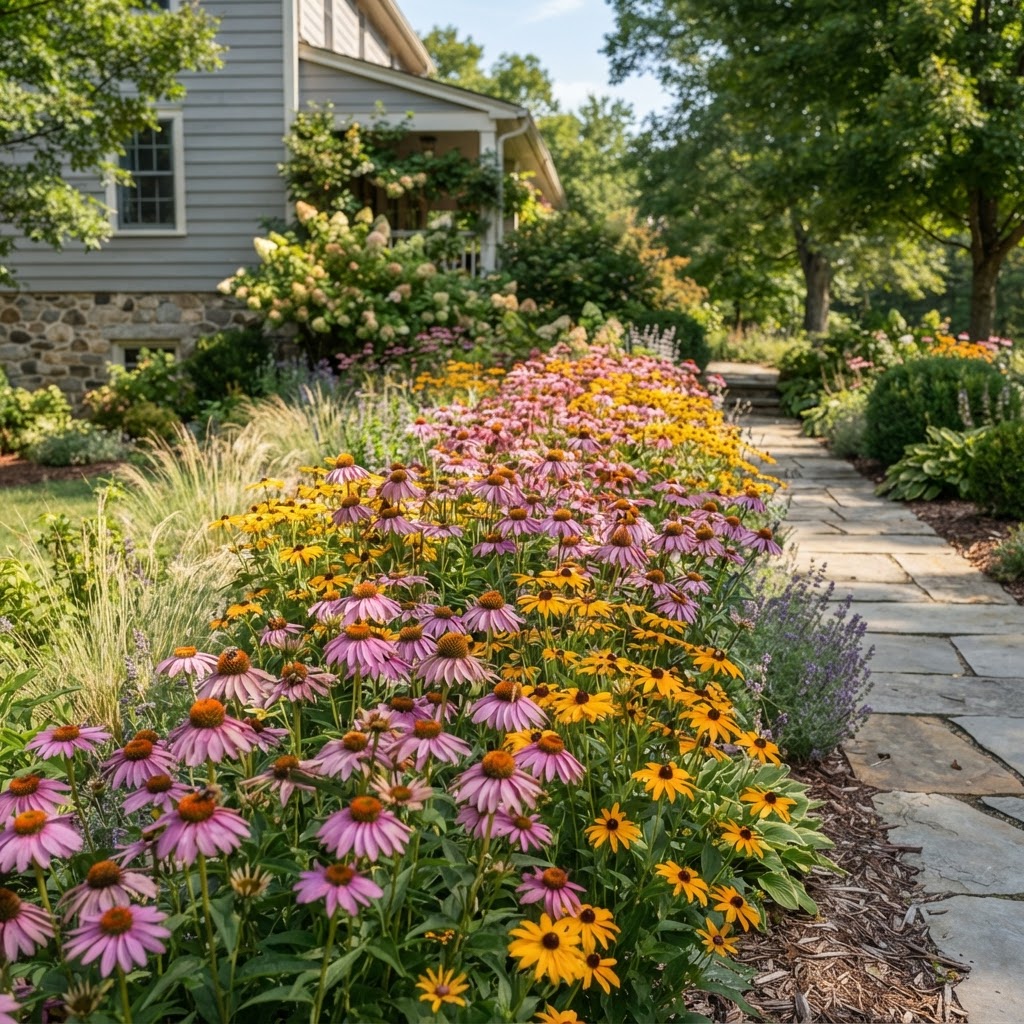
2. Coneflower (Echinacea). Native to North America, coneflowers are tough, drought tolerant once established and loved by butterflies. Leave the seed heads in winter for the birds.
3. Black-eyed Susan (Rudbeckia). Cheerful golden daisies with dark centres that flower for weeks from midsummer. They pair beautifully with coneflowers, and they're another North American native. Yellow flowers carry plenty of symbolism and meaning too.
4. Daylily (Hemerocallis). Almost indestructible, daylilies cope with heat, poor soil and neglect. Each flower lasts a day, but each plant produces many over several weeks. Deer do like them, so protect them if deer visit your garden.
5. Catmint (Nepeta). A haze of soft blue flowers from late spring that's perfect for edging paths and softening the front of a border. Cut it back after the first flush and it will often flower again.
6. Salvia. Upright spikes of purple, blue or pink that bees love. Perennial salvias such as Salvia nemorosa are drought tolerant and often rebloom if you cut off the faded spikes.
7. Sedum (stonecrop). Succulent leaves and flat flower heads that turn from green to pink and rust in late summer and autumn. Sedum is very drought tolerant and looks good even in winter.
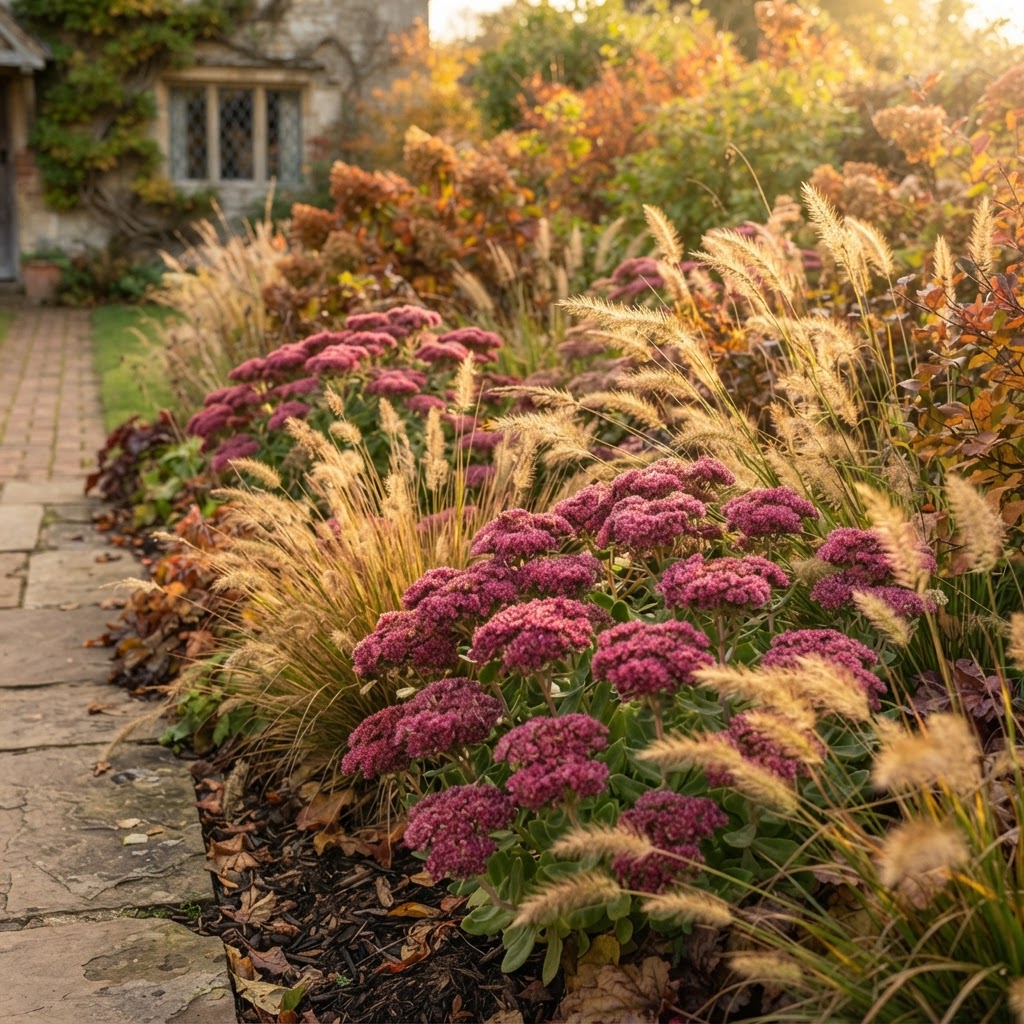
8. Coreopsis. Masses of small yellow, orange or pink daisies from early summer to autumn. Another North American native that thrives in hot, dry spots.
9. Russian sage. Tall, airy silver stems and lavender-blue flowers that bring height and movement. It's very drought tolerant and suits modern and gravel gardens.
Shade Perennials and Classic Peonies
10. Hardy geranium (cranesbill). Not the same as the bedding geraniums in pots, hardy geraniums are tough, spreading perennials that flower in sun or part shade and make excellent ground cover.
11. Hosta. Grown mainly for their beautiful leaves, hostas also send up lilac or white flower spikes in summer. They're the backbone of a shady front garden, although slugs, snails and deer love them too.
12. Astilbe. Feathery plumes of pink, red or white that light up moist, shady borders. Astilbe pairs perfectly with hostas and ferns.
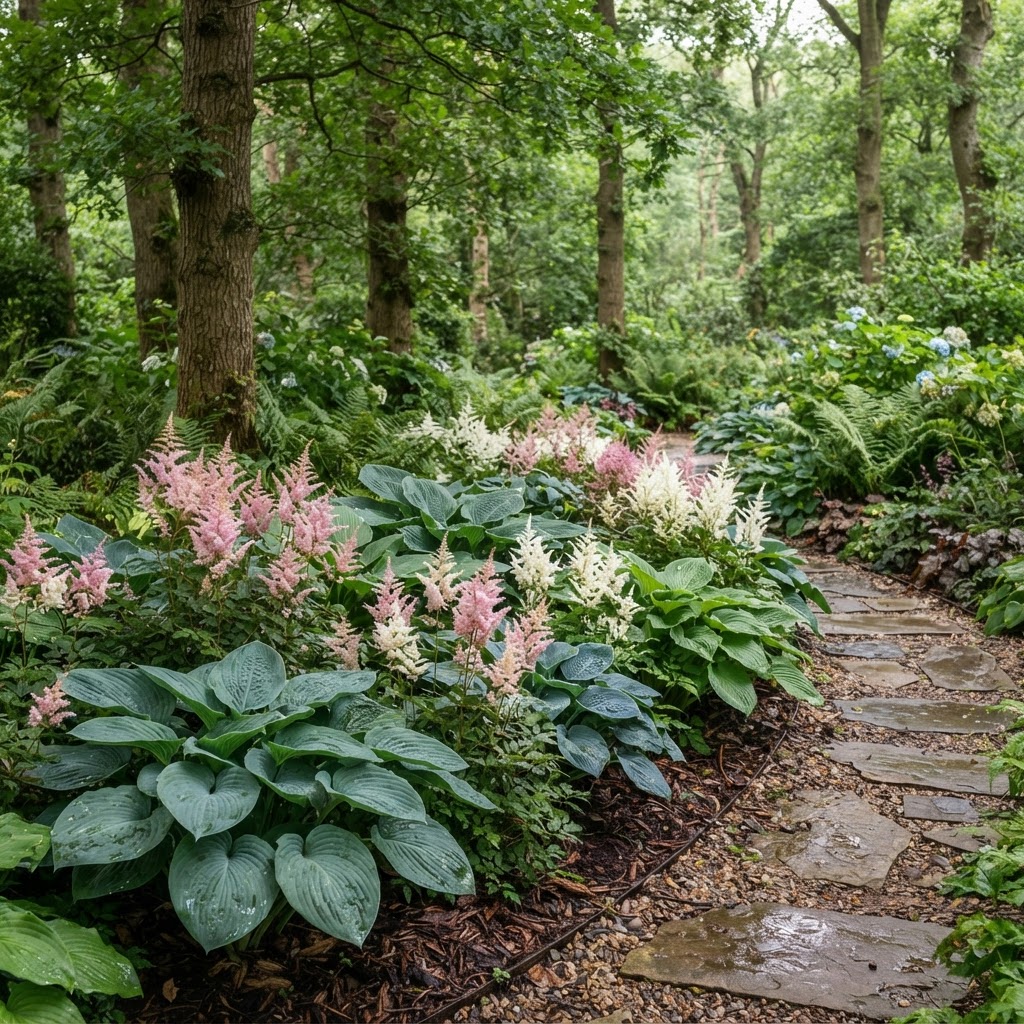
13. Peony. Peonies are some of the longest-lived perennials in a garden, often flowering for decades once settled. Their flowering season is short but spectacular, so it helps to know when peonies are in season.
Flowering Shrubs
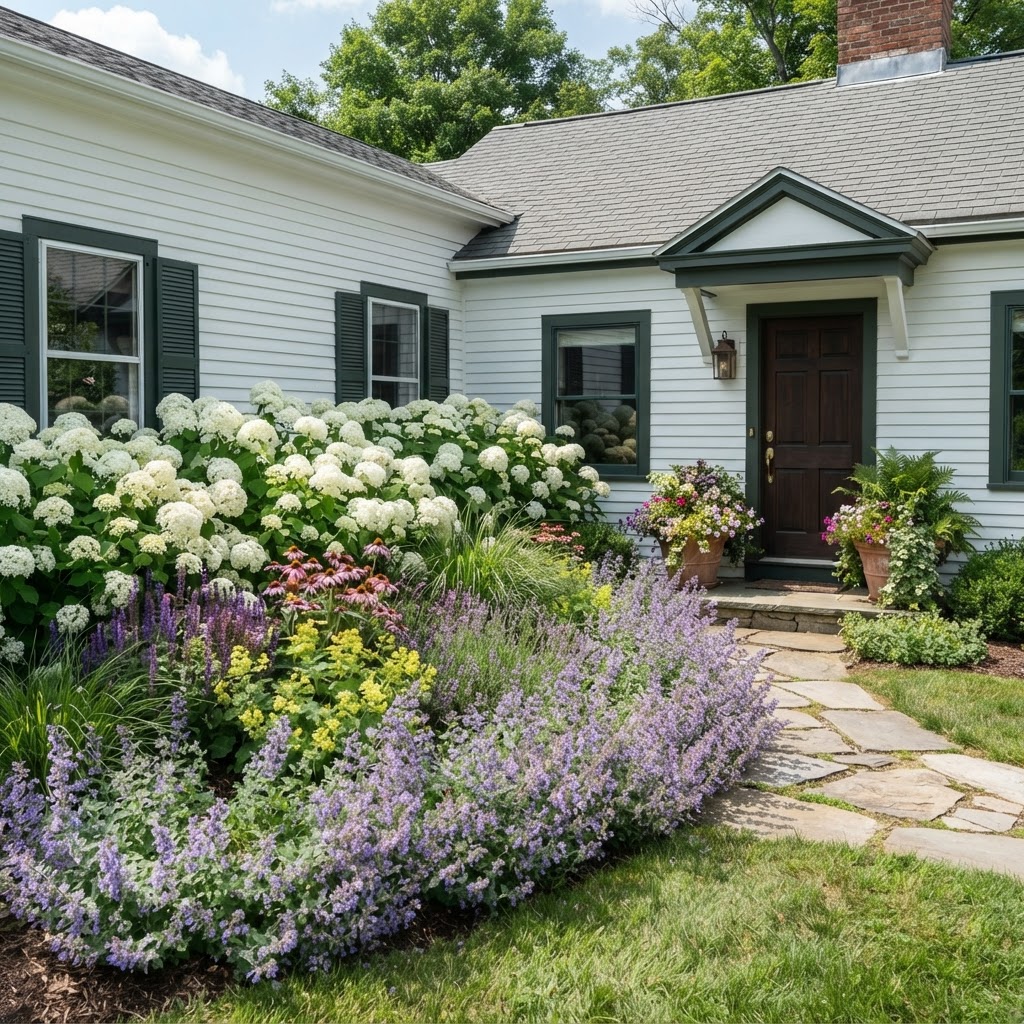
14. Panicle hydrangea (Hydrangea paniculata). Big cone-shaped flower heads from midsummer that age from white to pink. Unlike many hydrangeas, panicle types flower on new wood and cope with more sun, which makes them ideal for the front of a house.
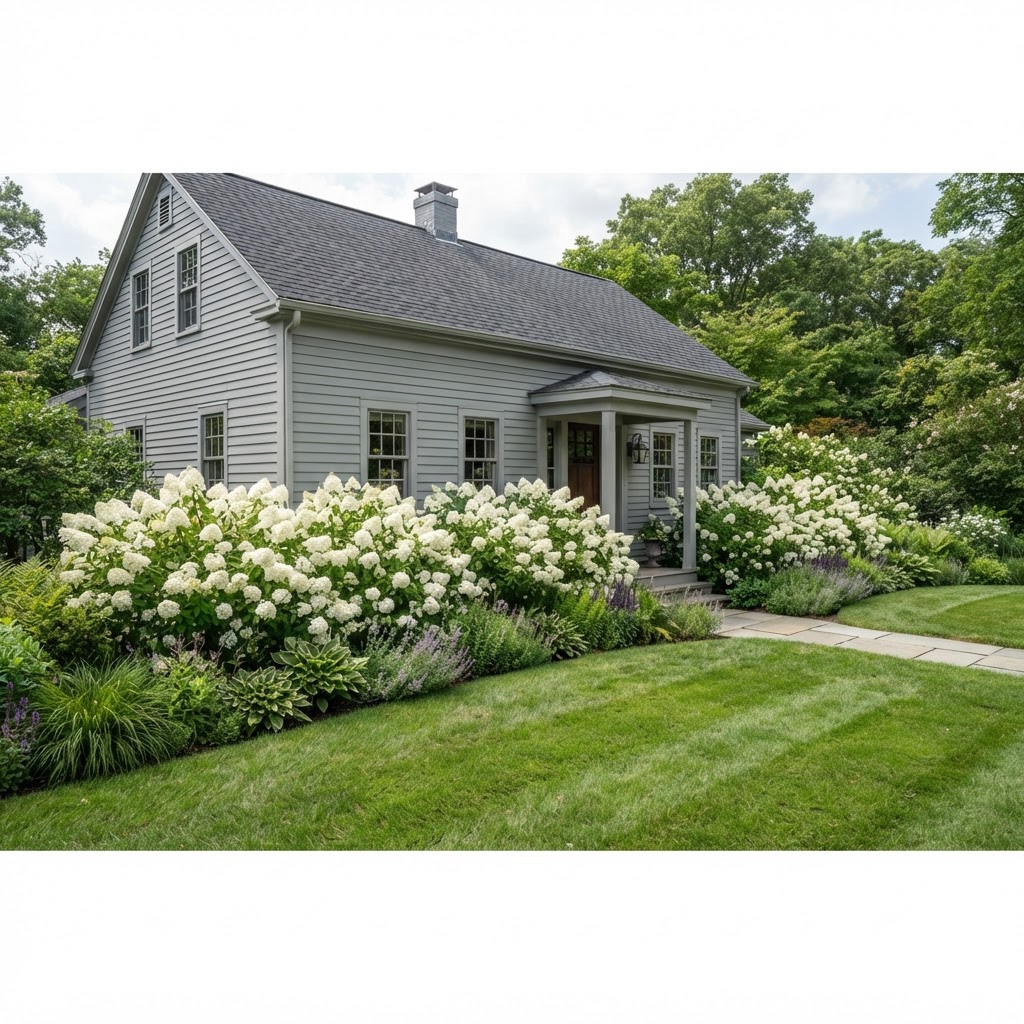
15. Shrub roses. Modern, disease-resistant shrub roses flower in repeated flushes from late spring to autumn with little fuss. Underplant them with catmint for a classic cottage pairing.
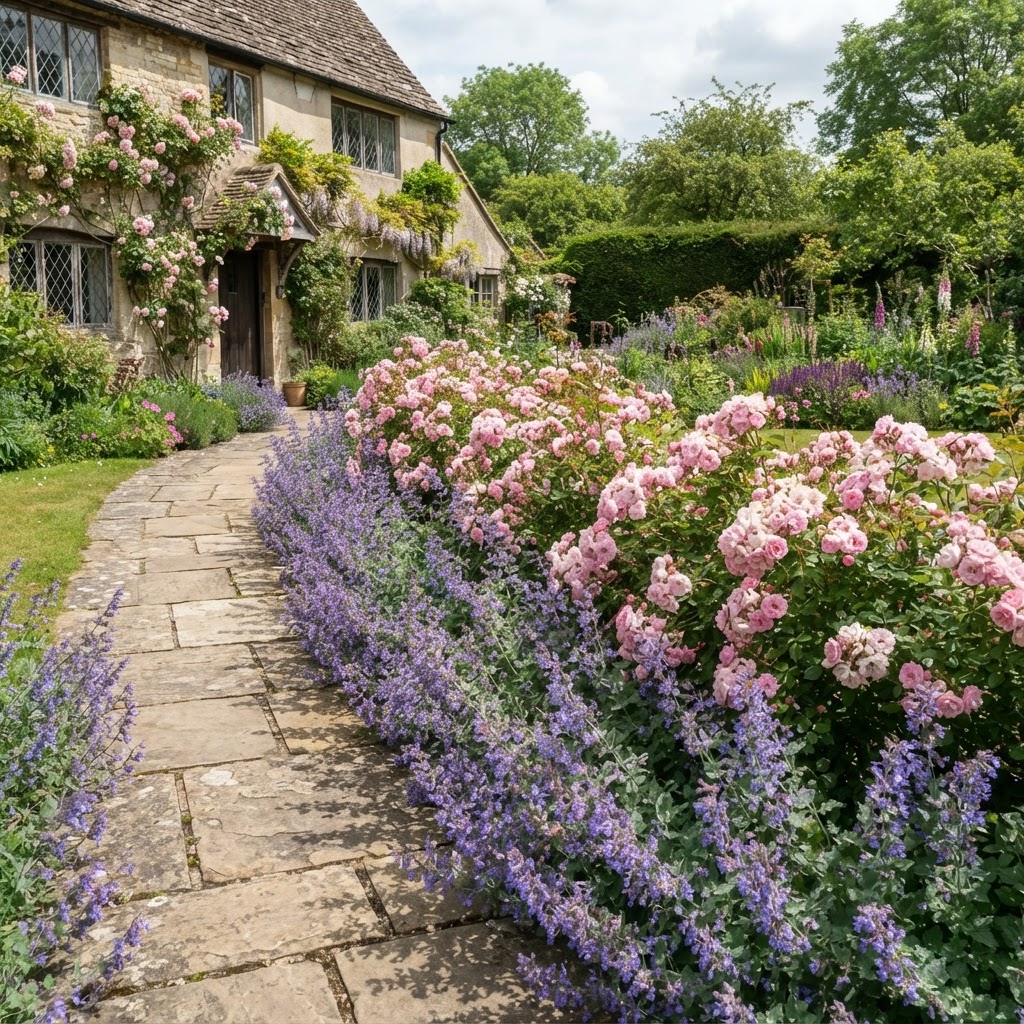
16. Weigela. A tough, easy shrub with trumpet flowers in late spring. Dark-leaved varieties add colour even when the shrub isn't in flower.
Annuals for Summer Colour
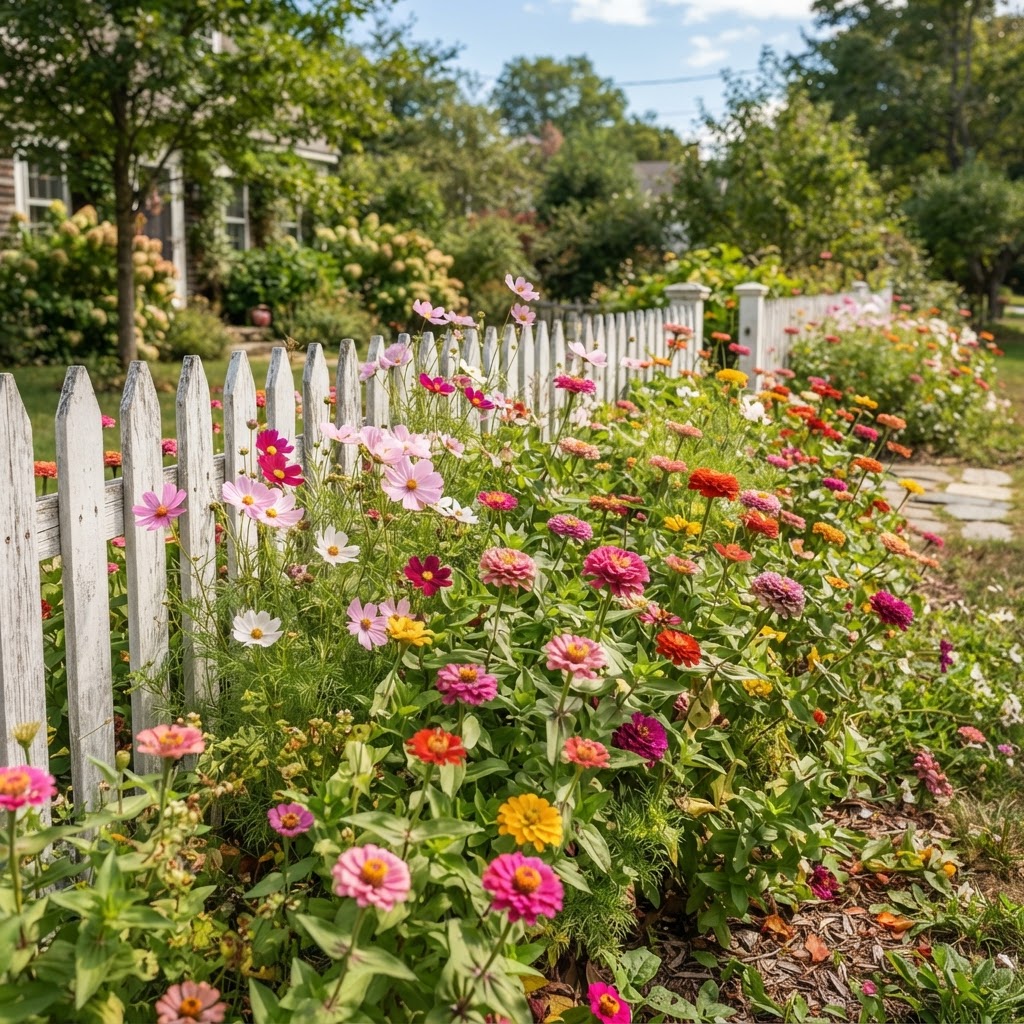
17. Zinnias. Bright, long-lasting flowers that love heat and make wonderful cut flowers. Knowing how to grow zinnias from seed takes the guesswork out.
18. Cosmos. Airy, daisy-like flowers in pink, white and crimson that keep coming until the first frost. They're one of the easiest annuals of all, and growing cosmos from seed is simple.
19. Lantana. A heat-loving plant with clusters of flowers that change colour and attract butterflies. It's perennial in frost-free climates and grown as an annual elsewhere. In some warm regions lantana can spread aggressively and is considered invasive, so check your local guidance before planting it in the ground.
Bulbs for Spring
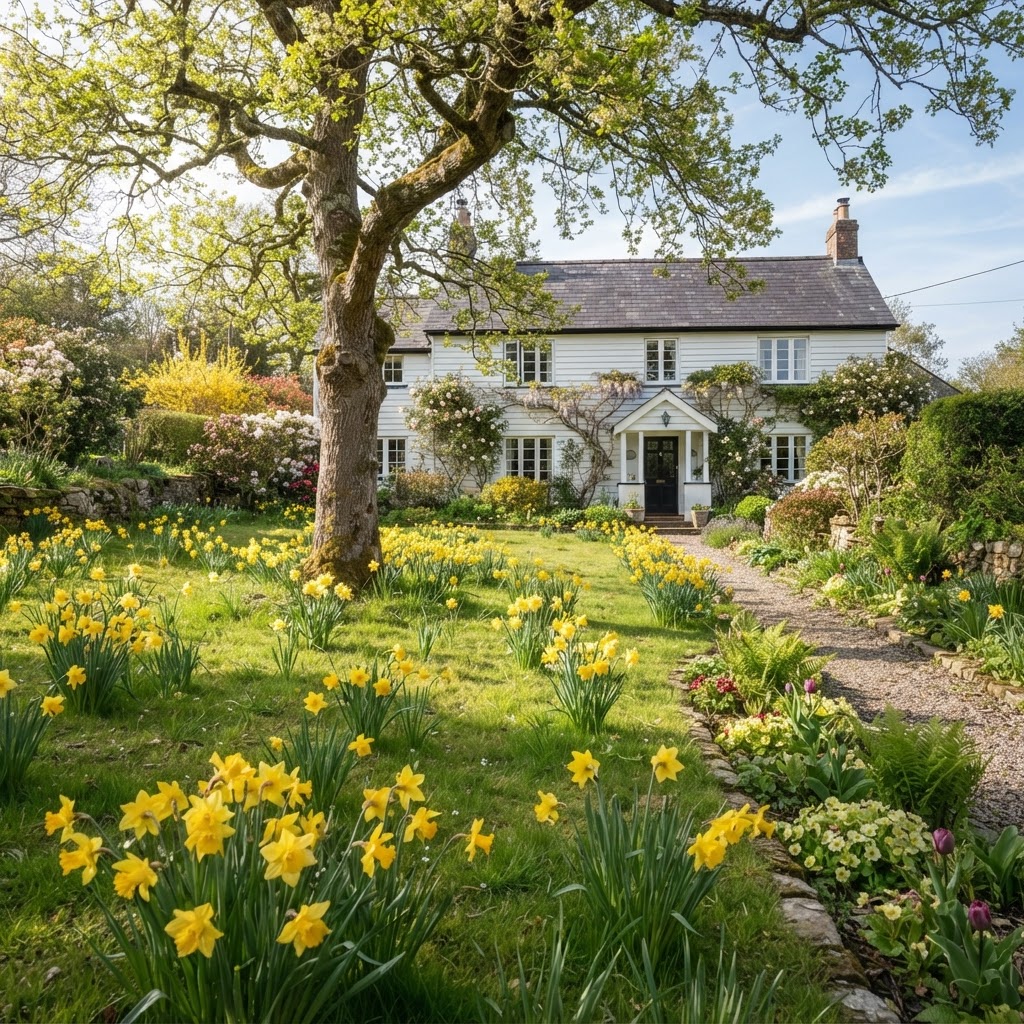
20. Daffodils. The easiest spring bulb of all. Daffodils come back every year, naturalise in grass and are rarely touched by deer or rodents. Plant them in autumn.
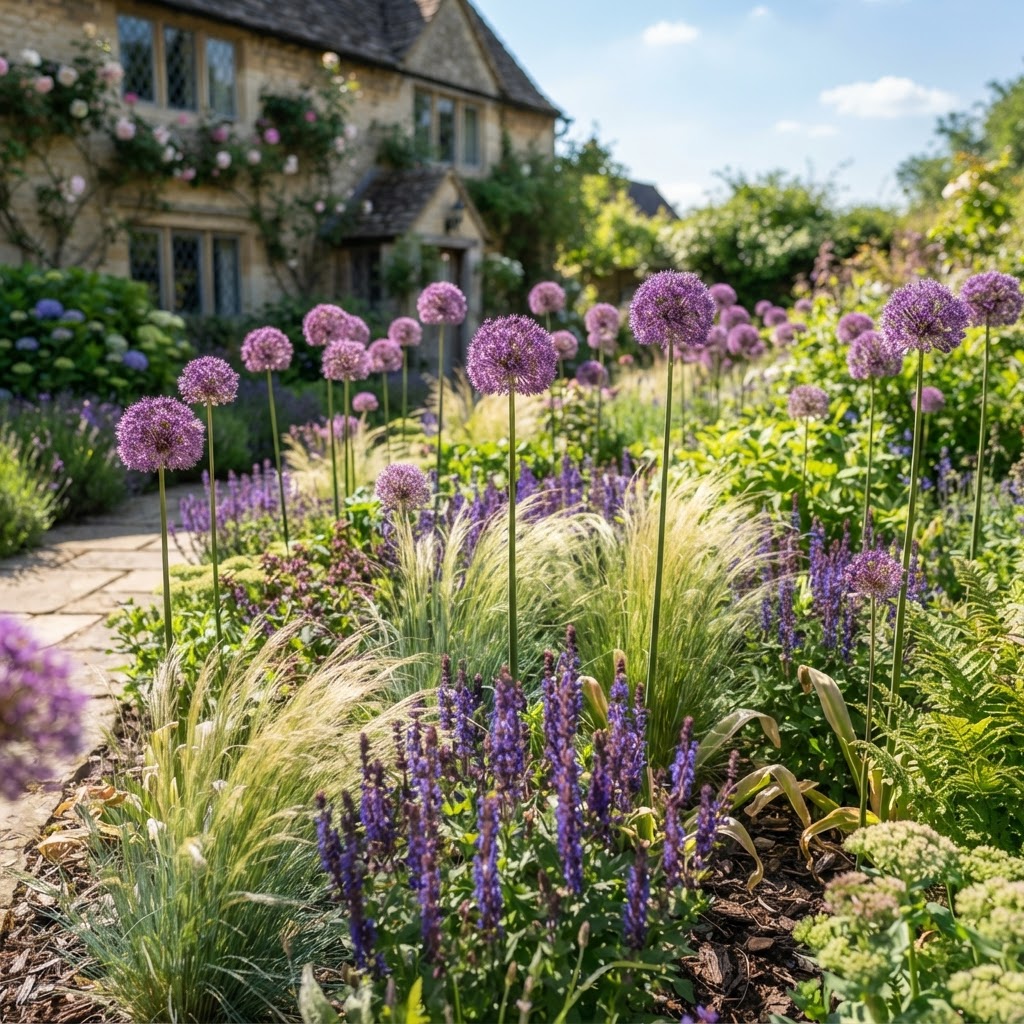
21. Alliums. Purple globes on tall stems that float above other plants in late spring and early summer. Their seed heads stay sculptural for months.
How to Design With Flowers for Kerb Appeal
- Layer by height. Put shrubs such as hydrangeas at the back, medium perennials in the middle and low edging plants such as catmint or hardy geraniums at the front.
- Plant in groups. Three, five or seven of the same plant look far better than one of everything.
- Repeat plants along a path. Repeating the same plant on both sides of a path or at intervals ties the garden together.
- Plan for every season. Combine spring bulbs, summer perennials and autumn flowers such as sedum, and add evergreens for winter structure.
- Frame the front door. Use a pair of matching pots, shrubs or roses to draw the eye to the entrance.
Flower Colours That Suit Your House
| House colour | Flower colours that suit it |
|---|---|
| White or cream | Almost anything; purple, blue and pink look especially fresh, as on a white house with black trim |
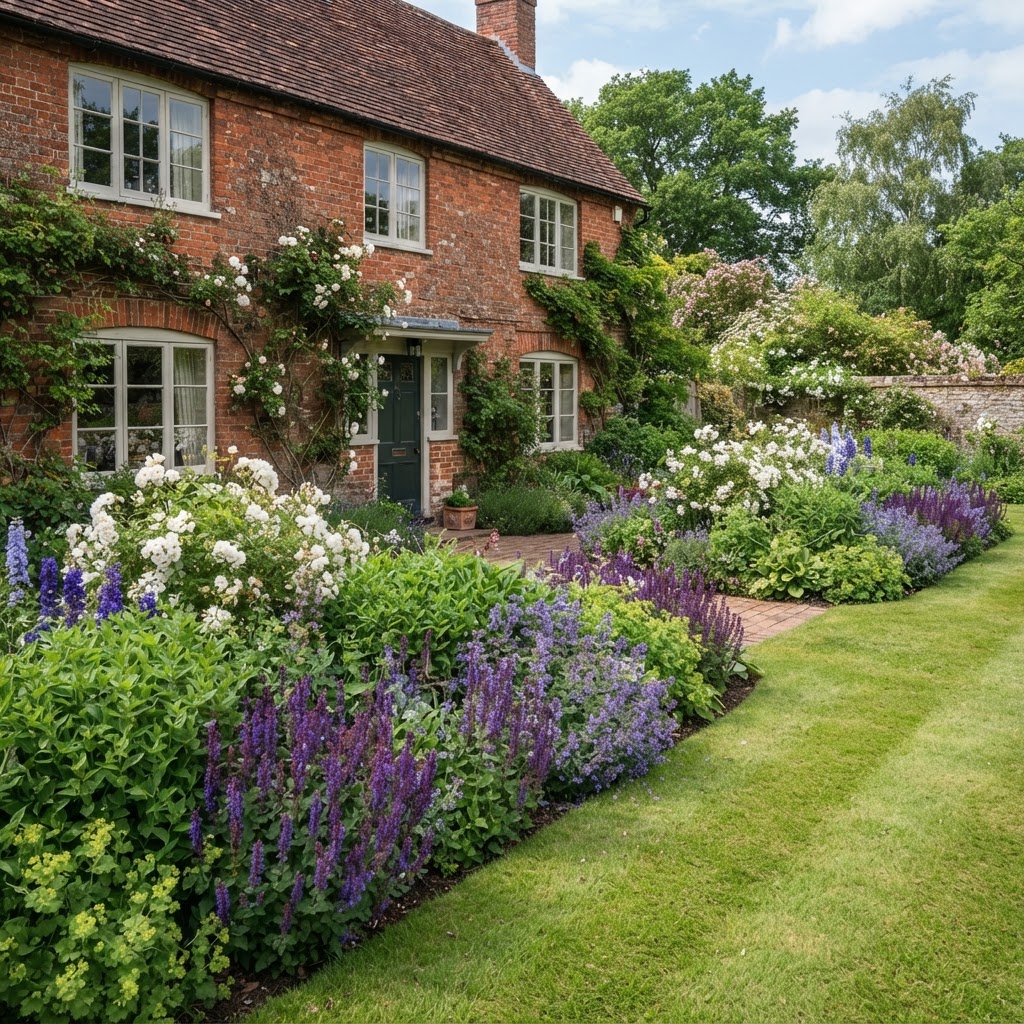
| Red brick | White, cream, blue and purple; avoid orange-reds that clash |
| White brick | Lavender, white hydrangeas and soft pinks, much like a white brick house with wisteria |
| Gray | Purple, blue, white and soft pink |
| Green | White, cream, pink and purple, which suit most green house colors |
| Blue | Yellow, orange, white and rust, as on a blue house with brown trim |
| Black or charcoal | White, lime green and soft pastels that glow against dark walls |
Easy Front Garden Planting Combinations
| Combination | Why it works |
|---|---|
| Lavender, catmint and shrub roses | A classic, fragrant cottage mix for full sun |
| Coneflowers, black-eyed Susans and grasses | Native, drought tolerant and great for pollinators |
| Hostas, astilbe and ferns | Lush and calm for shady fronts |
| Panicle hydrangeas, sedum and alliums | Structure, late colour and seed heads for winter |
| Daffodils under deciduous shrubs | Early colour before the shrubs leaf up |
Tips for Low-Maintenance Flower Beds
- Choose the right plant for the right place. Sun lovers in sun, shade lovers in shade, and drought tolerant plants in dry spots.
- Mulch. A layer of bark or compost keeps weeds down and holds moisture.
- Water well in the first year, then only in dry spells once plants are established.
- Leave seed heads standing over winter for birds and structure, and cut back in late winter or early spring.
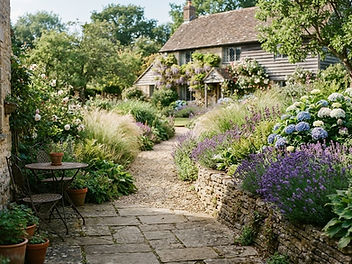
- Edge the beds. A clean lawn edge or a low border makes even simple planting look smart. Finishing touches such as simple garden fence ideas also frame a front garden. Paths, walls and edging are all part of hardscape landscaping, the built framework that planting softens.
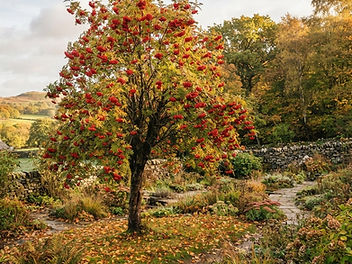
For autumn and winter colour too, add one of the trees with red berries, such as a rowan or holly, which feeds birds when the flowers have faded.
Common Mistakes to Avoid
| Mistake | Why it's a problem | What to do instead |
|---|---|---|
| Choosing plants that aren't hardy | They die over winter and leave gaps | Check your zone and the plant label |
| One of everything | Looks bitty and messy | Plant in groups of three, five or seven |
| Ignoring mature size | Plants swamp paths and windows | Check height and spread before planting |
| Only summer flowers | The garden looks bare in spring and autumn | Add bulbs, shrubs and autumn perennials |
| Planting invasive species | They spread into wild areas | Check local invasive plant lists |
| Too little watering at first | New plants struggle | Water regularly in the first year |
Frequently Asked Questions
What flowers are good for landscaping?
Long-flowering, low-maintenance perennials and shrubs are best, such as lavender, coneflowers, black-eyed Susans, daylilies, catmint, salvia, sedum, hostas and panicle hydrangeas. Add annuals for summer colour and bulbs for spring.
What is the easiest flower to grow for landscaping?
Daylilies, catmint and sedum are among the easiest. They cope with poor soil, heat and drought, and need very little care.
What flowers bloom all summer?
Catmint, coreopsis, black-eyed Susans, coneflowers, shrub roses, zinnias, cosmos and lantana all flower for most of the summer.
What are the best flowers for the front of a house?
Lavender, shrub roses, catmint, panicle hydrangeas and hostas for shade all look beautiful near a front door, especially planted in groups and repeated along the path.
What flowers come back every year?
Perennials and bulbs come back every year. Lavender, coneflowers, daylilies, hostas, peonies, sedum, daffodils and alliums are all reliable.
What flowers do deer avoid?
Lavender, catmint, salvia, Russian sage, daffodils and alliums are rarely eaten by deer. Hostas and daylilies are often eaten.
What flowers grow well in shade?
Hostas, astilbe, hardy geraniums and ferns grow well in shade. Panicle hydrangeas and daylilies cope with part shade.
Beautiful, Easy and Welcoming
The best flowers for landscaping are the ones that suit your climate, your light and your house, and come back reliably year after year. Start with a framework of shrubs and tough perennials, add bulbs for spring and annuals for summer sparkle, plant in generous groups, and your front garden will look good with very little effort.
And if you'd like help bringing your house and garden together, from exterior colours to the view from your windows, you can book a one-hour online interior design consultation with me.
About the author
Magda Callery is a UK interior designer and florist with more than 15 years' experience designing homes, pubs, restaurants and bars, and her expert commentary has featured in Homes & Gardens, The Mirror and The Spruce. Explore more of the flowers & garden articles.
Continue reading

What Is Hardscape Landscaping? Hardscape vs Softscape
What is hardscape landscaping? The built parts of a garden, how hardscape differs from softscape, 13 common features, materials compared and drainage tips.

Trees With Red Berries: 17 Trees to Identify and Grow
17 trees with red berries, from rowan and holly to strawberry tree and yew: how to identify them, which are poisonous and which suit small gardens.

Pool Designs for Small Backyards: 21 Smart Ideas
21 pool designs for small backyards, from plunge pools, cocktail pools and lap pools to spools, container pools and natural swimming ponds, plus what to check first, typical costs, safety rules, planting and the mistakes to avoid.