
What Does Red and Blue Make? Mixing Paint, Light and Purple
What do red and blue make? Purple in paint and magenta in light. Why your purple turns brown, how to mix every shade, and how to use purple at home.
By Magda Callery, interior designer and florist
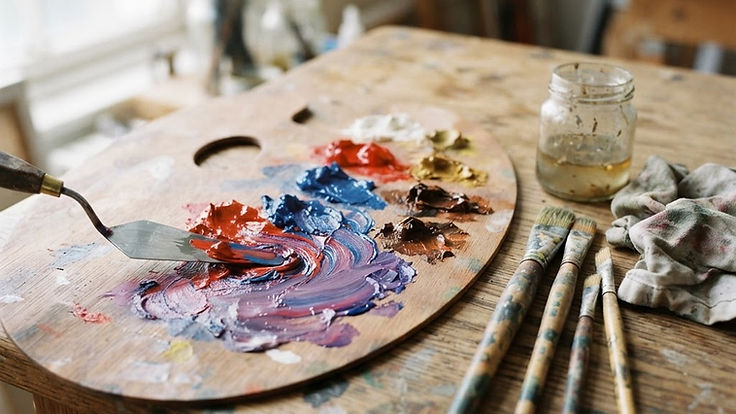
Red and blue make purple. That's the simple answer, and it's what most of us learned at school with a paintbox. But if you've ever mixed red and blue paint and ended up with a muddy brown instead of a clean violet, you'll know there's more to it. And if you mix red and blue light rather than paint, you won't get purple at all.
In this guide I'll explain what red and blue make in paint and in light, why your purple sometimes turns out brown, how to mix lighter, darker, warmer and cooler purples, the names of the different shades of purple, and how to use purple beautifully in your home.
What Do Red and Blue Make?
| Mixing | Result | Why |
|---|---|---|
| Red and blue paint | Purple (violet) | Paint mixes subtractively; red and blue are primaries on the traditional colour wheel |
| Red and blue light | Magenta | Light mixes additively; red and blue are additive primaries |
| More red than blue (paint) | Red-violet, plum, magenta-purple | |
| More blue than red (paint) | Blue-violet, indigo |
Red and Blue Paint: Why They Make Purple
Artists traditionally use the RYB colour wheel, built on three primary colours: red, yellow and blue. Mixing two primaries gives you a secondary colour:
- Red and yellow make orange
- Yellow and blue make green
- Red and blue make purple
Purple sits between red and blue on the colour wheel, so the more red you add, the warmer and pinker your purple becomes, and the more blue you add, the cooler and deeper it becomes.
The RYB wheel is a practical tool for painters rather than a precise scientific model. Colour scientists describe pigment mixing with a different set of primaries, cyan, magenta and yellow, which is why printers use CMY inks. The RMIT University overview of additive and subtractive colour explains that the subtractive primaries are cyan, magenta and yellow, and that the RYB wheel is still used in visual arts to teach colour mixing.
Why Does Red and Blue Sometimes Make Brown?
This is the most common frustration. The reason is hidden yellow.
Many red paints lean warm, towards orange, which means they contain a little yellow. Many blue paints lean towards green, which also means a touch of yellow. When you mix them, that yellow meets the purple you're creating. Yellow is purple's complementary colour, opposite it on the colour wheel, and complementary colours neutralise each other. The result is a dull, grayish or brownish purple.
How to mix a clean purple:
| Use | Instead of | Why |
|---|---|---|
| A cool red that leans towards pink, such as crimson, alizarin or magenta | A warm, orange-leaning red such as cadmium red or vermilion | Less hidden yellow |
| A warm blue that leans towards violet, such as ultramarine | A green-leaning blue such as phthalo or cerulean | Less hidden yellow |
Ultramarine blue with a crimson or magenta red gives a much brighter, cleaner purple than an orange-red with a green-blue.
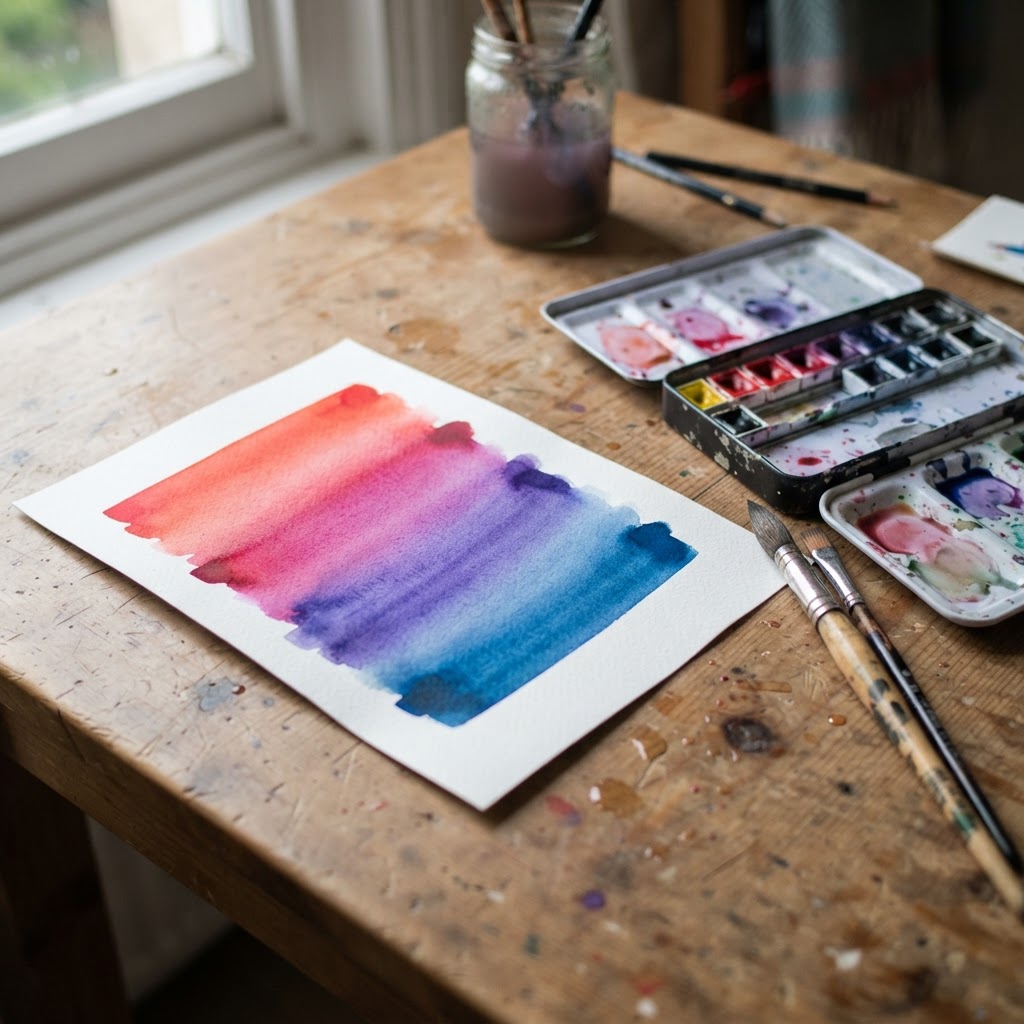
Red and Blue Light: Why They Make Magenta
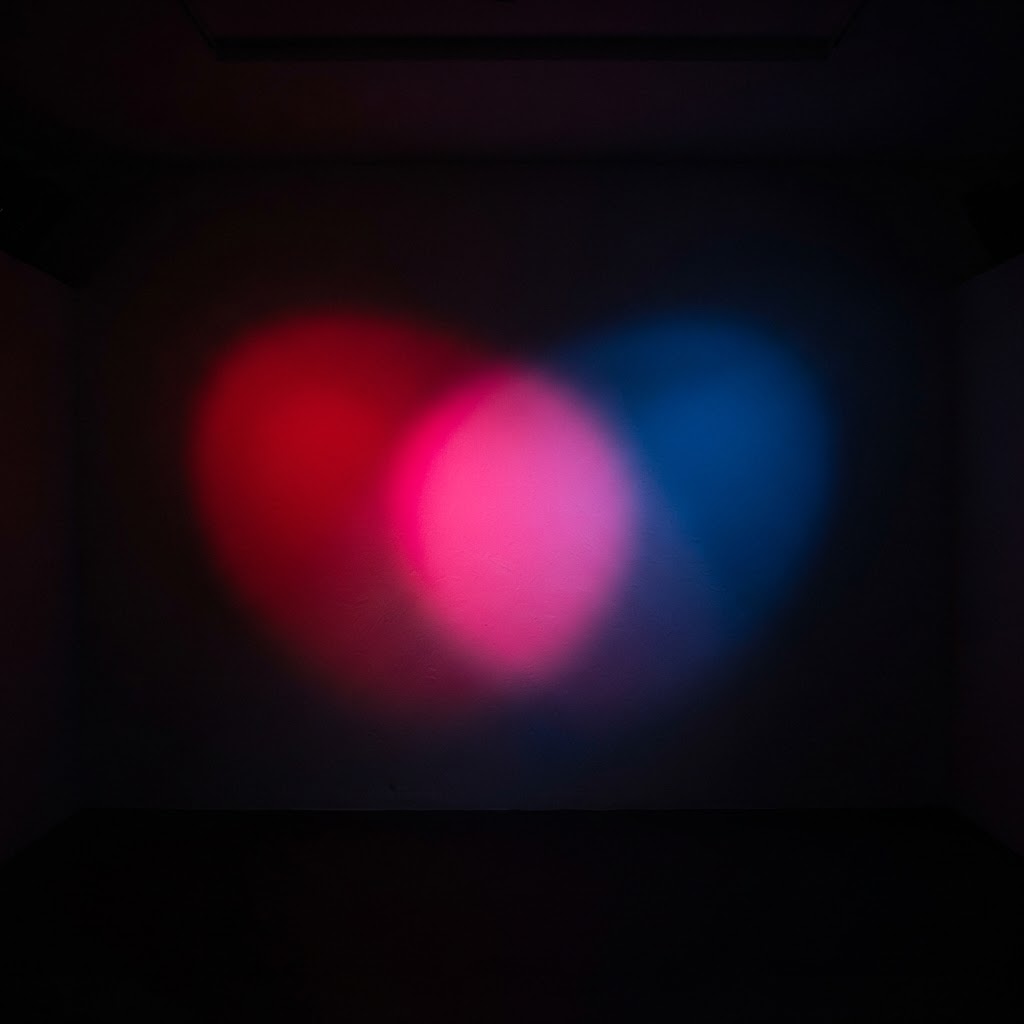
Light works the opposite way to paint. Screens, stage lights and LEDs mix colour additively, adding light together, and their primaries are red, green and blue (RGB). Mix red and blue light and you get magenta, a bright pinkish purple. Mix all three at full strength and you get white.
That's why the same two colour names give different answers: red and blue paint make purple, but red and blue light make magenta.
How to Mix Different Shades of Purple
| Shade | How to mix it |
|---|---|
| Violet | Equal amounts of a cool red and ultramarine blue |
| Red-violet or plum | More red than blue, plus a touch of black for plum |
| Blue-violet or indigo | More blue than red |
| Lavender | Purple plus plenty of white, leaning slightly blue |
| Lilac | Purple plus white, leaning slightly pink |
| Mauve | Purple plus white and a touch of gray or brown |
| Aubergine | Purple plus a little black or brown |
| Muted, dusty purple | Purple plus a tiny amount of its complement, yellow |
Tip: always add the darker colour to the lighter one in small amounts. It's much easier to darken a mix than to lighten it again.
The Many Shades of Purple
| Shade | Character |
|---|---|
| Lavender | Soft, cool and calming |
| Lilac | Soft, pinkish and pretty |
| Mauve | Muted, dusty and sophisticated |
| Violet | Pure and vivid |
| Magenta | Bright pinkish purple |
| Plum | Deep, warm and rich |
| Aubergine | Very dark, almost brown-black purple |
| Indigo | Deep blue-violet |
A Little Colour History
Purple has a long association with wealth and power. In the ancient world, the most famous purple dye, Tyrian purple, came from sea snails and was so costly that it became a symbol of royalty. Purple only became affordable in 1856, when a young chemist, William Perkin, accidentally created mauveine, one of the first synthetic dyes, and started a fashion for mauve.
How to Use Purple at Home
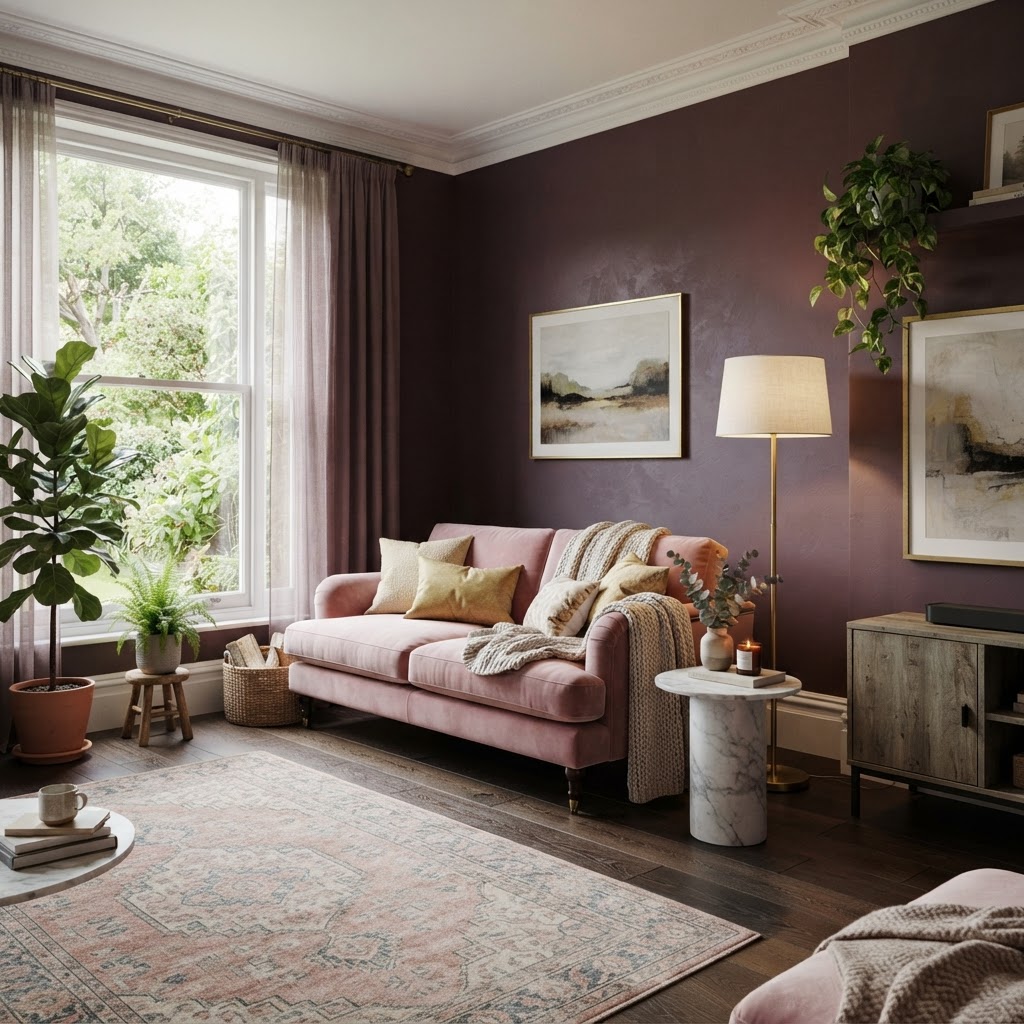
Deep plum and aubergine
Plum walls make a living room or snug feel rich, warm and cocooning, especially with velvet, brass and green plants. Blush pink upholstery softens the depth beautifully.
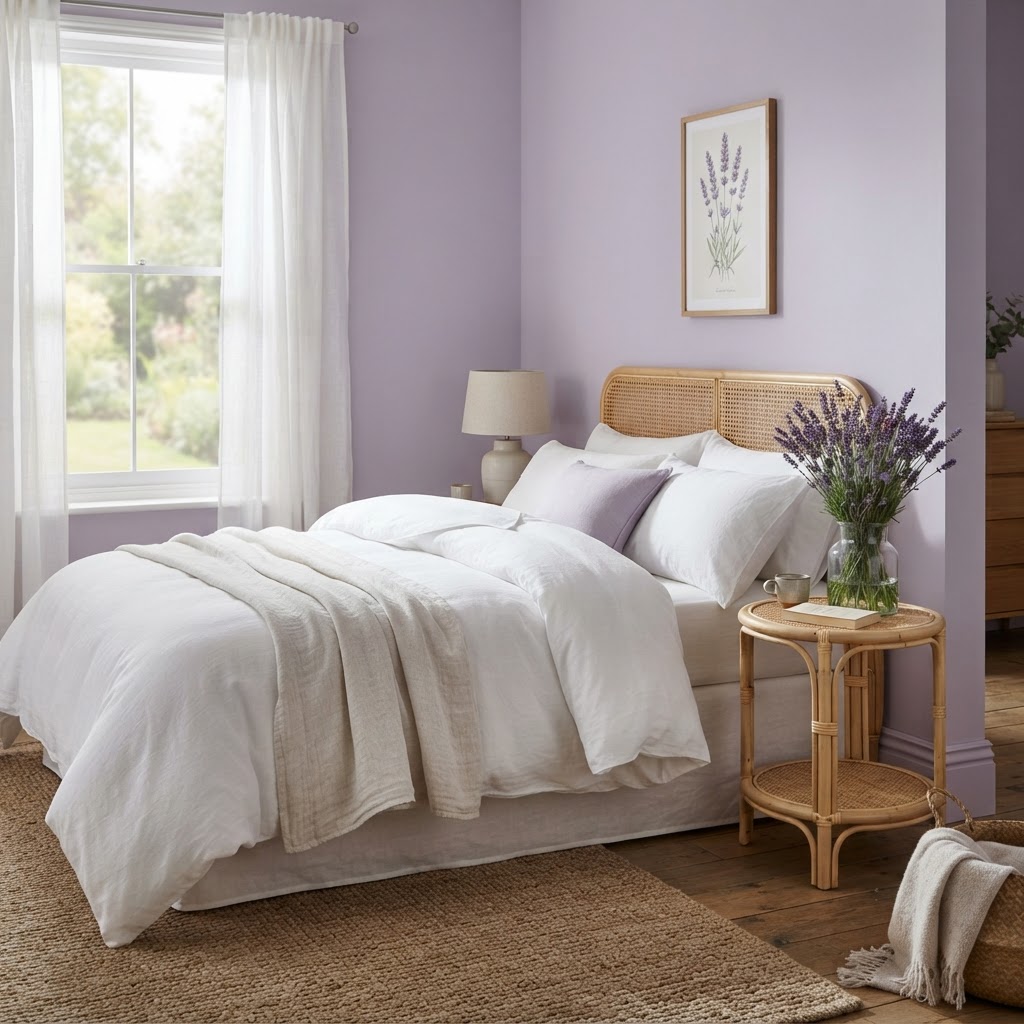
Soft lilac and lavender
Pale purples are calm and restful, ideal for bedrooms and bathrooms. Pair them with white, natural wood, rattan and soft green.
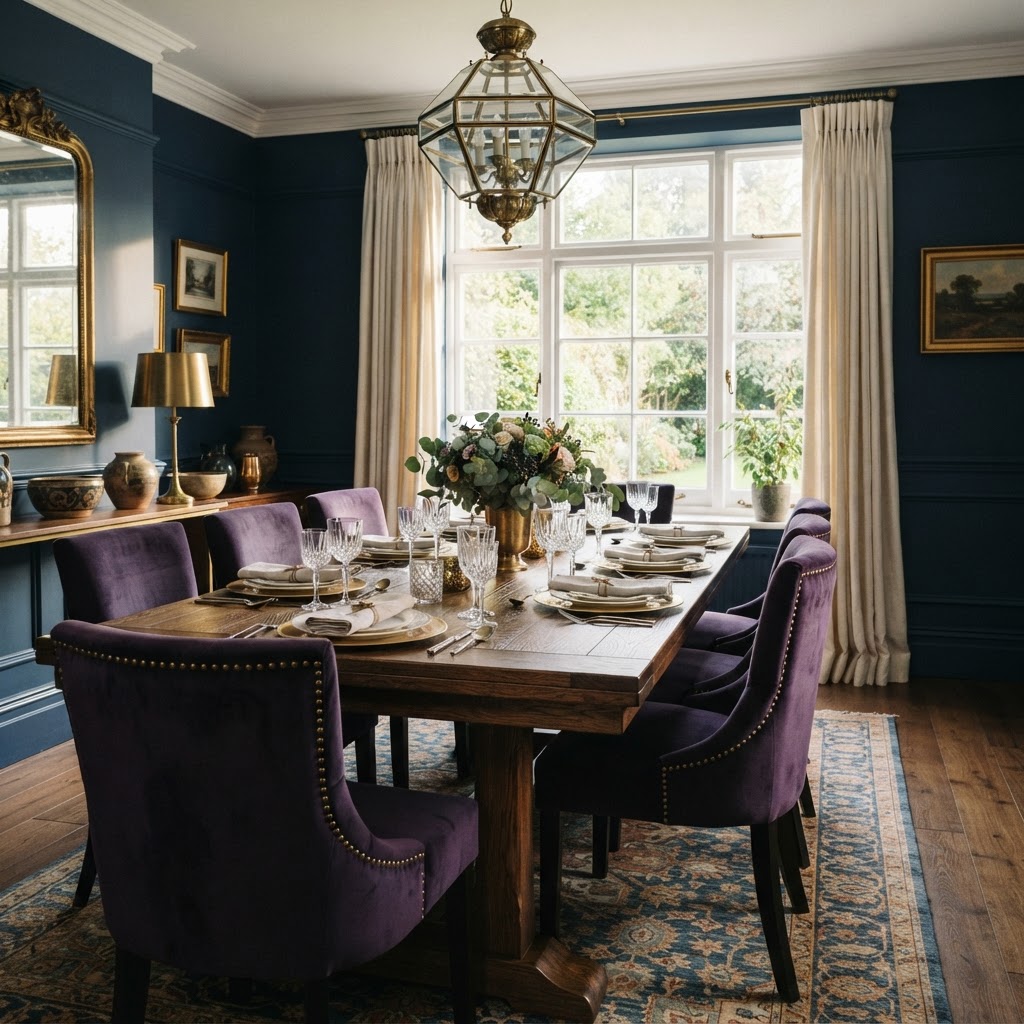
Purple accents
If you're not ready for purple walls, start with velvet chairs, cushions, artwork or a painted door. Purple velvet looks especially luxurious with navy, brass and warm wood.
Colors that go with purple
| Colour | Effect |
|---|---|
| Sage and olive green | Natural and balanced; olive green is a beautiful partner for plum |
| Blush pink | Soft and romantic |
| Mustard and ochre | Bold and complementary |
| Navy | Deep and sophisticated |
| Gray and graphite | Calm and modern |
| Cream and warm white | Fresh and timeless |
| Brass and gold | Warm and luxurious |
Purple and green are especially lovely together, as are pink and green; there are plenty of pink and green room ideas that work just as well with lilac or mauve. If you're building a whole scheme, choosing the right color palette step by step makes it easier.
Frequently Asked Questions
What color does red and blue make?
Red and blue paint make purple. Red and blue light make magenta.
Why did my red and blue make brown?
Your red or blue probably contained some yellow. Yellow is purple's complementary colour, so it dulls the mix towards brown or gray. Use a cool, pinkish red and ultramarine blue for a cleaner purple.
What do red and blue make in light?
Magenta. Light mixes additively, so red and blue light combine to make a bright pinkish purple.
How do you make light purple?
Mix red and blue to make purple, then add white. Add a little more blue for lavender, or a little more red for lilac.
How do you make dark purple?
Add more blue than red, then a small amount of black or brown. Plum and aubergine are both dark purples.
Is purple a primary color?
No. In traditional colour mixing, purple is a secondary colour, made from the primaries red and blue.
What color do red, yellow and blue make together?
Mixing all three primaries in paint makes a dark brown or muddy gray, depending on the proportions.
Red, Blue and Everything in Between
Red and blue make purple in paint and magenta in light, and the exact shade you get depends on which red and which blue you choose. Pick a cool red and a warm blue for a clean violet, add white for lilac and lavender, and add black or brown for plum and aubergine.
And if you'd love to bring purple into your home but aren't sure where to start, you can book a one-hour online interior design consultation with me.
About the author
Magda Callery is a UK interior designer and florist with more than 15 years' experience designing homes, pubs, restaurants and bars, and her expert commentary has featured in Homes & Gardens, The Mirror and The Spruce. Explore more of the decorating articles.
Continue reading

White Brick House: 19 Ideas, Paints and What to Know
19 white brick house ideas, plus paint vs limewash vs German smear, the best white paints for brick and the trim colours that suit white brick.


Green House Colors: 17 Exterior Ideas and Paint Colors
17 green house colour ideas, from sage farmhouses to forest green Victorians, plus the best green exterior paints and trim, door and roof colours.

Sherwin-Williams Drift of Mist: Undertones and Pairings
Sherwin-Williams Drift of Mist reviewed: a soft, light gray with gentle warmth. Its undertones, LRV, best rooms, pairings and similar colours.