
Winter Flower Arrangements: 17 Ideas for Cold Months
17 winter flower arrangement ideas, from hellebores, anemones and tulips to dogwood, forced forsythia, evergreens and dried flowers, plus how to keep them fresh.
By Magda Callery, interior designer and florist
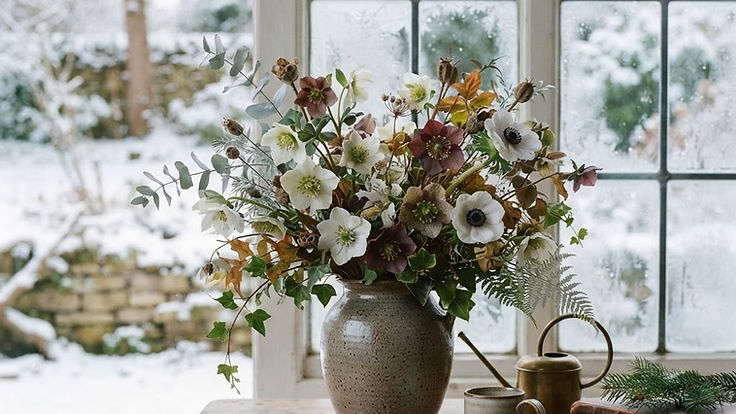
Once the Christmas decorations come down, homes can feel bare and a little flat. Winter flower arrangements fill that gap beautifully. Hellebores, anemones, ranunculus, tulips and forced bulbs bring colour to the darkest weeks, while bare branches, evergreens and dried flowers add structure and texture for very little cost. Winter is also the season when flowers matter most indoors, because there's so little to look at outside.
In this guide I'll explain the best flowers and branches for winter arrangements, share 17 winter flower arrangement ideas for every room, show you how to force spring branches into flower, and explain how to keep winter flowers fresh in a heated home.
The quick answer: the best flowers for winter arrangements are hellebores, anemones, ranunculus, tulips, amaryllis, hyacinths, paperwhites and snowdrops, combined with branches such as dogwood, birch, witch hazel, pussy willow and forsythia, plus evergreens and dried flowers. Keep arrangements cool and away from radiators so they last.
The Best Flowers and Branches for Winter
| Flower or branch | Season | Colours | Why it works |
|---|---|---|---|
| Hellebores | December to March | White, blush, plum, green | Flowers naturally in winter |
| Anemones | Winter to spring | White, red, purple, blue | Graphic flowers with dark centres |
| Ranunculus | Late winter to spring | White, pink, peach, red | Soft, layered petals |
| Tulips | January onwards | Every colour | Graceful and affordable |
| Amaryllis | December to February | Red, white, pink | Huge, dramatic blooms |
| Hyacinths and paperwhites | Winter, when forced | White, blue, pink | Wonderful scent |
| Snowdrops | January to February | White | The first sign of spring |
| Dogwood and birch | All winter | Red, yellow, white stems | Instant height and structure |
| Witch hazel | January to February | Yellow, orange, red | Spidery, scented flowers on bare stems |
| Forsythia and pussy willow | Late winter, forced | Yellow, silver | Spring indoors, weeks early |
17 Winter Flower Arrangement Ideas
Winter flowers
1. Hellebores and anemones. White and plum hellebores with white anemones and silver eucalyptus in a stoneware urn feel quiet, wintry and elegant.
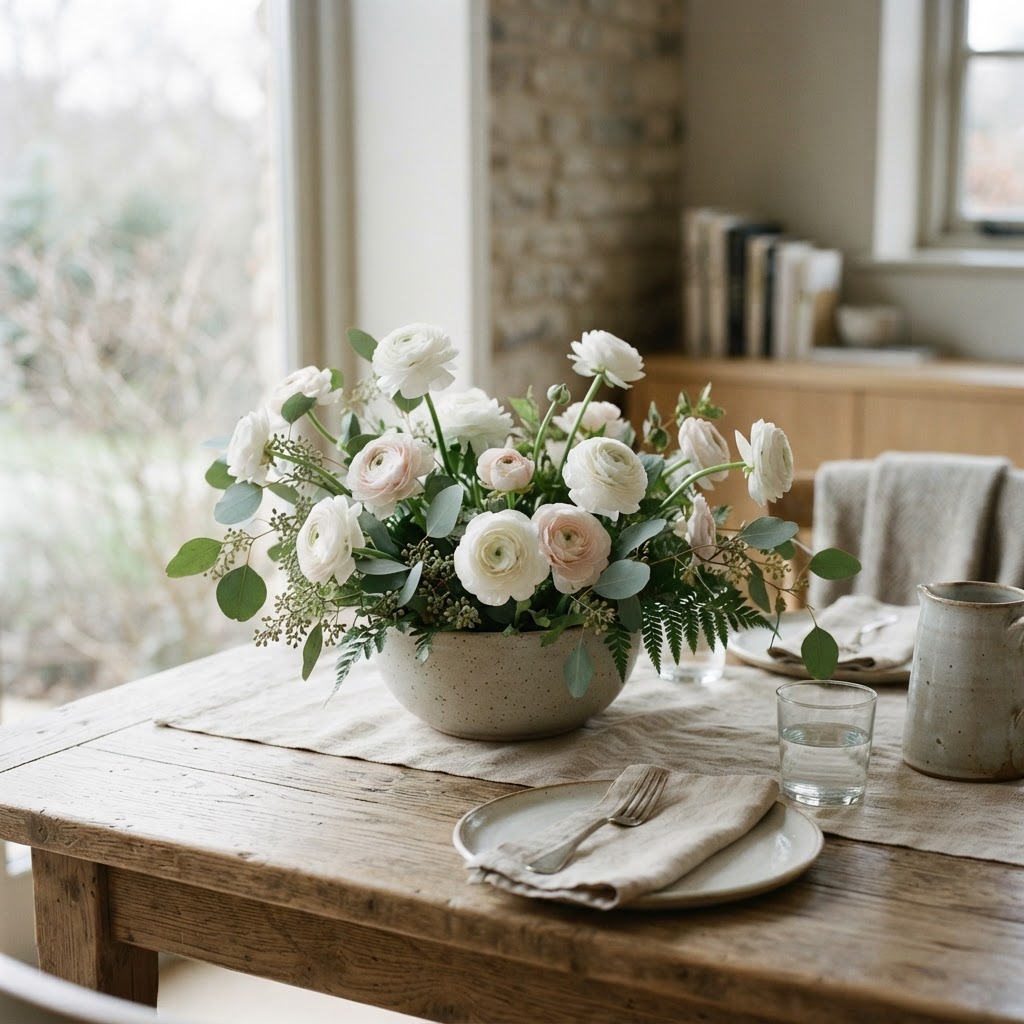
2. Ranunculus in a low bowl. White and pale pink ranunculus with a little eucalyptus make a soft, romantic centrepiece for a winter dinner.
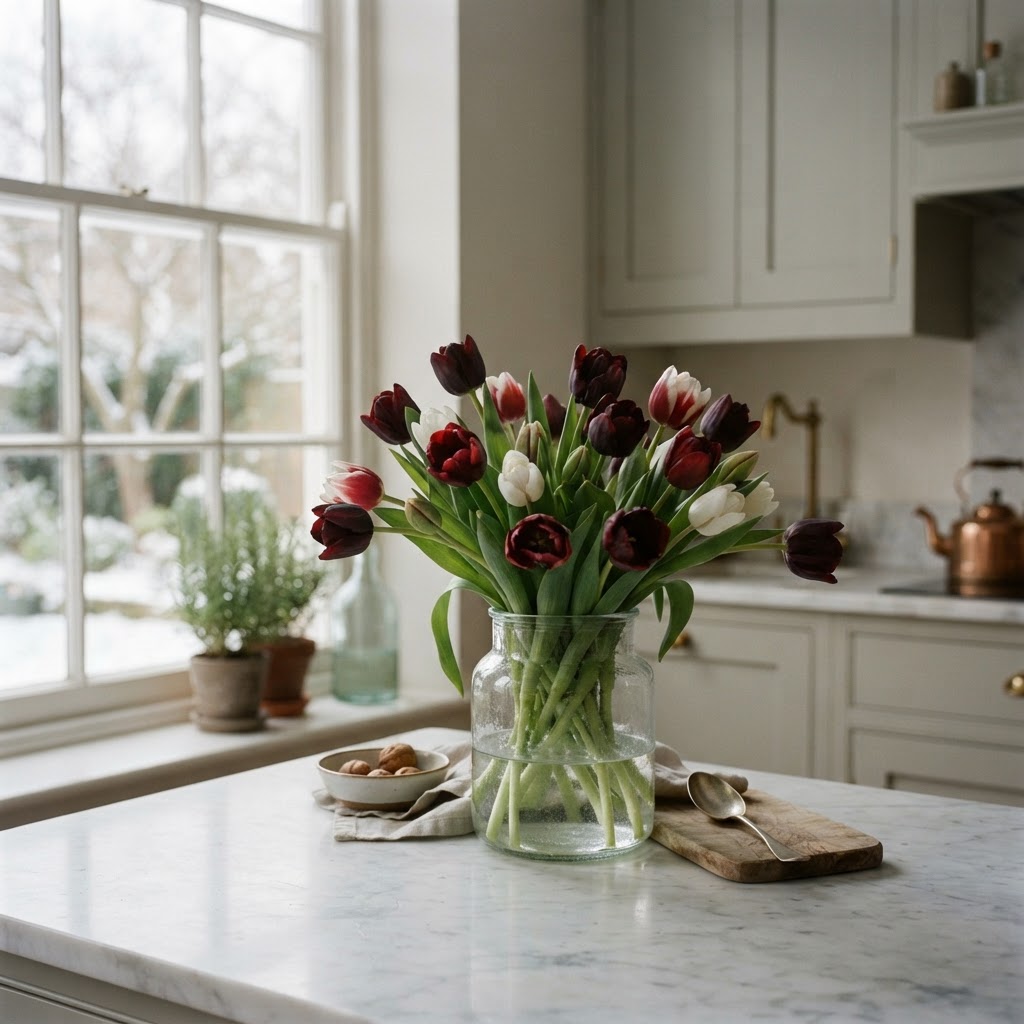
3. Loose tulips. Tulips keep growing and bending in the vase, so let them lean naturally in a simple glass vase. Dark red and white tulips look striking on a pale counter.
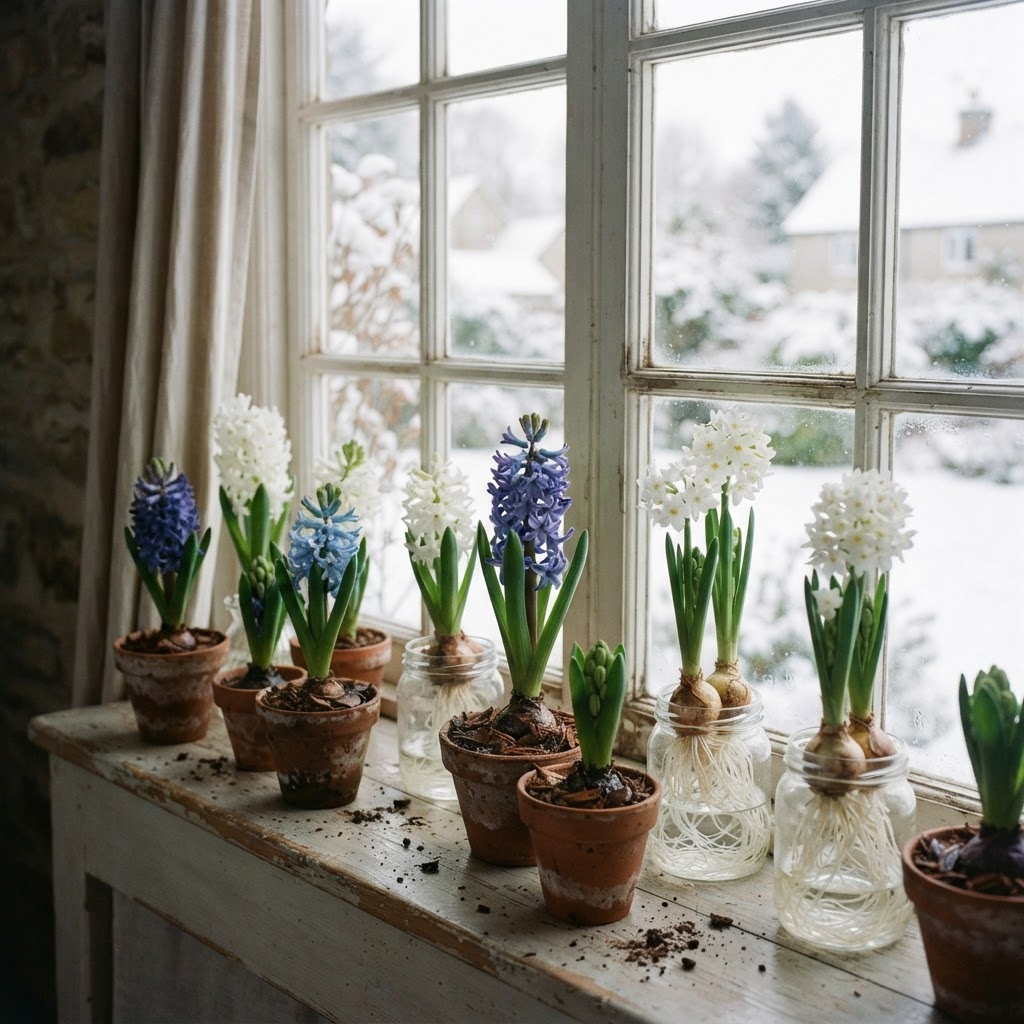
4. Forced bulbs on the windowsill. Hyacinths and paperwhites in small pots and glass jars bring colour and scent to a windowsill for weeks.
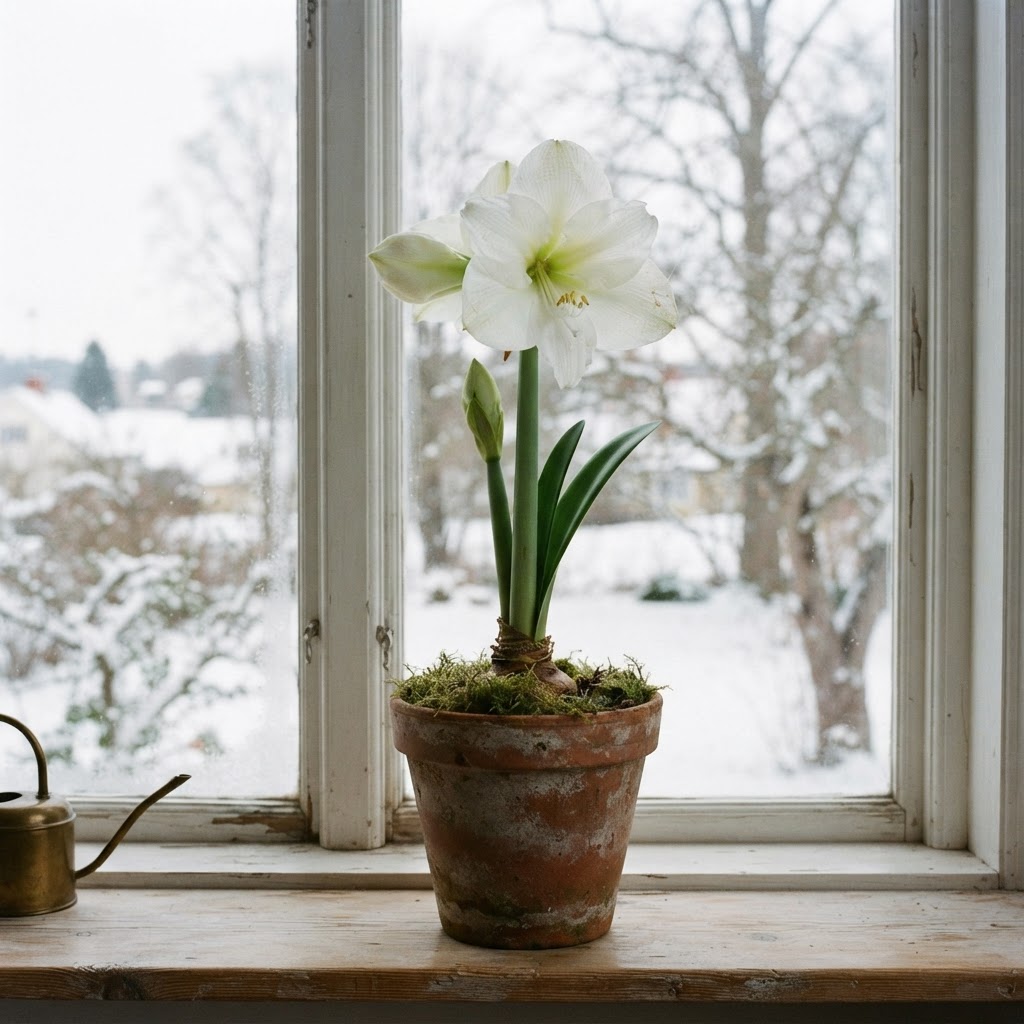
5. A single amaryllis. One potted amaryllis, topped with moss, is a living arrangement that flowers for weeks. A white one looks fresh long after Christmas.
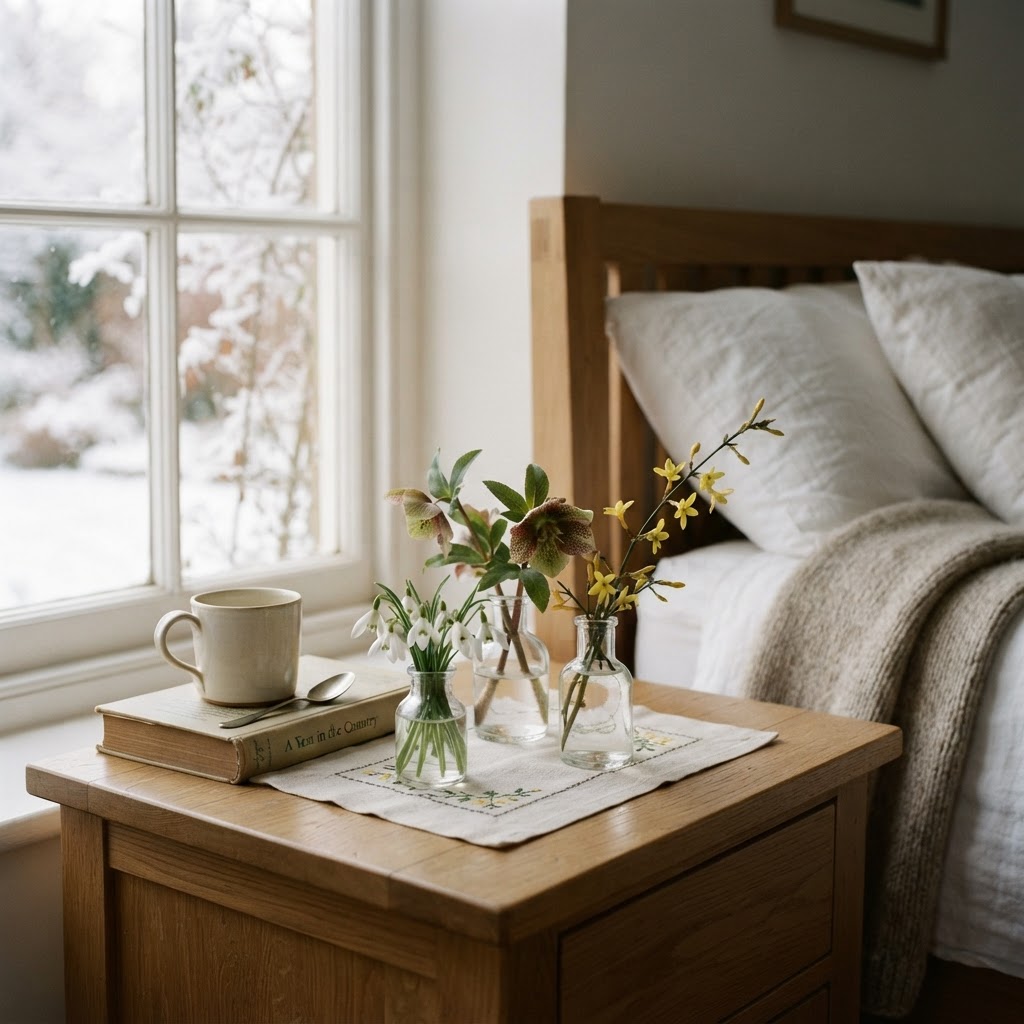
6. Snowdrops in bud vases. A few snowdrops, hellebores and sprigs of winter jasmine in tiny bud vases are perfect for a bedside table. Only pick snowdrops from your own garden.
7. A bowl of anemones. Anemones on their own, in a single colour, are bold and graphic. Their dark centres look wonderful against white or deep blue.
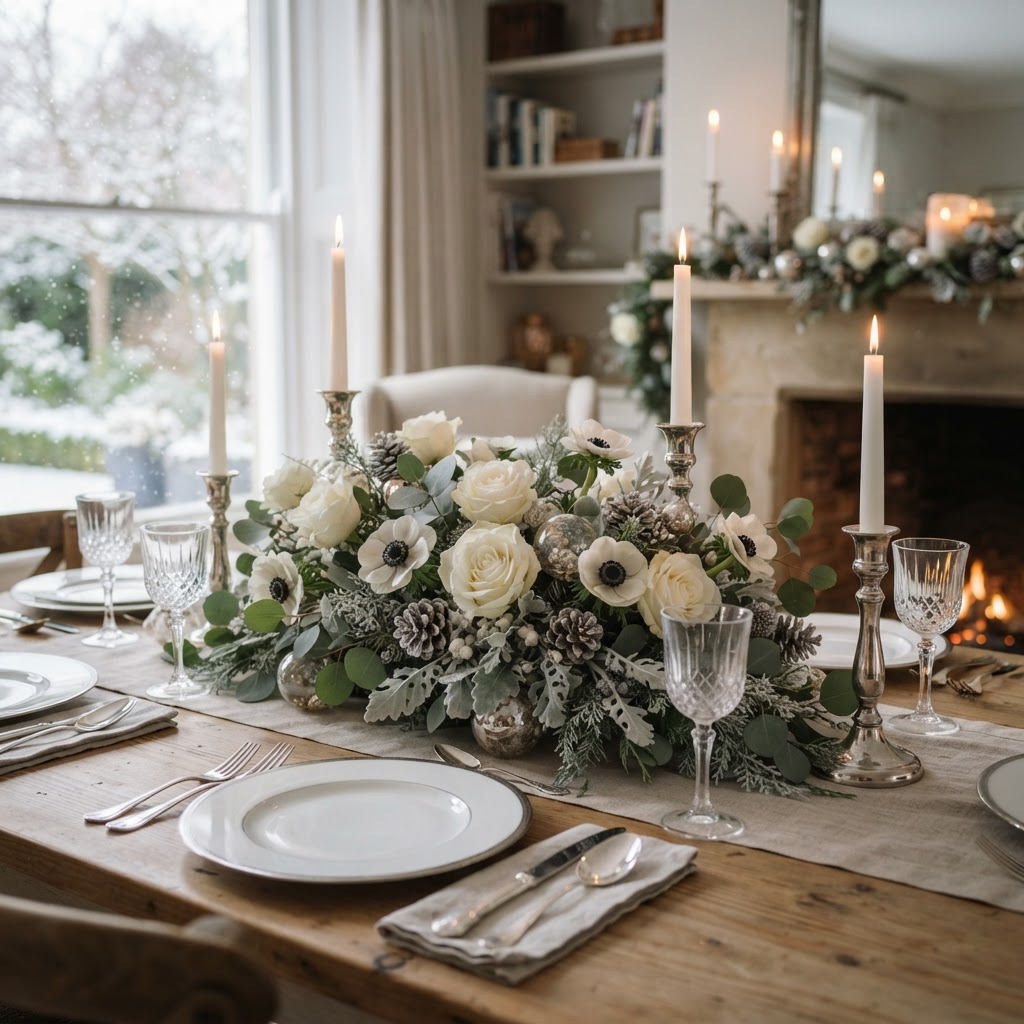
8. A silver and white centrepiece. White roses, white anemones, silver eucalyptus and frosted pine cones with white candles carry the festive season gently into January.
Winter branches
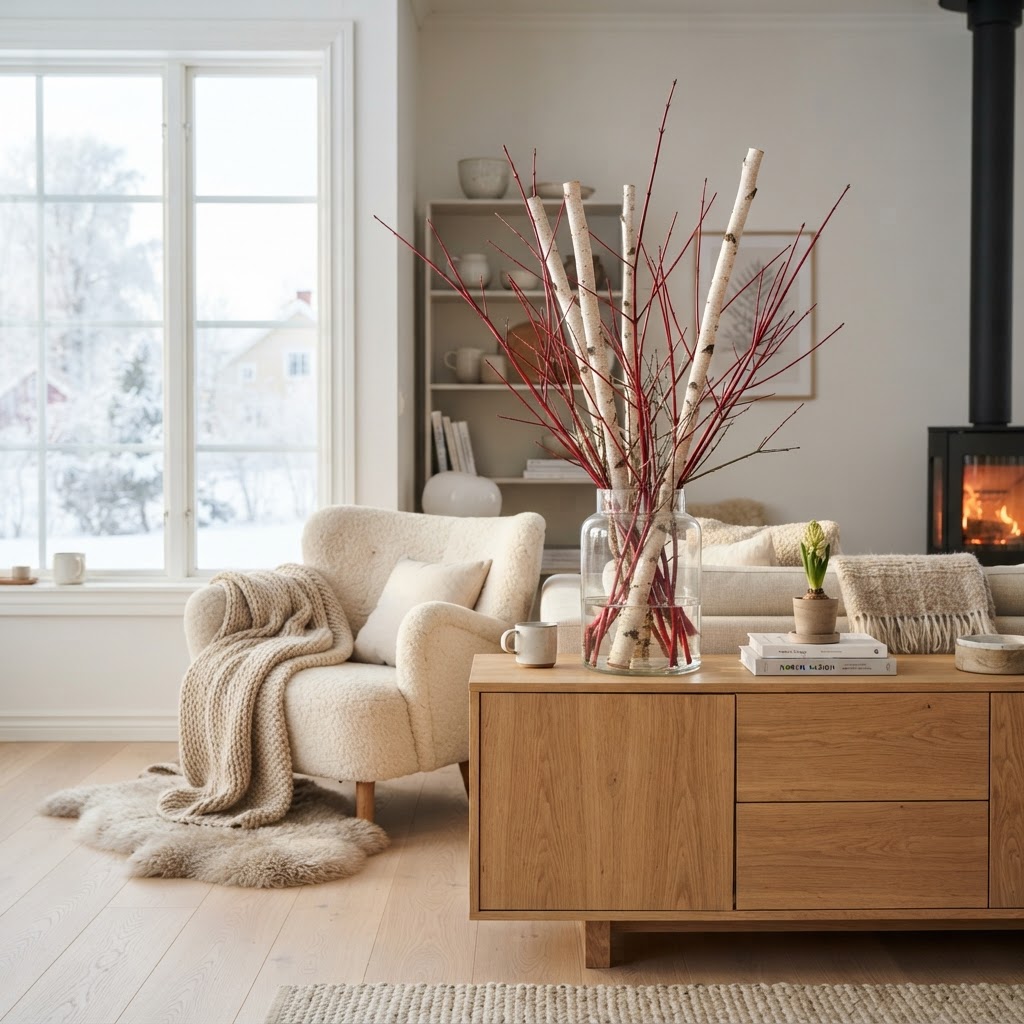
9. Dogwood and birch. Red-stemmed dogwood and white birch branches in a tall glass vase add instant height and colour, and last for weeks. They suit calm, Scandinavian-style rooms perfectly.
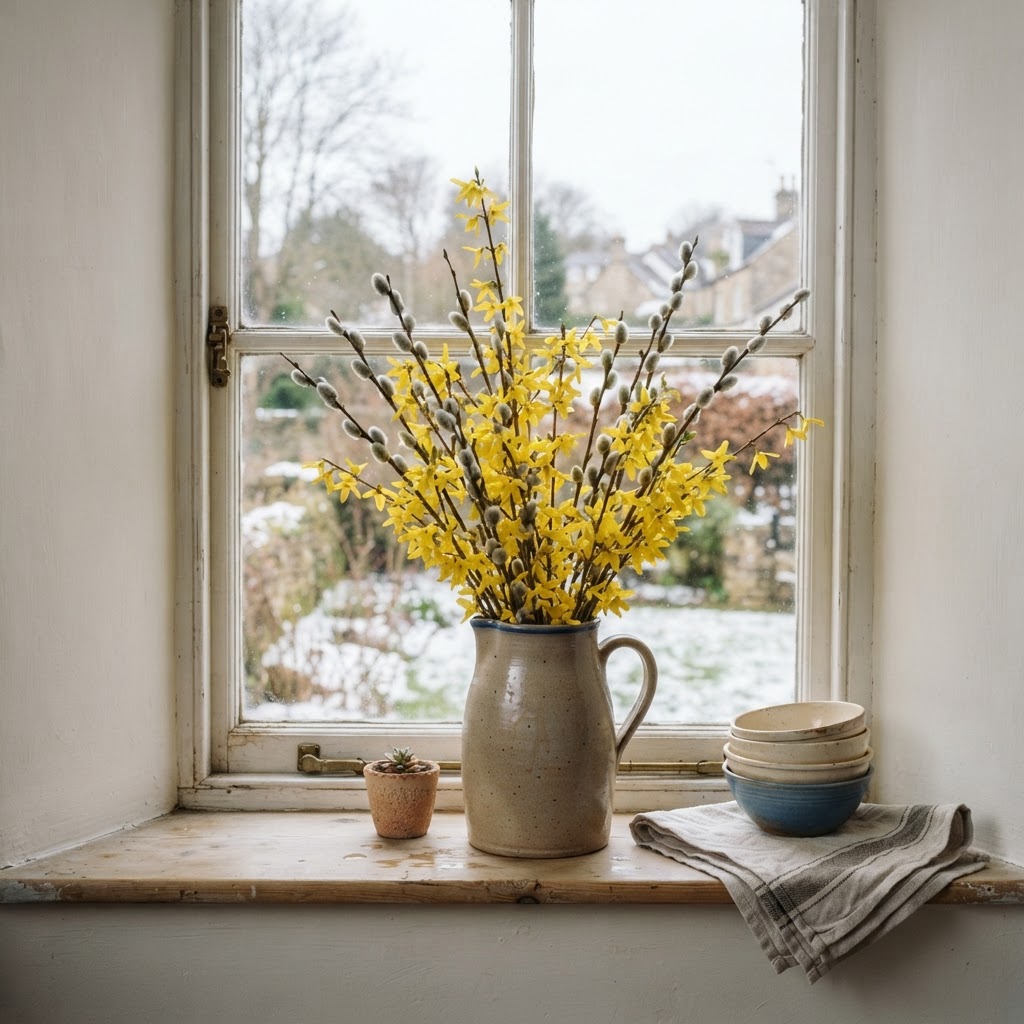
10. Forced forsythia and pussy willow. Bring branches indoors in late winter and they'll flower weeks before they would outside.
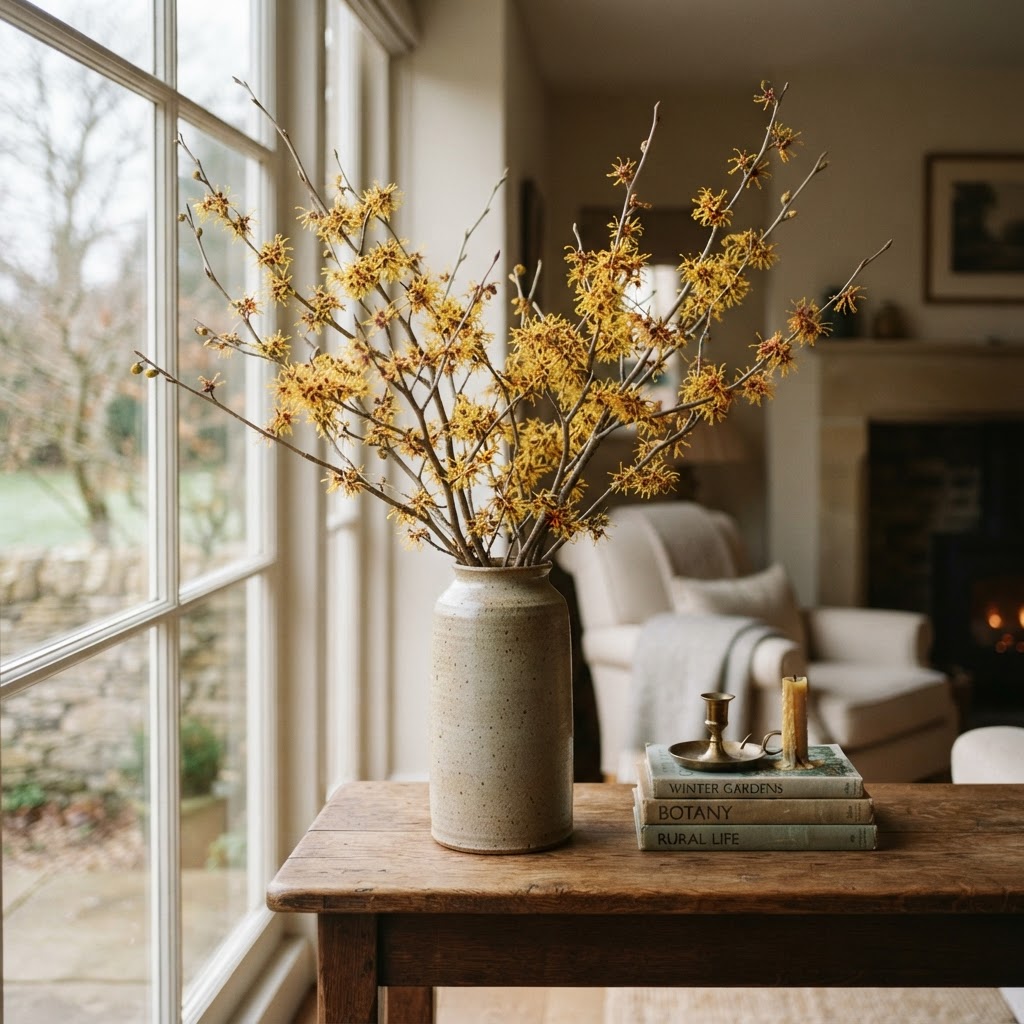
11. Witch hazel. Spidery yellow, orange or red flowers on bare stems, often with a light, spicy scent. A few branches in a stoneware vase are enough.
12. Scented winter shrubs. A few stems of winter-flowering viburnum, sweet box (sarcococca) or winter honeysuckle will scent a whole hallway.
13. Blossom branches. Cherry, flowering quince and crabapple branches can also be forced indoors in late winter for an early taste of spring blossom.
Evergreen and dried arrangements
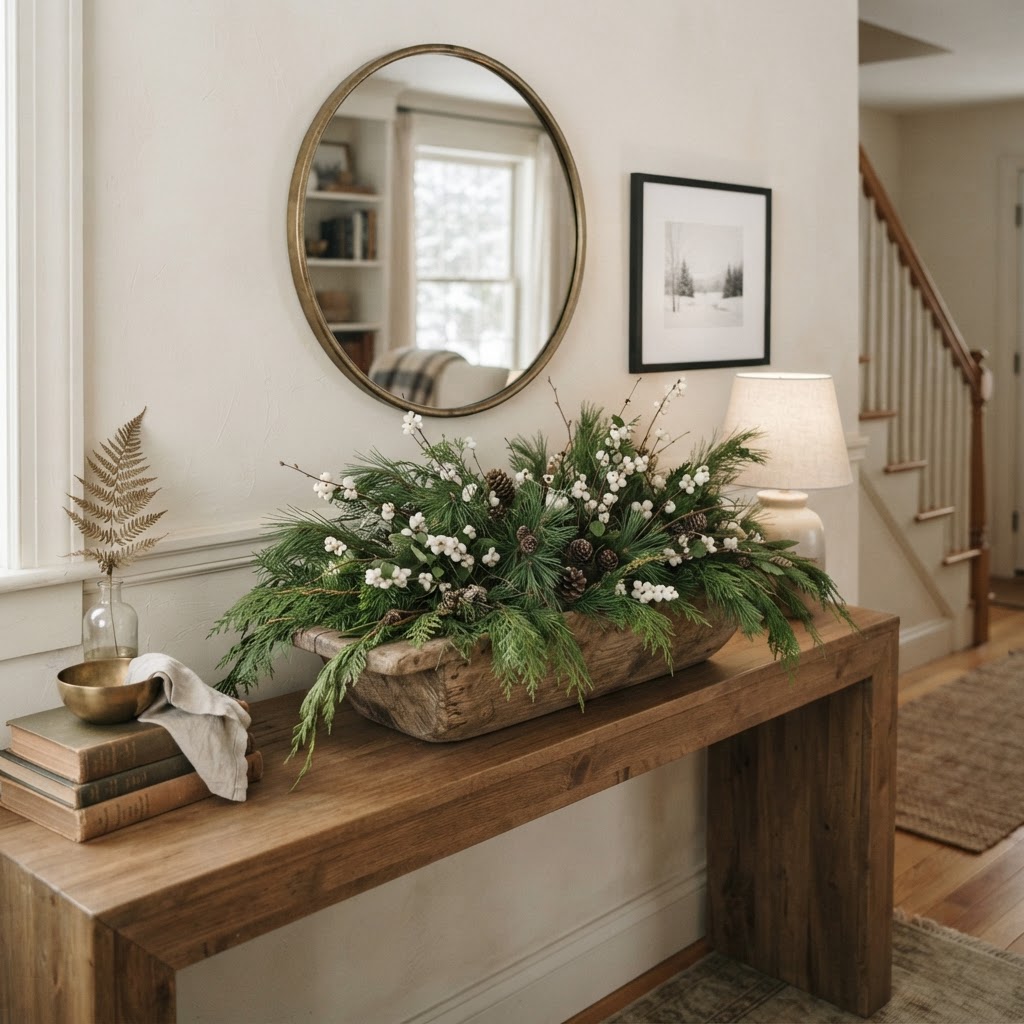
14. An evergreen trough. Pine, cedar, white berries and pine cones in a wooden trough on a hall table look fresh and seasonal all winter. Many of the greens from your fresh Christmas wreaths can be reused.
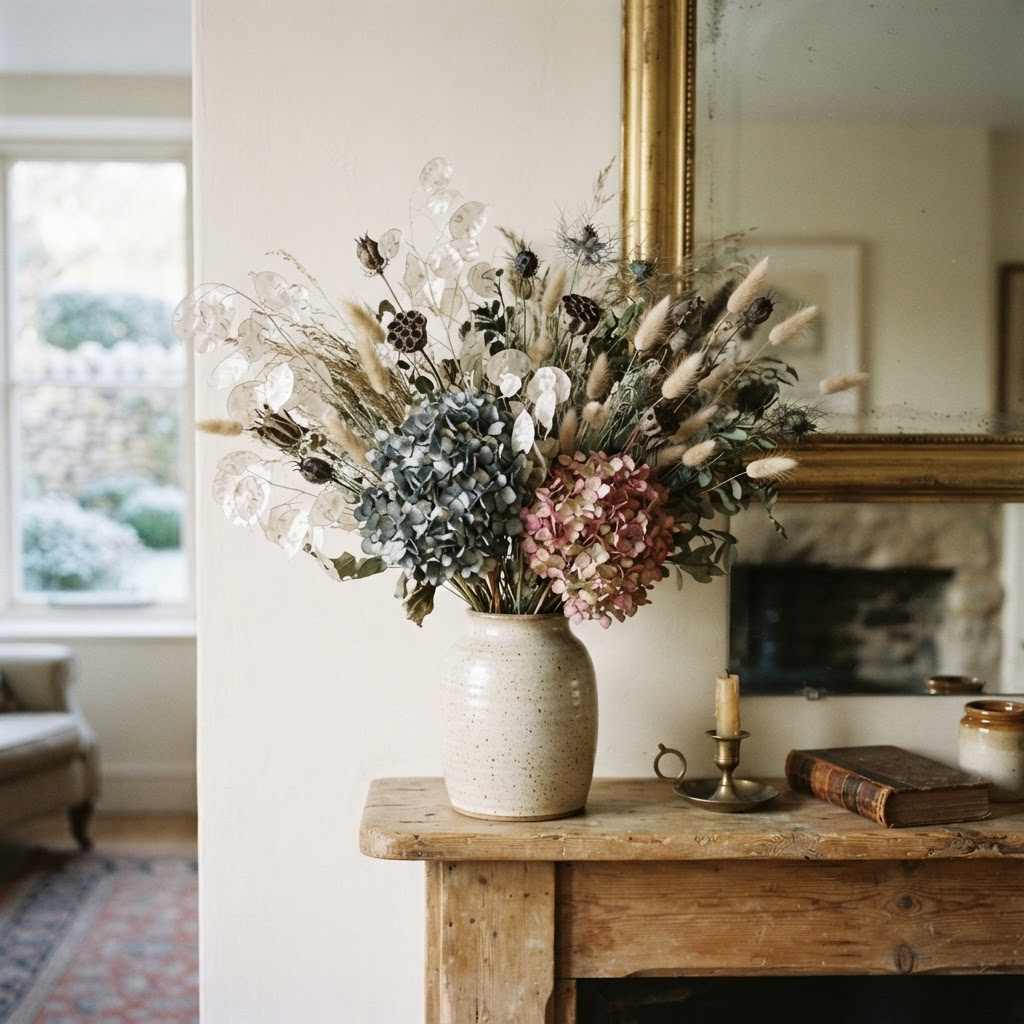
15. Dried flowers. Dried hydrangeas, honesty, bunny tail grass and seed pods last all winter and need no water, which makes them ideal for a warm mantelpiece.
16. Berries and foliage. Skimmia, ivy berries and stems from trees with red berries give colour when flowers are scarce.
17. A single stem. Inspired by ikebana, one branch or a single amaryllis stem in a beautiful vessel can be more striking than a full bouquet, and it suits the calm of Japanese house design.
How to Force Branches Into Flower
Forcing branches is one of the most rewarding winter projects. Iowa State University Extension's guide to forcing branches explains that "forcing can be done as soon as the buds begin to swell in late winter," and that forsythia and pussy willow "generally take only one to three weeks to force."
- Choose branches with plump flower buds from forsythia, pussy willow, flowering quince, cherry or crabapple.
- Cut stems 30 to 60 cm long on a mild day.
- Recut the ends and stand them in a tall container of water in a cool, dim room.
- Mist them a few times a day and change the water regularly.
- Move them into the light once the buds begin to open.
Winter Color Palettes
| Palette | Flowers and branches | Mood |
|---|---|---|
| White and silver | White ranunculus, anemones, hellebores, eucalyptus, birch | Calm, frosty and elegant |
| Plum and burgundy | Plum hellebores, dark tulips, burgundy ranunculus | Rich and moody |
| Yellow and green | Forsythia, witch hazel, narcissus, hellebores | Fresh and hopeful |
| Red and white | Red tulips, amaryllis, dogwood, white anemones | Bold and graphic |
| Natural and neutral | Dried flowers, seed heads, grasses | Soft and textural |
How to Keep Winter Flowers Fresh
- Keep them cool. Central heating is the biggest enemy of cut flowers. Move arrangements away from radiators and fires, and into a cool room overnight.
- Condition stems. Recut stems at an angle and leave them in deep water for a few hours before arranging.
- Sear hellebores. Dip the stem ends in boiling water for a few seconds, or split them, to help them drink.
- Keep narcissus apart at first. Narcissus release a sap that shortens the life of other flowers, so stand them on their own for several hours first.
- Change the water every couple of days and remove fading flowers.
Frequently Asked Questions
What flowers are in season in winter?
Hellebores, anemones, ranunculus, tulips, amaryllis, snowdrops, forced hyacinths and paperwhites, plus winter-flowering branches such as witch hazel.
What can I use for winter flower arrangements?
Winter flowers, bare and forced branches, evergreens, berries and dried flowers all work well, alone or combined.
How do you make a simple winter arrangement?
Choose one type of flower or branch, such as tulips or dogwood, and arrange it simply in a glass vase or jug. Add a little eucalyptus or pine for texture.
How long do winter flower arrangements last?
Most fresh flowers last about a week in a cool room. Branches and evergreens last two weeks or more, and dried flowers last all season.
Which branches can you force indoors?
Forsythia, pussy willow, flowering quince, cherry, crabapple and magnolia can all be forced into flower indoors in late winter.
Are winter flowers expensive?
Some imported flowers can be, but tulips, anemones and forced bulbs are usually good value, and branches, evergreens and dried flowers cost very little.
How do I stop tulips drooping?
Recut the stems, wrap the bunch in paper and stand it upright in deep, cold water for a few hours before arranging. Keep the vase cool.
Flowers for the Darkest Months
Winter flower arrangements bring life and colour to the quietest time of year. Mix a few seasonal blooms with branches, evergreens or dried flowers, keep them cool, and your home will feel fresh and welcoming until spring. If you're still in the festive season, start with Christmas flower arrangements and festive Christmas mantel decorations, then let them evolve into winter displays in January.
And if you'd like help creating a home that feels warm and beautiful all year round, you can book a one-hour online interior design consultation with me.
About the author
Magda Callery is a UK interior designer and florist with more than 15 years' experience designing homes, pubs, restaurants and bars, and her expert commentary has featured in Homes & Gardens, The Mirror and The Spruce. Explore more of the decorating articles.
Continue reading

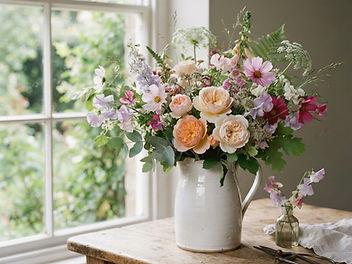
Simple Flower Arrangements: 19 Easy Ideas for Your Home
19 simple flower arrangement ideas for your home, from tulips in a jar and bud vases to low bowls and branches, plus easy rules and how to keep flowers fresh.

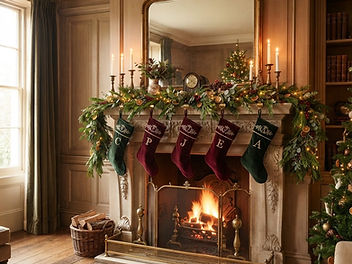
Christmas Mantel Decorations: 17 Festive Ideas
17 Christmas mantel decoration ideas, from lush garlands and velvet stockings to Scandinavian minimalism, plus how to style a mantel and keep it safe.

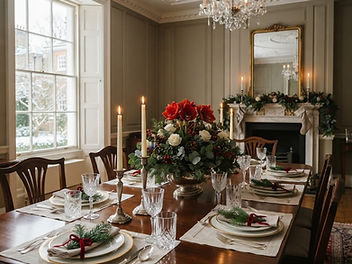
Christmas Flower Arrangements: 19 Festive Ideas
19 Christmas flower arrangement ideas, from red amaryllis and white roses to table runners and foraged berries, plus the best flowers and how to make them last.