
Simple Flower Arrangements: 19 Easy Ideas for Your Home
19 simple flower arrangement ideas for your home, from tulips in a jar and bud vases to low bowls and branches, plus easy rules and how to keep flowers fresh.
By Magda Callery, interior designer and florist
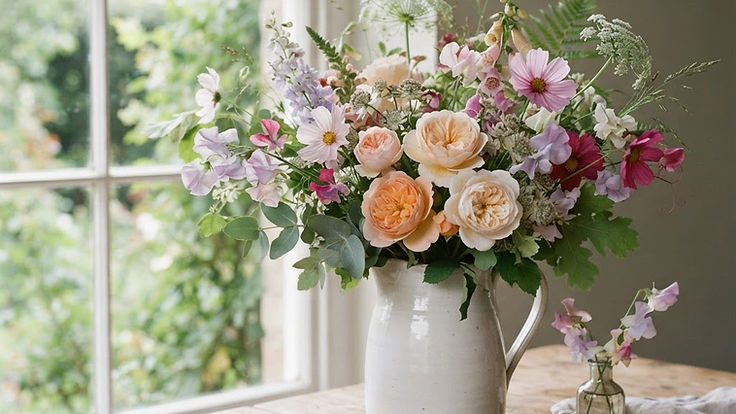
Flowers don't need to be complicated to be beautiful. A jar of tulips on the kitchen table, three bud vases on a windowsill or a jug of garden roses by the bed can lift a room as much as any florist's bouquet. As an interior designer and florist, I often find that the simplest arrangements look the most stylish, because they let the flowers and the room speak for themselves.
In this guide I'll explain the basic rules of simple flower arrangements, the tools you need, a step-by-step method, 19 easy flower arrangement ideas for every room, and how to keep your flowers fresh for longer.
The quick answer: for a simple flower arrangement, choose one or two types of flower, a vase that suits their size, and a little greenery. Cut the stems so the flowers are about one and a half to two times the height of the vase, strip any leaves below the water line, and group them loosely. A single variety in a jar, a trio of bud vases or a low bowl of blooms are the easiest places to start.
The Basic Rules of Simple Flower Arrangements
- Keep it to one or two flower types. Fewer varieties look more deliberate and modern.
- Get the proportions right. Flowers usually look best at around one and a half to two times the height of the vase.
- Use odd numbers. Three, five or seven stems look more natural than even numbers.
- Think focal, filler and foliage. One showy flower, a smaller filler and a little greenery is a simple, reliable recipe.
- Match the vase to the flowers. Heavy blooms need a sturdy vase; delicate stems suit bud vases.
- Let them move. A slightly loose, natural shape looks more relaxed than a tight, stiff bunch.
Tools for Simple Flower Arranging
| Tool | Why it helps |
|---|---|
| Sharp scissors or secateurs | Clean cuts help stems drink |
| A selection of vases | Jars, jugs, bud vases and a low bowl cover most arrangements |
| Flower frog or pin holder | Holds stems upright in low bowls |
| Clear tape | A grid across the top of a vase keeps stems in place |
| Chicken wire | A reusable, foam-free support for larger arrangements |
| Flower food | Helps flowers last longer |
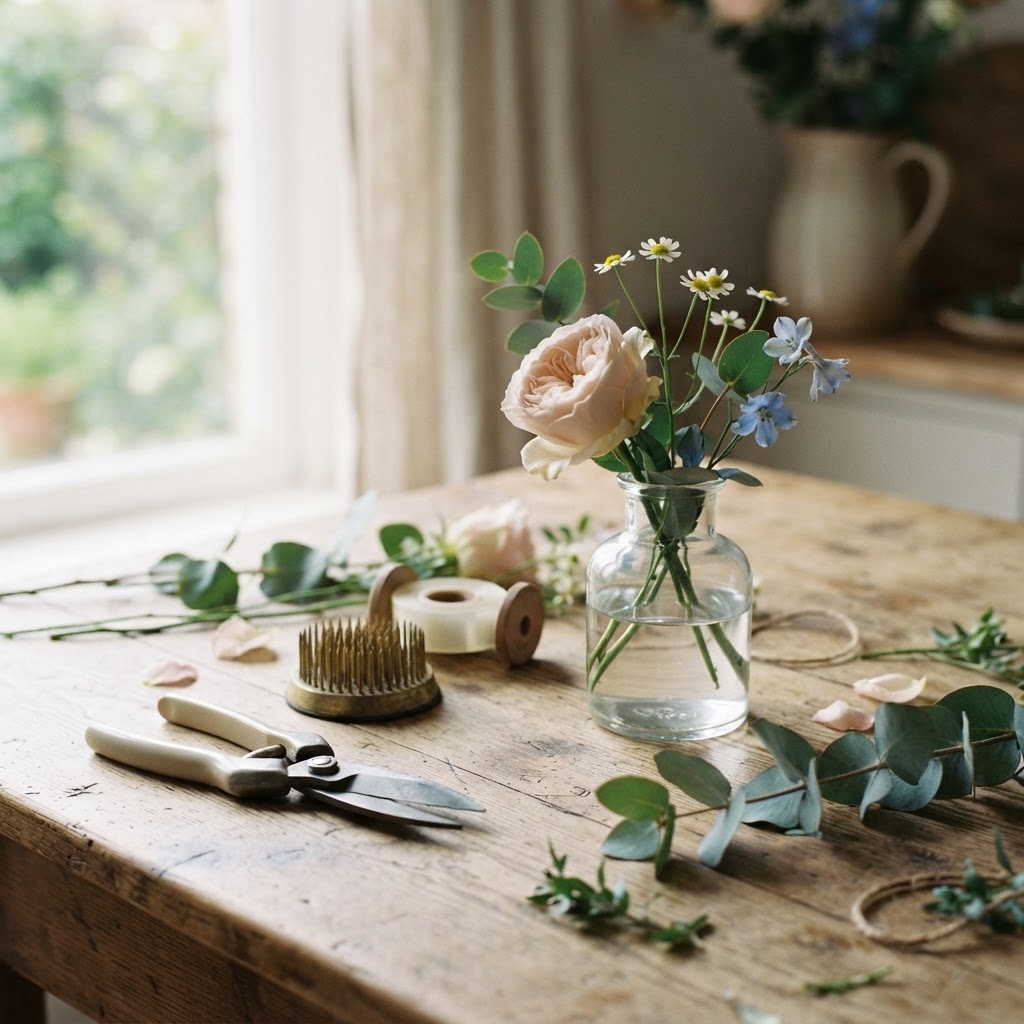
How to Make a Simple Flower Arrangement
- Prepare the vase. Wash it thoroughly and fill it with fresh water and flower food.
- Condition the flowers. Strip leaves that will sit below the water, recut the stems and give them a long drink.
- Add greenery first. A few stems of foliage create a framework that holds the flowers in place.
- Add the focal flowers. Place the biggest flowers first, at slightly different heights.
- Fill the gaps. Add smaller flowers or buds to soften the shape.
- Step back and adjust. Turn the vase and look at it from where it will be seen.
19 Simple Flower Arrangement Ideas
Easy everyday arrangements
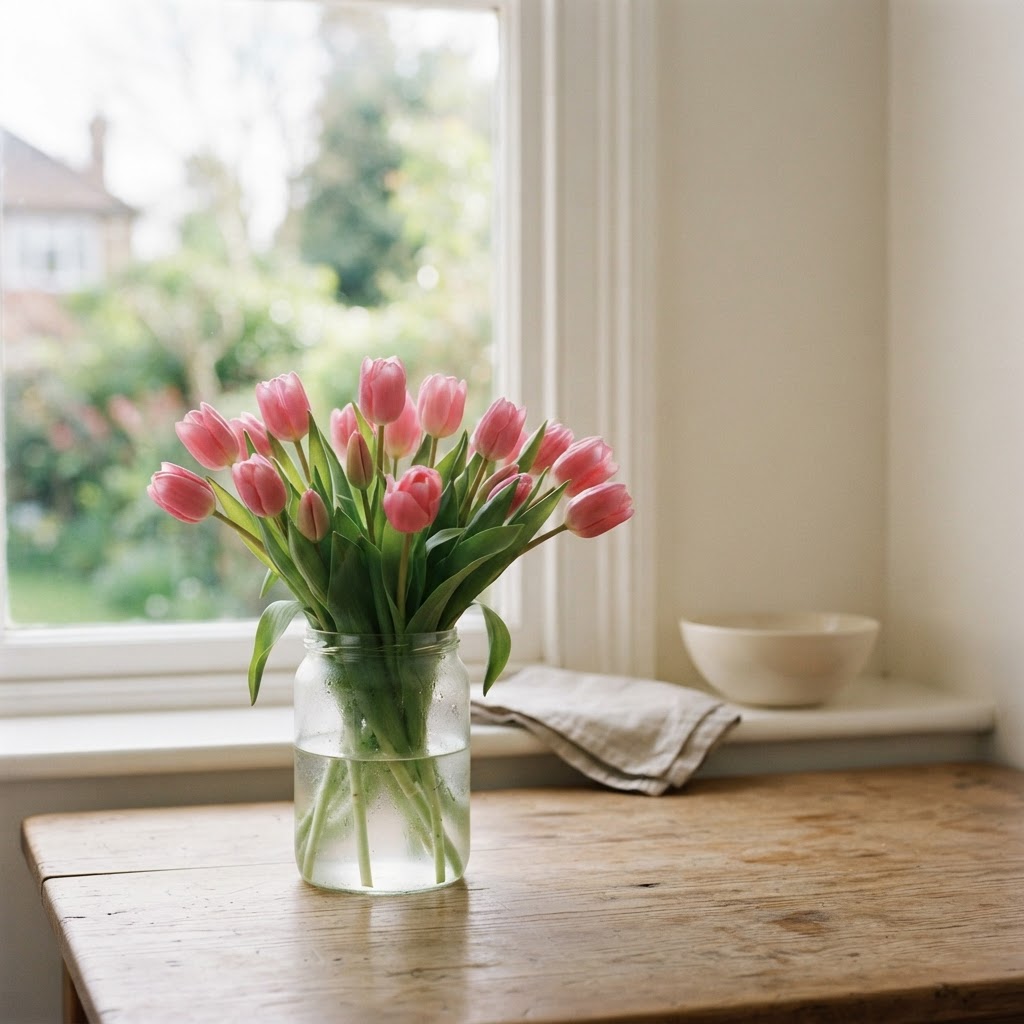
1. One variety in a jar. A bunch of tulips, ranunculus or sweet peas in a simple glass jar is the easiest arrangement of all, and always looks good.
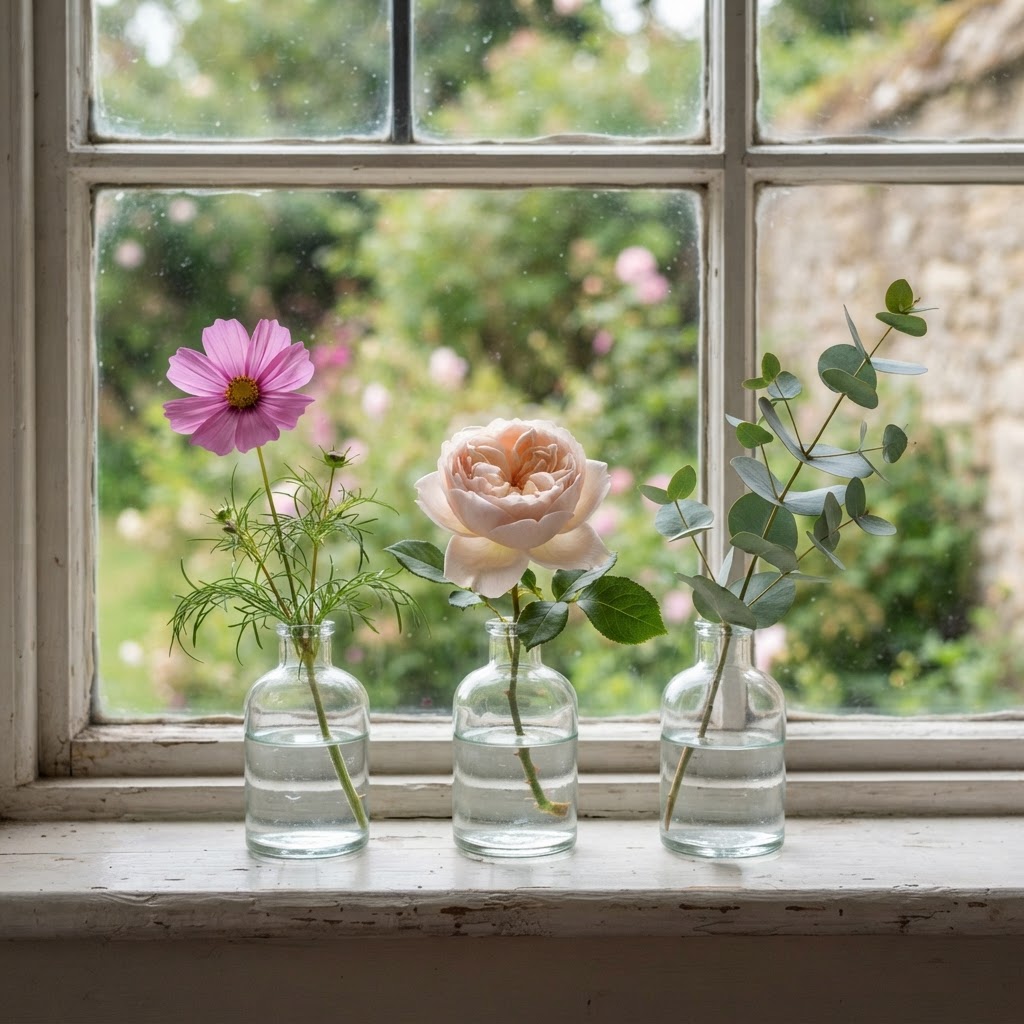
2. A trio of bud vases. Three small bud vases, each with one or two stems, look charming on a windowsill, mantelpiece or bedside table.
3. Split a supermarket bunch. Divide one inexpensive bunch between several small vases and dot them around the house for maximum impact.
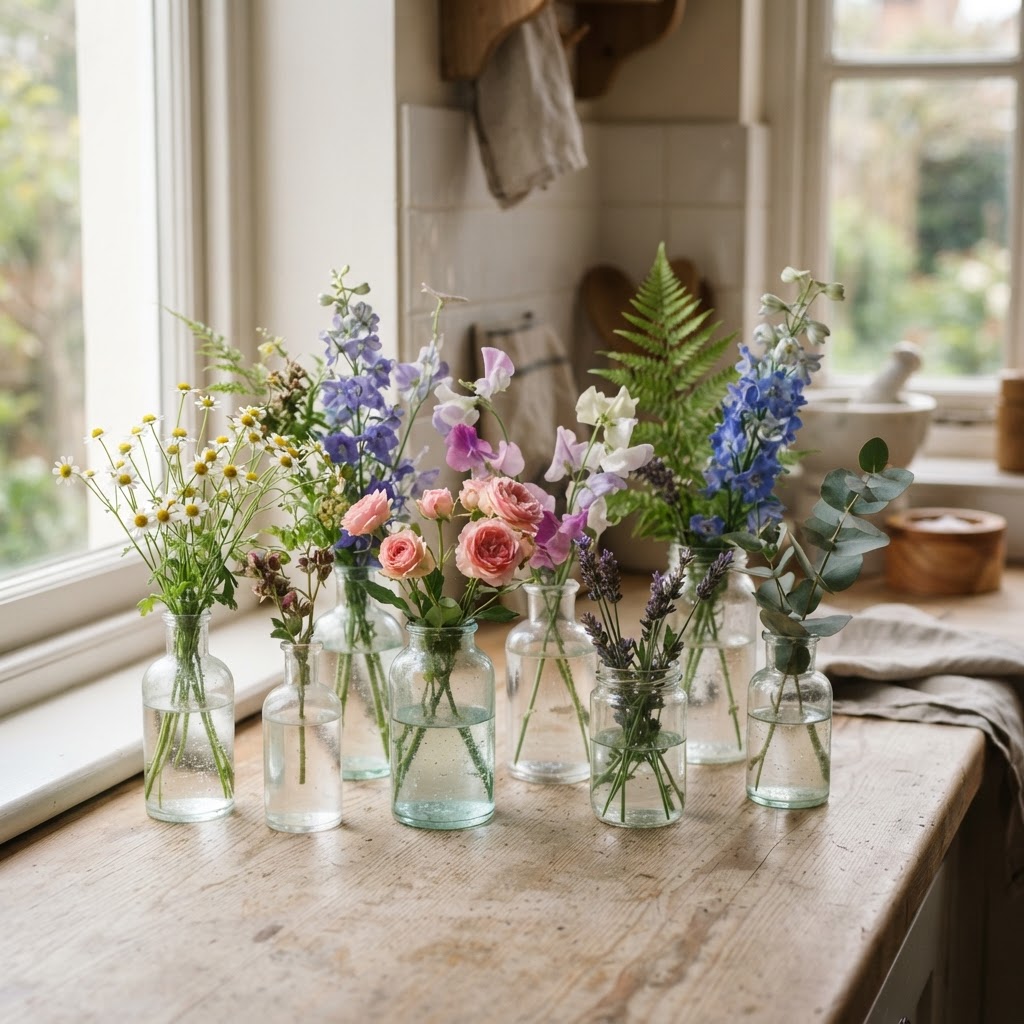
4. A low bowl centrepiece. Short stems of roses, ranunculus and greenery in a low bowl, held in place with a flower frog, make an easy dinner table centrepiece that guests can see over.
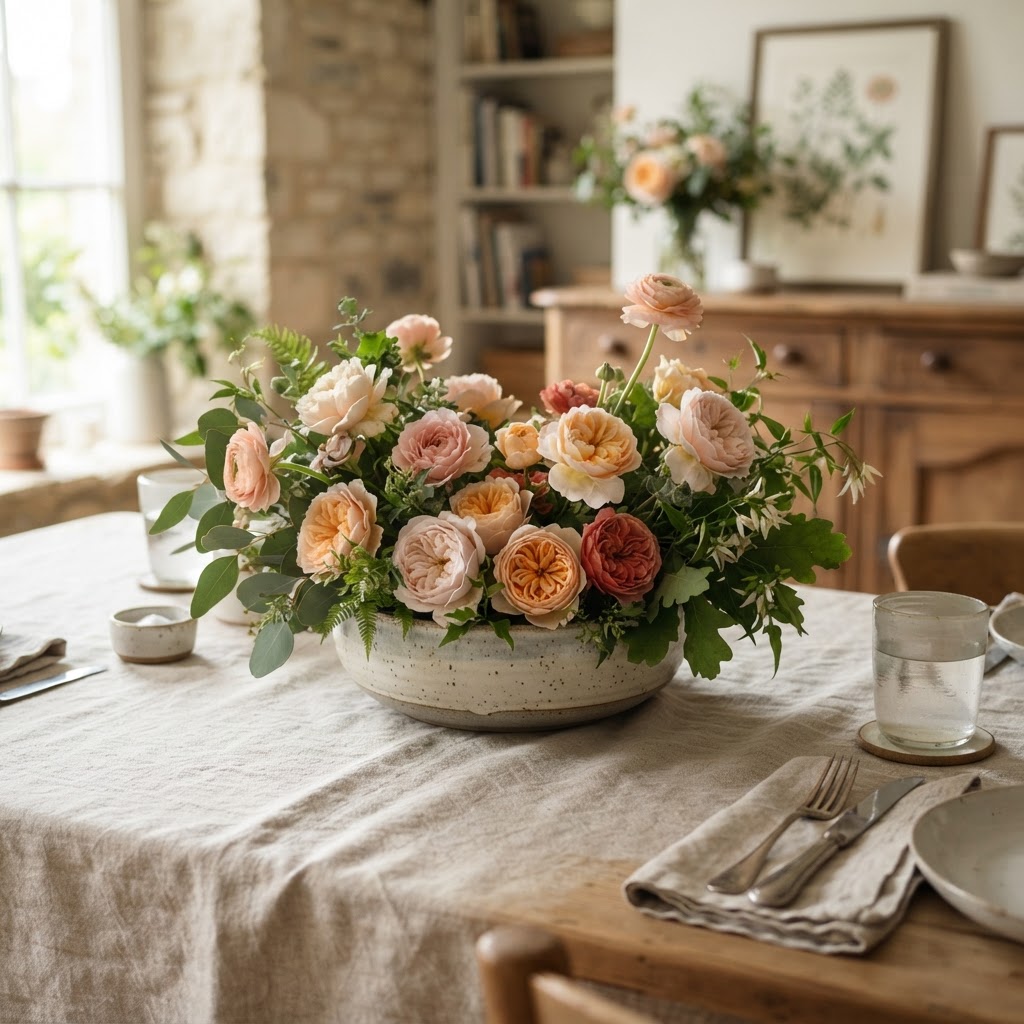
5. A jug of garden flowers. Whatever is in flower in the garden, loosely gathered in a jug, has an effortless cottage charm. A patterned jug, such as Polish Bolesławiec pottery, adds even more character.
6. A single colour. An all-white or all-pink arrangement of different flowers looks elegant and is easy to get right.
7. A single stem. One beautiful stem, such as a peony, a lily or a branch of blossom, in a narrow vase can be more striking than a full bouquet.
Branches, foliage and herbs
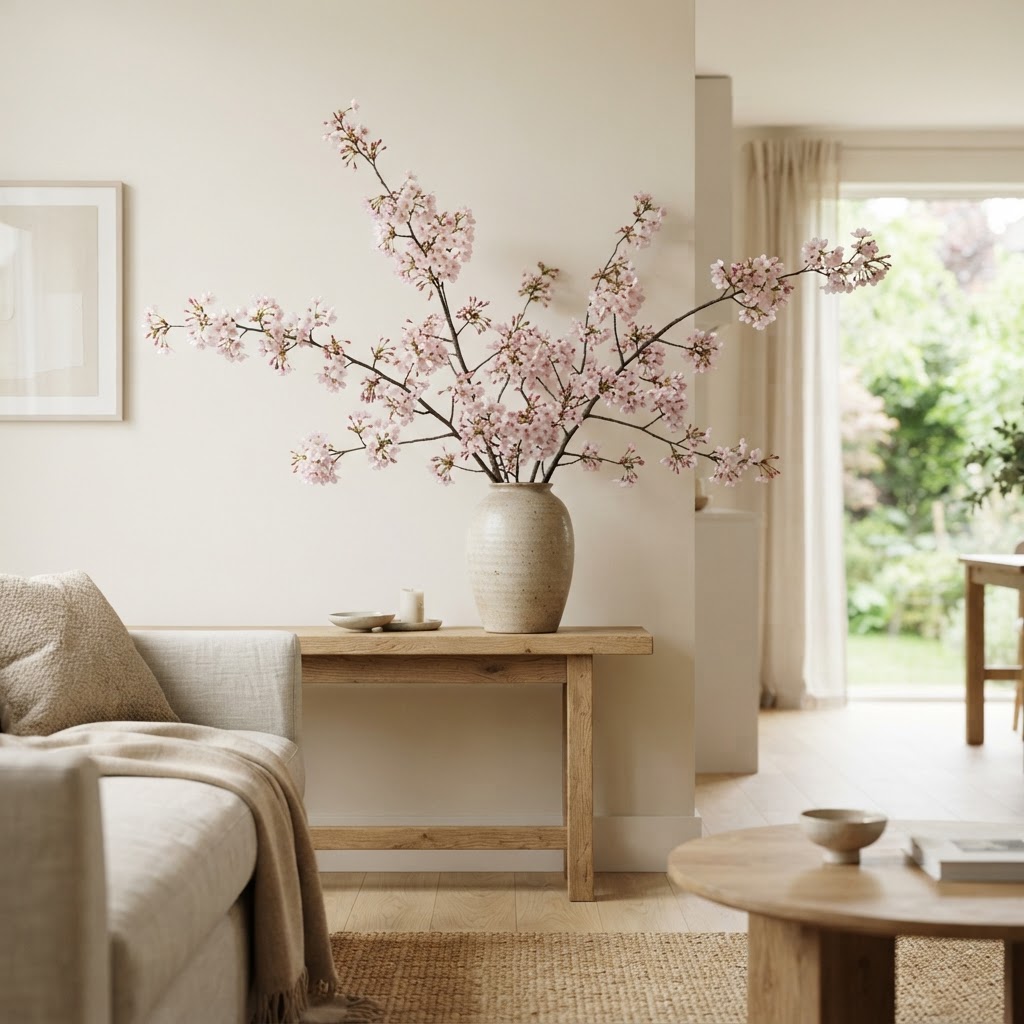
8. Blossom branches. A few branches of cherry or apple blossom in a tall vase bring spring indoors. In winter, forced forsythia and pussy willow do the same, and they're among the easiest winter flower arrangements.
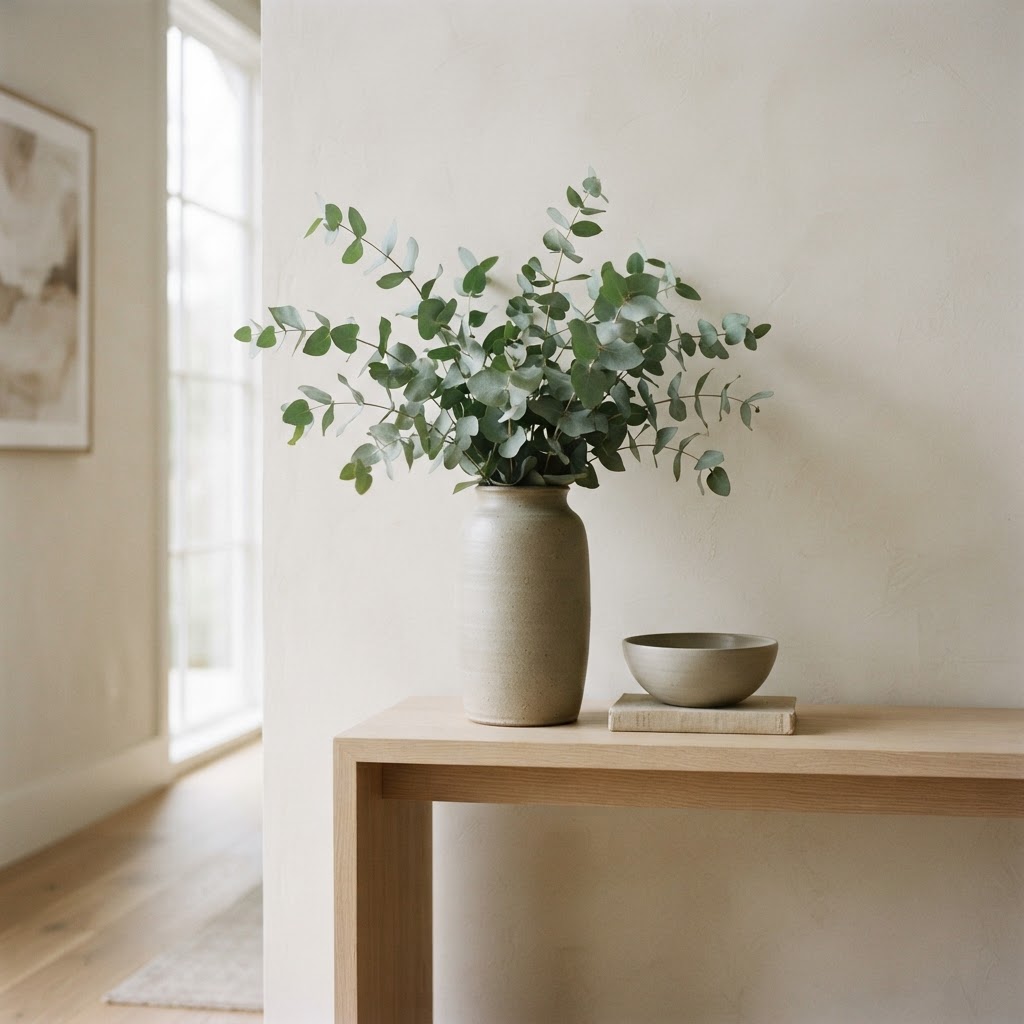
9. Greenery only. A vase of eucalyptus, olive or beech leaves lasts for weeks and suits calm, minimal rooms.
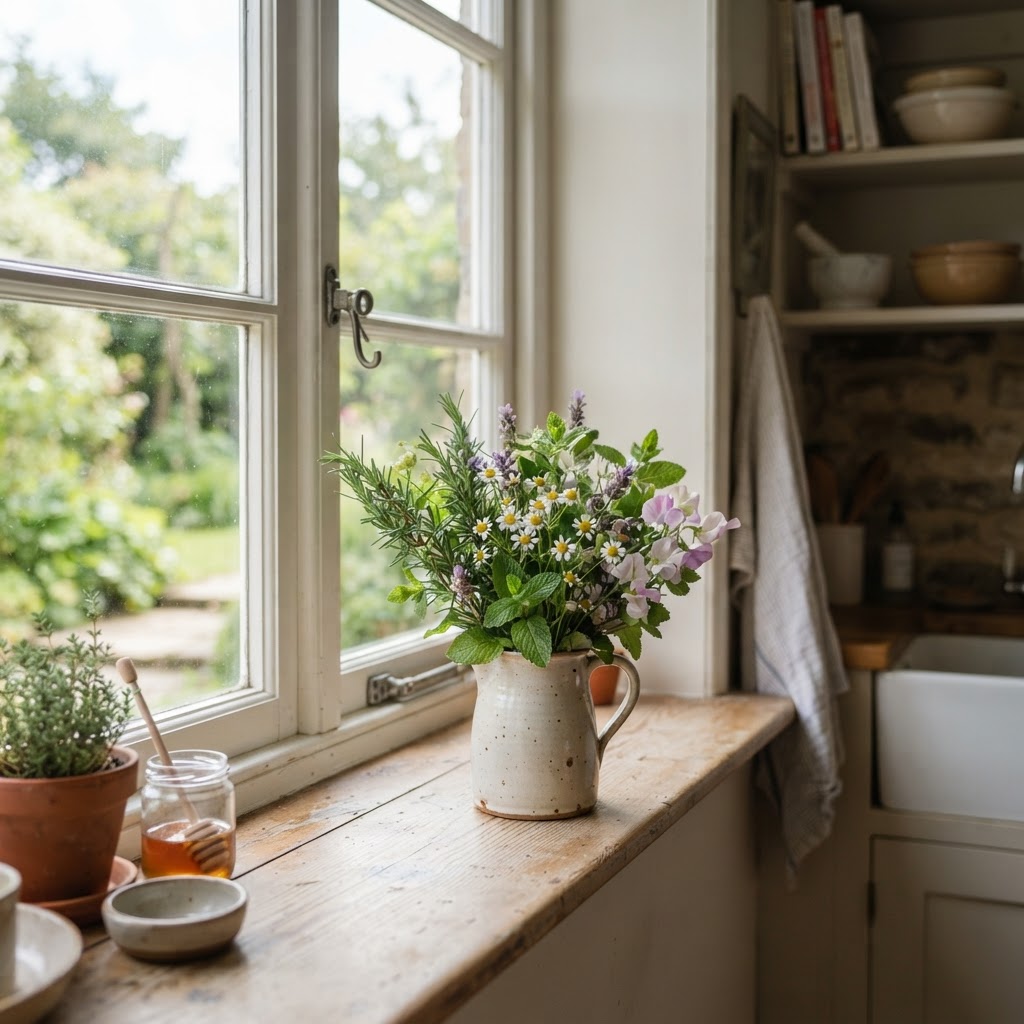
10. Herbs and flowers. Rosemary, mint and flowering herbs mixed with a few blooms look and smell lovely in the kitchen.
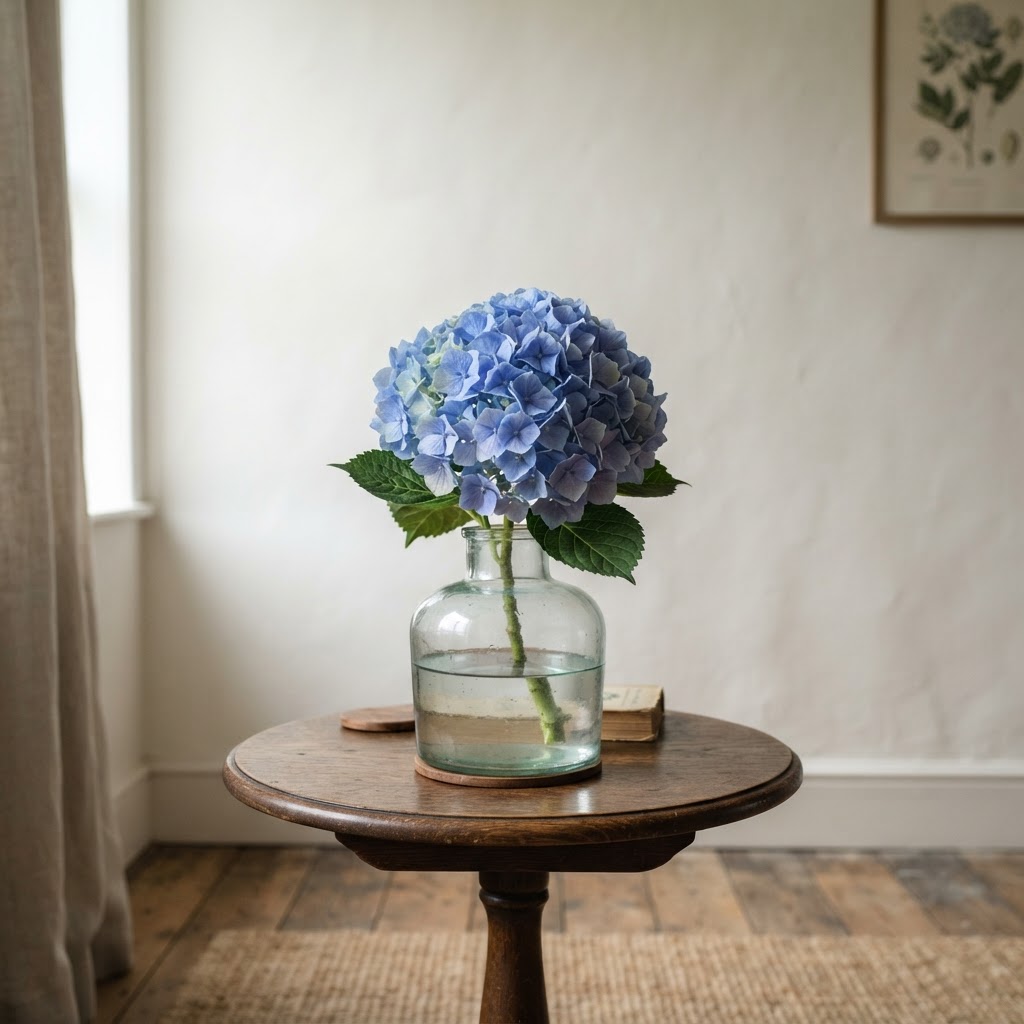
11. One big hydrangea. A single hydrangea head fills a vase on its own. Cut it in the morning and plunge it straight into deep water.
Seasonal ideas
12. Peonies in season. A few peonies in a simple vase are all you need in late spring. They're only in season for a few weeks, so enjoy them while you can.
13. Lilac in a jug. Armfuls of cut lilac in a jug fill the house with scent. Split the stems and strip most leaves first; a lilac tree in the garden gives you plenty to cut.
14. Sunflowers. Three or five sunflowers in a heavy jug make a cheerful summer arrangement. Like other yellow flowers, they're associated with happiness and warmth.
15. Wildflowers in a bottle. Small stems of cow parsley, buttercups and grasses in old glass bottles look natural and pretty. Only pick from your own garden or where it's allowed.
16. Festive simplicity. At Christmas, a few amaryllis stems or a single branch of berries can be as effective as the fullest Christmas flower arrangements.
Creative touches
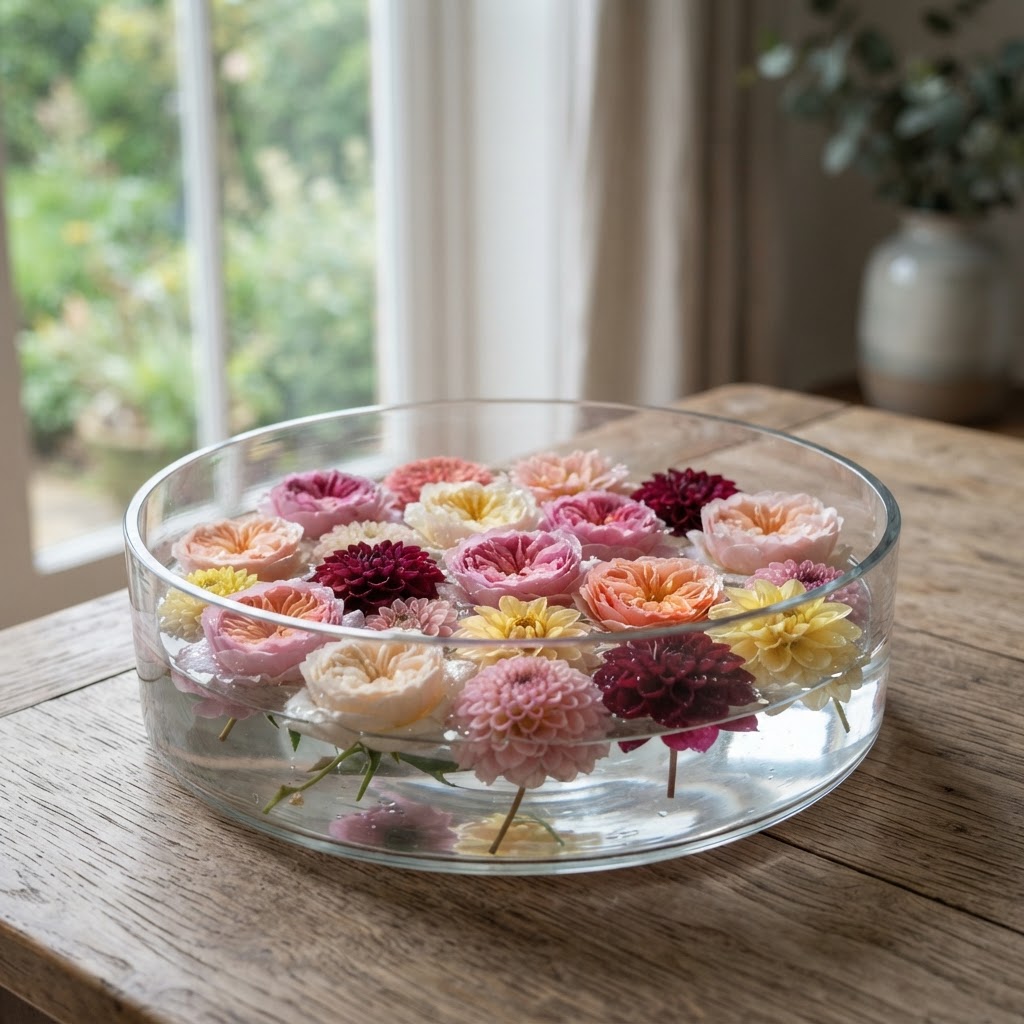
17. Floating flowers. Float flower heads, such as roses, dahlias or gardenias, in a shallow bowl of water. It's perfect for using up short stems.
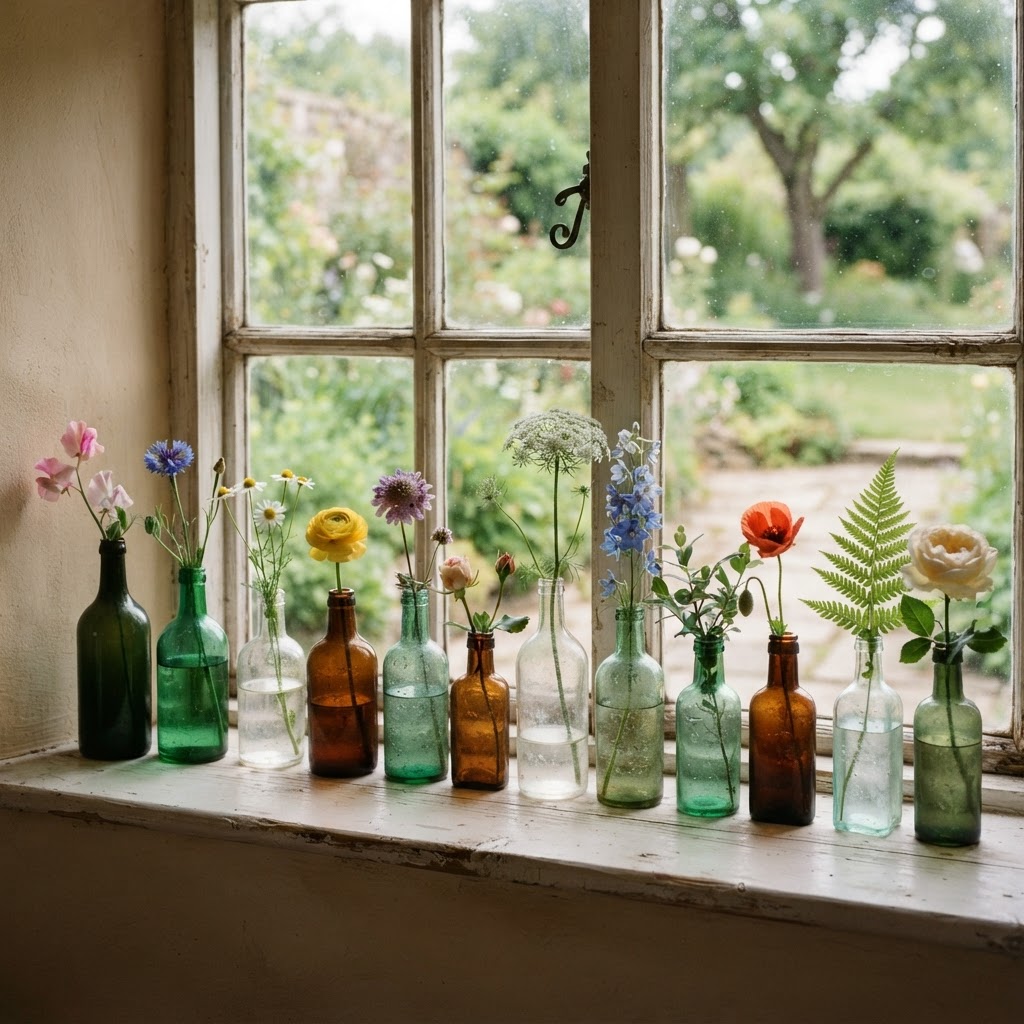
18. A collection of bottles. Mismatched vintage bottles with a single stem in each, lined up on a windowsill, create a relaxed, collected look.
19. Fruit in the vase. Lemons, limes or clementines inside a clear vase add colour and hide stems. Change the water often.
How to Keep Cut Flowers Fresh
University of Massachusetts Amherst's advice on caring for cut flowers recommends recutting the stems, removing any foliage that would sit below the waterline, using a floral preservative, and keeping flowers in a cool place away from heat and draughts.
- Recut stems at an angle every couple of days.
- Remove leaves below the water line, because they rot and cloud the water.
- Use flower food and fresh, clean water.
- Keep arrangements cool, away from radiators, sunny windows and draughts.
- Remove fading flowers so they don't shorten the life of the rest.
Choosing the Right Vase
| Vase | Best flowers | Tip |
|---|---|---|
| Glass jar | Tulips, ranunculus, sweet peas | Keep the water crystal clear |
| Bud vase | Single stems, small flowers | Group in threes |
| Jug or pitcher | Garden flowers, lilac, sunflowers | Let stems lean naturally |
| Low bowl | Short stems, roses, centrepieces | Use a flower frog or tape grid |
| Tall vase | Branches, delphiniums, lilies | Choose a heavy base for stability |
| Bottles | Single stems, wildflowers | Mix heights and colours of glass |
Simple arrangements look especially good on a console table behind a sofa, a kitchen island or a bedside table. For more inspiration, explore decorating with fresh flowers.
Common Mistakes to Avoid
| Mistake | Why it's a problem | What to do instead |
|---|---|---|
| Too many types of flower | Looks busy | Stick to one or two varieties |
| Flowers too short or too tall | Unbalanced proportions | Aim for one and a half to two times the vase height |
| Leaves below the water | Water turns cloudy and smelly | Strip lower leaves |
| Dirty vases | Bacteria shorten vase life | Wash vases thoroughly |
| Placing flowers by a radiator | They wilt quickly | Keep them cool |
| A tight, stiff bunch | Looks unnatural | Let stems fall loosely |
Frequently Asked Questions
How do you make a simple flower arrangement?
Choose one or two types of flower and a little greenery, strip the lower leaves, cut the stems to about one and a half to two times the height of the vase, and arrange them loosely in fresh water.
What flowers are best for simple arrangements?
Tulips, roses, ranunculus, peonies, sweet peas, hydrangeas, sunflowers and garden flowers all look beautiful on their own.
How many flowers do I need for a vase?
For a medium vase, around seven to eleven stems is usually enough. Bud vases need just one to three.
How tall should flowers be in a vase?
As a guide, around one and a half to two times the height of the vase.
How do you make flowers stay in place?
Use a flower frog in a low bowl, a grid of clear tape across the top of the vase, or a ball of chicken wire inside it.
How can I make supermarket flowers look expensive?
Remove the packaging and fillers, group one variety together, and split them into several simple vases or one generous jug.
How long do simple flower arrangements last?
Usually about a week, depending on the flowers. Changing the water and recutting stems helps them last longer.
Beautiful Doesn't Have to Be Complicated
Simple flower arrangements are easy, affordable and endlessly adaptable. Choose a few good stems, a vase that suits them and a cool spot, and let the flowers do the work. Start with a single variety in a jar, and you'll soon find yourself bringing flowers into every room.
And if you'd like help styling your home so it feels fresh and beautiful every day, you can book a one-hour online interior design consultation with me.
About the author
Magda Callery is a UK interior designer and florist with more than 15 years' experience designing homes, pubs, restaurants and bars, and her expert commentary has featured in Homes & Gardens, The Mirror and The Spruce. Explore more of the decorating articles.
Continue reading


Winter Flower Arrangements: 17 Ideas for Cold Months
17 winter flower arrangement ideas, from hellebores, anemones and tulips to dogwood, forced forsythia, evergreens and dried flowers, plus how to keep them fresh.

Christmas Mantel Decorations: 17 Festive Ideas
17 Christmas mantel decoration ideas, from lush garlands and velvet stockings to Scandinavian minimalism, plus how to style a mantel and keep it safe.

Christmas Flower Arrangements: 19 Festive Ideas
19 Christmas flower arrangement ideas, from red amaryllis and white roses to table runners and foraged berries, plus the best flowers and how to make them last.