
Bay vs Bow Window: Differences and Decorating Ideas
The difference between a bay and a bow window, the types of each, which suits your home, 13 decorating ideas and how to dress bay and bow windows with curtains and blinds.
By Magda Callery, interior designer and florist
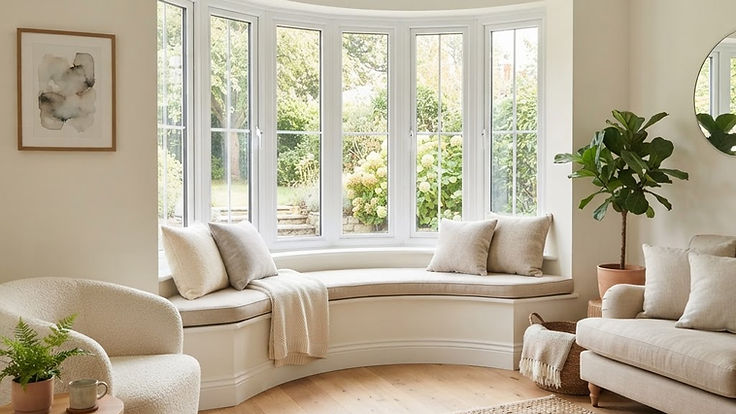
Bay and bow windows are two of the most loved features a home can have. They push out beyond the wall, pull in light from several directions and create a little extra space that's perfect for a window seat, a reading chair or a breakfast table. But although the names are often used interchangeably, they're not quite the same thing.
In this guide I'll explain the difference between a bay and a bow window, the main types of each, which one suits your home, 13 decorating ideas for bay and bow windows, how to dress them with curtains and blinds, and the mistakes to avoid.
The quick answer: a bay window usually has three panels, a large central window flanked by two angled side windows, and projects in a sharp, angular shape. A bow window has four or more panels of equal size arranged in a gentle curve. Bay windows project further and create more floor space; bow windows give a softer, more panoramic view. Both work beautifully as window seats, reading nooks and breakfast spots.
Bay vs Bow Window: The Key Differences
| Feature | Bay window | Bow window |
|---|---|---|
| Number of panels | Usually three | Usually four to six |
| Shape | Angular, with a flat front | Gently curved |
| Projection | Projects further from the wall | Projects less |
| Panel sizes | Large central window, narrower sides | Panels of equal size |
| Interior space | More floor space, ideal for seats and tables | Softer nook, wider view |
| Light | Light from three directions | A wide, panoramic sweep of light |
| Typical homes | Victorian, Edwardian, Craftsman, modern | Georgian, Regency, 1930s, Queen Anne |
| Cost | Usually less | Usually more, because there are more panels |
In architectural terms, a bay window is defined by how it projects. Nottinghamshire's Historic Environment Record describes a bay window as "a window that forms a projection from the body of a building, extending down to ground level," "forming a bay in the wall's interior." A projecting window on an upper floor that doesn't reach the ground is usually called an oriel window.
Types of Bay and Bow Windows
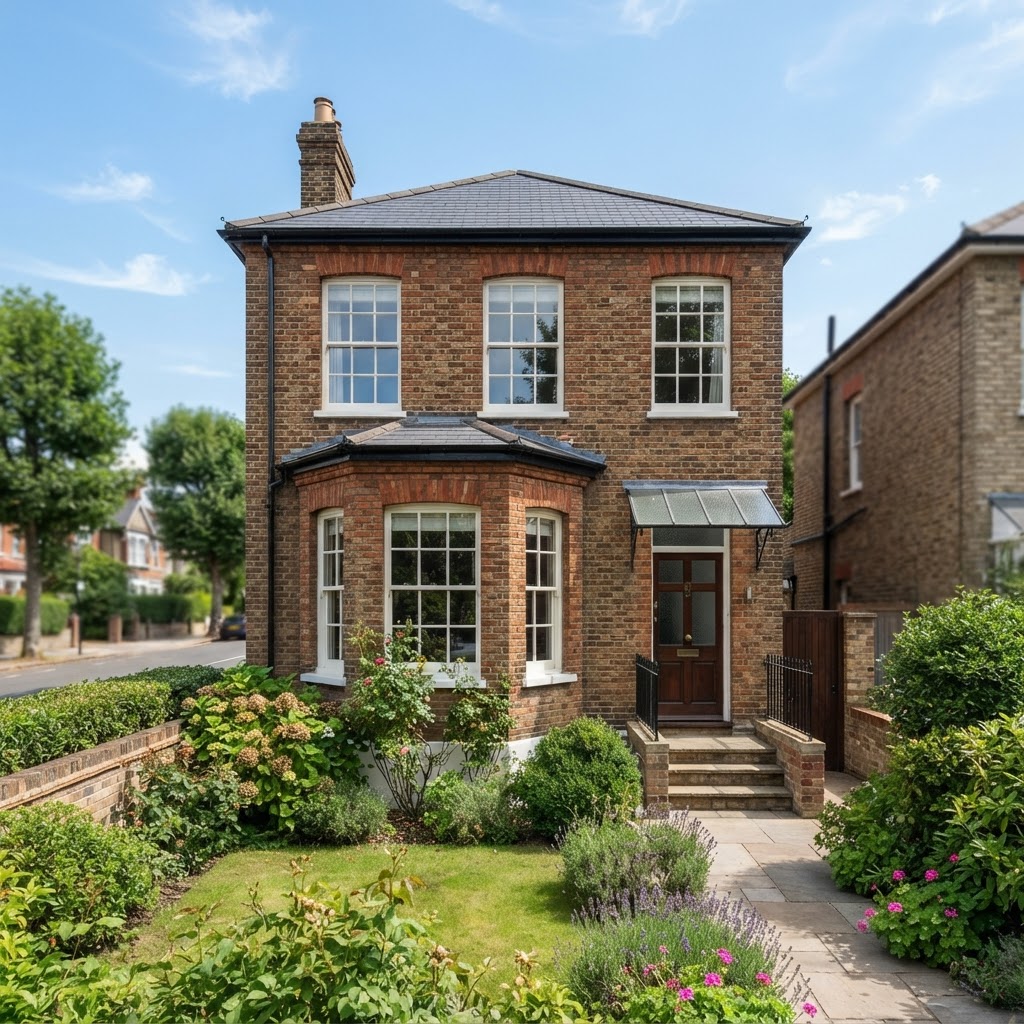
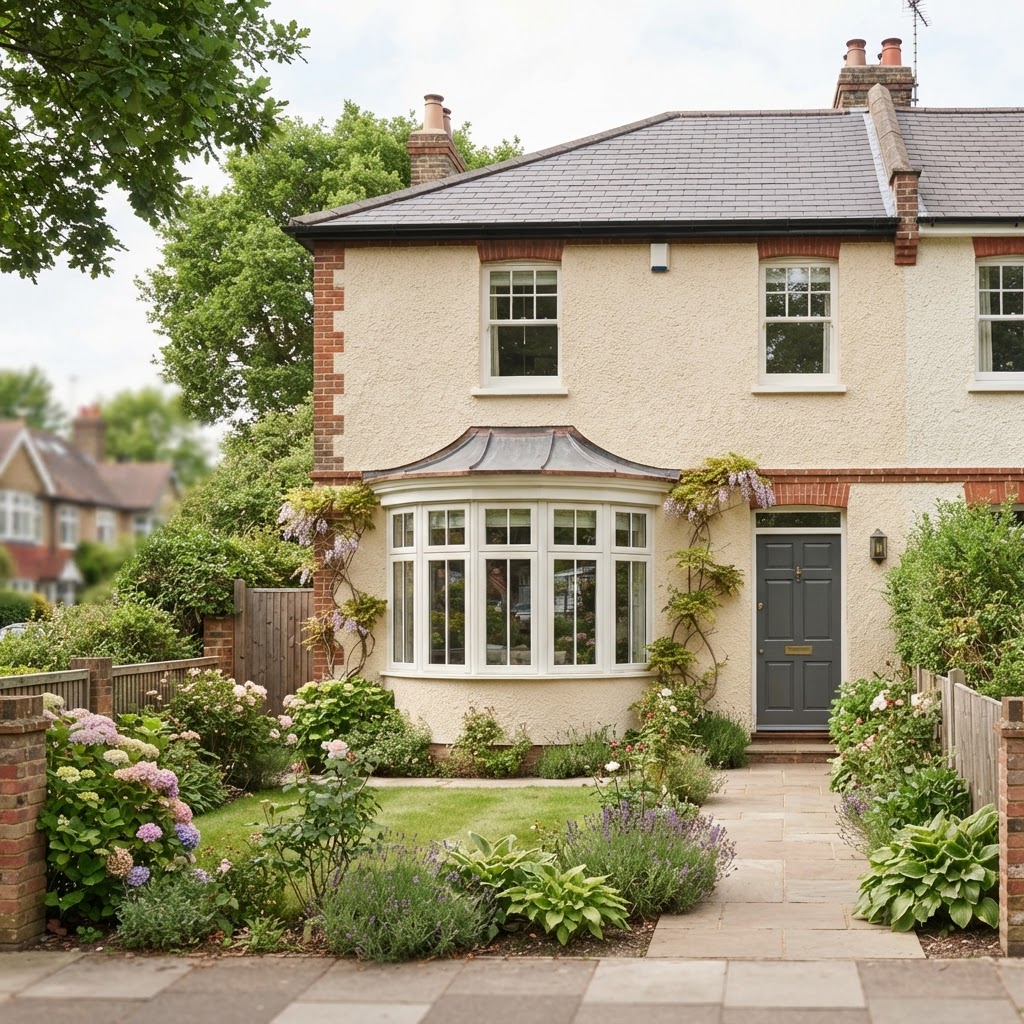
- Canted bay. The classic bay, with a flat front and angled sides, usually at 30 or 45 degrees.
- Box bay. A square-sided bay with sides at 90 degrees to the wall, common in kitchens and modern homes.
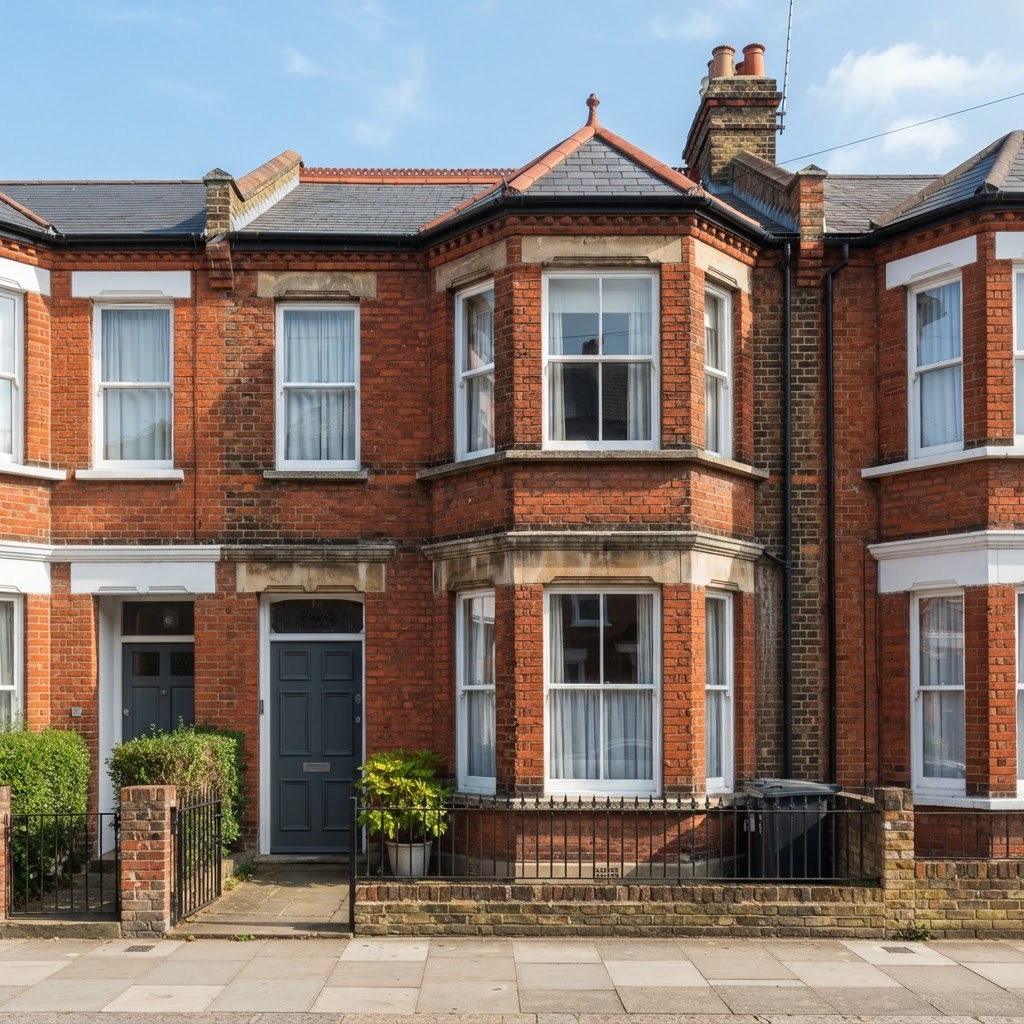
- Two-storey bay. Bays stacked on the ground and first floors, typical of Victorian and Edwardian terraced houses.
- Oriel window. A bay on an upper floor, supported on brackets or corbels rather than reaching the ground.
- Bow window. Four or more equal panels set in a gentle curve, sometimes called a circle bay.
- Garden window. A small box bay with glass shelves, often over a kitchen sink, for plants and herbs.
Should You Choose a Bay or a Bow Window?
- Choose a bay window if you want extra floor space for a seat, desk or table, if your home has angular architecture, or if you're working to a tighter budget.
- Choose a bow window if you want a wide, sweeping view, if your home has softer, curved details, or if you want the window itself to be the feature.
- Follow your home's period. Victorian and Edwardian houses usually have canted bays, while Georgian, Regency and many 1930s houses have curved bows.
13 Decorating Ideas for Bay and Bow Windows
1. A cushioned window seat. The ultimate use of a bay or bow. A built-in seat with a thick cushion, plenty of throw pillows and a soft throw creates a cosy spot to read or watch the world go by.
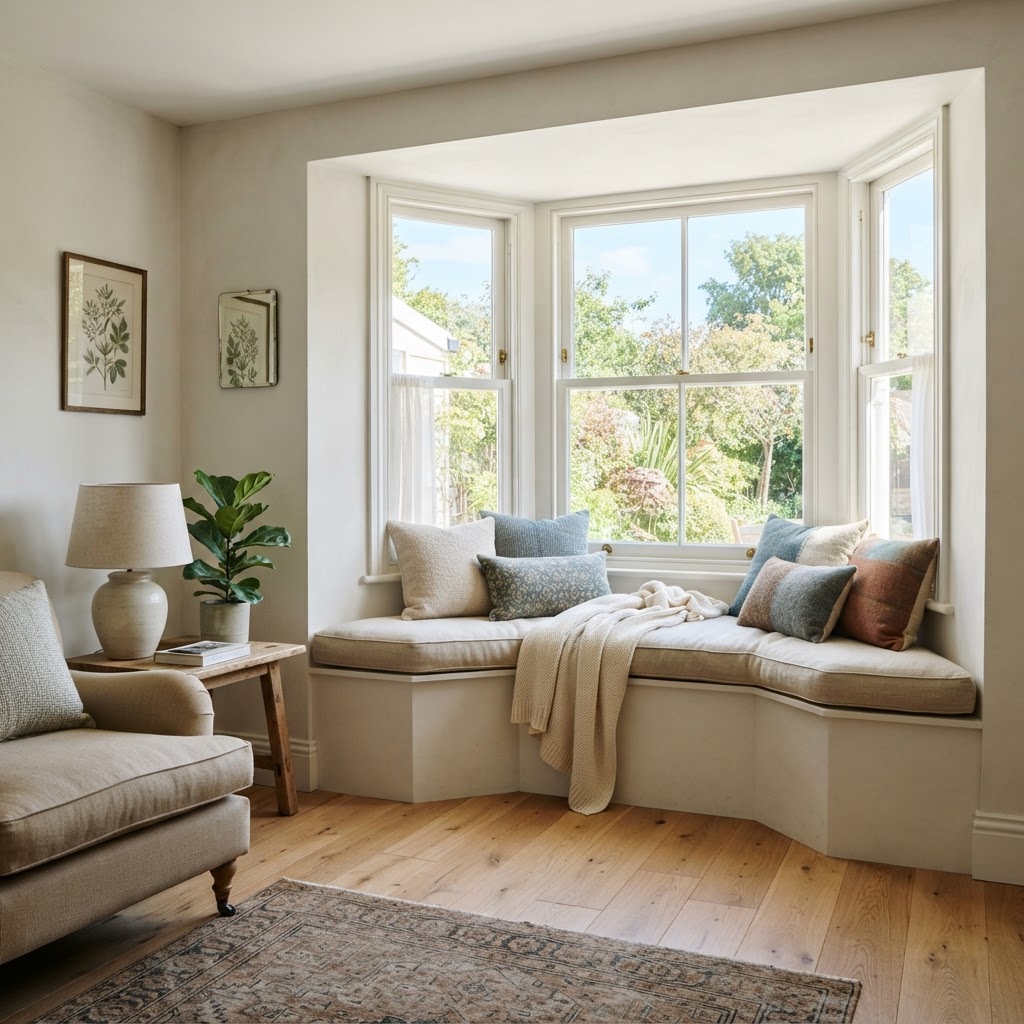
2. Storage beneath the seat. Add drawers or lift-up lids under a window seat for books, toys or blankets. It's one of the best ways to add hidden storage to a living room.
3. A breakfast nook. A curved bench, a round table and a couple of chairs turn a kitchen or dining room bay into the sunniest place for breakfast.
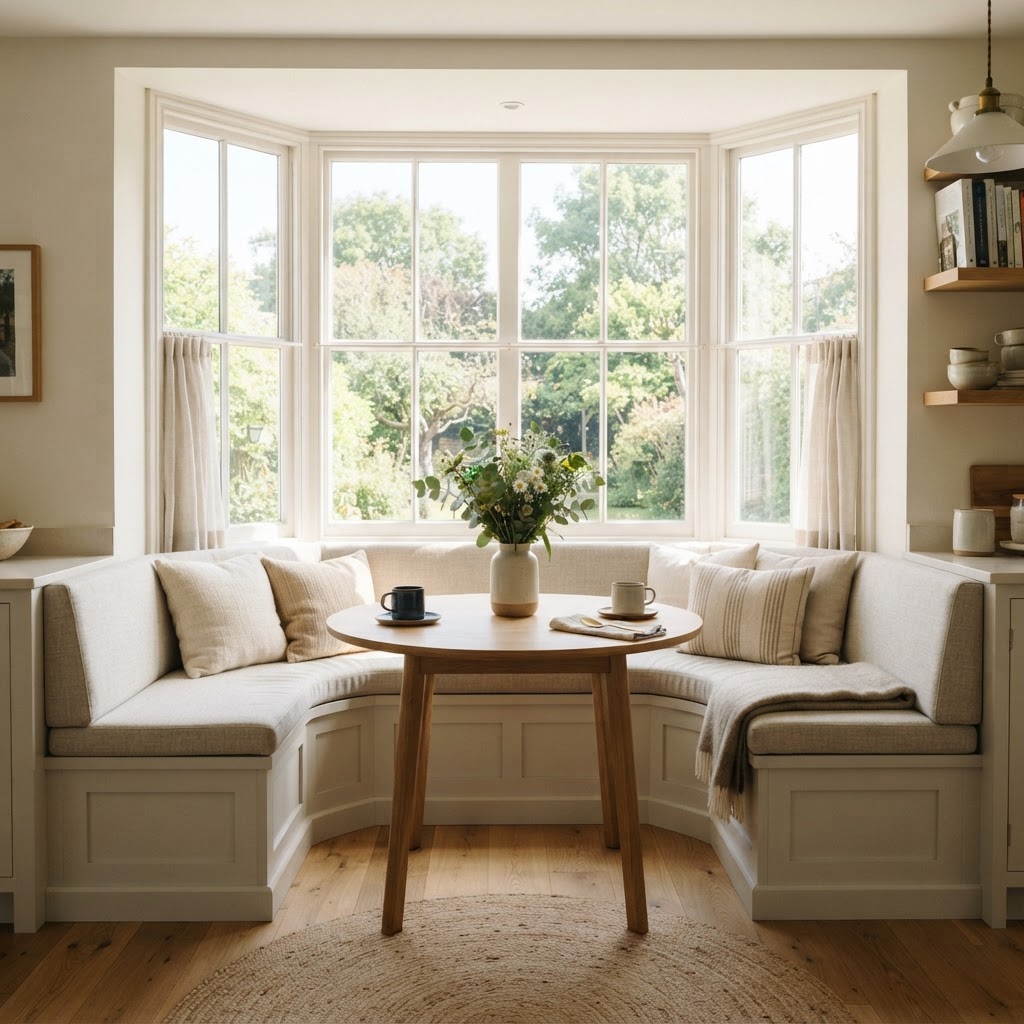
4. A reading corner. A comfortable armchair, a small side table and a good lamp make a bow window the perfect reading nook.
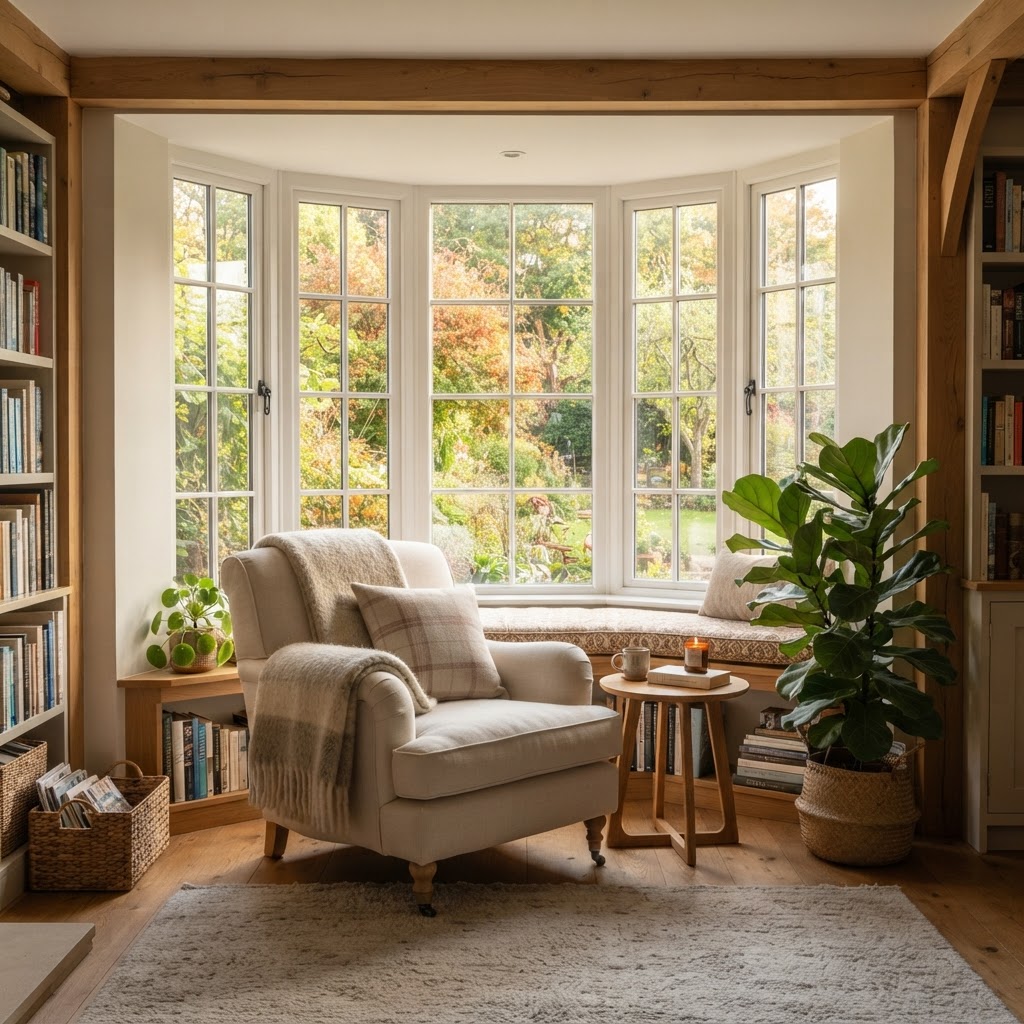
5. A home office. A desk in a bay gives you natural light and a view to rest your eyes on, which makes long days at the screen much more pleasant. Good home office design always starts with light.
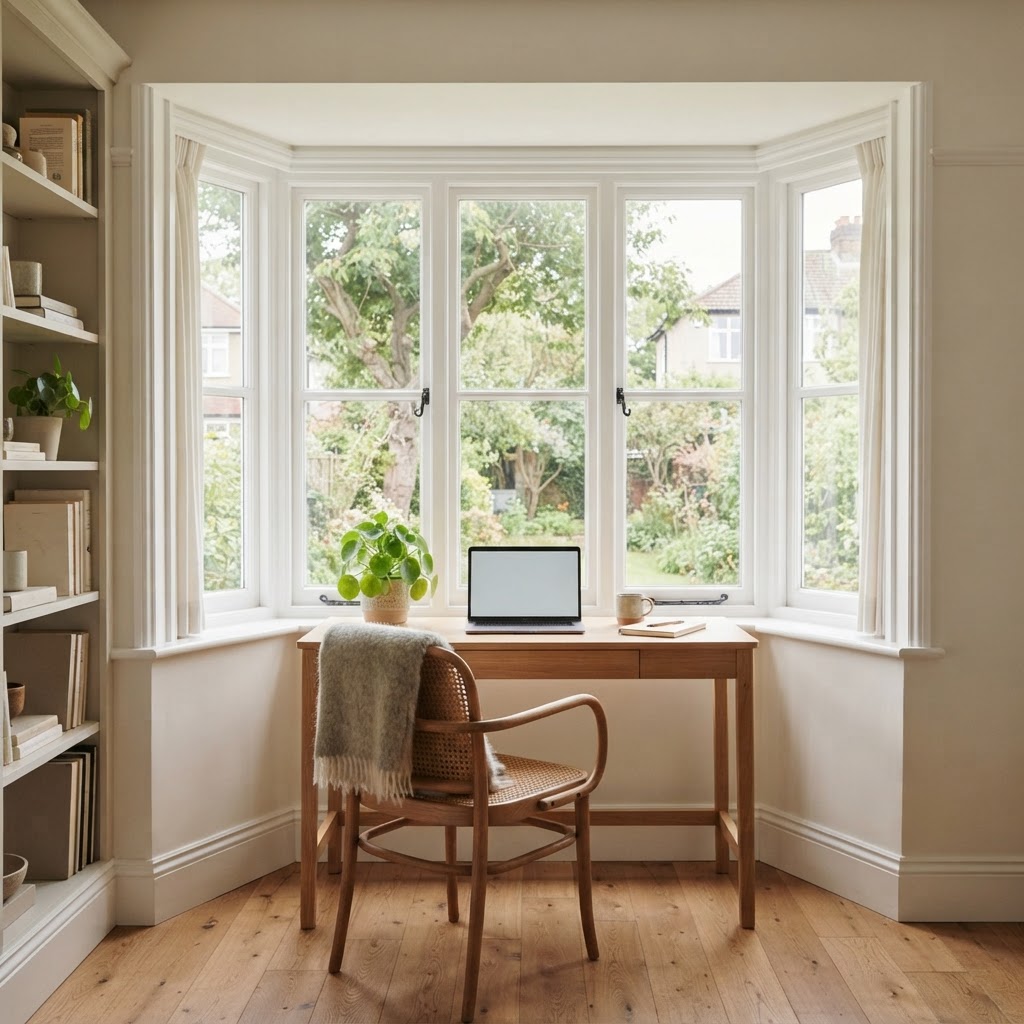
6. A dressing table. In a bedroom, a bay window is the ideal spot for a dressing table, with flattering natural light for getting ready.
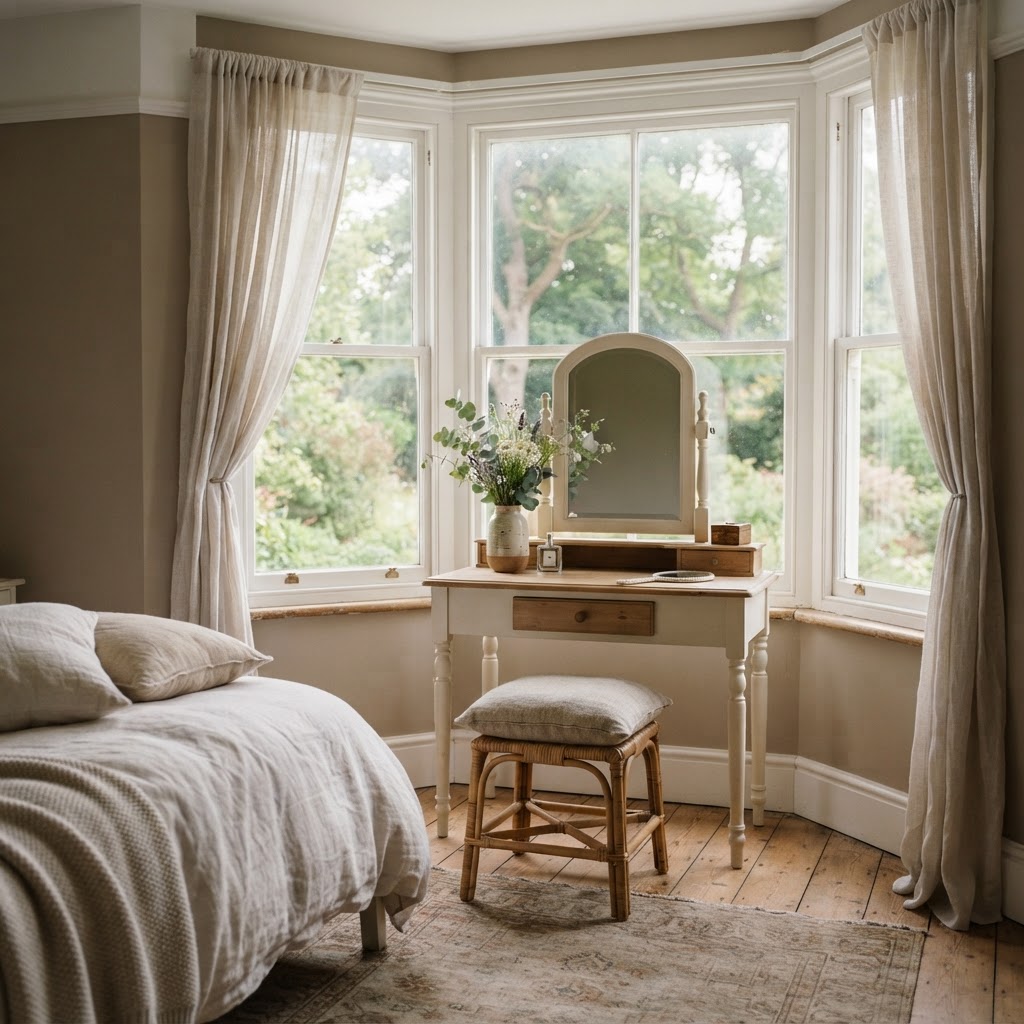
7. A dining table. If your bay is large enough, a round or oval dining table set into it makes every meal feel special.
8. Roman blinds on each panel. Fitting a separate Roman blind to each window in the bay keeps the look neat and lets you control the light panel by panel.
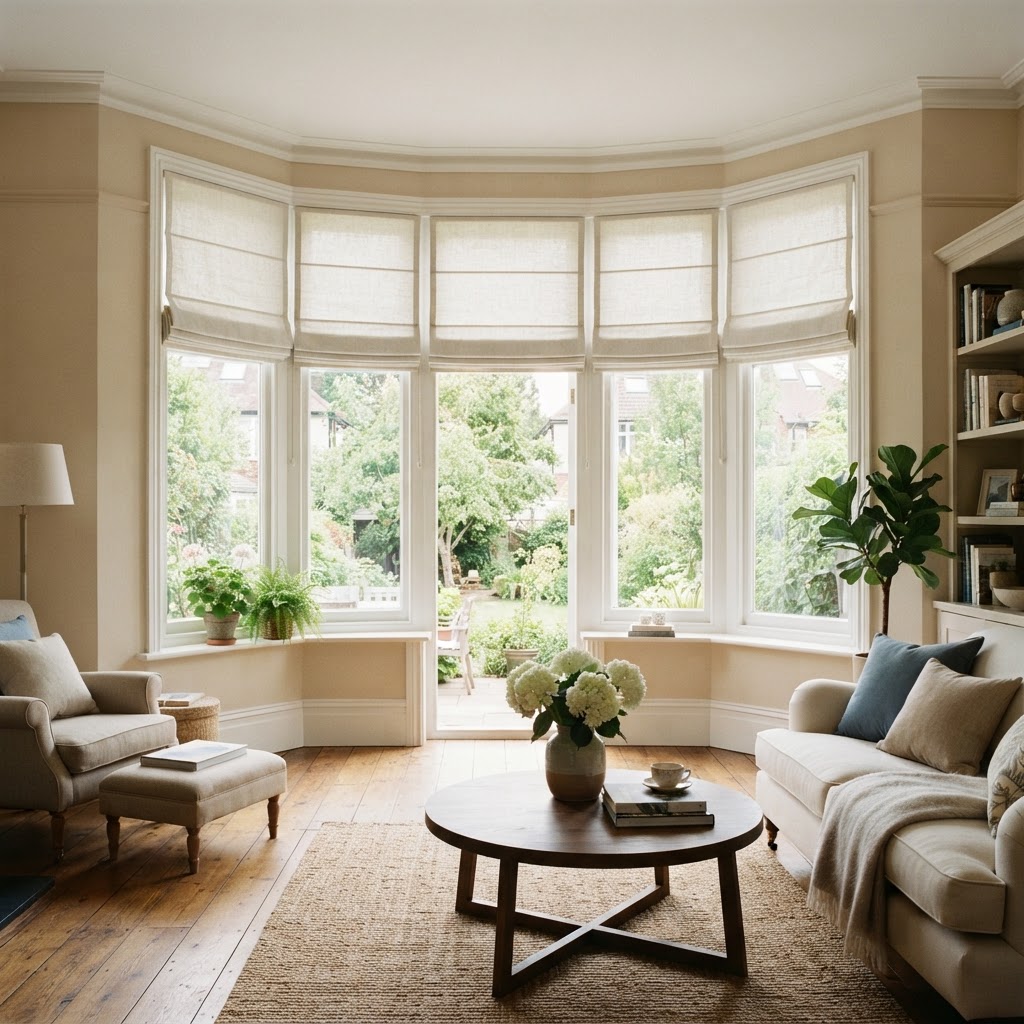
9. Curtains on a curved track. A bendable curtain track that follows the curve of a bow window lets floor-length curtains wrap around it beautifully.
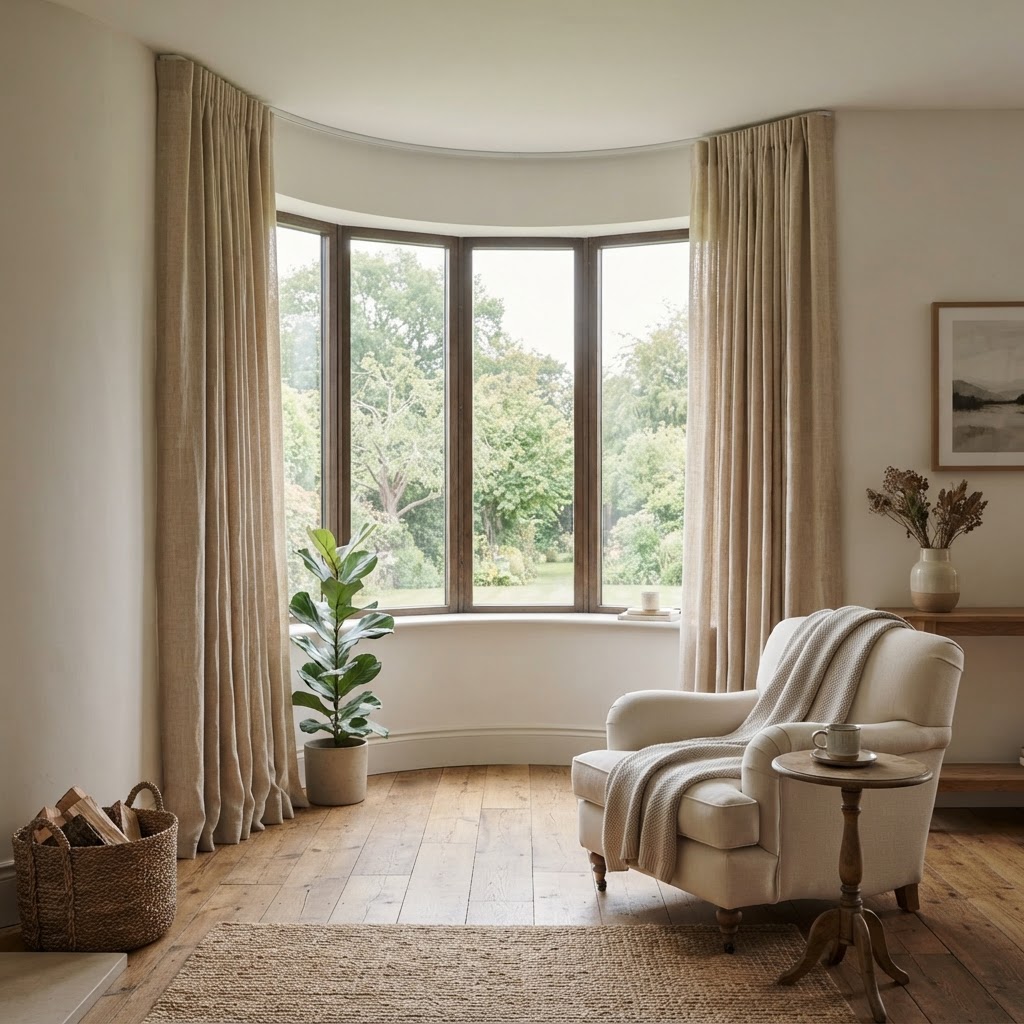
10. Plants and herbs. A small box bay or garden window is perfect for herbs in the kitchen, while a larger bay can hold a collection of houseplants that love the extra light.
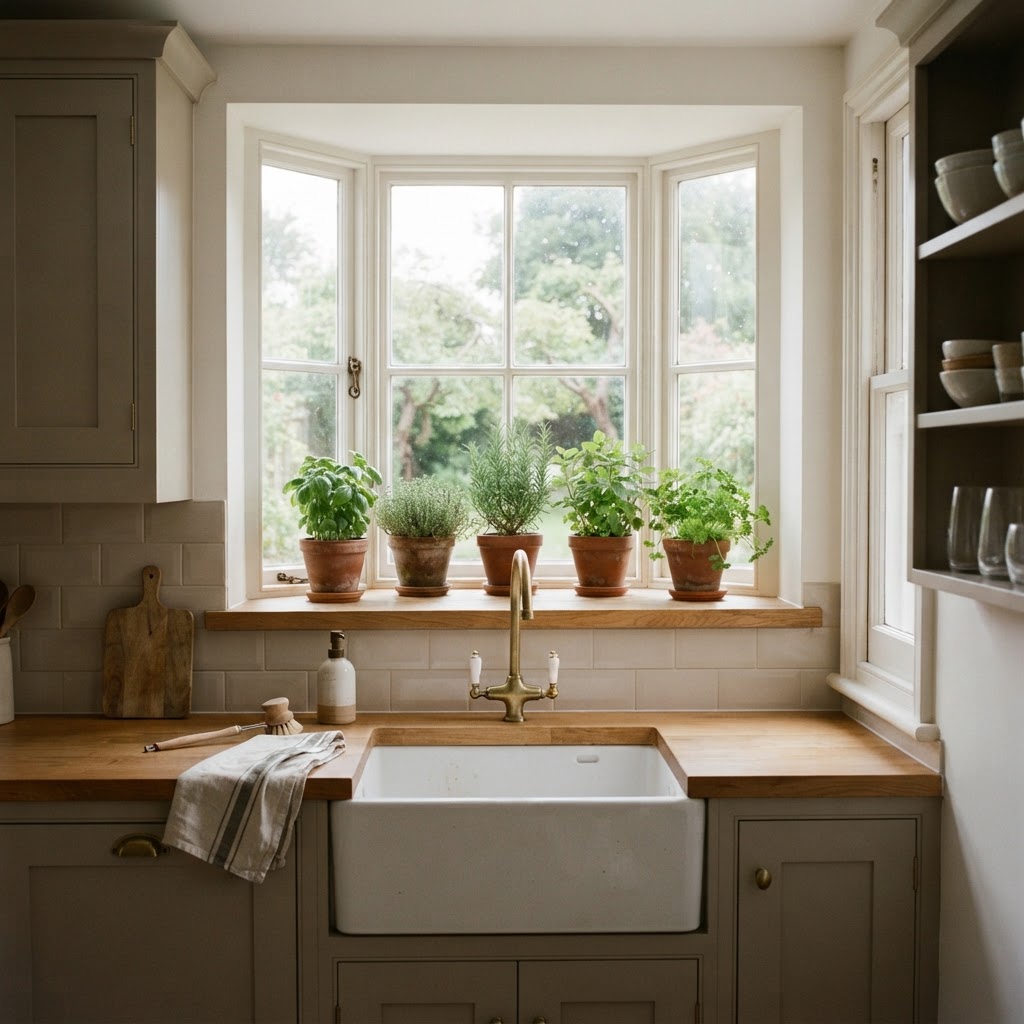
11. Interior shutters. Made-to-measure shutters on each panel give a crisp, tailored look that suits period homes and works well for privacy.
12. A Christmas tree. A bay window is the classic spot for a Christmas tree, where it can be seen and enjoyed from the street. It's a lovely way to show off this year's Christmas tree trends.
13. A rug to define the space. A small rug under a seat or table defines the bay as its own little zone, and the right rug for the living room ties it to the rest of the room.
How to Dress Bay and Bow Windows
| Option | Best for | Tips |
|---|---|---|
| Roman blinds on each panel | Bays and bows | Choose the same fabric for every panel |
| Curtains on a bendable track | Bow windows and curved bays | Use floor-length curtains for elegance |
| Curtains across the opening | Deep bays | Hang across the front of the bay to close it off at night |
| Shutters | Period homes | Fit a set to each panel |
| Cellular or pleated blinds | Modern homes | Slim and energy efficient |
| Sheers or cafe curtains | Street-facing bays | Privacy without losing light |
Simple trim around the panels keeps the look clean, and the right window trim styles help a bay feel like part of the room rather than an add-on.
How I Make the Most of Bay Windows
After more than 15 years of designing homes, pubs and restaurants, I've learnt that a bay or bow window is often the best seat in the house, so I always plan around it.
- Give it a job. A bay with nothing in it feels like wasted space. A seat, a desk or a table instantly makes it useful.
- Keep it light. Choose window treatments that stack neatly away so the bay can do what it does best: bring in light.
- Think about the view. Arrange seating so you face out, not into the room.
- Make it cosy. Cushions, throws and a good lamp turn a bay into the place everyone wants to sit, especially on winter evenings.
Common Mistakes to Avoid
| Mistake | Why it's a problem | What to do instead |
|---|---|---|
| Leaving the bay empty | It feels like wasted space | Add a seat, desk, table or chair |
| One straight curtain pole | It doesn't follow the shape | Use a bendable track or separate blinds |
| Mismatched blinds on each panel | Looks messy | Use the same fabric and style throughout |
| Furniture blocking the light | The room feels dark | Keep tall furniture away from the bay |
| Ignoring draughts | Older bays can be cold | Draught-proof and add thermal linings |
| Choosing the wrong shape for the house | Looks out of place | Follow the architecture of your home |
Frequently Asked Questions
What is the difference between a bay and a bow window?
A bay window usually has three panels in an angular shape that projects further from the wall, while a bow window has four or more equal panels arranged in a gentle curve.
Which is better, a bay or a bow window?
Neither is better overall. A bay window gives more floor space and usually costs less, while a bow window gives a wider, softer view and suits homes with curved details.
What is a canted bay window?
A canted bay window has a flat front panel and two side panels set at an angle, usually 30 or 45 degrees, to the wall.
Is a bow window more expensive than a bay window?
Usually, yes, because a bow window has more panels and more complex framing.
How do you decorate a bow window?
Add a window seat, a reading chair or a small table, and dress it with curtains on a bendable track or a Roman blind on each panel.
What is the difference between a bay window and an oriel window?
A bay window projects from the wall and usually reaches the ground, while an oriel window projects from an upper floor and is supported by brackets or corbels.
Can you put curtains on a bay window?
Yes. Use a bendable curtain track that follows the shape of the bay, separate curtains or blinds on each panel, or one pair of curtains across the front of the bay.
The Best Seat in the House
Whether you have an angular bay or a graceful bow, these windows give you more light, a better view and a little extra space to enjoy. Understand the shape, give the space a purpose, dress it neatly and make it cosy, and it may well become your favourite spot in the house.
And if you'd like help planning a window seat, nook or scheme for your home, you can book a one-hour online interior design consultation with me.
About the author
Magda Callery is a UK interior designer and florist with more than 15 years' experience designing homes, pubs, restaurants and bars, and her expert commentary has featured in Homes & Gardens, The Mirror and The Spruce. Explore more of the decorating articles.
Continue reading

Balboa Mist vs Edgecomb Gray: Which Benjamin Moore Greige?
Balboa Mist vs Edgecomb Gray compared: LRV, undertones, how each looks in different light, the best rooms, coordinating colors and how to choose between them.

Flat Back Christmas Tree: 13 Ideas for Small Spaces
What a flat back Christmas tree is, how it compares with slim and half trees, how to choose the right size, 13 ideas for small spaces and how to decorate it so it looks full.

Pergola Decorating Ideas: 17 Ways to Style a Pergola
17 pergola decorating ideas, from climbing roses, clematis and grapevines to festoon lights, curtains, shade canopies and outdoor kitchens, plus the best plants for a pergola.