
Window Trim Styles: 17 Interior and Exterior Ideas
17 window trim styles for inside and out, from Craftsman and Colonial to trimless plaster returns, plus the parts of window trim, widths, colours and mistakes to avoid.
By Magda Callery, interior designer and florist
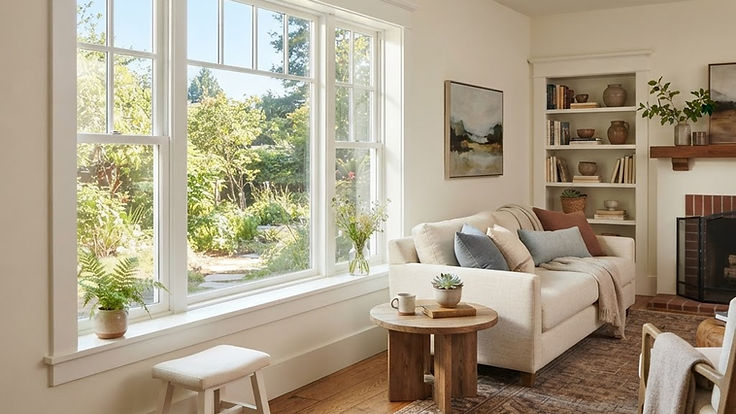
Window trim is one of those details most people never notice until it's wrong. Too thin and the windows look cheap and unfinished; too heavy and they overwhelm the room. Get it right and the trim quietly frames every view, ties the architecture together and gives a room its character, whether that's a cosy Craftsman bungalow, a crisp modern farmhouse or a minimal Scandinavian flat.
In this guide I'll share 17 window trim styles for inside and outside your home, from Craftsman and Colonial to trimless plaster returns, plus the parts of window trim, how wide it should be, the best colours and finishes, and the mistakes to avoid.
The quick answer: the most popular window trim styles are Craftsman (flat casings with a thick header), Colonial (moulded casings), farmhouse (simple flat boards), picture-frame casing with mitred corners, Victorian trim with corner rosettes, and modern minimal or trimless styles. Interior casings are usually 6 to 9cm (2.25 to 3.5 inches) wide, exterior trim is often wider, and the best style is the one that matches your home's architecture and the trim on your doors.
The Parts of Window Trim
| Part | What it is |
|---|---|
| Casing | The flat or moulded boards that frame the sides and top of the window |
| Head casing (header) | The top piece, often thicker or more decorative |
| Stool | The interior ledge at the bottom, often called the sill |
| Apron | The board beneath the stool that finishes the bottom |
| Back band | A small moulding around the outer edge of the casing for extra depth |
| Rosettes and plinth blocks | Decorative square blocks at the corners or base |
| Returns | The surfaces that wrap into the window opening |
Original trim is part of what makes an older home special. The US National Park Service's Preservation Brief on historic wooden windows describes windows as "an important aspect of the architectural character" of historic buildings, and recommends "the retention and repair of original windows whenever possible."
17 Window Trim Styles
Classic interior trim
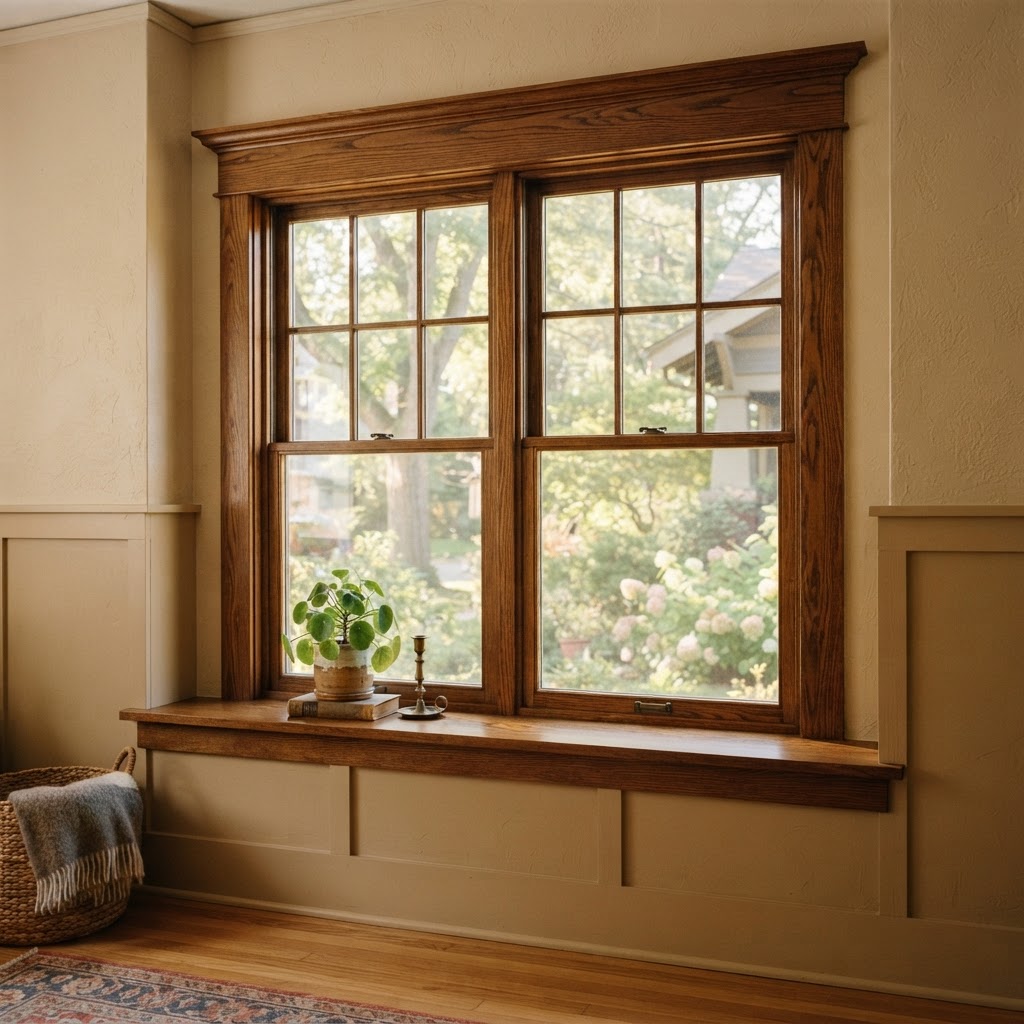
1. Craftsman trim. Flat, wide side casings topped with a thicker header that projects slightly, often with a small cap moulding. It's sturdy, honest and handsome, especially in stained wood. Craftsman trim suits bungalows and many of the 1920s architecture styles.
2. Colonial trim. Moulded casings with a gentle profile, often with a back band, give Colonial trim a soft, traditional elegance. It's the most common style in American homes and works with almost any traditional interior.
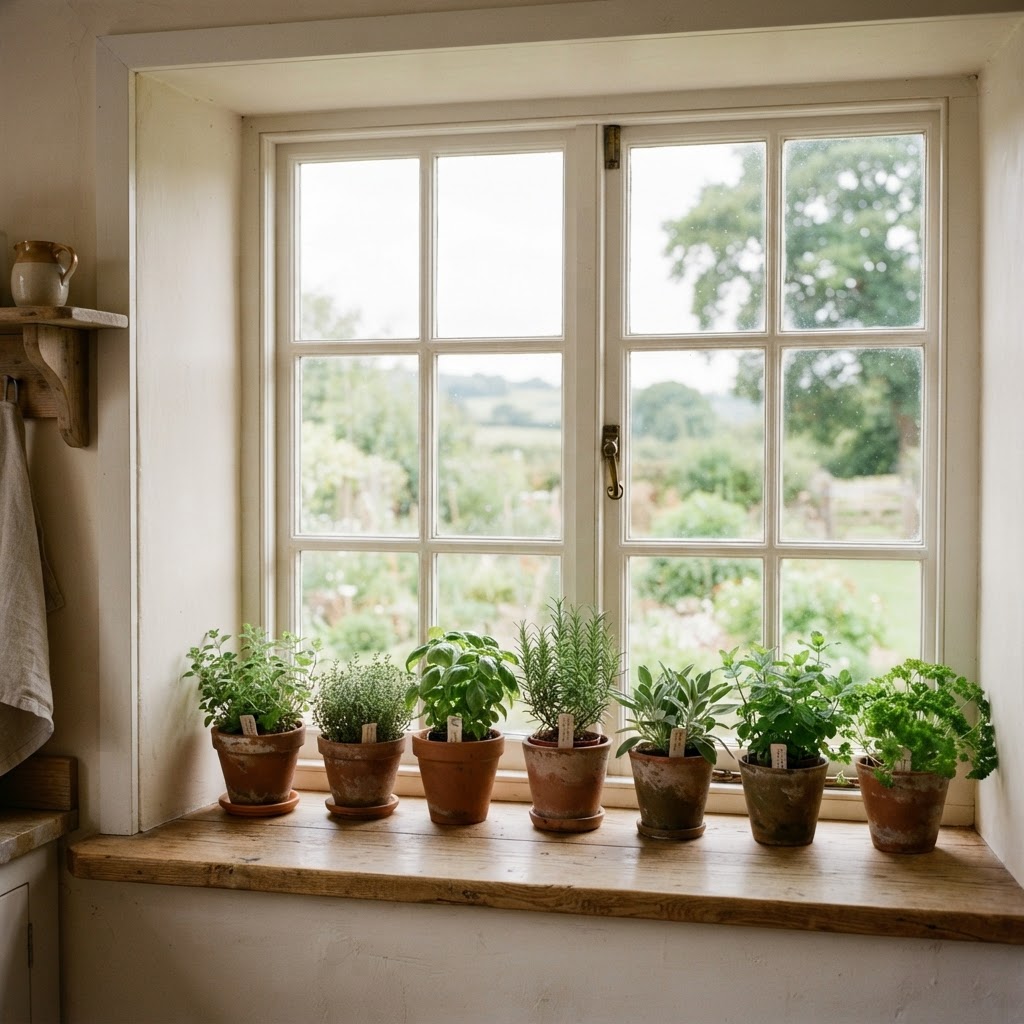
3. Farmhouse trim. Simple, flat boards on all four sides, painted white or left as natural wood, with a wide sill for plants and jars. It's relaxed, practical and perfect for country kitchens.
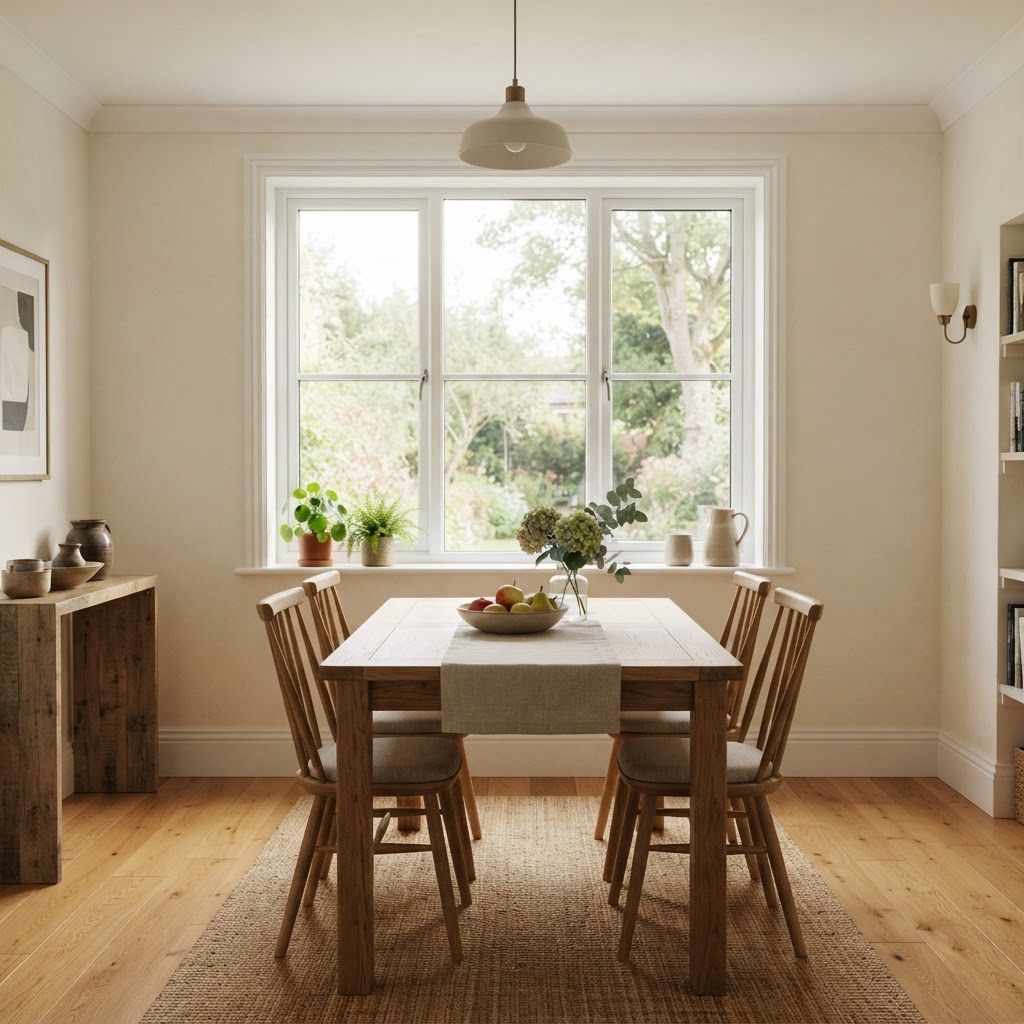
4. Picture-frame casing. The casing runs around all four sides of the window with mitred corners, like a picture frame, and there's no projecting sill. It's clean and tailored and works well in both traditional and transitional rooms.
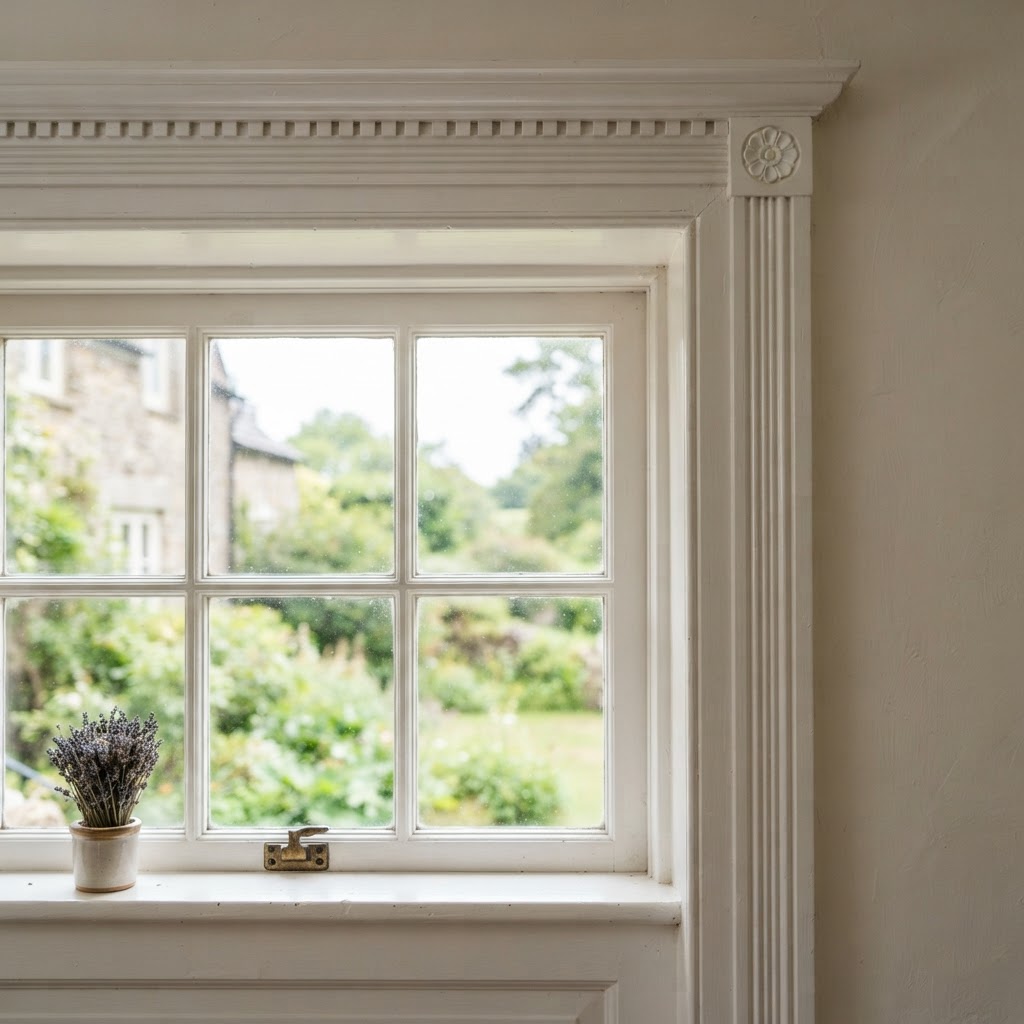
5. Victorian trim with rosettes. Fluted or reeded casings with carved rosette blocks at the top corners and plinth blocks at the bottom are typical of Victorian homes. They add instant period character and avoid the need for mitred joints.
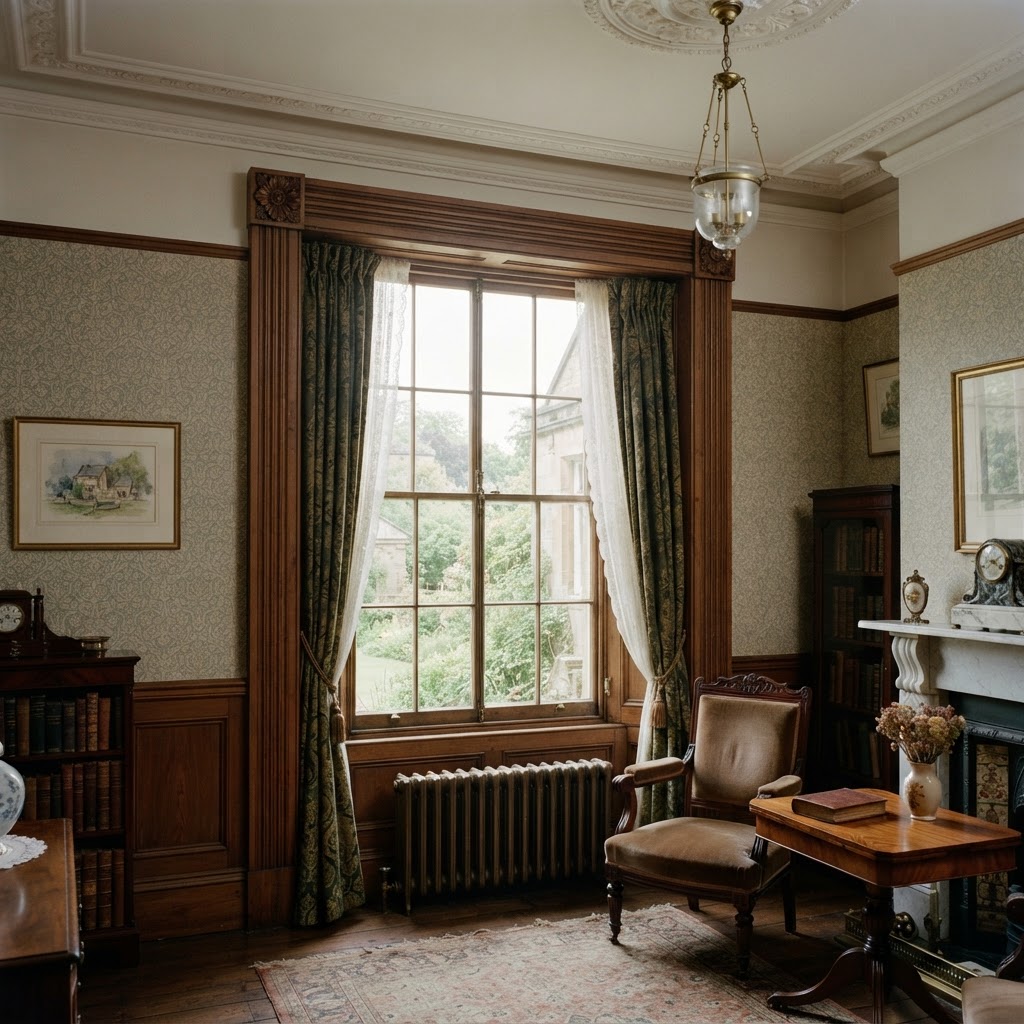
6. Georgian trim. Georgian windows are often framed with a moulded architrave, sometimes with panelled shutters folding into the window reveals. It's refined and symmetrical, much like a Georgian hallway, and it pairs naturally with tall sash windows.
7. Edwardian trim. Lighter and simpler than Victorian trim, with gently moulded casings and a slightly deeper sill. It suits the airy feel of Edwardian interior design.
Modern and minimal trim
8. Slim flat casing. A narrow, flat casing with square edges gives a crisp, modern outline without fuss. It's a popular choice for new builds and contemporary renovations.
9. Trimless windows with plaster returns. In minimal homes, there's no trim at all. The plaster wraps neatly into the window opening, so the glass seems to float in the wall. It's beautiful in Scandinavian and Japandi rooms, but the plastering must be very precise.
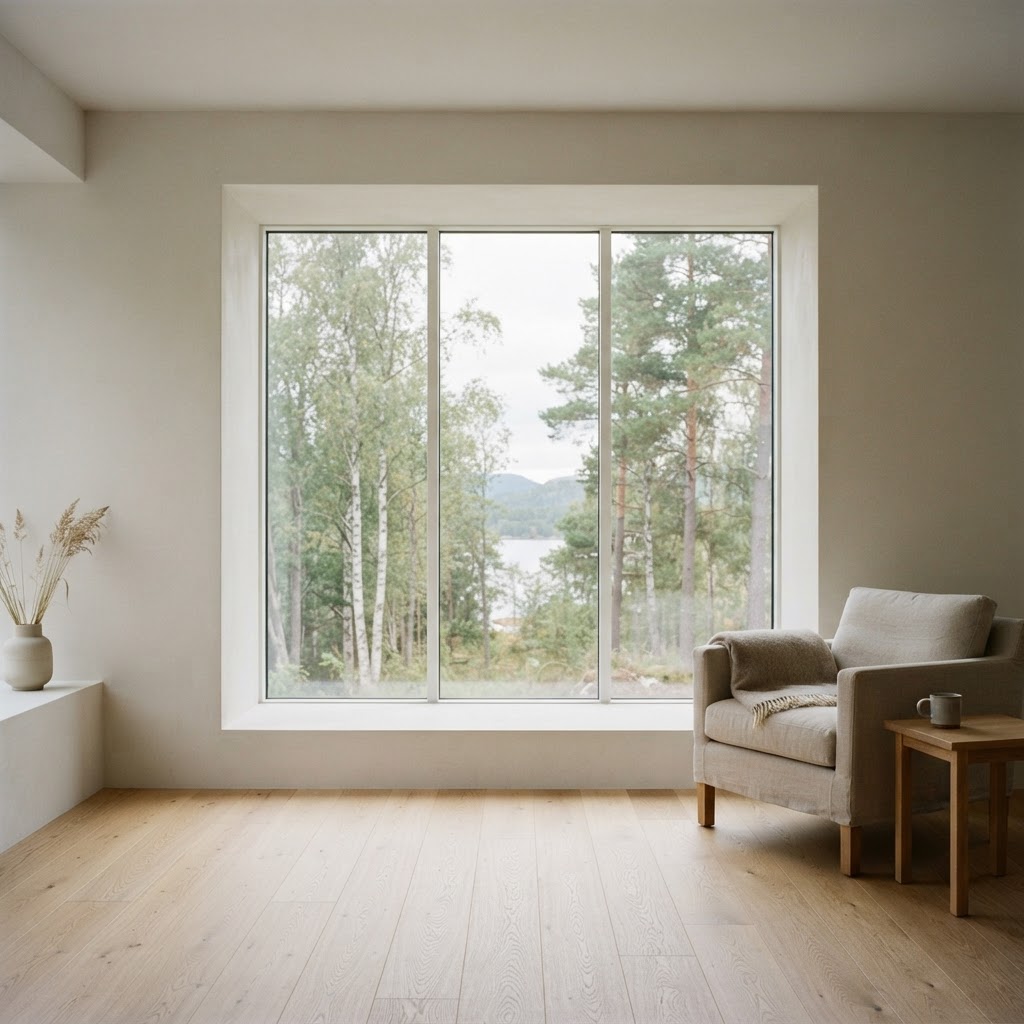
10. Shadow gap trim. A thin recess between the wall and the window frame creates a fine shadow line instead of a casing. It's a subtle, architectural detail that looks especially smart in modern homes.
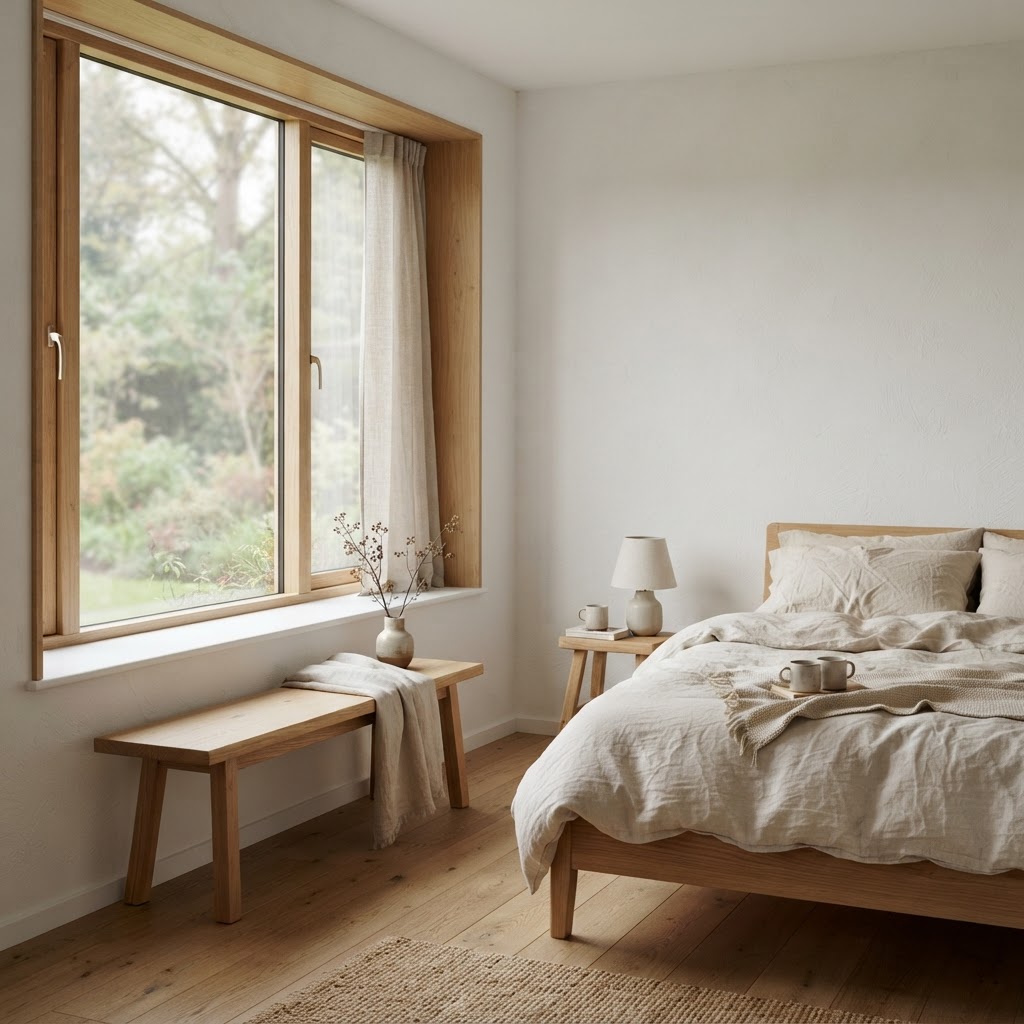
11. Natural wood trim. Light oak, ash or walnut trim adds warmth to calm, natural interiors and pairs beautifully with timber floors and furniture, as in a Japandi office.
Colourful and characterful trim
12. Contrasting painted trim. Painting trim a deep colour such as forest green, navy or charcoal against pale walls turns the windows into a feature. Many of the best green paint colours look wonderful on trim.
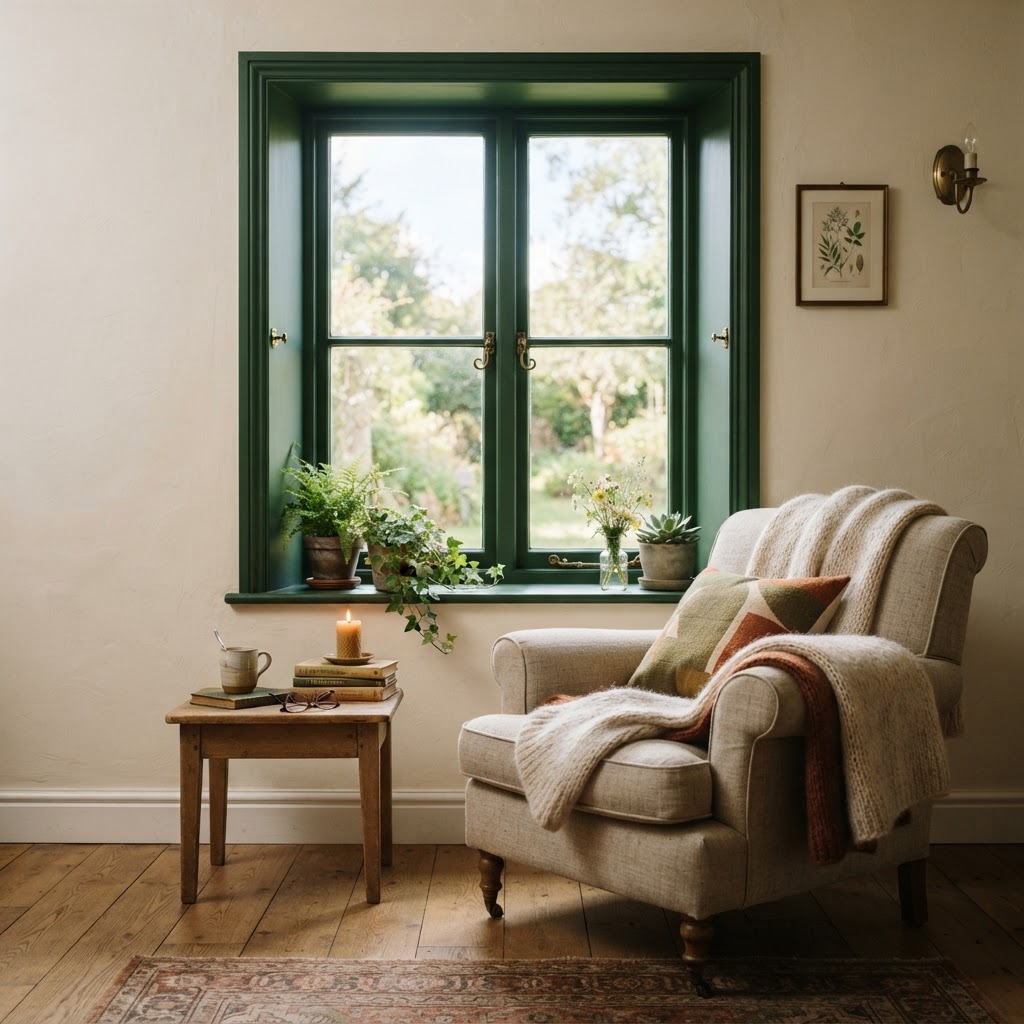
13. Colour-drenched trim. Painting the trim the same colour as the walls, in the same or a slightly glossier finish, creates a calm, enveloping look that's very fashionable right now.
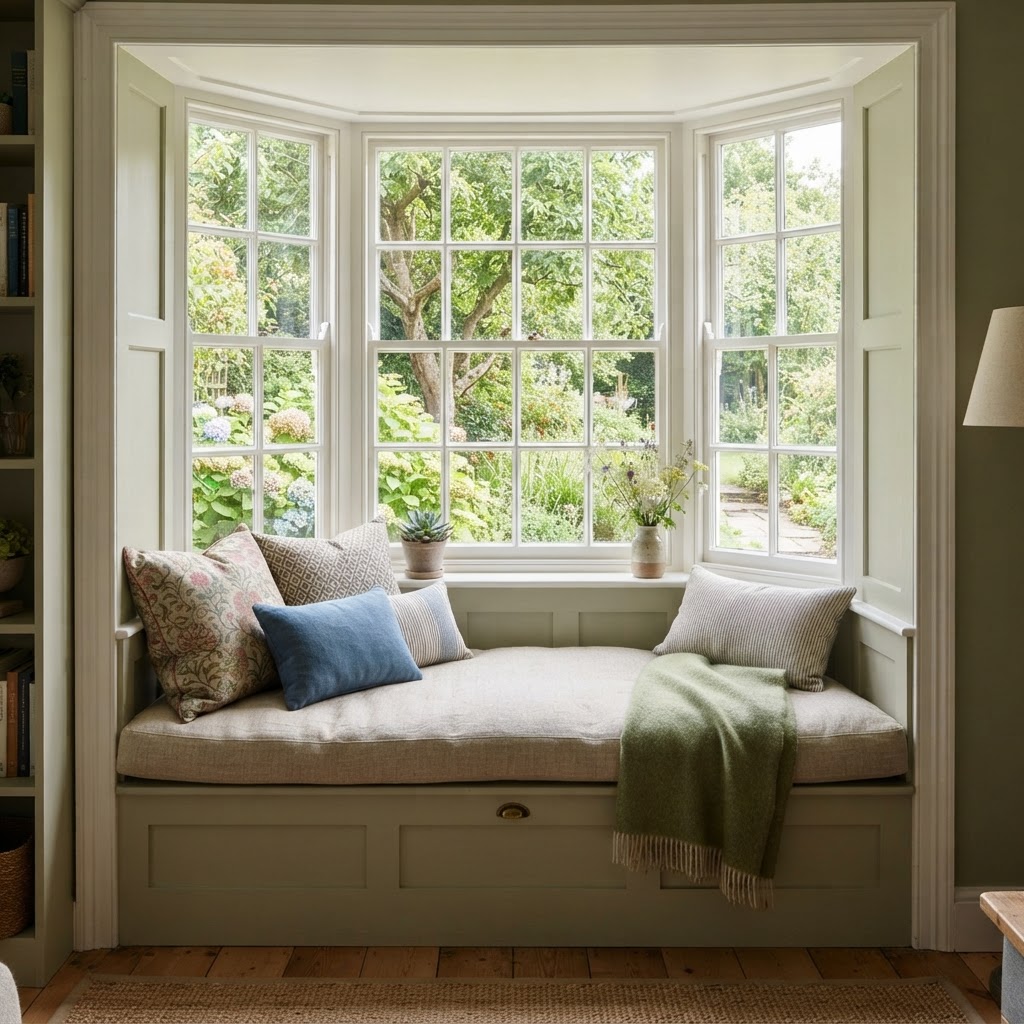
14. Window seat with built-in trim. Where a window sits in a deep recess, a built-in seat framed with matching trim and panelling creates a cosy reading nook.
Exterior window trim
15. Wide flat exterior trim. Wide, flat boards around exterior windows give a house a crisp, finished look and make the windows read clearly from the street. They're typical of farmhouses, Cape Cods and Craftsman homes.
16. Crown moulding headers. A decorative header with a small crown moulding above each window adds height and elegance to a traditional facade.
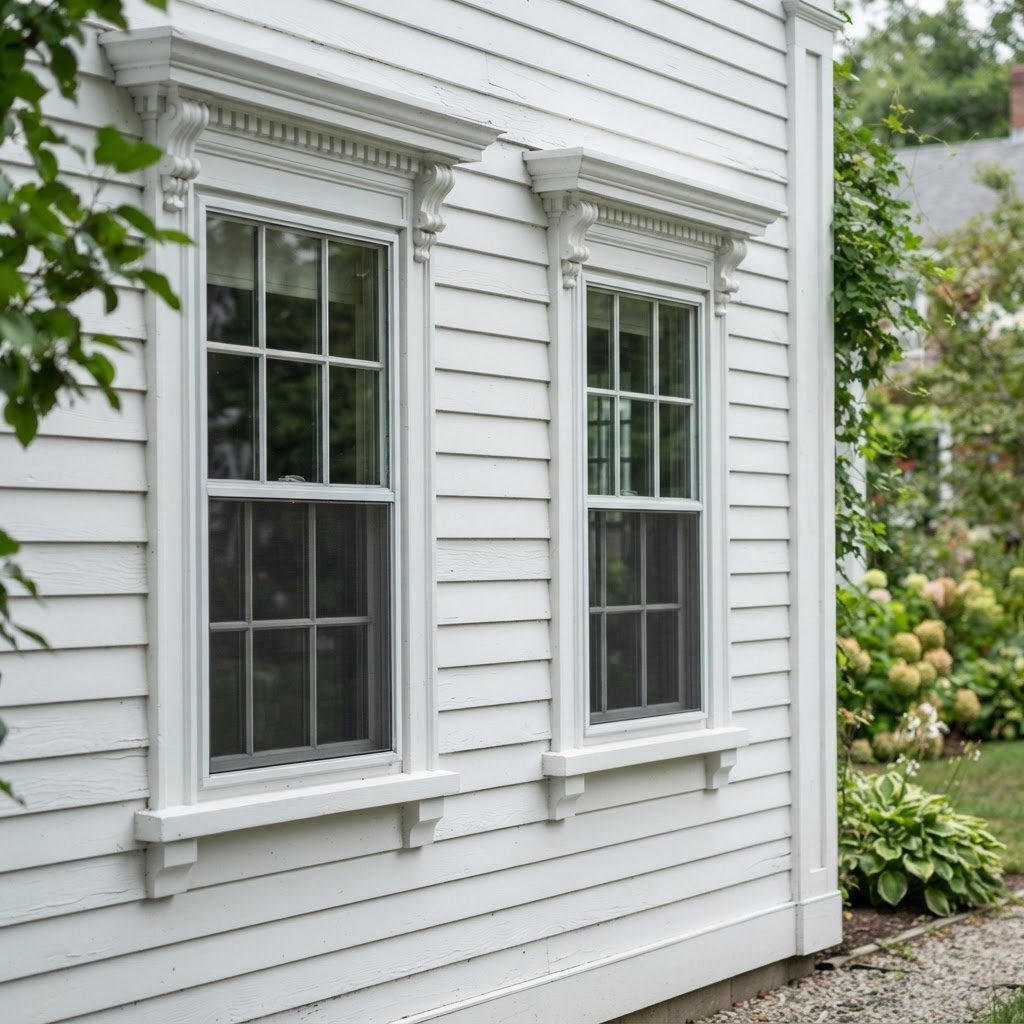
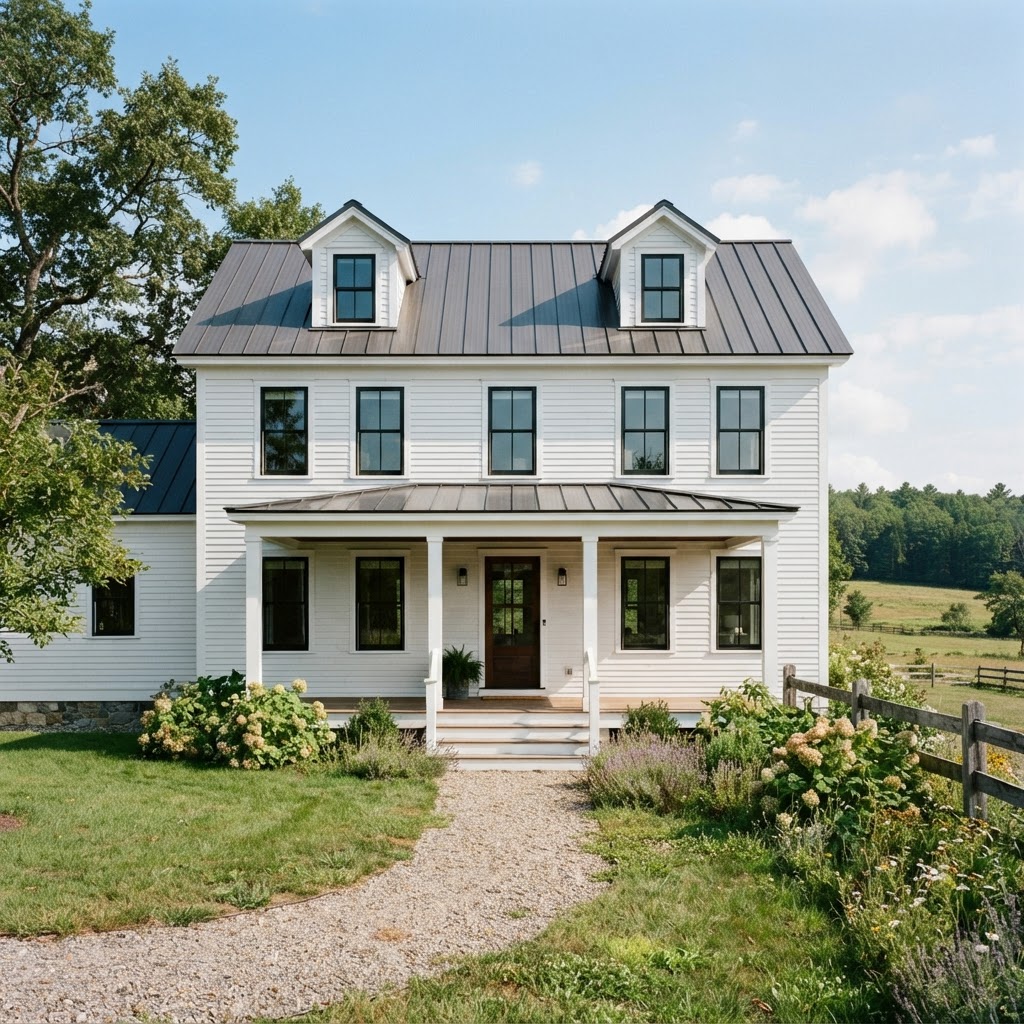
17. Black exterior trim. Black trim is one of the strongest looks of recent years, especially on white or light painted houses. It works on the same principle as a white house with black trim and suits homes with black window frames.
How Wide Should Window Trim Be?
| Trim | Typical width | Notes |
|---|---|---|
| Interior casing (modern) | 6 to 7cm (2.25 to 2.75 inches) | Slim and clean |
| Interior casing (traditional) | 7.5 to 9cm (3 to 3.5 inches) | Classic proportions |
| Craftsman casing | 9 to 14cm (3.5 to 5.5 inches) | Wide and flat, with a thicker header |
| Exterior trim | 9 to 14cm (3.5 to 5.5 inches) | Wider trim reads better from a distance |
| Header | 1.25 to 1.5 times the casing width | Adds visual weight at the top |
A good rule is to match the window trim to the door trim in the same room, and to make it a little wider in rooms with high ceilings.
How to Choose a Window Trim Style
- Follow your home's architecture. Craftsman trim in a Craftsman bungalow, Colonial trim in a Colonial, simple trim in a farmhouse. Original details always look right.
- Match doors, skirting and windows. The trim around your windows, doors and skirting should feel like one family.
- Think about ceiling height. Low ceilings suit slimmer trim; high ceilings can carry wider, more decorative casings.
- Consider the view. In a room with a beautiful view, slim or trimless frames keep the focus on what's outside.
Best Colours and Finishes for Window Trim
Most interior trim is painted in a satin or eggshell finish, which is durable and easy to wipe while keeping a soft sheen. A semi-gloss finish is tougher still and suits busy kitchens and bathrooms.
- Warm white is classic and fresh; the best white paint colours are warm rather than icy.
- The wall colour in a slightly higher sheen creates a calm, tonal look.
- A contrasting dark colour makes the windows a feature.
- Natural wood suits Craftsman, Japandi and rustic interiors.
Outside, trim colours work best when they're tied to the rest of the facade, from the front door colors to the shutter colors and the walls themselves.
How I Choose Window Trim
After more than 15 years of designing homes, pubs and restaurants, my rules for window trim are simple.
- Respect the original. In a period home, I always try to keep or copy the original trim, because it's part of the building's story.
- Don't let trim fight the view. If a window looks onto something beautiful, I keep the frame quiet.
- Be brave with colour on trim. Painting trim a deep colour is one of the cheapest ways to give a plain room real character.
- Dress the window after the trim. Blinds, curtains and shutters should complement the trim, not hide it, and the same applies to blinds for French doors.
If you love the look of simple country windows, farmhouse windows pair perfectly with flat, painted trim.
Common Mistakes to Avoid
| Mistake | Why it's a problem | What to do instead |
|---|---|---|
| Trim that's too thin | The window looks cheap and unfinished | Use at least 6cm (2.25 inches) casing |
| Mixing trim styles in one room | The room feels disjointed | Match window, door and skirting trim |
| Ripping out original period trim | It's hard to replace and adds character | Repair and keep it |
| Gloss paint on uneven trim | It highlights every dent and joint | Use satin or eggshell |
| Ignoring the exterior | The house looks unfinished from the street | Give exterior windows proper trim |
| Gaps and cracked caulk | It looks shabby and lets in draughts | Fill, caulk and repaint regularly |
Frequently Asked Questions
What is the most popular window trim style?
Colonial and Craftsman trim are the most popular traditional styles, while slim flat casings and trimless windows are the most popular modern options.
What are the parts of window trim?
The main parts are the casing around the sides and top, the head casing or header, the stool or sill at the bottom, and the apron beneath it. Some styles also have a back band, rosettes or plinth blocks.
What size should window trim be?
Interior casings are usually 6 to 9cm (2.25 to 3.5 inches) wide, Craftsman casings can be wider, and exterior trim is often 9 to 14cm (3.5 to 5.5 inches) wide.
Should window trim match door trim?
Yes, in most homes window and door trim should match in style, width and colour so the room feels cohesive.
What color should window trim be?
Warm white is the classic choice, but painting trim the same colour as the walls, or a contrasting dark colour, can look very stylish. Natural wood suits Craftsman and Japandi interiors.
What is the difference between window casing and window trim?
Window trim is the general term for all the decorative pieces around a window. The casing is the specific part that frames the sides and top.
Are trimless windows more expensive?
Often, yes. Trimless windows need very precise plastering and careful detailing around the frame, which takes more time and skill than fitting casing.
Frame Every View
Window trim is a small detail that makes a big difference. Choose a style that suits your home's architecture, match it to your doors, get the proportions right, and finish it in a colour that frames the view rather than fighting it.
And if you'd like help choosing trim, colours and window treatments for your home, you can book a one-hour online interior design consultation with me.
About the author
Magda Callery is a UK interior designer and florist with more than 15 years' experience designing homes, pubs, restaurants and bars, and her expert commentary has featured in Homes & Gardens, The Mirror and The Spruce. Explore more of the decorating articles.
Continue reading

Flat Back Christmas Tree: 13 Ideas for Small Spaces
What a flat back Christmas tree is, how it compares with slim and half trees, how to choose the right size, 13 ideas for small spaces and how to decorate it so it looks full.

Pergola Decorating Ideas: 17 Ways to Style a Pergola
17 pergola decorating ideas, from climbing roses, clematis and grapevines to festoon lights, curtains, shade canopies and outdoor kitchens, plus the best plants for a pergola.

Garden Pagoda: 13 Stylish Ideas and Buying Tips
What a garden pagoda is, how it differs from a gazebo and a pergola, 13 garden pagoda ideas, the best climbing plants to grow over one and how to choose the right pagoda.