
Blinds for French Doors: 17 Stylish Ideas
17 stylish ideas for blinds for French doors, from door-mounted wood blinds and Roman shades to blinds between the glass, plus how to measure, fit and stop them swinging.
By Magda Callery, interior designer and florist
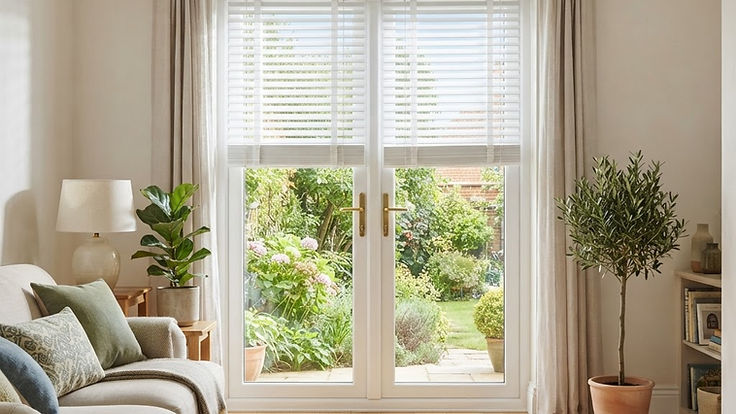
French doors are one of the loveliest features a home can have. They flood a room with light, frame the garden and make indoor and outdoor living feel like one. But they're also one of the trickiest things to dress. Ordinary curtains get in the way of the doors, blinds swing and rattle every time you open them, and handles and hinges leave very little room to fit anything at all.
In this guide I'll share 17 stylish ideas for blinds for French doors, from door-mounted wood blinds and Roman shades to blinds between the glass and no-drill options for renters, plus how to measure and fit them, which styles suit each room, and the mistakes to avoid.
The quick answer: the best blinds for French doors are slim, door-mounted styles that move with the door: faux wood or aluminium Venetian blinds, cellular (honeycomb) shades, pleated blinds, Roman shades and roller blinds, ideally with hold-down brackets so they don't swing. Blinds sealed between the glass are the neatest option for new doors, while plantation shutters and sash curtains suit traditional rooms. Choose cordless designs if you have children or pets.
Before You Choose: How Your Doors Work
French doors aren't like windows, so start with a few practical checks.
- Which way do they open? Inward-opening doors need slim blinds mounted on the door itself. Outward-opening doors give you more freedom, including a blind or curtain mounted above the frame.
- How much space is above the glass? Most door-mounted blinds need around 2.5cm (1 inch) of flat frame above the glass for the headrail.
- Where are the handles? A handle that sticks out more than a few centimetres can stop a blind lying flat. Measure its depth before you buy.
- Do the doors open fully? Anything mounted on the frame or wall must clear the doors as they swing, or it will block them.
| Mounting option | How it works | Best for |
|---|---|---|
| Door-mounted (on the frame) | Each door has its own blind fixed to the door | Inward-opening doors, most homes |
| Inside the glass bead | Blind sits within the recess around the glass | Doors with a deep glazing bead |
| Above the doors | One blind or curtain covers both doors | Outward-opening doors with space above |
| Between the glass | Blind sealed inside a double-glazed unit | New or replacement doors |
17 Stylish Ideas for Blinds for French Doors
Classic blinds
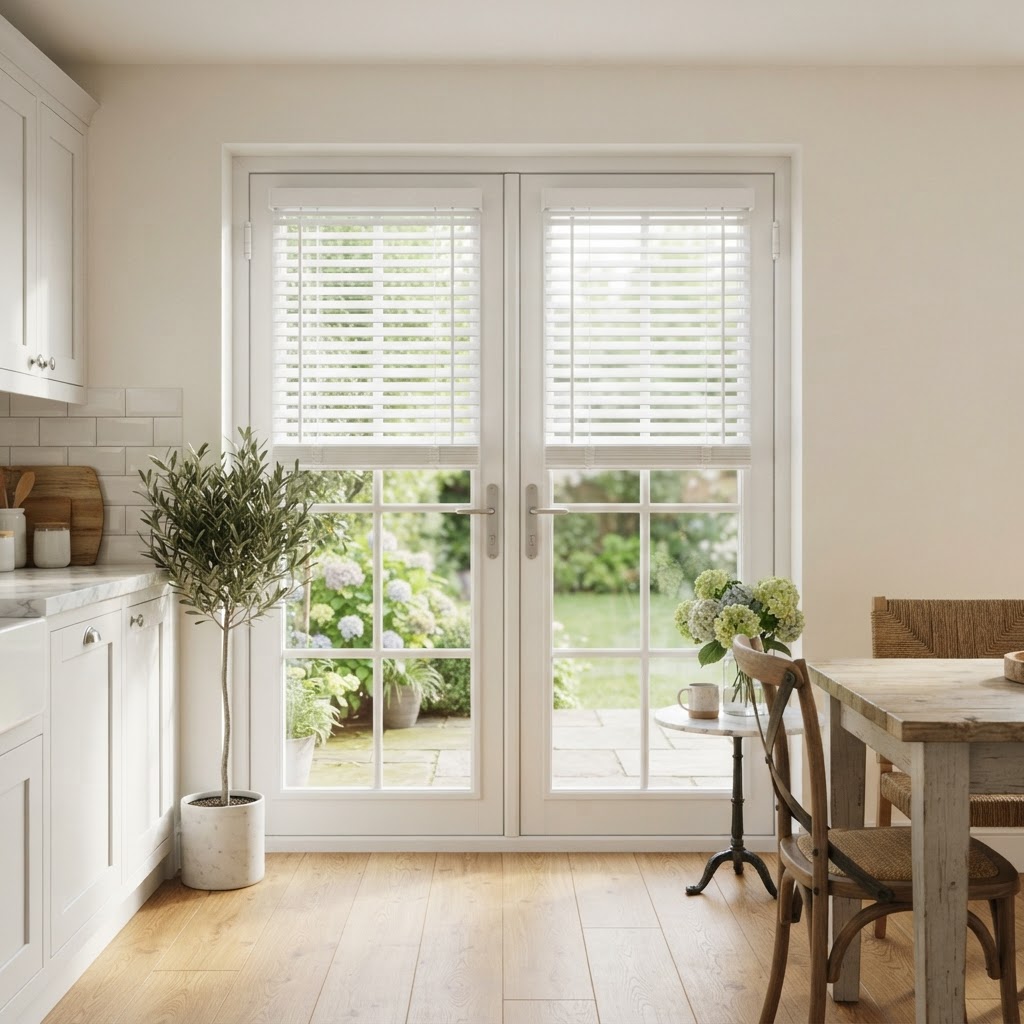
1. Faux wood blinds. Faux wood Venetian blinds are the most popular choice for French doors, and for good reason. They're slim, inexpensive, moisture-resistant and easy to tilt for privacy while still letting in light. White suits almost every scheme, and they're ideal in kitchens and bathrooms where real wood could warp.
2. Real wood blinds. For a warmer, richer look, real wood blinds in oak, walnut or a painted finish bring texture to a living room or study. They're a little heavier, so choose a door-mounted system with hold-down brackets.
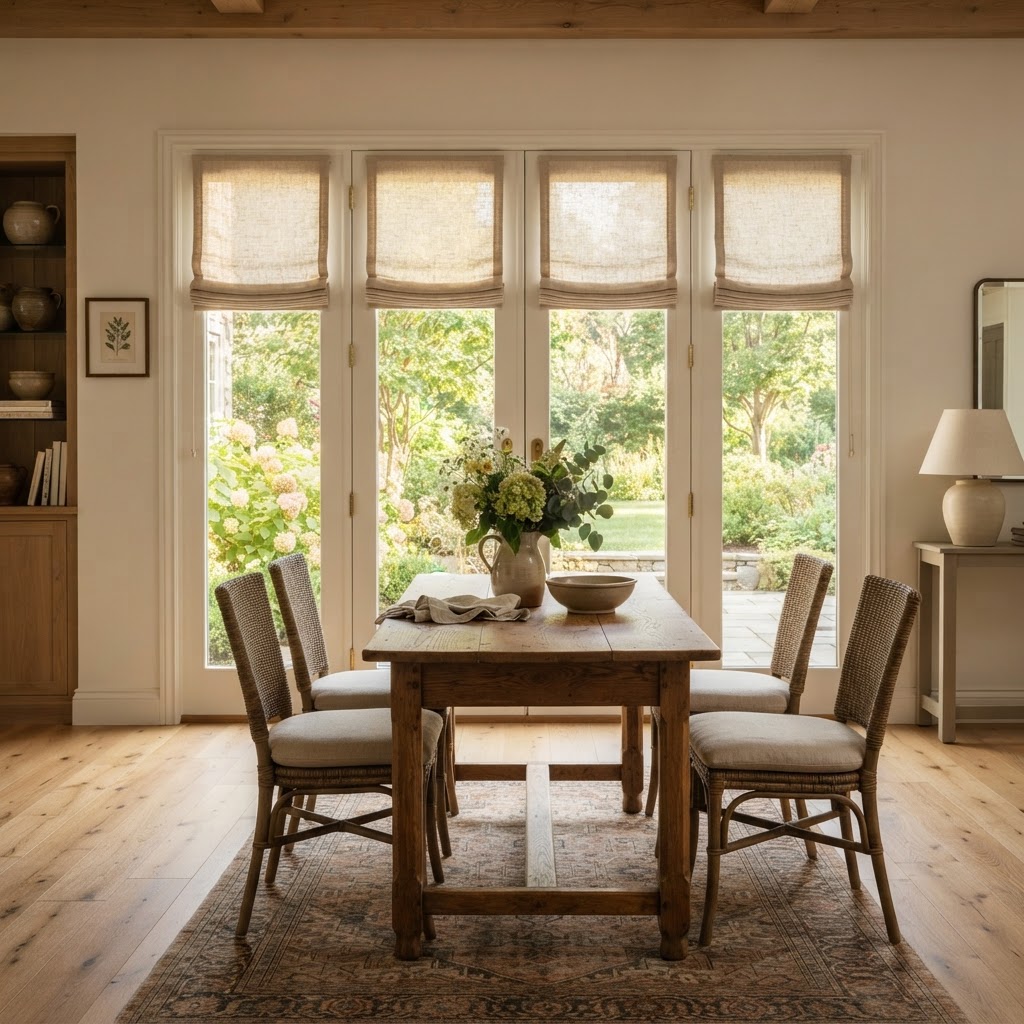
3. Roman shades. Soft fabric Roman shades in linen or cotton instead of slats feel elegant and relaxed. Choose a flat-fold style made specifically for doors, with a slim headrail and a weighted bottom bar so they stay neat.
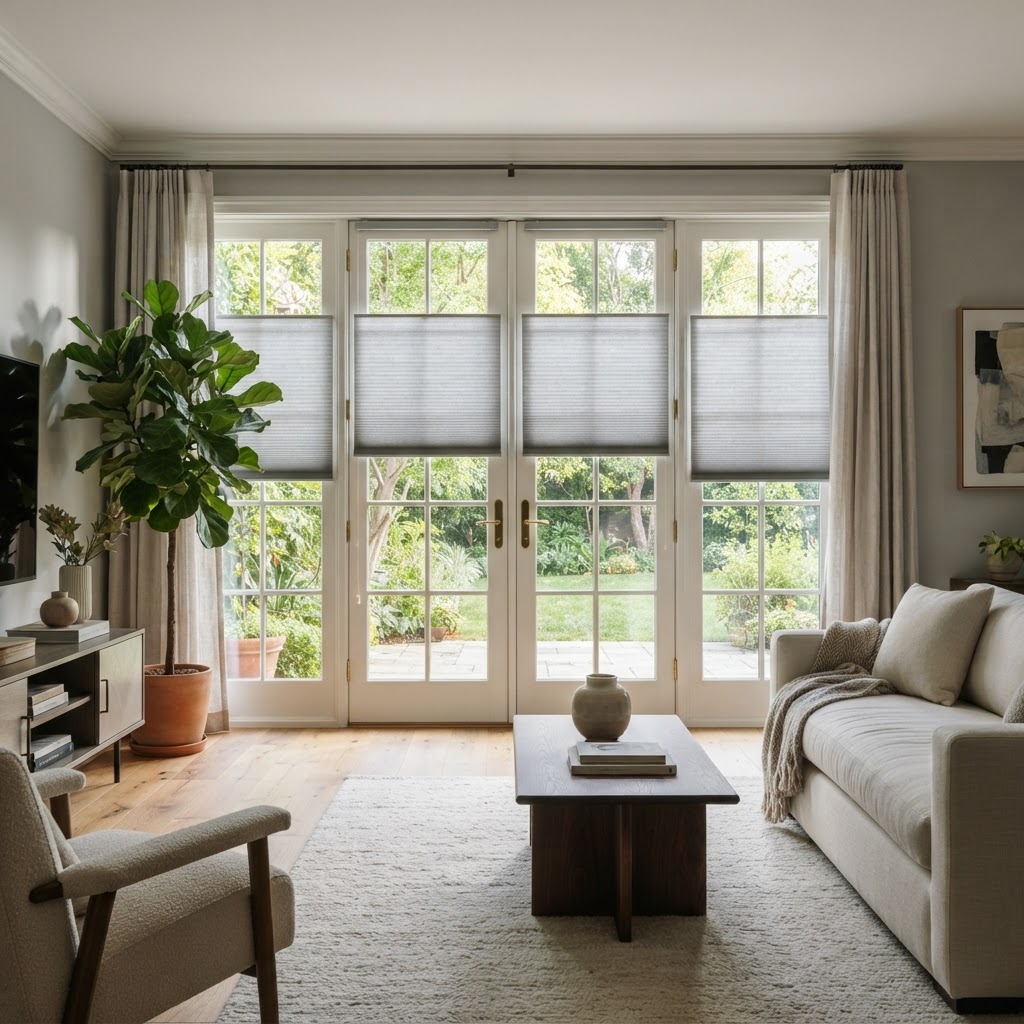
4. Cellular (honeycomb) shades. Cellular shades trap air in their honeycomb pockets, so they're one of the most energy-efficient choices for a wall of glass. In its fact sheet on cellular shades, the US Department of Energy says they "reduce nighttime heat loss through windows" and that, in testing, "cellular shades saved up to 20% on heating energy."
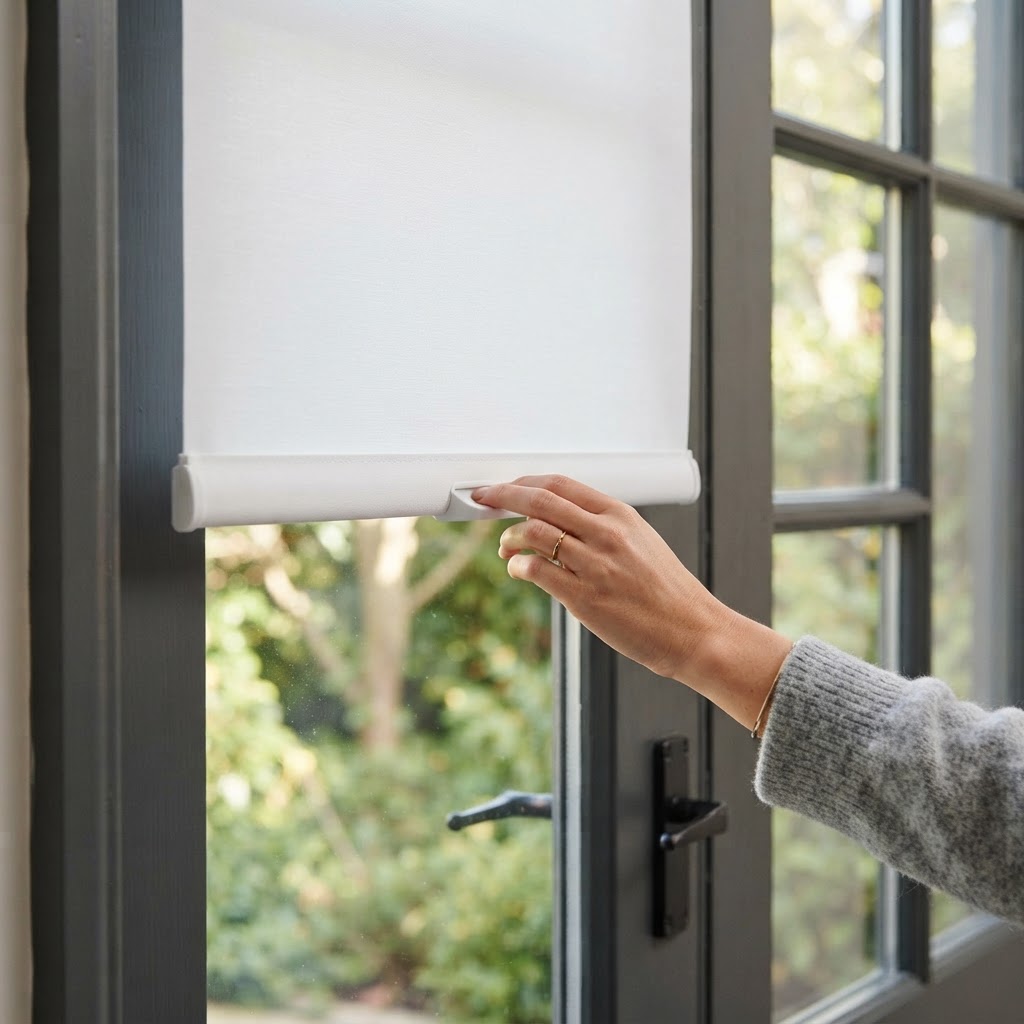
5. Roller blinds. Simple roller blinds give a clean, minimal look and roll up almost completely out of sight. Sheer and light-filtering fabrics soften the light without blocking the view.
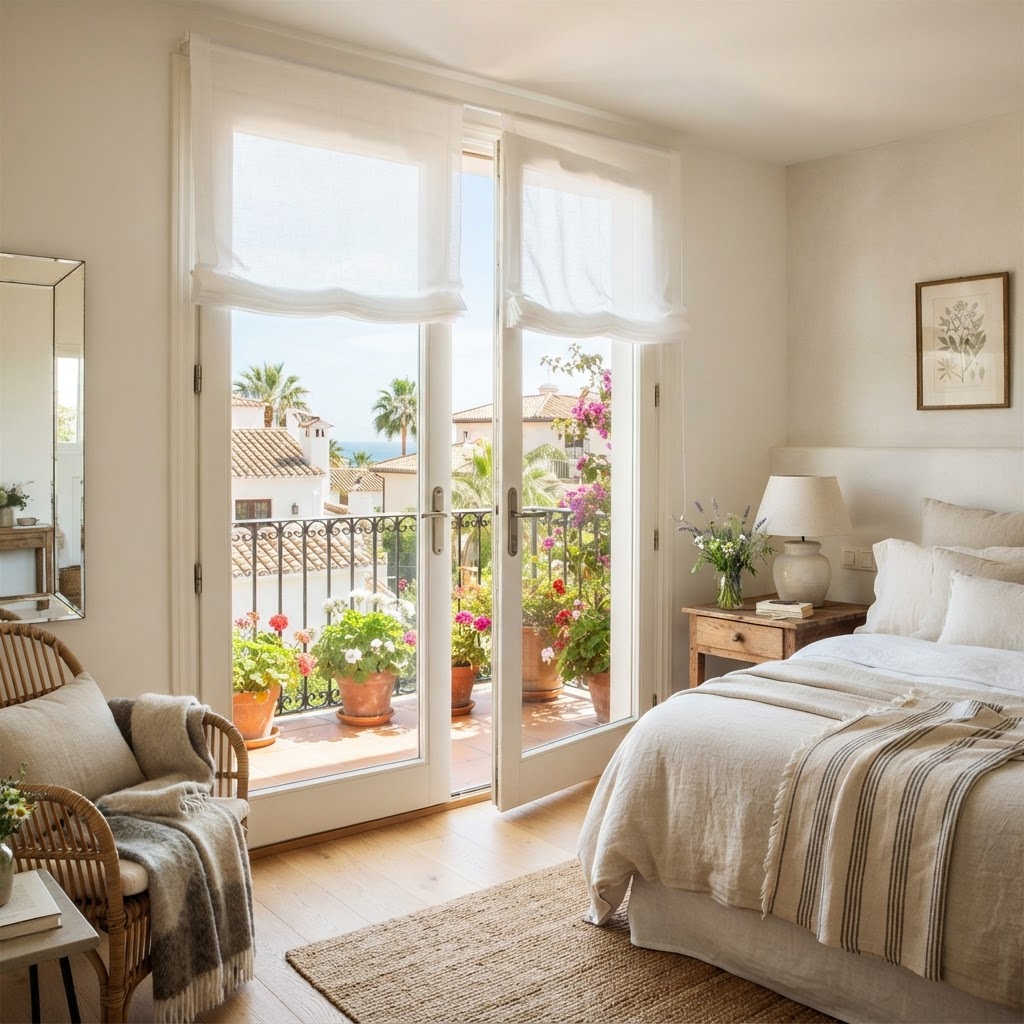
6. Blinds between the glass. If you're replacing your doors, blinds sealed between two panes of glass are the neatest solution of all. They never need dusting, can't swing or be damaged by pets, and are operated by a small magnetic slider on the frame.
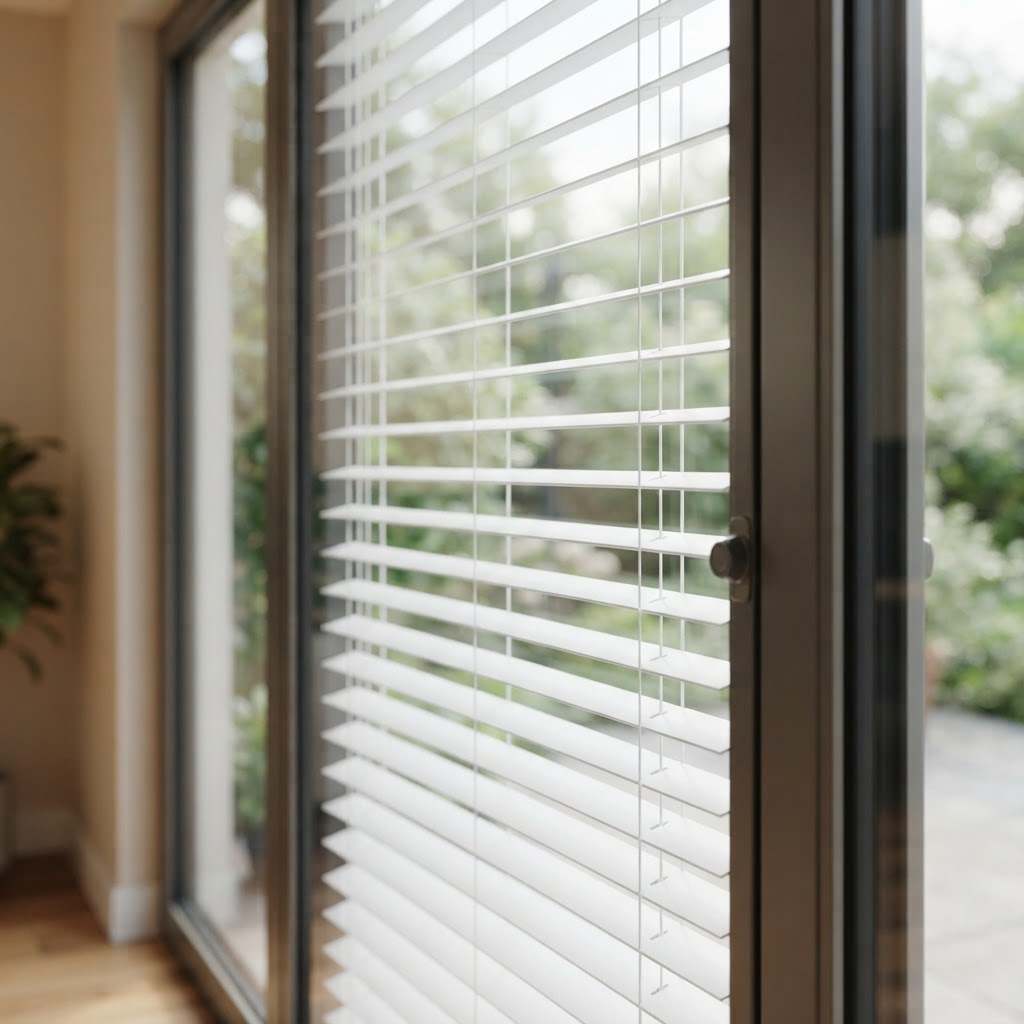
7. Pleated blinds. Pleated blinds are light, crisp and fold into a very slim stack at the top of the door, so you keep almost all of the glass. Many come with side cords or tension systems that hold them taut against the door.
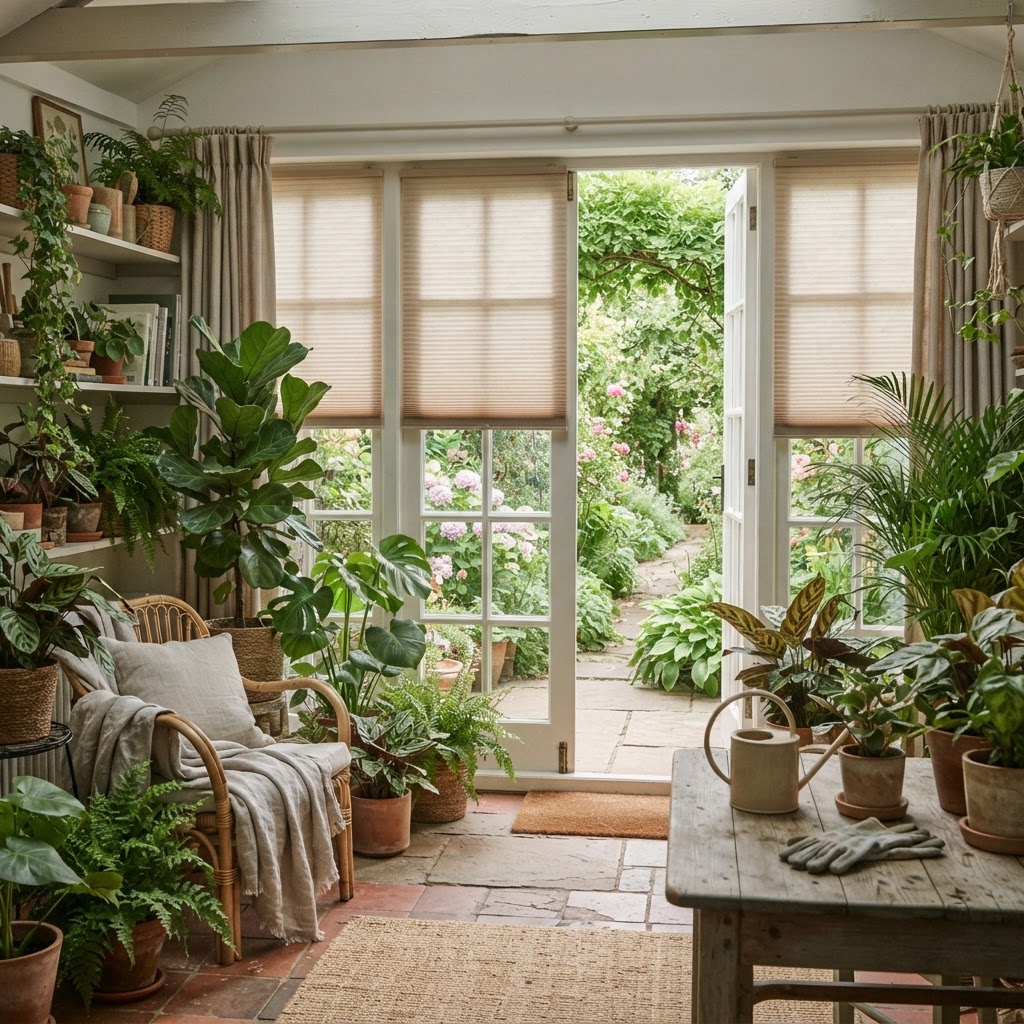
8. Top-down, bottom-up shades. These shades can be lowered from the top as well as raised from the bottom, so you can cover the lower half of the glass for privacy while still letting in light from above. They're perfect for doors that face a street or a neighbour's garden.
Natural and textured styles
9. Woven bamboo and grass shades. Natural woven shades add warmth and texture and suit relaxed, coastal and tropical decor beautifully. Add a privacy lining if you need it, as many weaves are see-through at night.
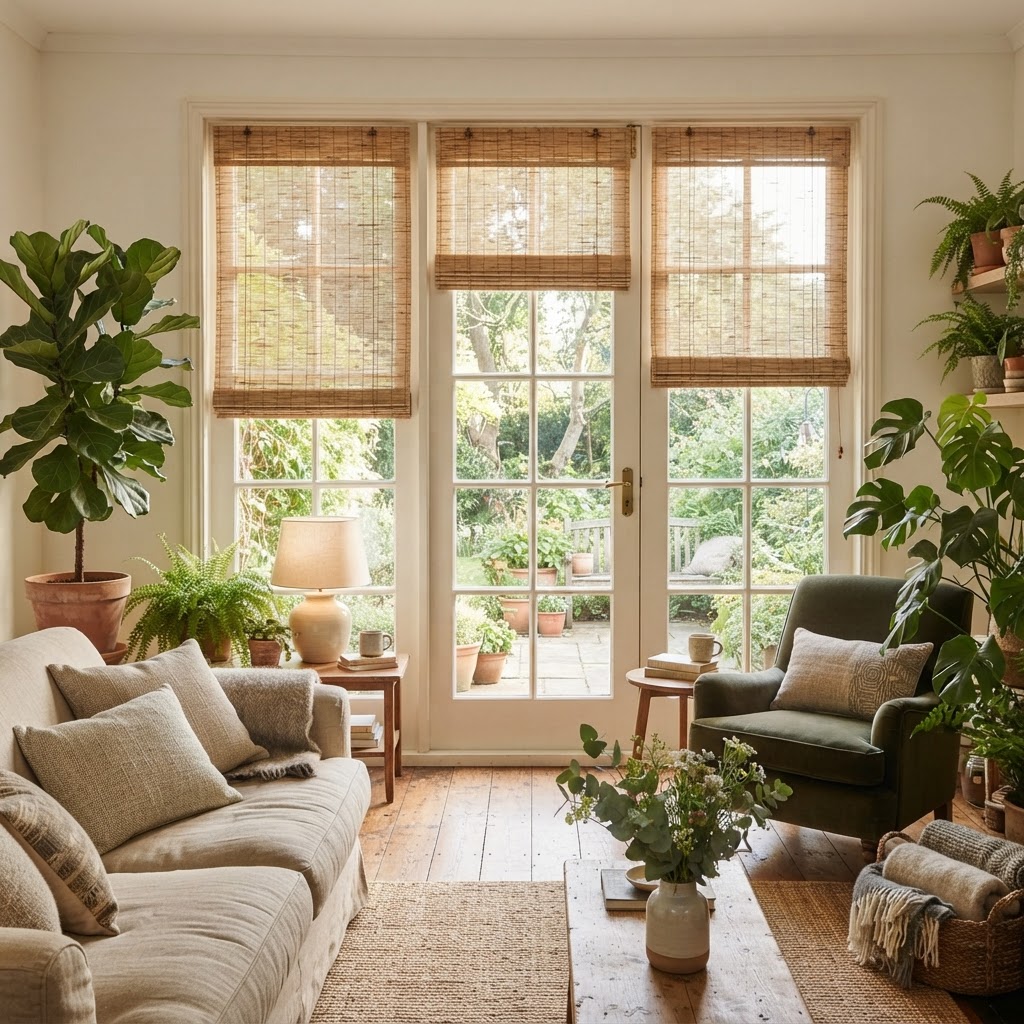
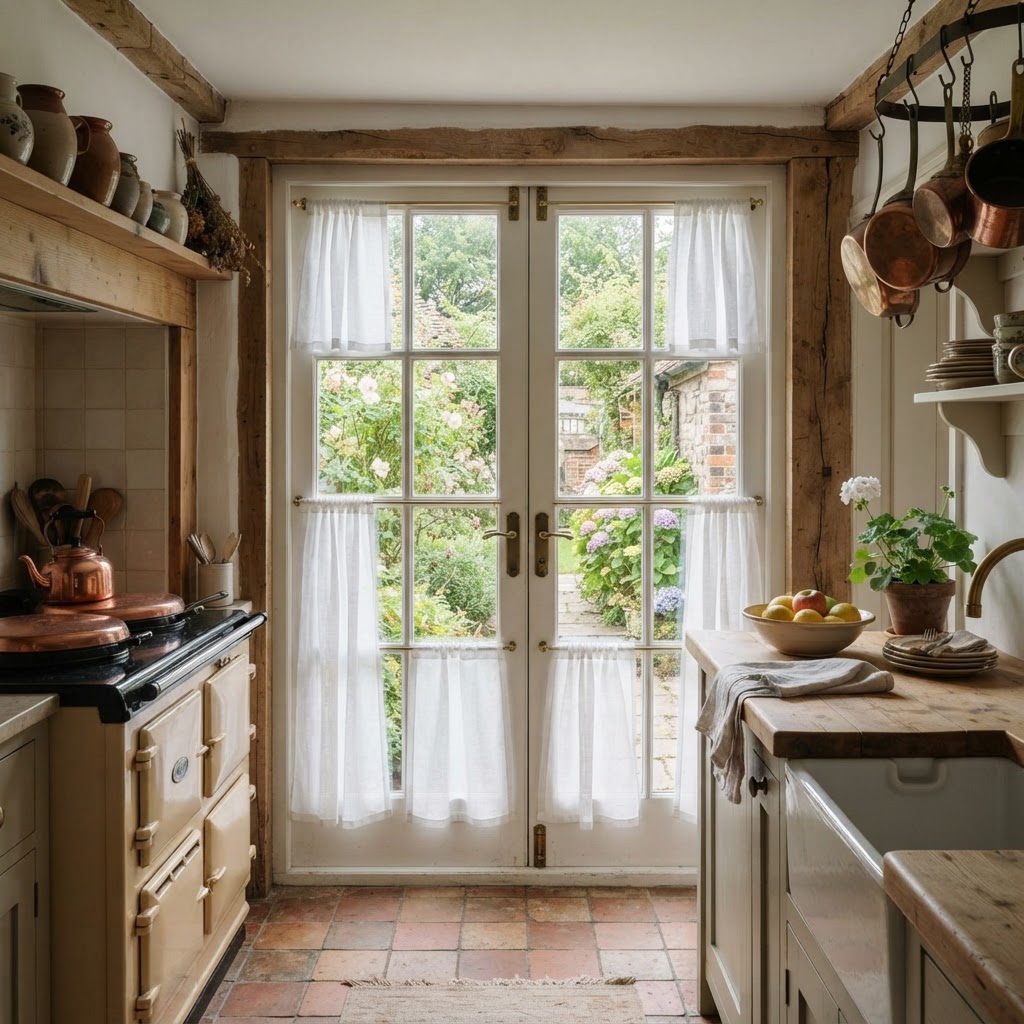
10. Sash curtains. Sheer curtains gathered on slim rods at the top and bottom of each glass panel are a pretty, traditional option for cottages and country kitchens, and they move with the door. Pinch them in the middle with a tie for an hourglass shape.
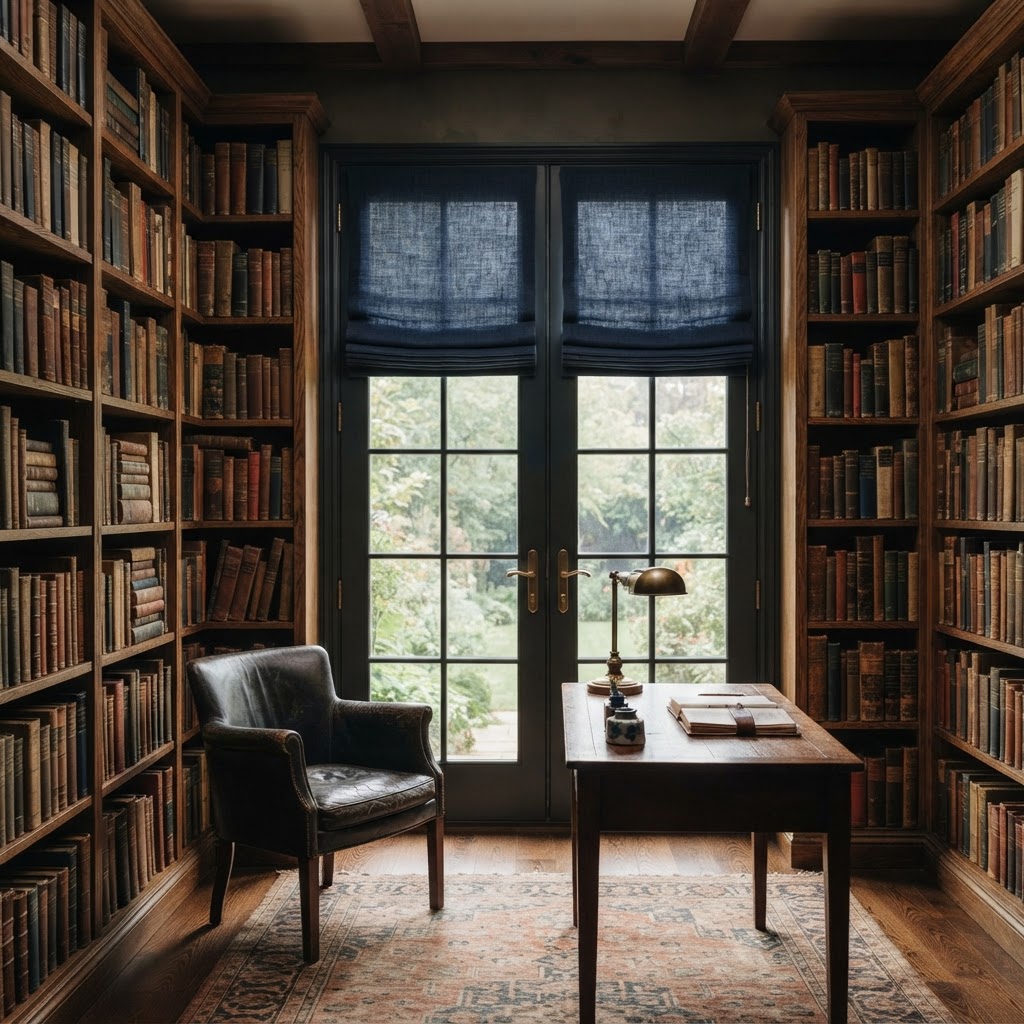
11. Dark, dramatic Roman blinds. French doors don't have to disappear. A deep navy, forest green or rich rust Roman blind turns them into a feature, especially in a study, snug or dining room with dark walls.
Practical and modern options
12. Add-on and no-drill blinds. For renters, add-on blinds clip into the glazing bead or attach with magnets or adhesive brackets, so there's no drilling and no damage when you move out.
13. Day and night blinds. Also called zebra blinds, these have alternating sheer and solid stripes that slide past each other, so you can switch from soft, filtered light to full privacy without raising the blind.
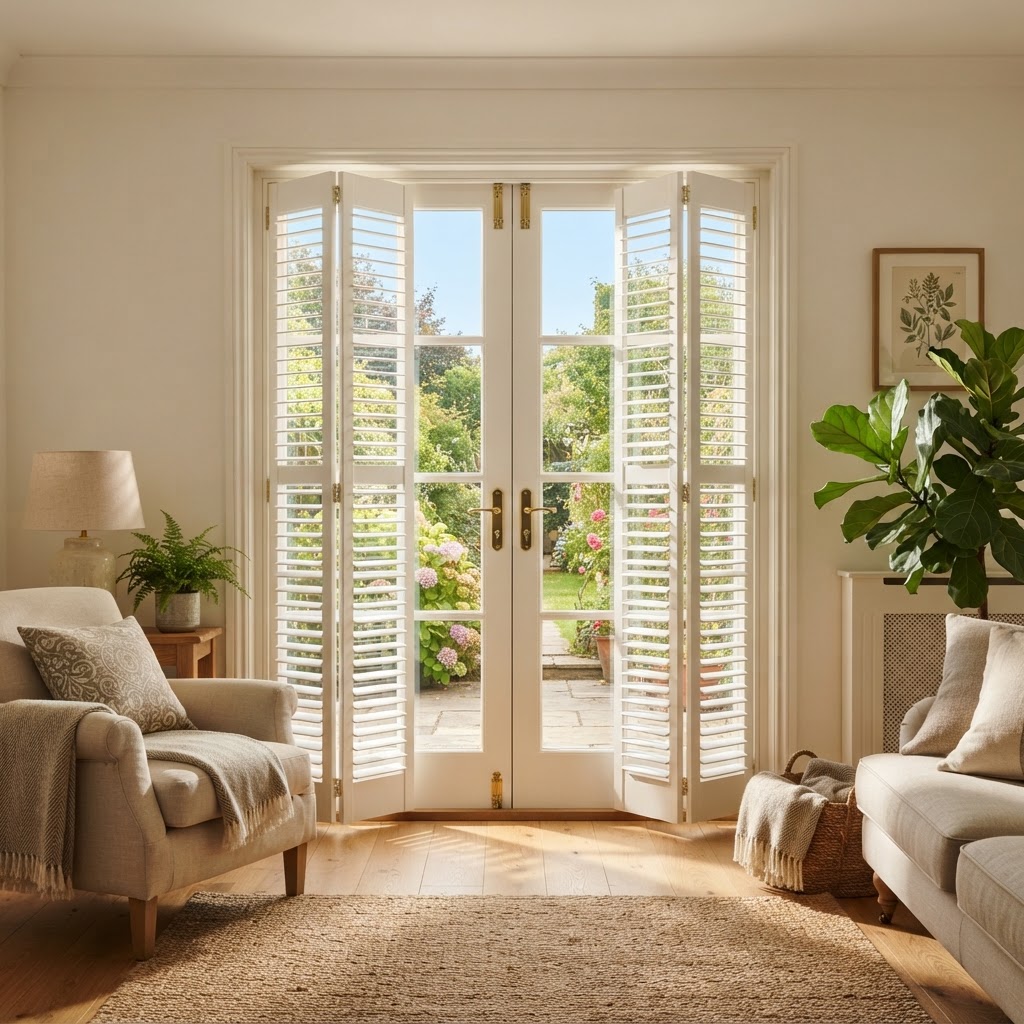
14. Plantation shutters. Interior shutters fitted to each door are smart, durable and timeless. They work especially well in traditional living rooms and suit a home that already has shutters on its windows.
15. Blackout blinds. In a bedroom or a media room, blackout roller or cellular blinds with side channels block light around the edges of the glass. They're also useful on doors that catch the morning sun.
16. Cordless and motorised blinds. If you have young children, choose cordless blinds. The US Consumer Product Safety Commission advises families to go cordless with window coverings, warning that "even if you tie them high, or use so-called safety cleats, kids can still strangle to death in under one minute." Motorised blinds are cordless too, and you can control them from a remote or your phone.
17. Curtains on a wide pole. If your doors open outwards, or you have plenty of wall on either side, curtains on a pole that extends well beyond the frame can be pulled right back, leaving the doors completely clear. Hang them high and long to make the doors look taller.
How to Measure for French Door Blinds
- Measure each door separately. Even matching doors can differ by a few millimetres.
- Measure the glass, not the door. For door-mounted blinds, measure the width and height of the glass and add around 2.5cm (1 inch) on each side so the blind overlaps the glass.
- Check the depth of the frame. Make sure there's enough flat space above the glass for the headrail.
- Measure the handle depth. Note how far the handle projects from the door.
- Check the swing. Open each door fully and make sure the blind or headrail won't hit a wall, radiator or furniture.
How to Stop Blinds Swinging on French Doors
- Use hold-down brackets. Small brackets at the bottom of the door hold the bottom rail in place when the blind is down.
- Choose tensioned systems. Pleated and cellular blinds with side cords stay taut against the glass.
- Fit sash rods top and bottom. Curtains held on two rods can't swing at all.
- Go between the glass. Integrated blinds are the only option that can never swing or rattle.
Best Blinds for French Doors by Room
| Room | Best choices | Why |
|---|---|---|
| Living room | Wood blinds, Roman shades, shutters | Warm, elegant and adjustable |
| Kitchen | Faux wood blinds, roller blinds, sash curtains | Moisture-resistant and easy to clean |
| Bedroom | Blackout cellular or roller blinds | Privacy and good sleep |
| Dining room | Roman shades, pleated blinds | Soft and decorative |
| Garden room | Cellular or pleated blinds | Insulation and glare control |
| Home office | Day and night blinds, top-down shades | Light without screen glare |
| Children's rooms | Cordless or motorised blinds | Safety first |
If you're working on a home office, top-down shades let daylight in without glare on your screen, and in a small living room, slim door-mounted blinds keep the space feeling open.
How I Dress French Doors
After more than 15 years of designing homes, pubs and restaurants, I've learnt that French doors look best when the dressing respects the doors rather than fighting them.
- Keep the glass as clear as possible. The whole point of French doors is light and a view, so I choose blinds that stack neatly at the top.
- Match the blinds to the frame. White blinds on white doors almost disappear, which makes the doors feel bigger. A contrasting colour turns them into a feature, so make that a deliberate choice.
- Think about the evening. A room that's lovely by day can feel like a goldfish bowl at night. Light-filtering fabrics or blinds you can fully close make a big difference.
- Repeat colours from the room. A Roman blind in a fabric that picks up a cushion or rug ties the doors into the scheme, and soft white paint colours on the frames keep everything fresh.
If you have sliding glass doors rather than hinged ones, vertical blinds and panel track blinds work better, as they glide along the same track as modern sliding doors. The same principles of framing and proportion also apply to window trim styles and French casement windows.
Common Mistakes to Avoid
| Mistake | Why it's a problem | What to do instead |
|---|---|---|
| Hanging curtains that block the doors | The doors can't open fully | Use door-mounted blinds or a wide pole |
| Ignoring the handle depth | The blind can't lie flat | Measure the handle before buying |
| No hold-down brackets | Blinds swing and rattle | Fit brackets or a tensioned system |
| Choosing corded blinds with children | A serious strangulation risk | Choose cordless or motorised |
| Heavy blinds on light doors | They strain the hinges and frame | Choose slim, lightweight styles |
| Measuring once for both doors | Doors often differ slightly | Measure each door separately |
Frequently Asked Questions
What kind of blinds are best for French doors?
Slim, door-mounted styles such as faux wood blinds, cellular shades, pleated blinds, Roman shades and roller blinds work best, because they move with the door. Blinds between the glass are the neatest option for new doors.
Can you put blinds on French doors?
Yes. Most blinds for French doors are mounted directly on each door, above the glass, so they open and close with the door.
How do you keep blinds from swinging on French doors?
Fit hold-down brackets at the bottom of each door, or choose pleated or cellular blinds with side tension cords. Blinds sealed between the glass can't swing at all.
Are blinds between the glass worth it?
They're more expensive, but they never need dusting, can't be damaged by pets or children, and never swing. They're well worth considering if you're replacing your doors.
What can I use instead of blinds on French doors?
Sash curtains on top and bottom rods, plantation shutters, frosted window film or curtains on a wide pole that clears the doors are all good alternatives.
How do you measure blinds for French doors?
Measure the width and height of the glass on each door separately, add about 2.5cm (1 inch) on each side for overlap, and check the depth of the handle and the space above the glass.
Should blinds on French doors be inside or outside mount?
Most are mounted on the outside of the glass, on the door frame, so they overlap the glass for privacy. Inside mounts only work if the glazing bead is deep enough.
Doors That Work Beautifully Day and Night
The right blinds let your French doors do what they do best: bring in light and frame the view, while giving you privacy and comfort when you need it. Measure carefully, choose slim styles that move with the door, keep them steady with brackets, and go cordless if you have little ones.
And if you'd like help choosing window and door treatments for your home, you can book a one-hour online interior design consultation with me.
About the author
Magda Callery is a UK interior designer and florist with more than 15 years' experience designing homes, pubs, restaurants and bars, and her expert commentary has featured in Homes & Gardens, The Mirror and The Spruce. Explore more of the decorating articles.
Continue reading

Flat Back Christmas Tree: 13 Ideas for Small Spaces
What a flat back Christmas tree is, how it compares with slim and half trees, how to choose the right size, 13 ideas for small spaces and how to decorate it so it looks full.

Pergola Decorating Ideas: 17 Ways to Style a Pergola
17 pergola decorating ideas, from climbing roses, clematis and grapevines to festoon lights, curtains, shade canopies and outdoor kitchens, plus the best plants for a pergola.

Garden Pagoda: 13 Stylish Ideas and Buying Tips
What a garden pagoda is, how it differs from a gazebo and a pergola, 13 garden pagoda ideas, the best climbing plants to grow over one and how to choose the right pagoda.