
Garden Pagoda: 13 Stylish Ideas and Buying Tips
What a garden pagoda is, how it differs from a gazebo and a pergola, 13 garden pagoda ideas, the best climbing plants to grow over one and how to choose the right pagoda.
By Magda Callery, interior designer and florist
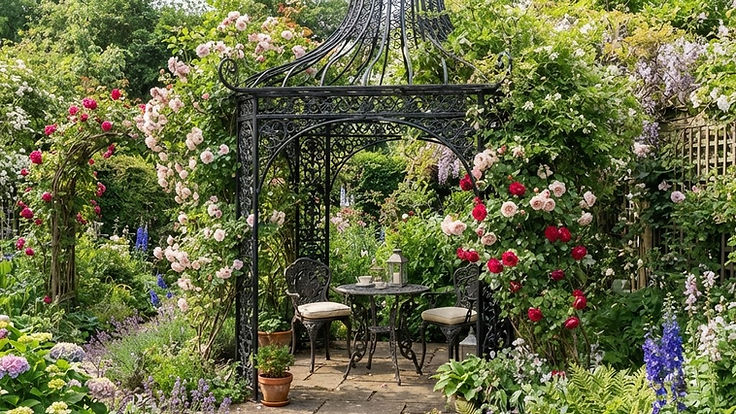
A garden pagoda is one of the prettiest ways to add height, shade and a sense of romance to a garden. With its tiered, gently curving roof, it brings a touch of the East to a British lawn, and once it's covered in roses or wisteria and dressed with lights, it becomes the place everyone wants to sit on a summer evening.
In this guide I'll share what a garden pagoda is, how it differs from a gazebo and a pergola, 13 garden pagoda ideas, the best climbing plants to grow over one, how to choose the right pagoda and the mistakes to avoid.
The quick answer: a garden pagoda is a freestanding garden structure with a tiered, often curved roof inspired by the pagodas of Asia. Most are made from powder-coated metal or timber, either as an open frame for climbing plants or with a solid or fabric roof for shade. Use one as a focal point at the end of a path, over a seating or dining area, or as a support for roses, clematis and wisteria, and dress it with lights, curtains and cushions.
What Is a Garden Pagoda?
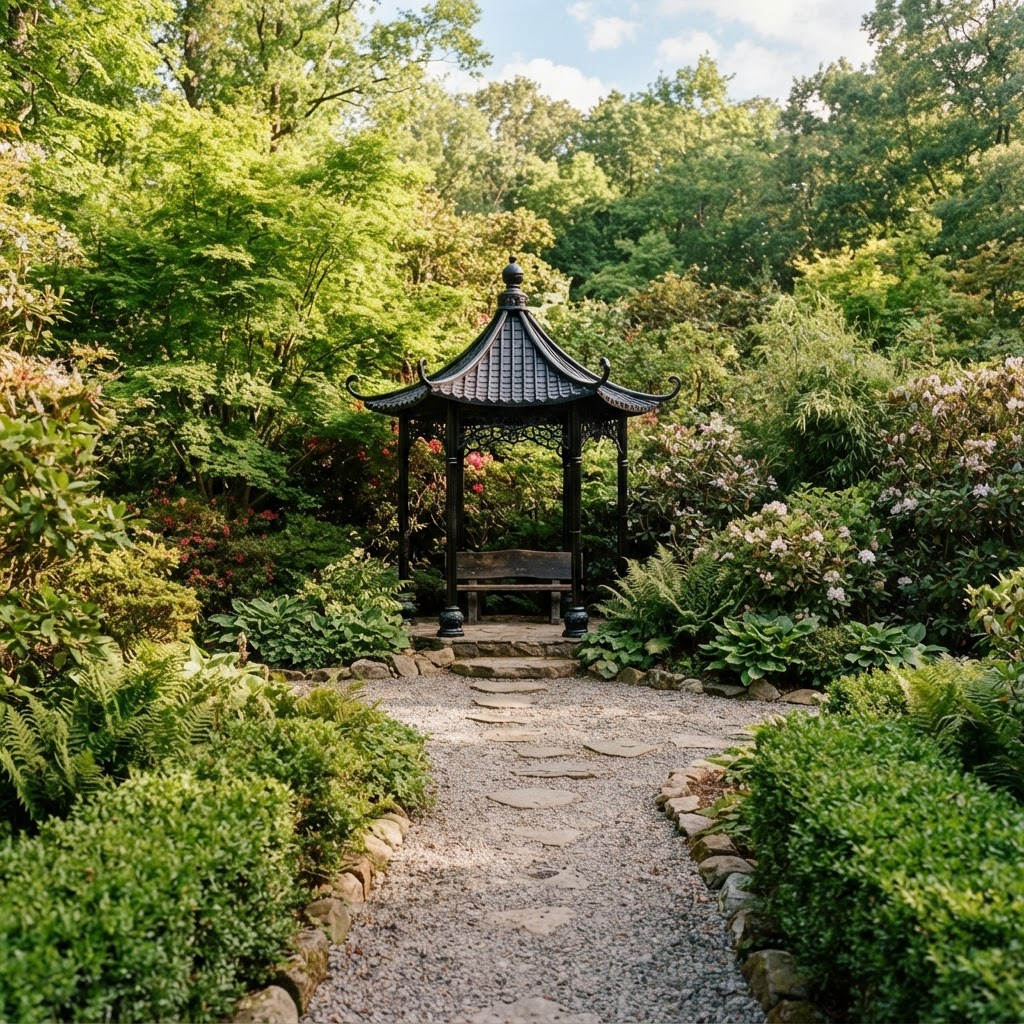
In Asia, a pagoda is a tiered tower, often part of a temple. In the garden, the word has come to mean two things: a decorative structure with a pagoda-style roof that you can sit beneath, and a small stone pagoda ornament or lantern, often found in Japanese-style gardens.
Pagodas have been part of British gardens for centuries. Historic Royal Palaces describes how the Great Pagoda at Kew "was designed in the 18th century by English architect Sir William Chambers for the royal family." It was completed in 1762 and "was once adorned with 80 'iridescent' wooden dragons," which were removed in 1784 and have since been recreated. Today's garden pagodas are much smaller, but they share that same sense of fun and exotic charm.
Pagoda vs Gazebo vs Pergola
| Structure | Roof | Shape | Best for |
|---|---|---|---|
| Garden pagoda | Tiered, curved pagoda-style roof, open or covered | Square, round or octagonal | Focal points, seating and climbing plants |
| Gazebo | Solid or fabric roof | Square, hexagonal or octagonal | Shade and shelter for dining or relaxing |
| Pergola | Open beams or slats | Usually rectangular | Walkways and dining areas with climbers |
If you prefer a more open, linear structure, there are lots of pergola decorating ideas that use the same climbers, lights and fabrics.
13 Garden Pagoda Ideas
1. A pagoda over a patio seating area. Place a metal pagoda over a small patio with a couple of chairs or a bench to create an outdoor room that feels sheltered and special.
2. A pagoda as a focal point. A pagoda at the end of a path or lawn draws the eye through the garden. Add a bench beneath it so it's a destination as well as a feature.
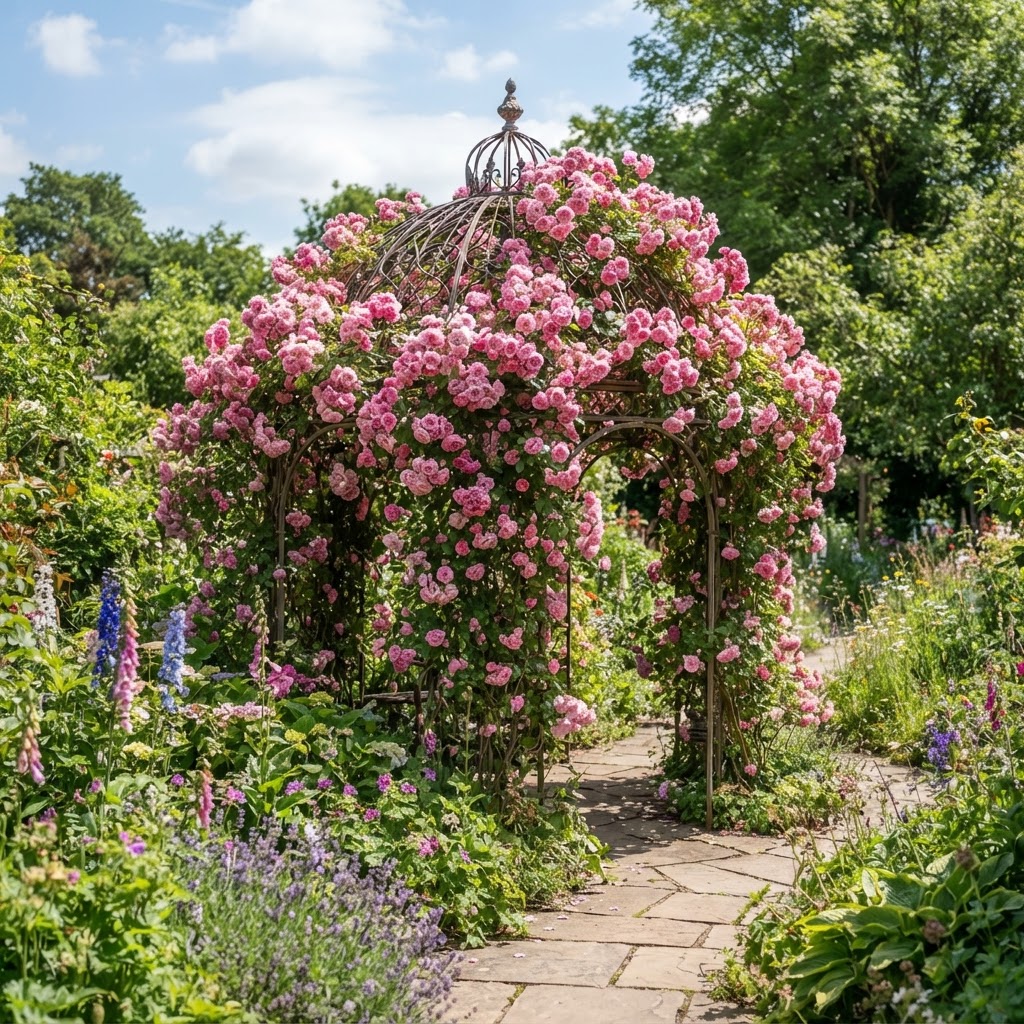
3. A pagoda covered in climbing roses. An open metal pagoda is the perfect support for roses. Choose a scented climber or rambler, such as one of the most fragrant roses, and you'll have a perfumed retreat by midsummer.
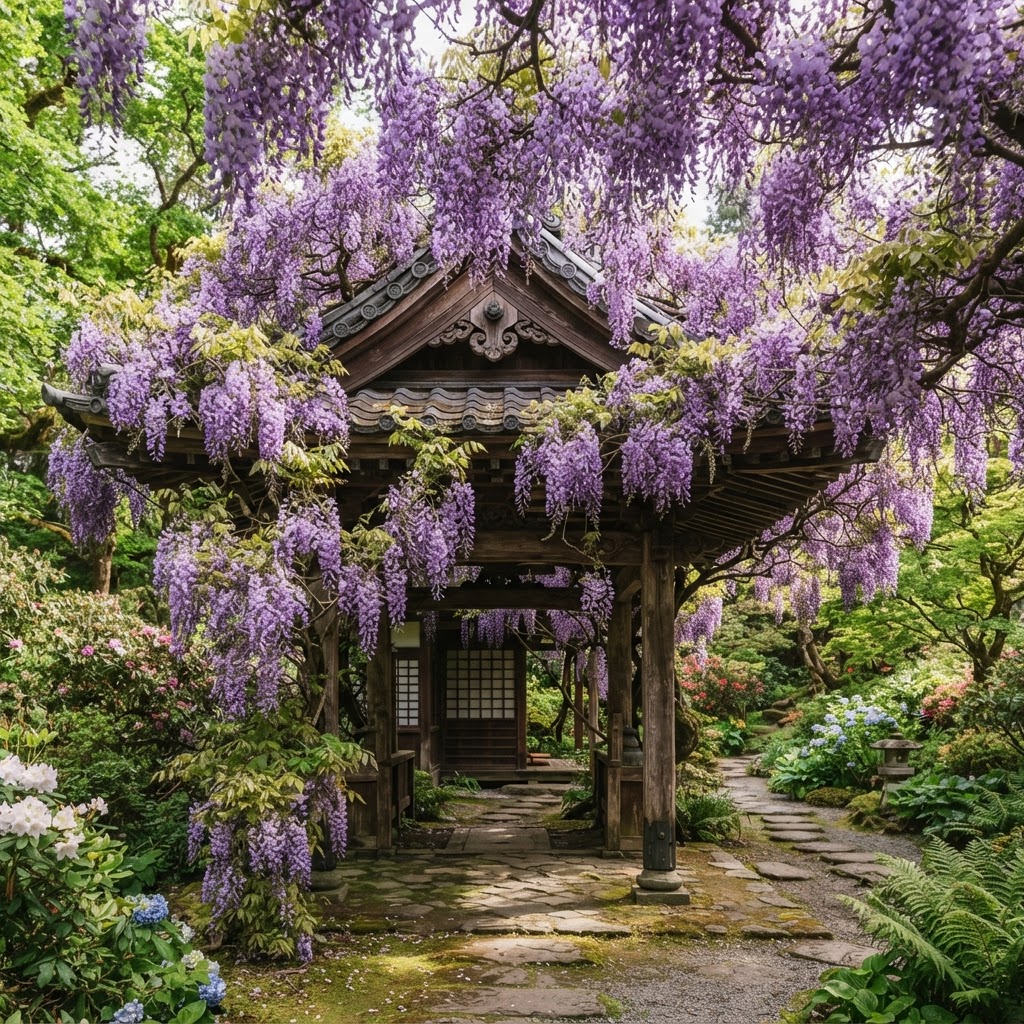
4. A wisteria pagoda. Long trails of wisteria hanging from a pagoda roof are breathtaking in late spring. Wisteria is heavy and vigorous, so choose a sturdy metal or timber structure.
5. An outdoor dining pagoda. Set a dining table beneath a pagoda and add tie-back curtains for shade and privacy. A tiled outdoor dining table brings a Mediterranean feel.
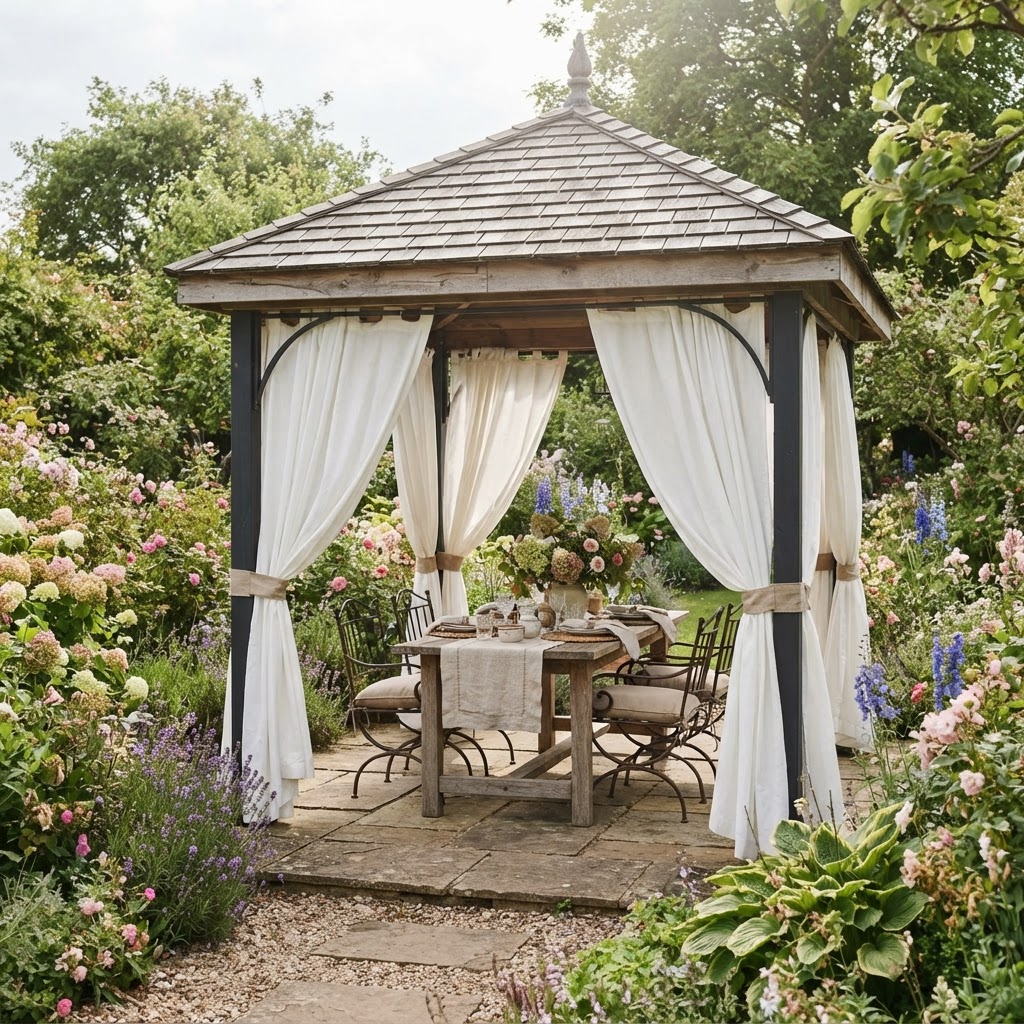
6. A pagoda with festoon lights. Draping warm festoon lights or fairy lights over the frame makes a pagoda glow after dark. Choose lights designed for outdoor use and a weatherproof connection.
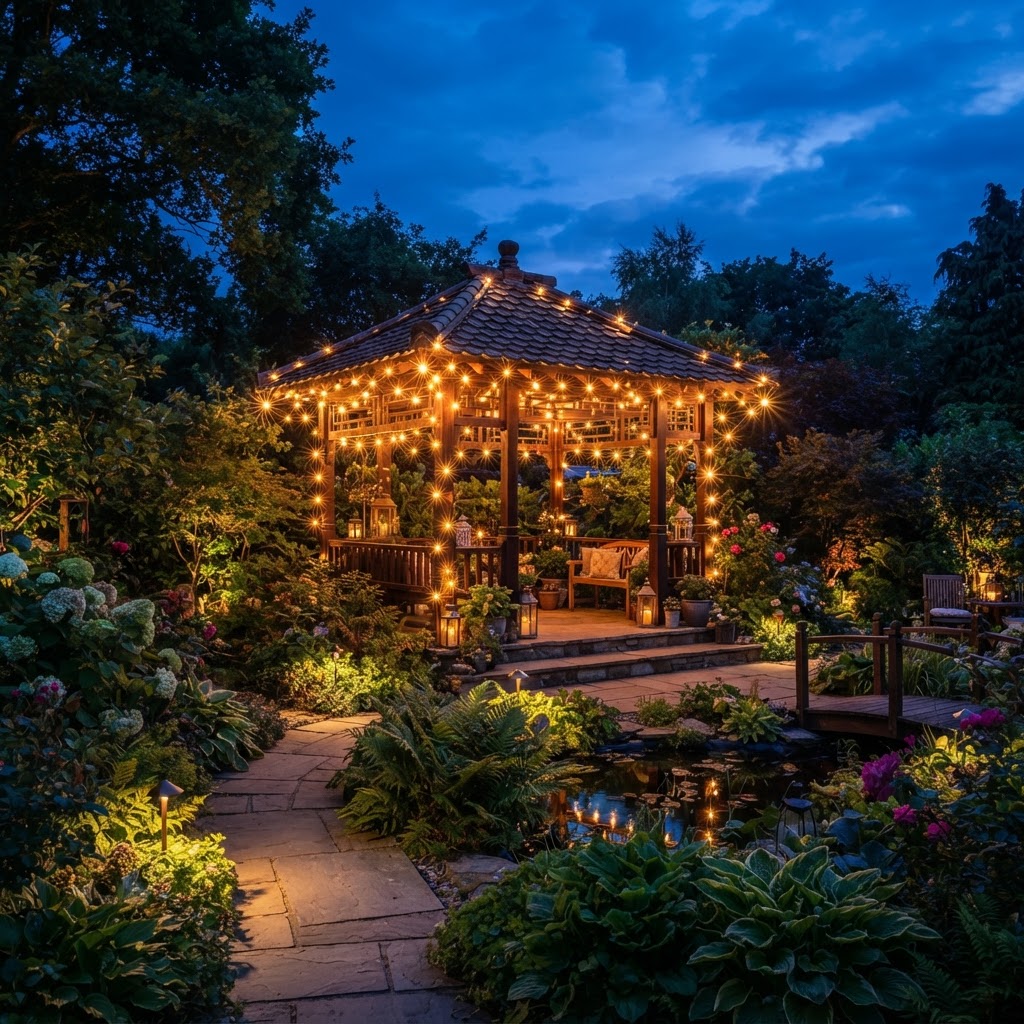
7. A wooden pagoda gazebo. A timber pagoda with upturned roof corners is more solid and sheltering than an open metal frame, and it ages beautifully as the wood weathers.
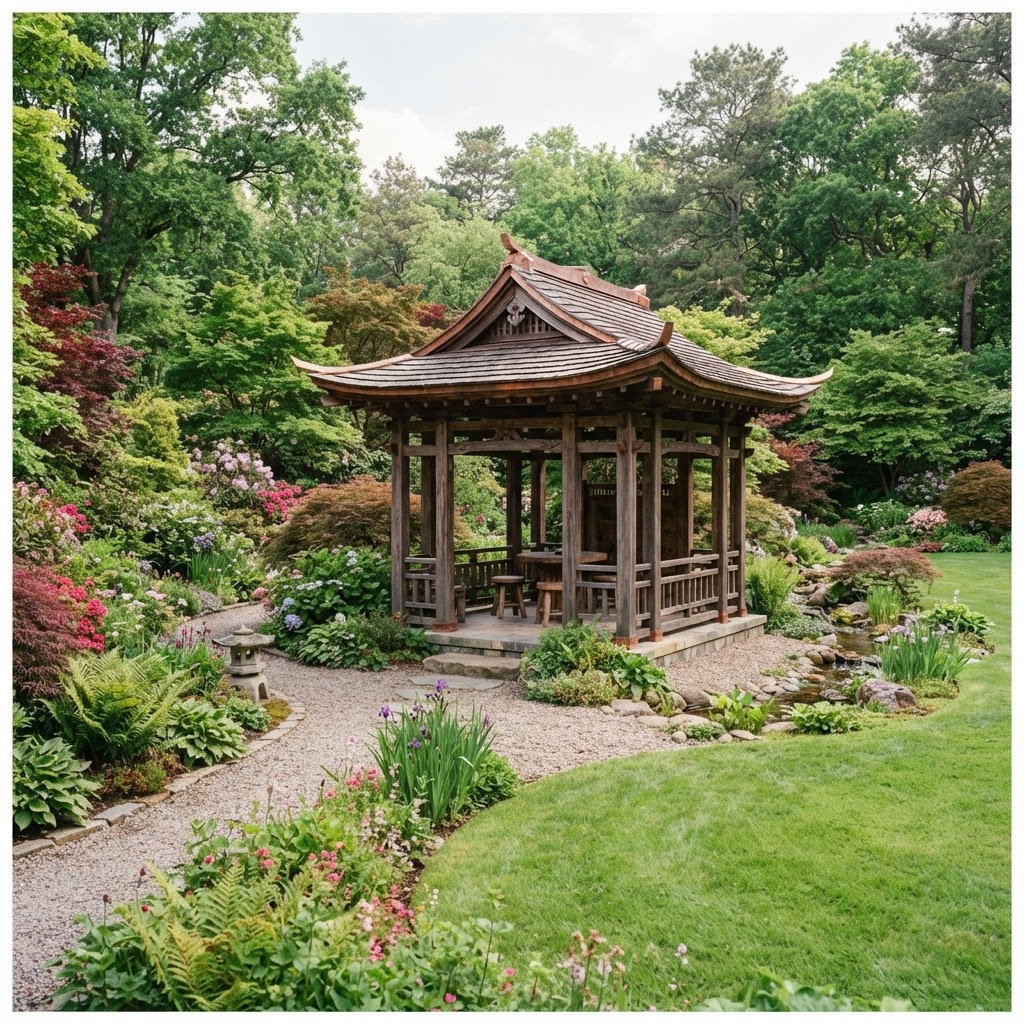
8. An octagonal pagoda on the lawn. An eight-sided pagoda gives you a generous space for a round table or a circle of chairs and looks balanced from every angle.
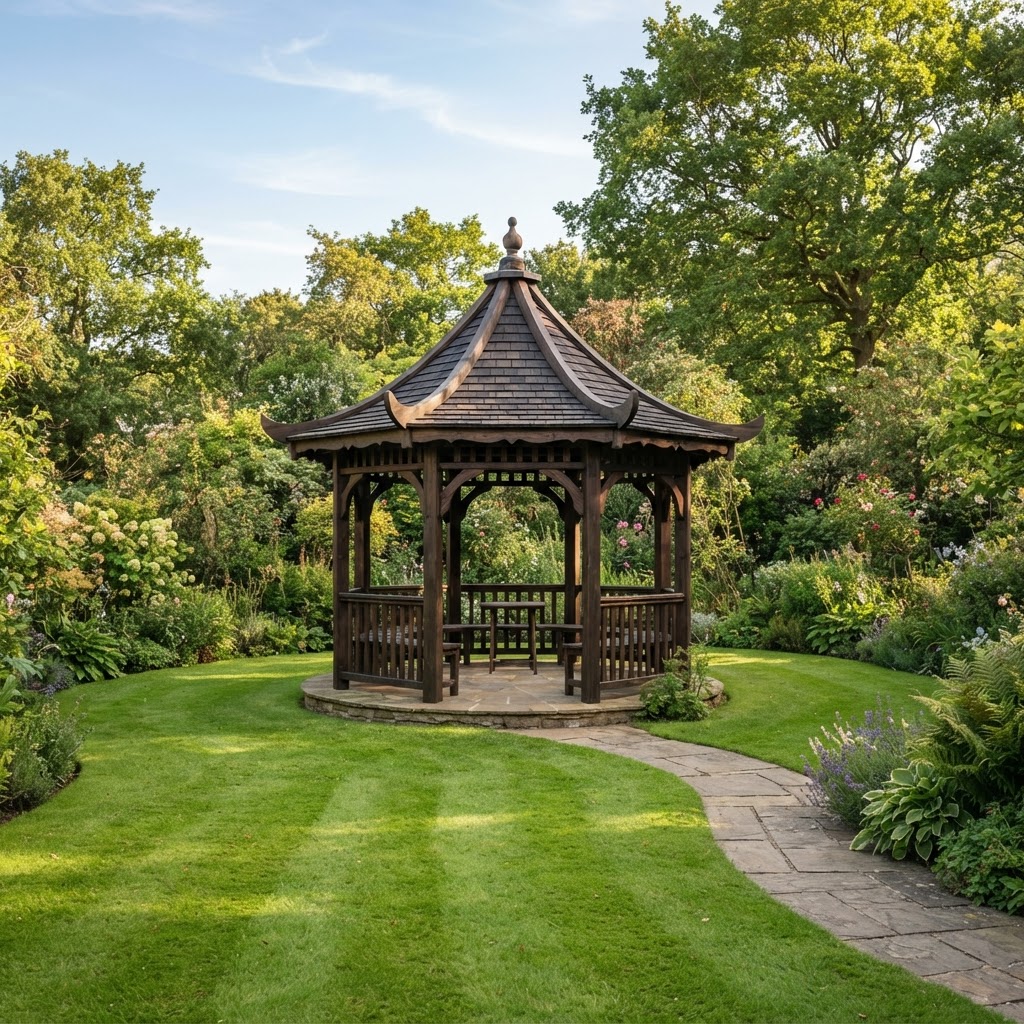
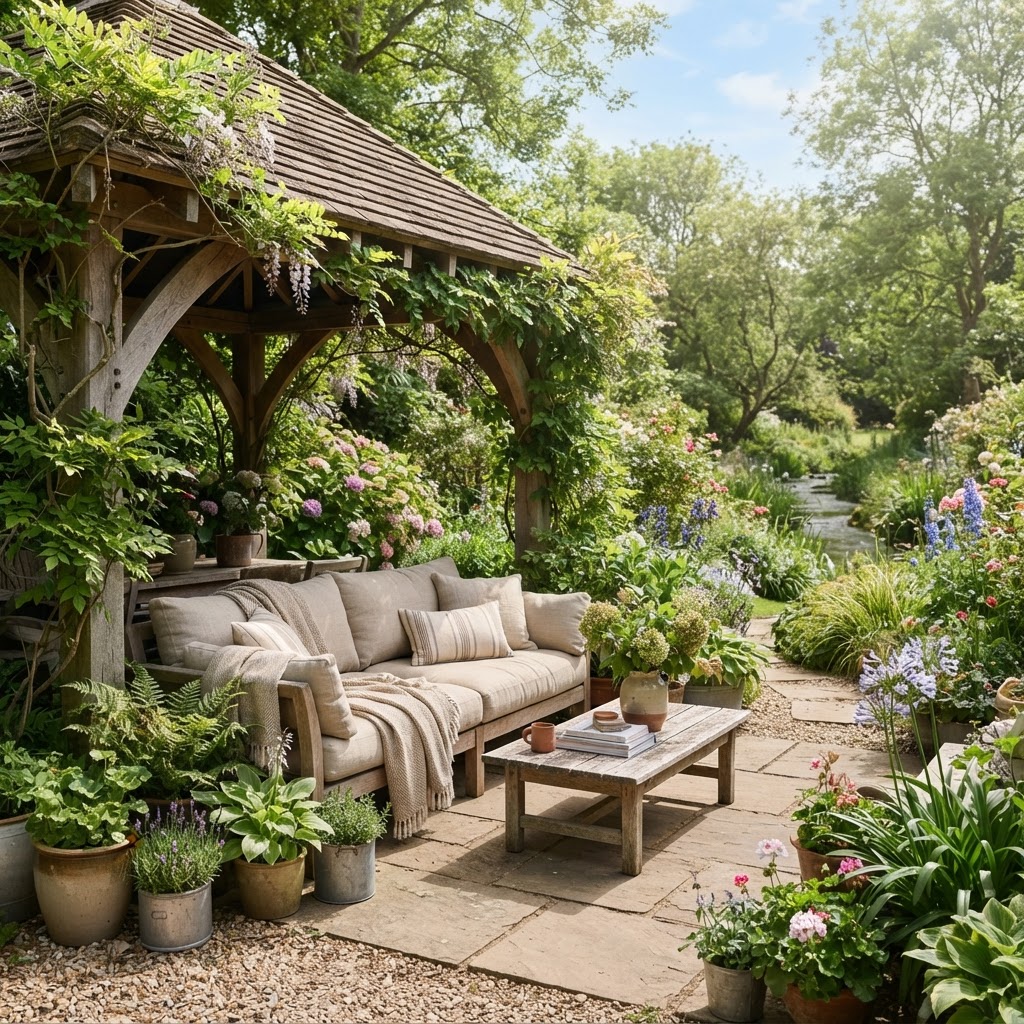
9. An outdoor living room. Fill a larger pagoda with an outdoor sofa, cushions, a coffee table and a rug for a cosy spot to read or chat.
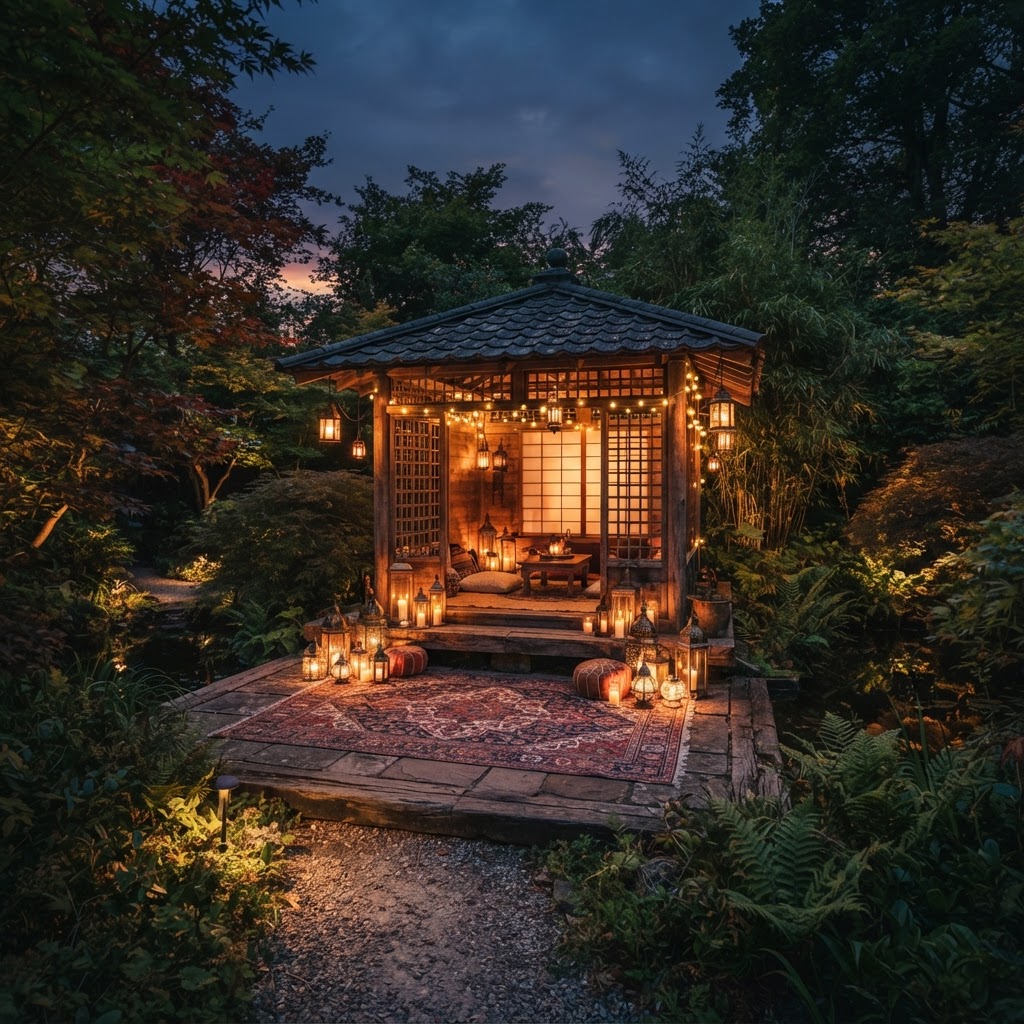
10. A candlelit evening retreat. An outdoor rug, lanterns and throws turn a pagoda into a romantic evening hideaway. Battery candles are the safest choice under fabric or near climbing plants.
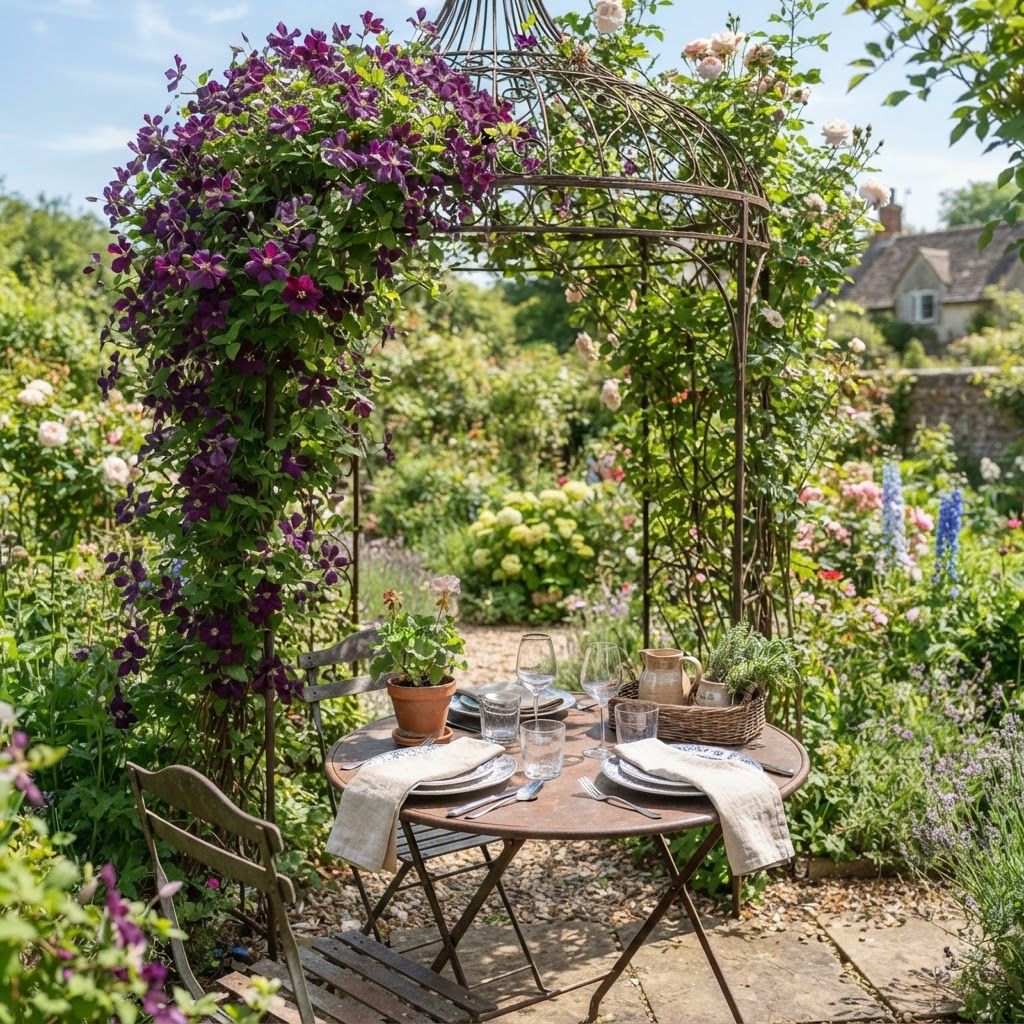
11. A clematis-covered bistro corner. A small pagoda with a bistro table and two chairs is perfect for morning coffee, especially when it's covered in clematis.
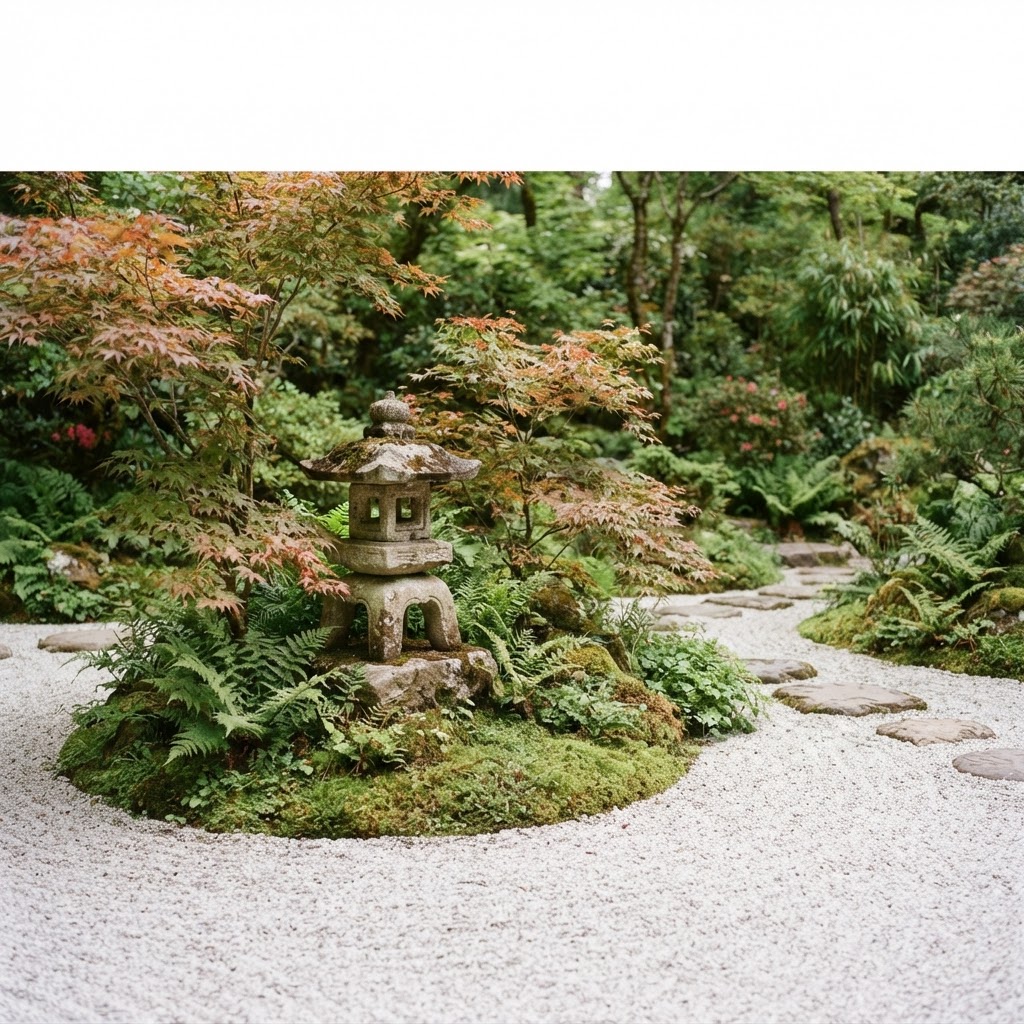
12. A stone pagoda ornament in a Japanese garden. A small stone pagoda or lantern among moss, ferns and maples adds calm and a sense of age. It pairs beautifully with the principles of Japanese house design and with other garden statues.
13. A pagoda by the pool or hot tub. A pagoda next to a pool gives shade for loungers and a spot for drinks. It works especially well alongside the ideas for a pool house.
Best Climbing Plants for a Garden Pagoda
| Plant | Why it works | Flowering |
|---|---|---|
| Climbing and rambling roses | Scent, colour and romance | Early to late summer |
| Clematis | Lightweight and easy to train | Spring to autumn, depending on type |
| Wisteria | Spectacular hanging flowers | Late spring |
| Star jasmine | Evergreen with a sweet evening scent | Summer |
| Honeysuckle | Scented and loved by pollinators | Summer |
| Grapevine | Leafy shade and fruit | Foliage all summer |
The Royal Horticultural Society's advice on pergolas applies just as well to a pagoda: "Any rambler or strongly-growing climbing rose will be a good choice," and to "cover the canopy quickly, train the shoots straight up the posts." Evening-scented plants such as jasmine and honeysuckle are lovely here too, alongside other flowers that bloom at night.
How to Choose a Garden Pagoda
- Material. Powder-coated steel is strong and slim, wrought iron is heavy and long-lasting, and timber is warm and natural but needs treating.
- Size. Measure the space and the furniture you want to put beneath it, and leave room to walk around.
- Open or covered. An open frame is best for climbers, while a solid or fabric roof gives shade and some shelter from showers.
- Anchoring. Fix the legs securely into the ground or onto paving, as tall structures can catch the wind.
- Planning. Most freestanding garden structures don't need planning permission, but height limits apply, especially near boundaries, so check with your local council if in doubt.
How I Style Garden Structures
After more than 15 years of designing homes, pubs and restaurants, I treat a garden structure like a room. As a florist, I also can't resist filling it with flowers.
- Plant first, decorate second. Climbers take a few seasons to establish, so I plant them as soon as the pagoda goes in.
- Layer the lighting. Festoons overhead, lanterns on the table and a few solar lights along the path make it magical after dark.
- Bring the indoors out. Cushions, throws and an outdoor rug make it feel like a real room.
- Keep the colours soft. Black or dark green frames disappear into the planting and let the flowers be the stars.
Common Mistakes to Avoid
| Mistake | Why it's a problem | What to do instead |
|---|---|---|
| Not anchoring the pagoda | It can blow over in strong winds | Fix the legs into the ground or onto paving |
| Choosing a flimsy frame for wisteria | It may bend or collapse | Use a sturdy metal or timber pagoda |
| Too small for the furniture | It feels cramped | Measure your table and chairs first |
| Real candles near fabric or plants | Fire risk | Use battery candles and outdoor lights |
| Putting it in deep shade | Climbers won't flower | Choose a sunny or partly sunny spot |
| Forgetting maintenance | Rust or rot shortens its life | Treat timber and touch up metal each year |
Frequently Asked Questions
What is a garden pagoda?
A garden pagoda is a freestanding garden structure with a tiered, often curved roof inspired by Asian pagodas. It's used as a focal point, a seating area or a support for climbing plants.
What is the difference between a pagoda and a gazebo?
A pagoda has a distinctive tiered, curved roof and is often an open frame, while a gazebo usually has a solid or fabric roof designed mainly for shade and shelter.
What can I grow over a garden pagoda?
Climbing and rambling roses, clematis, wisteria, star jasmine, honeysuckle and grapevines all grow well over a pagoda.
Do I need planning permission for a garden pagoda?
Usually not, as most freestanding garden structures are allowed without permission, but height limits apply, especially close to boundaries. Check with your local council if you're unsure.
How do you anchor a garden pagoda?
Use ground spikes or concrete the legs into the soil, or bolt the feet onto paving or decking so the pagoda can't move in strong winds.
How do you decorate a garden pagoda?
Add climbing plants, festoon or fairy lights, outdoor curtains, cushions, an outdoor rug and lanterns.
Where should I put a garden pagoda?
Put it where you'd naturally want to sit, such as a sunny patio or the end of a path, or use it as a focal point that draws the eye down the garden.
A Little Romance in the Garden
A garden pagoda adds height, shade and a touch of exotic charm to any garden. Choose a sturdy frame, anchor it well, plant it with roses or wisteria and dress it with lights and cushions, and it will become your favourite place to sit from spring to autumn.
And if you'd like help planning a garden room or outdoor seating area, you can book a one-hour online interior design consultation with me.
About the author
Magda Callery is a UK interior designer and florist with more than 15 years' experience designing homes, pubs, restaurants and bars, and her expert commentary has featured in Homes & Gardens, The Mirror and The Spruce. Explore more of the decorating articles.
Continue reading

Flat Back Christmas Tree: 13 Ideas for Small Spaces
What a flat back Christmas tree is, how it compares with slim and half trees, how to choose the right size, 13 ideas for small spaces and how to decorate it so it looks full.

Pergola Decorating Ideas: 17 Ways to Style a Pergola
17 pergola decorating ideas, from climbing roses, clematis and grapevines to festoon lights, curtains, shade canopies and outdoor kitchens, plus the best plants for a pergola.

Driveway Ideas: 17 Stylish Ideas for Kerb Appeal
17 driveway ideas and suggestions, from gravel and block paving to resin, brick and grass grids, plus driveway materials compared, planning rules and finishing touches.