
Driveway Ideas: 17 Stylish Ideas for Kerb Appeal
17 driveway ideas and suggestions, from gravel and block paving to resin, brick and grass grids, plus driveway materials compared, planning rules and finishing touches.
By Magda Callery, interior designer and florist
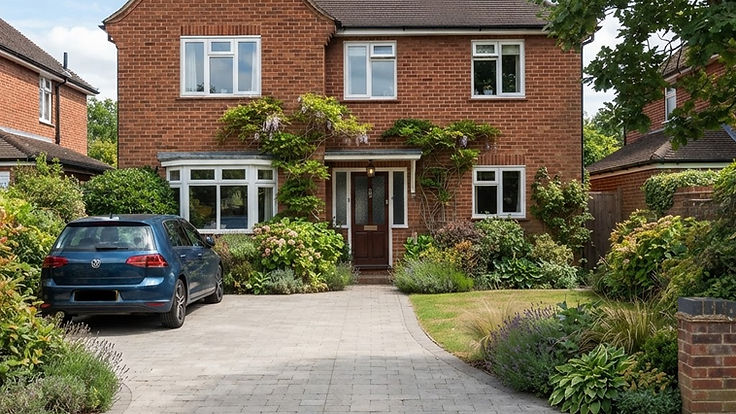
Your driveway is often the biggest single feature at the front of your house, and the first thing visitors walk across. A tired, cracked or weedy drive can let down even the prettiest home, while a well-designed one adds instant kerb appeal, frames the house and makes arriving home feel special.
In this guide I'll share 17 driveway ideas and suggestions for every style and budget, from gravel and block paving to resin, brick and grass, plus a comparison of driveway materials, the planning rules to know before you start, and the mistakes to avoid.
The quick answer: the most popular driveway materials are gravel, block paving, resin-bound surfacing, tarmac, concrete and natural stone. Gravel is the cheapest and most natural looking, block paving and brick are classic and hard-wearing, resin is smooth and modern, and grass grids are the greenest choice. Soften any driveway with planted borders, a contrasting edging and good lighting. In England, a new driveway over five square metres needs planning permission unless it uses permeable surfacing or drains to a lawn or border.
Driveway Materials Compared
| Material | Look | Cost | Lifespan | Maintenance |
|---|---|---|---|---|
| Gravel | Natural, crunchy, country | Low | Long, with topping up | Rake and top up; weeds without a membrane |
| Block paving | Neat and classic | Medium | 20 years or more | Weed and re-sand joints |
| Clay brick pavers | Warm and traditional | Medium to high | Very long | Occasional cleaning |
| Resin-bound | Smooth, modern, seamless | Medium to high | 15 to 25 years | Sweep and wash |
| Tarmac | Simple and practical | Low to medium | 15 to 20 years | Reseal occasionally |
| Concrete | Clean and modern | Low to medium | 25 years or more | Clean; can crack |
| Natural stone | Elegant, timeless | High | Very long | Clean and seal |
| Grass grid | Green and soft | Low to medium | Long | Mow and water |
Do You Need Planning Permission for a Driveway?
Before you choose a material, check the rules. The government's Planning Portal sets out the rules for paving your front garden in England: "You will not need planning permission if a new or replacement driveway of any size uses permeable (or porous) surfacing," such as gravel or permeable block paving, "or if the rainwater is directed to a lawn or border to drain naturally." But "if the surface to be covered is more than five square metres planning permission will be needed" for traditional, impermeable surfaces that don't drain to a permeable area.
If you need to drive across the pavement, you'll also need a dropped kerb. The Planning Portal is clear that "it is illegal to do so without one," and you'll need to apply to your local council. Rules can differ in Wales, Scotland and Northern Ireland, and in conservation areas, so always check with your council first.
17 Driveway Ideas
Gravel and natural driveways
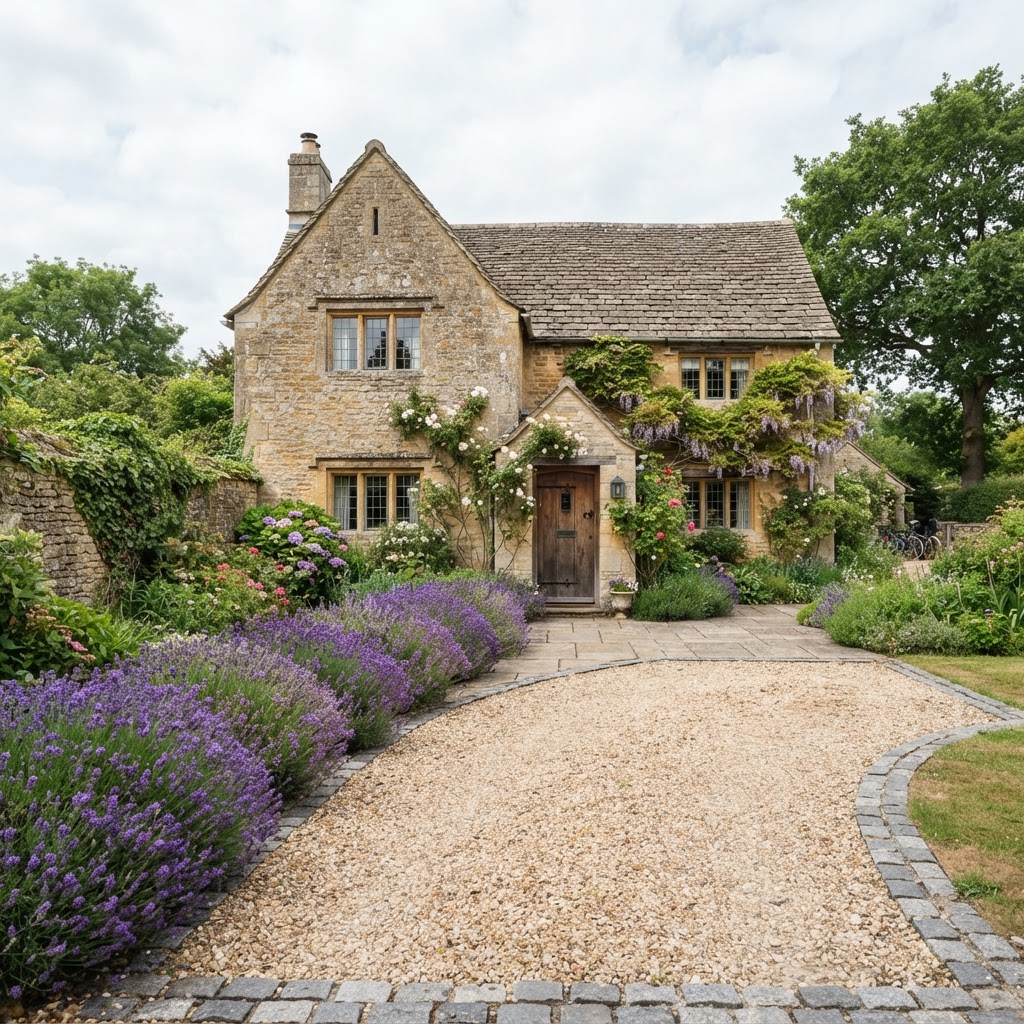
1. Gravel with stone sett edging. Gravel is affordable, permeable and has a lovely crunch underfoot that tells you when someone arrives. Edge it with granite setts or bricks to keep the stones in place and give it a crisp finish.
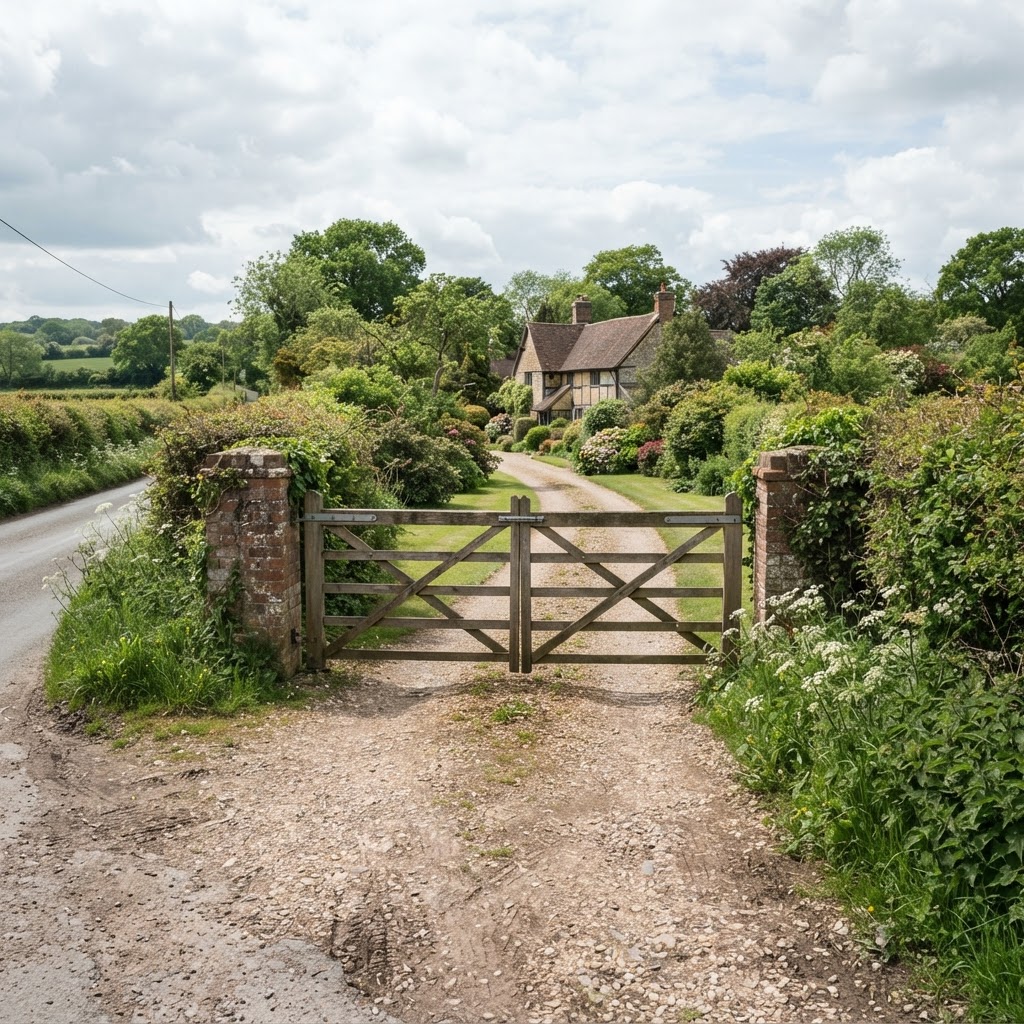
2. Gravel with timber gates. A gravel drive leading to wooden five-bar gates between brick pillars has a relaxed, country feel that suits cottages and older homes beautifully.
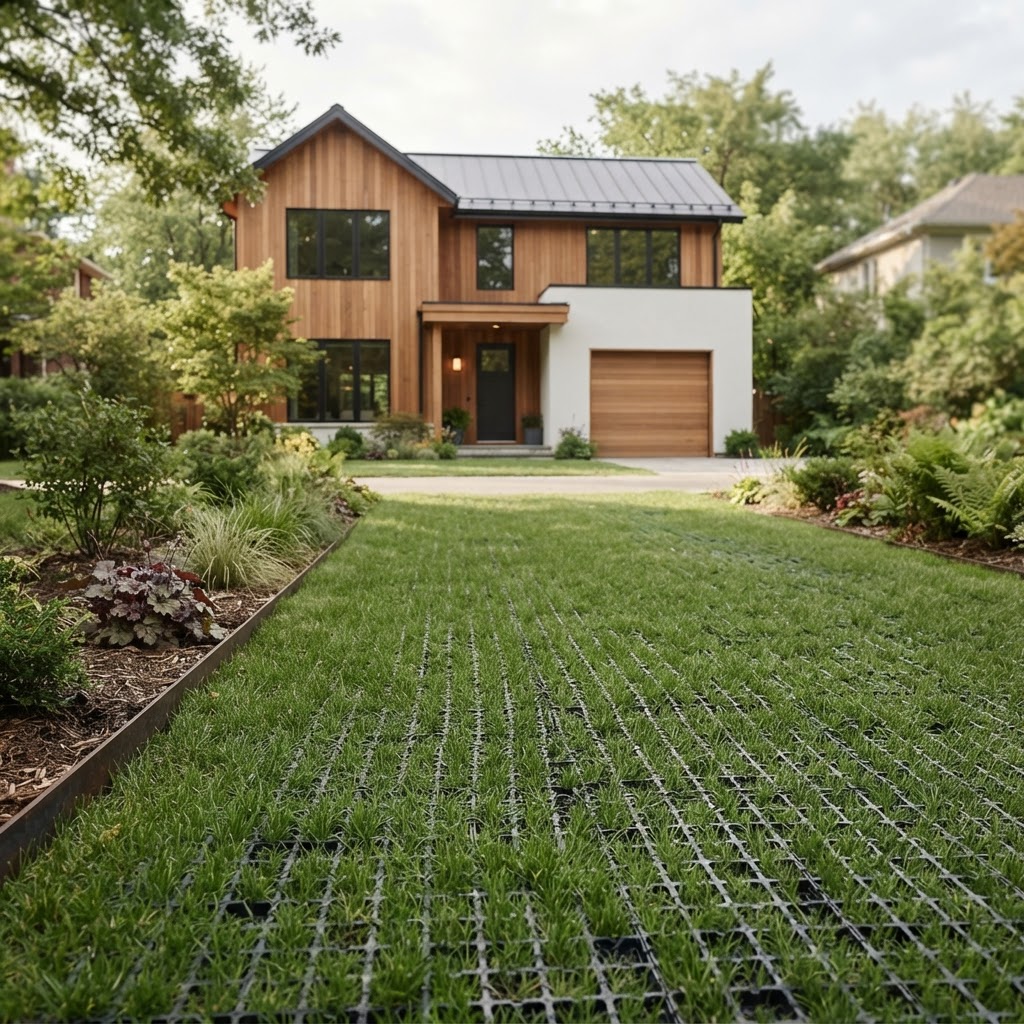
3. A grass grid driveway. Plastic or concrete grids filled with grass or gravel give you a strong, permeable surface that still looks green. It's one of the most eco-friendly driveway suggestions and works well for drives that aren't used every day.
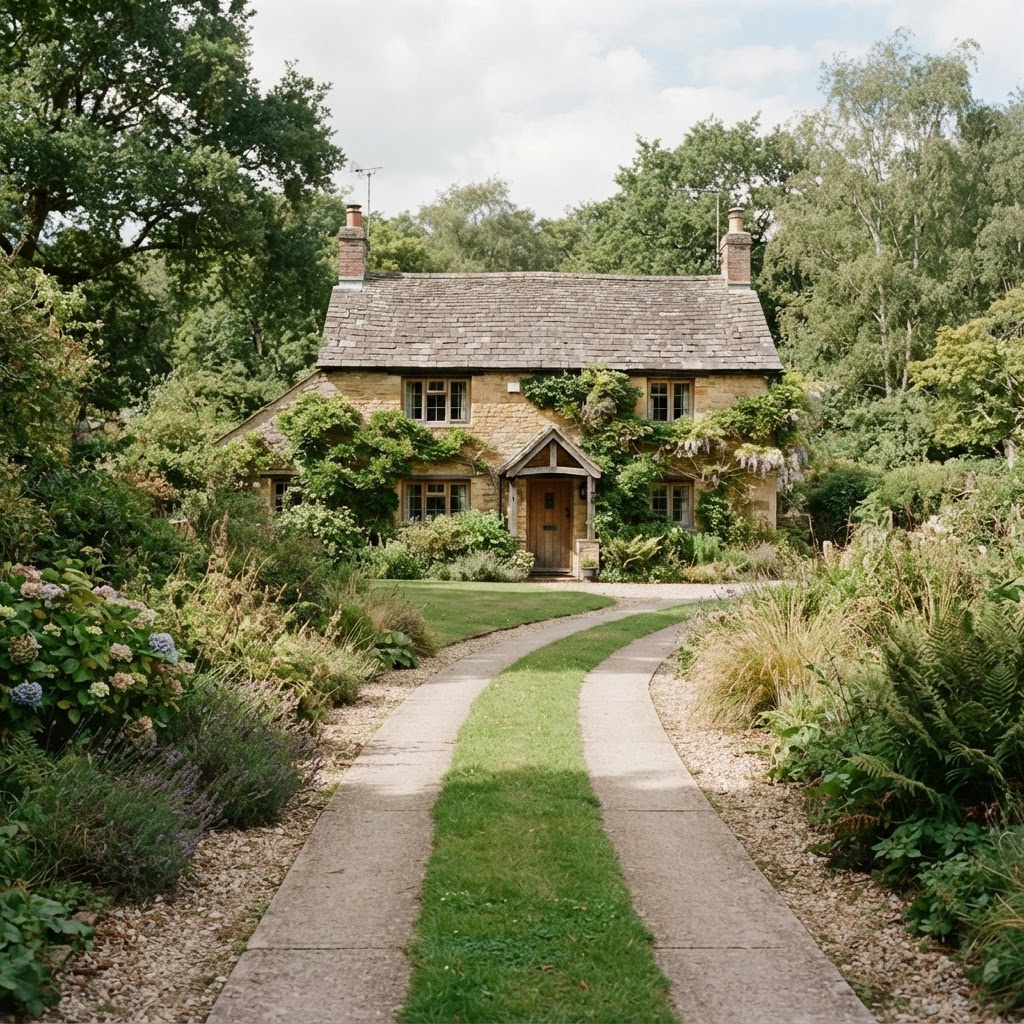
4. A ribbon driveway. Two strips of concrete, stone or brick for the wheels with grass, gravel or low planting in between is a charming, old-fashioned idea that uses far less hard surface.
Block paving and brick
5. Classic block paving. Grey or charcoal block paving is hard-wearing and neat, and it suits most modern and traditional homes. Choose permeable blocks if you want to avoid planning permission.
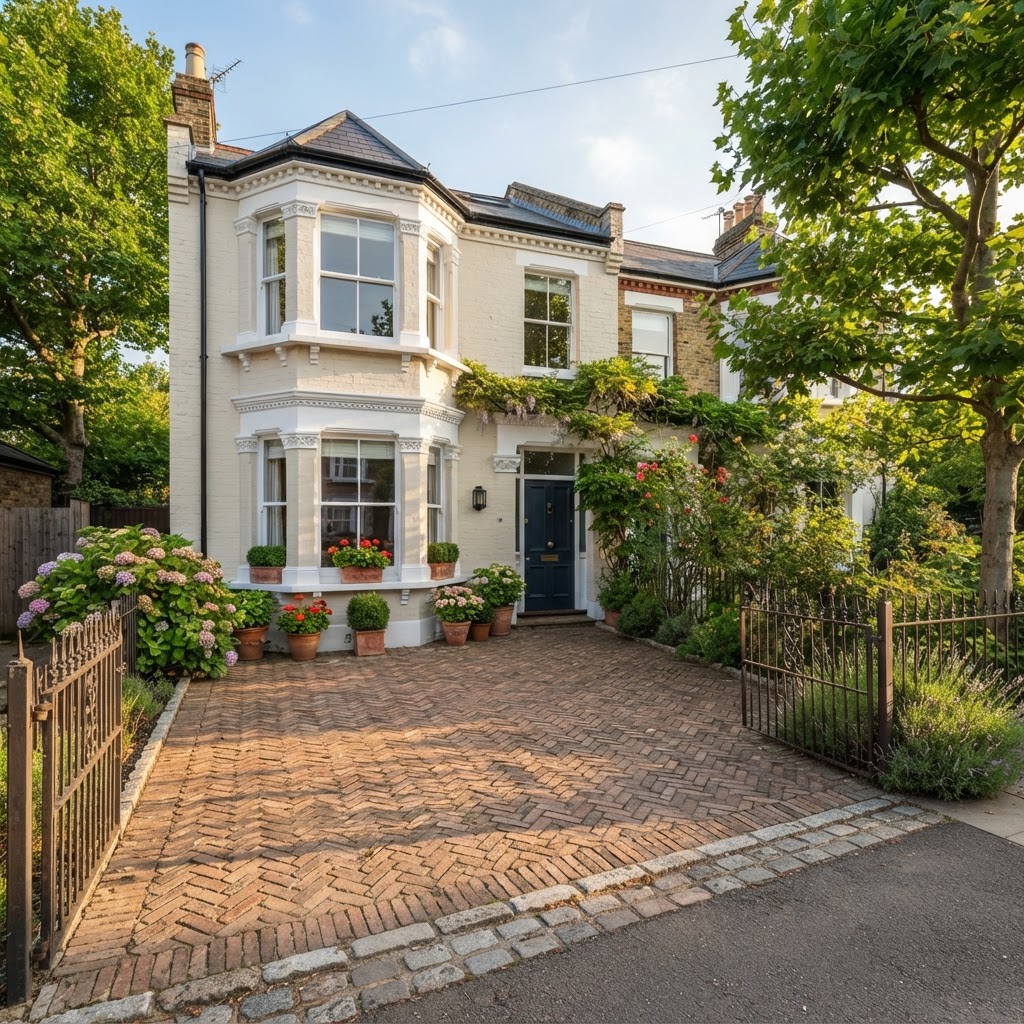
6. Herringbone brick pavers. Clay pavers laid in a herringbone pattern are wonderfully warm and traditional, especially in front of a Victorian or Edwardian house. They also match the bricks of a period home far better than concrete blocks.
7. A contrasting border. A border of darker blocks or setts around a paler driveway defines the edges and makes even a simple drive look designed.
8. Mixed materials. Combine block paving for parking with gravel or planting elsewhere, so the front garden doesn't feel like one big car park.
Resin, tarmac and concrete
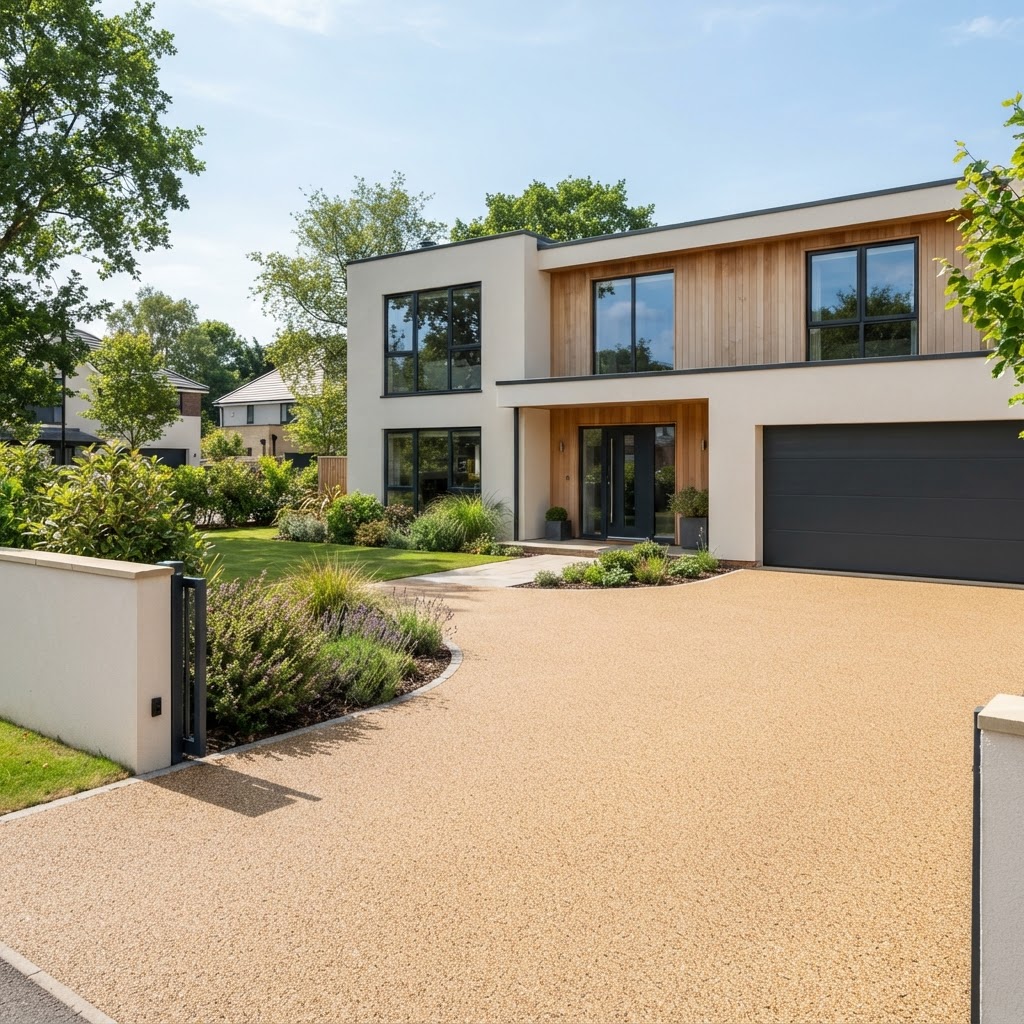
9. A resin-bound driveway. Resin-bound gravel gives you the look of gravel with a smooth, seamless and permeable finish, and it comes in lots of colours. Warm buff and honey tones look softer than grey.
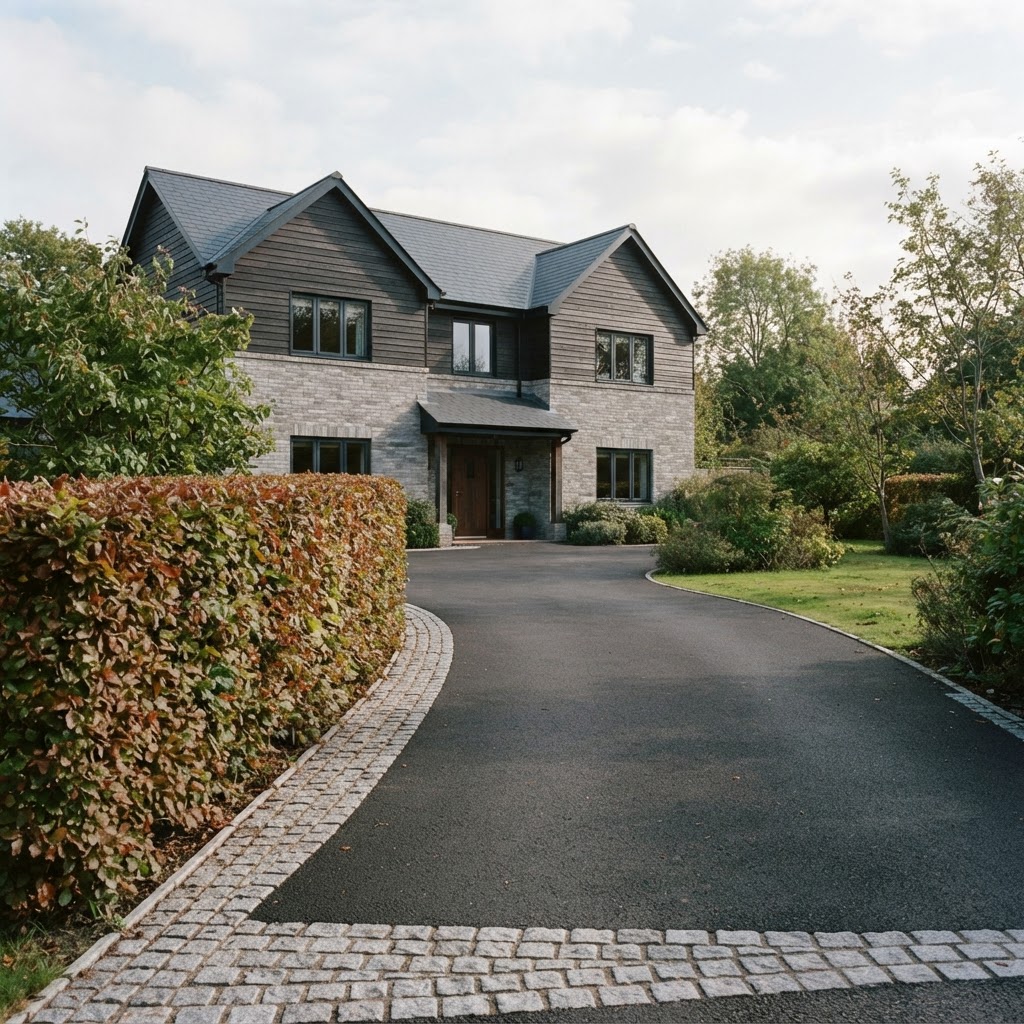
10. Tarmac with a sett border. Tarmac is practical and affordable, and a border of granite setts or bricks lifts it from basic to smart. A beech or yew hedge behind it adds a classic touch.
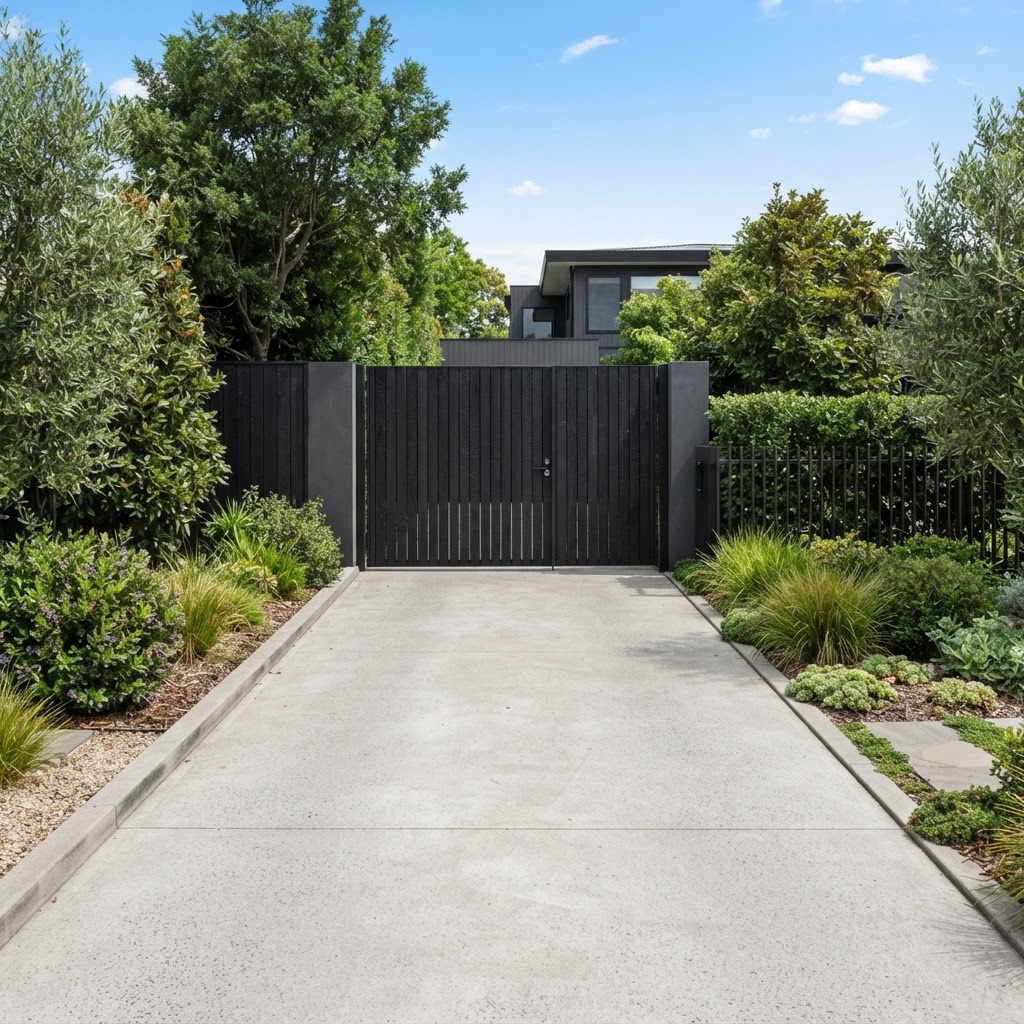
11. Smooth modern concrete. Large, pale concrete slabs with clean joints suit a modern house, especially with a black gate, black window frames and simple planting.
Natural stone
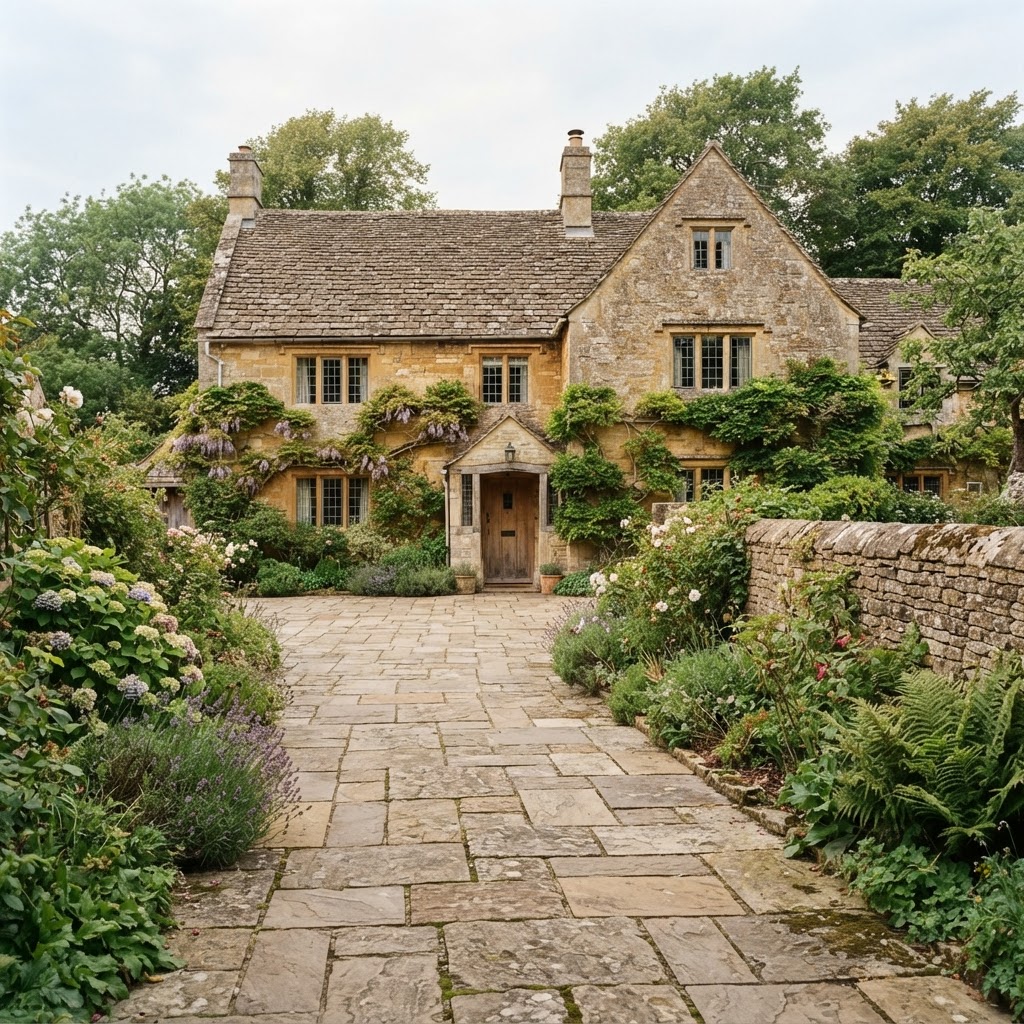
12. Sandstone or limestone flags. Natural stone flags are elegant and timeless, and they look especially good in front of a period stone house.
13. Cobbles and setts. A driveway laid entirely in granite setts or reclaimed cobbles has huge character and lasts for generations, though it costs more and can be bumpy underfoot.
Planting, lighting and finishing touches
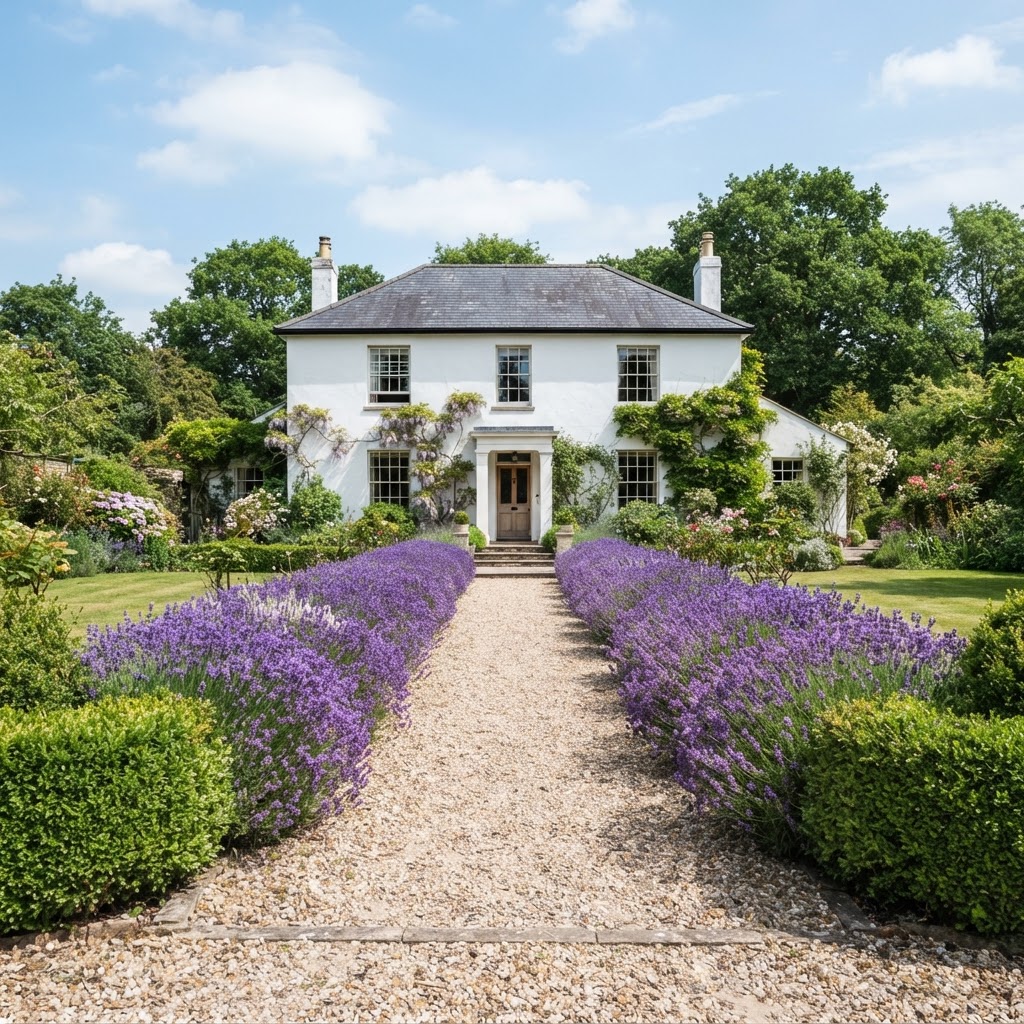
14. Planted borders. Soften the edges of your driveway with lavender, grasses, box or low shrubs. Lavender loves a hot, sunny, well-drained spot, and there are plenty of types of lavender to choose from, along with other flowers that are good for landscaping.
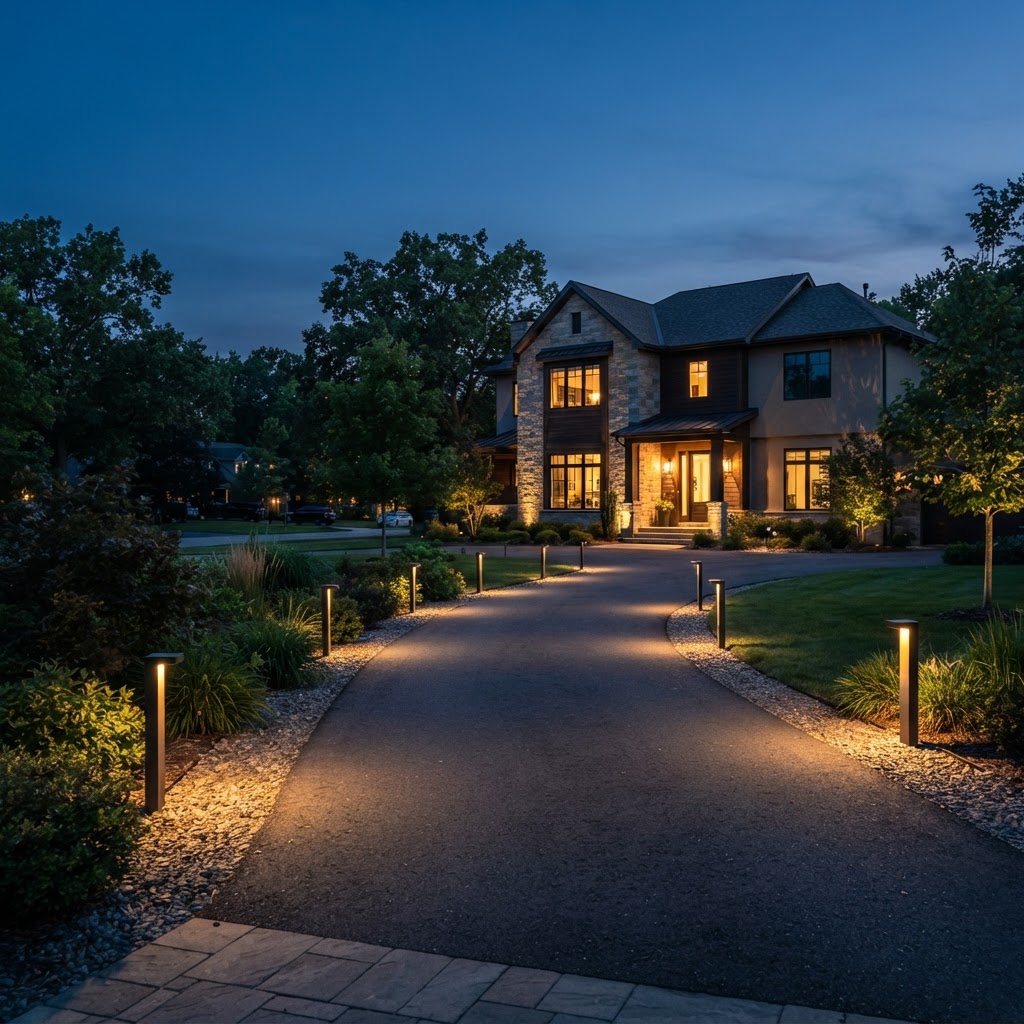
15. Driveway lighting. Low bollard lights, solar lights set into the edges or uplights on trees make the driveway safer at night and look beautiful from the street.
16. Gates, walls and fences. The right boundary frames the driveway. Choose gates and fencing that suit the house, and if budget is tight, many cheap garden fence ideas work well around a front garden too.
17. A coordinated front. Tie the driveway colour to the front door, window frames and trim. A grey drive looks crisp with a white house with black trim, while warm buff gravel or brick suits a cream or tan house, especially with one of the front door colours for a tan house.
How to Choose the Right Driveway
- Match the house. Brick and stone suit period homes, gravel suits cottages and country houses, and resin or concrete suit modern homes.
- Think about drainage. Permeable surfaces help prevent flooding and usually avoid the need for planning permission.
- Consider how you use it. Heavy daily use needs a strong surface, while a drive used for one car at weekends can be gravel or grass.
- Balance hard and soft. Leave room for planting so the front of the house still feels like a garden. The idea of balancing paving and planting is at the heart of good hardscape landscaping.
- Budget for the groundwork. Excavation, sub-base and drainage often cost as much as the surface itself.
How I Approach Front Gardens and Driveways
After more than 15 years of designing homes, pubs and restaurants, I've learnt that the outside of a building matters just as much as the inside. A driveway is the welcome mat of the house.
- Start with the house, not the car. I look at the colour of the brick, render, roof and windows before choosing a driveway material.
- Always add green. Even a small planted border or a pair of pots by the door makes a big difference.
- Keep the palette simple. One main material and one edging material is usually enough.
- Light the way. Good lighting is as important outside as it is inside.
Common Mistakes to Avoid
| Mistake | Why it's a problem | What to do instead |
|---|---|---|
| Paving the whole front garden | Looks harsh and can cause flooding | Keep planted borders and use permeable surfaces |
| Ignoring planning rules | You may have to dig it up | Check the rules before you start |
| No edging on gravel | Stones spread onto the lawn and pavement | Add setts, bricks or timber edging |
| Skimping on the sub-base | The surface sinks and cracks | Invest in proper groundwork |
| A material that clashes with the house | Looks out of place | Match the colour and style of the house |
| No lighting | Unsafe and uninviting at night | Add bollards or solar lights |
Frequently Asked Questions
What is the cheapest driveway option?
Gravel is usually the cheapest driveway material, followed by tarmac and concrete. Grass grids can also be affordable.
What is the best driveway material?
It depends on your house and budget. Block paving and brick are hard-wearing and classic, resin is smooth and modern, gravel is affordable and natural, and natural stone is the most elegant.
Do I need planning permission for a new driveway?
In England, you don't need planning permission if the driveway uses permeable surfacing or drains to a lawn or border. An impermeable driveway over five square metres does need permission. Always check with your local council.
Do I need a dropped kerb for a driveway?
Yes, if you need to drive across the pavement to reach your driveway. You must apply to your local council for one.
How can I make my driveway look nicer?
Add a contrasting border, planted edges, lighting and a coordinated front door and gate. Keeping it clean and weed-free helps too.
What is a ribbon driveway?
A ribbon driveway has two strips of hard surface for the wheels with grass, gravel or planting in between.
Is a resin driveway permeable?
Resin-bound driveways are permeable, while resin-bonded surfaces, where gravel is scattered over a resin layer, are not.
A Welcome Worth Coming Home To
A beautiful driveway sets the tone for the whole house. Choose a material that suits your home, check the planning rules, soften it with planting and finish it with good lighting, and you'll have a welcome you'll love every time you come home.
And if you'd like help choosing colours and materials for the front of your house, you can book a one-hour online interior design consultation with me.
About the author
Magda Callery is a UK interior designer and florist with more than 15 years' experience designing homes, pubs, restaurants and bars, and her expert commentary has featured in Homes & Gardens, The Mirror and The Spruce. Explore more of the decorating articles.
Continue reading

Flat Back Christmas Tree: 13 Ideas for Small Spaces
What a flat back Christmas tree is, how it compares with slim and half trees, how to choose the right size, 13 ideas for small spaces and how to decorate it so it looks full.

Pergola Decorating Ideas: 17 Ways to Style a Pergola
17 pergola decorating ideas, from climbing roses, clematis and grapevines to festoon lights, curtains, shade canopies and outdoor kitchens, plus the best plants for a pergola.

Garden Pagoda: 13 Stylish Ideas and Buying Tips
What a garden pagoda is, how it differs from a gazebo and a pergola, 13 garden pagoda ideas, the best climbing plants to grow over one and how to choose the right pagoda.