
Types of Lavender: 13 Best Varieties and How to Grow Them
The main types of lavender, 13 of the best lavender varieties, how fast lavender grows, and how to plant, prune, grow in pots and dry lavender.
By Magda Callery, interior designer and florist

Lavender is one of the most loved plants in the world. Its silvery leaves, purple spikes and unmistakable scent bring a little of Provence to any sunny garden, and bees adore it. But there are many types of lavender, and they're not all the same: some are tough enough for cold, wet winters, while others are short-lived and need protection. Choosing the right type is the key to lavender that thrives for years.
In this guide I'll explain the main types of lavender, share 13 of the best lavender varieties, explain how fast lavender grows, and show you how to plant, prune and dry it.
The quick answer: the three main groups are English lavender (Lavandula angustifolia), which is the hardiest and most compact; lavandin (Lavandula × intermedia), which is larger and very fragrant; and French or Spanish lavender (Lavandula stoechas and relatives), which has "rabbit ear" flowers but is less hardy. All need full sun and very well-drained soil, and they should be pruned every year after flowering.
The Main Types of Lavender
| Type | Botanical name | Hardiness | Flowers | Best for |
|---|---|---|---|---|
| English lavender | Lavandula angustifolia | Hardiest | Compact spikes in purple, blue, pink and white | Hedges, borders, cooking |
| Lavandin | Lavandula × intermedia | Hardy | Long spikes, strong scent | Large borders, drying, oil |
| Spanish lavender | Lavandula stoechas | Less hardy, short-lived | Plump heads with "rabbit ear" bracts | Pots, warm gardens |
| Butterfly lavender | Lavandula pedunculata | Less hardy | Long, flag-like bracts | Pots and sunny patios |
| French (fringed) lavender | Lavandula dentata | Tender | Soft heads, toothed leaves | Pots, conservatories |
The Royal Horticultural Society's guide to growing lavender explains that "English lavender ... and its hybrids are the hardiest types," while French and tender lavenders "are less hardy than English types and tend to be short-lived." In colder gardens, grow tender types in pots and move them somewhere frost-free for winter.
13 Best Lavender Varieties
English lavender (Lavandula angustifolia)
1. 'Hidcote'. The classic deep purple English lavender, compact and neat, with silvery leaves. It's perfect for low hedges and edging paths.
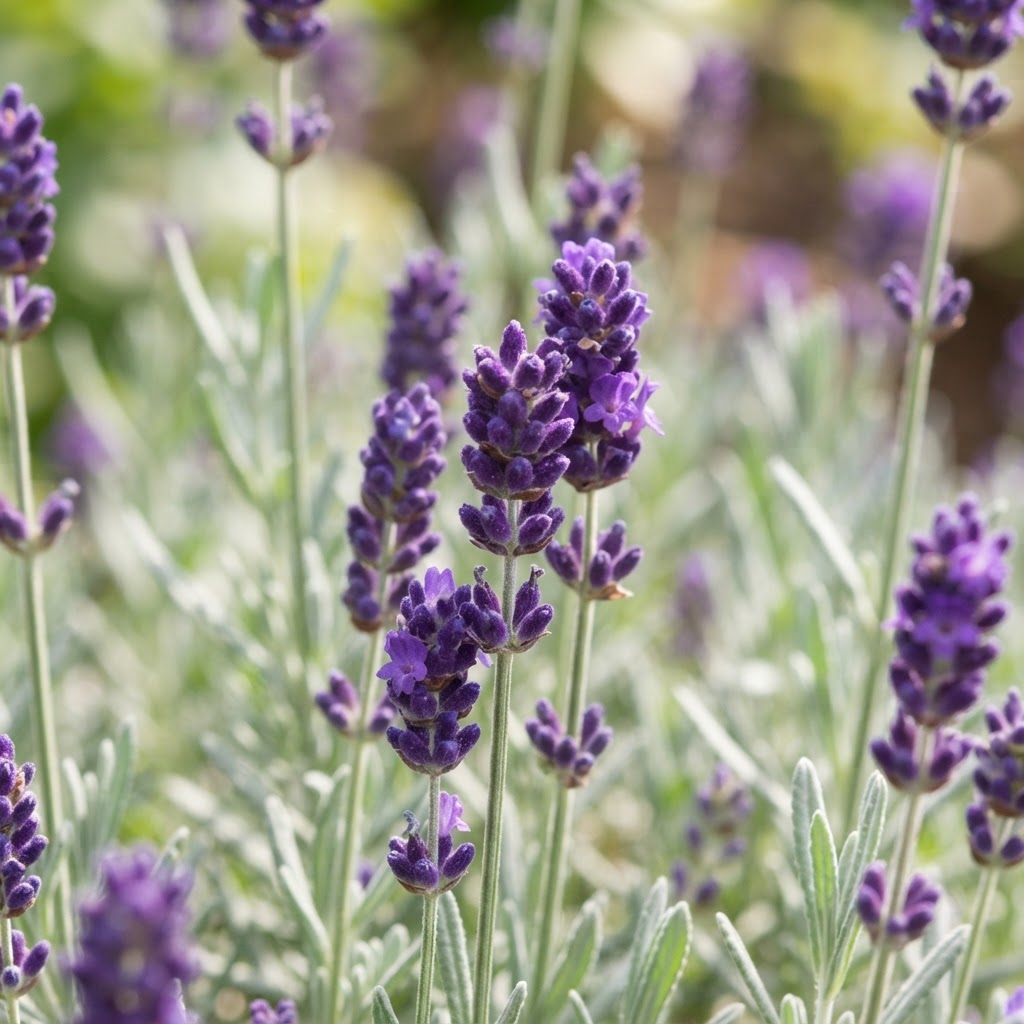
2. 'Munstead'. Soft blue-purple flowers on a compact plant. It's one of the most reliable lavenders for cooler gardens.
3. 'Folgate'. Blue-violet flowers that open early in the season; another excellent variety for culinary use.
4. 'Imperial Gem'. Rich, dark purple flowers above particularly silvery foliage.
5. Pink English lavender. Varieties such as 'Rosea' and 'Hidcote Pink' have soft, rose-pink flowers that look pretty with roses and white flowers.
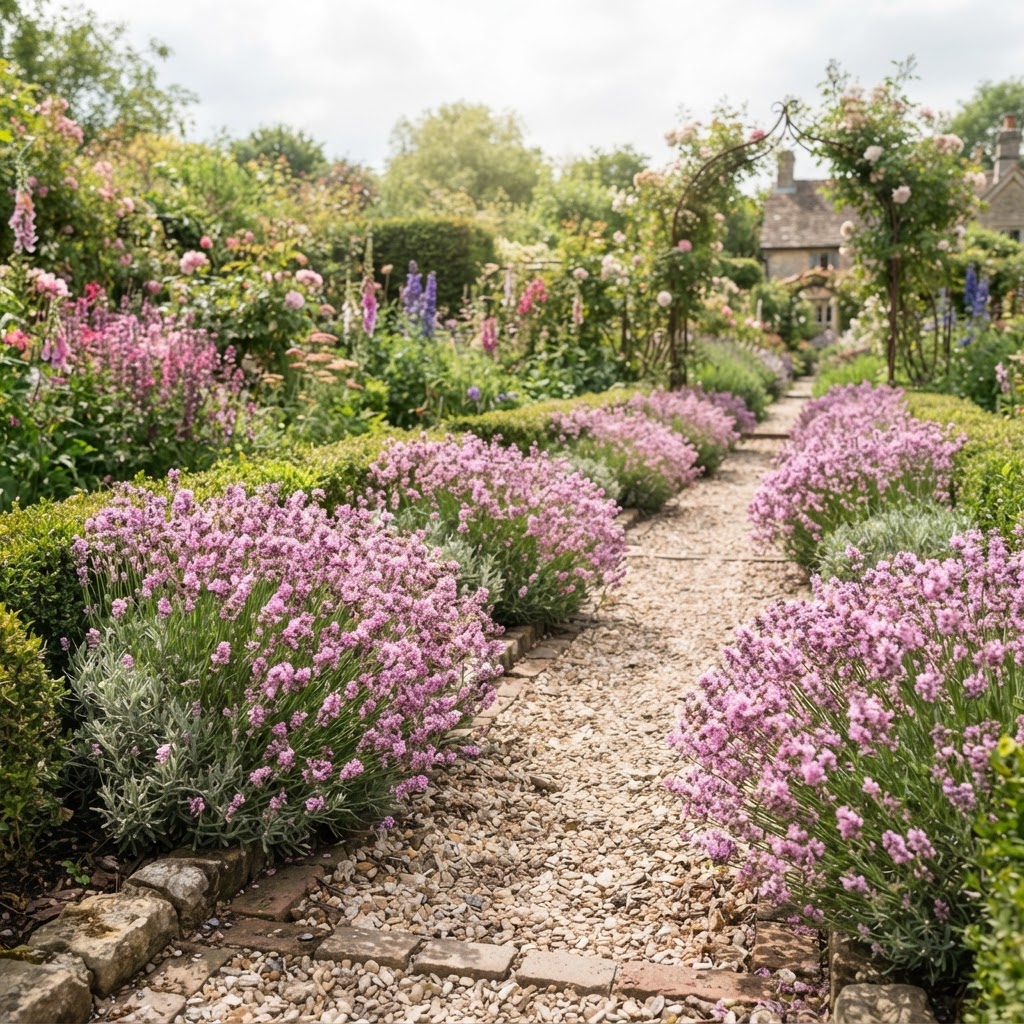
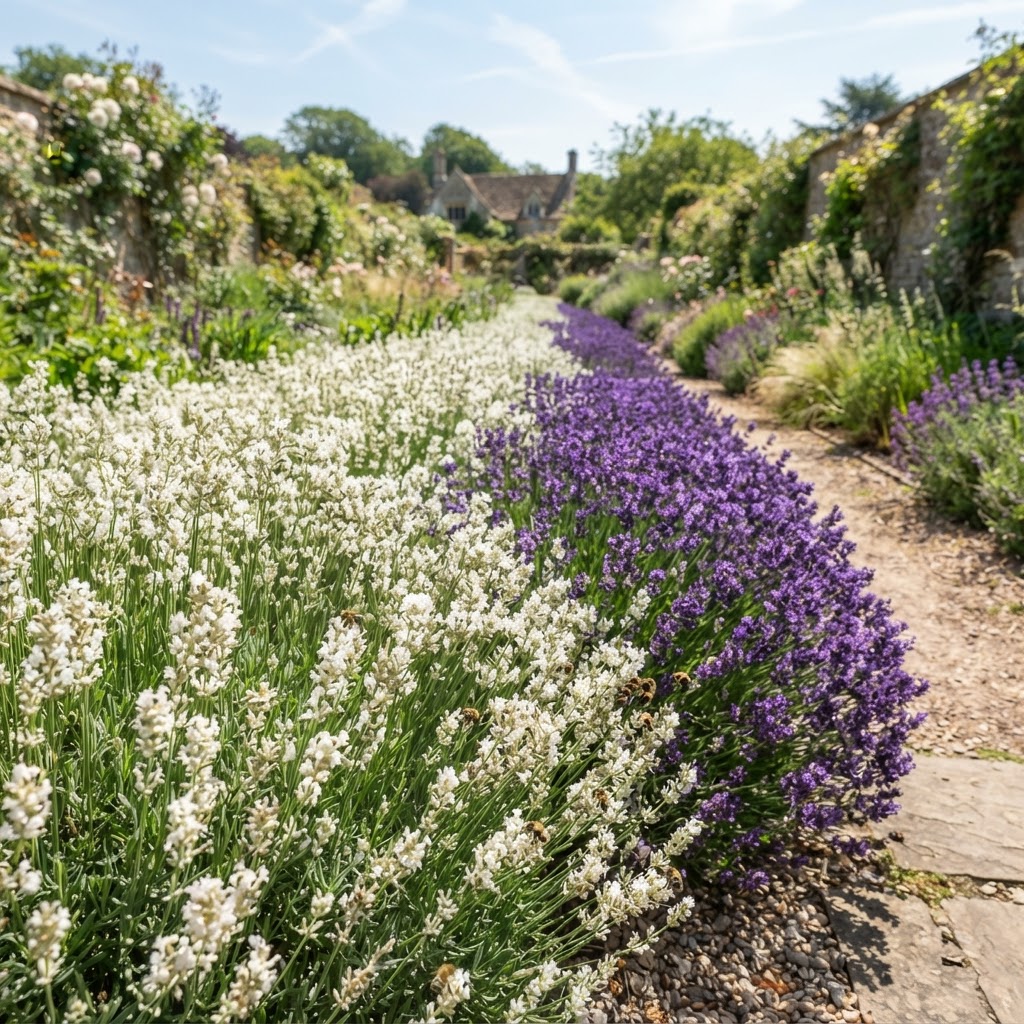
6. White English lavender. White varieties such as 'Arctic Snow' look fresh and elegant, especially in a white garden or mixed with purple lavender.
Lavandin (Lavandula × intermedia)
7. 'Grosso'. The lavender of the famous Provence fields, with long stems and a very strong scent. It's widely grown for lavender oil and drying.
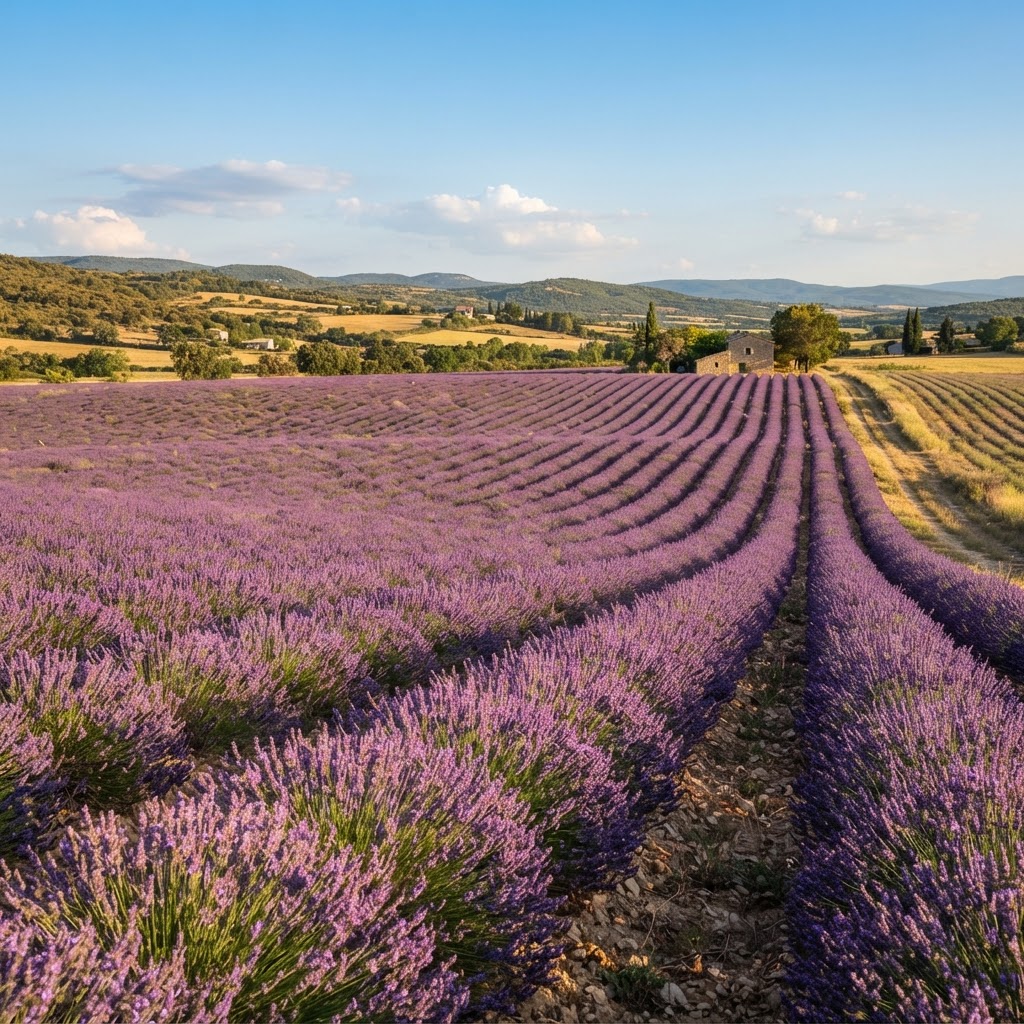
8. 'Provence'. Long, pale violet spikes with a sweet fragrance; lovely for drying.
9. 'Edelweiss'. A white lavandin with long spikes and a strong scent.
French and Spanish lavenders
10. Spanish lavender (Lavandula stoechas). Plump, dark purple flower heads topped with petal-like "rabbit ears." It flowers early and suits pots and warm, sheltered gardens.
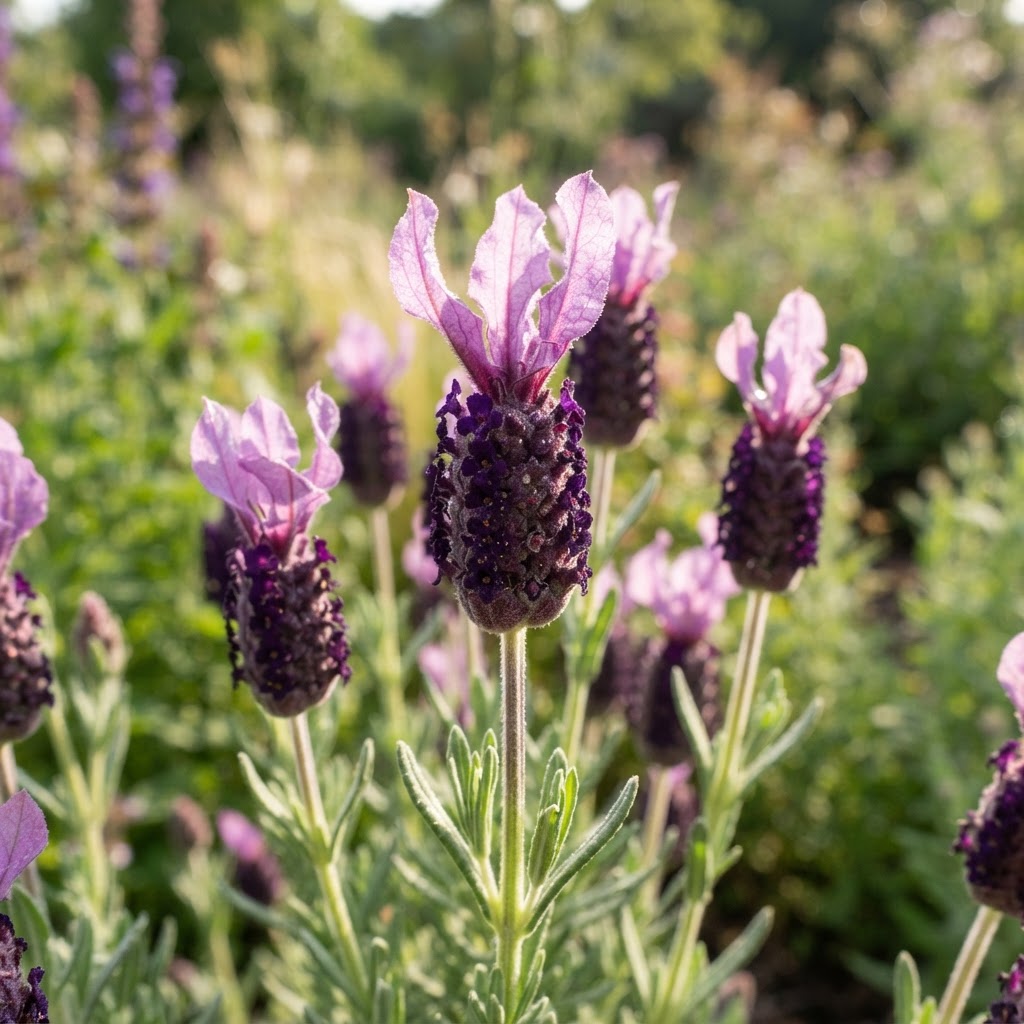
11. Butterfly lavender (Lavandula pedunculata 'Papillon'). Long, wavy, flag-like bracts on tall stems, like little butterflies.
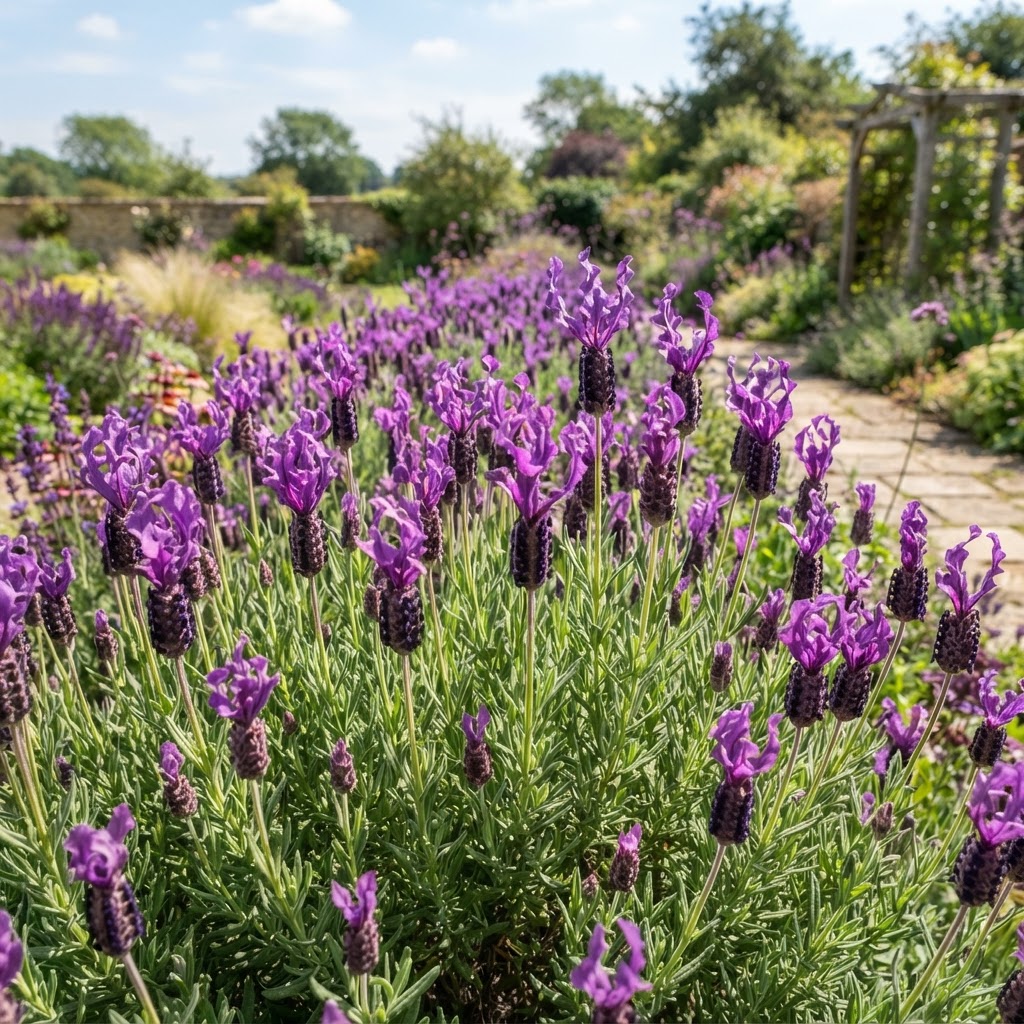
12. Fringed lavender (Lavandula dentata). Soft lilac heads and fine, toothed, grey-green leaves. It's tender, so grow it in a pot.
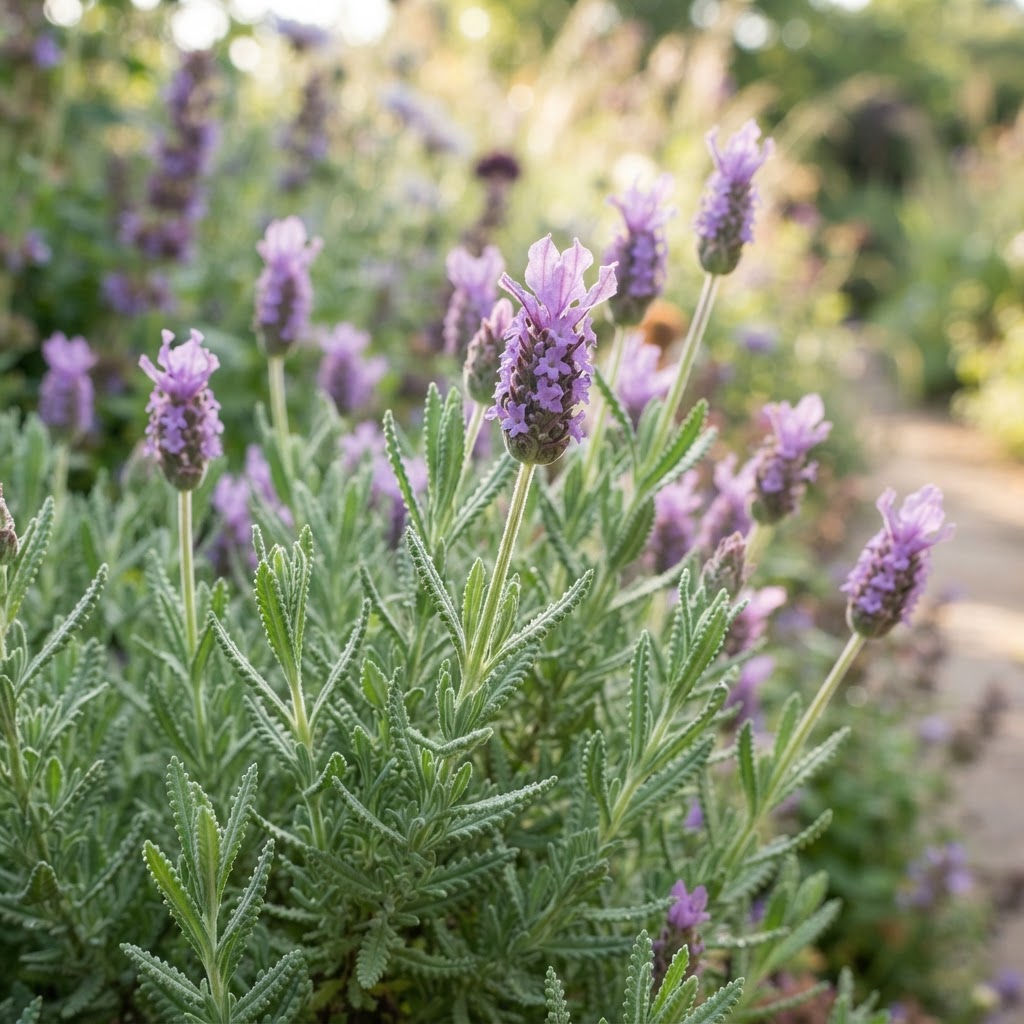
13. Fernleaf lavender (Lavandula multifida). Feathery, fern-like leaves and slender blue-violet spikes. It's tender and best grown as an annual or in a pot.
How Fast Does Lavender Grow?
Lavender is a moderately fast grower. Young plants usually flower in their first summer, fill out in their second year and reach their full size in around two to three years. English lavenders typically grow to about 45 to 90 cm, lavandins to around 90 cm or more, and Spanish lavenders to about 60 cm. Growth is fastest in full sun and well-drained soil, and slowest in damp, shady or rich ground.
How to Grow Lavender
- Sun. Plant in full sun. Lavender is a Mediterranean plant and dislikes shade.
- Drainage. This is the most important rule. Lavender tolerates poor, dry and chalky soil, but it hates heavy, wet ground. On clay, plant on a mound or in a raised bed.
- Planting time. Plant in spring, once the soil is warming, so roots establish before winter.
- Spacing. Plant hedging lavender about 30 to 45 cm apart.
- Feeding. Don't feed; rich soil makes lavender soft and floppy.
- Watering. Water new plants until established, then only in long droughts.
Lavender is one of the best plants for edging paths, steps and terraces, where it softens the hardscape and releases its scent as you brush past.
How to Prune Lavender
The RHS advises trimming lavender once a year in late summer, after flowering, removing the spent flower stalks and about 2.5 cm of leafy growth. Crucially, avoid cutting into old, woody stems, because lavender rarely regrows from bare wood.
- Prune after flowering, in late summer.
- Cut off the flower stalks and trim the plant into a neat mound.
- Leave some green leaves on every stem; don't cut into bare wood.
- Tidy lightly in spring if needed, removing any frost-damaged tips.
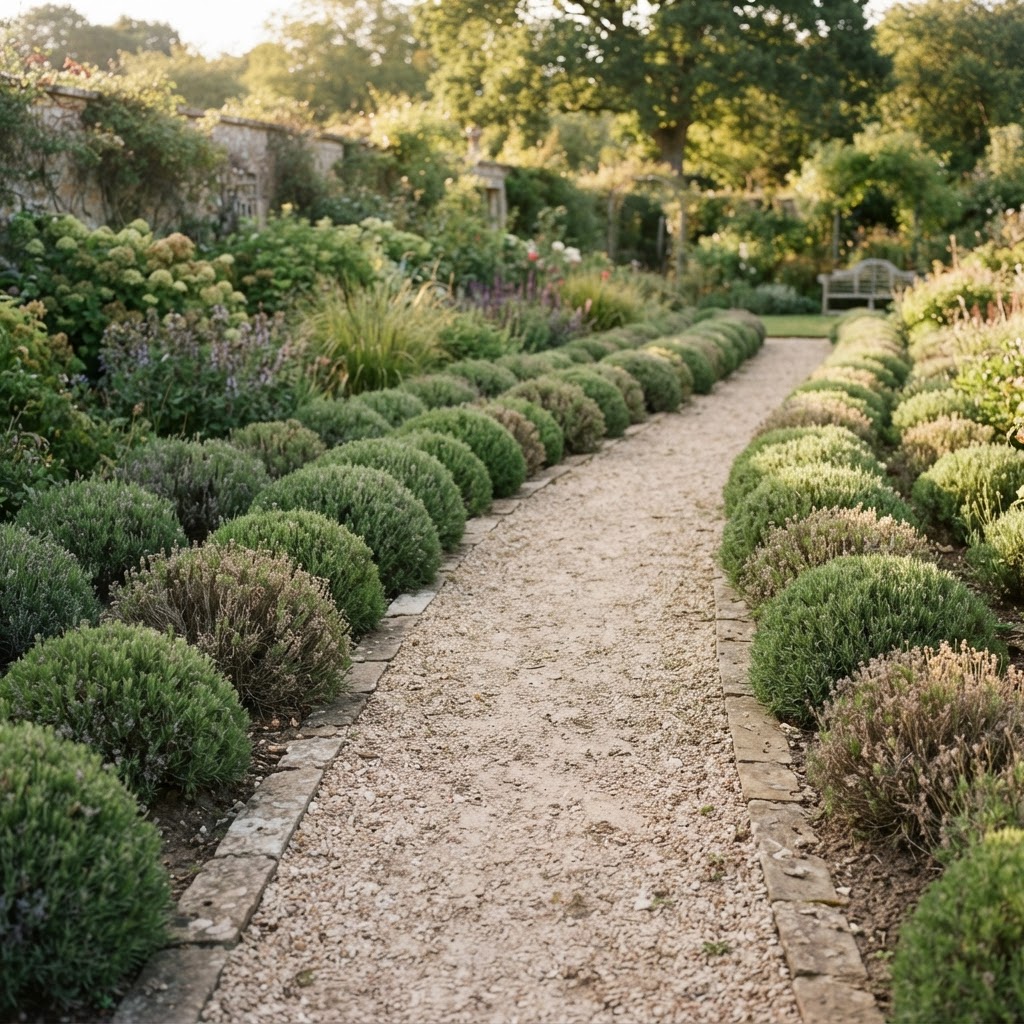
Without regular pruning, lavender becomes woody and leggy, and old plants are best replaced every few years.
Growing Lavender in Pots
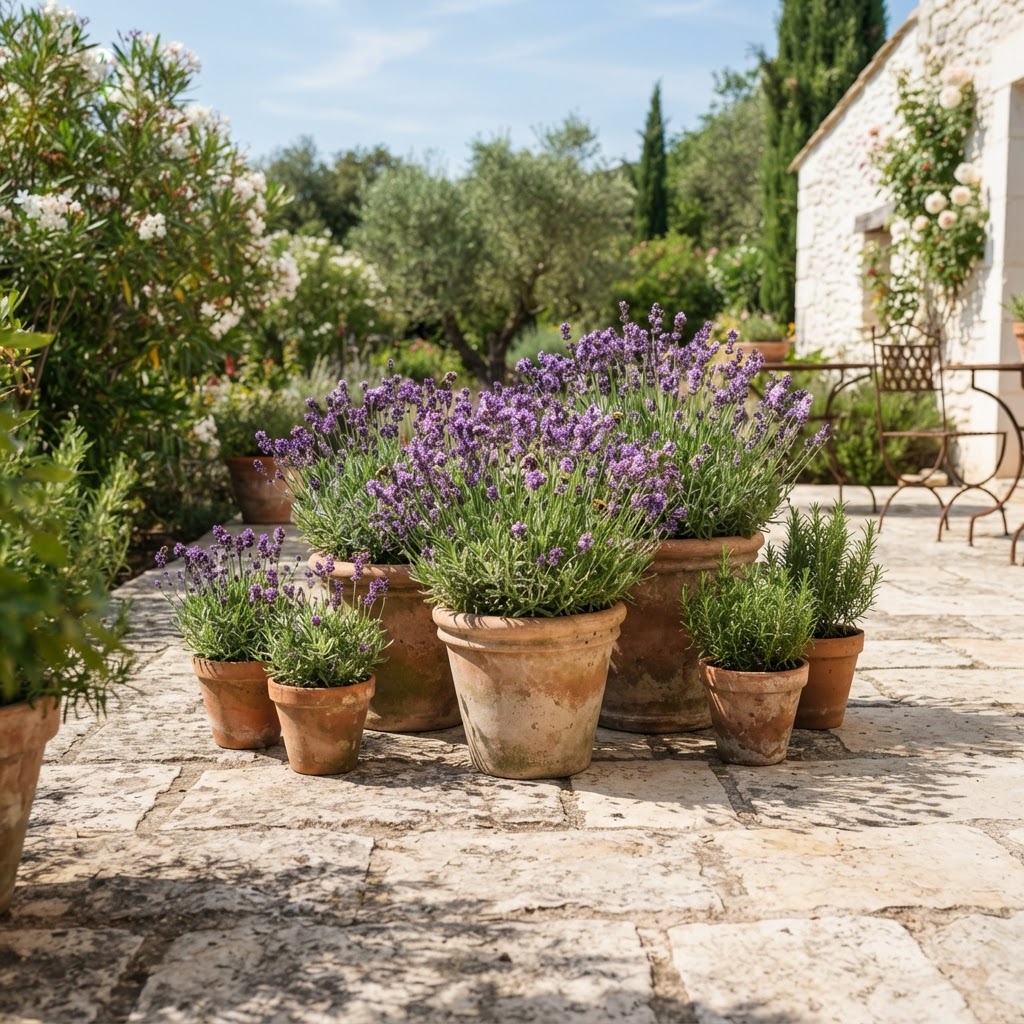
Lavender grows beautifully in pots, especially Spanish and fringed types that need winter protection. Use a terracotta pot with plenty of drainage holes, a gritty, free-draining compost, and a sunny spot. Water when the top of the compost is dry, and move tender types under cover for the winter.
Harvesting and Drying Lavender
Cut lavender for drying when the first few flowers on each spike have opened, ideally on a dry morning. Tie the stems in small bunches and hang them upside down somewhere warm, dark and airy for a couple of weeks. Lavandins such as 'Grosso' are best for scent; English lavenders are best for colour and cooking.
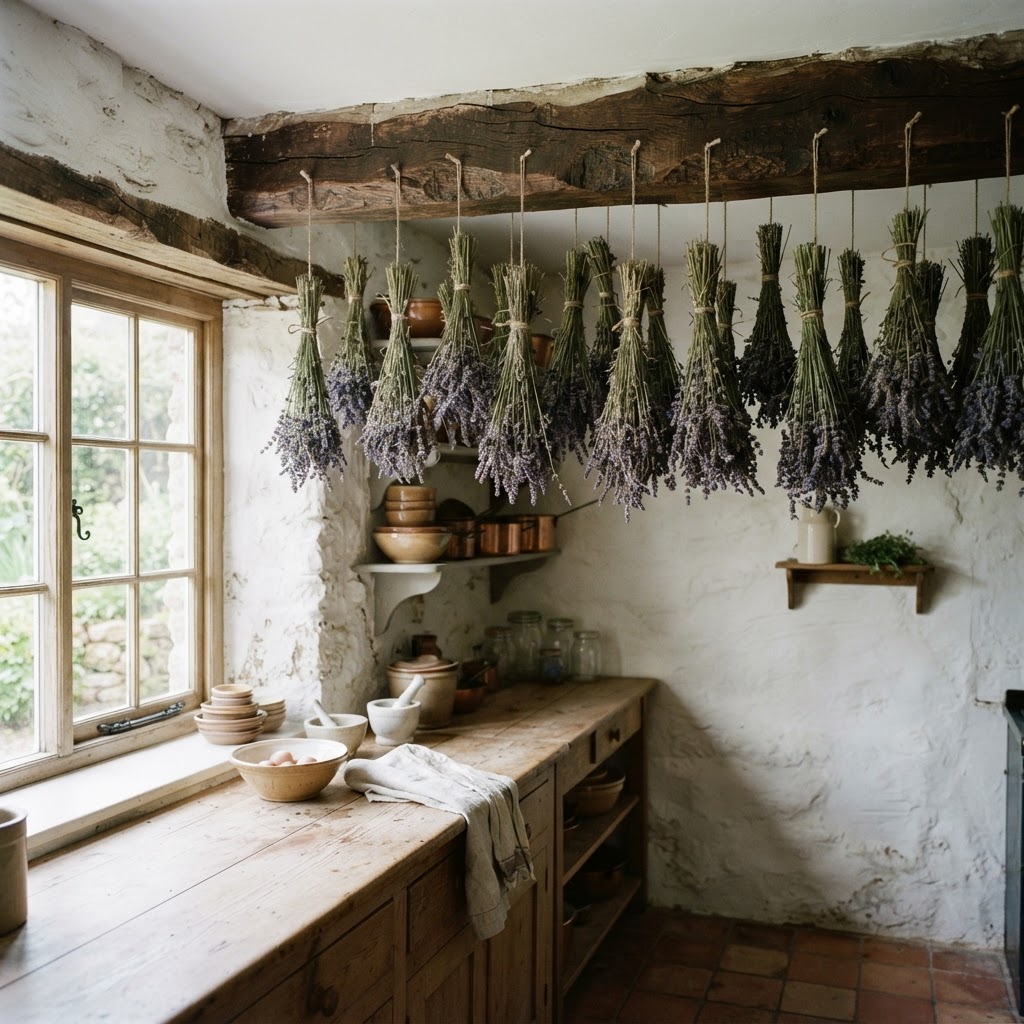
Dried lavender looks lovely in jugs and wreaths, and it's a calming addition to a bedroom alongside soft bedroom lighting.
Lavender in the Garden
- Low hedges. English lavender makes a fragrant, informal hedge along a path.
- Cottage borders. Combine lavender with roses, foxgloves and catmint.
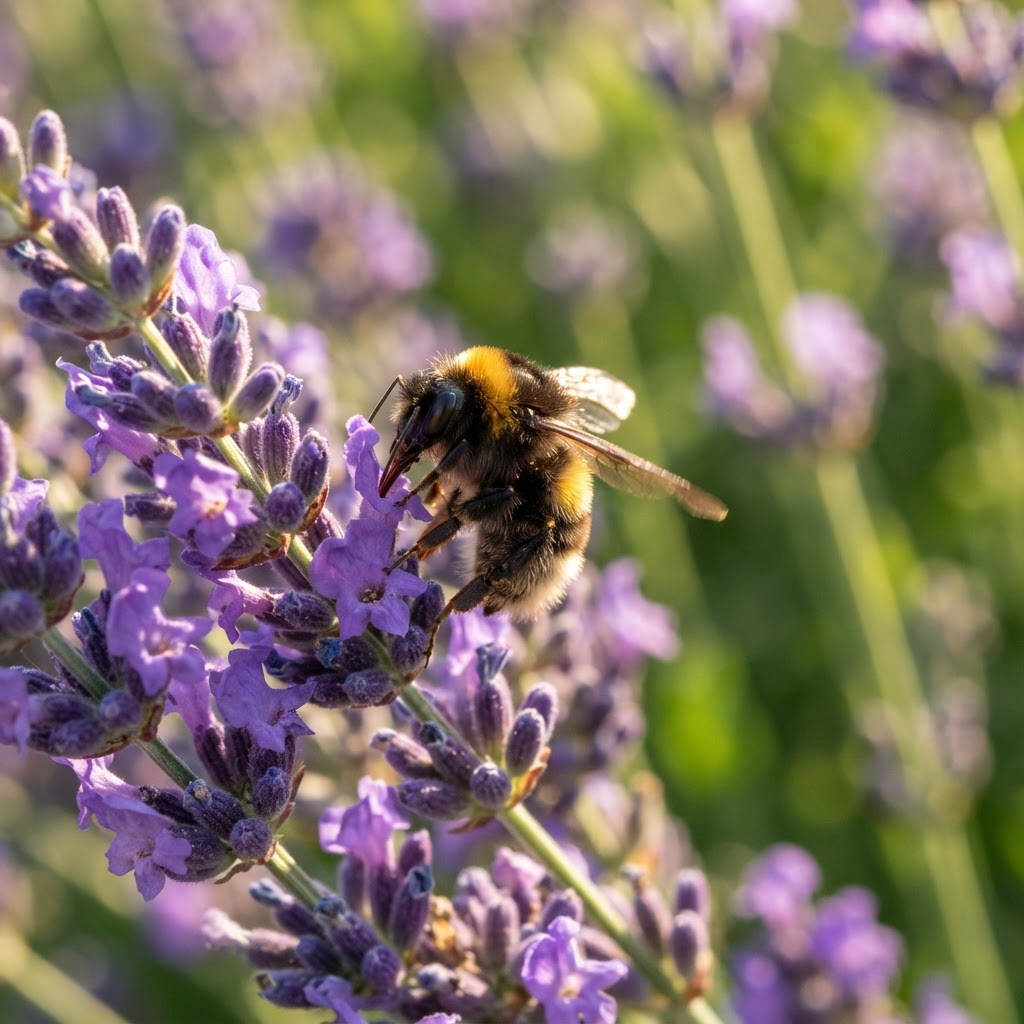
- Wildlife gardens. Lavender is excellent for bees, and pairs well with a butterfly bush for butterflies.
- Mediterranean gardens. Plant it with rosemary, olive trees and grasses in gravel.
- Front gardens. Lavender is one of the toughest, most rewarding flowers for landscaping.
Common Mistakes to Avoid
| Mistake | Why it's a problem | What to do instead |
|---|---|---|
| Wet, heavy soil | Roots rot, especially in winter | Improve drainage or plant on a mound |
| Planting in shade | Leggy plants and few flowers | Choose full sun |
| Cutting into old wood | Lavender rarely regrows from bare stems | Always leave green growth |
| Never pruning | Woody, sprawling plants | Prune every year after flowering |
| Feeding too much | Soft, floppy growth | Grow in lean soil without feeding |
| Leaving tender types out in winter | They may die in cold, wet weather | Grow in pots and protect over winter |
Frequently Asked Questions
What is the hardiest type of lavender?
English lavender (Lavandula angustifolia) and its hybrids are the hardiest types, and they survive most winters if the soil drains well.
What is the difference between English and French lavender?
English lavender is hardier and more compact with slender flower spikes. French and Spanish lavenders have plumper heads, often with "rabbit ear" bracts, and are less hardy.
Is lavender a flower?
Yes. Lavender is a flowering, woody-stemmed herb in the mint family. Its flowers grow in spikes above aromatic, silvery leaves.
How fast does lavender grow?
Young plants usually flower in their first summer and reach full size in about two to three years.
When should you prune lavender?
Prune once a year in late summer, after flowering, and never cut into old, bare wood.
Does lavender come back every year?
Yes, most lavenders are perennial shrubs. English lavender and lavandins are long-lived in well-drained soil, while tender types may need winter protection.
Which lavender is best for cooking?
English lavender, such as 'Hidcote', 'Munstead' and 'Folgate', has the sweetest flavour and is the usual choice for cooking.
A Little Piece of Provence
Lavender rewards very little care with months of colour, scent and bees. Choose a type that suits your climate, give it full sun and sharp drainage, prune it every year after flowering, and it will bring a little piece of Provence to your garden for years.
And if you'd like help connecting your garden and your interiors with a calm, beautiful palette, you can book a one-hour online interior design consultation with me.
About the author
Magda Callery is a UK interior designer and florist with more than 15 years' experience designing homes, pubs, restaurants and bars, and her expert commentary has featured in Homes & Gardens, The Mirror and The Spruce. Explore more of the flowers & garden articles.
Continue reading


Garden Statues: 17 Ideas for Placing Sculpture in a Garden
17 garden statue and sculpture ideas, how to choose and place garden statues, the best materials compared, and how to care for them.

Marigold Varieties: 17 Types of Marigold to Grow
17 marigold varieties to grow, from tall African and compact French marigolds to edible signets and calendula, plus growing tips and their role in Day of the Dead.


Butterfly Bush: How to Grow Buddleia and Is It Invasive?
How to grow and prune a butterfly bush, whether buddleia is invasive, how good it really is for butterflies, and 13 of the best varieties.