
Garden Statues: 17 Ideas for Placing Sculpture in a Garden
17 garden statue and sculpture ideas, how to choose and place garden statues, the best materials compared, and how to care for them.
By Magda Callery, interior designer and florist
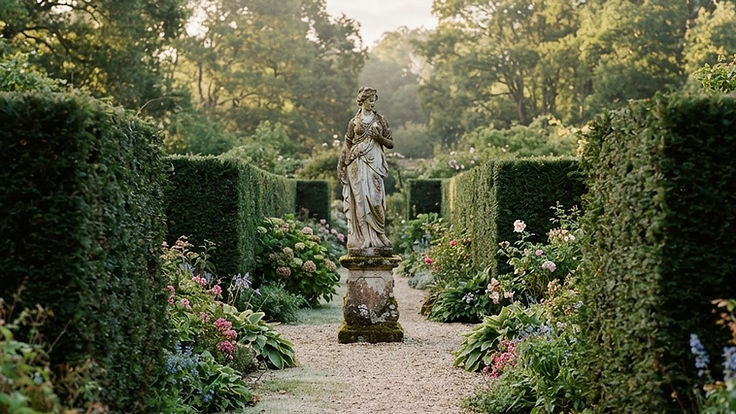
A well-placed statue can transform a garden. It gives the eye somewhere to rest, draws you down a path, adds structure in winter and brings a sense of history, humour or calm. From a weathered stone urn at the end of a hedge to a pair of bronze hares in long grass, garden sculpture is one of the most personal ways to finish an outdoor space. The secret is choosing the right piece and putting it in exactly the right place.
In this guide I'll explain how to choose and place garden statues, compare the main materials, share 17 garden statue and sculpture ideas for every style and size of garden, and explain how to care for them.
The quick answer: place garden statues where they create a focal point: at the end of a path or vista, against a dark hedge, beside a seat or half-hidden in planting. Choose a size that suits the space, raise smaller pieces on a plinth, use frost-proof materials such as stone, bronze or quality reconstituted stone, and resist cluttering the garden with too many pieces.
How to Choose and Place a Garden Statue
- Create a focal point. A statue at the end of a path, an avenue or a lawn pulls the eye and makes the garden feel deliberate.
- Think about the view from the house. Place one piece where you'll see it from a window or the back door.
- Get the scale right. Small pieces disappear in large gardens; oversized pieces overwhelm small ones. Test the size with a box or a cane before you buy.
- Use a backdrop. Dark yew, box or a painted wall makes stone and bronze stand out.
- Raise it up. A plinth, a low wall or a stone base lifts a small statue to eye level and gives it presence.
- Leave room around it. One strong piece in each part of the garden looks better than many competing ones.
- Fix it securely. Heavy pieces need a firm, level base; valuable ones should be anchored against theft.
Garden Statue Materials Compared
| Material | Look | Durability | Frost-proof? | Relative cost |
|---|---|---|---|---|
| Natural stone | Timeless, gains moss and lichen | Excellent | Most stones, yes | High |
| Reconstituted stone | Stone-like, weathers well | Very good | Usually | Medium |
| Bronze | Rich, develops a patina | Excellent | Yes | High |
| Lead | Soft grey, traditional | Excellent | Yes | High; at risk of theft |
| Cast iron | Classic, Victorian | Good if painted | Yes | Medium |
| Corten steel | Rusty, contemporary | Very good | Yes | Medium |
| Terracotta | Warm, Mediterranean | Fair | Only if frost-proof | Low to medium |
| Resin or fibreglass | Imitates stone or metal | Fair; can fade | Usually | Low |
| Concrete | Simple, modern | Good | Usually | Low to medium |
Lead and stone have a long history in gardens. The National Trust's sculpture guide notes that "lead became an increasingly popular medium for garden statuary from the end of the 17th century," while "bronze was an expensive medium for statuary and more suited to smaller scale statuettes." It describes the landscape garden at Stowe as "one of the most remarkable legacies of Georgian England," famous for its temples and statues.
17 Garden Statue and Sculpture Ideas
Classical and traditional
1. A statue at the end of a path. A classical figure framed by clipped hedges at the end of a path is the most traditional and effective use of garden statuary.
2. A stone urn on a plinth. An urn raised on a plinth adds height and elegance to a lawn, a terrace or the centre of a formal garden.
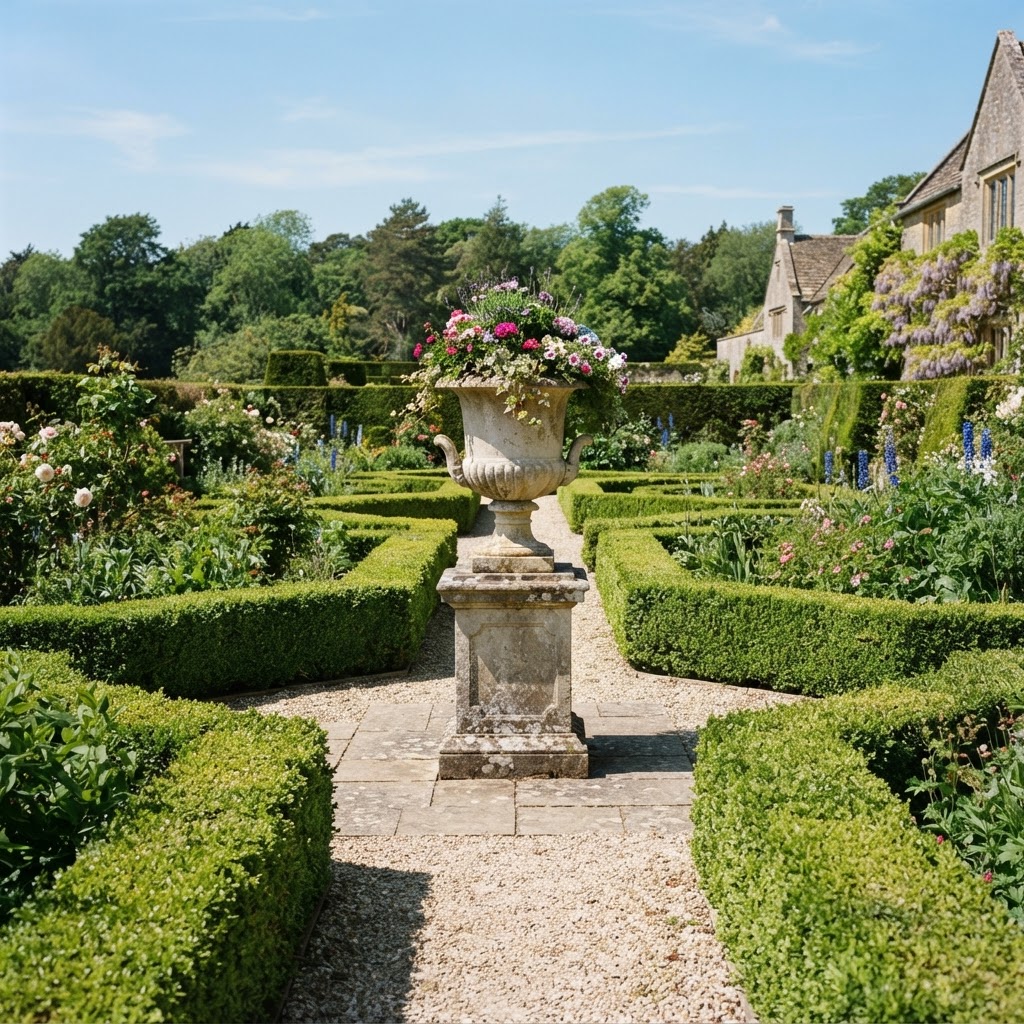
3. A pair either side of steps or a gate. Matching urns, finials or animals flanking steps, a gate or a door create a sense of arrival.
4. A statue in a hedge niche. Cutting an alcove into a yew or beech hedge makes a living frame for a statue, just as in grand historic gardens.
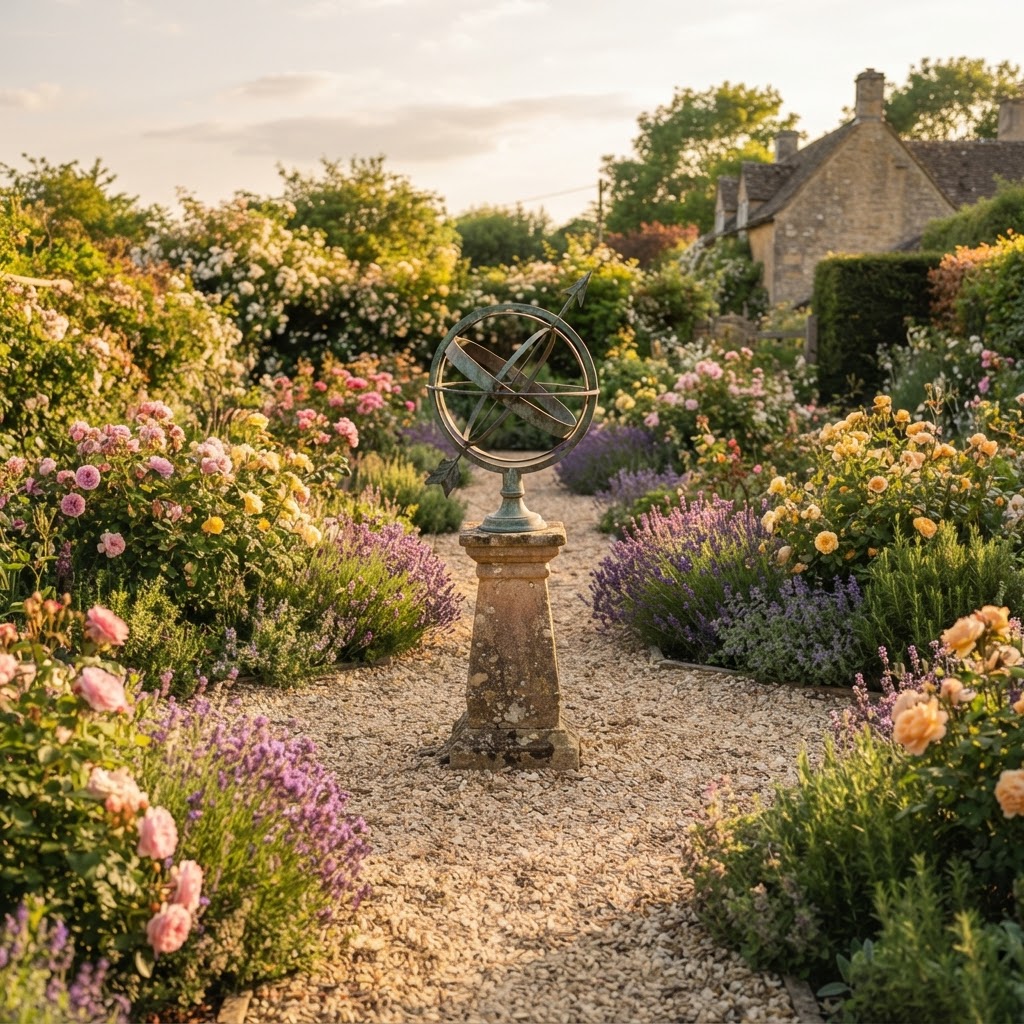
5. A sundial or armillary sphere. A sundial or armillary sphere is both sculpture and an old-fashioned way of telling the time, ideal at the centre of a herb or rose garden.
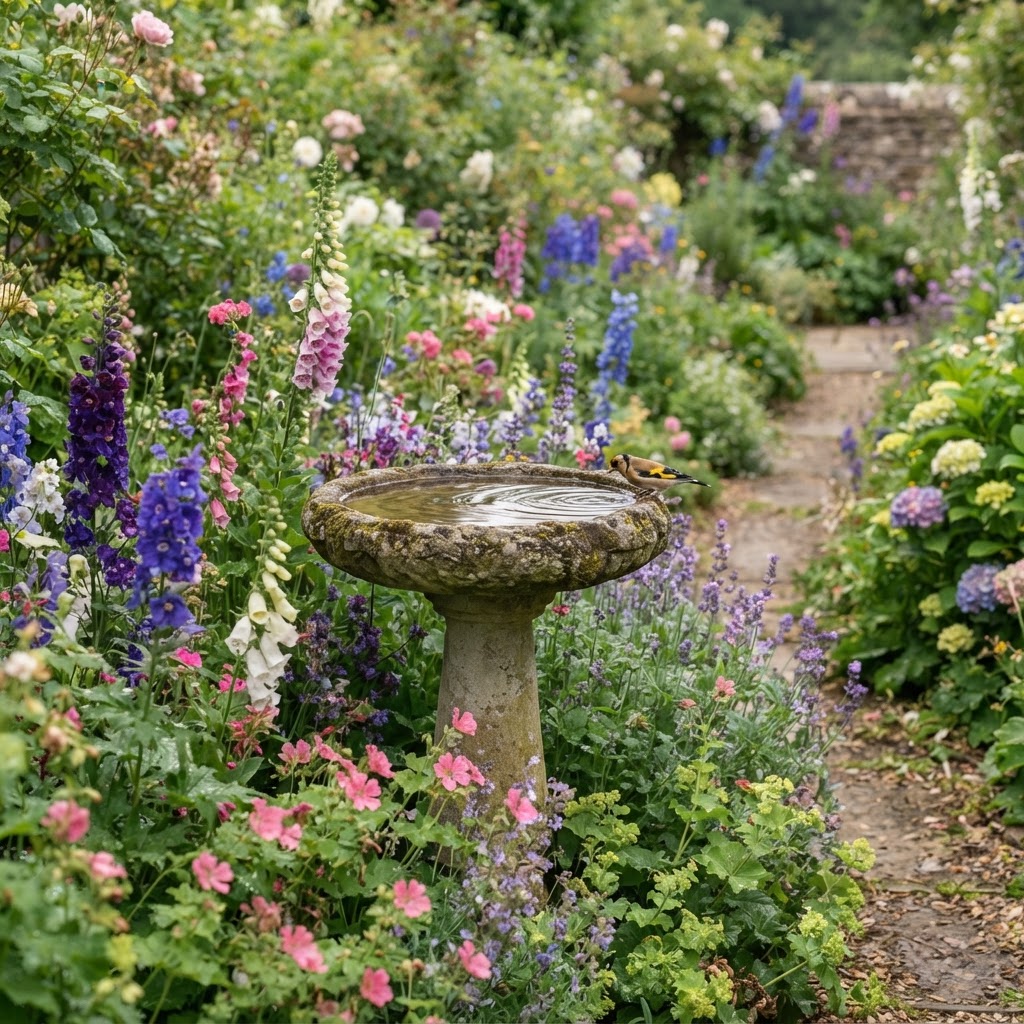
6. A bird bath. A stone bird bath is practical and decorative, bringing birds and movement to a border or lawn.
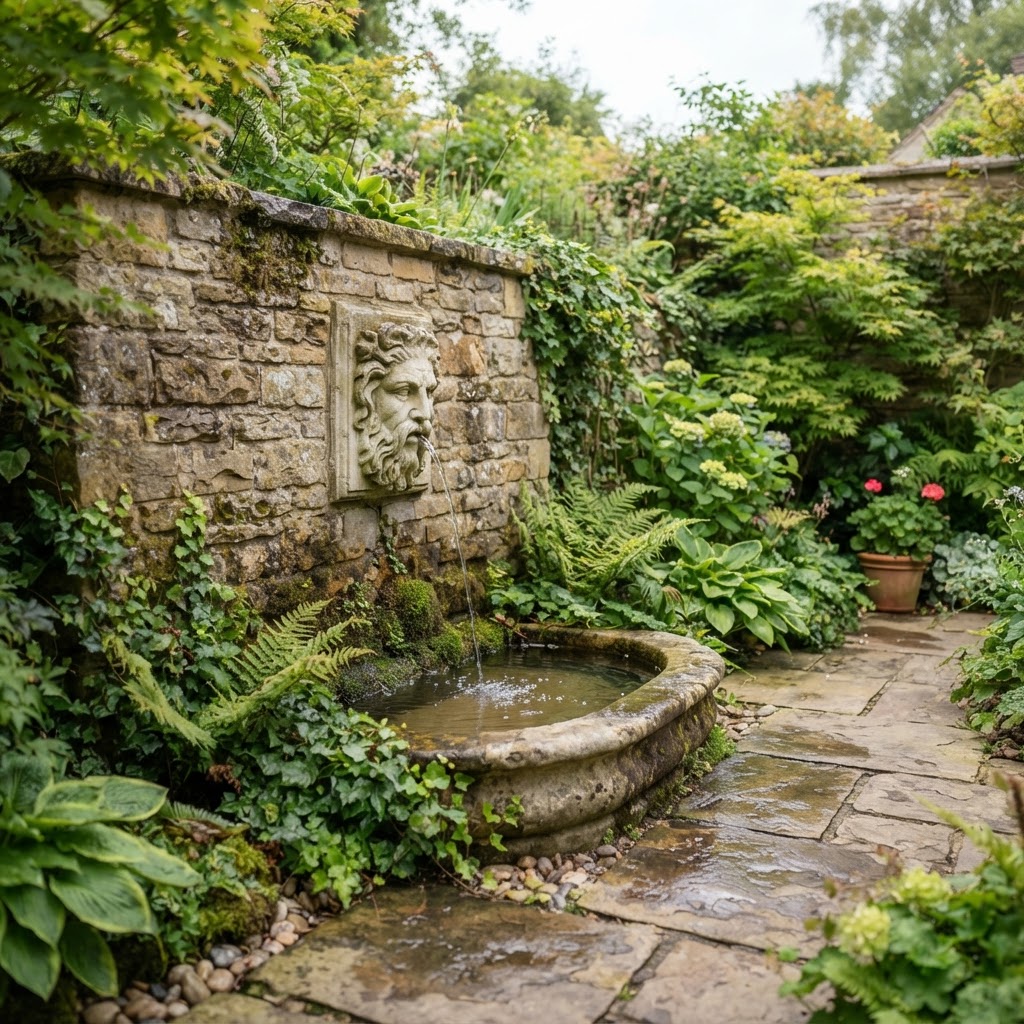
7. A wall fountain. A stone mask spouting water into a basin adds sound and life to a courtyard or terrace wall.
Natural and romantic
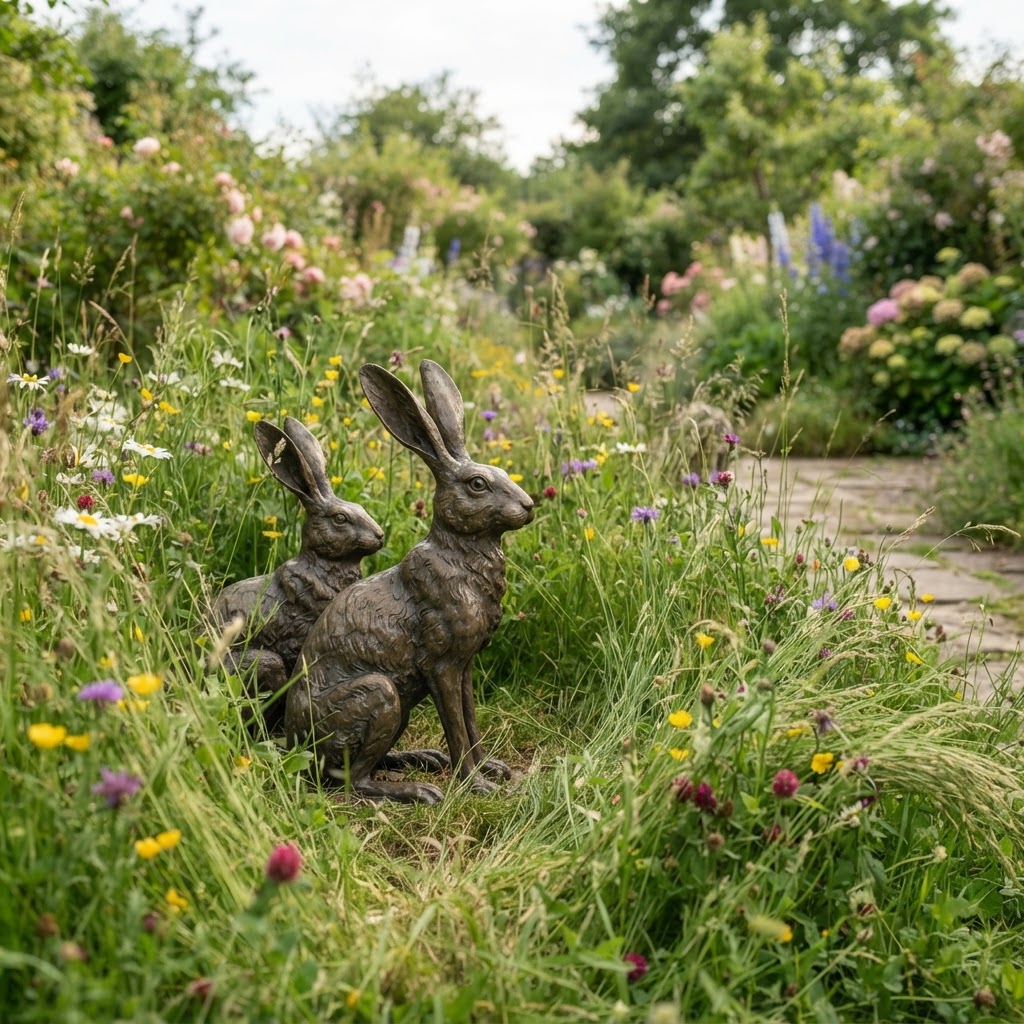
8. Animals in long grass. Bronze hares, deer or birds placed in long grass or a wildflower meadow look as if they've just paused there.
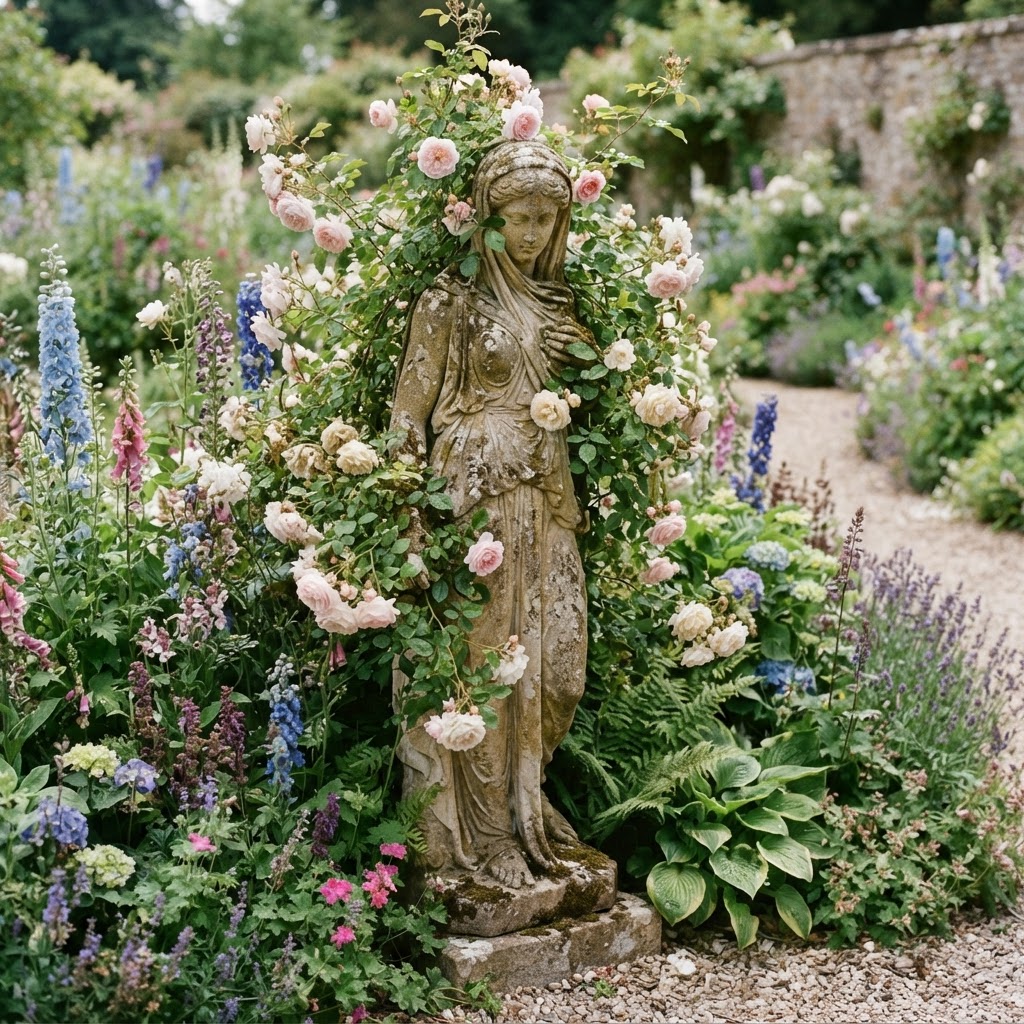
9. A statue half-hidden in planting. A figure glimpsed among roses, foxgloves or ferns feels romantic and surprising.
10. A head or bust among ferns. A stone head resting on the ground in a shady fern bed has a mysterious, ancient feel.
11. Staddle stones. These traditional mushroom-shaped stones, once used to raise granaries, make characterful sculpture along a path or lawn edge.
12. A vintage, weathered piece. Old statues with moss, lichen and patina bring instant character. Reclamation yards are full of them.
Modern and contemporary
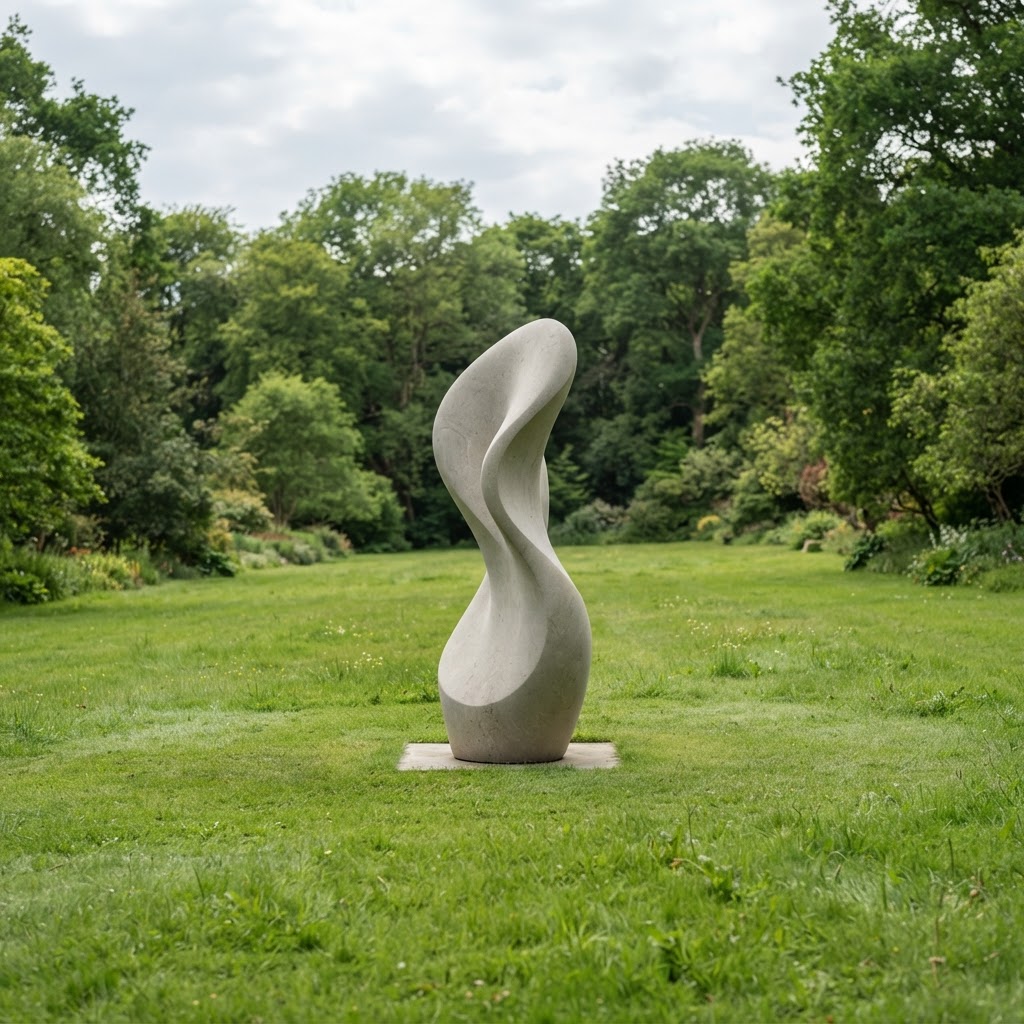
13. An abstract sculpture on a lawn. A smooth stone or bronze form on a simple lawn looks calm, modern and gallery-like.
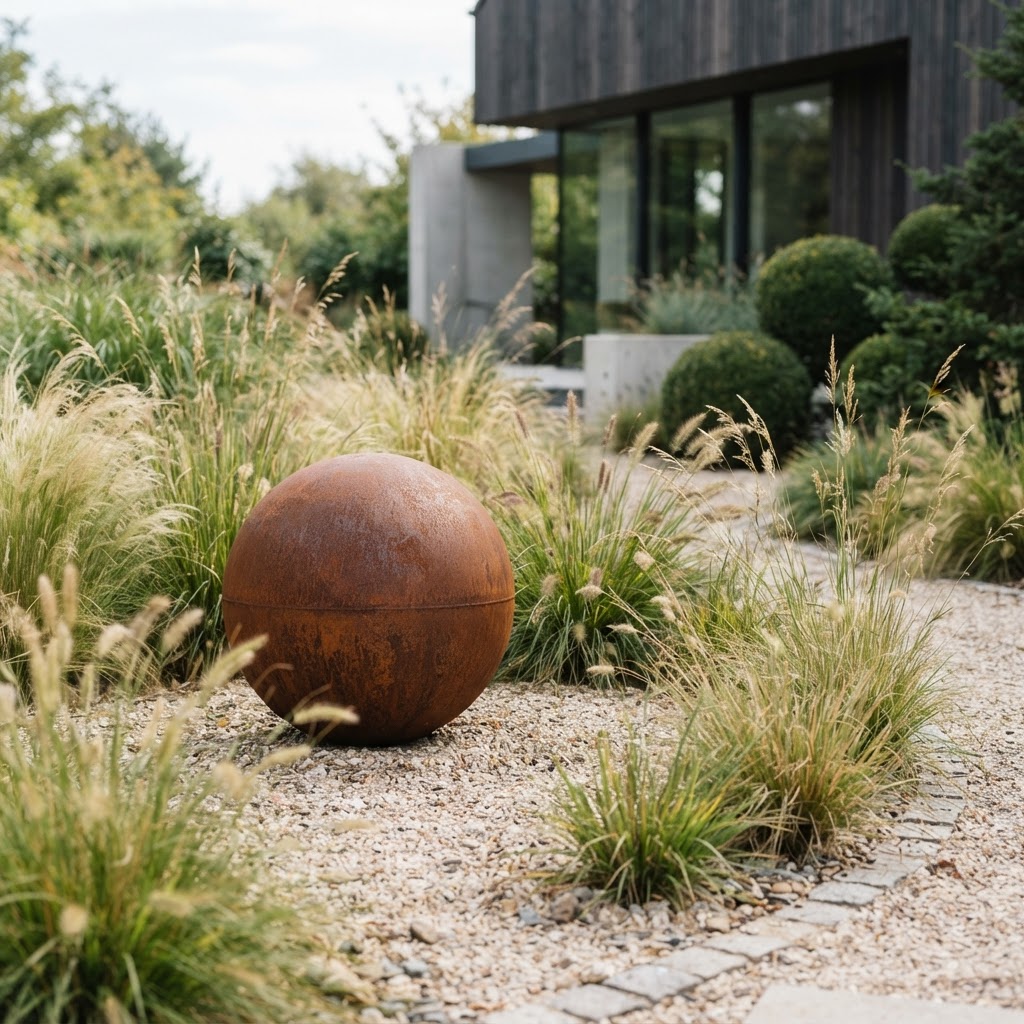
14. A corten steel sphere. A rusty steel sphere or ring among ornamental grasses adds warm colour and a contemporary edge.
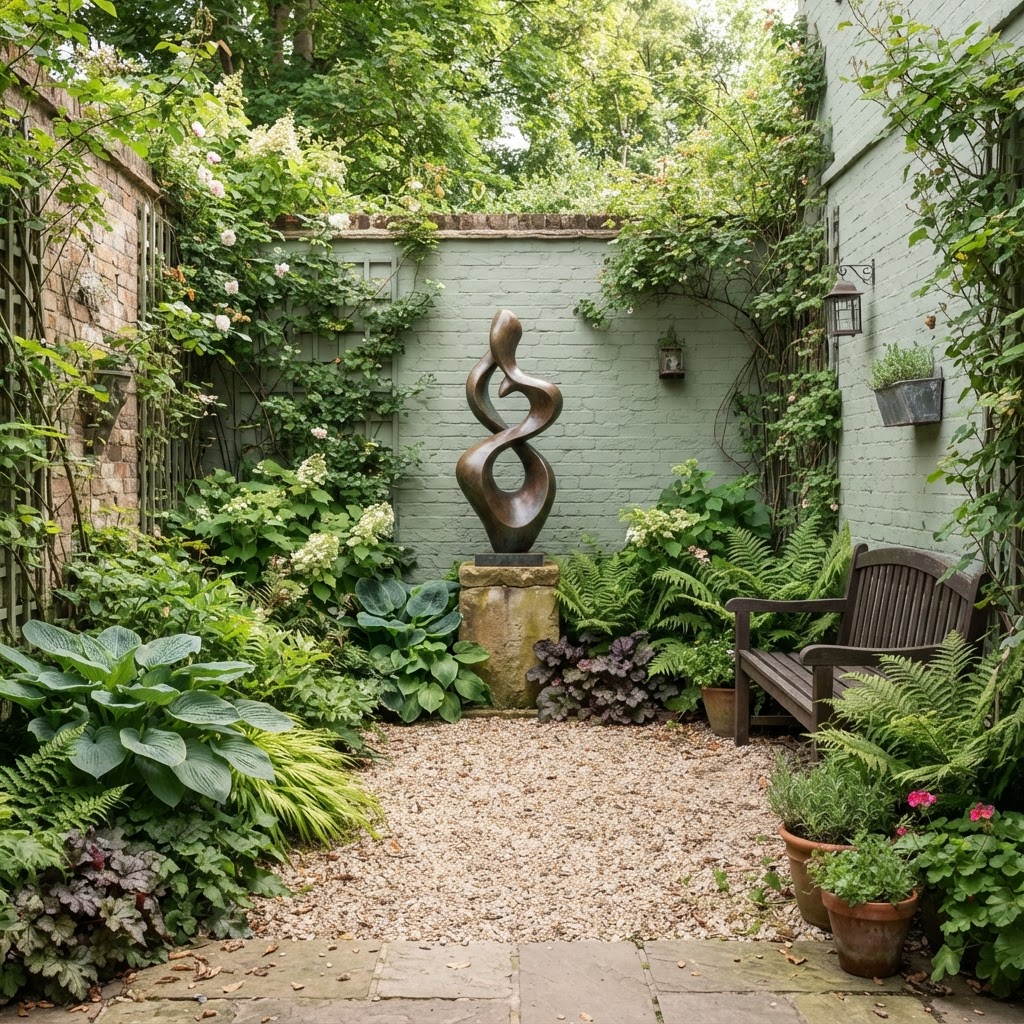
15. A sculpture in a small courtyard. One well-chosen piece against a painted wall can be the making of a small courtyard garden or city terrace.
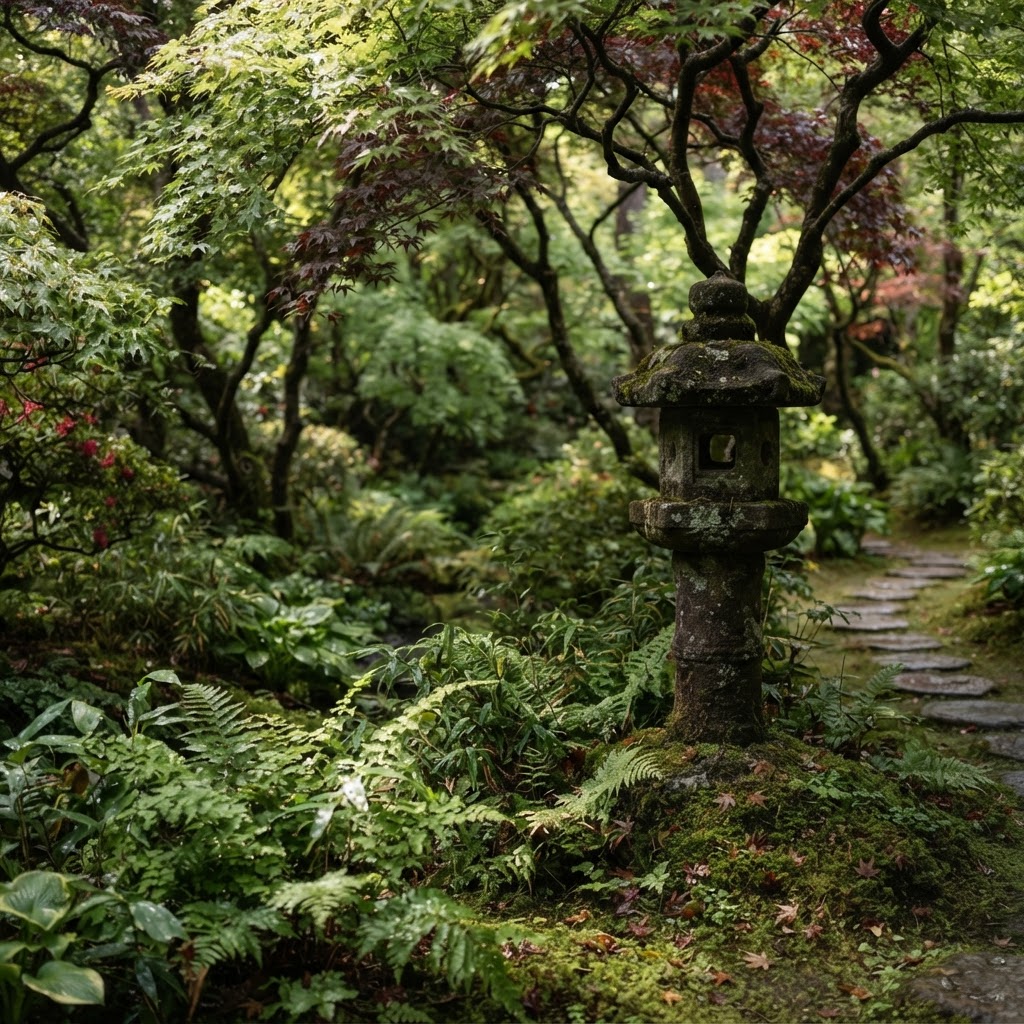
16. A stone lantern in a Japanese-inspired corner. A traditional stone lantern among moss, ferns and acers creates a calm, contemplative space, inspired by Japanese house design.
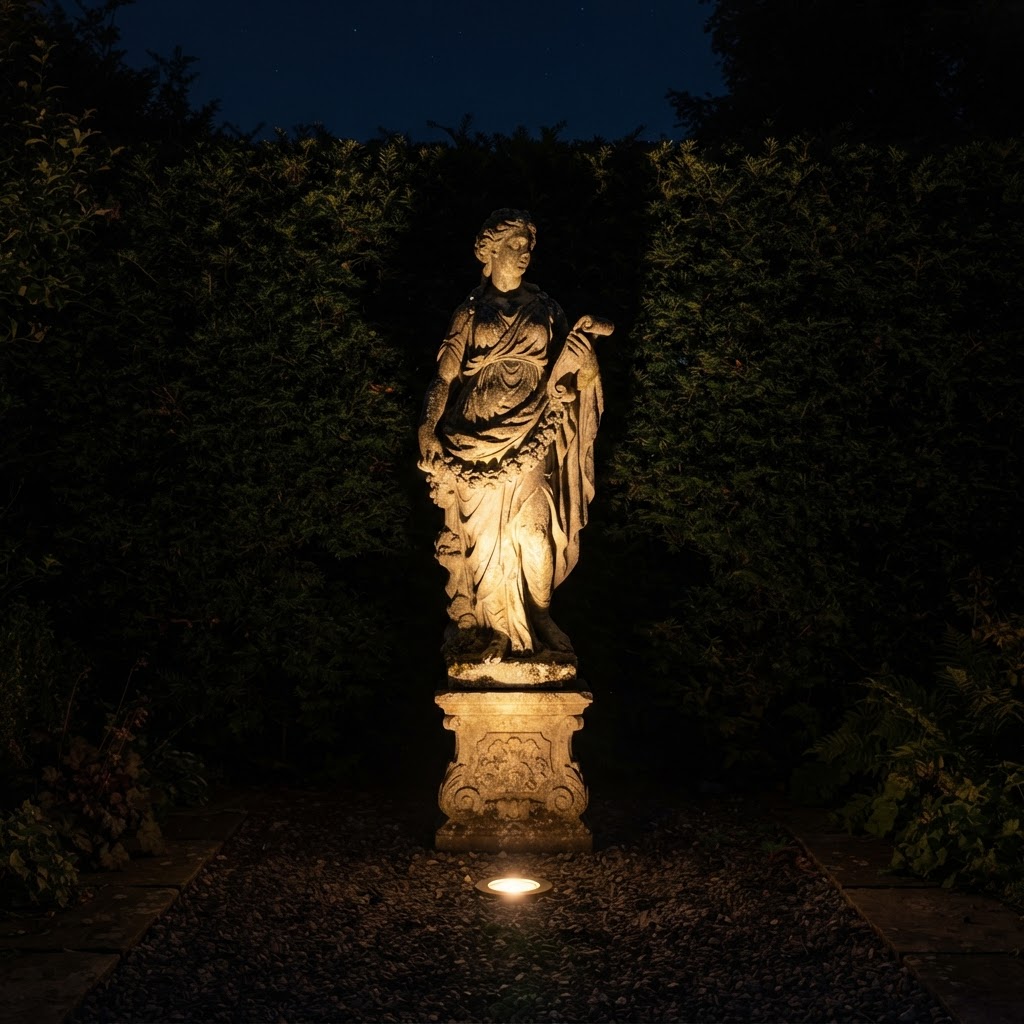
17. A lit statue at night. A small uplighter turns a statue into a dramatic night-time feature, visible from the house all year.
Where to Put Garden Statues
| Location | Best type of piece | Why it works |
|---|---|---|
| End of a path or vista | Statue, urn, sundial | Draws you through the garden |
| Against a dark hedge | Pale stone or white figure | Strong contrast |
| Beside a seat | Small figure, bird bath | Something to enjoy up close |
| In long grass or meadow | Animals, natural forms | Feels found rather than placed |
| Courtyard or terrace | Wall fountain, single sculpture | Gives a small space a focal point |
| By the pool or patio | Urns, modern forms | Frames an outdoor room, such as a pool house |
Statues work best when they're part of the garden's structure. Plan them with paths, walls and terraces as part of the hardscape, then soften them with planting such as a lilac tree or a low hedge of lavender.
How to Care for Garden Statues
- Clean gently. Use water and a soft brush. Avoid pressure washers and harsh chemicals, which damage stone and patina.
- Embrace the patina. Moss, lichen and weathering add character to stone, lead and bronze.
- Protect terracotta. Move pots and figures that aren't frost-proof under cover in winter.
- Check the base. Make sure heavy pieces stay level and stable, especially on soft ground.
- Secure valuable pieces. Anchor lead, bronze and antique statues, and photograph them for insurance.
Common Mistakes to Avoid
| Mistake | Why it's a problem | What to do instead |
|---|---|---|
| Too many statues | The garden looks cluttered | One strong piece per area |
| The wrong scale | Too small disappears; too big overwhelms | Test the size before buying |
| No backdrop | The statue gets lost | Place it against a hedge or wall |
| Non-frost-proof materials | Cracks in winter | Choose frost-proof stone, metal or resin |
| Placing it where it can't be seen | Wasted impact | Line it up with a view from the house or a path |
| Ignoring security | Theft of valuable pieces | Anchor and insure them |
Frequently Asked Questions
Where should I put a statue in my garden?
At the end of a path or vista, against a dark hedge, beside a seat or half-hidden in planting, ideally where you can see it from the house.
What is the best material for garden statues?
Natural stone and bronze are the most durable and beautiful. Reconstituted stone is a good, more affordable alternative, and corten steel suits modern gardens.
Do garden statues need a base?
Small and medium statues look better and are more stable on a plinth or a solid base. Heavy pieces need firm, level ground.
How do you make a garden statue look old?
Let it weather naturally, or encourage moss and lichen by keeping it in a shady, damp spot. Avoid cleaning it too often.
How many statues should a garden have?
As a rule, one strong piece per part of the garden. Small gardens usually need just one.
Can garden statues stay outside in winter?
Stone, bronze, lead, iron and most resin statues can. Terracotta and some concrete pieces should be frost-proof or brought under cover.
How do you protect garden statues from theft?
Anchor them to their base or the ground, keep them away from easy access points, and photograph and insure valuable pieces.
The Finishing Touch
A garden statue is the finishing touch that gives an outdoor space character and purpose. Choose one piece you love, give it the right scale, backdrop and position, and it will bring your garden to life in every season.
And if you'd like help bringing the same eye for detail to your home and garden, you can book a one-hour online interior design consultation with me.
About the author
Magda Callery is a UK interior designer and florist with more than 15 years' experience designing homes, pubs, restaurants and bars, and her expert commentary has featured in Homes & Gardens, The Mirror and The Spruce. Explore more of the flowers & garden articles.
Continue reading


Types of Lavender: 13 Best Varieties and How to Grow Them
The main types of lavender, 13 of the best lavender varieties, how fast lavender grows, and how to plant, prune, grow in pots and dry lavender.

Marigold Varieties: 17 Types of Marigold to Grow
17 marigold varieties to grow, from tall African and compact French marigolds to edible signets and calendula, plus growing tips and their role in Day of the Dead.


Butterfly Bush: How to Grow Buddleia and Is It Invasive?
How to grow and prune a butterfly bush, whether buddleia is invasive, how good it really is for butterflies, and 13 of the best varieties.