
Foxglove Flower: How to Grow Foxgloves and Best Varieties
How to grow foxgloves, the biennial life cycle, 13 beautiful foxglove varieties, growing from seed, caring for them and handling this toxic flower safely.
By Magda Callery, interior designer and florist
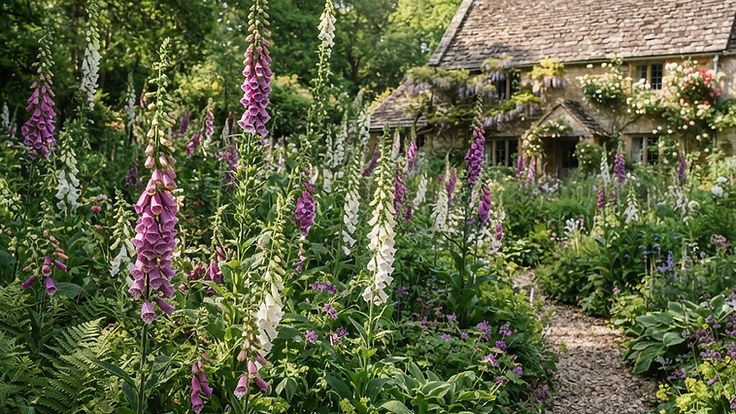
Foxgloves are the spires of the cottage garden. Their tall stems of speckled, bell-shaped flowers rise above borders and woodland edges in early summer, buzzing with bumblebees, and they bring height and romance to a planting scheme like few other flowers. They're also easy to grow from seed and happy in light shade, which makes them one of the most useful plants for a natural, relaxed garden.
In this guide I'll explain how the foxglove's two-year life cycle works, share 13 beautiful foxglove varieties, show you how to grow foxgloves from seed and plants, and explain how to grow them safely, because every part of a foxglove is toxic.
The quick answer: common foxglove (Digitalis purpurea) is a biennial or short-lived perennial that grows leaves in its first year and flowers in early summer of its second year. Grow it in full sun to light shade in moist, well-drained soil, sow the seed on the surface because it needs light to germinate, and let some plants self-seed for flowers every year. All parts are toxic if eaten, so wear gloves and keep it away from children and pets.
Foxglove at a Glance
| Common foxglove (Digitalis purpurea) | |
|---|---|
| Life cycle | Biennial or short-lived perennial |
| Height | Usually 3 to 4 ft (90 to 120 cm) |
| Flowers | Tubular bells in purple, pink, white, cream or apricot, often spotted inside |
| Bloom time | Early summer |
| Light | Full sun to light shade |
| Soil | Moist, well-drained, rich in organic matter |
| Wildlife | Excellent for bumblebees |
| Toxicity | All parts toxic if eaten |
The Foxglove Life Cycle
University of Wisconsin-Madison Extension's profile of common foxglove describes it as a "herbaceous biennial or short-lived perennial." In its first year, it forms a low rosette of soft, hairy leaves. In its second year, it sends up a tall flower spike, sets seed and often dies. The same guide notes that "each plant can produce 1-2 million seeds which will readily self-seed under favorable growing conditions."
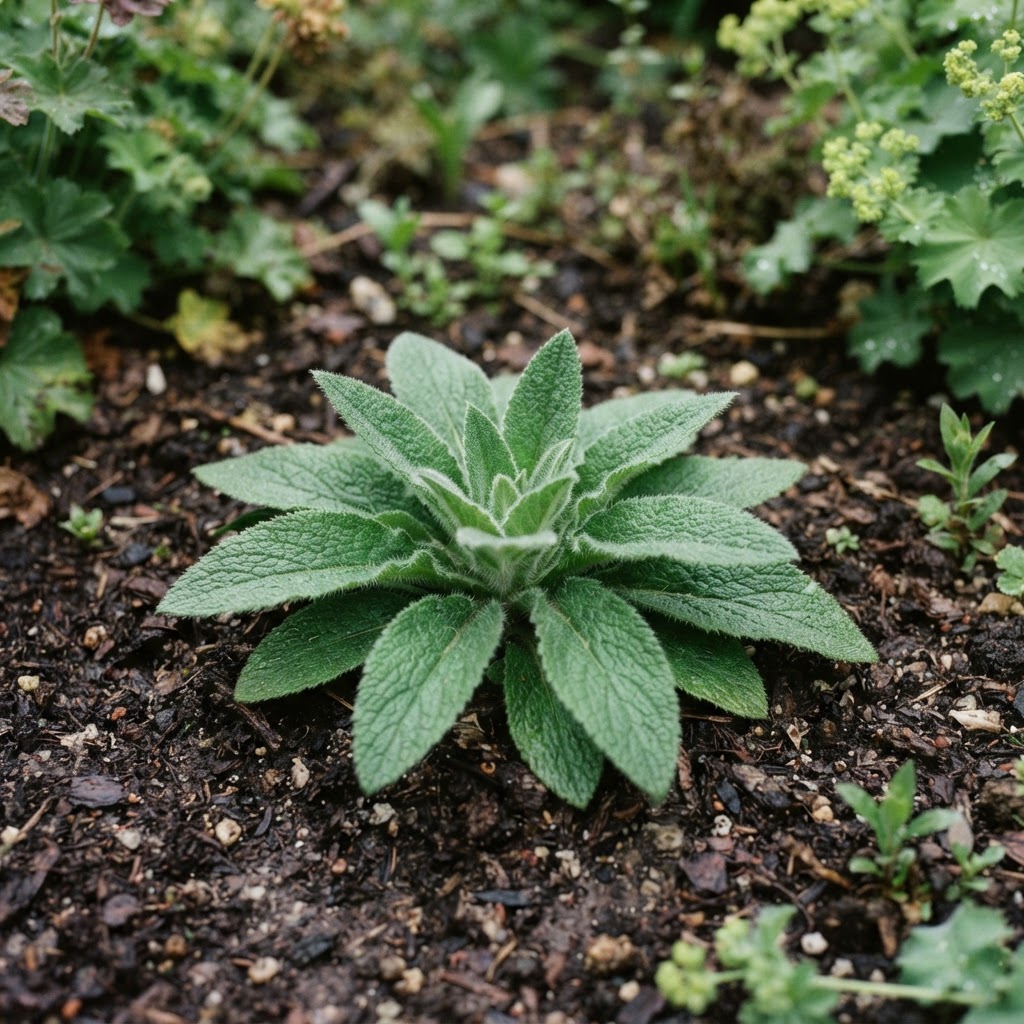
That's why foxgloves seem to wander around a garden, appearing in new places each year. To have flowers every summer, sow seed two years running, or let some plants self-seed.
13 Beautiful Foxglove Varieties
Common foxgloves
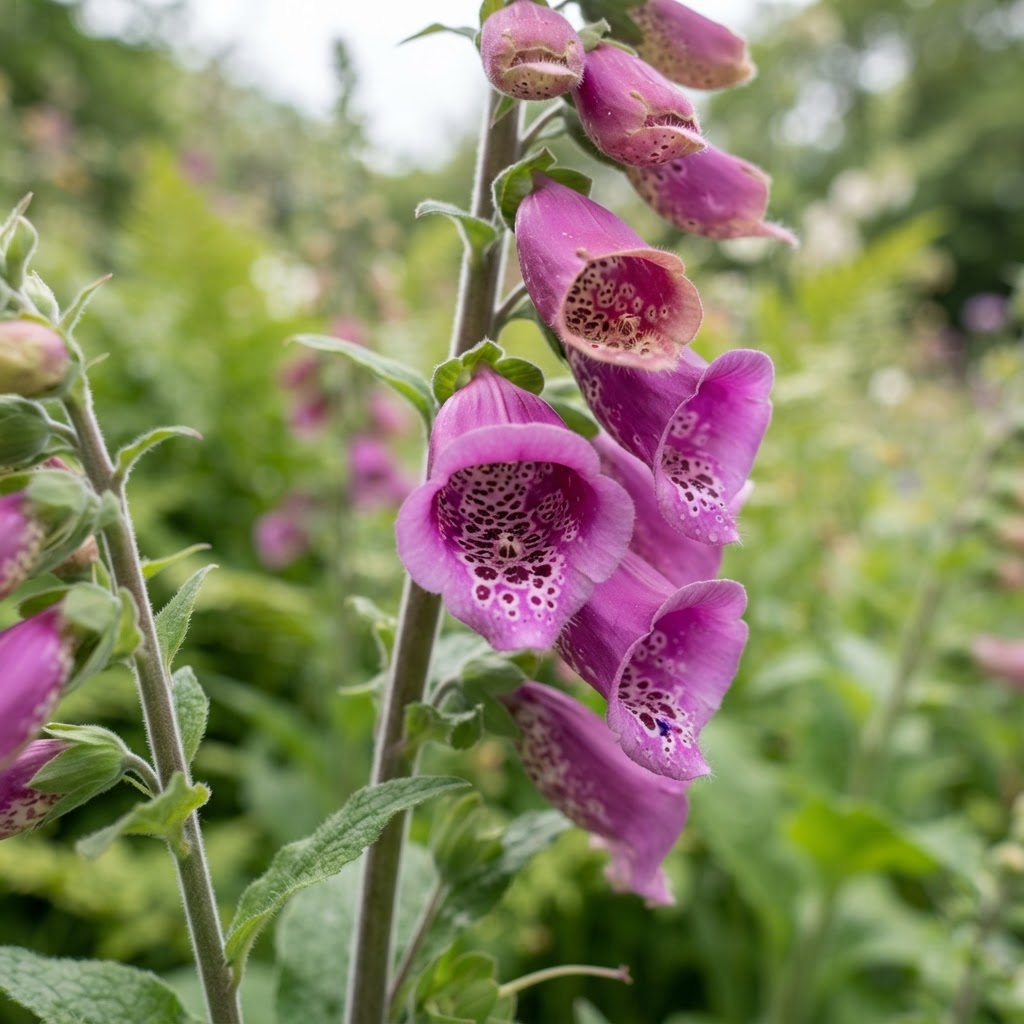
1. Common foxglove (Digitalis purpurea). The wild foxglove, with purple-pink bells spotted with darker markings inside. It's lovely in woodland gardens and wildflower borders.
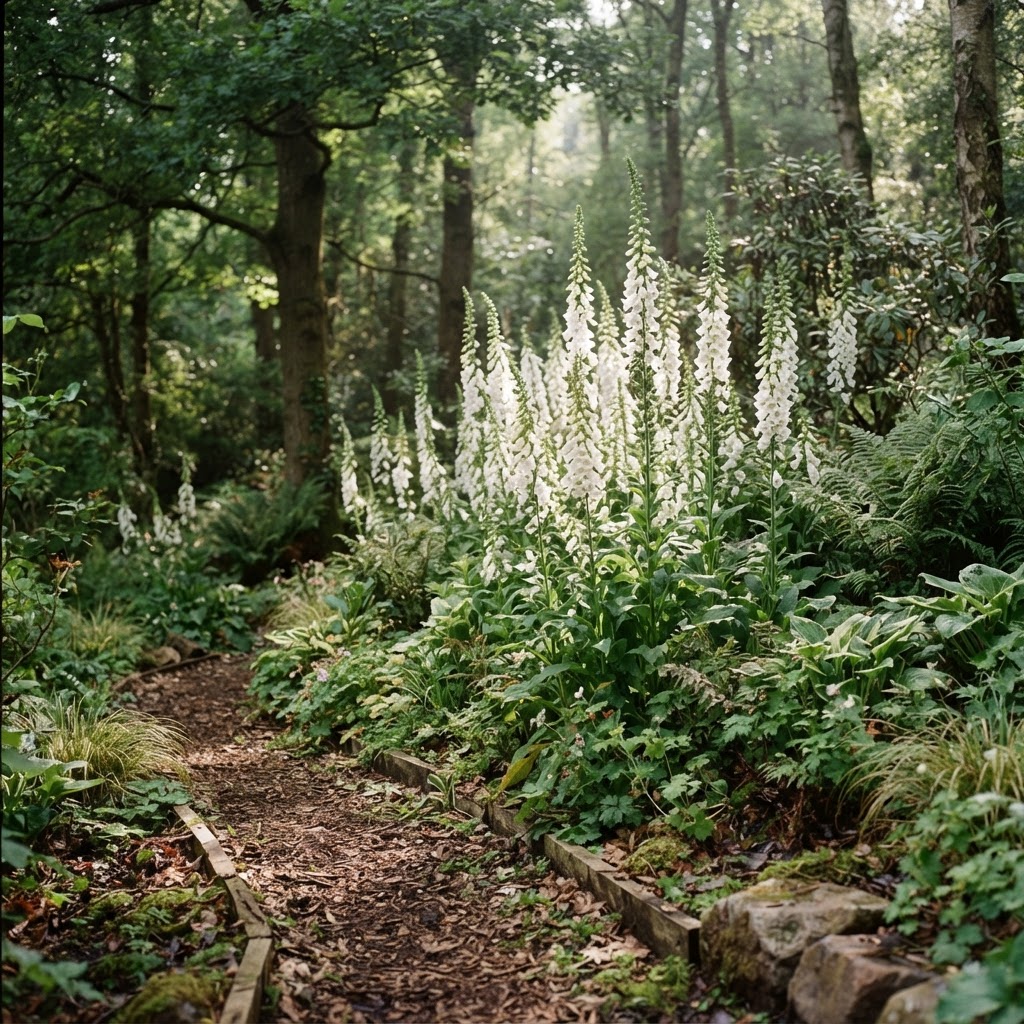
2. White foxglove ('Alba'). Pure white spires that glow in shade and at dusk. They look elegant in a white garden.
3. 'Pam's Choice'. White flowers with dramatic maroon spotting in the throat; one of the most striking foxgloves.
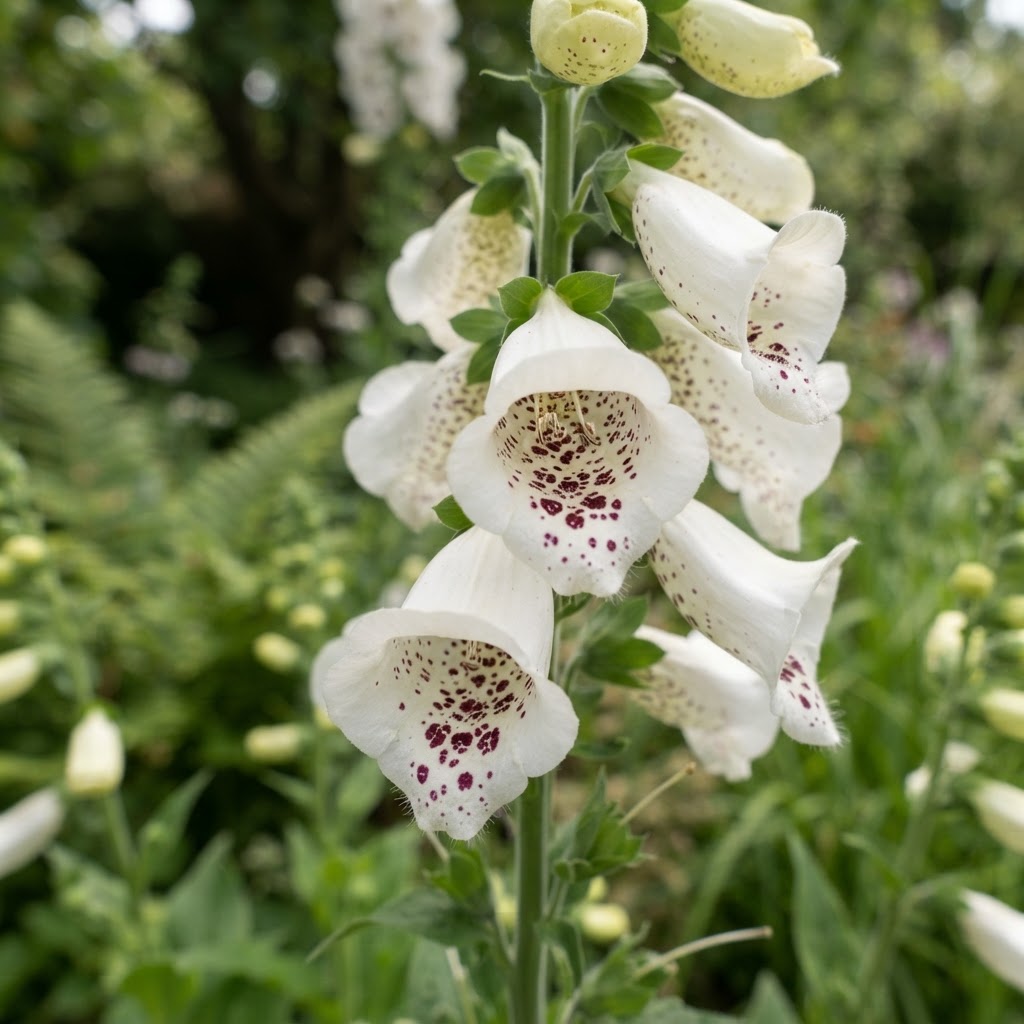
4. 'Sutton's Apricot'. Soft apricot-pink flowers that suit romantic, pastel planting schemes.
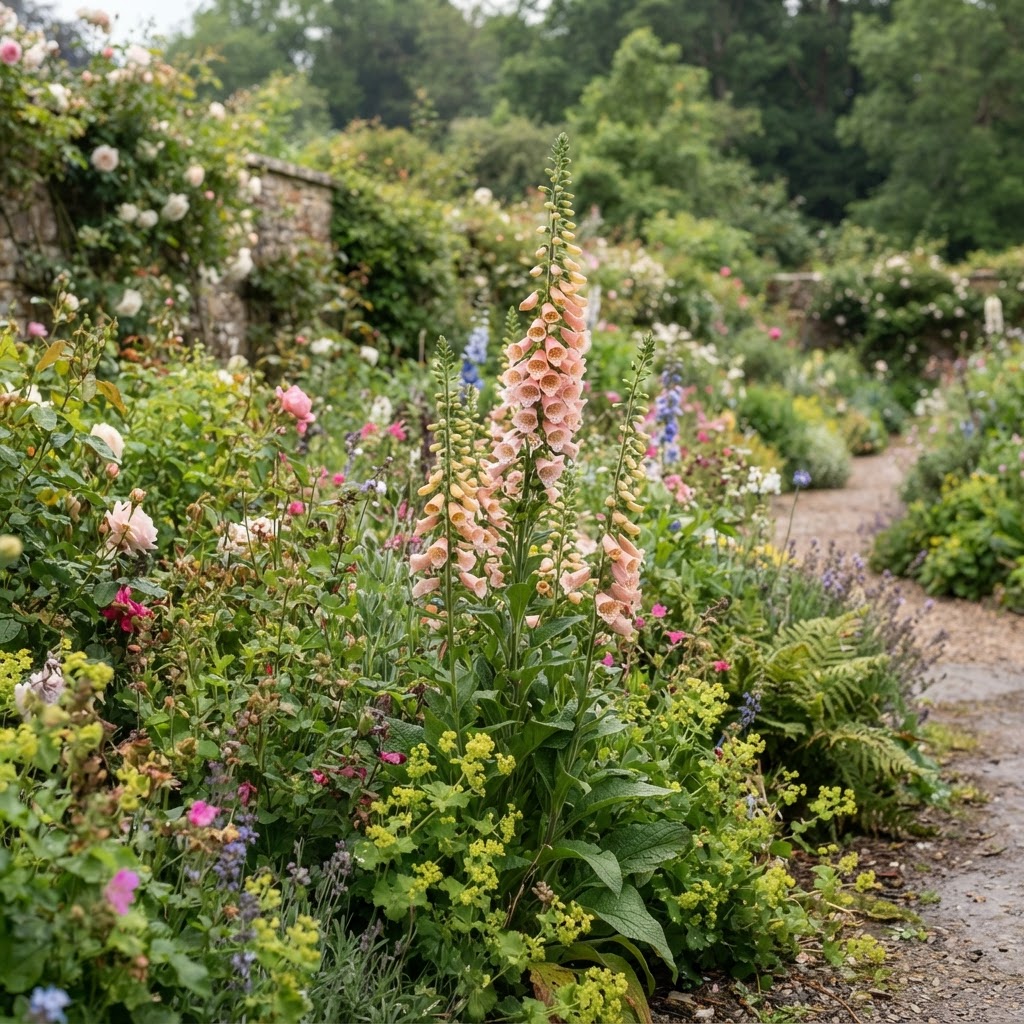
5. Dalmatian foxgloves. Compact foxgloves that can flower in their first year from an early sowing, in purple, white, peach and rose.
6. Camelot foxgloves. Tall, sturdy foxgloves that also flower in their first year, with large, well-spotted bells.
7. Excelsior hybrids. Flowers held all the way around the stem, rather than on one side, in a mix of pastel colours.
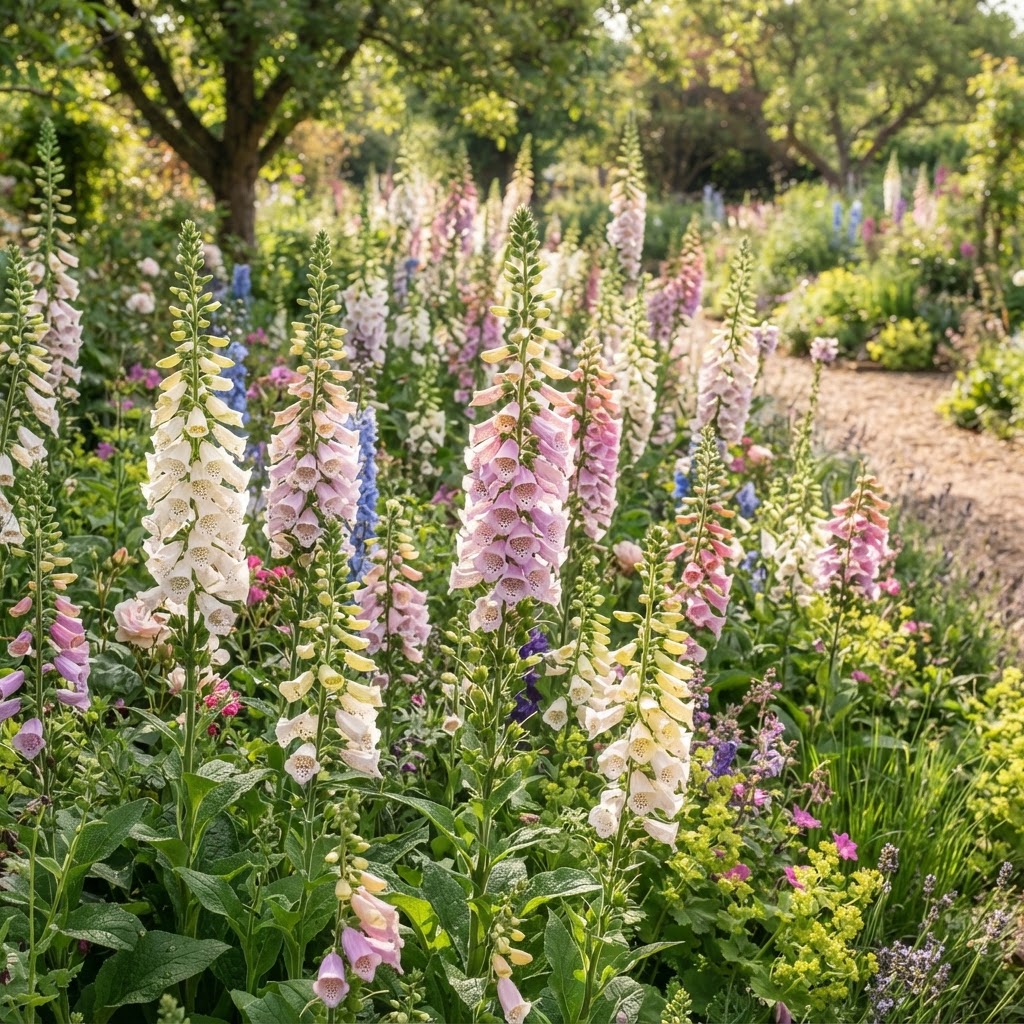
Perennial foxgloves
8. Strawberry foxglove (Digitalis × mertonensis). A perennial foxglove with crushed strawberry-pink flowers and a longer life than the common foxglove.
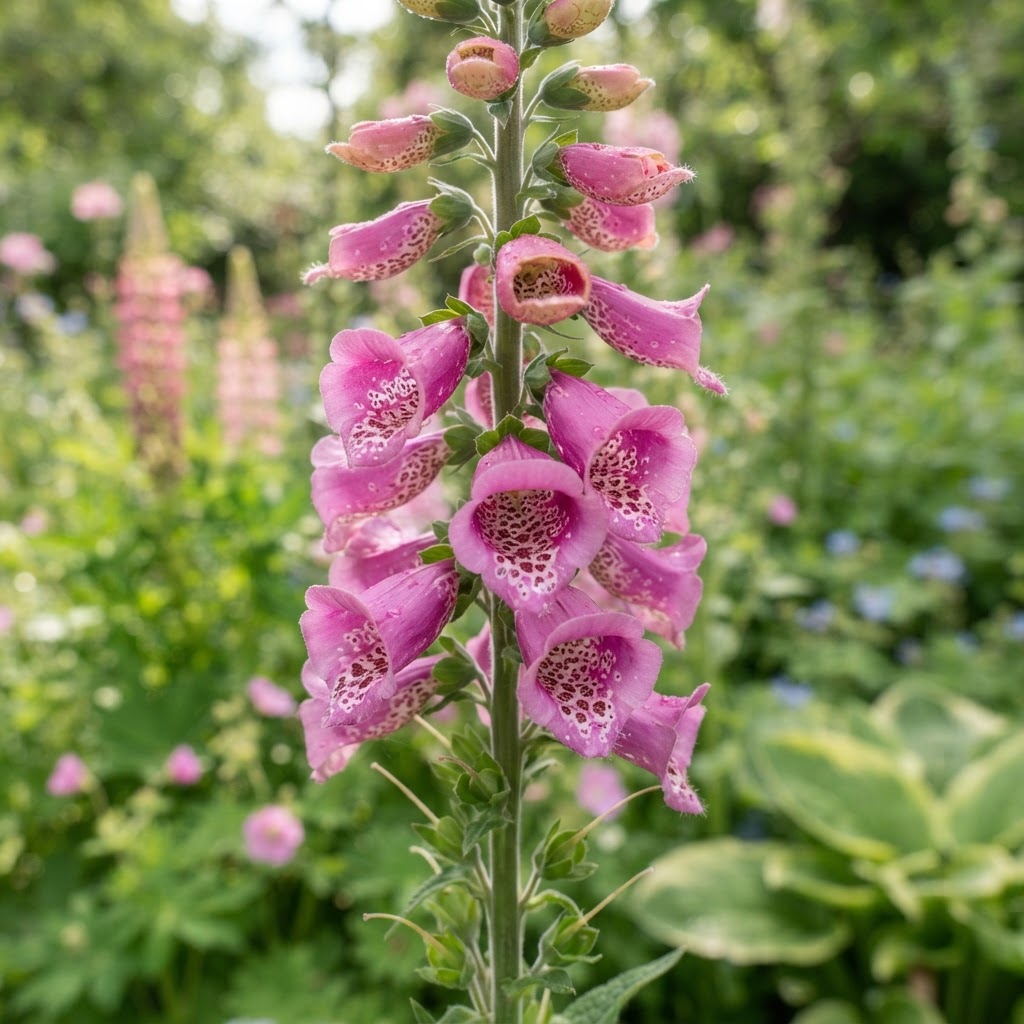
9. Yellow foxglove (Digitalis grandiflora). Soft, pale yellow bells on a reliable perennial plant. It's good in light shade.
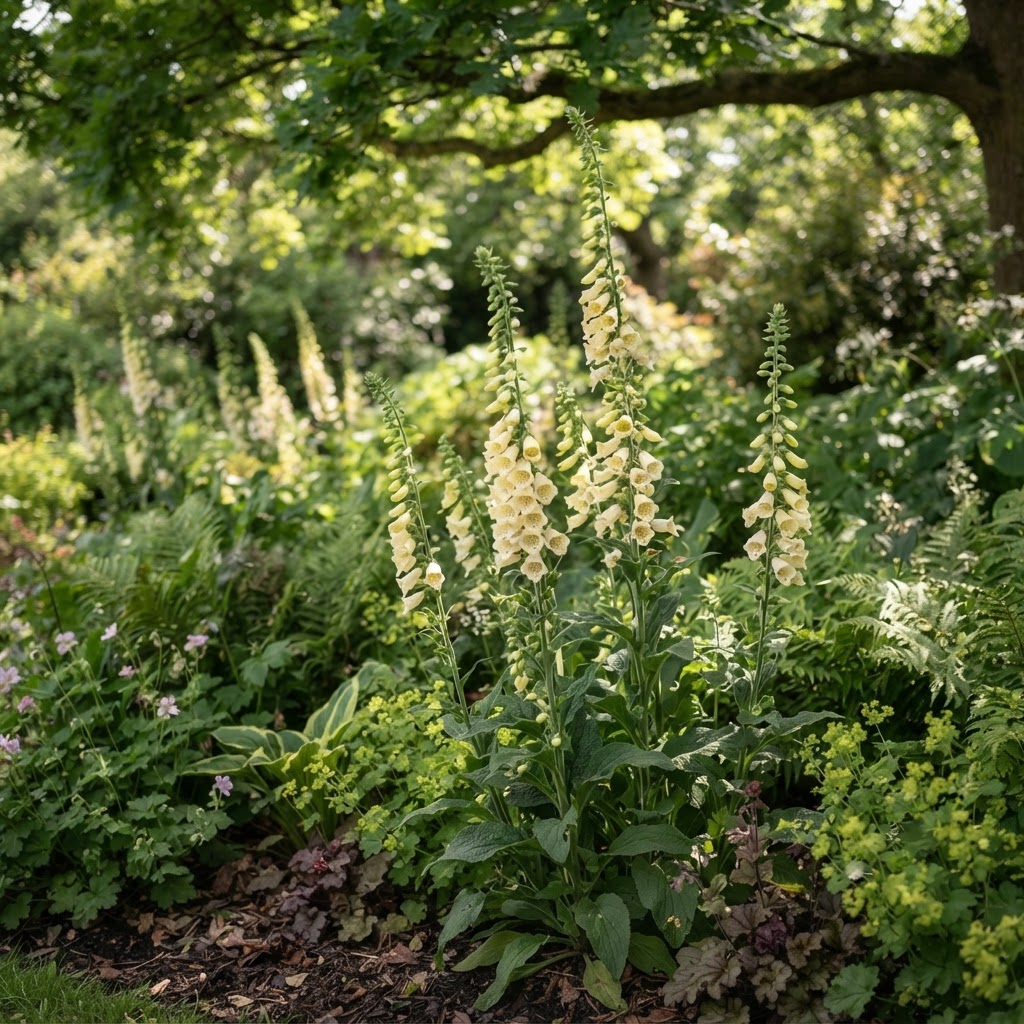
10. Small yellow foxglove (Digitalis lutea). Slender spires of small, creamy yellow flowers for a natural, understated look.
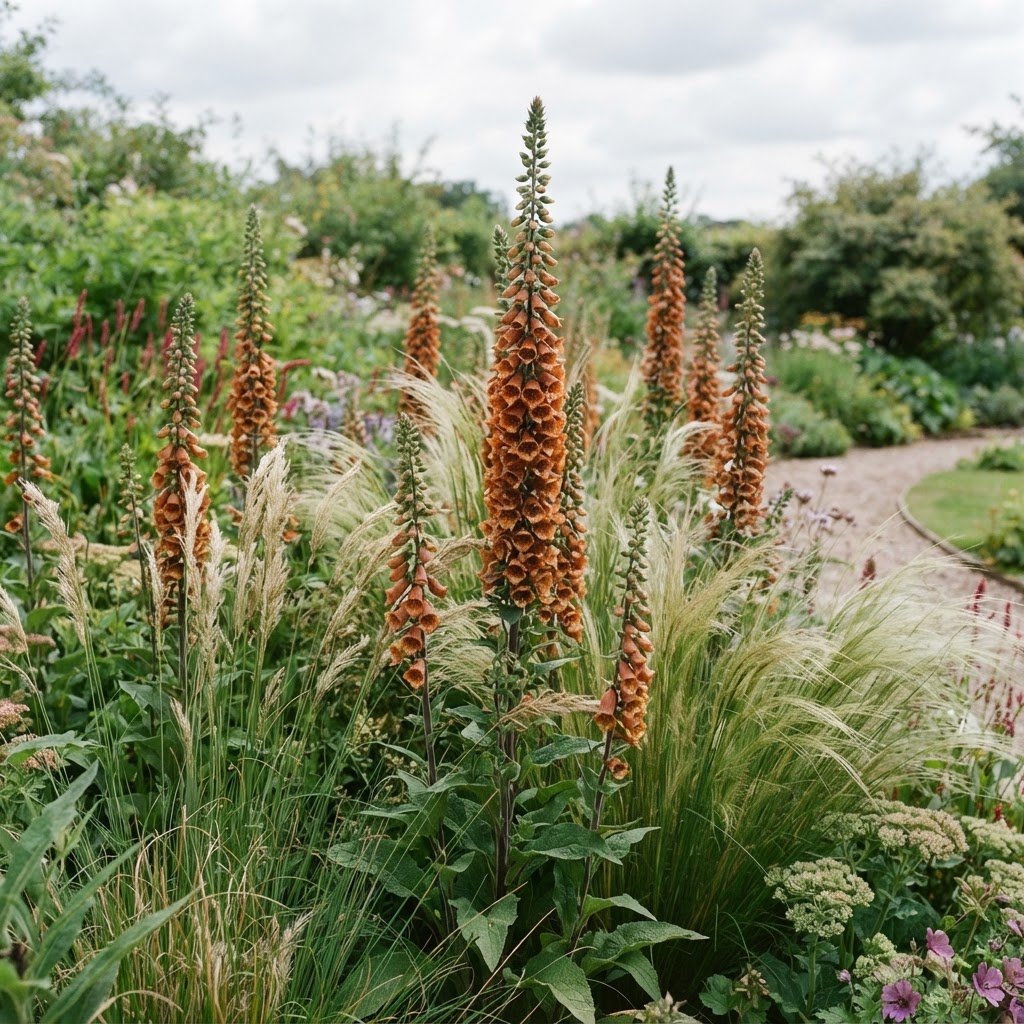
11. Rusty foxglove (Digitalis ferruginea). Tall, narrow spires of coppery, rust-veined flowers that look wonderful with grasses.
12. Grecian foxglove (Digitalis lanata). Creamy flowers with fine brown veining and a pale lip.
13. Canary Island foxglove. A shrubby foxglove relative with orange flowers. It's tender, so grow it in a pot and protect it from frost.
How to Grow Foxgloves From Seed
- Sow in late spring or summer for flowers the following year, or sow first-year varieties early indoors.
- Sow on the surface. The UW-Madison guide is clear: "Seeds need light to germinate, so do not cover." Press the tiny seed onto moist compost.
- Keep moist and out of direct sun while the seed germinates.
- Prick out seedlings into small pots when they're big enough to handle.
- Plant out in autumn, spacing plants around 30 to 45 cm apart, so they settle in before winter.
How to Care for Foxgloves
- Light and soil. Full sun to light shade, in moist but well-drained soil with plenty of organic matter.
- Watering. Water young plants in dry spells; established plants cope well.
- Staking. Tall varieties may need support in exposed gardens.
- Deadheading. Cut the main spike after flowering to encourage smaller side spikes, but leave some to set seed if you want self-sown plants.
- After flowering. Biennial foxgloves usually die after setting seed; perennial types can be cut back and will return.
Foxgloves and Wildlife
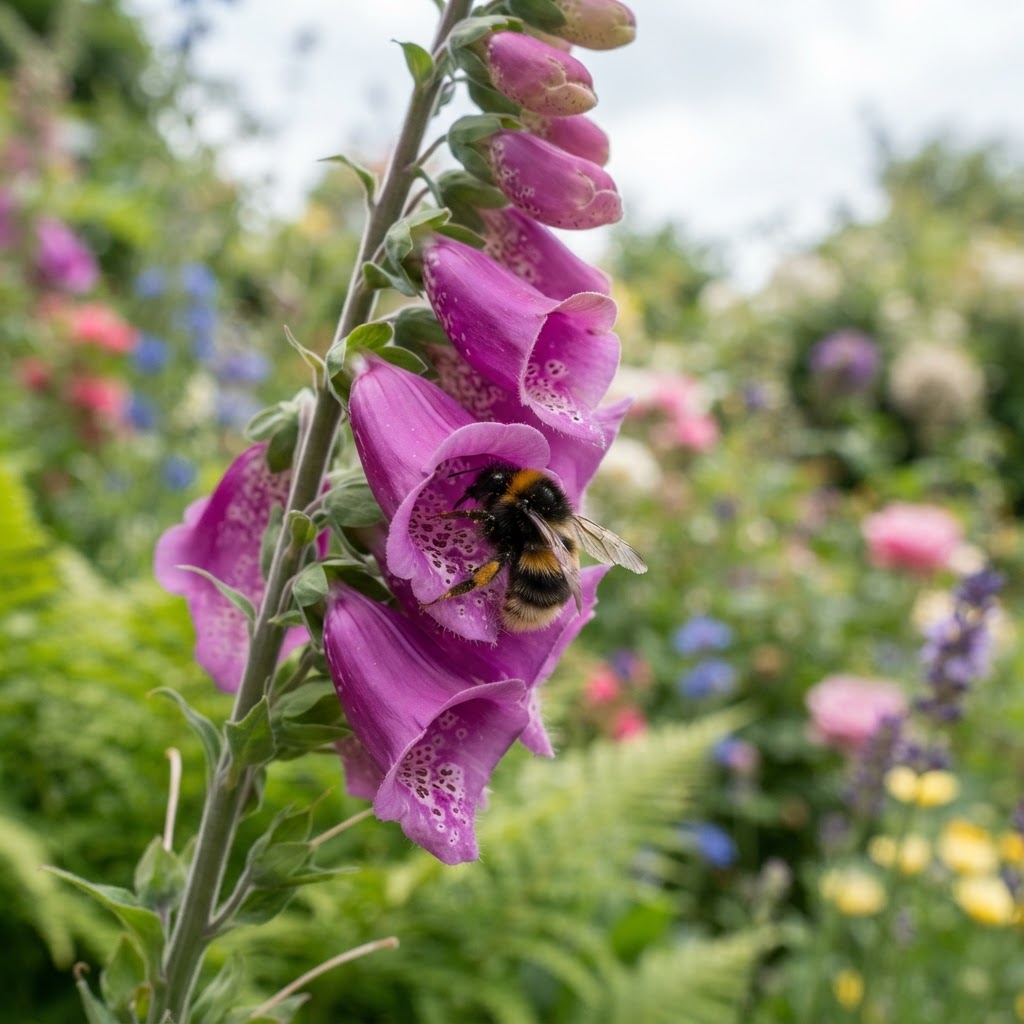
Foxgloves are superb for bumblebees, which climb right inside the bells to reach the nectar. Planted in groups at the back of a border or along a woodland edge, they create a buzzing early summer display. For more long-flowering, wildlife-friendly plants, combine them with tough perennials and other flowers for landscaping.
Foxglove Safety
Foxgloves are beautiful but poisonous. The UW-Madison guide warns that "all parts of the species are toxic if ingested" and that "contact with the leaves can irritate sensitive skin."
- Wear gloves when handling foxgloves.
- Keep them away from areas where small children play or pets chew plants.
- Never confuse the leaves with edible or herbal plants such as comfrey or borage.
- Wash your hands after cutting foxgloves for a vase.
Foxglove has a long history in medicine: in 1785, the English physician William Withering published his study of foxglove as a treatment for dropsy, and heart medicines are still derived from Digitalis today. That doesn't make the plant safe to use at home.
Foxgloves in Garden Design and Flower Arrangements
- Cottage gardens. Foxgloves look perfect with roses, alliums, poppies and geraniums. They're the natural partner for poppies grown from seed.
- Woodland edges. White and pale foxgloves brighten light shade under trees and shrubs, including beneath a lilac tree.
- Against walls and fences. Tall spires soften a boundary or a plain fence, and pair beautifully with simple garden fence ideas.
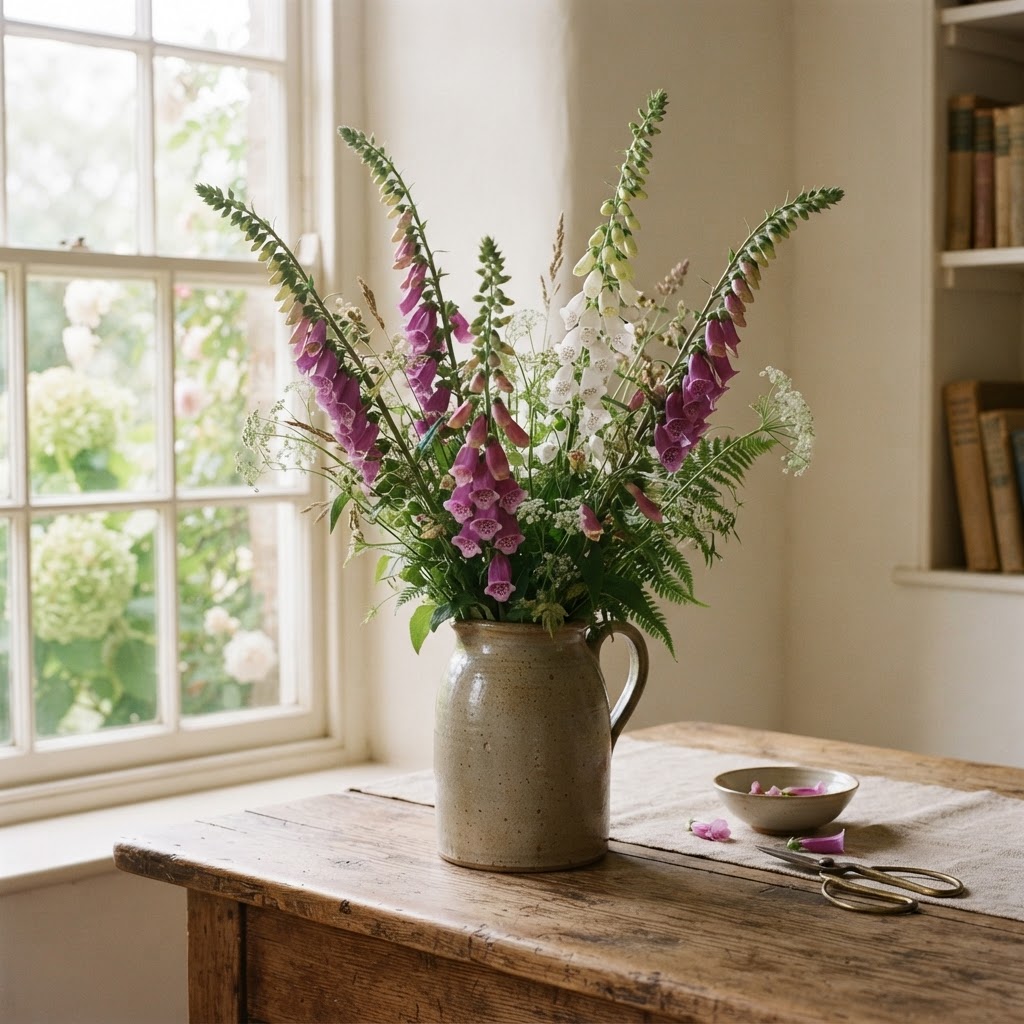
- In a vase. Foxgloves make dramatic cut flowers in a tall jug. Handle them with gloves and keep the vase out of reach of children and pets.
Foxgloves have inspired artists too; Vincent van Gogh painted his doctor, Paul Gachet, holding a sprig of foxglove, one of many famous flower paintings with a story behind it.
Common Mistakes to Avoid
| Mistake | Why it's a problem | What to do instead |
|---|---|---|
| Expecting flowers in the first year | Common foxgloves are biennial | Sow two years running, or grow first-year varieties |
| Covering the seed | Seeds need light to germinate | Sow on the surface |
| Planting in dry, hot soil | Plants struggle and flower poorly | Choose moist soil and light shade |
| Removing every seed head | No self-sown plants for next year | Leave a few spikes to ripen |
| Handling without gloves | Sap can irritate skin | Wear gloves and wash your hands |
| Planting where children play | All parts are toxic | Choose the back of a border |
Frequently Asked Questions
Do foxgloves come back every year?
Common foxgloves are biennial and usually die after flowering, but they self-seed freely, so new plants appear each year. Perennial types, such as strawberry and yellow foxgloves, come back.
When do foxgloves bloom?
Mainly in early summer, usually from late May to July in the UK.
Do foxgloves like sun or shade?
They grow in full sun to light shade, and they're especially useful in dappled shade under trees.
Are foxgloves poisonous?
Yes. All parts are toxic if eaten, and the leaves can irritate sensitive skin. Wear gloves and keep them away from children and pets.
How do you grow foxgloves from seed?
Sow the tiny seed on the surface of moist compost in late spring or summer, without covering it, then plant the young plants out in autumn to flower the following year.
How tall do foxgloves grow?
Common foxgloves usually reach 3 to 4 ft (90 to 120 cm), although some varieties grow taller.
Are foxgloves good for bees?
Yes. They're one of the best flowers for bumblebees, which climb inside the bells to feed.
Spires of Early Summer
Foxgloves bring height, romance and wildlife to a garden for very little effort. Sow them on the surface, give them light shade and moist soil, leave a few to self-seed, and handle them with care, and they'll return to your borders summer after summer.
And if you'd like help designing a garden that feels as considered as your interiors, you can book a one-hour online interior design consultation with me.
About the author
Magda Callery is a UK interior designer and florist with more than 15 years' experience designing homes, pubs, restaurants and bars, and her expert commentary has featured in Homes & Gardens, The Mirror and The Spruce. Explore more of the flowers & garden articles.
Continue reading


Garden Statues: 17 Ideas for Placing Sculpture in a Garden
17 garden statue and sculpture ideas, how to choose and place garden statues, the best materials compared, and how to care for them.


Types of Lavender: 13 Best Varieties and How to Grow Them
The main types of lavender, 13 of the best lavender varieties, how fast lavender grows, and how to plant, prune, grow in pots and dry lavender.

Marigold Varieties: 17 Types of Marigold to Grow
17 marigold varieties to grow, from tall African and compact French marigolds to edible signets and calendula, plus growing tips and their role in Day of the Dead.