
Bedroom Lighting Ideas: 19 Ways to Light a Bedroom
19 bedroom lighting ideas, from pendants and swing-arm wall lights to backlit headboards, plus how to choose lighting for a bedroom and the best bulbs for sleep.
By Magda Callery, interior designer and florist
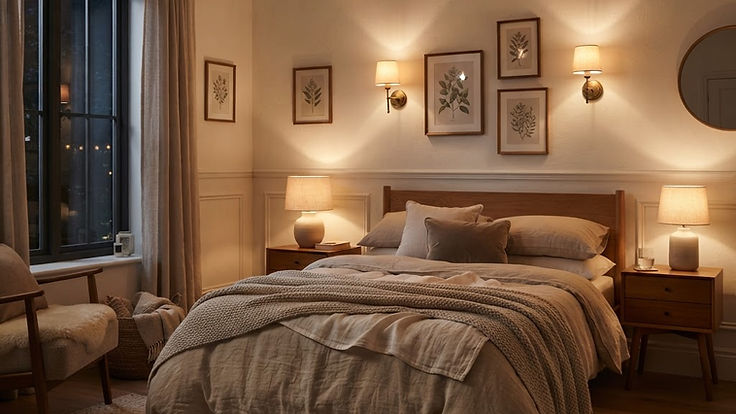
Lighting can make or break a bedroom. A single bright ceiling light makes even the prettiest room feel flat and clinical, while a few well-placed lamps, wall lights and warm bulbs can turn it into a calm, cosy retreat. A bedroom also asks more of its lighting than almost any other room: it needs to help you wake up, get dressed, read in bed and wind down for sleep.
In this guide I'll explain how to choose lighting for a bedroom, the three layers of light every bedroom needs, the best colour temperature for sleep, 19 bedroom lighting ideas for every style and size of room, and the mistakes to avoid.
The quick answer: layer your bedroom lighting. Use a ceiling light or downlights on a dimmer for general light, lamps or wall lights on each side of the bed for reading, and a few accent lights, such as a picture light or a lamp in a corner, for atmosphere. Choose warm white bulbs of around 2700K or lower, and make sure you can switch the lights from both the door and the bed.
The Three Layers of Bedroom Lighting
| Layer | What it does | Examples |
|---|---|---|
| Ambient (general) | Lights the whole room for cleaning, dressing and finding things | Pendants, chandeliers, flush ceiling lights, downlights |
| Task | Focused light for reading, make-up and getting dressed | Bedside lamps, swing-arm wall lights, dressing table lights, wardrobe lights |
| Accent (mood) | Adds atmosphere, depth and highlights | Picture lights, LED strips, floor lamps, candles |
A bedroom with all three layers on separate switches and dimmers can feel bright and practical in the morning, then soft and restful at night.
How to Choose Lighting for a Bedroom
- Start with the bed. Decide where the bed will go first, then plan reading lights on each side of it.
- Plan the switches. Ideally, you should be able to switch the main light from the door and from the bed, so you never cross a dark room.
- Add dimmers. A dimmer on the ceiling light is one of the most effective upgrades in any bedroom.
- Choose warm bulbs. Warm white light feels relaxing and flattering; cool white feels harsh at night.
- Light the dark corners. A lamp in a corner or a light in a wardrobe makes the room feel bigger and more welcoming.
- Match the style. Choose fittings that suit the room, from a linen pendant in a calm bedroom to brass wall lights in a period home.
Colour temperature guide
| Colour temperature | Look | Best for |
|---|---|---|
| 2200K to 2400K | Very warm, candle-like | Evening lamps, night lights |
| 2700K | Warm white | Most bedroom lighting |
| 3000K | Soft white | Dressing tables, wardrobes, reading |
| 4000K and above | Cool white | Best avoided in bedrooms |
Bedroom Lighting and Sleep
The light around you in the evening affects how easily you fall asleep. Harvard Health Publishing explains that "while light of any kind can suppress the secretion of melatonin, blue light at night does so more powerfully." Its advice on blue light includes using "dim red lights for night lights" and avoiding bright screens for two to three hours before bed.
In practice, that means warm, dim, low-level light in the evening: lamps rather than the ceiling light, warm bulbs, and dimmers or smart bulbs that let you turn the light down as bedtime approaches.
19 Bedroom Lighting Ideas
Ceiling lights
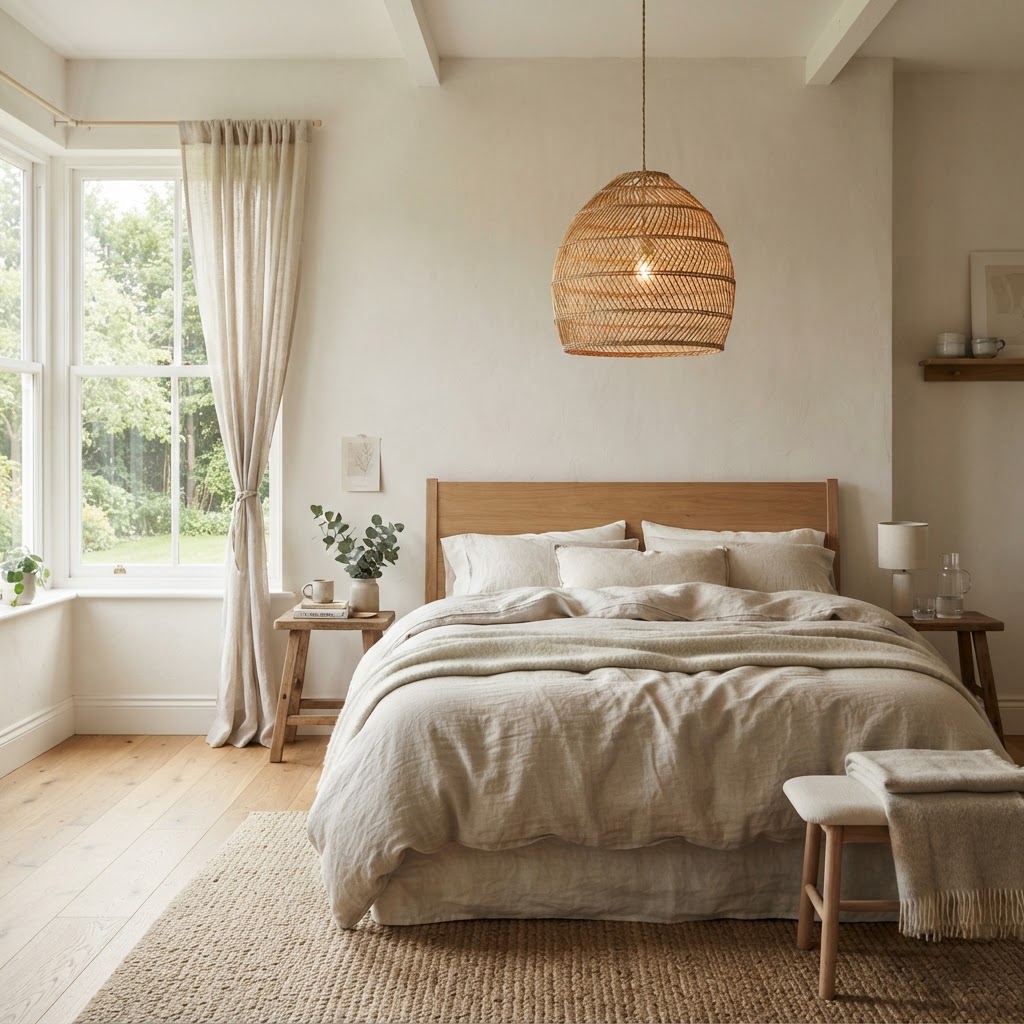
1. A statement pendant. A large rattan, linen or paper pendant softens the light and becomes a focal point. Choose a shade that diffuses light rather than a bare bulb.
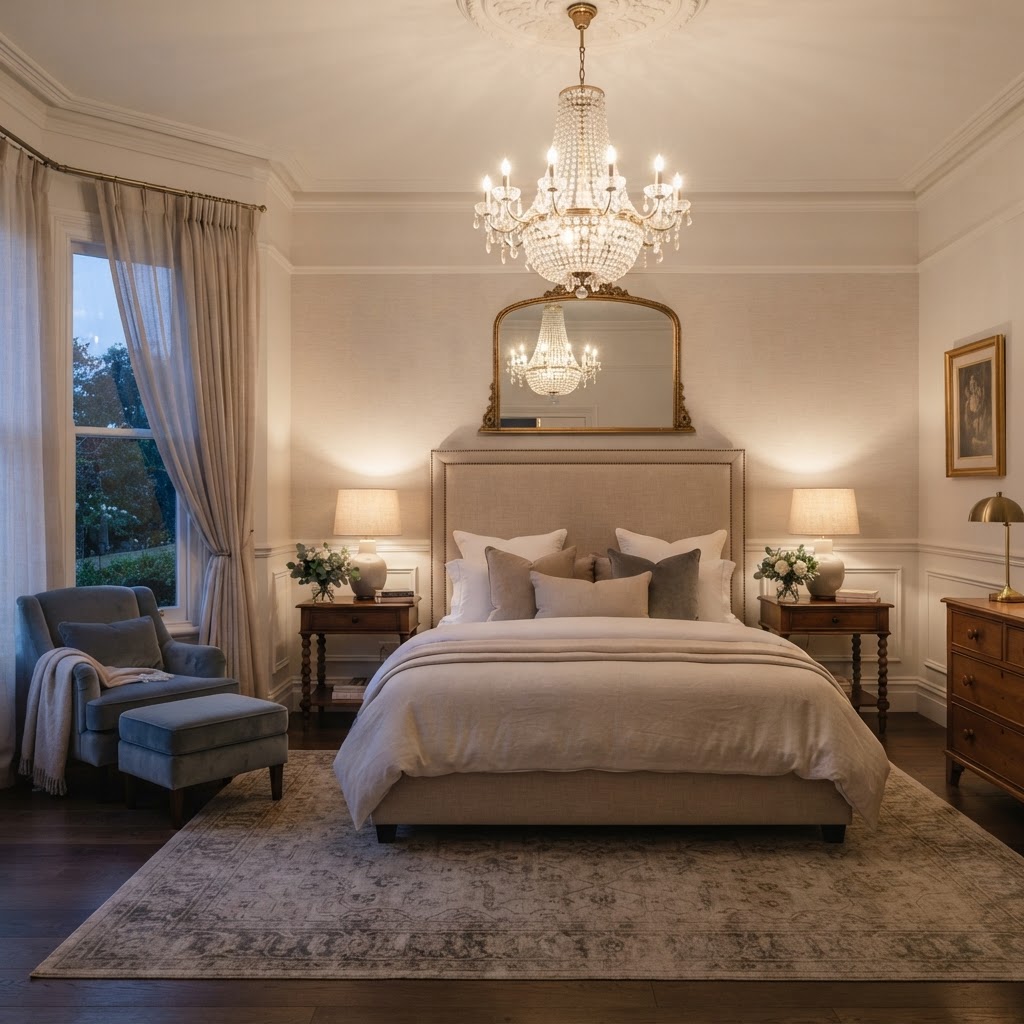
2. A chandelier. A chandelier brings glamour and sparkle to a bedroom with good ceiling height, especially in a period home or an Edwardian interior.
3. Dimmable downlights. Recessed downlights give even, discreet light. Keep them away from directly above the pillows, so they don't shine into your eyes when you're lying down, and always add a dimmer.
4. A flush light for a low ceiling. In a loft or a room with a low or sloping ceiling, a flush or semi-flush fitting keeps headroom clear. It works well with a tongue and groove ceiling or faux ceiling beams.
Bedside lighting
5. Matching bedside lamps. A pair of lamps either side of the bed is classic, symmetrical and calm. Place them so the bottom of the shade sits at around chin height when you're sitting up in bed, so the light falls on your book rather than in your eyes.
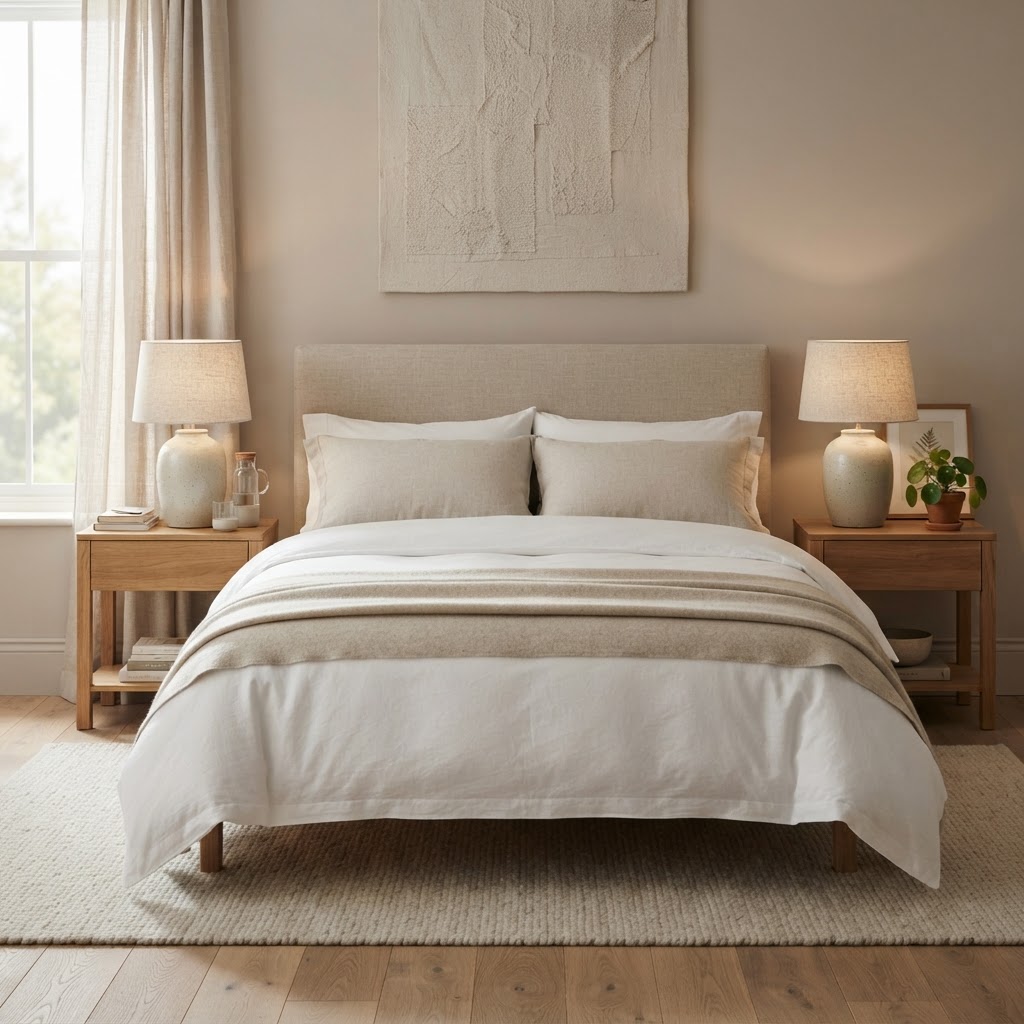
6. Mismatched lamps. Two different lamps of a similar height give a relaxed, collected look, especially in a cottage or eclectic bedroom.
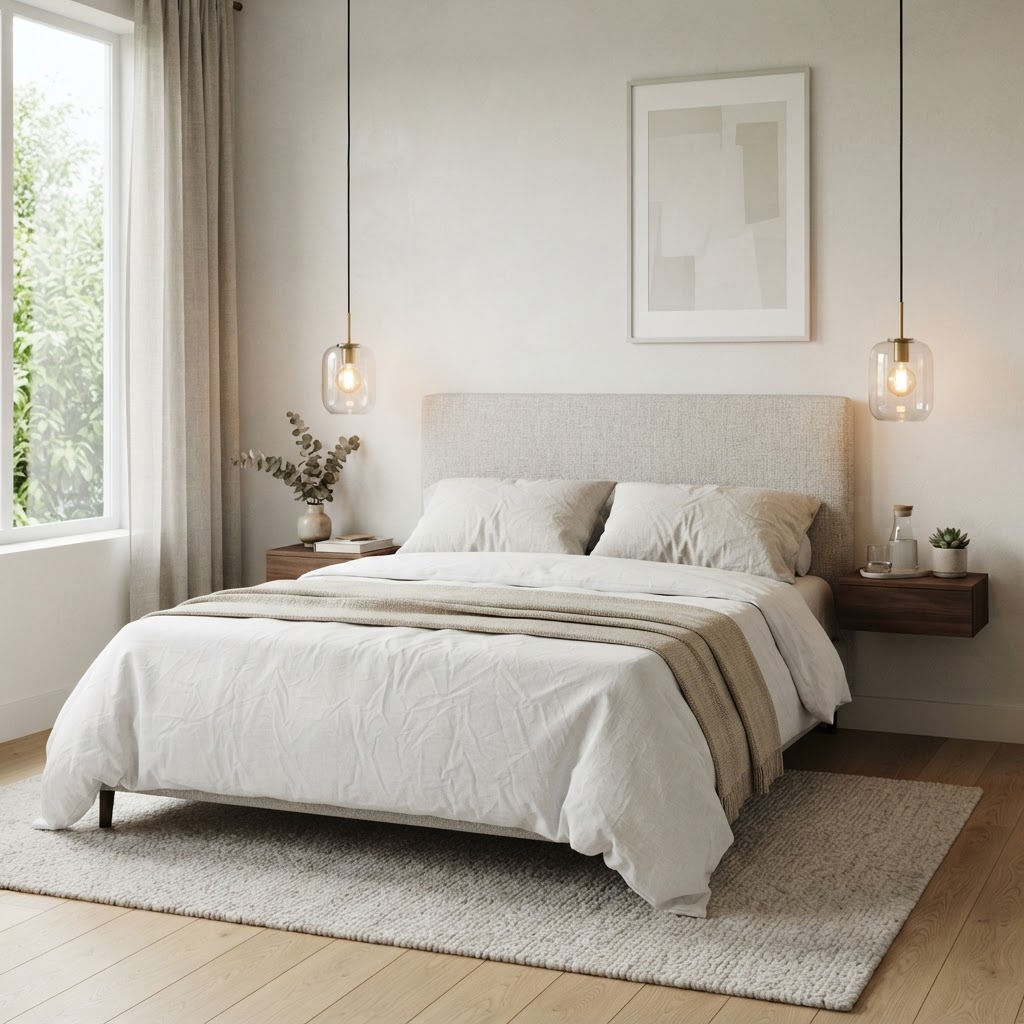
7. Pendants either side of the bed. Hanging pendants instead of lamps frees up space on small bedside tables and looks elegant and modern.
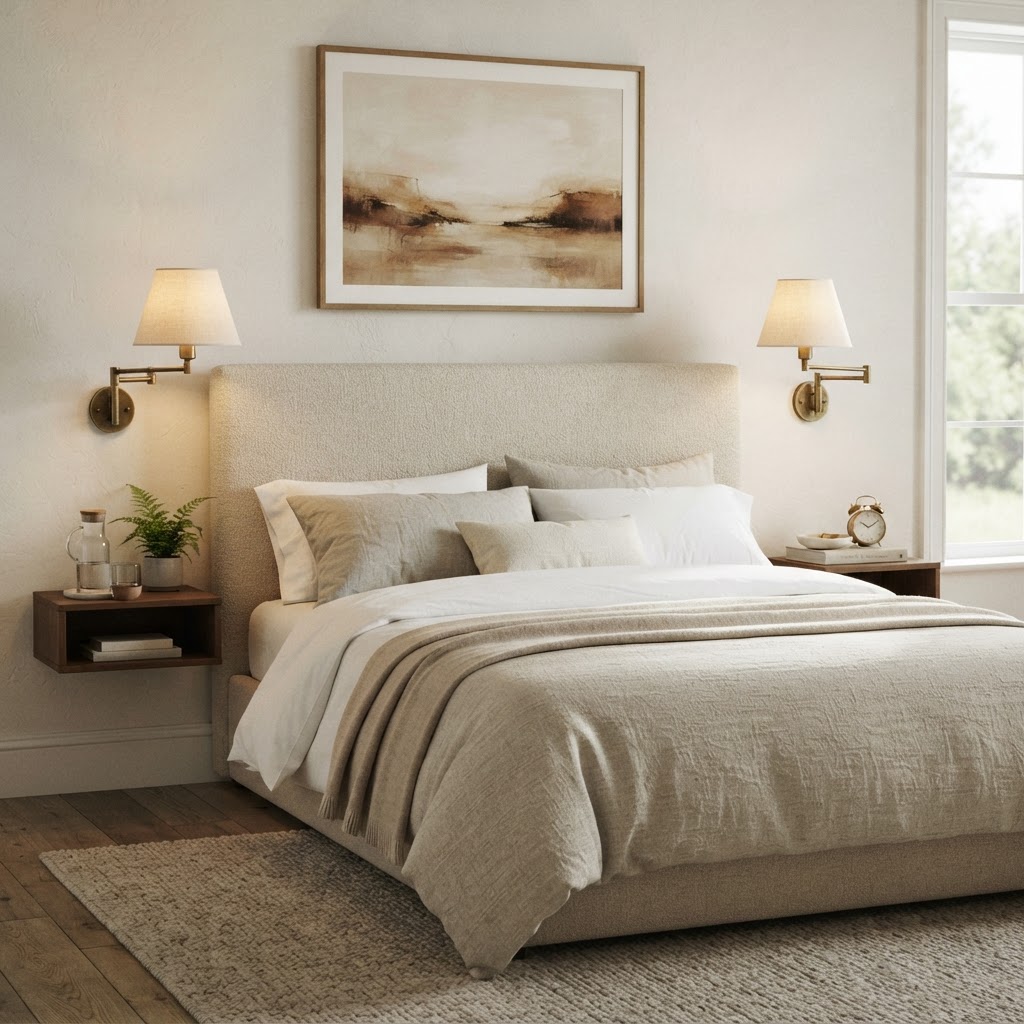
8. Swing-arm wall lights. Adjustable wall lights are perfect for reading, because you can direct the light exactly where you need it. They also free up the bedside table completely.
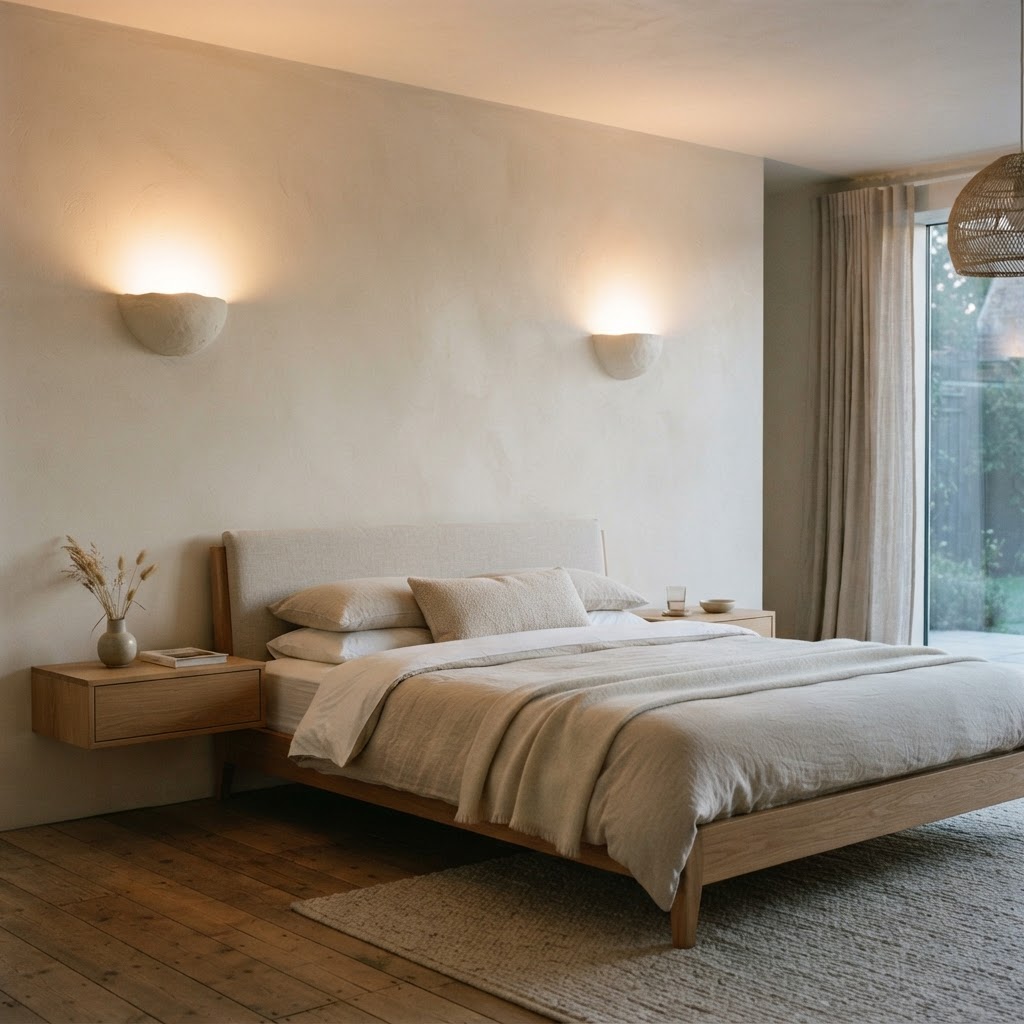
9. Plaster wall sconces. Paintable plaster uplighters wash the wall with soft light and blend into the room. They suit calm, minimal and Japandi-style bedrooms.
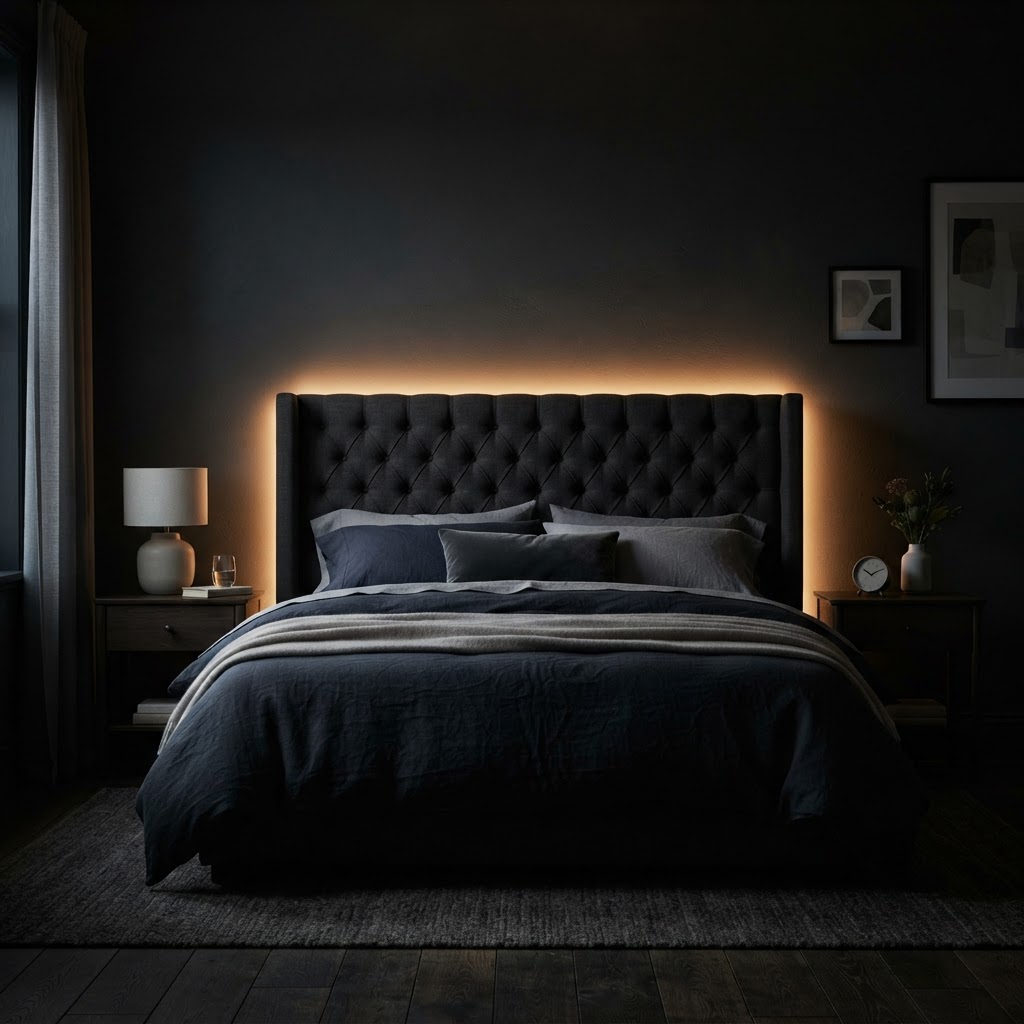
10. A backlit headboard. A warm LED strip behind or above an upholstered headboard creates a gentle halo of light, ideal as a night light.
11. Bedside reading lights for two. If one of you reads while the other sleeps, choose focused reading lights with a narrow beam, so only one side of the bed is lit.
Accent and practical lighting
12. A picture light above the bed. A slim brass picture light over a painting or print above the headboard adds warmth and a gallery feel.
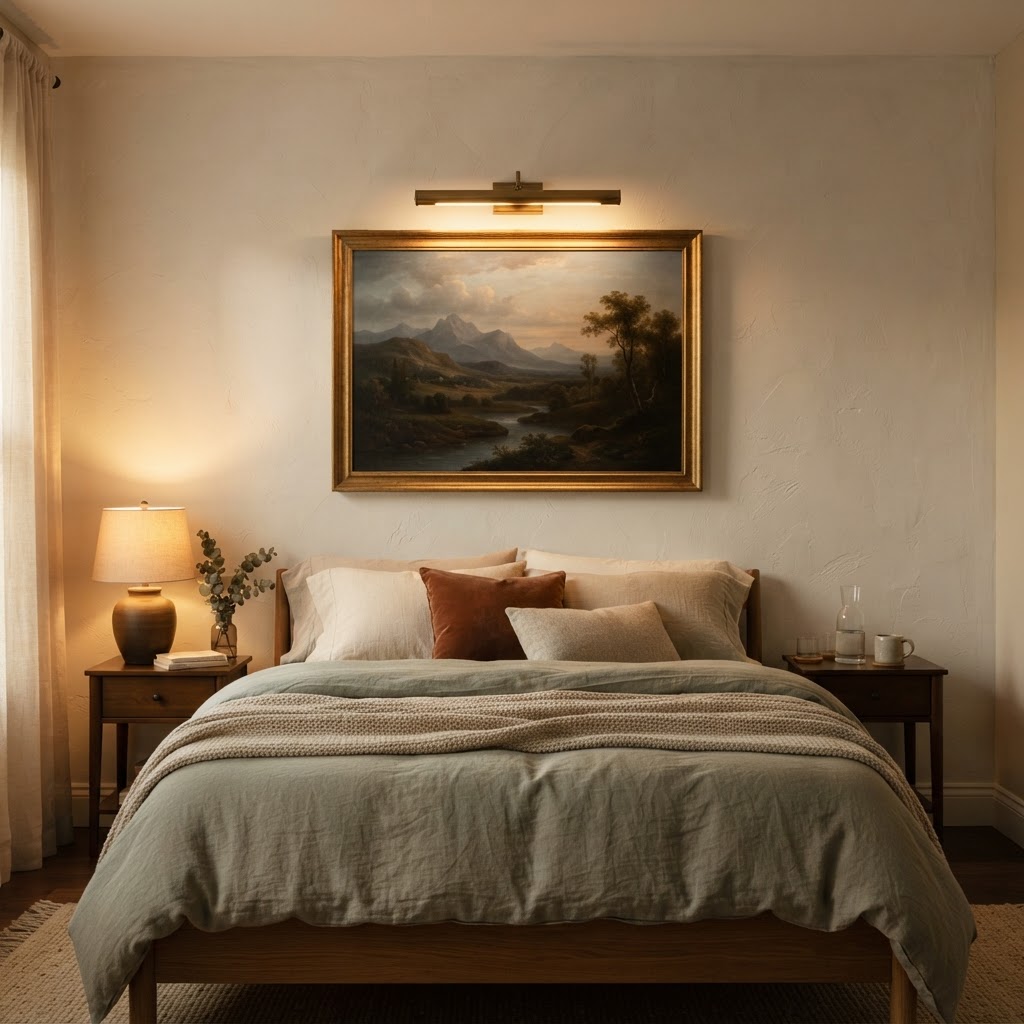
13. Low-level night lighting. A warm, motion-sensor strip under the bed or along the skirting lets you find your way at night without switching on a bright light.
14. Lit shelves and alcoves. Small LED lights in alcove shelves or niches add depth and highlight books and ceramics.
15. Wardrobe lighting. Lights inside a wardrobe, triggered when the doors open, make getting dressed easier and feel luxurious.
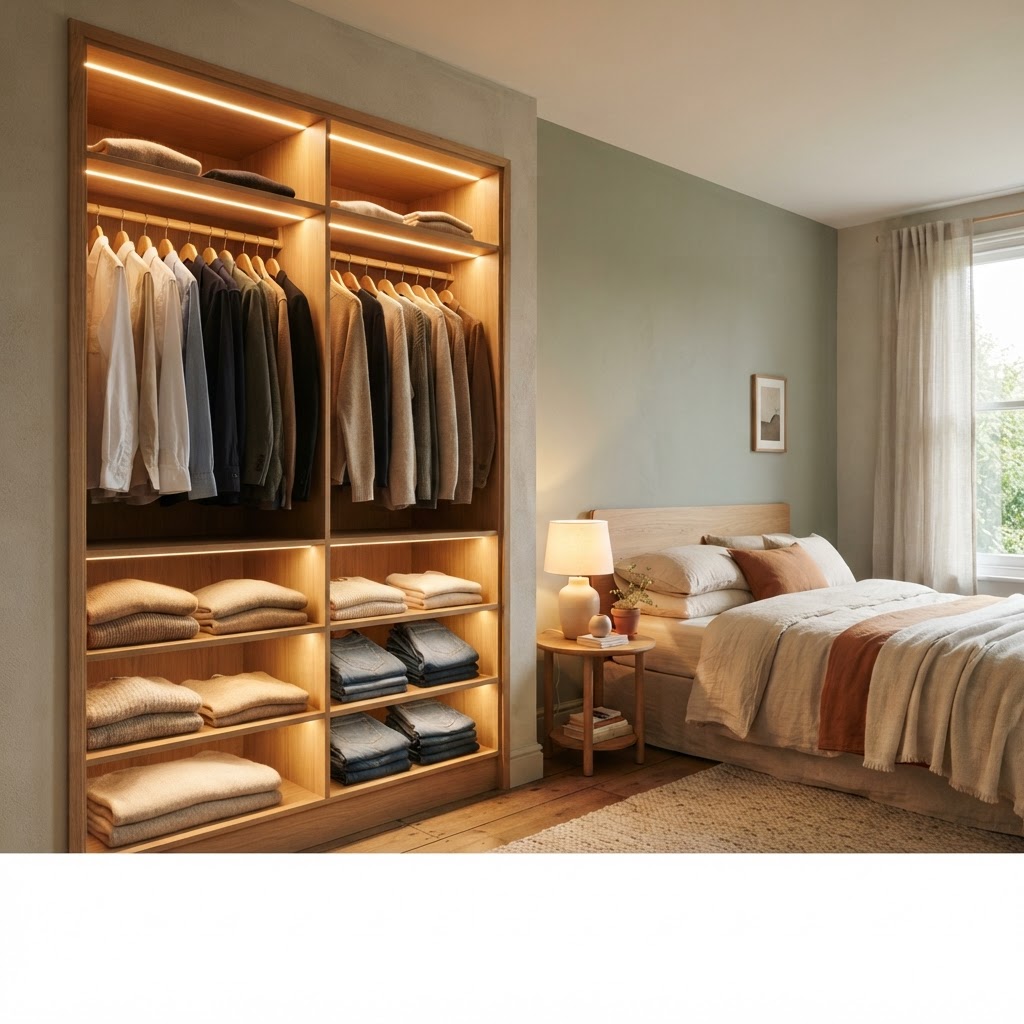
16. A lit dressing table. Soft, even light either side of a mirror is the most flattering for make-up. Pair it with a big mirror in the bedroom to bounce light around.
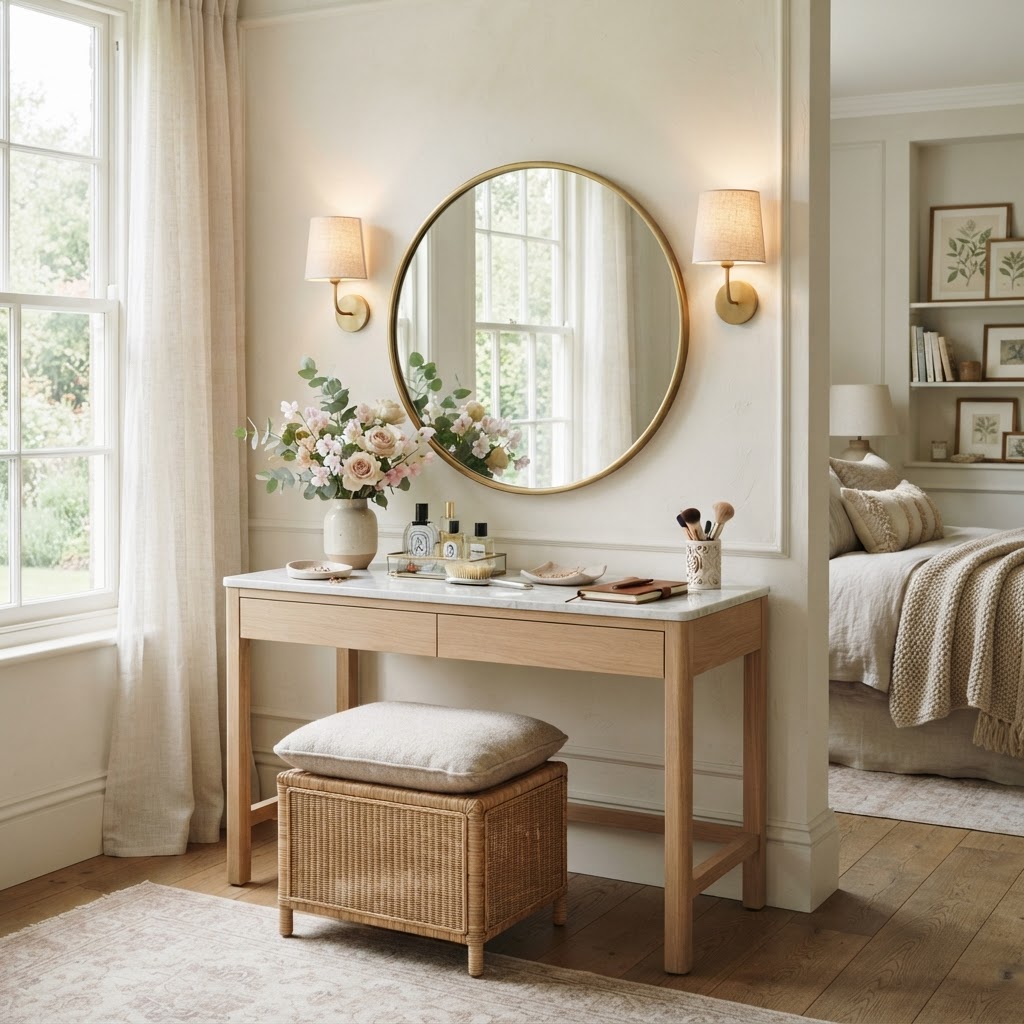
17. A floor lamp in a reading corner. An armchair, a throw and a floor lamp create a cosy corner for reading, separate from the bed.
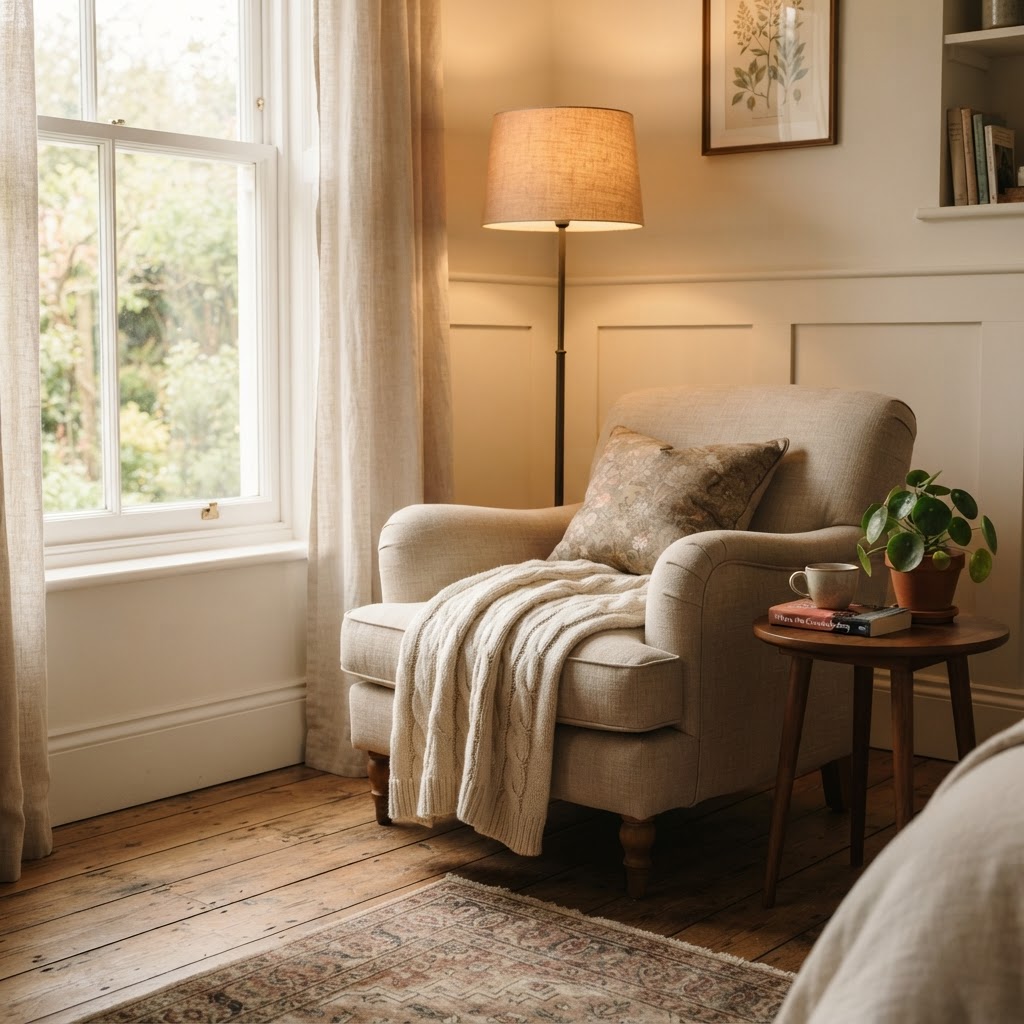
Mood and atmosphere
18. Candles and lanterns. Candlelight is the ultimate in cosy, but never leave candles burning unattended or near bedding. Flameless LED candles give the same glow safely. They're perfect for cosy autumn bedroom ideas.
19. Smart and warm-dimming bulbs. Smart bulbs and warm-dim LEDs, which turn warmer as they dim, let you create a bright morning setting and a soft evening one without changing fittings.
Lighting for Different Bedrooms
- Small bedrooms: wall lights and pendants free up floor and table space. Pale walls and a mirror help light bounce around, as in a small studio apartment.
- Dark, moody bedrooms: in a room painted a deep shade such as Dulux Ink Well, use more lamps at lower levels and warm bulbs to make the colour glow.
- Children's rooms and nurseries: choose dimmable lights, a warm night light and cordless lamps. A baby girl nursery needs soft light for night feeds.
- Lofts and mezzanines: clip-on or wall-mounted lights work well above loft beds, where space is tight.
- Patterned rooms: a lamp or picture light makes a feature wall glow at night, and it works with all kinds of wallpaper ideas.
Common Mistakes to Avoid
| Mistake | Why it's a problem | What to do instead |
|---|---|---|
| Relying on one ceiling light | Flat, harsh and unflattering | Layer lamps, wall lights and accent lights |
| Cool white bulbs | Feel clinical and keep you alert at night | Use warm white, around 2700K or lower |
| Downlights above the pillows | Shine straight into your eyes | Position them away from the bed head |
| No switch by the bed | You cross a dark room to switch off | Add two-way switching or smart controls |
| Lamps that are too low or too short | Poor light for reading | Shade bottom at about chin height when sitting up |
| No dimmers | No way to soften the light at night | Put the main lights on dimmers |
Frequently Asked Questions
How do you choose lighting for a bedroom?
Plan three layers: general light from the ceiling, task light for reading and dressing, and accent light for atmosphere. Put the main lights on dimmers, choose warm bulbs, and make sure you can switch lights from both the door and the bed.
What color light is best for a bedroom?
Warm white light, around 2700K or lower, is best. It feels relaxing and flattering, and it's kinder to sleep than cool, blue-toned light.
How high should bedside lamps be?
The bottom of the shade should sit at about chin height when you're sitting up in bed, so light falls onto your book rather than into your eyes.
Should a bedroom have a ceiling light?
It's useful for cleaning and getting dressed, but it shouldn't be the only light. Put it on a dimmer and rely on lamps and wall lights in the evening.
What lighting is best for sleep?
Dim, warm, low-level light in the evening, such as bedside lamps with warm bulbs, and a very dim red or amber night light if you need one.
Are wall lights or lamps better by the bed?
Both work. Wall lights free up space and are easy to angle for reading, while lamps are easier to install and change. In small bedrooms, wall lights or pendants are often the better choice.
How many lights should a bedroom have?
Most bedrooms benefit from at least three or four light sources: a ceiling light, a light on each side of the bed and one accent light, such as a floor lamp or picture light.
Light for Living, Light for Rest
Good bedroom lighting is layered, warm and easy to control. Plan your lights around the bed, add dimmers and warm bulbs, light the corners and keep the evening soft and low, and your bedroom will feel bright when you need it and restful when you want to sleep. Finishing touches matter too, from the right bed shams to a bedside lamp you love.
And if you'd like help planning the lighting and design of your bedroom, you can book a one-hour online interior design consultation with me.
About the author
Magda Callery is a UK interior designer and florist with more than 15 years' experience designing homes, pubs, restaurants and bars, and her expert commentary has featured in Homes & Gardens, The Mirror and The Spruce. Explore more of the interior design articles.
Continue reading

Wallpaper Ideas for Every Room: 21 Stylish Ideas
21 wallpaper ideas for every room, from botanical feature walls and chinoiserie dining rooms to wallpapered ceilings, plus how to choose the right type.


Brown Couch Living Room Ideas: 21 Ways to Style a Brown Sofa
21 brown couch living room ideas, plus the best wall colours, throw pillows and rugs for a brown sofa and how to make it look modern rather than dated.

Handleless Kitchen Ideas: Types, Pros and Cons
An interior designer's guide to handleless kitchens: true handleless vs J-pull vs push-to-open, handleless doors and cabinets, handleless shaker kitchens, costs, pros and cons, and 21 ideas.