
Loft Bed Ideas: 15 Clever Ways to Save Space
Loft bed ideas from a designer: the different types of loft bed and high sleeper, how much ceiling height you need, 15 ideas for children, teenagers and adults, safety rules and mistakes to avoid.
By Magda Callery, interior designer and florist
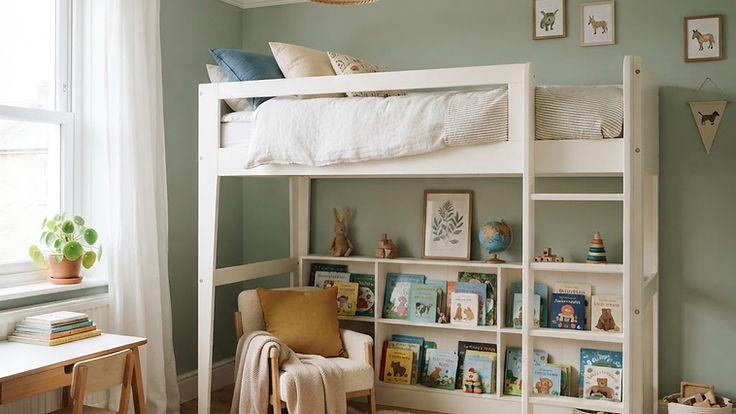
A loft bed is one of the smartest ways to gain space in a small bedroom, a box room or a studio flat. By lifting the bed up high, you free up a whole floor's worth of space underneath for a desk, a reading nook, a wardrobe, a sofa or a den. Done well, it doesn't just save space; it gives a room a completely new layout.
In this guide I'll explain the different types of loft bed, how much ceiling height you need, 15 loft bed ideas for children, teenagers and adults, the safety rules every parent should know and the mistakes to avoid.
What Is a Loft Bed?
A loft bed is a raised bed on a tall frame, with open space underneath instead of a second bed. It's similar to a bunk bed, but the lower level is used for living, working or storage. In the UK, loft beds for children are often called high sleepers, while lower versions are called mid sleepers or cabin beds.
| Type | Sleeping height | Best for |
|---|---|---|
| High sleeper or loft bed | High, with standing or desk space underneath | Older children, teens, studios |
| Mid sleeper | Mid height, with storage or a play space underneath | Younger children who've outgrown a cot bed |
| Cabin bed | Low, with drawers and cupboards built in | Small rooms that need storage |
| Adult loft bed | Strong frame for double or single mattresses | Studio flats and small spare rooms |
| Built-in loft bed | Custom joinery fitted to the room | High-ceilinged rooms and awkward spaces |
How Much Ceiling Height Do You Need?
This is the first thing to check. You need room to sit up comfortably in bed and, ideally, to stand or sit underneath.
- Above the mattress: as a rule of thumb, I aim for at least 75 to 90cm between the top of the mattress and the ceiling, so you can sit up without hitting your head.
- Underneath: for a desk you'll need around 75cm of clear height for the worktop and enough room to sit comfortably below the bed frame; to stand underneath, you'll need much more.
- Typical UK ceilings of around 2.4m usually suit a high sleeper for a child or a mid sleeper, while a full-height adult loft bed with standing room below works best with higher ceilings.
Measure from the floor to the lowest point of the ceiling, including any beams, pendant lights, sloping ceilings or window heads.
15 Loft Bed Ideas
For children
1. A reading nook underneath. Cushions, a soft rug, a wall light and low bookshelves turn the space under a high sleeper into a cosy den.
2. A play den with curtains. Hang simple linen curtains from the bed frame to create a hideaway that can be closed off at the end of the day.
3. A desk for homework. A built-in desk with a lamp, pinboard and shelves gives older children a dedicated study zone.
4. A wardrobe and drawers underneath. In a box room with no space for a wardrobe, clothes storage under the bed frees up the rest of the floor.
5. Stairs with storage instead of a ladder. Staircase steps with drawers inside are safer and easier to climb than a ladder, and add storage.
6. A soft, calm colour scheme. Paint the bed frame and walls in soft, restful colours, and keep the area under the bed light so it doesn't feel cave-like. The gentle palettes in these baby girl nursery ideas grow up well into a child's loft bed room.
For teenagers
7. A study and gaming zone. A deeper desk, a comfortable chair and good task lighting make a proper workspace under the bed.
8. A mini sofa or beanbag lounge. A compact sofa underneath gives teens space to hang out with friends.
9. A dressing area. A clothes rail, a full-length mirror and a small chest of drawers make a teenage dressing corner.
For adults and small homes
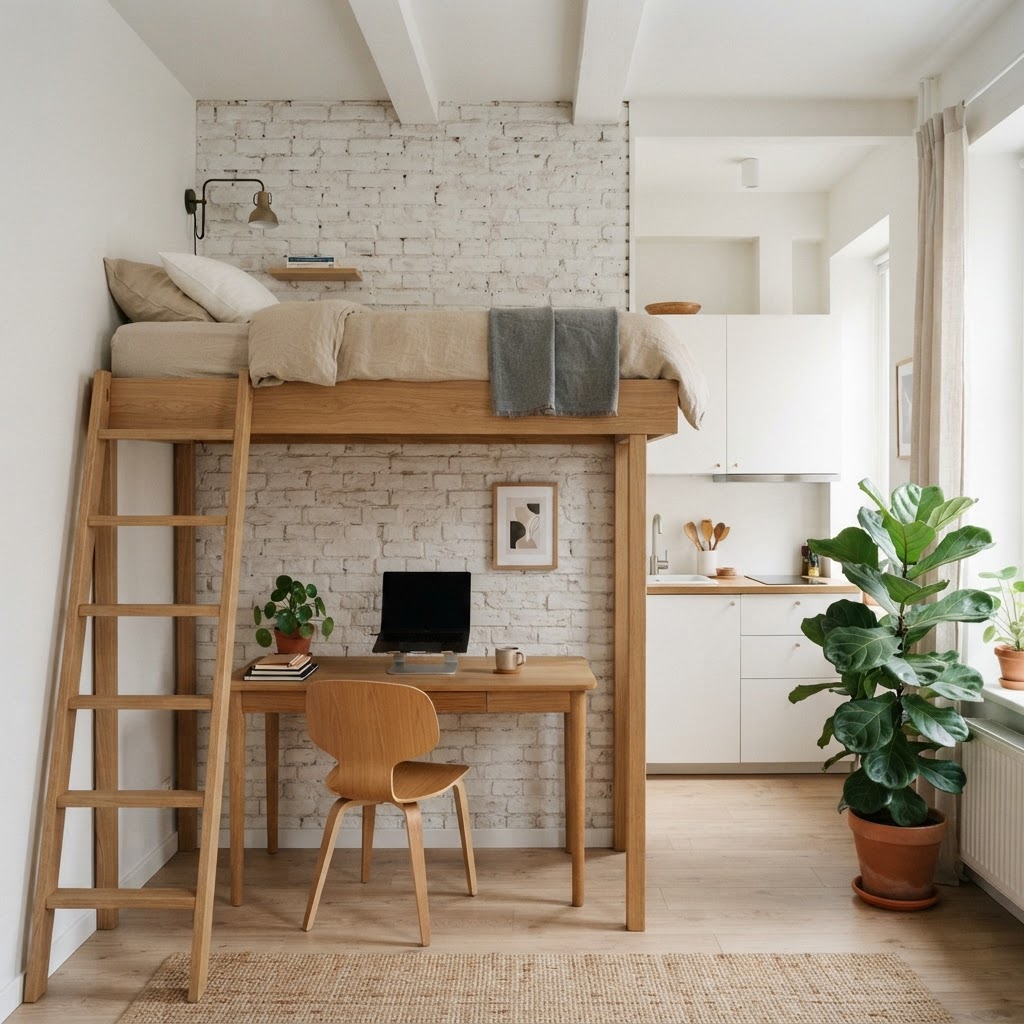
10. A loft bed in a studio flat. Lifting the bed frees up the floor for a living area, so a studio feels like a one-bedroom flat. These small studio apartment ideas show how to zone the rest of the room.
11. A home office under the bed. A desk, shelves and a good chair under an adult loft bed create a real home office. Choose a desk at a standard height, as with any writing desk, and add a wall light so the space doesn't feel dark.
12. A guest room that doubles as a study. In a small spare room, a loft bed above a desk gives guests a bed without losing the office.
13. Built-in joinery. In a room with high ceilings, a bespoke timber loft bed with built-in steps, storage and a desk feels like part of the architecture.
14. Natural materials. Oak, pine or birch plywood frames with linen bedding feel calm and Scandinavian, much like the simple, natural workspaces of a Japandi office.
15. Lighting and ventilation. Add a wall light or reading light to the bed level and good lighting below. Heat rises, so keep the room well ventilated and avoid heavy duvets in summer.
Loft Bed Safety
Safety matters, especially for children.
- Check the standard. In the UK, bunk beds and high beds should conform to BS EN 747, according to retailers such as Sleepland Beds.
- Age. Upper bunks and high beds are widely advised as not suitable for children under six, because of the risk of falls.
- Guard rails on all open sides, high enough above the mattress to stop a sleeping child rolling out.
- Use the right mattress. Never exceed the maximum mattress height marked on the bed, or the guard rails become too low.
- Secure ladders and stairs, and teach children to use them every time.
- Keep away from hazards: ceiling lights, fans, windows, curtain cords and radiators.
- Check the weight limit, especially for adult loft beds, and fix the bed to the wall if the manufacturer recommends it.
- One person on the top at a time, and no playing or jumping on the bed.
Common Mistakes to Avoid
| Mistake | Why it's a problem | What to do instead |
|---|---|---|
| Not measuring the ceiling | No room to sit up in bed | Allow around 75 to 90cm above the mattress |
| Too thick a mattress | Guard rails become ineffective | Stay below the maximum mattress line |
| Dark, cluttered space underneath | Feels like a cave | Use light colours, lighting and storage |
| A ladder in a young child's room | Harder and riskier to climb | Choose a mid sleeper or stairs |
| Forgetting about changing the bed | Making a high bed is awkward | Choose lighter bedding and a fitted sheet with deep corners |
Frequently Asked Questions
What age is a loft bed suitable for?
High sleepers and loft beds are generally advised as not suitable for children under six. Mid sleepers and cabin beds are better for younger children.
How much space do you need above a loft bed?
As a rule of thumb, allow at least 75 to 90cm between the top of the mattress and the ceiling so you can sit up comfortably.
Are loft beds good for adults?
Yes, in studio flats and small rooms. Choose a strong frame with a suitable weight limit, check the ceiling height and add good lighting and ventilation.
What is the difference between a loft bed and a bunk bed?
A bunk bed has two beds, one above the other. A loft bed has only one raised bed, with open space underneath for a desk, storage or seating.
What is the difference between a high sleeper and a mid sleeper?
A high sleeper is tall enough for a desk or play area underneath, while a mid sleeper is lower, with storage or a small den beneath, and suits younger children.
How do you make a loft bed look nice?
Paint or choose a frame that suits the room, add curtains or lighting underneath, keep colours light and use the space below for a clear purpose, such as a desk, reading nook or wardrobe.
Make Every Square Metre Count
A loft bed can transform a small bedroom, studio or spare room by giving you a whole extra zone underneath. Measure carefully, choose the right type for the person using it, follow the safety rules and give the space below a clear purpose.
For more space-saving ideas, explore the interior design section, and if you'd like help planning a small bedroom or studio, you can book a one-hour online interior design consultation with me.
About the author
Magda Callery is a UK interior designer and florist with more than 15 years' experience designing homes, pubs, restaurants and bars, and her expert commentary has featured in Homes & Gardens, The Mirror and The Spruce. Explore more of the interior design articles.
Continue reading

Bedroom With a Big Mirror: 15 Ideas and Placement Tips
Ideas for a bedroom with a big mirror: the best and worst places to put one, how big it should be, what feng shui says about mirrors facing the bed, 15 styling ideas and how to hang or lean a heavy mirror safely.

Microcement Bathroom: Pros, Cons, Costs and Ideas
Everything you need to know about a microcement bathroom: what microcement is, how it compares with tiles and tadelakt, whether it's waterproof, applying it over tiles, UK costs per m², 12 design ideas, maintenance and how to choose an installer.

Faux Ceiling Beams: Ideas, Materials and Installation
A designer's guide to faux ceiling beams: what they are, polyurethane vs timber, how to size and space them, 15 ideas for living rooms, kitchens and bedrooms, rough costs, safety points and a step by step installation guide.