
Greek Villa vs Alabaster: Which Sherwin-Williams White?
Greek Villa vs Alabaster compared: undertones, LRV, how each looks in different light, the best rooms for each, and the colours that go with them.
By Magda Callery, interior designer and florist

Greek Villa and Alabaster are two of the most popular warm whites Sherwin-Williams makes, and they're so close that many people can't tell them apart on a small chip. Both are soft, warm and welcoming, both work on walls, trim, cabinets and exteriors, and both avoid the cold, clinical look of a stark white. But the small differences between them matter once they cover a whole room.
In this guide I'll explain how Greek Villa and Alabaster compare side by side, the difference in their undertones and LRV, how each looks in north, south, east and west-facing rooms, which is better for kitchens, living rooms, bedrooms, trim and exteriors, the best coordinating colours, and how to test them properly before you decide.
The quick answer: Greek Villa is slightly lighter, brighter and creamier. Alabaster is a touch deeper and softer, with a hint of gray that makes it a little more muted. If your room is dark or you want a warm white that still feels fresh, choose Greek Villa. If your room gets lots of light or you want a calmer, more relaxed white, choose Alabaster.
Greek Villa vs Alabaster Side by Side
| Greek Villa | Alabaster | |
|---|---|---|
| Code | SW 7551 | SW 7008 |
| LRV | 84.2 | 82.2 |
| Hex | #F0ECE2 | #EDEAE0 |
| RGB | 240, 236, 226 | 237, 234, 224 |
| Undertone | Warm, creamy | Warm, softened with a little gray |
| Look on the wall | Bright, fresh warm white | Soft, calm warm white |
| Best for | Darker rooms, cabinets, trim, exteriors | Bright rooms, whole-house colour, relaxed schemes |
The LRV, hex and RGB values come from Sherwin-Williams' own colour pages for Greek Villa and Alabaster. Both sit in the brand's White and Pastel family.
The Difference in Undertones
Both colours are warm whites, so neither will look blue or icy. The difference is in how that warmth comes across.
- Greek Villa reads as a clean, creamy white. In warm light it can lean very slightly yellow, but it stays fresh rather than buttery.
- Alabaster has a little more gray in it, which softens the cream. That's why it often looks calmer and more muted, and why it sits so comfortably with greige, wood and natural textures.
A designer's tip: hold both samples against something pure white, such as a sheet of printer paper. The cream in Greek Villa and the softness in Alabaster become much easier to see.
LRV: Which Is Brighter?
LRV (light reflectance value) measures how much light a colour reflects, from 0 for black to 100 for pure white. Greek Villa's LRV of 84.2 is about two points higher than Alabaster's 82.2, so it reflects slightly more light and looks a little brighter on the wall.
Two points doesn't sound like much, but in a north-facing room or a hallway with little daylight, the extra brightness of Greek Villa can stop the walls looking dull. In a sunny room, Alabaster's slightly lower LRV helps it avoid glare.
How They Look in Different Light
| Room orientation | Greek Villa | Alabaster |
|---|---|---|
| North-facing | Stays fairly bright and warm; the better choice for cool, gray light | Can look a little flat or grayish |
| South-facing | Can look quite creamy in strong sun | Soft and balanced, without glare |
| East-facing | Bright and warm in the morning, softer later | Gentle and warm in the morning, calmer in the afternoon |
| West-facing | Glows warmly in the evening | Golden but restrained in the evening |
| Artificial light | Creamier under warm bulbs | Softer and slightly more neutral under warm bulbs |
Greek Villa vs Alabaster Room by Room
Kitchens and cabinets
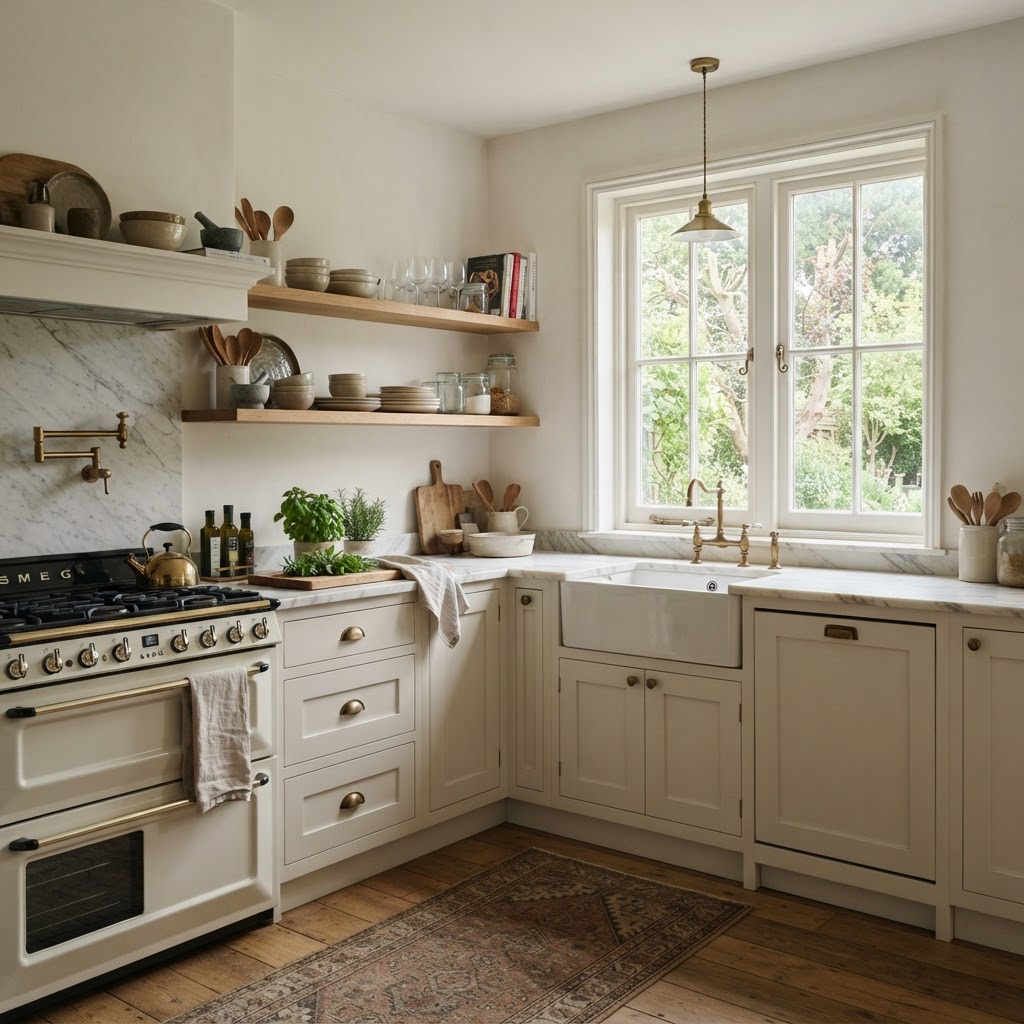
Both are beautiful cabinet colours. Greek Villa gives cabinets a crisp but warm finish that looks lovely with brass hardware and marble. Alabaster looks softer and more relaxed, especially with oak, terracotta and natural stone. In a sleek, modern scheme such as a handleless kitchen, Greek Villa's brightness keeps the look clean.
Living rooms
For a living room that's used morning to night, Alabaster is the easier, more forgiving colour. It feels calm in daylight and cosy in lamplight. If your living room is north-facing or quite dark, Greek Villa will keep it brighter.
Bedrooms
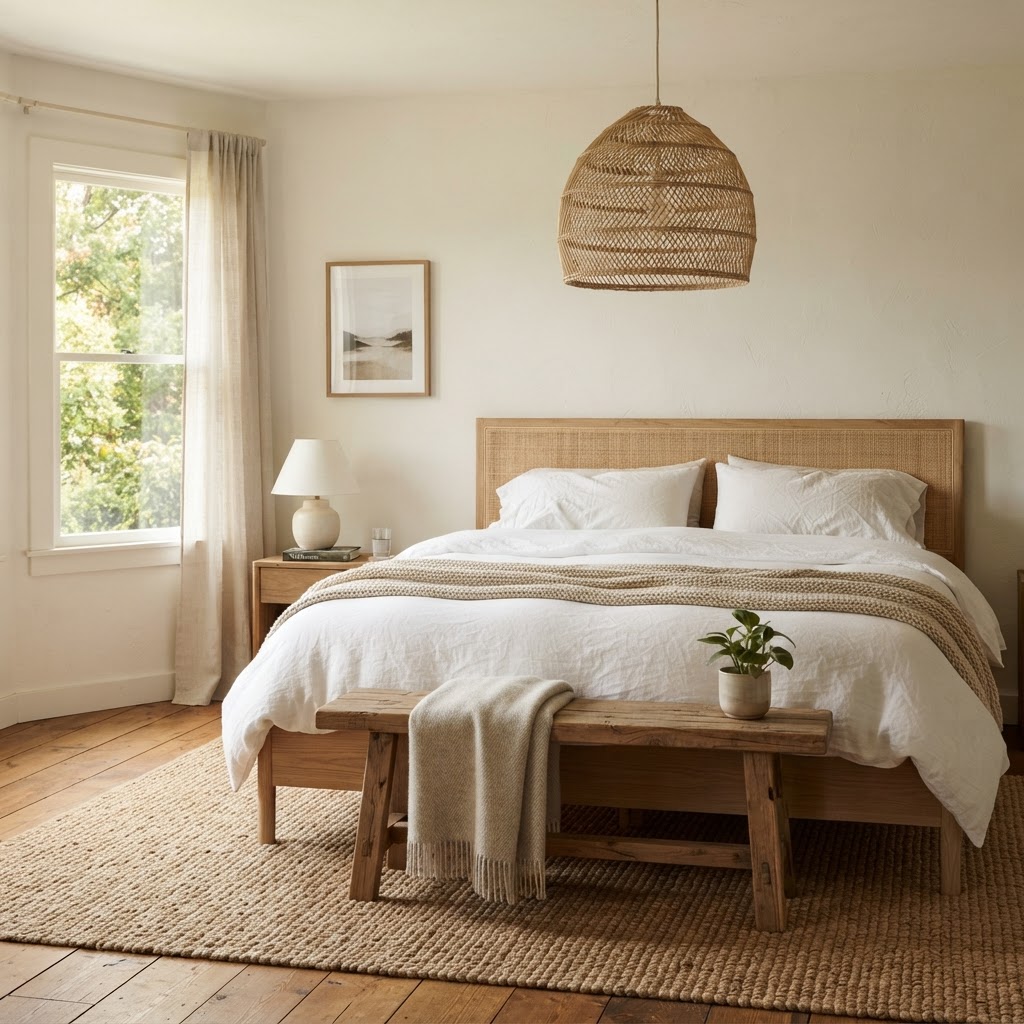
Alabaster's softness suits bedrooms, where you want a restful, gentle colour. Greek Villa works well in a small or dim bedroom that needs more light.
Trim and doors
Many people paint the walls and trim in the same colour for a seamless look. If you want a little contrast, Greek Villa trim with Alabaster walls gives a very subtle, slightly brighter outline. For a crisper contrast with either colour, a cleaner white such as Pure White SW 7005 works well on trim.
Hallways
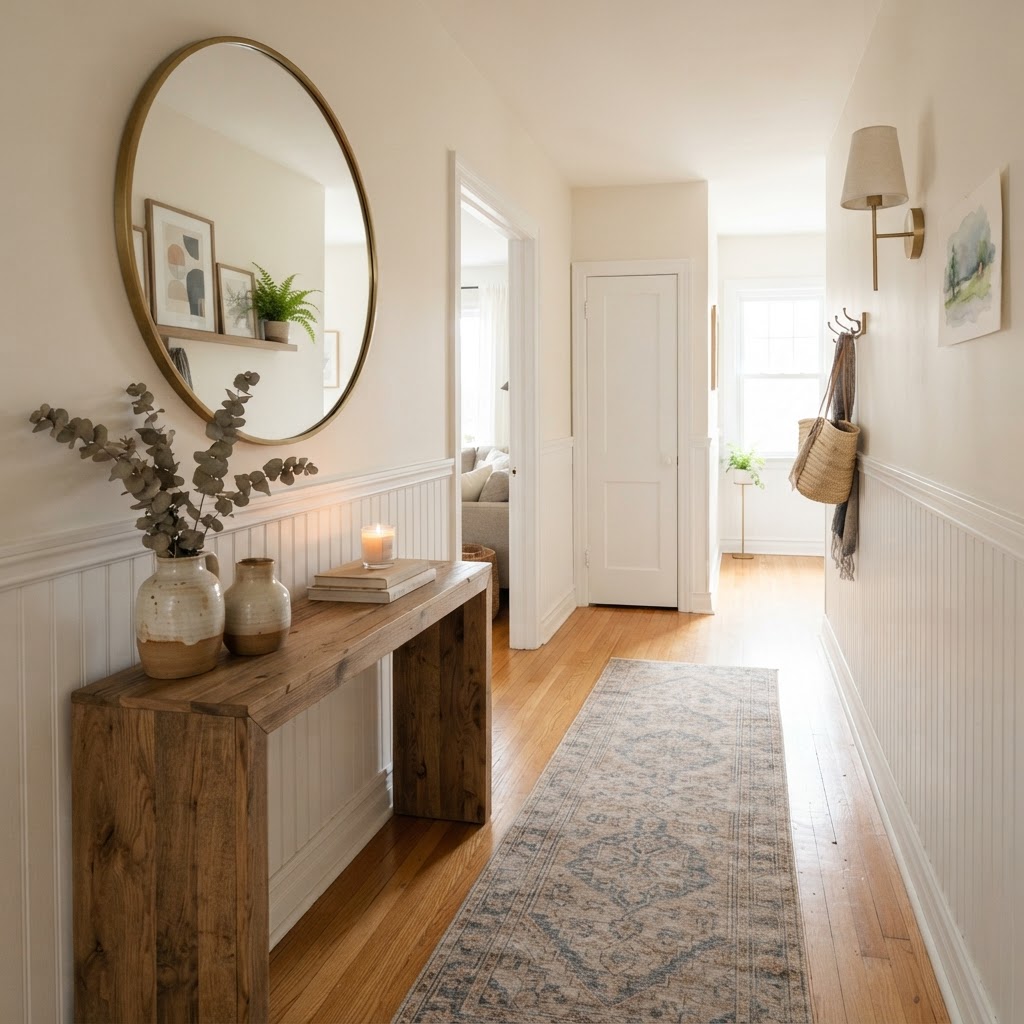
Hallways often have little natural light, so Greek Villa's higher LRV gives it the edge.
Exteriors
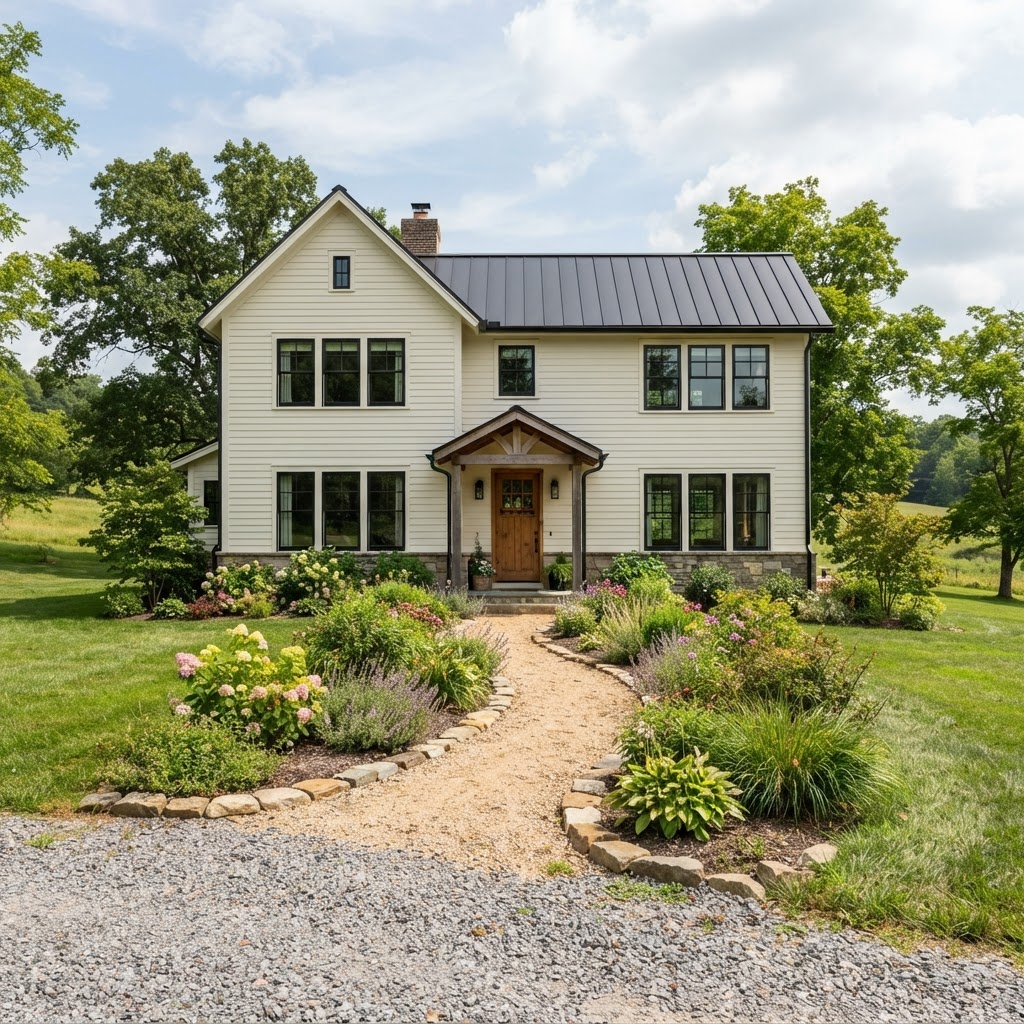
Both are popular exterior whites. Outdoors, strong daylight washes colours out, so whites look brighter than they do inside. Alabaster is a favourite on modern farmhouses because it looks soft rather than glaring in full sun, especially with black windows and a wooden door. Greek Villa looks crisp and fresh on shaded houses or in cloudier climates. Both pair beautifully with black, as on a white house with black trim, or with gray, as on a white house with gray trim.
Colors That Go With Greek Villa and Alabaster
| Colour | Code | LRV | How to use it |
|---|---|---|---|
| Pure White | SW 7005 | 84.0 | Crisper trim and ceilings |
| Agreeable Gray | SW 7029 | 60.4 | A warm greige for adjoining rooms |
| Mindful Gray | SW 7016 | 47.7 | Deeper greige for accent walls |
| Dorian Gray | SW 7017 | 38.7 | A mid-tone warm gray for cabinets or doors |
| Iron Ore | SW 7069 | 5.55 | A soft black for windows, doors and exteriors |
Natural wood, brass, linen, jute and green plants all suit both colours beautifully.
Similar Whites to Compare
| White | LRV | Compared with Greek Villa and Alabaster |
|---|---|---|
| Sherwin-Williams Creamy SW 7012 | 81.2 | Noticeably warmer and creamier than both |
| Sherwin-Williams Pure White SW 7005 | 84.0 | Cleaner and less creamy than both |
| Benjamin Moore White Dove OC-17 | 83.16 | A soft, warm white between the two |
| Benjamin Moore Swiss Coffee OC-45 | 81.91 | Warm and creamy, close to Alabaster |
| Benjamin Moore Dune White 968 | 80.18 | Often suggested as a close Benjamin Moore alternative to Alabaster |
If you're also considering Benjamin Moore, Swiss Coffee vs Alabaster is another very close pairing, and Shoji White vs Swiss Coffee is a good example of how much undertone matters. For a wider choice, explore the best white paint colours.
How to Test Greek Villa and Alabaster
- Use large samples. Paint two sample boards at least A3 size, or buy peel and stick samples.
- Test on every wall. The same white can look different on a sunny wall and a shaded one.
- Look at different times. Check the samples in the morning, at midday, in the evening and under your lamps.
- Keep them apart from the old colour. Place a white border around each sample so your existing wall colour doesn't affect how you see it.
- Test with your furniture. Hold samples next to your floors, worktops, sofa and curtains.
Frequently Asked Questions
Is Greek Villa warmer than Alabaster?
They're both warm, but Greek Villa looks slightly creamier and brighter, while Alabaster looks softer because of its touch of gray. Many people describe Greek Villa as the warmer of the two.
Which is lighter, Greek Villa or Alabaster?
Greek Villa is lighter, with an LRV of 84.2 compared with Alabaster's 82.2.
Does Alabaster look yellow?
Rarely. Alabaster's slight gray softens its warmth, so it usually looks creamy rather than yellow. Under very warm bulbs or next to cool whites, it can look warmer than expected.
Is Greek Villa good for kitchen cabinets?
Yes. Greek Villa is one of the most popular cabinet whites because it's warm but still fresh and bright.
Can you use Greek Villa and Alabaster together?
Yes. They're close enough to look harmonious, so you could use Alabaster on walls and Greek Villa on trim, or use each in different rooms.
Which is better for exteriors?
Alabaster is often preferred in sunny climates because it looks softer in strong light. Greek Villa looks crisper on shaded houses and in cloudy climates.
Which is better for a north-facing room?
Greek Villa, because its higher LRV and creamy warmth help counteract cool, gray north light.
Which Should You Choose?
Choose Greek Villa if your room is dark, north-facing or used mostly in daylight, or if you want warm white cabinets and trim that still look fresh. Choose Alabaster if your room is bright, you want a calmer, softer white, or you're looking for one forgiving colour for the whole house.
Whichever you lean towards, test both on your own walls before you buy. And if you'd like help choosing the right white for your home, you can book a one-hour online interior design consultation with me.
About the author
Magda Callery is a UK interior designer and florist with more than 15 years' experience designing homes, pubs, restaurants and bars, and her expert commentary has featured in Homes & Gardens, The Mirror and The Spruce. Explore more of the decorating articles.
Continue reading


White Brick House: 19 Ideas, Paints and What to Know
19 white brick house ideas, plus paint vs limewash vs German smear, the best white paints for brick and the trim colours that suit white brick.


Green House Colors: 17 Exterior Ideas and Paint Colors
17 green house colour ideas, from sage farmhouses to forest green Victorians, plus the best green exterior paints and trim, door and roof colours.


What Does Red and Blue Make? Mixing Paint, Light and Purple
What do red and blue make? Purple in paint and magenta in light. Why your purple turns brown, how to mix every shade, and how to use purple at home.