
Small Cottage Garden Ideas: 13 Ways to Get the Look
Small cottage garden ideas for UK gardens: 13 ways to get the English cottage look in a small space, plus the best cottage garden plants, shrubs and layout tips.
By Magda Callery, interior designer and florist
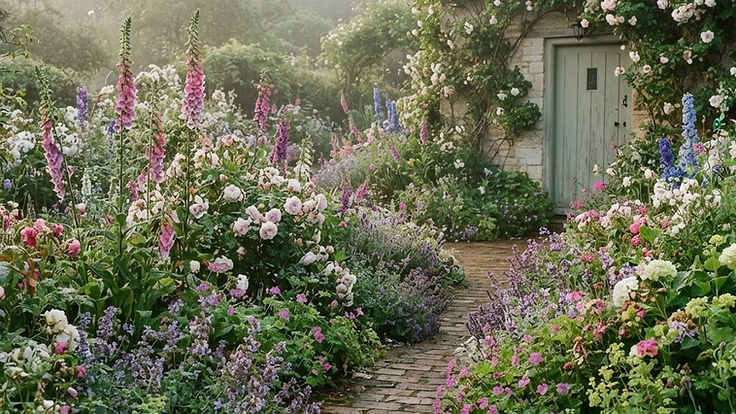
You don't need a rambling country garden to create a cottage garden. Some of the loveliest cottage gardens are tiny: a front path lined with lavender, a back yard full of pots, a single border crammed with foxgloves and roses. In fact, a small space suits the cottage style beautifully, because it's all about abundance, scent and plants growing close together.
In this guide I'll share 13 small cottage garden ideas, the best plants and shrubs for a small English cottage garden, how to plan the layout, and how to keep it looking good through the seasons.
The quick answer: To create a small cottage garden, plant densely in informal drifts, mix flowers, herbs and a few edibles, use classic cottage plants such as roses, lavender, foxgloves, delphiniums, hardy geraniums, catmint and alliums, and add height with an arch, obelisk or climbing rose. Soften paths with self-seeding plants, use pots for extra planting space, and finish with a bench, a bird bath or a picket fence for that relaxed, romantic English feel.
What Is a Cottage Garden?
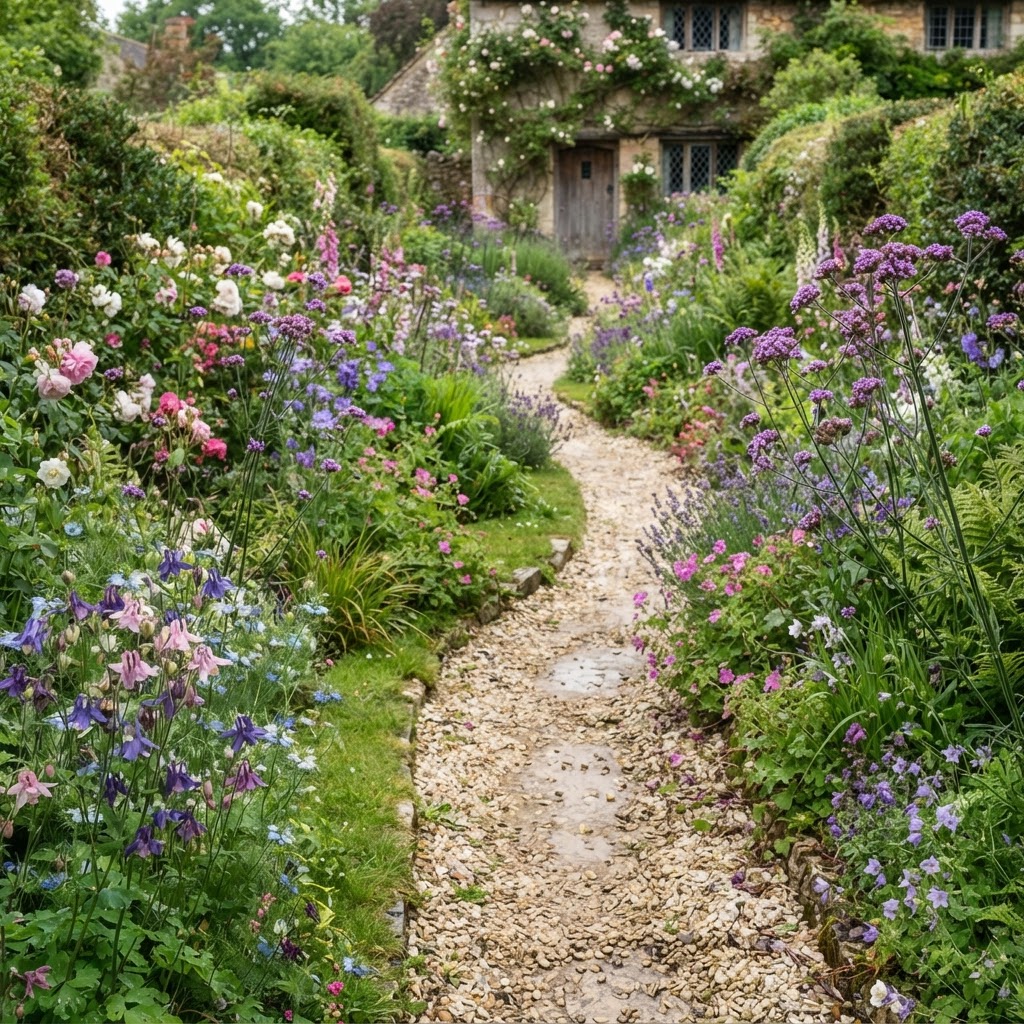
A cottage garden is an informal, densely planted garden where flowers, herbs, fruit and vegetables grow happily together. Traditionally it was a practical garden for cottagers who grew food and medicinal plants alongside flowers, and over time it became the romantic, blowsy style we know today.
The Royal Horticultural Society notes that "lavenders are particularly at home in cottage gardens," and that "no cottage garden summer would be complete without roses and their perfume." Those two plants alone go a long way towards the look.
13 Small Cottage Garden Ideas
1. Plant densely. The cottage look relies on abundance, so plant closely and let plants knit together. Bare soil between plants is the quickest way to lose the effect, and dense planting also helps smother weeds.
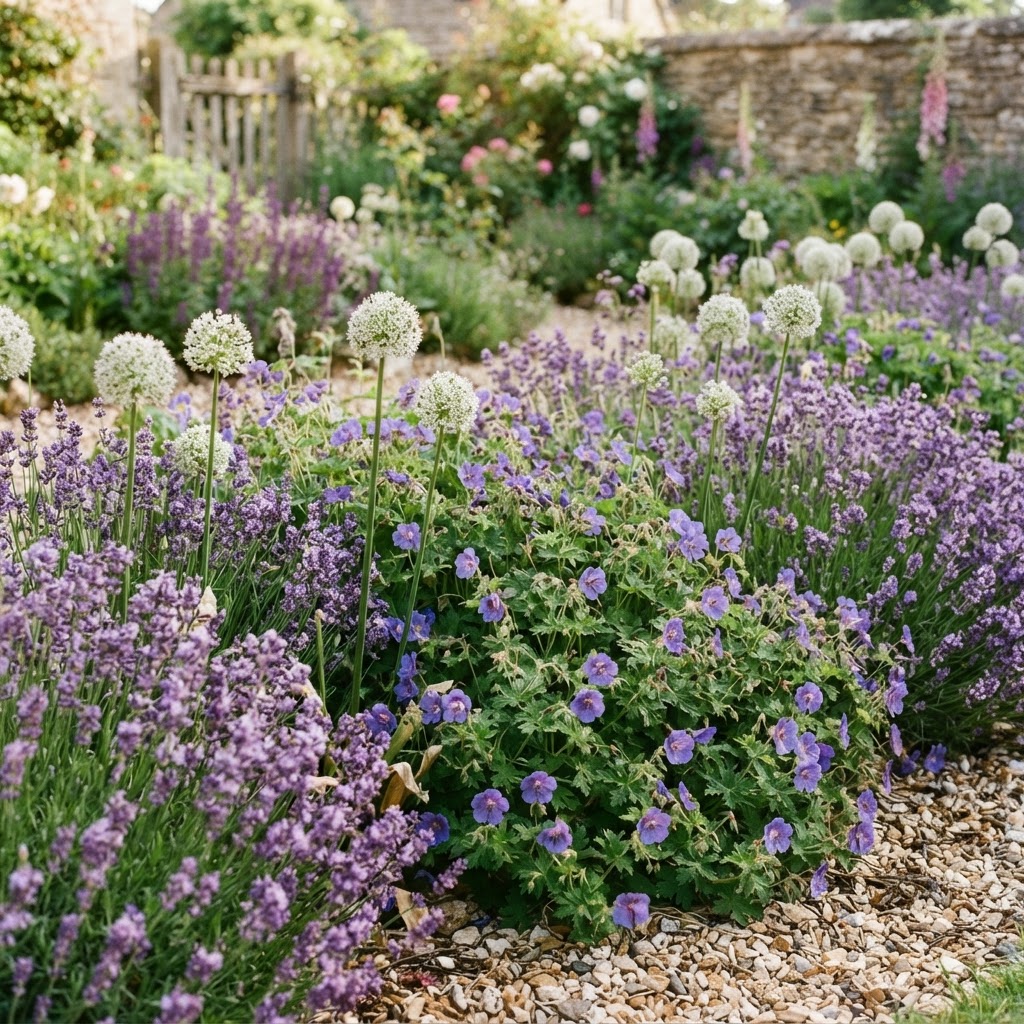
2. Soften the edges of paths. Let lavender, catmint, alchemilla and self-seeding flowers spill over a gravel or brick path, so the planting looks generous and relaxed.
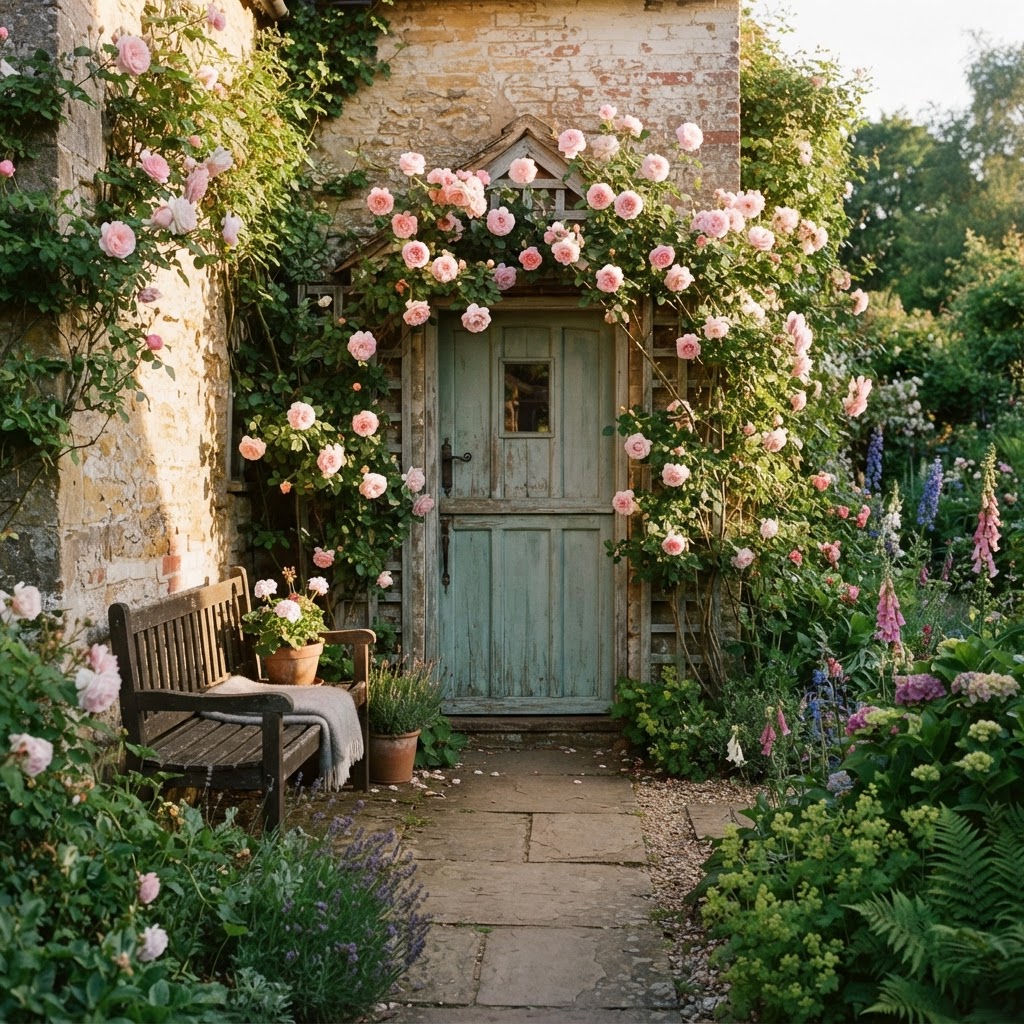
3. Frame the front door with a climbing rose. A rose or honeysuckle around the door is the most classic cottage image of all. Choose a fragrant variety from the most fragrant roses so you smell it every time you come home.
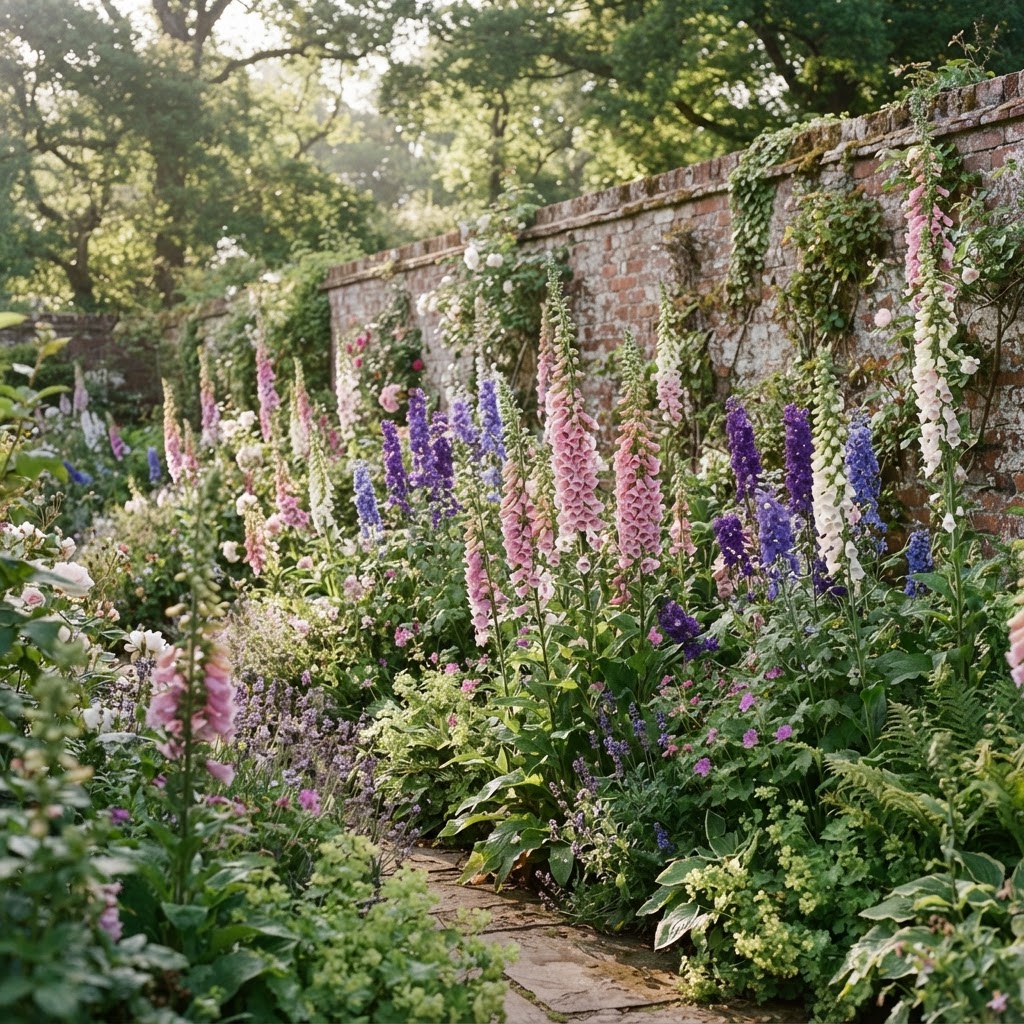
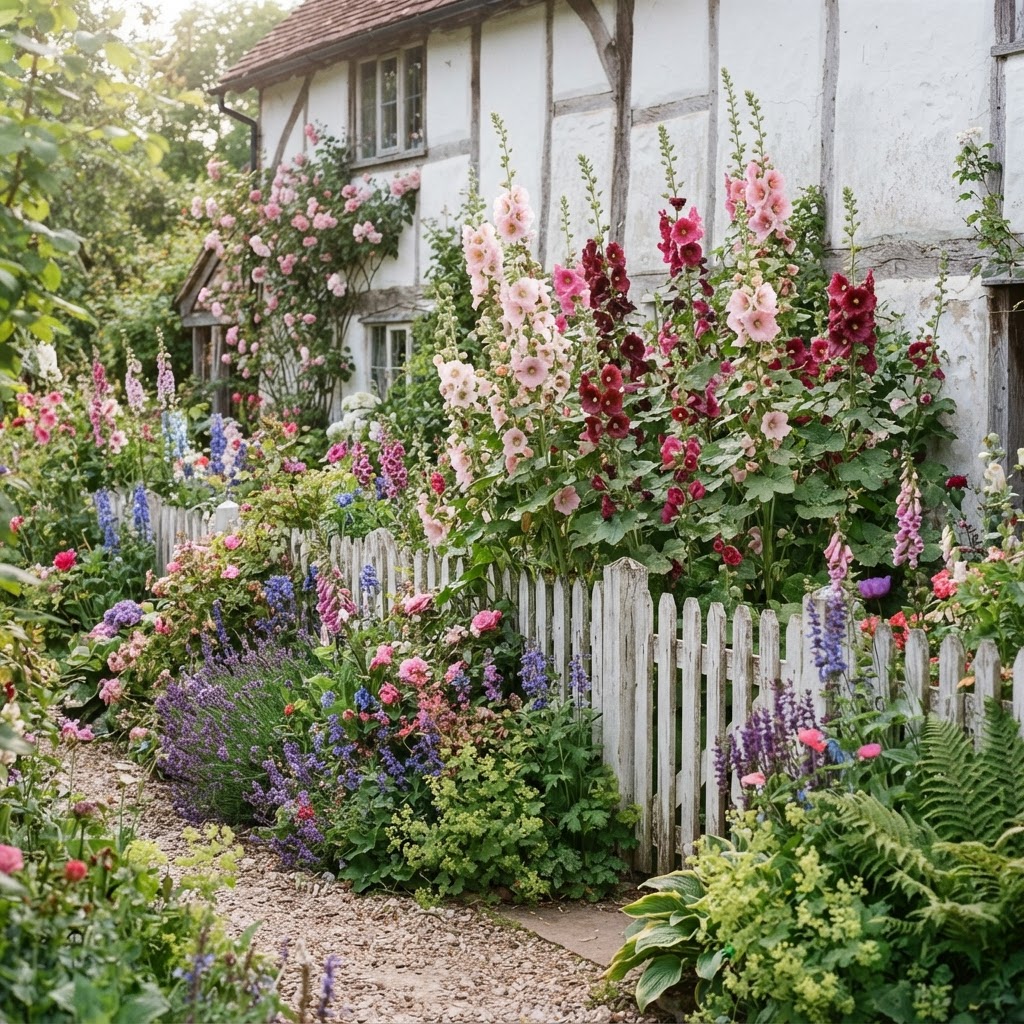
4. Go up, not out. In a small garden, height adds planting space. Tall foxgloves, delphiniums and hollyhocks against a wall or fence give the classic layered look.
5. Repeat a few key plants. Repeating lavender, catmint or alliums through a small border holds the planting together and stops it looking chaotic. There are plenty of types of lavender suited to small spaces.
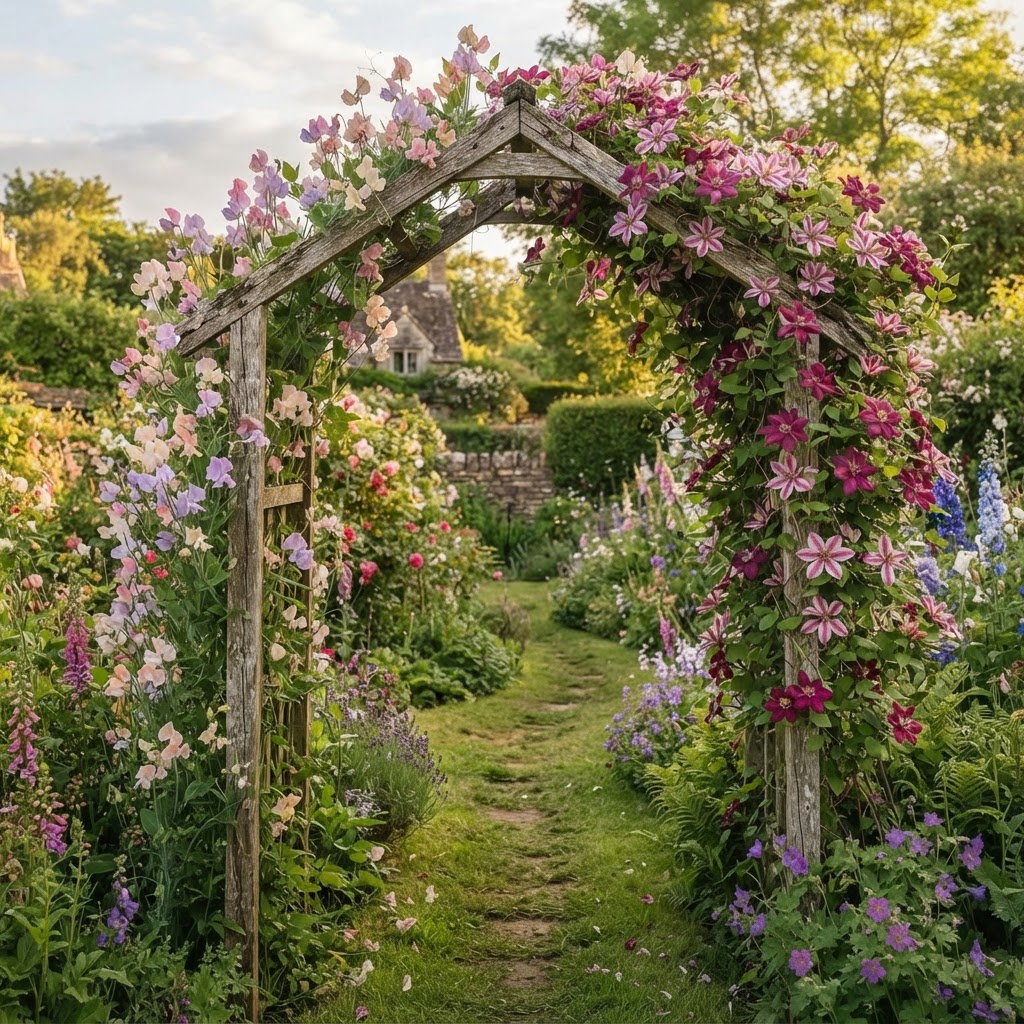
6. Add an arch or obelisk. A simple wooden or metal arch covered in sweet peas, clematis or a rambling rose creates a sense of entrance and adds a vertical layer.
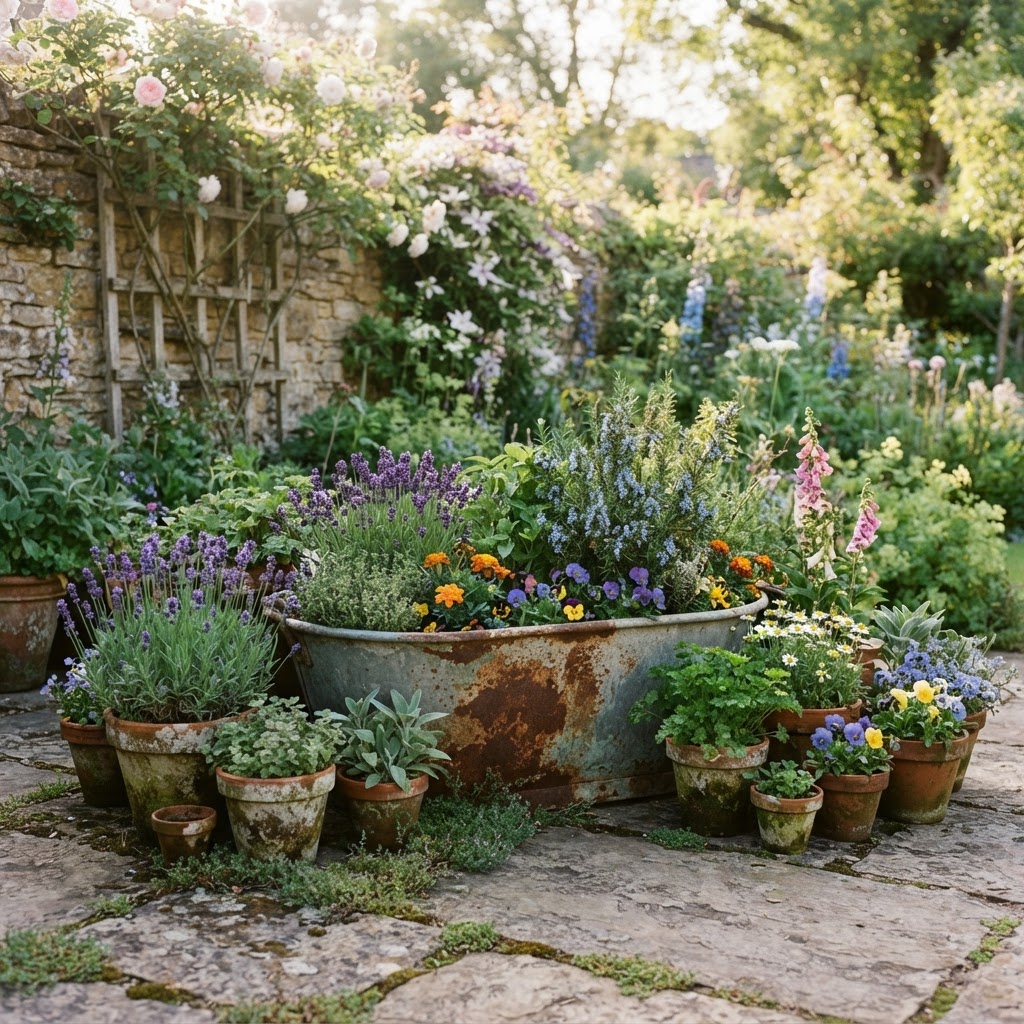
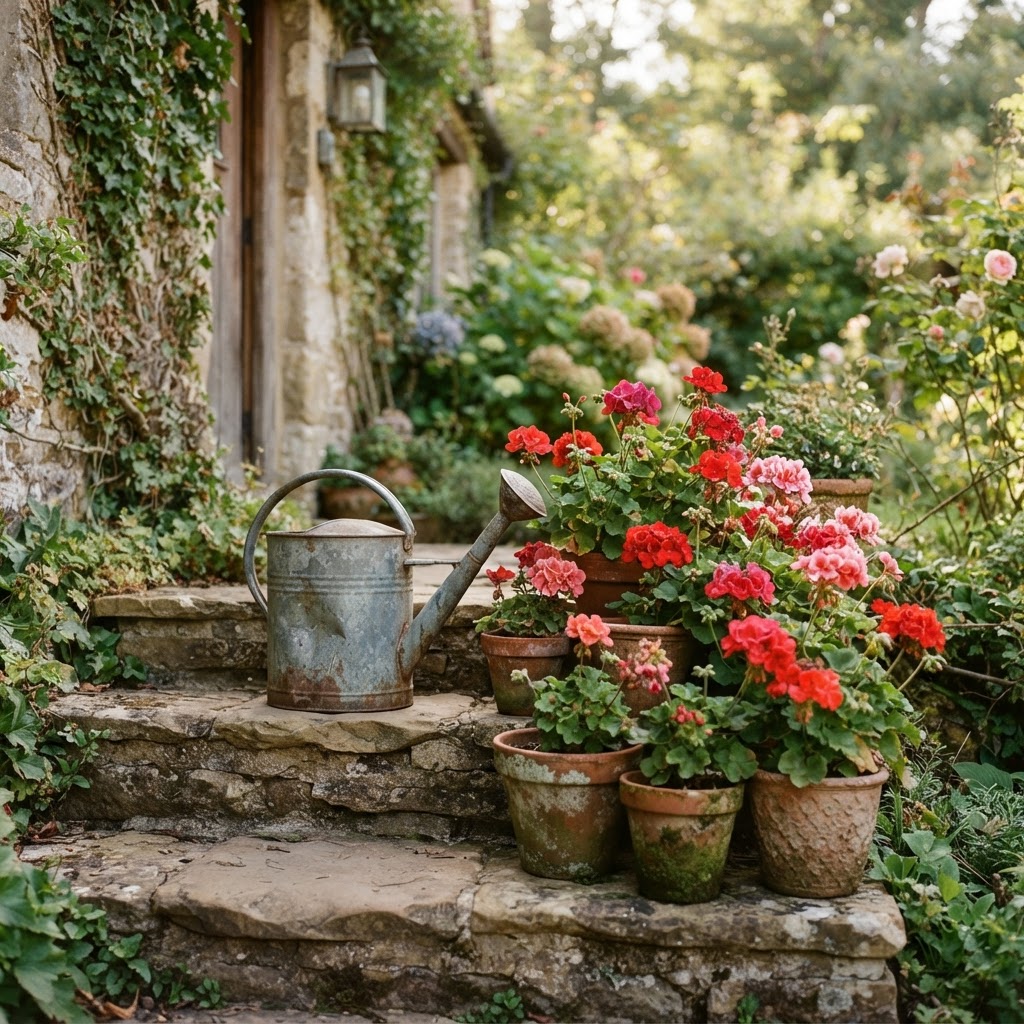
7. Use pots and containers. Terracotta pots, old tin baths and window boxes add planting space on patios and steps, and they can be moved around as plants flower.
8. Put up a picket fence. A low picket fence or woven hazel hurdle makes the perfect backdrop for hollyhocks and roses. For budget options, these cheap garden fence ideas work well.
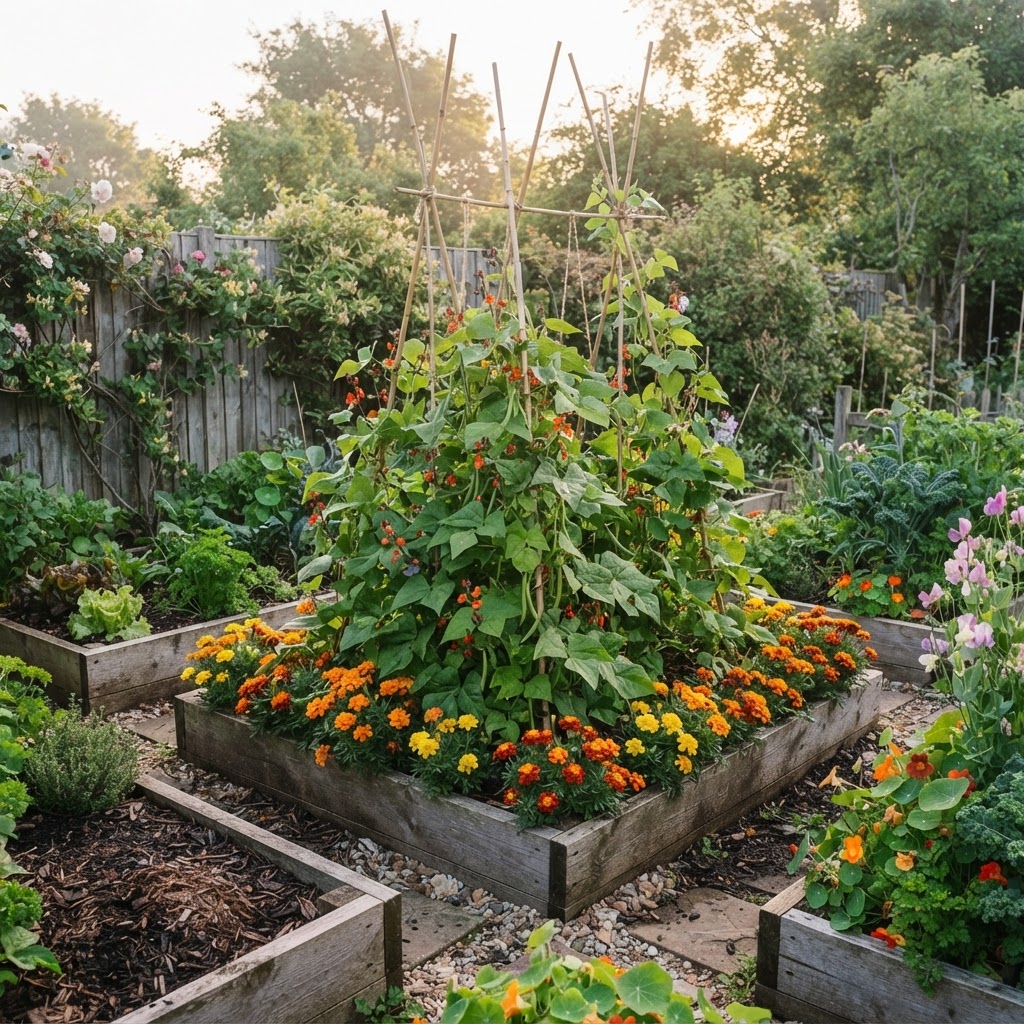
9. Grow a few edibles. Mixing herbs, runner beans, strawberries and salad leaves with flowers is true to the cottage tradition. Marigolds and nasturtiums look pretty and are useful companion plants.
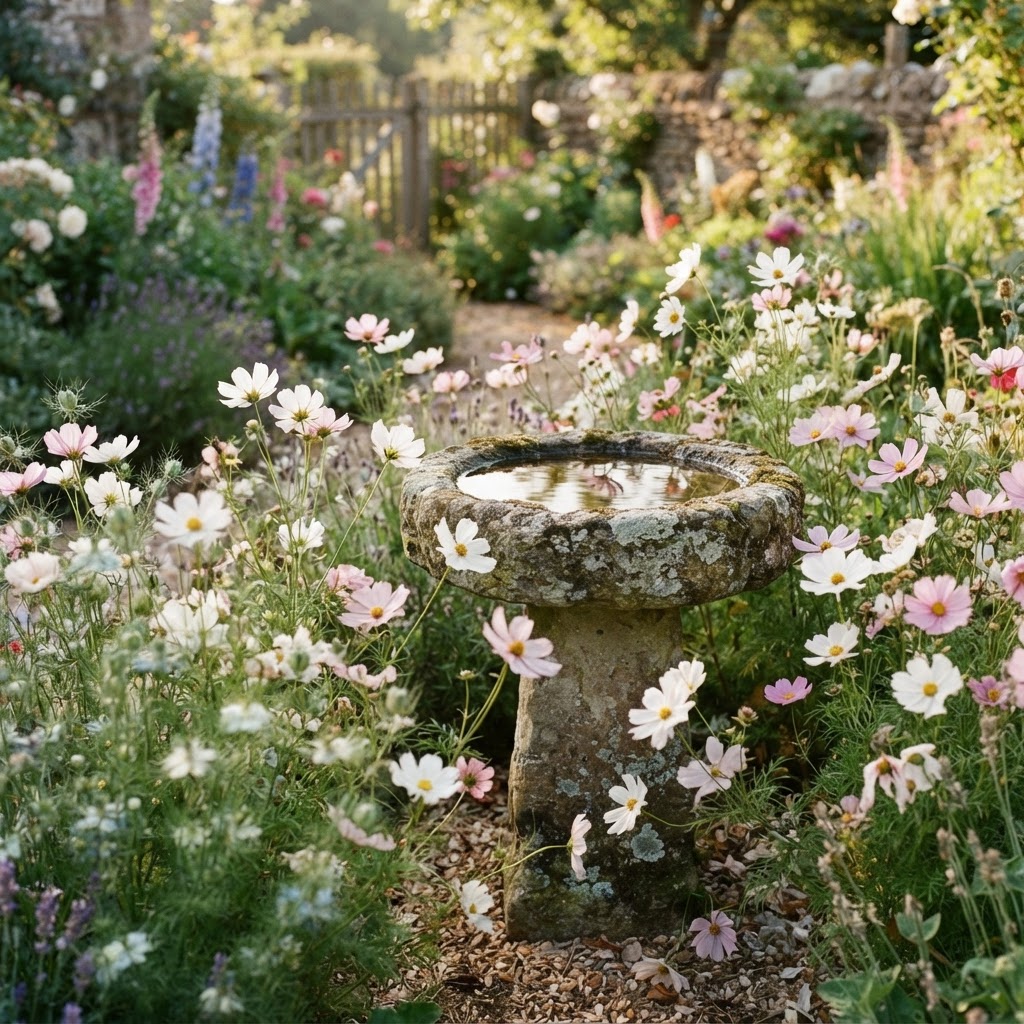
10. Encourage wildlife. A bird bath, a small water bowl and nectar-rich flowers bring bees, butterflies and birds into even the smallest garden.
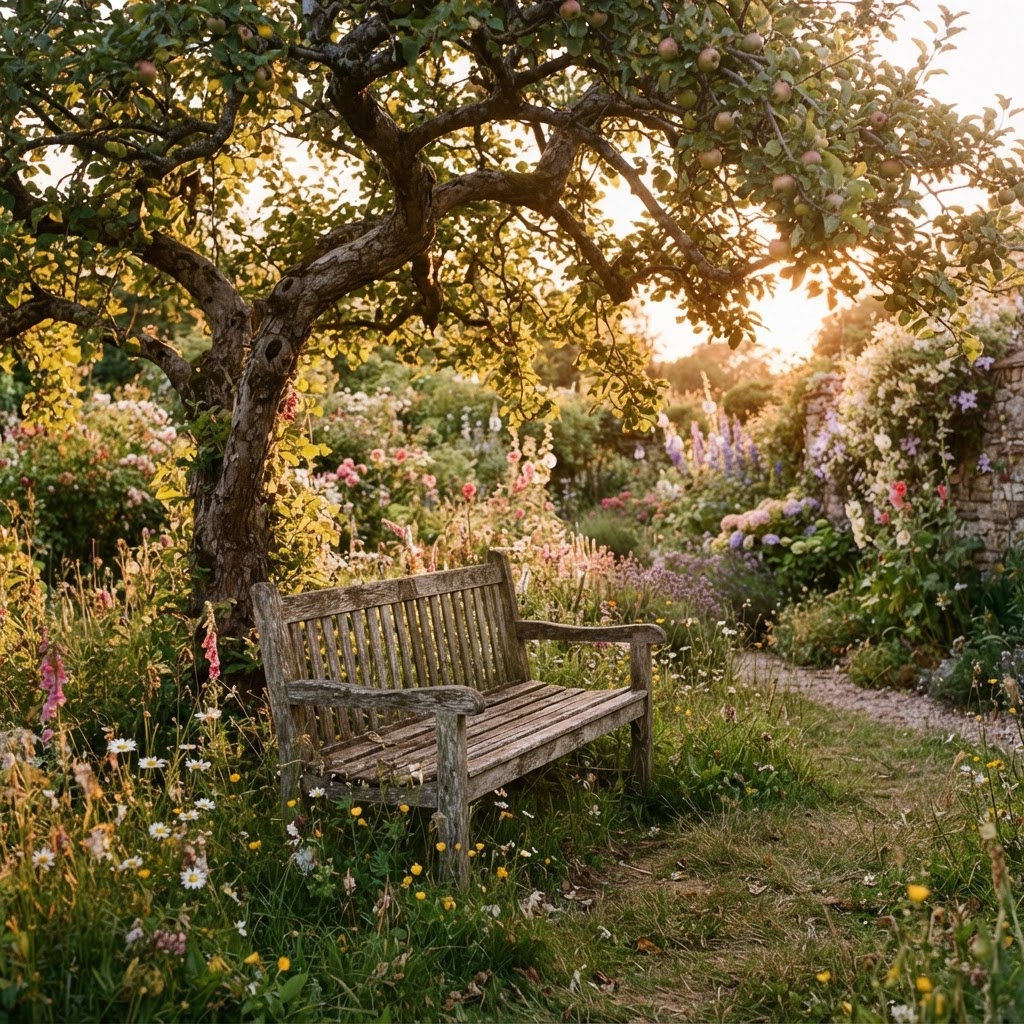
11. Make a place to sit. A small bench or a pair of chairs tucked among the planting lets you enjoy the scent. Under a small tree, it becomes the heart of the garden.
12. Let plants self-seed. Foxgloves, forget-me-nots, nigella, aquilegia and violas will scatter themselves around, giving that natural, unplanned look. Violas and heartsease are especially good at filling small gaps.
13. Add vintage details. An old watering can, a weathered bench, reclaimed bricks or a garden statue add character and make a new garden feel established.
Best Plants for a Small Cottage Garden
| Plant | Type | Flowering time | Why it works in a small garden |
|---|---|---|---|
| Rose | Shrub or climber | Early summer onwards | Scent, colour and height |
| Lavender | Small shrub | Summer | Fragrant, compact and loved by bees |
| Foxglove | Biennial | Early summer | Tall spires that take little ground space |
| Delphinium | Perennial | Early to midsummer | Tall blue spires for height |
| Hardy geranium | Perennial | Late spring to autumn | Long flowering ground cover |
| Catmint (nepeta) | Perennial | Late spring to late summer | Soft edging for paths |
| Allium | Bulb | Late spring to early summer | Height without bulk |
| Aquilegia | Perennial | Late spring | Self-seeds into gaps |
| Sweet pea | Annual climber | Summer | Scent on arches and obelisks |
| Hollyhock | Biennial or short-lived perennial | Summer | Classic height against walls |
| Cosmos | Annual | Summer to autumn | Airy flowers for months |
| Viola | Annual or perennial | Spring, and winter types | Fills gaps and edges |
English Cottage Garden Shrubs
Shrubs give a small cottage garden structure, especially in winter.
- Shrub roses. Repeat-flowering shrub roses give scent and colour for months.
- Lavender. Compact, evergreen and perfect for edging.
- Mock orange (philadelphus). Heavily scented white flowers in early summer. Compact varieties suit small gardens.
- Hydrangea. Big, romantic flower heads for partial shade.
- Fuchsia. Hardy fuchsias flower for months and suit borders and pots.
- Box or yew balls. Clipped evergreens add structure among loose planting.
How to Plan a Small Cottage Garden
| Step | What to do |
|---|---|
| Check your light | Note where the sun falls and which areas stay shady |
| Choose a path | A simple brick, gravel or stepping stone path gives the garden shape |
| Plan your height | Tall plants and climbers at the back and on walls, low plants at the front |
| Pick a palette | Soft pinks, purples, blues and whites are classic, with a little yellow |
| Plan for seasons | Bulbs for spring, perennials and roses for summer, seedheads for autumn |
| Add structure | Shrubs, clipped evergreens or an arch for winter interest |
How I Bring Cottage Garden Style Into a Small Space
After more than 15 years as a designer and florist, cottage gardens are the gardens I love most, because they're as much about picking flowers as looking at them.
- I plant for cutting. Sweet peas, cosmos, roses and alchemilla give armfuls of flowers for the house. A wildflower bouquet picked from your own garden is the best kind.
- I keep the colours soft. Pinks, purples and whites with lots of green always look romantic.
- I think about scent near the door. Roses, lavender and honeysuckle where you walk past every day.
- I add one rustic piece. A weathered bench or an old pot gives a new garden instant charm.
Frequently Asked Questions
How do you make a small cottage garden?
Plant densely in informal drifts, use classic cottage plants such as roses, lavender and foxgloves, add height with climbers and an arch, soften paths with spilling plants and finish with pots and a bench.
What plants are best for a small cottage garden?
Roses, lavender, foxgloves, delphiniums, hardy geraniums, catmint, alliums, aquilegia, sweet peas and cosmos all suit small cottage gardens.
What are the best English cottage garden shrubs?
Shrub roses, lavender, mock orange, hydrangeas, hardy fuchsias and clipped box or yew are classic cottage garden shrubs.
Can you have a cottage garden in a small space?
Yes. Cottage gardens suit small spaces because they rely on dense planting, height and pots rather than large lawns.
How do you make a cottage garden low maintenance?
Plant densely to smother weeds, choose long-flowering perennials and shrubs, mulch every year and let self-seeders fill gaps.
What colours are best for a cottage garden?
Soft pinks, purples, blues and whites are classic, with touches of yellow and apricot for warmth.
When should you plant a cottage garden?
Autumn and spring are the best times to plant perennials and shrubs, while annuals such as cosmos and sweet peas go out after the last frost.
A Small Garden Full of Flowers
The best small cottage gardens feel generous, scented and a little wild. Plant closely, grow upwards, repeat your favourite plants and leave room for a bench, and even the tiniest garden can feel like a slice of the English countryside.
And if you'd like help designing a garden or home with that relaxed cottage feel, you can book a one-hour online interior design consultation with me.
About the author
Magda Callery is a UK interior designer and florist with more than 15 years' experience designing homes, pubs, restaurants and bars, and her expert commentary has featured in Homes & Gardens, The Mirror and The Spruce. Explore more of the flowers & garden articles.
Continue reading

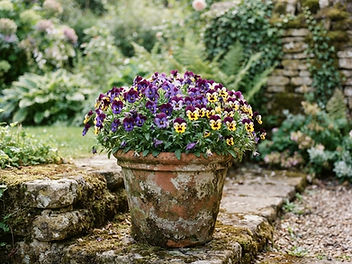
Viola Flower: How to Grow Violas and 13 Ways to Use Them
Everything about the viola flower: violas vs pansies, when violas flower, how to grow and care for them, whether you can eat them and 13 ways to use them.

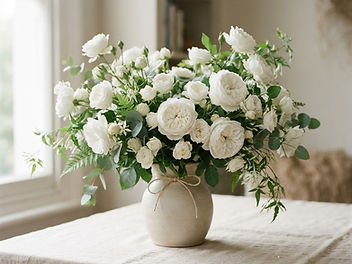
White Rose Symbolic Meaning: 13 Things White Roses Say
The white rose symbolic meaning, from a florist: purity, new beginnings, remembrance and more, plus white roses in history and when to give them.


Most Fragrant Roses: 17 Best Scented Roses to Grow
17 of the most fragrant roses, from English shrub roses and hybrid teas to old roses and climbers, plus the types of rose scent and how to grow for fragrance.