
Wildflower Bouquet: 17 Flowers and How to Make One
How to make a wildflower bouquet, 17 of the best flowers to use, the rules on picking wild flowers, wildflower wedding ideas and how to keep stems fresh.
By Magda Callery, interior designer and florist

A wildflower bouquet has a charm that no formal arrangement can match. Loose, airy and a little untamed, it looks as if it's just been gathered on a summer walk: cornflowers, daisies, frothy white umbellifers, poppies and grasses, all tumbling together. It's one of my favourite styles, for a kitchen table and for relaxed weddings alike, and the good news is that it's also one of the easiest to make.
In this guide I'll explain what a wildflower bouquet is, the rules on picking wild flowers, 17 of the best flowers for a wildflower bouquet, how to make one step by step, and how to keep it fresh.
The quick answer: a wildflower bouquet is a loose, natural bouquet of meadow-style flowers such as cornflowers, ox-eye daisies, cow parsley, ammi, scabious, yarrow, nigella, cosmos and grasses. The best and most sustainable way to make one is to grow the flowers yourself or buy British-grown, seasonal stems. If you do pick from the wild, take only a few common flowers, never uproot anything, and always ask the landowner.
What Is a Wildflower Bouquet?
A wildflower bouquet is less about the exact species and more about the look: informal, unstructured and full of movement, with flowers at different heights and plenty of airy fillers and grasses. Most "wildflower" bouquets are actually made with garden-grown cottage flowers that look wild, such as cornflowers, cosmos and ammi.
| Element | What it adds | Examples |
|---|---|---|
| Focal flowers | Colour and interest | Cornflowers, poppies, scabious, cosmos, sweet peas |
| Daisies and umbels | The classic meadow look | Ox-eye daisies, ammi, cow parsley, yarrow, chamomile |
| Airy fillers | Lightness and movement | Grasses, nigella, gypsophila, wild carrot |
| Greenery | Structure and softness | Grasses, herbs, ivy, wild foliage |
Can You Pick Wild Flowers?
In Great Britain, the Botanical Society of Britain and Ireland's Code of Conduct notes that under the Wildlife and Countryside Act "it is illegal to uproot any wild plant without permission from the landowner or occupier." It also says that "you can pick a few wild flowers for study and/or enjoyment (but take only 1 in 20)," while a list of endangered plants is protected against picking altogether.
- Never uproot wild plants.
- Ask permission before picking on private land, and check the rules in nature reserves and parks.
- Pick only common flowers, and only where there are plenty.
- Take no more than one in twenty stems, and leave the rest for wildlife and seed.
- Grow your own for generous bunches without any worry.
17 Best Flowers for a Wildflower Bouquet
Meadow classics
1. Cornflowers. The clear blue of cornflowers is the signature of a wildflower bouquet. They last well in water and come in pink, white and nearly black too.
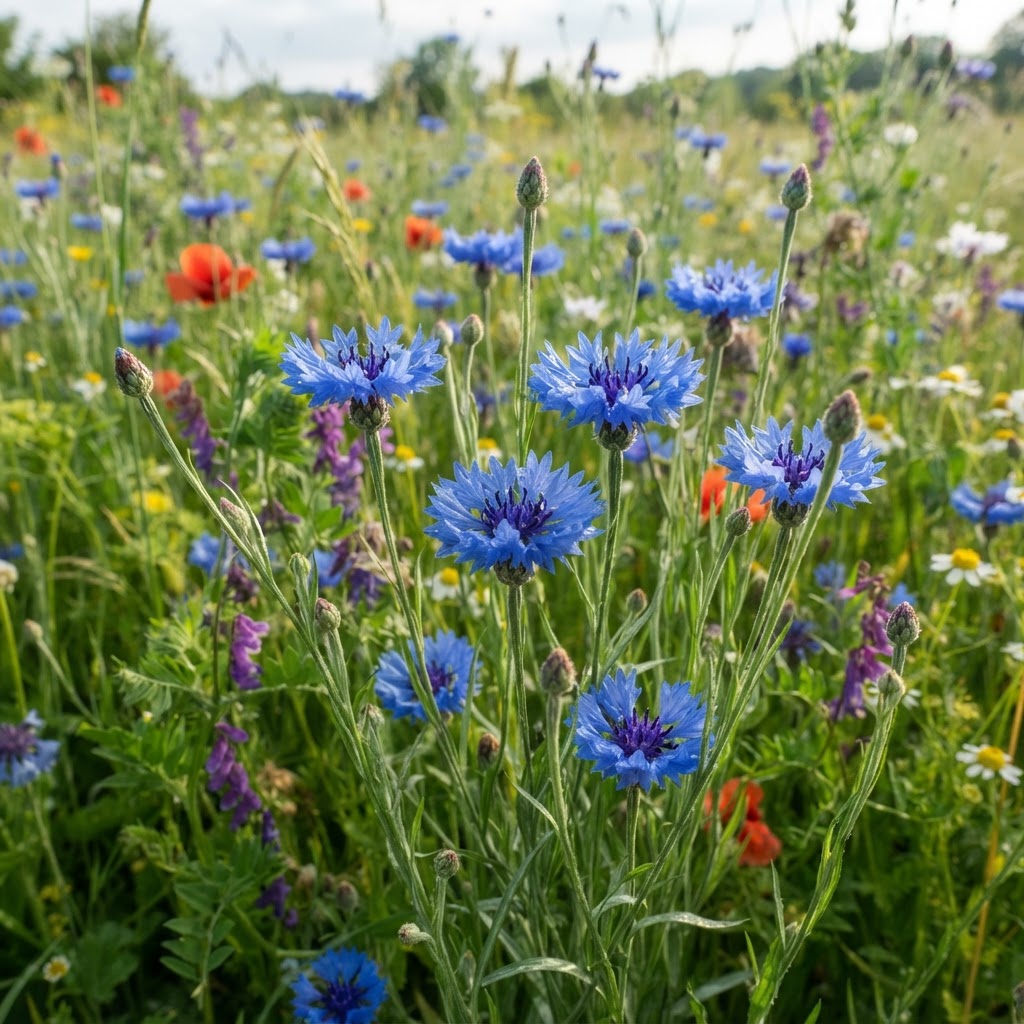
2. Ox-eye daisies. Simple white daisies with golden centres, the essence of an English meadow in early summer.
3. Cow parsley. Frothy white umbels of cow parsley light up May hedgerows and give bouquets a soft, cloud-like look. Condition it well, as it can wilt quickly.
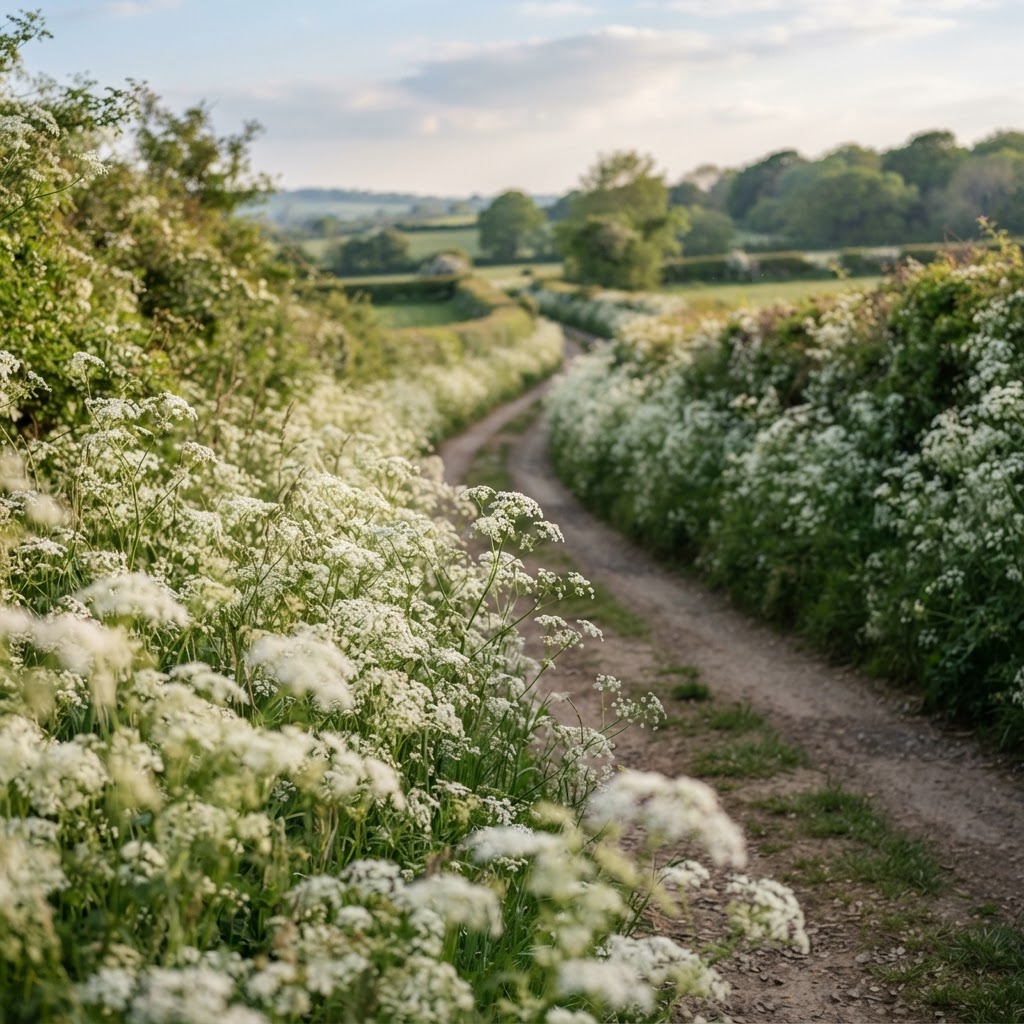
4. Ammi majus. A garden-grown alternative to cow parsley, with larger, sturdier lace-like flower heads that last much longer in a vase.
5. Poppies. Field poppies and Iceland poppies add silky petals and bright colour. Sear the stems to help them last.
6. Scabious. Pincushion flowers in lilac, blue, white and deep burgundy on wiry stems, loved by bees and butterflies.
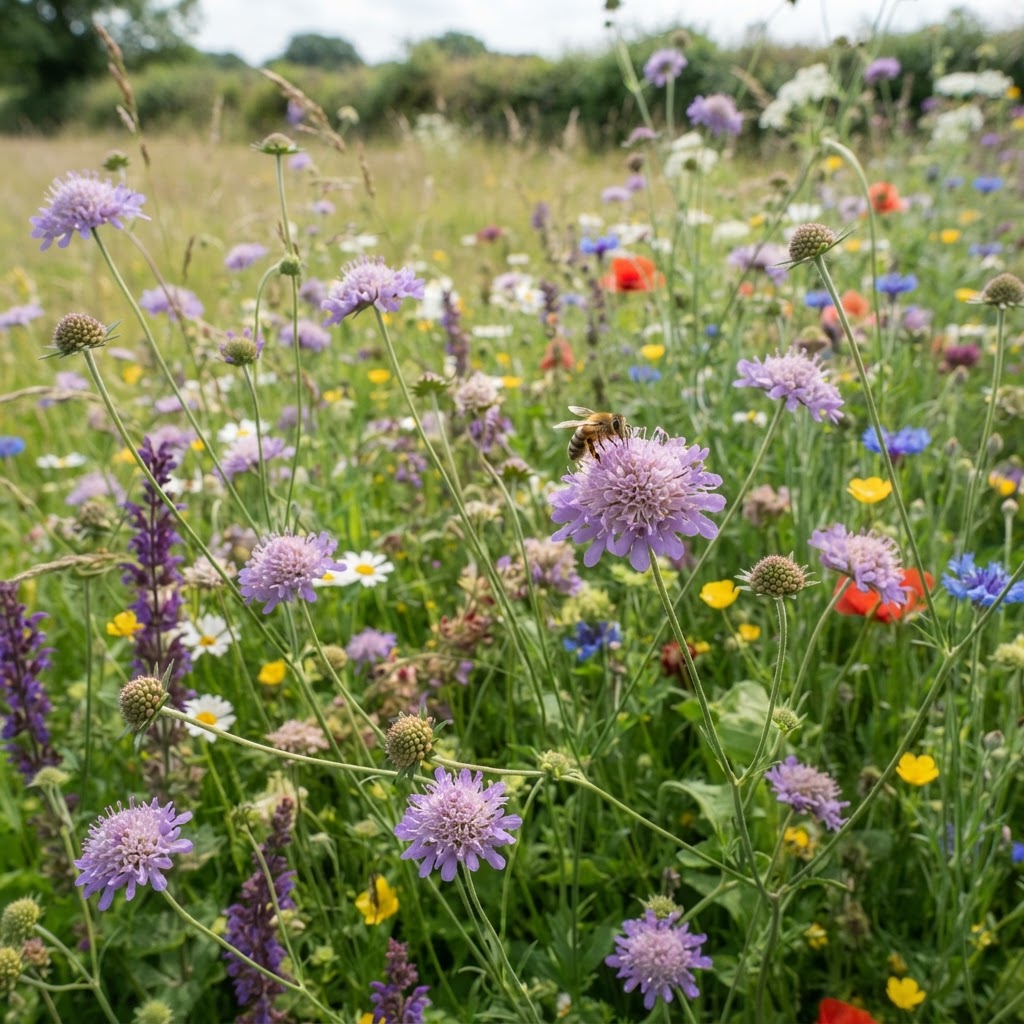
7. Yarrow. Flat heads of tiny flowers in white, soft pink, yellow or terracotta, which also dry well.
8. Knapweed. Purple thistle-like flowers that bring a truly wild feel and attract pollinators.
Cottage garden favorites
9. Nigella (love-in-a-mist). Delicate blue or white flowers wrapped in feathery foliage, followed by striking seed pods.
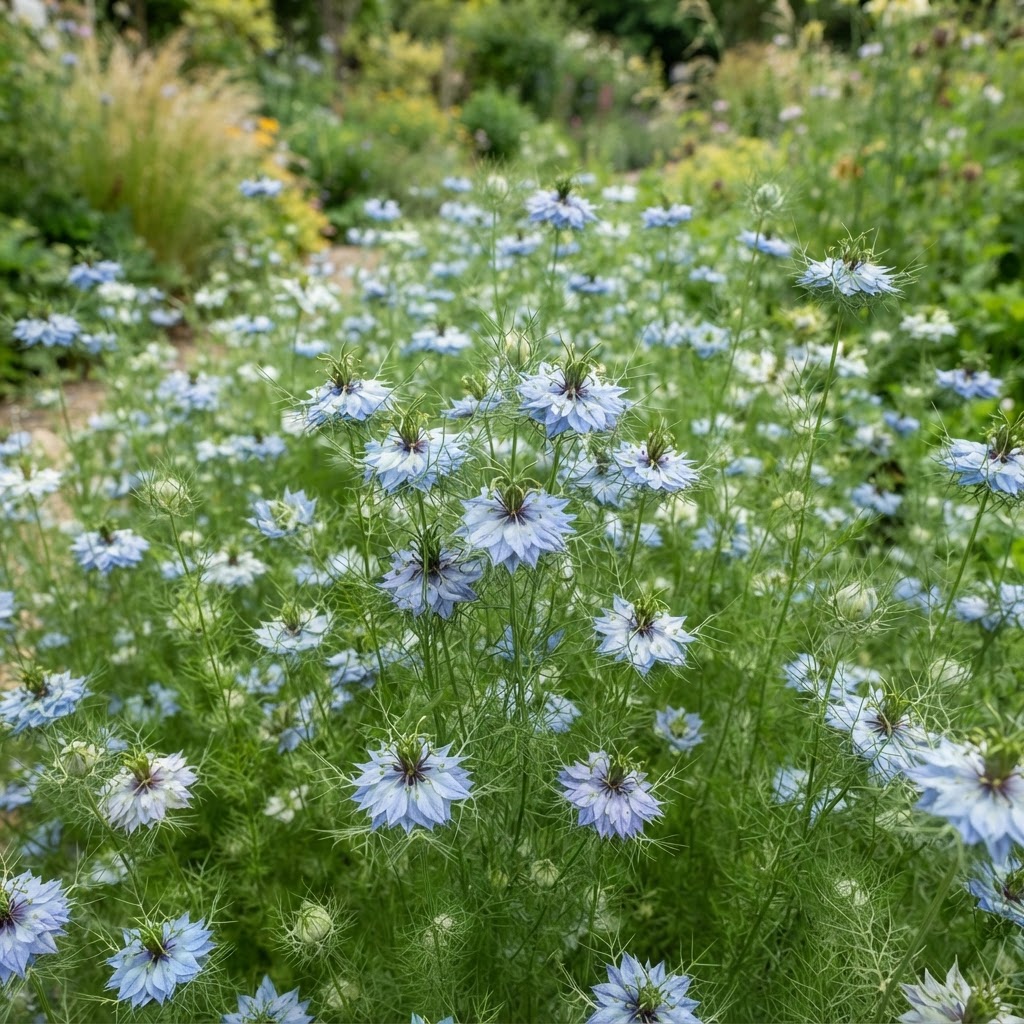
10. Cosmos. Tall, airy daisies in white, pink and burgundy that keep flowering all summer if you keep cutting.
11. Chamomile and feverfew. Tiny white daisies with a sweet, herby scent that make perfect fillers.
12. Sweet peas. Ruffled, scented flowers in soft pastels and rich jewel colours, ideal for early summer posies.
13. Larkspur. Tall spires of blue, pink, lilac and white that add height and dry beautifully.
14. Foxgloves. Tall, freckled spires that bring height to large bouquets and early summer arrangements.
Fillers and grasses
15. Wild carrot. Lacy white umbels, sometimes with a single dark flower in the centre, on sturdy stems.
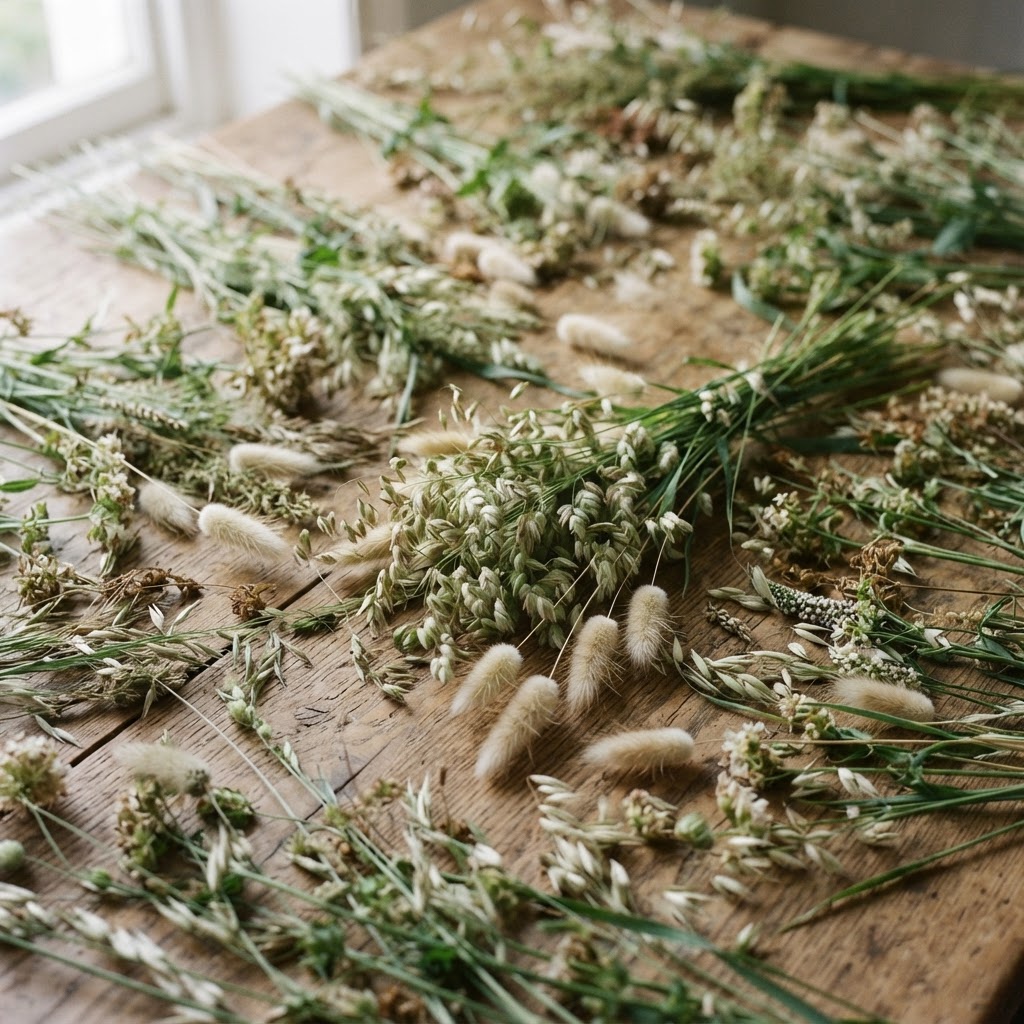
16. Meadow grasses. Quaking grass, bunny tails and other ornamental grasses add movement and a soft, natural texture.
17. Honeysuckle. Trailing stems of fragrant, creamy flowers that spill out of the bouquet and scent the room.
How to Make a Wildflower Bouquet
- Gather your stems early in the morning or in the evening, when they're full of water, and put them straight into a bucket.
- Condition them. Strip the lower leaves, recut the stems and let them drink for a few hours.
- Start with a few focal flowers and some greenery in one hand.
- Add stems at an angle, turning the bunch a little each time so the stems form a spiral. This keeps the bouquet loose and full.
- Vary the heights. Let some flowers and grasses rise above the rest for a natural, gathered look.
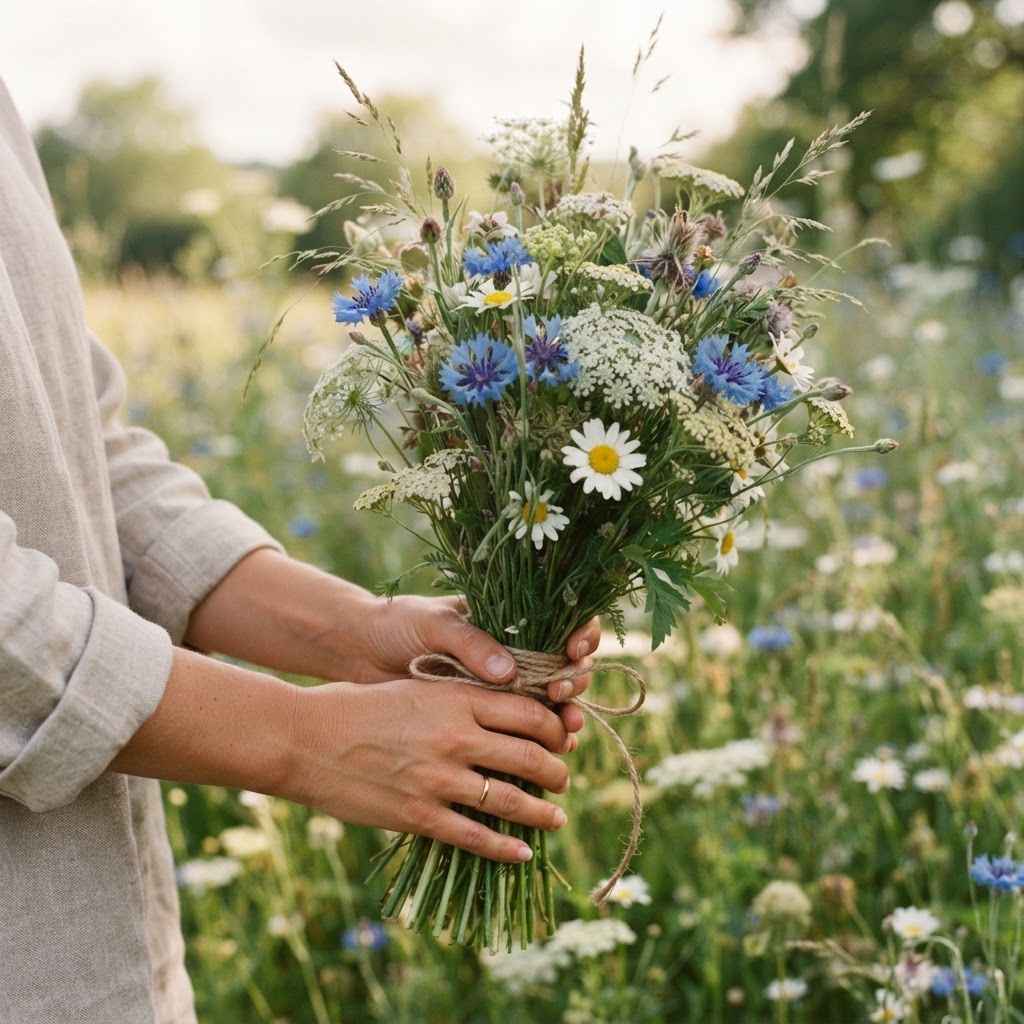
- Tie it with twine or ribbon where the stems cross, and trim the stems to the same length.
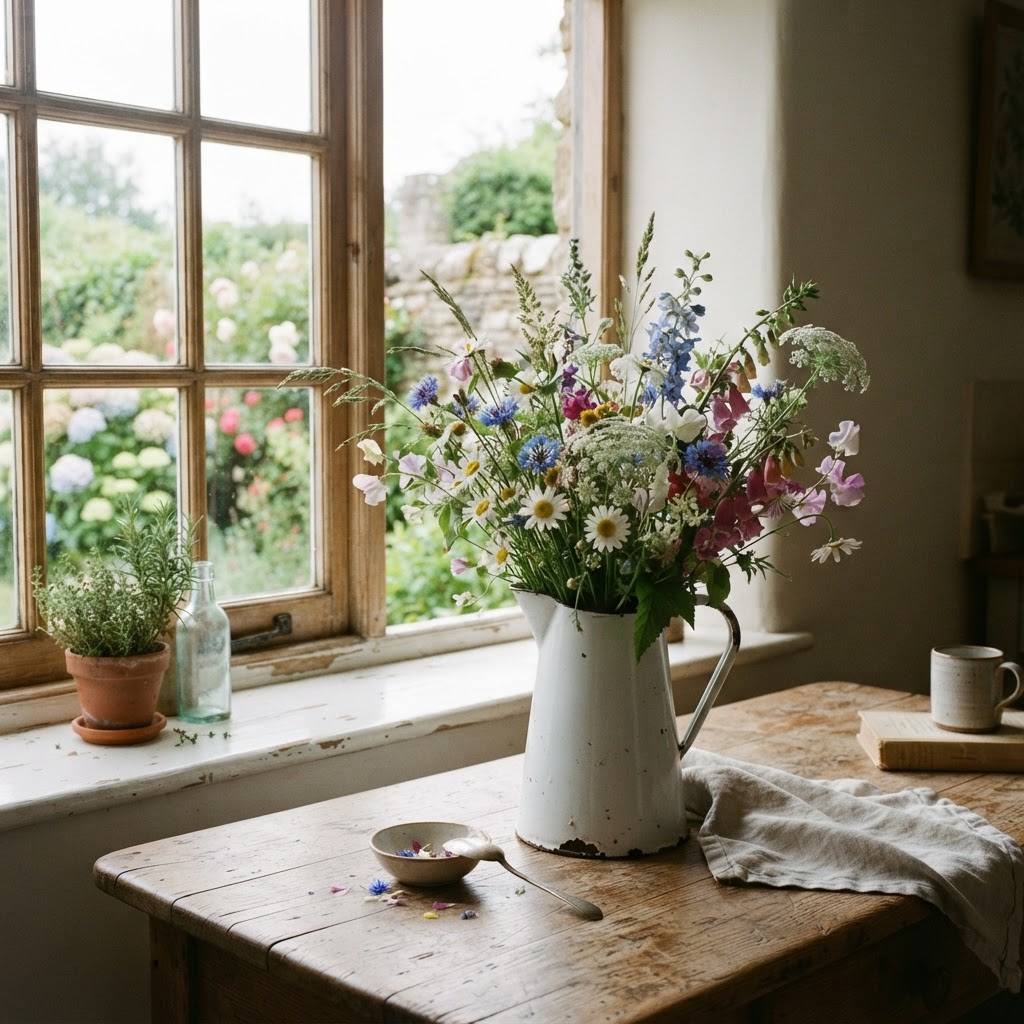
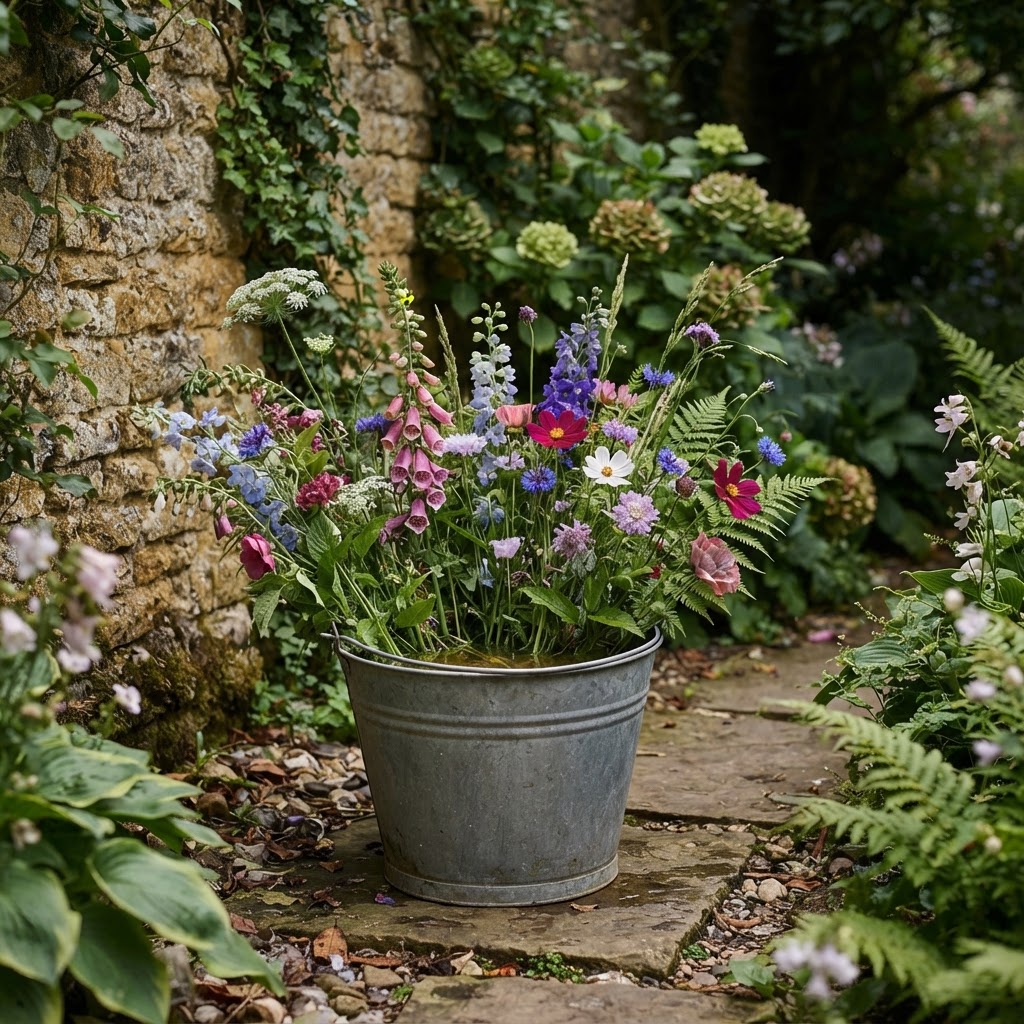
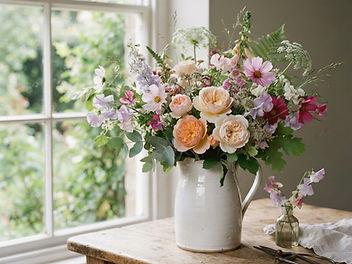
For a vase rather than a hand-tied bouquet, use a jug or a few glass bottles, and let the stems fall where they like, as in the easiest simple flower arrangements. A little garden foliage makes a lovely base, and much of the same greenery for flower arrangements suits meadow flowers too.
Wildflower Bouquets for Weddings
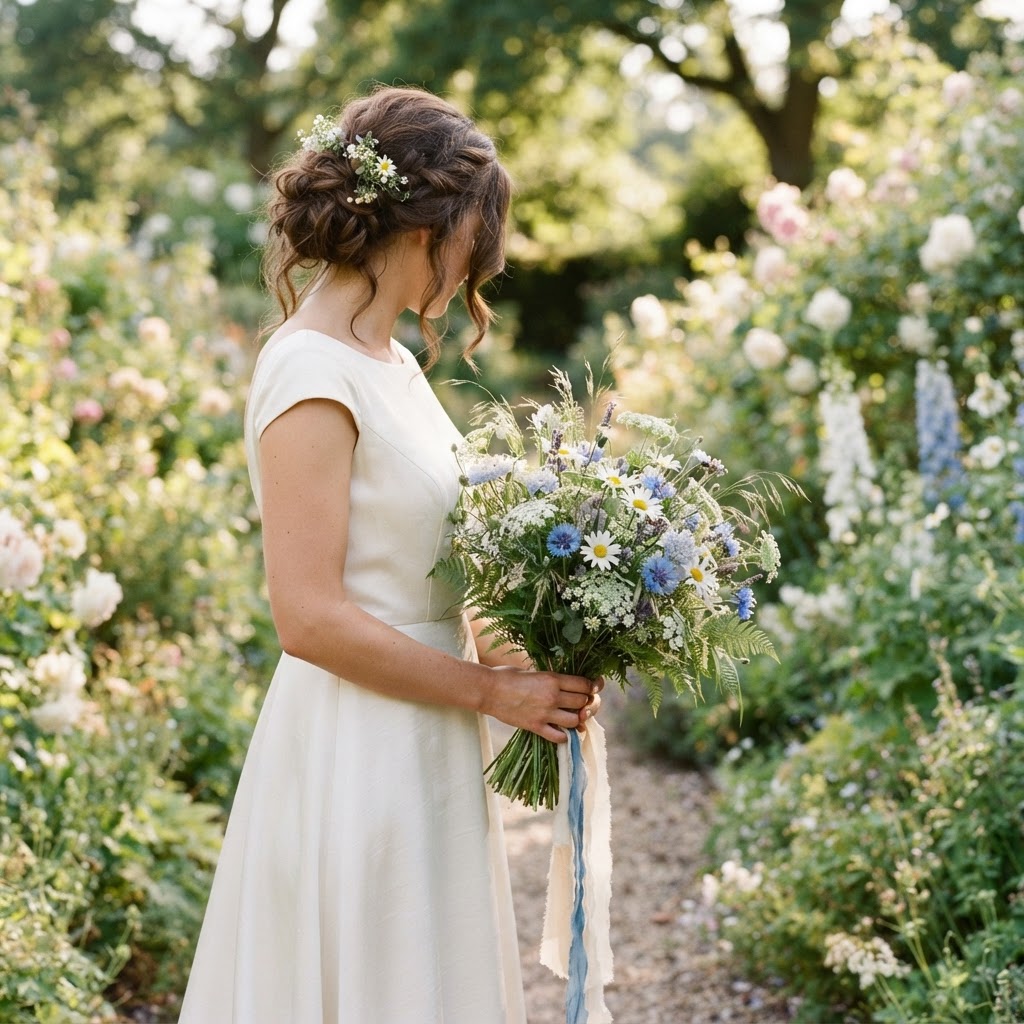
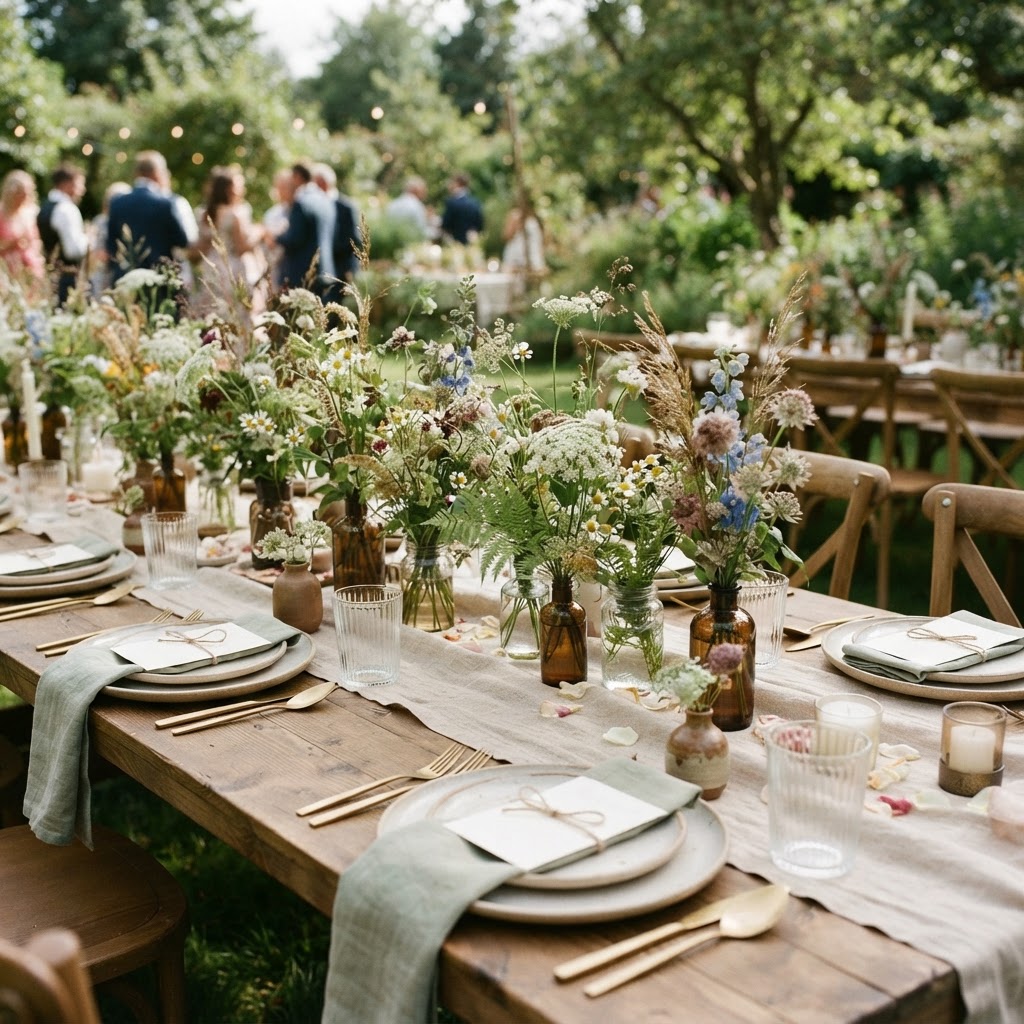
Wildflower bouquets are perfect for relaxed country, garden and boho weddings. Ask your florist for British-grown, seasonal flowers, which suit the style and travel fewer miles.
- Bridal bouquet. A loose, hand-tied mix of ammi, cornflowers, scabious, sweet peas and grasses.
- Bridesmaids. Smaller posies in the same flowers, perhaps with one colour each.
- Buttonholes. A single cornflower, a sprig of yarrow or a few grasses.
- Tables. Jam jars, bottles and jugs of meadow flowers down the centre of long tables.
Grow Your Own Wildflower Bouquets
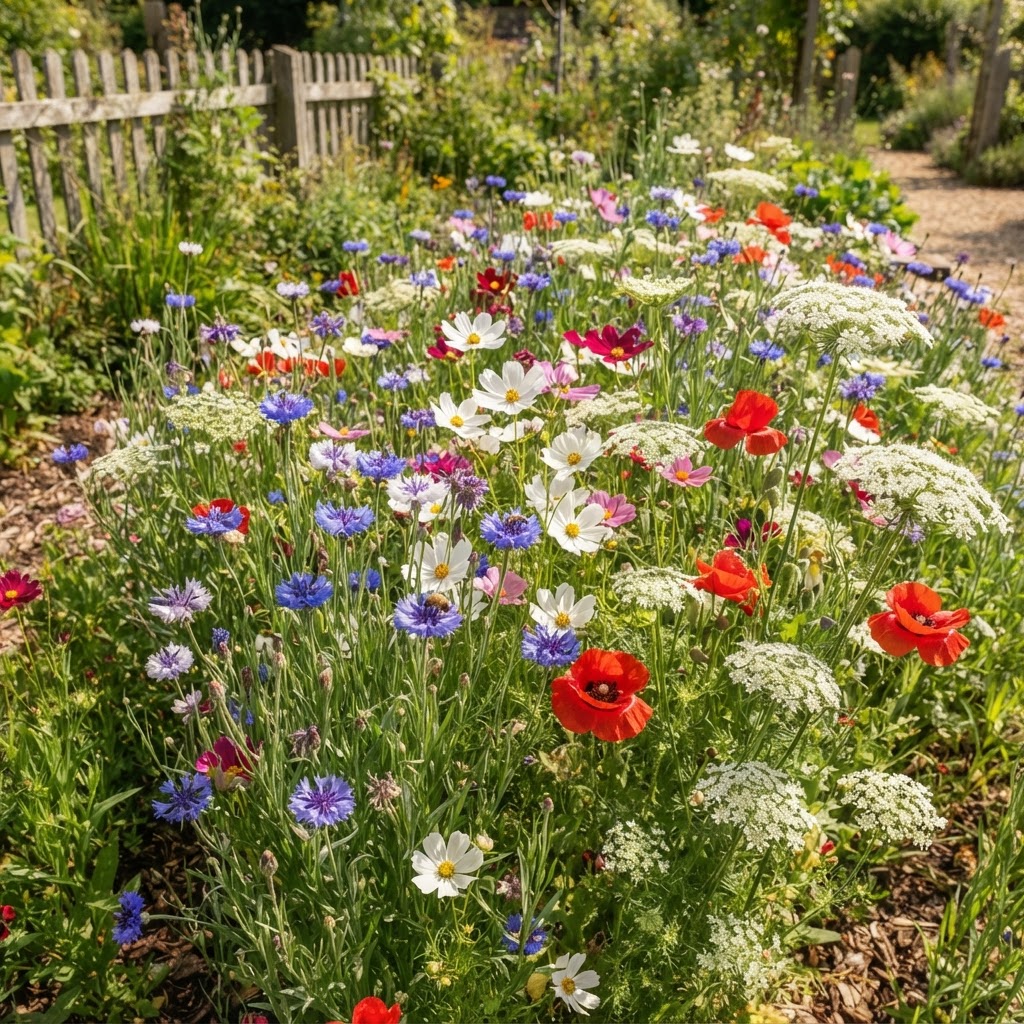
A small patch of annual meadow flowers will give you bouquets all summer. Sow cornflowers, ammi, nigella, cosmos, poppies and chamomile in spring in a sunny spot, and add foxgloves and scabious for early summer. Most are quick and easy from seed, and the more you pick, the more they flower.
Wildflower Bouquets Through the Season
| Season | Flowers to look for |
|---|---|
| Late spring | Cow parsley, bluebells (look, don't pick), buttercups, campion |
| Early summer | Ox-eye daisies, sweet peas, foxgloves, poppies, cornflowers |
| High summer | Scabious, yarrow, knapweed, cosmos, nigella, grasses |
| Late summer | Wild carrot, cosmos, seed heads, grasses, honeysuckle |
Native bluebells are protected from being picked for sale in the UK, so enjoy them where they grow.
How to Keep a Wildflower Bouquet Fresh
- Pick or buy in the cool of the morning or evening.
- Get stems into water immediately; wildflowers wilt quickly.
- Sear soft or hollow stems such as poppies and cow parsley in boiling water for a few seconds.
- Use clean vases and flower food.
- Keep the bouquet cool and away from direct sun and fruit bowls.
Common Mistakes to Avoid
| Mistake | Why it's a problem | What to do instead |
|---|---|---|
| Picking in the heat of the day | Stems wilt before you get home | Pick in the morning or evening |
| Uprooting plants | It's illegal without permission and harms wild populations | Snip stems and leave the plant |
| Picking rare flowers | They may be protected | Only pick common flowers where there are plenty |
| Packing stems too tightly | Looks stiff, not wild | Spiral the stems and keep it loose |
| Skipping conditioning | Wildflowers droop quickly | Give stems a long drink before arranging |
| Using every colour | Can look chaotic | Choose a palette, such as blue, white and yellow |
Frequently Asked Questions
What flowers are in a wildflower bouquet?
Cornflowers, ox-eye daisies, cow parsley or ammi, poppies, scabious, yarrow, nigella, cosmos, sweet peas and grasses are some of the most popular.
Is it illegal to pick wild flowers in the UK?
Picking a few common wild flowers for personal enjoyment is generally allowed, but uprooting any wild plant without the landowner's permission is illegal, and some rare species are fully protected.
How do you keep wildflowers from wilting?
Pick them in the cool of the morning or evening, put them straight into water, recut the stems, sear soft stems, and keep the bouquet cool.
How long does a wildflower bouquet last?
Usually three to seven days, depending on the flowers. Cornflowers, yarrow and grasses last longest.
Can you have a wildflower bouquet for a wedding?
Yes. Ask a florist for British-grown, seasonal meadow-style flowers, or grow your own if your wedding is in summer.
How do you make a wildflower bouquet look natural?
Use a mix of heights, plenty of airy fillers and grasses, and spiral the stems loosely rather than packing them tightly.
What is the best way to get wildflowers for a bouquet?
Grow your own from seed or buy British-grown seasonal flowers. It's the most sustainable option and gives you plenty to pick.
A Summer Walk in a Vase
A wildflower bouquet captures the joy of a summer meadow. Grow or buy seasonal flowers, gather them loosely with plenty of grasses and fillers, and let them tumble naturally from a jug or tie them with a little twine.
And if you'd like help bringing natural, relaxed style into your home, you can book a one-hour online interior design consultation with me.
About the author
Magda Callery is a UK interior designer and florist with more than 15 years' experience designing homes, pubs, restaurants and bars, and her expert commentary has featured in Homes & Gardens, The Mirror and The Spruce. Explore more of the decorating articles.
Continue reading

Greenery for Flower Arrangements: 19 Best Foliage Picks
19 of the best greenery choices for flower arrangements, from eucalyptus and ruscus to olive and ivy, plus how to condition foliage and use it through the seasons.

Simple Flower Arrangements: 19 Easy Ideas for Your Home
19 simple flower arrangement ideas for your home, from tulips in a jar and bud vases to low bowls and branches, plus easy rules and how to keep flowers fresh.


Winter Flower Arrangements: 17 Ideas for Cold Months
17 winter flower arrangement ideas, from hellebores, anemones and tulips to dogwood, forced forsythia, evergreens and dried flowers, plus how to keep them fresh.