
Greenery for Flower Arrangements: 19 Best Foliage Picks
19 of the best greenery choices for flower arrangements, from eucalyptus and ruscus to olive and ivy, plus how to condition foliage and use it through the seasons.
By Magda Callery, interior designer and florist
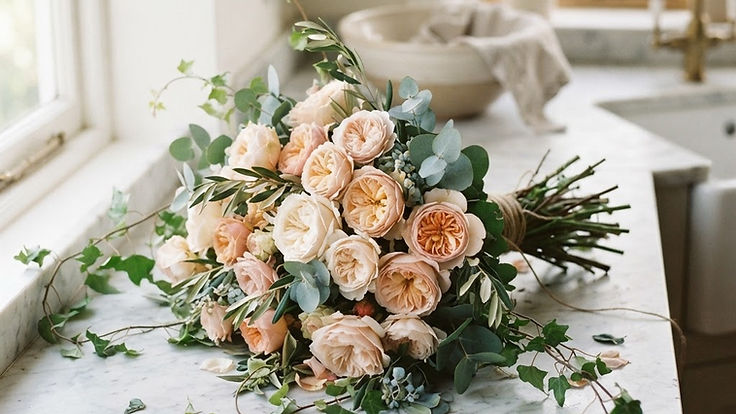
Greenery is the quiet secret of beautiful flower arrangements. A few stems of eucalyptus, a branch of olive or a trail of ivy can turn a simple bunch of flowers into something that looks relaxed, generous and professionally put together. Foliage gives an arrangement its shape, hides the mechanics, fills gaps, and costs a fraction of the price of flowers. As a florist, I often spend as long choosing the greenery as I do the blooms.
In this guide I'll explain the main types of greenery florists use, share 19 of the best foliage choices for flower arrangements, explain how to condition greenery so it lasts, and suggest which leaves suit each season and style.
The quick answer: the most popular greenery for flower arrangements is eucalyptus, Italian ruscus, salal, pittosporum, olive, leatherleaf fern, asparagus fern and ivy. Use structural foliage such as salal or pittosporum to build the shape first, then add flowers, then finish with trailing or airy greenery such as ivy, smilax or asparagus fern. Recut and soak woody stems before arranging, and most greenery will outlast the flowers.
The Three Types of Greenery in an Arrangement
| Type | What it does | Examples |
|---|---|---|
| Base or mass foliage | Builds the framework, fills the vase and supports stems | Salal, pittosporum, magnolia, beech, myrtle |
| Line foliage | Adds height, width and movement | Eucalyptus, Italian ruscus, olive, grasses |
| Trailing or textural foliage | Softens edges and spills over the rim | Ivy, smilax, asparagus fern, jasmine |
A simple recipe for most arrangements is one base foliage, one line foliage and one trailing green. Three types of leaf are usually plenty; more can look busy.
19 Best Greenery for Flower Arrangements
Classic florist greenery
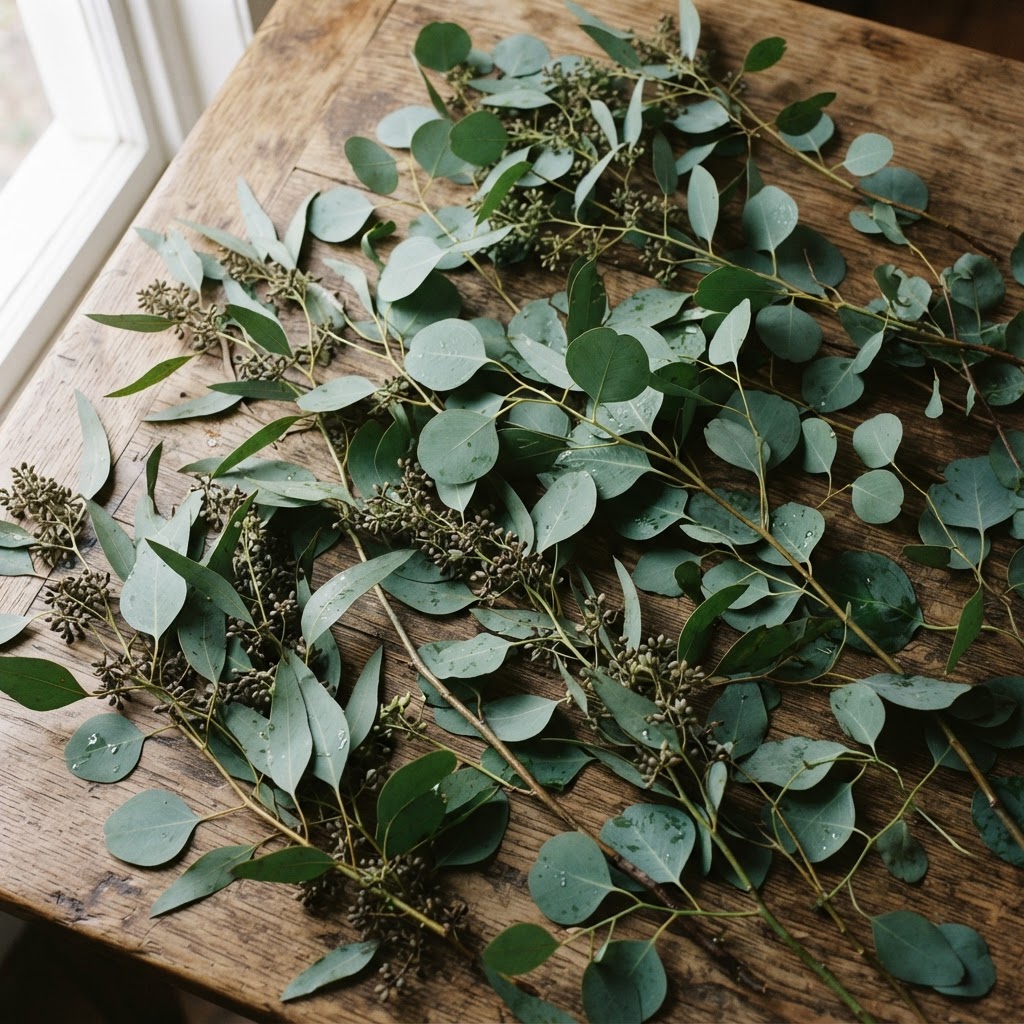
1. Eucalyptus. The most popular greenery of all, with silvery blue leaves and a fresh scent. Silver dollar eucalyptus has round, coin-like leaves, seeded eucalyptus has clusters of little seed pods, and baby blue has small leaves packed along the stem. It lasts for weeks and dries beautifully.
2. Italian ruscus. Long, arching stems of small, glossy leaves that add graceful movement to bouquets and table runners. It lasts up to two weeks.
3. Salal (lemon leaf). Sturdy stems of broad, glossy leaves that make a dependable base for almost any arrangement.
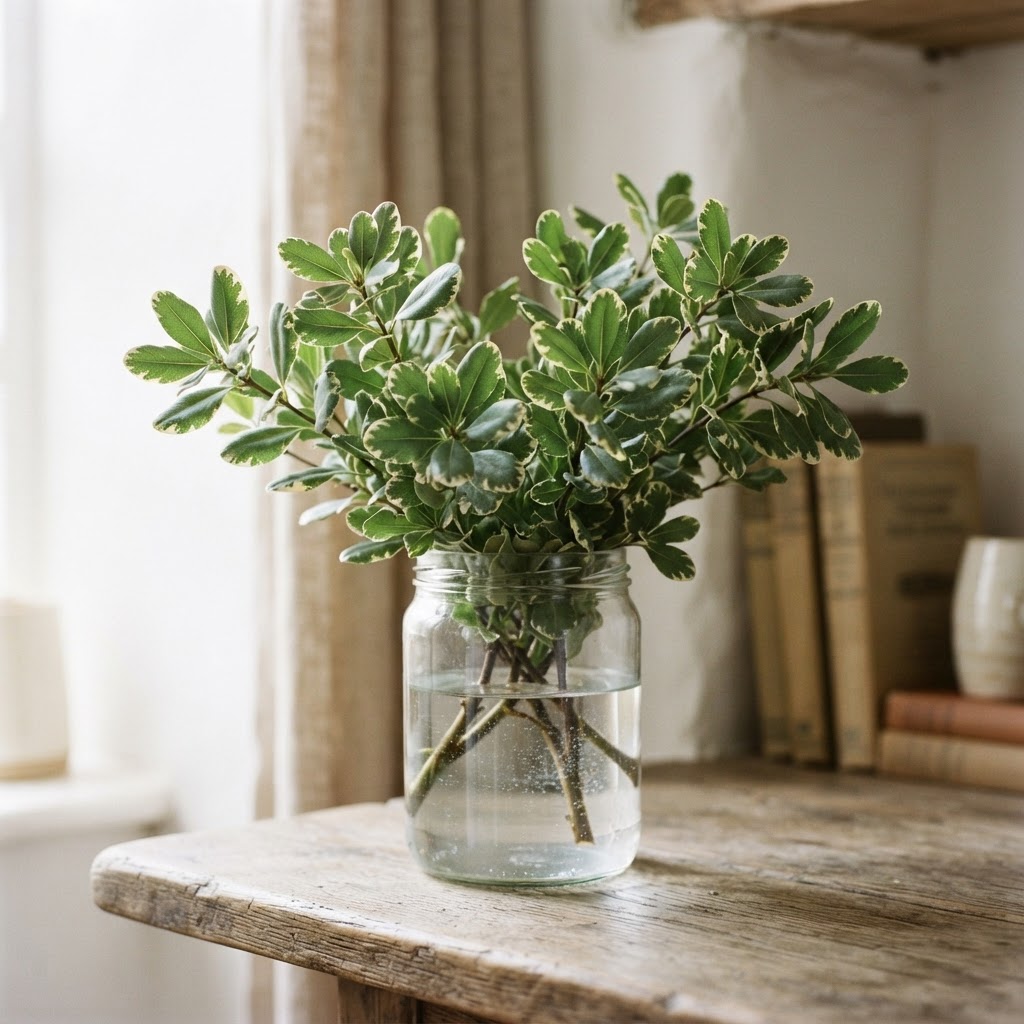
4. Pittosporum. Small, rounded leaves in green or variegated cream on dark stems. It's one of the most useful fillers, with a soft, natural look.
5. Leatherleaf fern. Flat, dark green fronds that last a long time and fill out a bouquet quickly.
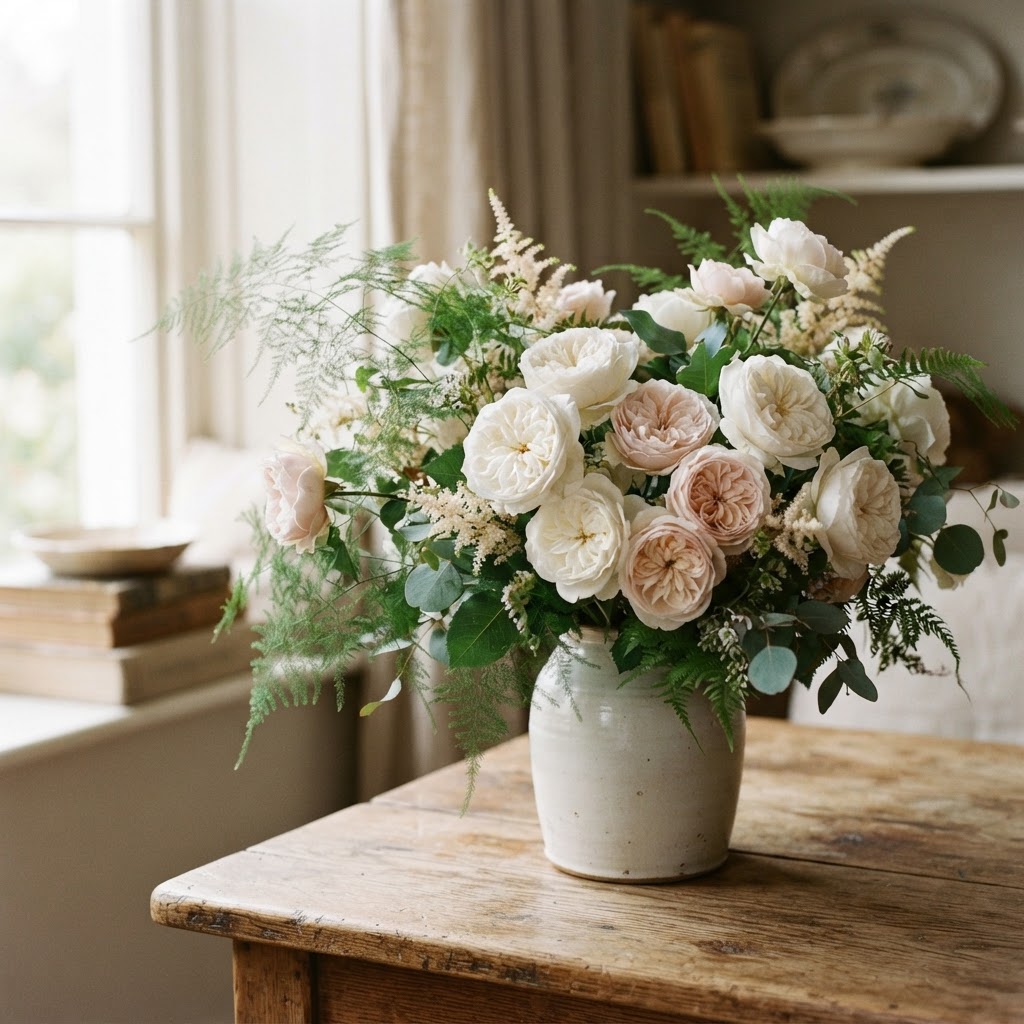
6. Asparagus fern. Feathery, cloud-like foliage that adds an airy, romantic texture, especially around roses and garden flowers.
7. Smilax. Long, trailing garlands of small leaves, used to drape tables, mantelpieces and wedding arches.
Garden greenery
8. Olive. Slender branches of silvery green leaves with a Mediterranean feel. They suit calm, natural interiors and look lovely on their own.
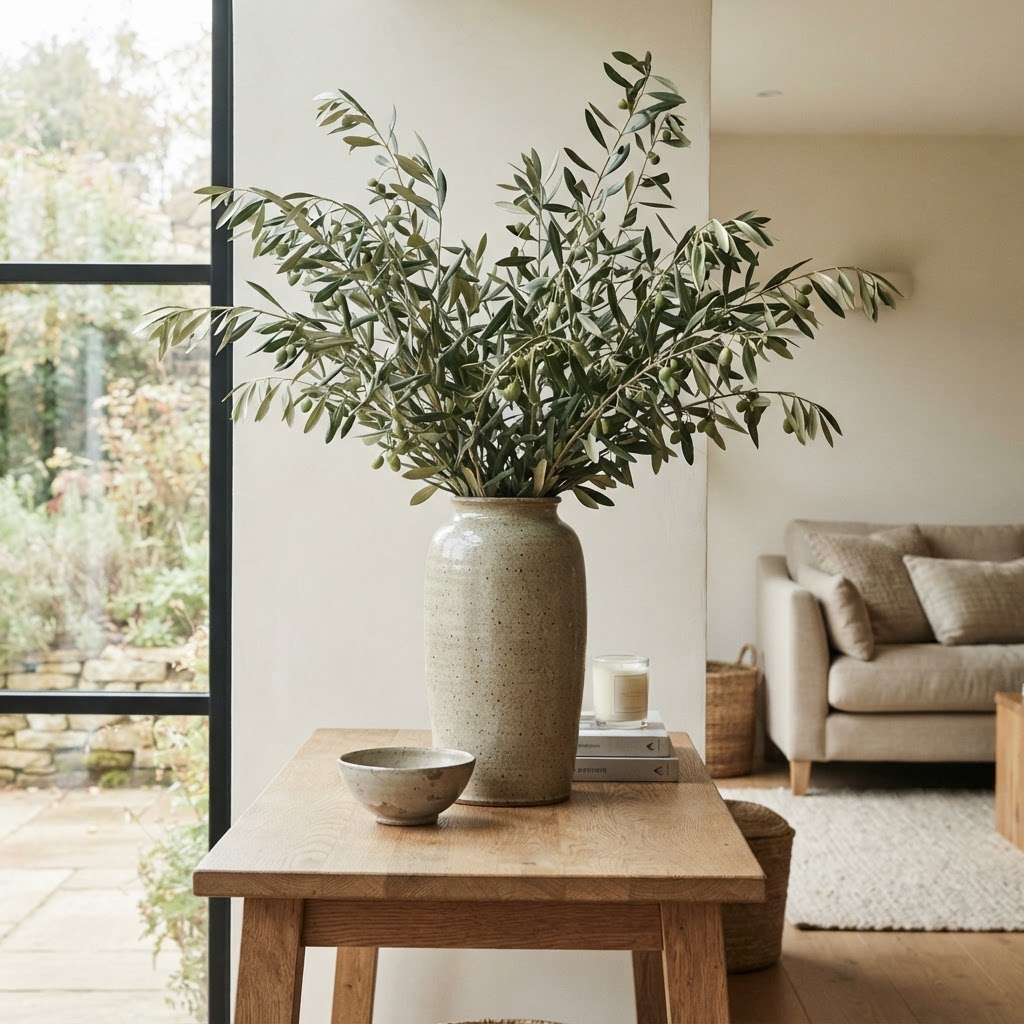
9. Ivy. Trailing ivy softens the edges of a low arrangement and spills beautifully over the rim of a vase. Choose mature, berried ivy for autumn and winter.
10. Magnolia leaves. Large, glossy leaves with a velvety brown underside. They're a classic for Christmas wreaths and dramatic winter arrangements.
11. Copper beech. Deep purple and copper leaves that add richness and contrast, especially with pink and burgundy flowers.
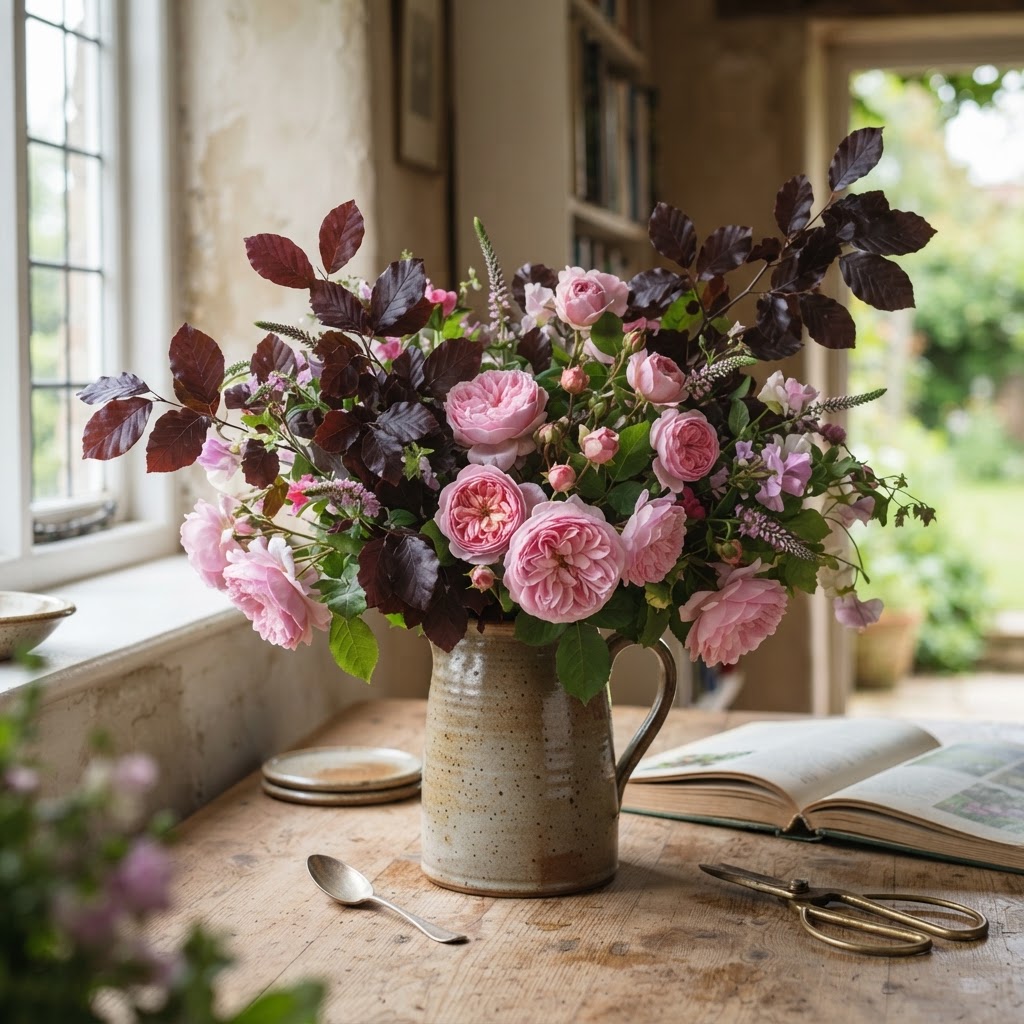
12. Rosemary and herbs. Rosemary, mint, sage and flowering oregano bring scent and a relaxed, kitchen-garden feel to small posies.
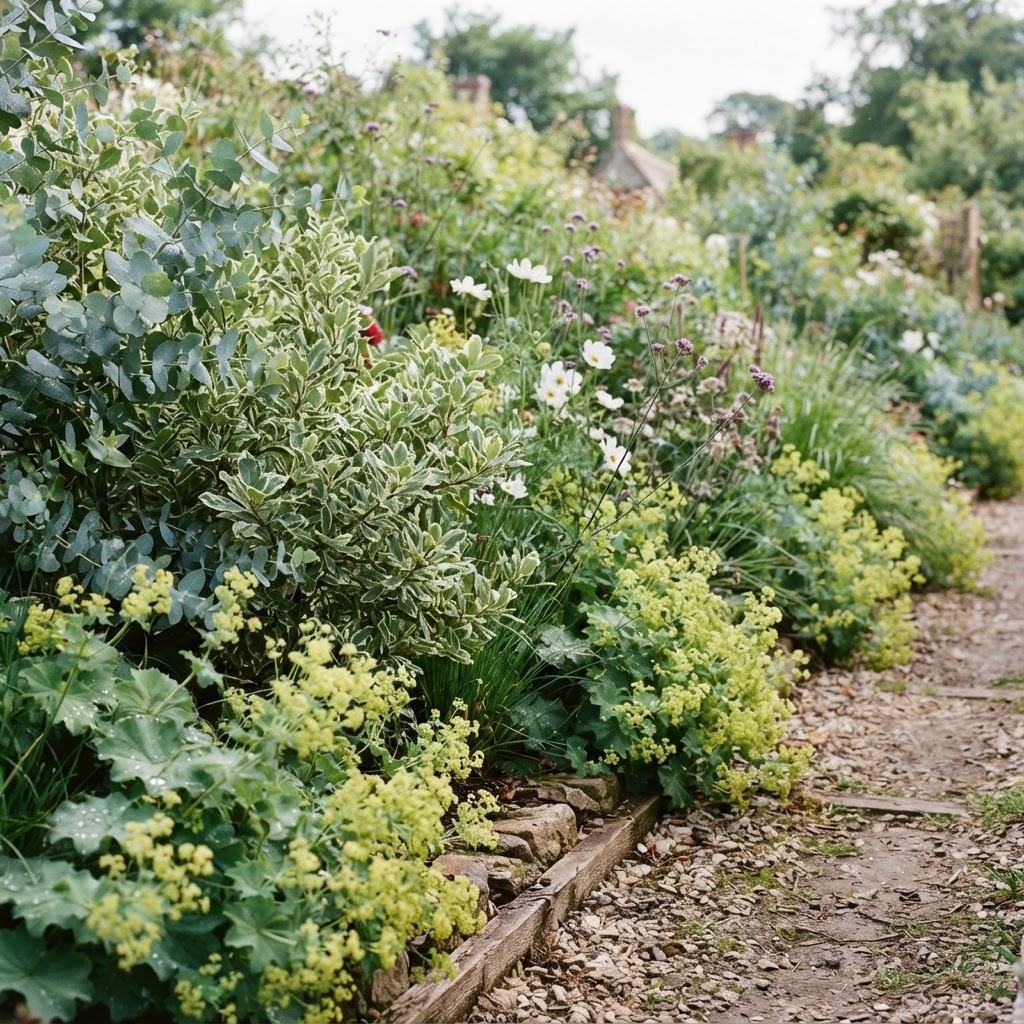
13. Lady's mantle. Clouds of acid-green flowers and soft, scalloped leaves that brighten any summer arrangement.
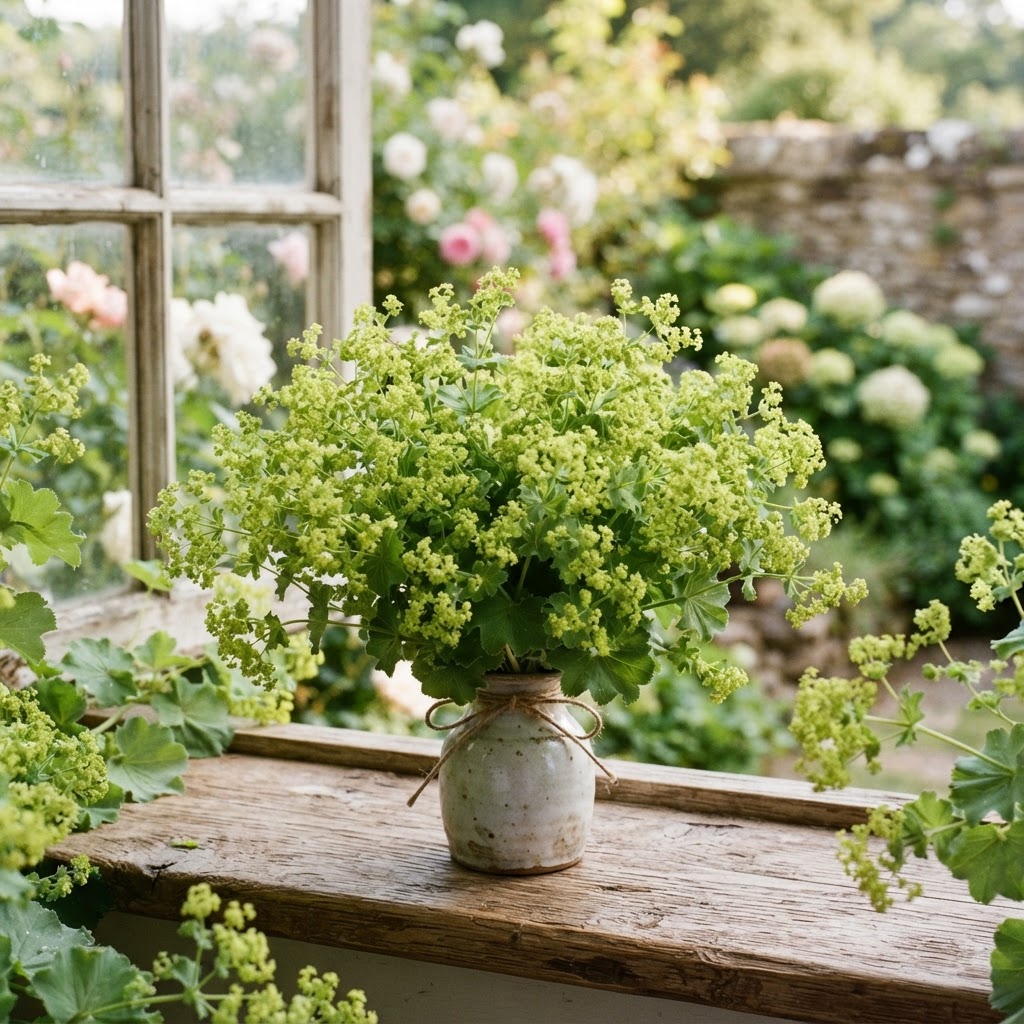
14. Hosta leaves. Large, bold leaves in green, blue or variegated cream, perfect for collaring a hand-tied bouquet or lining a low bowl.
15. Myrtle. Small, aromatic leaves on fine stems. Myrtle is traditional in British royal wedding bouquets.
Textural and unusual greenery
16. Dusty miller. Soft, silver-white leaves that glow beside white and blush flowers.
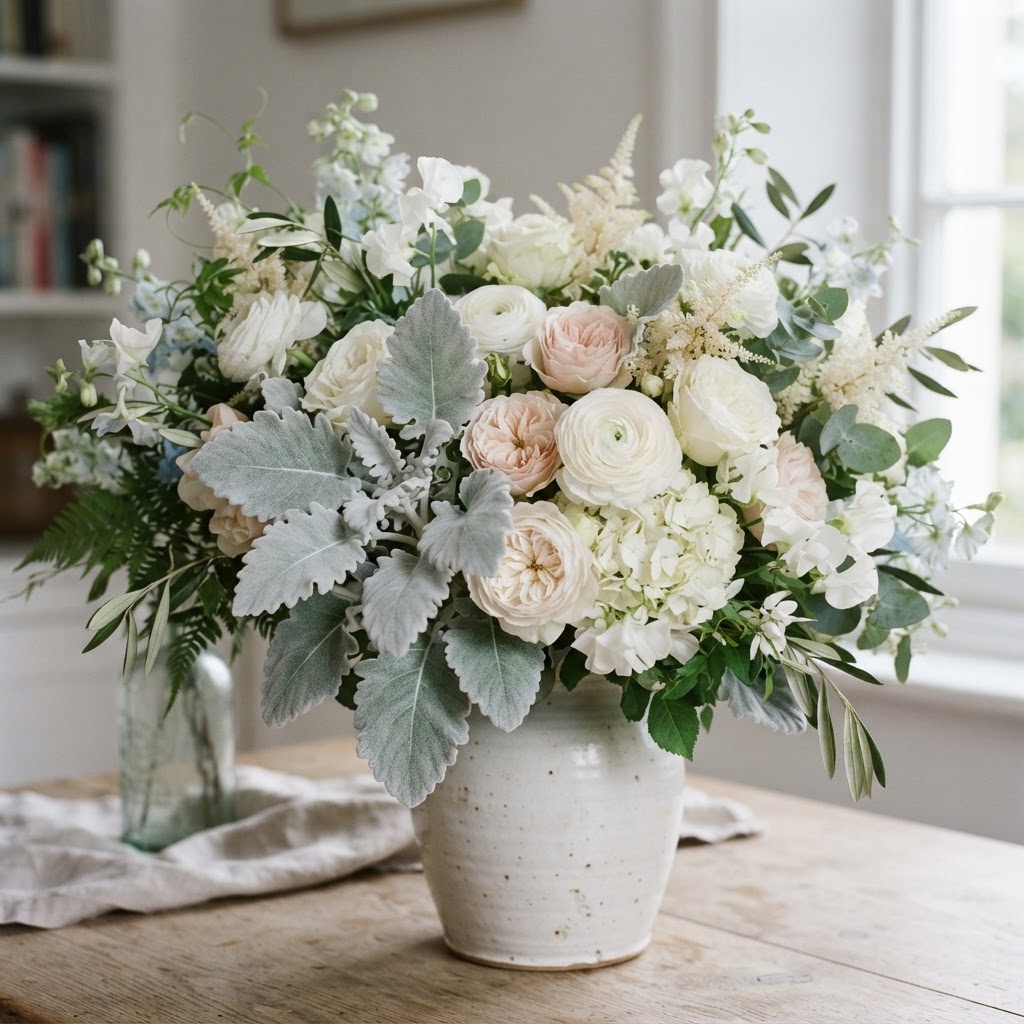
17. Bupleurum. Lime-green leaves and tiny flowers that act as both greenery and filler.
18. Ornamental grasses. Grasses such as millet, pennisetum and quaking grass add movement and a wild, meadow-like feel.
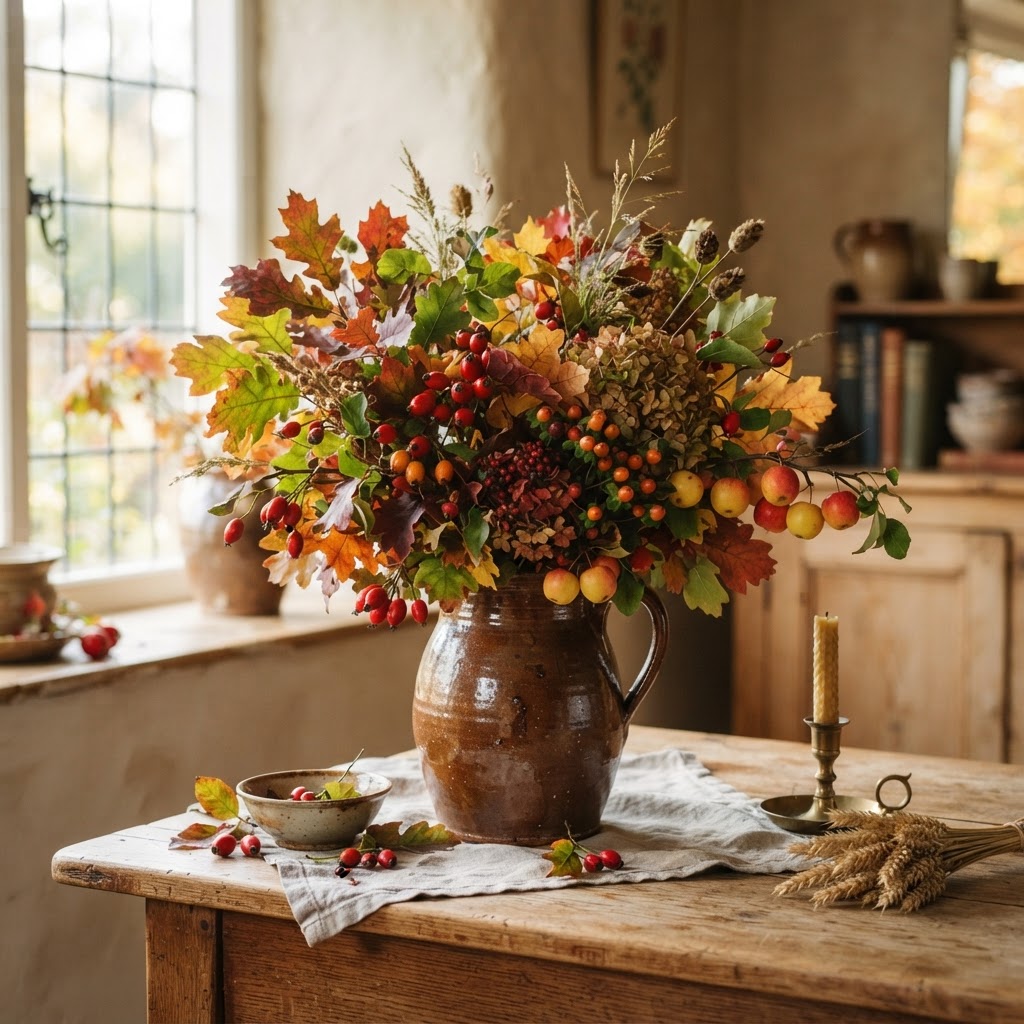
19. Fruiting branches. Rosehips, crab apples, hypericum berries and blackberries add colour and texture in late summer and autumn.
How to Condition Greenery So It Lasts
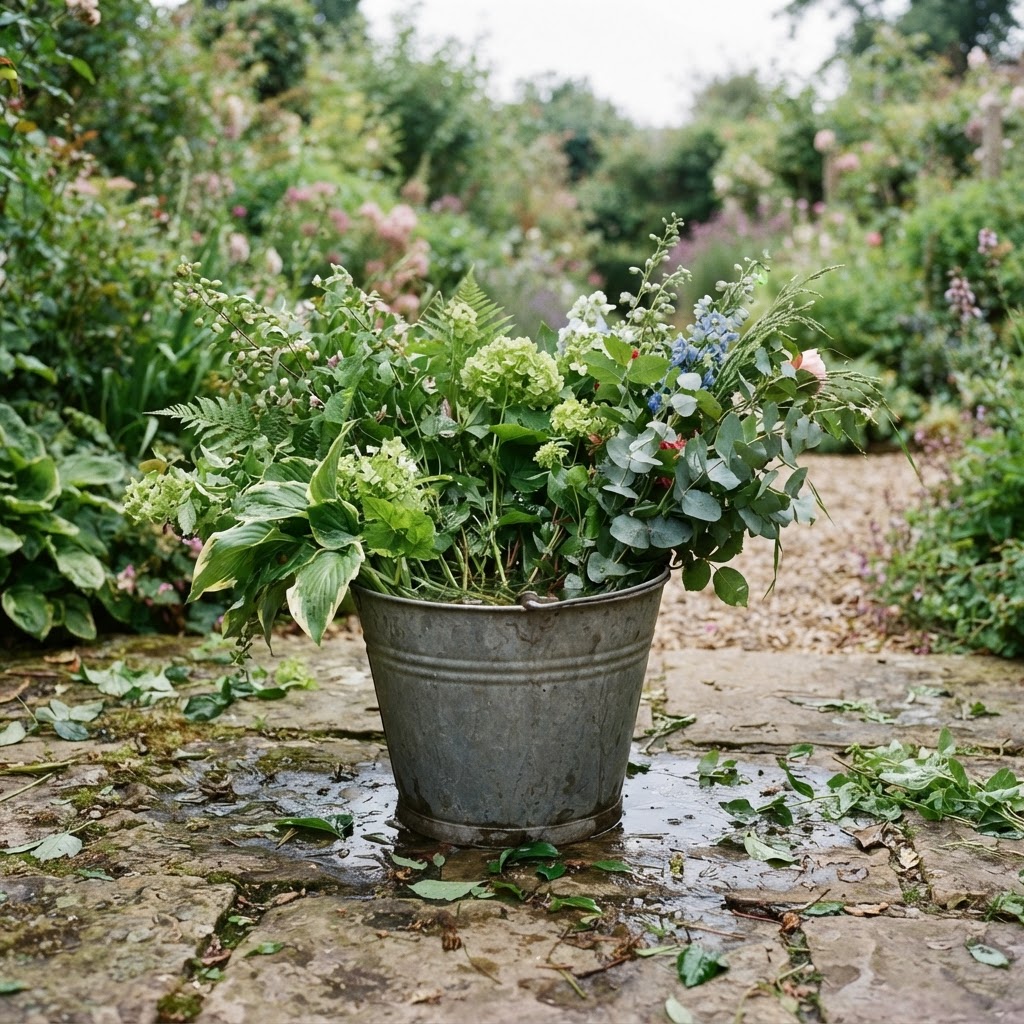
Most foliage will outlast the flowers if you prepare it properly. NC State Extension's advice on keeping decorative greens fresh says that "to keep cut greenery fresh, you must provide a source of water and moderate the effects of heat and dry air," and that "cut greens can last two to three weeks and maybe longer if properly cared for."
- Cut in the cool of the morning if you're gathering from the garden.
- Strip the lower leaves so none sit below the waterline.
- Recut the stems at an angle. For woody stems such as beech, olive and magnolia, split the base a few centimetres.
- Give it a long drink in deep, cool water for a few hours, or overnight, before arranging.
- Add flower food to the vase and change the water every couple of days.
How to Use Greenery in an Arrangement
- Build the frame first. Criss-cross base foliage in the vase to create a natural grid that holds the flowers in place.
- Add flowers next. Place the largest blooms first, then the smaller ones.
- Finish with movement. Tuck in trailing ivy, grasses or ruscus last, so they flow out of the arrangement.
- Repeat, don't scatter. Group each type of greenery in two or three places rather than dotting single stems everywhere.
- Try greenery on its own. A vase of eucalyptus, olive or beech can look as striking as flowers, and lasts much longer.
Greenery works hard in every kind of arrangement, from simple flower arrangements in a jar to evergreen winter flower arrangements and festive Christmas flower arrangements.
Greenery Through the Seasons
| Season | Greenery to use |
|---|---|
| Spring | Pussy willow, blossom branches, young beech, hosta leaves |
| Summer | Lady's mantle, herbs, grasses, copper beech, jasmine |
| Autumn | Rosehips, berried ivy, crab apples, turning leaves, bracken |
| Winter | Pine, cedar, magnolia, holly, eucalyptus, Viburnum tinus |
In winter, evergreen foliage from trees with red berries, along with pine and magnolia, makes the backbone of fresh Christmas wreaths and mantel garlands.

Growing Your Own Greenery
If you have a garden, a few shrubs will keep you in greenery all year. Pittosporum, eucalyptus, myrtle, Viburnum tinus, rosemary and ivy are all easy, and lady's mantle and hostas fill summer gaps. Plant them alongside a cutting patch of cosmos and zinnias, and add a lilac tree for spring branches.
Common Mistakes to Avoid
| Mistake | Why it's a problem | What to do instead |
|---|---|---|
| Leaves below the waterline | They rot and cloud the water | Strip lower leaves before arranging |
| Too many types of greenery | Looks messy and unplanned | Stick to two or three types |
| Adding greenery last | Flowers have nothing to hold them | Build a foliage frame first |
| Not conditioning woody stems | Leaves wilt within a day | Split the stems and soak them first |
| Greenery that overpowers | Flowers get lost | Let foliage frame the flowers, not hide them |
| Ignoring scent | Strong herbs can clash with fragrant flowers | Pair scented foliage with lightly scented blooms |
Frequently Asked Questions
What greenery do florists use?
Florists commonly use eucalyptus, Italian ruscus, salal, pittosporum, leatherleaf fern, asparagus fern, smilax and myrtle, along with seasonal garden foliage.
What is the most popular greenery for bouquets?
Eucalyptus is the most popular, especially silver dollar and seeded eucalyptus, followed by Italian ruscus and pittosporum.
Which greenery lasts the longest?
Eucalyptus, ruscus, salal, leatherleaf fern, magnolia and conifers can all last two weeks or more with fresh water.
How do you keep greenery fresh in an arrangement?
Strip the lower leaves, recut the stems, split woody ends, give the foliage a long drink before arranging, and change the water every couple of days.
Can you use garden greenery in arrangements?
Yes. Beech, ivy, pittosporum, rosemary, hosta leaves, lady's mantle and many shrubs make beautiful, free greenery.
What greenery goes with white flowers?
Eucalyptus, dusty miller, olive and pittosporum suit white flowers, giving a soft, silvery, elegant look.
Can you make an arrangement with just greenery?
Yes. A vase of eucalyptus, olive, beech or magnolia looks calm and modern, and lasts much longer than most flowers.
The Backbone of Every Bouquet
Greenery is what turns a handful of flowers into an arrangement. Choose two or three leaves that suit the season and the flowers, condition them well, and build your arrangement around them. You'll find your flowers go further, look more natural and last longer.
And if you'd like help bringing flowers and natural textures into your home, you can book a one-hour online interior design consultation with me.
About the author
Magda Callery is a UK interior designer and florist with more than 15 years' experience designing homes, pubs, restaurants and bars, and her expert commentary has featured in Homes & Gardens, The Mirror and The Spruce. Explore more of the decorating articles.
Continue reading

Wildflower Bouquet: 17 Flowers and How to Make One
How to make a wildflower bouquet, 17 of the best flowers to use, the rules on picking wild flowers, wildflower wedding ideas and how to keep stems fresh.

Simple Flower Arrangements: 19 Easy Ideas for Your Home
19 simple flower arrangement ideas for your home, from tulips in a jar and bud vases to low bowls and branches, plus easy rules and how to keep flowers fresh.


Winter Flower Arrangements: 17 Ideas for Cold Months
17 winter flower arrangement ideas, from hellebores, anemones and tulips to dogwood, forced forsythia, evergreens and dried flowers, plus how to keep them fresh.