
Castles in Poland: 21 Polish Castles Worth Visiting
From the brick might of Malbork to the 99 turrets of Moszna and the ruins of the Eagles' Nests, 21 of the best castles in Poland, with routes, castle hotels and visiting tips.
By Magda Callery, interior designer and florist
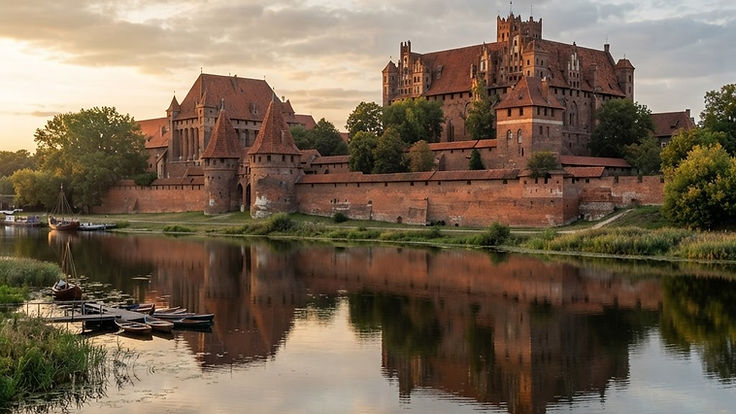
Poland is a wonderful country for castles. In one trip you can explore the largest brick fortress in Europe, a white fairytale castle with 99 turrets, Renaissance courtyards built for kings and magnates, and romantic limestone ruins perched on rocks above the countryside. Many are surprisingly quiet compared with the famous castles of the Loire or the Rhine, and some even let you stay the night.
As a Polish designer, I love these buildings as much for their interiors and craftsmanship as for their history. In this guide I'll explain how many castles there are in Poland, the main types you'll find, 21 Polish castles worth visiting region by region, how to plan a castle route, and a few tips to make the most of your visit.
How Many Castles Are There in Poland?
There's no single official number, because it depends on what you count: complete castles, ruins, castles rebuilt as palaces, or fortified manor houses. A University of Łódź study of castles, palaces and manors in Poland gathered data on 4,842 historic residences, and about 6% of them, roughly 290, were castles. The rest were palaces (about 41%) and manor houses (about 53%). Counts that include every small ruin and fortified tower are higher, which is why you'll often see figures of 400 or more.
Whatever the exact number, there are castles in every region, from the Baltic coast to the Tatra Mountains.
Types of Castles in Poland
| Type | Where | What to look for | Examples |
|---|---|---|---|
| Teutonic brick castles | North, along the Vistula and in Warmia | Red brick, cloisters, chapels, defensive towers | Malbork, Gniew, Kwidzyn |
| Royal castles | Kraków, Warsaw | Grand state rooms, coronation history | Wawel, Royal Castle in Warsaw |
| Eagles' Nests | Kraków-Częstochowa Upland | Ruins on white limestone rocks | Ogrodzieniec, Bobolice |
| Renaissance residences | South and south-east | Arcaded courtyards, decorative parapets | Krasiczyn, Baranów Sandomierski |
| Palace castles | Across the country | Rebuilt in the 18th and 19th centuries as aristocratic homes | Łańcut, Kórnik, Moszna |
| Mountain castles | Lower Silesia, Pieniny, Karkonosze | Hilltop and riverside sites with dramatic views | Książ, Niedzica, Chojnik |
Medieval Castles in Poland
The golden age of Polish castle building came in the 14th century. King Casimir the Great built or rebuilt dozens of stone castles to defend his borders, and Poles still say that he "found Poland made of wood and left it made of stone". Many of the Eagles' Nests on the limestone hills between Kraków and Częstochowa date from his reign.
In the north, the Teutonic Knights built an entire network of brick castles. Each one combined a fortress and a monastery, with a chapel, a chapter house, a refectory and dormitories arranged around a cloister. Brick was the material of the region, and these castles are some of the finest examples of the red Brick Gothic style that defines so much of Polish architecture.
21 Polish Castles Worth Visiting
Northern Poland: Teutonic castles
1. Malbork Castle. The former headquarters of the Teutonic Order, on the bank of the Nogat river, is the largest brick castle in Europe and often described as the largest castle in the world by land area. It became the seat of the Grand Master in 1309 and passed to the Polish crown in 1457. Allow at least half a day for the High, Middle and Low Castles, and come back at dusk for the view across the river. It's a UNESCO World Heritage Site.
2. Gniew Castle. A square Teutonic castle on a hill above the Vistula, south of Gdańsk, famous for its lively historical re-enactments, jousting and summer festivals. You can also stay in the grounds.
3. Kwidzyn Castle. Part of a castle and cathedral complex built for the bishops of Pomesania, Kwidzyn is known for its extraordinary dansker, a latrine and defensive tower linked to the castle by a long arcaded bridge. The Medieval Heritage project describes it as "the largest sanitary-defense tower in the Teutonic state".
4. Lidzbark Warmiński Castle. The castle of the prince-bishops of Warmia is one of the best preserved Gothic castles in Poland, with a beautiful arcaded courtyard and painted vaults. Nicolaus Copernicus lived here for several years as secretary and physician to his uncle, the bishop.
Kraków and Warsaw: royal castles
5. Wawel Royal Castle, Kraków. The seat of Polish kings for centuries sits on a hill above the Vistula, beside the cathedral where they were crowned and buried. Inside are the Renaissance arcaded courtyard, state rooms hung with Flemish tapestries, the royal private apartments and the treasury. Below the hill is the Dragon's Den, a cave linked to the legend of the Wawel Dragon, with a bronze dragon that breathes real fire.
6. Royal Castle, Warsaw. Blown up by the Germans during the Second World War, the Royal Castle was rebuilt between 1971 and 1984, much of it funded by donations from Poles at home and abroad. It was here, in the Senate Chamber, that the Constitution of 3 May 1791, Europe's first modern written constitution, was passed. The castle stands at the entrance to the rebuilt Old Town.
The Trail of the Eagles' Nests
The Trail of the Eagles' Nests (Szlak Orlich Gniazd) runs for more than 160 kilometres between Kraków and Częstochowa, linking castles and ruins built on white Jurassic limestone outcrops.
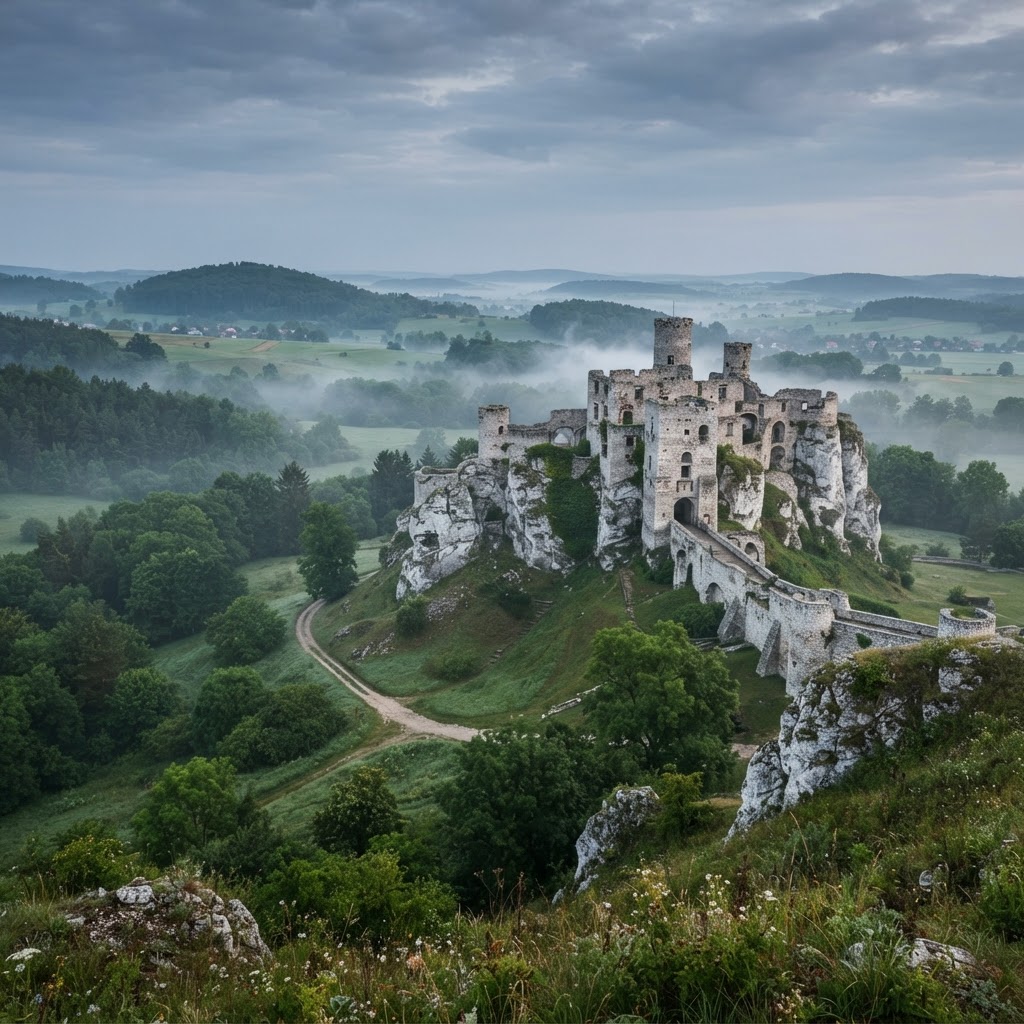
7. Ogrodzieniec Castle. The most popular of the Eagles' Nests, Ogrodzieniec is a vast, romantic ruin built into the rocks on one of the highest hills of the upland. It was burned during the Swedish invasion of the 17th century and never restored. Fans of The Witcher may recognise it: scenes for the final episode of the first season of the Netflix series were filmed here.
8. Bobolice Castle. A 14th century castle rebuilt from ruins by private owners in the early 21st century, Bobolice gives a vivid idea of how the Eagles' Nests once looked. The ruins of Mirów Castle stand on the next hill, and a path links the two.
9. Pieskowa Skała Castle. In the Ojców National Park, just north of Kraków, this Renaissance castle has an arcaded courtyard and gardens on a rocky ridge above the Prądnik valley. Nearby is the Club of Hercules, a limestone pillar that looks like a giant club balanced on its tip.
Silesia: fairytale and mountain castles
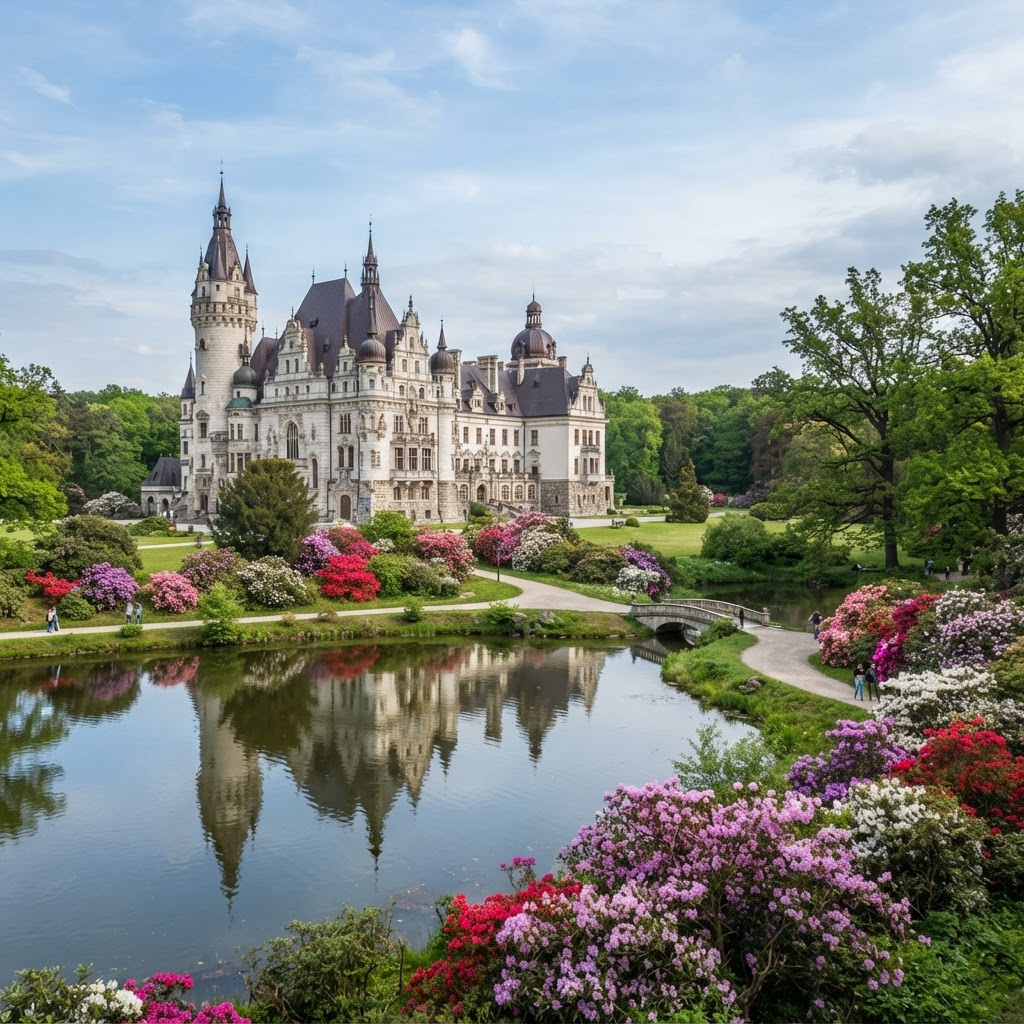
10. Moszna Castle. With 99 turrets and 365 rooms, Moszna in Opole Silesia is Poland's most fairytale castle. Its Baroque centre was rebuilt after a fire in 1896, and the Tiele-Winckler family added a neo-Gothic east wing and a neo-Renaissance west wing by 1914. In late spring the park glows with azaleas and rhododendrons, and the castle hosts a music festival as they bloom.
11. Książ Castle. Above a wooded gorge near Wałbrzych, Książ is the third largest castle in Poland. It was the home of the Hochberg family, including the English-born Princess Daisy of Pless, and during the Second World War the Nazis seized it and tunnelled into the rock beneath it. Today you can tour the state rooms, terraced gardens and parts of the tunnels.
12. Czocha Castle. A mysterious castle on a rocky outcrop above Lake Leśnia, full of secret passages and hidden rooms. It's a popular hotel and the setting for the College of Wizardry, a live role-play event that feels like stepping into a wizarding school.
13. Chojnik Castle. A ruined castle on a forested hill in Karkonosze National Park, above the village of Sobieszów near Jelenia Góra. The climb is steep but the views of the mountains are superb. Legend says Princess Kunegunda would only marry a knight who could ride around the castle walls, and many died trying.
Southern Poland: lakes, valleys and Renaissance courts
14. Niedzica Castle. A white castle on a rock above Lake Czorsztyn in the Pieniny mountains, built in the 14th century when this land belonged to Hungary. It faces the ruins of Czorsztyn Castle across the water, and it's known for its legend of a hidden Inca treasure.
15. Krasiczyn Castle. Near Przemyśl, this Renaissance castle is famous for its four corner towers, named the Divine, Papal, Royal and Noble towers, and for its walls covered in sgraffito decoration. It's set in a large park and has a hotel.
16. Łańcut Castle. A castle turned palace, Łańcut was home to the Lubomirski and Potocki families and survived the Second World War with much of its collection intact. Its rooms, orangery, park and carriage museum, one of the finest in Europe, make it one of the most rewarding visits in Poland.
17. Baranów Sandomierski Castle. Often called "Little Wawel" for its resemblance to the royal castle in Kraków, this elegant Renaissance castle has a beautiful arcaded courtyard and a Polish parapet along its roofline.
18. Krzyżtopór Castle. The colossal ruin of Krzyżtopór in Ujazd was built in the 17th century for the magnate Krzysztof Ossoliński and designed around the calendar. The regional tourist board describes Krzyżtopór Castle as having "four towers symbolizing the four seasons and 12 big halls, one for each month", with a room for every week and, according to legend, a window for every day of the year. It was devastated by the Swedes in 1655 and never recovered.
19. Janowiec Castle. The romantic ruins of a Renaissance castle on a hill above the Vistula, across the river from the pretty town of Kazimierz Dolny. Combine the two for a perfect day out.
Eastern and western Poland
20. Lublin Castle. From the outside, Lublin Castle is a 19th century neo-Gothic building, but inside its medieval Chapel of the Holy Trinity is one of Poland's great treasures. Lublin's tourist board explains that its frescoes were completed in 1418 "at the request of king Władysław Jagiełło" and calls the chapel "a unique example of combining Gothic architecture with Ruthenian-Byzantine frescoes", as you can read on the Holy Trinity Chapel page.
21. Kórnik Castle. Near Poznań, Kórnik was remodelled in the 19th century in a romantic neo-Gothic style by Tytus Działyński, who filled it with a remarkable library and collections. It stands beside a lake and one of Poland's oldest arboretums, and according to legend the White Lady, the ghost of Teofila Działyńska, walks the castle at night.
Polish Castles at a Glance
| Castle | Region | Style | Best for |
|---|---|---|---|
| Malbork | Pomerania | Brick Gothic | The biggest and most impressive |
| Wawel | Kraków | Gothic and Renaissance | Royal history and art |
| Royal Castle, Warsaw | Warsaw | Baroque and Neoclassical (rebuilt) | History and the Old Town |
| Moszna | Opole Silesia | Eclectic fairytale | Photographs and spring gardens |
| Książ | Lower Silesia | Baroque and eclectic | Grand interiors and underground tunnels |
| Ogrodzieniec | Kraków-Częstochowa Upland | Ruin | Romantic ruins and The Witcher |
| Niedzica | Lesser Poland | Gothic and Renaissance | Lake and mountain views |
| Krasiczyn | Subcarpathia | Renaissance | Sgraffito walls and a castle hotel |
| Łańcut | Subcarpathia | Palace castle | Furnished rooms and carriages |
| Krzyżtopór | Świętokrzyskie | Ruin | Sheer scale and legends |
| Lublin | Lublin | Neo-Gothic with a medieval chapel | Medieval frescoes |
| Kórnik | Greater Poland | Neo-Gothic | Collections, gardens and ghost stories |
Castle Routes Through Poland
The Teutonic route (3 to 4 days)
Start in Gdańsk, then visit Malbork, Gniew, Kwidzyn and the Gothic town of Toruń, before heading north east to Lidzbark Warmiński. It's an easy route by car, and Malbork is a short train ride from Gdańsk.
The Eagles' Nests (2 to 3 days)
From Kraków, drive north to Pieskowa Skała and the Ojców National Park, then on to Ogrodzieniec, Bobolice and Mirów. Walkers and cyclists can follow the waymarked trail, and spring and autumn are the most beautiful seasons.
Silesian castles (3 to 4 days)
Base yourself in Wrocław and visit Książ, Czocha and Chojnik, then head south east to Moszna. Lower Silesia has so many castles and palaces that you could easily spend a week here. On the way, stop in Bolesławiec, the home of hand-stamped Boleslawiec pottery, for its factory shops.
The south-east (3 to 4 days)
Combine Krasiczyn, Łańcut, Baranów Sandomierski and Krzyżtopór with Sandomierz and Kazimierz Dolny, then cross the river to Janowiec. It's a quieter part of Poland, with lovely countryside and small historic towns.
Can You Stay in a Castle in Poland?
Yes, and it's often surprisingly affordable. Several castles have hotels or guest rooms within their walls or grounds, including Czocha, Gniew, Krasiczyn and the Książ estate. Many palaces and manor houses have also been turned into hotels, so it's worth searching for a zamek (castle), pałac (palace) or dwór (manor) when you book. A Polish dwór is closer to an English manor house than to a castle, and often just as charming.
Tips for Visiting Castles in Poland
- Book ahead for the big names. Wawel and Malbork are busy in summer, and some routes have limited daily tickets.
- Check opening days. Many castles close one day a week, often Monday, and some have shorter hours in winter.
- Use the audio guides. Malbork and many others offer audio guides in English, which bring the rooms to life.
- Wear good shoes. Eagles' Nests, Chojnik and Ogrodzieniec involve rocky paths and steep steps.
- Go in late spring or early autumn. You'll have green landscapes, mild weather and fewer crowds. Visit Moszna in late spring for the azaleas.
- Look for evening events. Many castles host night tours, illuminations, concerts and re-enactments in summer.
- Learn a few words. Zamek means castle, ruiny means ruins, and bilet means ticket.
Bringing Castle Style Into Your Home
Castles have shaped interior design for centuries, and a few details can bring their warmth and drama into an ordinary home without making it feel like a museum.
- Rich, deep colours. Forest green, oxblood and inky blue on walls or woodwork feel enveloping. A shade like Dulux Ink Well works beautifully in a study or dining room, and olive green is softer and earthier.
- Tapestries and textiles. A woven wall hanging, a kilim or velvet curtains add the softness that stone castles needed.
- Layered rugs. Faded, patterned rugs on wooden floors instantly add age and comfort.
- Iron and candlelight. A wrought iron chandelier, candlesticks and warm, low lighting create a castle atmosphere in the evening.
- Solid wood. An oak refectory table, a carved chest or a dark wooden dresser feels grounded and timeless.
- Arched details. Arched mirrors, doorways or alcoves echo Gothic and Romanesque windows, one of the most recognisable types of architecture in Europe.
Frequently Asked Questions
How many castles are there in Poland?
A University of Łódź study of 4,842 historic castles, palaces and manor houses found that about 6% of them, roughly 290, were castles. Counts that include every ruin and fortified tower are higher, often quoted at 400 or more.
What is the largest castle in Poland?
Malbork Castle, the former headquarters of the Teutonic Knights, is the largest castle in Poland and often described as the largest castle in the world by land area. Wawel and Książ are among the next largest.
What is the most beautiful castle in Poland?
It depends on your taste. Moszna is the most fairytale, Malbork the most impressive, Wawel the most historic, and Ogrodzieniec and Niedzica the most romantic.
Which castle in Poland was used in The Witcher?
Ogrodzieniec Castle on the Trail of the Eagles' Nests was used for scenes in the final episode of the first season of Netflix's The Witcher.
What are the Eagles' Nests?
The Eagles' Nests are castles and ruins built on limestone rocks along the Kraków-Częstochowa Upland, many from the 14th century. They're linked by the Trail of the Eagles' Nests, a waymarked route of more than 160 kilometres.
Can you visit castles in Poland in winter?
Yes. Most major castles stay open all year, though some have shorter winter hours, and smaller ruins may close in bad weather. Check each castle's website before you travel.
Can you stay overnight in a Polish castle?
Yes. Castles such as Czocha, Gniew and Krasiczyn have hotels or guest rooms, and many palaces and manor houses across Poland are now hotels.
A Country of Castles
From the brick might of Malbork to the turrets of Moszna and the ruins on the Eagles' Nests, Polish castles tell the story of knights, kings and magnates in some of Europe's most beautiful landscapes. Pick a region, plan a route and leave time to linger, because many of the best moments come at dusk, when the crowds have gone and the walls glow in the evening light.
For more on Poland's buildings, from Renaissance squares to wooden churches, explore Polish architecture, and if you'd like help bringing a little castle character into your own home, you can book a one-hour online interior design consultation with me.
About the author
Magda Callery is a UK interior designer and florist with more than 15 years' experience designing homes, pubs, restaurants and bars, and her expert commentary has featured in Homes & Gardens, The Mirror and The Spruce. Explore more of the lifestyle articles.
Continue reading

Home Essentials Checklist: What You Need for a New Home
The ultimate UK home essentials checklist from an interior designer: what to buy for your first night, first week and first month, room-by-room checklists, safety essentials, moving-in admin and the designer touches that make a house feel like home.

Top 5 Holiday Destinations for British People in 2024
Spain, Italy, France, Portugal and Thailand: the five holiday destinations British families love most, with Magda's picks for beaches, city breaks and culture.

Boleslawiec Polish Pottery: History, Care and Styling
Everything you need to know about Boleslawiec pottery, from its 600-year history and hand-stamped patterns to quality grades, oven and dishwasher care, and how a Polish designer styles it at home.