
Soviet Brutalist Architecture: 17 Iconic Examples
What Soviet brutalist architecture is, why the Soviets built in concrete, 17 iconic examples from Kyiv to Tbilisi and Katowice, and memories of growing up among the blocks in communist Poland.
By Magda Callery, interior designer and florist
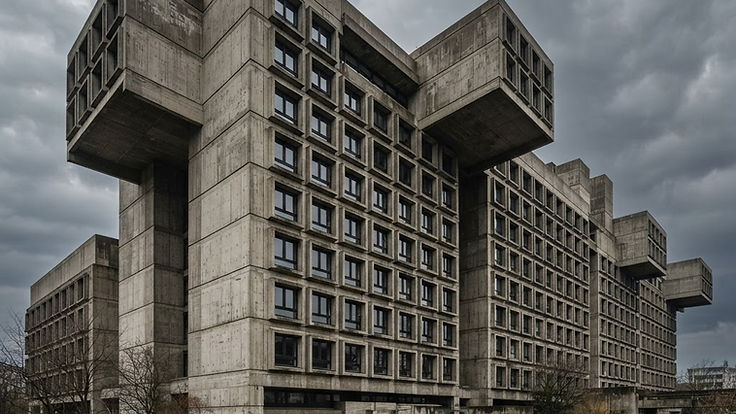
I grew up in Poland during the communist years, so for me Soviet-era concrete isn't just a dramatic backdrop on social media. It was everyday life: the blocks of flats, schools, cinemas, bus stations and sports halls where people lived, studied and queued. Today those same buildings fascinate designers and photographers around the world, and I understand why. Soviet brutalist architecture is bold, strange, sculptural and, at its best, breathtaking.
In this guide I'll explain what Soviet brutalist architecture is, why the Soviets built in concrete on such a vast scale, 17 iconic examples from across the former USSR and Eastern Bloc, what it was really like to live among the blocks, and how to bring a little brutalist character into a modern home.
The quick answer: Soviet brutalist architecture is the bold, raw concrete architecture built across the Soviet Union from the 1960s to the 1980s, from monumental ministries and hotels to sports arenas, sanatoriums and research institutes. It grew out of a 1955 shift away from ornate Stalinist buildings towards cheap, fast, industrialised construction. Famous examples include the "Flying Saucer" in Kyiv, the Ministry of Highways in Tbilisi, the Druzhba Sanatorium in Crimea and Linnahall in Tallinn.
What Is Soviet Brutalist Architecture?
Brutalism is a style of modern architecture built mainly from exposed, unfinished concrete, with heavy, sculptural forms and repeated geometric modules. The University of Guelph's exhibit Brutalism at Guelph describes Brutalism as "an attitude as much as a style," and notes that the name is linked to the French phrase béton brut, "literally meaning raw concrete."
In the Soviet Union, the style took on its own character. Architects working within a rigid state system found freedom in concrete, creating futuristic, almost science fiction buildings, especially in the republics far from Moscow.
Is Soviet Architecture Brutalist?
Not all of it. Soviet architecture went through several very different phases, and Brutalism was only one of them.
| Era | Style | What it looks like |
|---|---|---|
| 1920s to early 1930s | Constructivism | Dynamic geometric forms, glass and concrete, avant-garde |
| 1930s to 1955 | Stalinist architecture (Socialist Realism) | Grand, ornate, classical, wedding cake towers |
| 1955 to 1970s | Soviet Modernism | Simple, functional, glass and concrete |
| 1960s to 1980s | Brutalism and late modernism | Raw concrete, sculptural, monumental |
| 1950s to 1980s | Prefabricated mass housing | Repetitive concrete panel blocks of flats |
Why Did the Soviets Use Brutalist Architecture?
After Stalin's death, the government turned against expensive, ornamental buildings. As historian Katherine Zubovich-Eady notes in her UC Berkeley paper To the New Shore, "On November 4 1955, the Central Committee published a decree targeting the 'excesses' of Soviet architecture," and "from 1955 onwards, bureaucrats would no longer accept plans from architects for low-density buildings made with expensive materials."
- Concrete was cheap and fast. Factory-made concrete panels and standard designs let the state build at enormous scale.
- It looked modern. Raw concrete and bold shapes expressed progress, science and the space age.
- It suited big public projects. Ministries, palaces of culture, sports arenas and sanatoriums needed monumental, durable buildings.
- It allowed creativity. Within strict budgets, architects used concrete to experiment with dramatic, sculptural forms.
17 Iconic Examples of Soviet Brutalist Architecture
Ukraine and Crimea
1. The "Flying Saucer", Kyiv. Built in 1971 for the Ukrainian Institute of Scientific, Technical and Economic Information, this circular hall on a concrete stem looks as if it has just landed in the city.
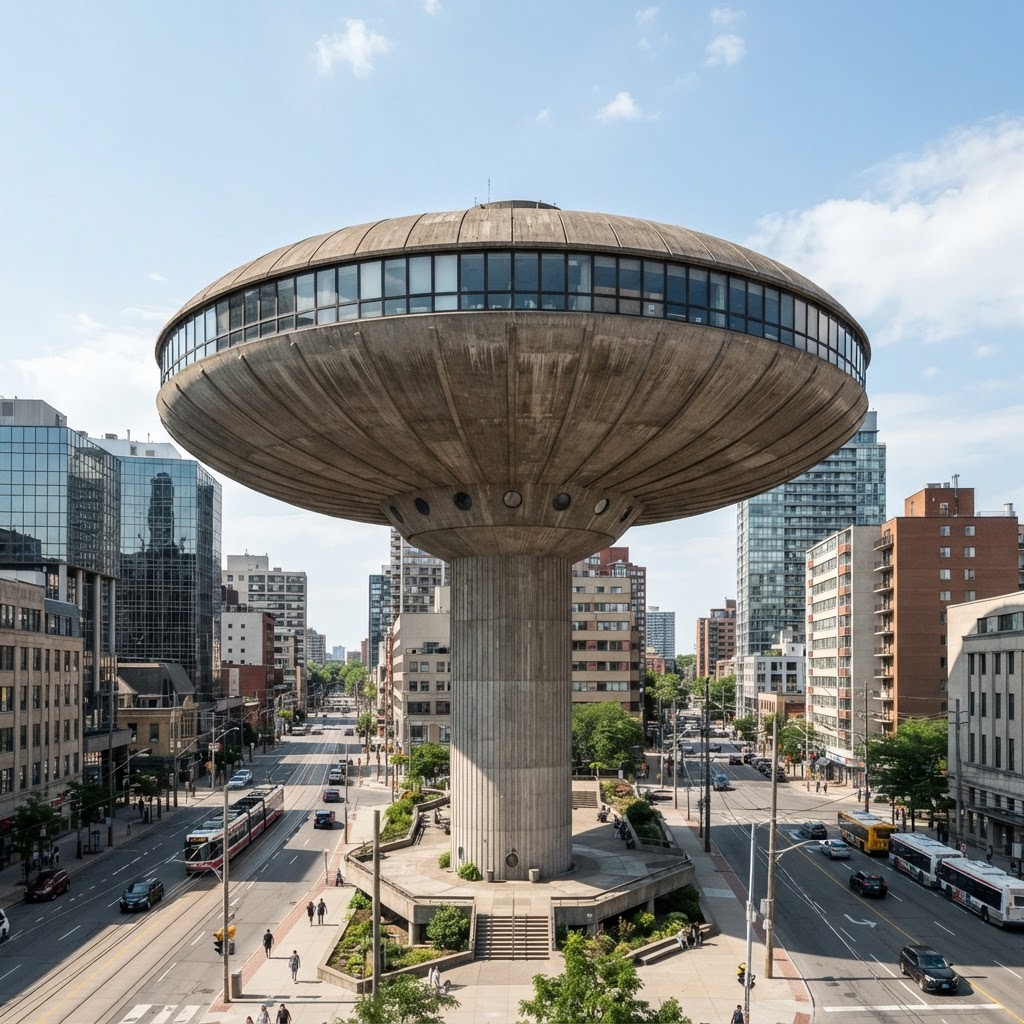
2. Hotel Salut, Kyiv. Finished in 1984, this tower of rounded concrete modules is often compared to a corncob or a space rocket.
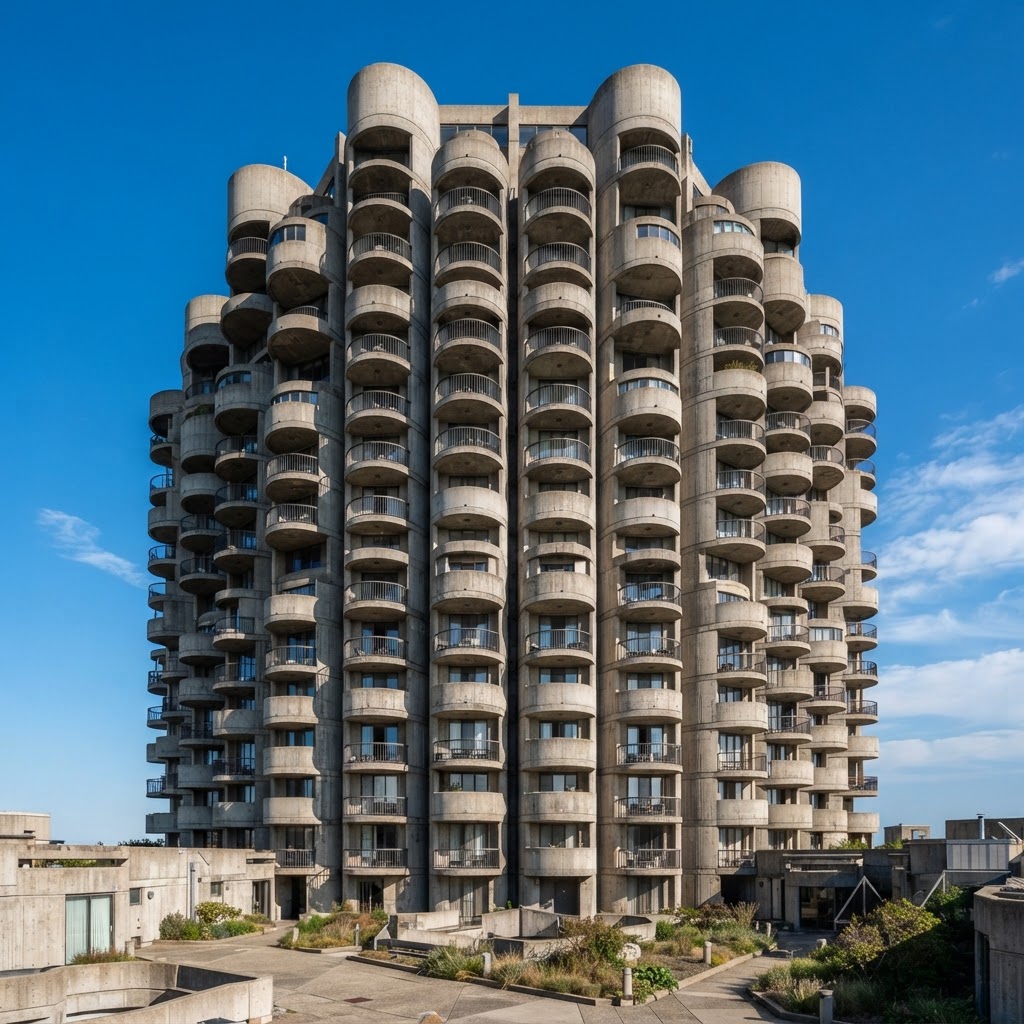
3. The Wall of Memory, Kyiv. At the crematorium in Kyiv's Park of Memory, artists Ada Rybachuk and Volodymyr Melnichenko created a vast concrete relief in the 1970s and early 1980s. The authorities ordered it to be covered with concrete before it was finished, and it remains hidden today.
4. Druzhba Sanatorium, Crimea. Completed in 1985 near Yalta, this round, cog-shaped sanatorium on stilts above the Black Sea coast is one of the most photographed Soviet buildings.
Georgia and Armenia
5. Ministry of Highways, Tbilisi. Built in 1975, this building of stacked, interlocking concrete blocks cantilevers over a hillside like a giant game of Jenga. It's now the headquarters of the Bank of Georgia.
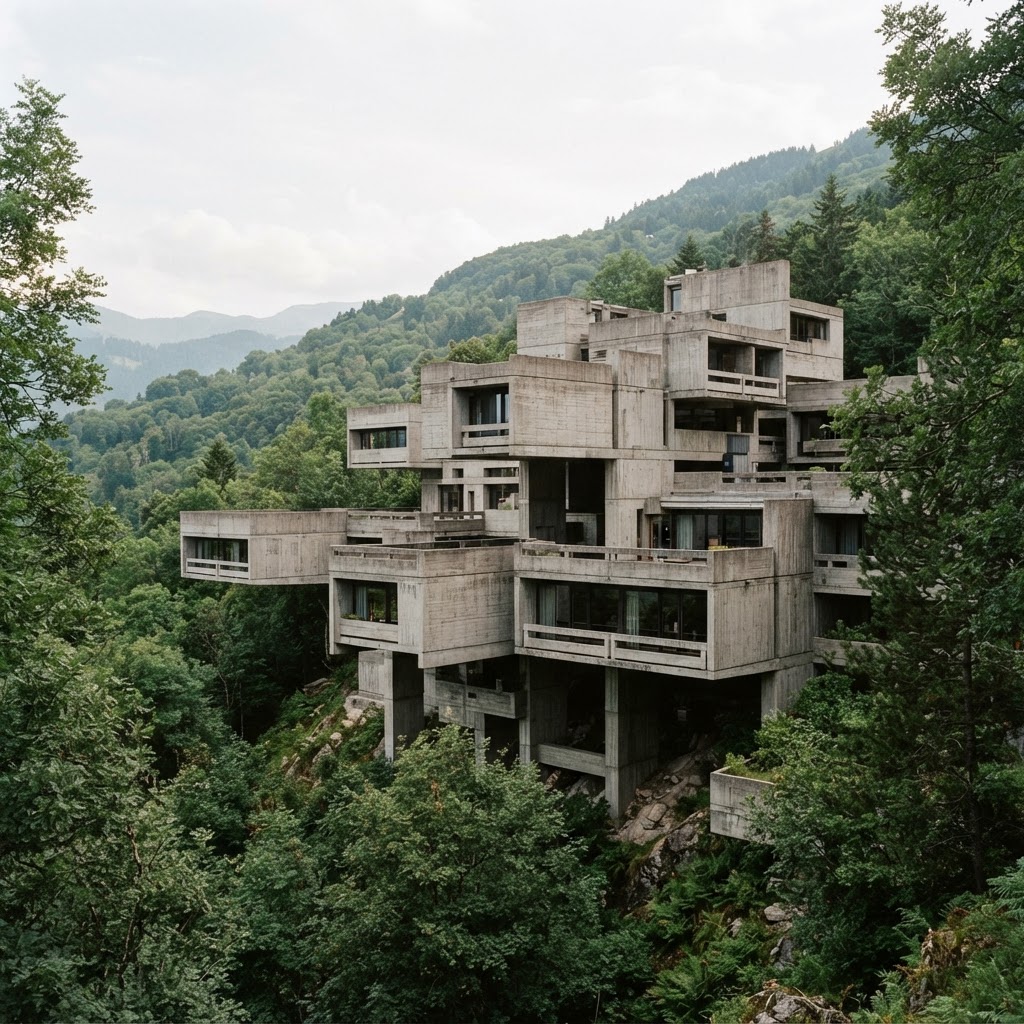
6. Palace of Rituals, Tbilisi. Built in the mid-1980s as a wedding palace, its soaring, curved concrete forms feel almost like a cathedral.
7. Karen Demirchyan Complex, Yerevan. Opened in 1983, this sports and concert complex spreads across a hillside with two great sloping wings, said to resemble a bird about to take flight.
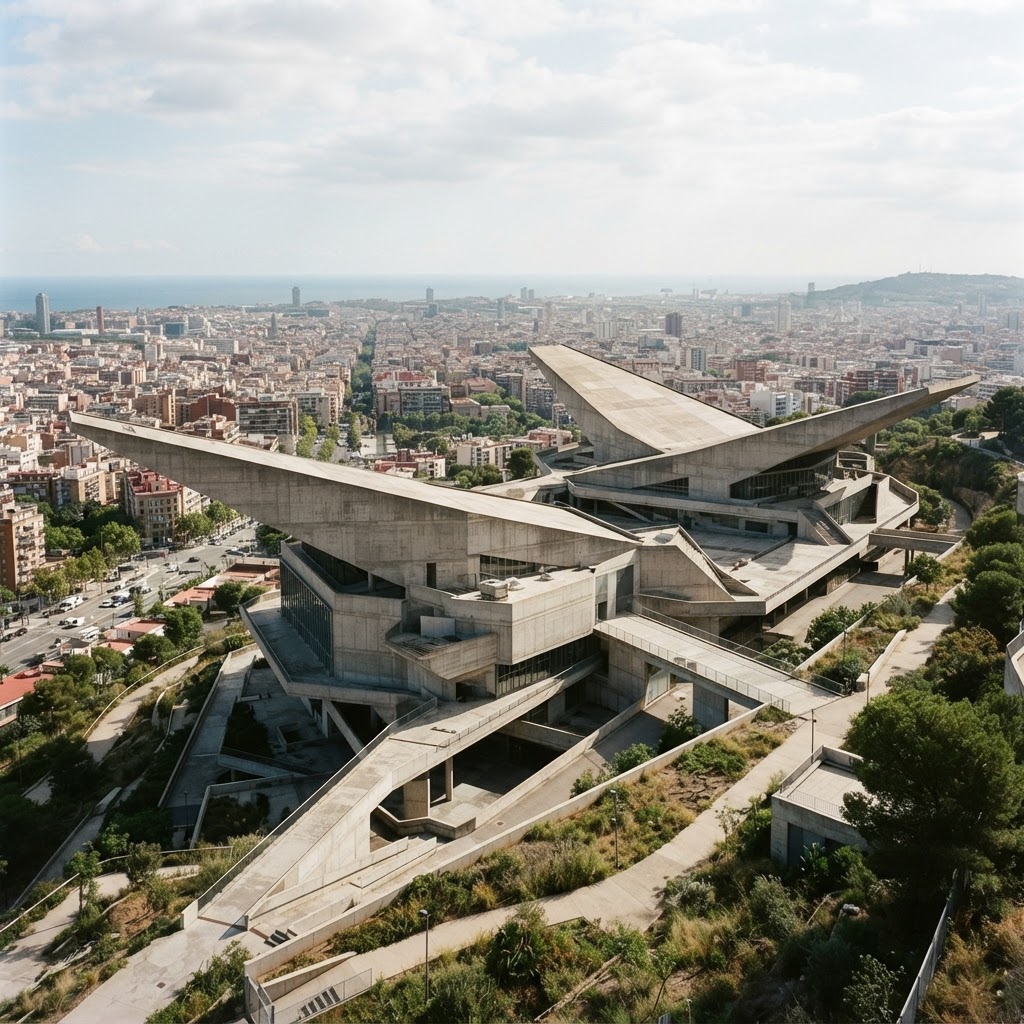
Russia, the Baltics and Central Asia
8. Russian Academy of Sciences, Moscow. Completed around 1990, the presidium building is crowned with golden metal sculptures, nicknamed the "Golden Brains."
9. Linnahall, Tallinn. Built for the sailing events of the 1980 Olympic Games, this vast, low concrete concert and sports hall steps down to the sea, with its roof doubling as a public promenade.
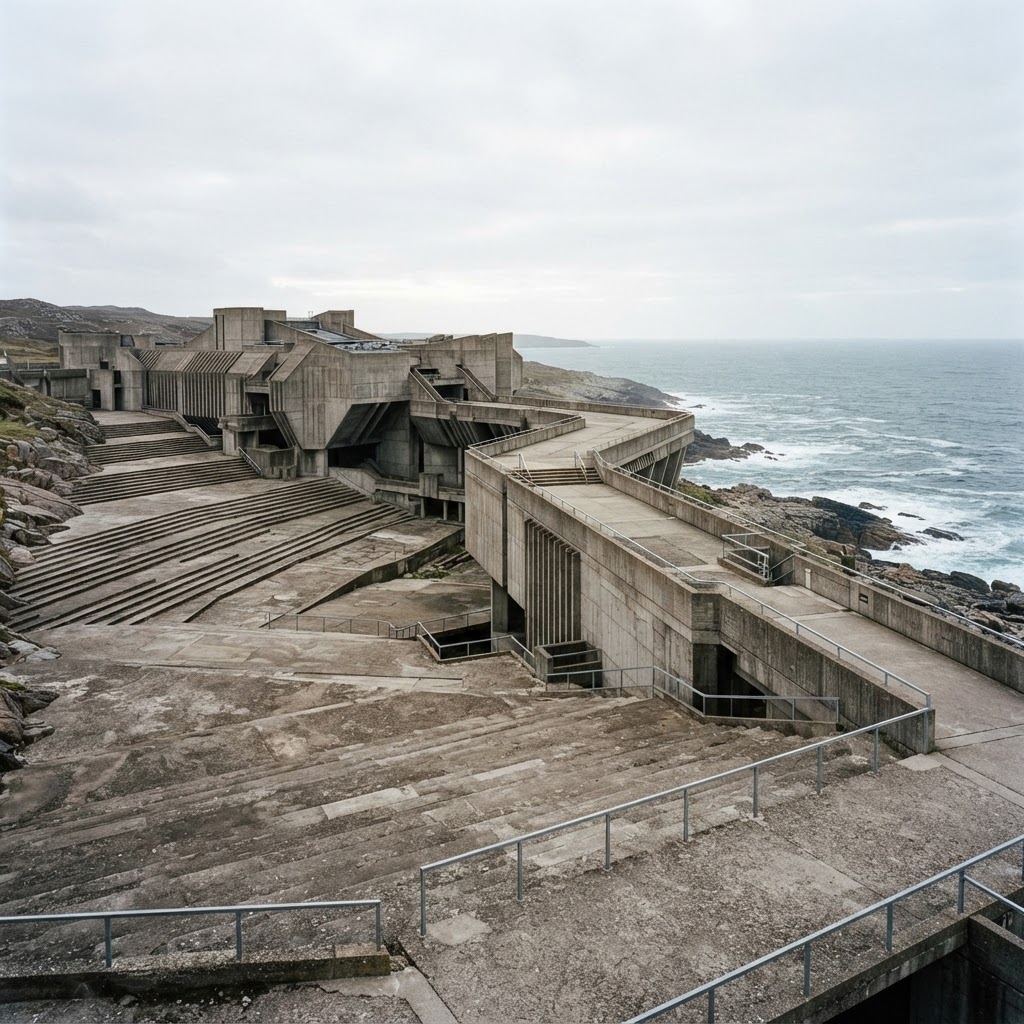
10. Palace of Concerts and Sports, Vilnius. Opened in 1971, its sweeping concave roof makes it one of the most striking buildings in Lithuania.
11. Hotel Kazakhstan, Almaty. Completed in 1977, this tall concrete tower with a distinctive crown was for years the tallest building in the city.
12. Lenin Museum, Tashkent. Opened in 1970, this white, block-like building wrapped in a decorative concrete screen now houses the State Museum of History of Uzbekistan.
Beyond the USSR: the Eastern Bloc
13. Buzludzha Monument, Bulgaria. Opened in 1981 on a mountain peak, this saucer-shaped hall with a tall tower was abandoned after 1989 and became one of the most famous ruins in Europe.
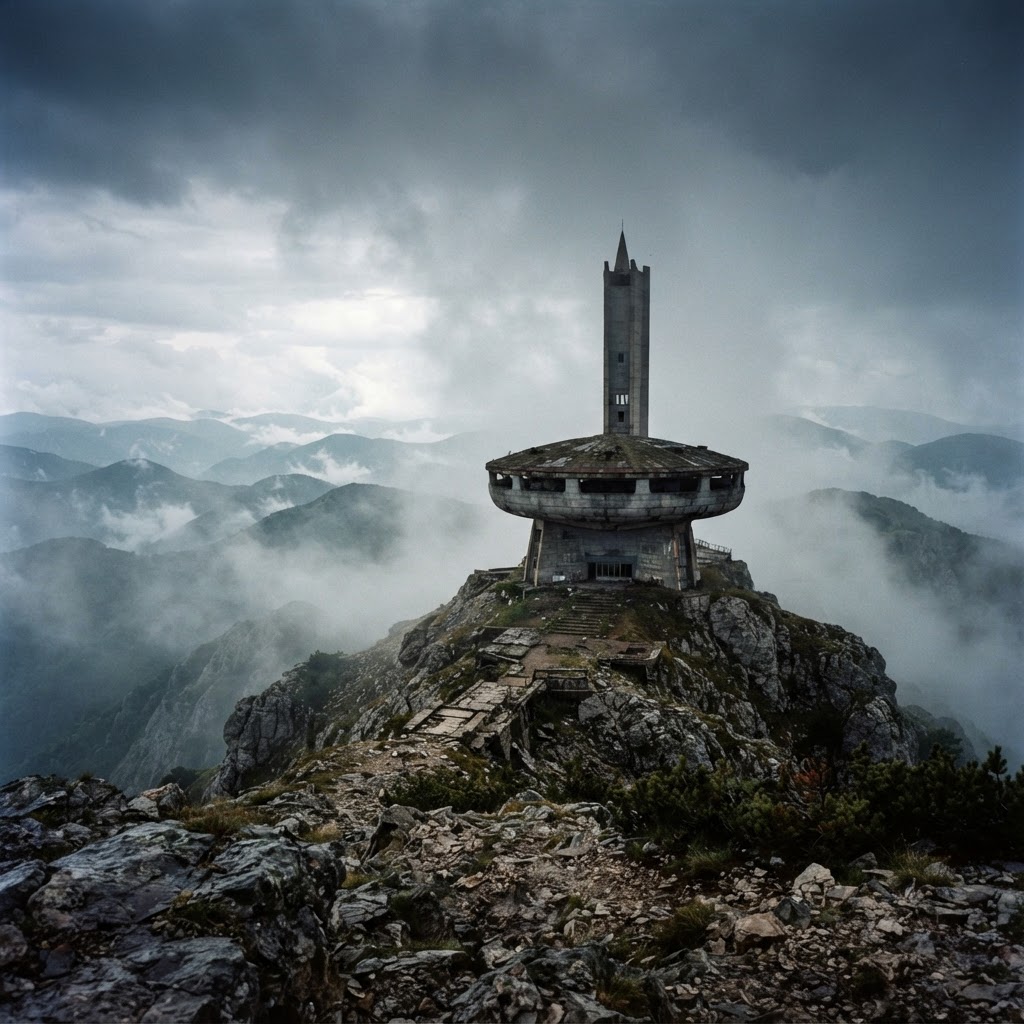
14. Spodek, Katowice, Poland. Opened in 1971, this saucer-shaped arena is a much-loved landmark that still hosts concerts and sporting events. I've always loved how it looks like a flying saucer landing in the middle of Silesia.
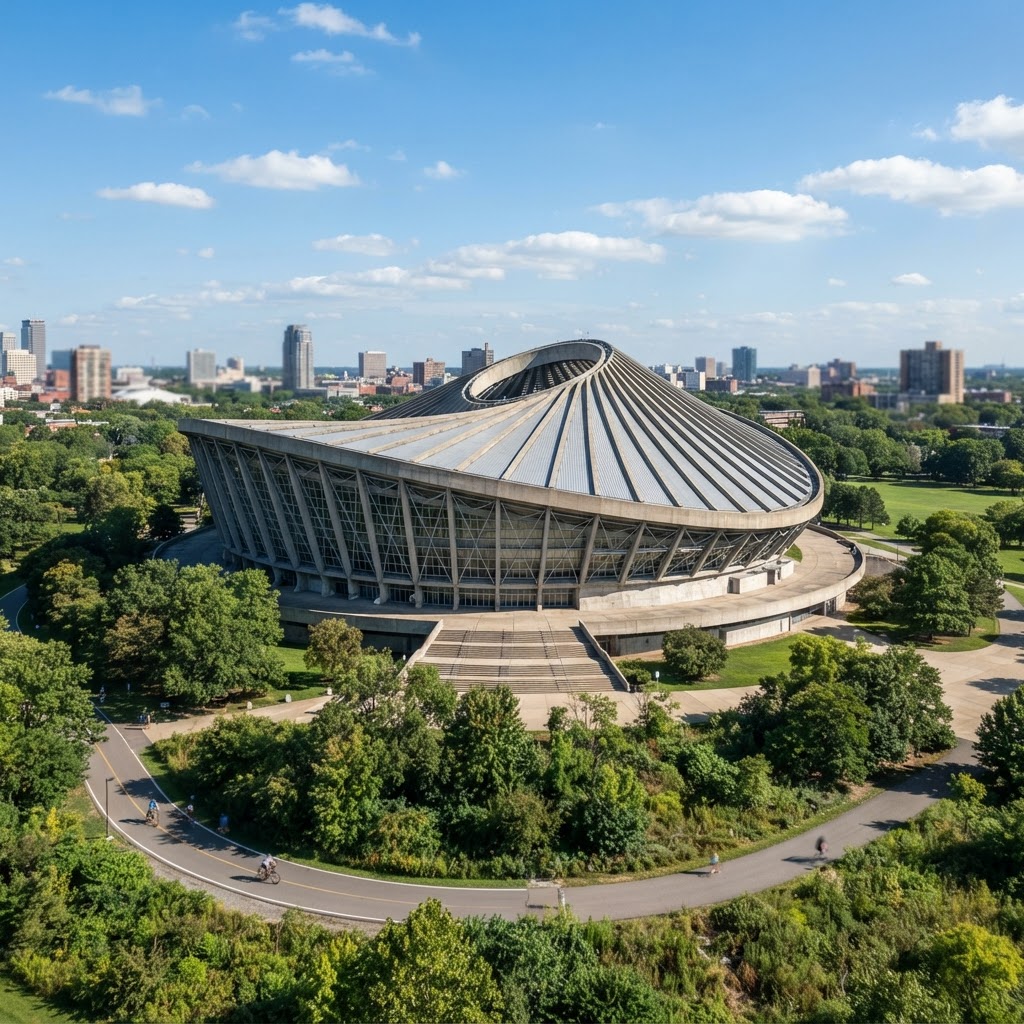
15. Superjednostka, Katowice, Poland. Built between 1967 and 1972 and inspired by Le Corbusier's Unité d'Habitation, this enormous block of more than 700 flats is one of the biggest residential buildings in Poland. It's one of the highlights of modern Polish architecture.
Everyday Soviet modernism
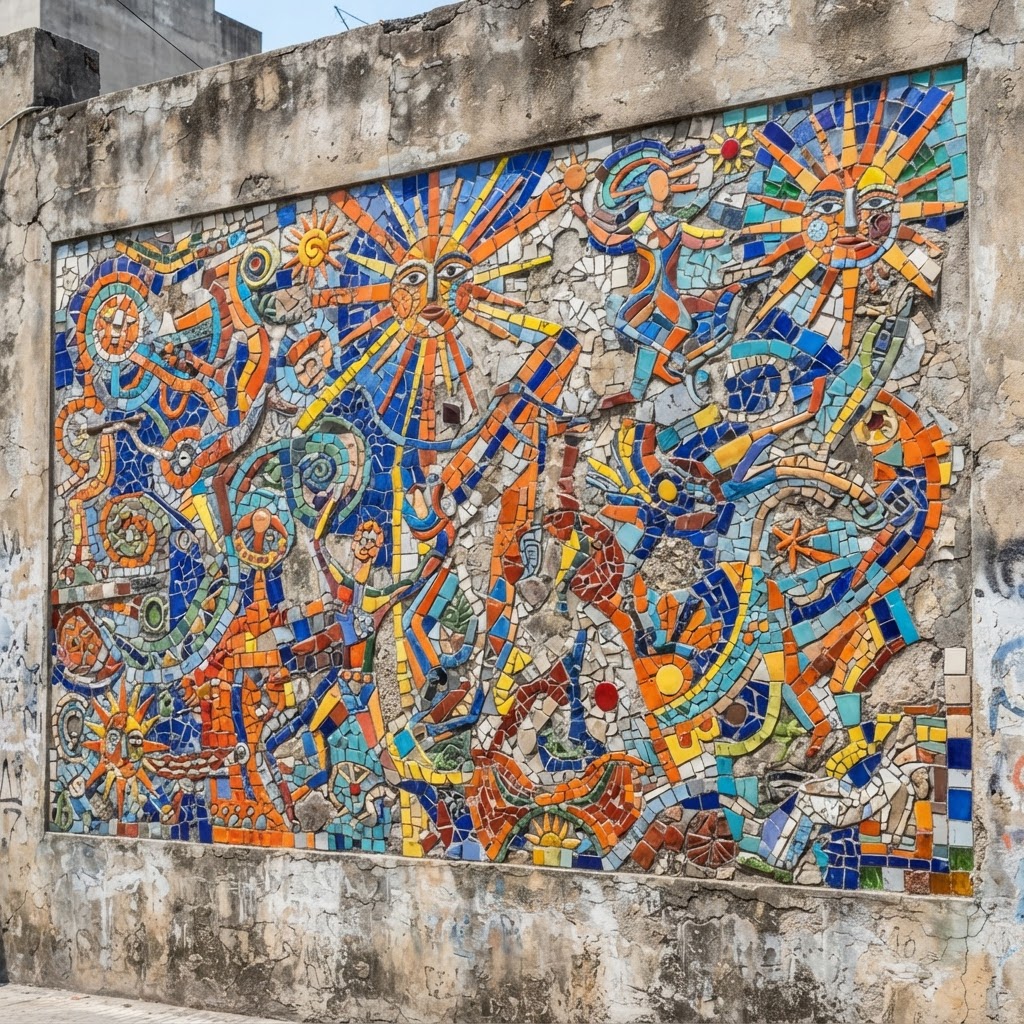
16. Soviet mosaics. Colourful mosaics of cosmonauts, workers, suns and folk motifs decorated bus stops, schools, factories and blocks of flats, softening the concrete with art.
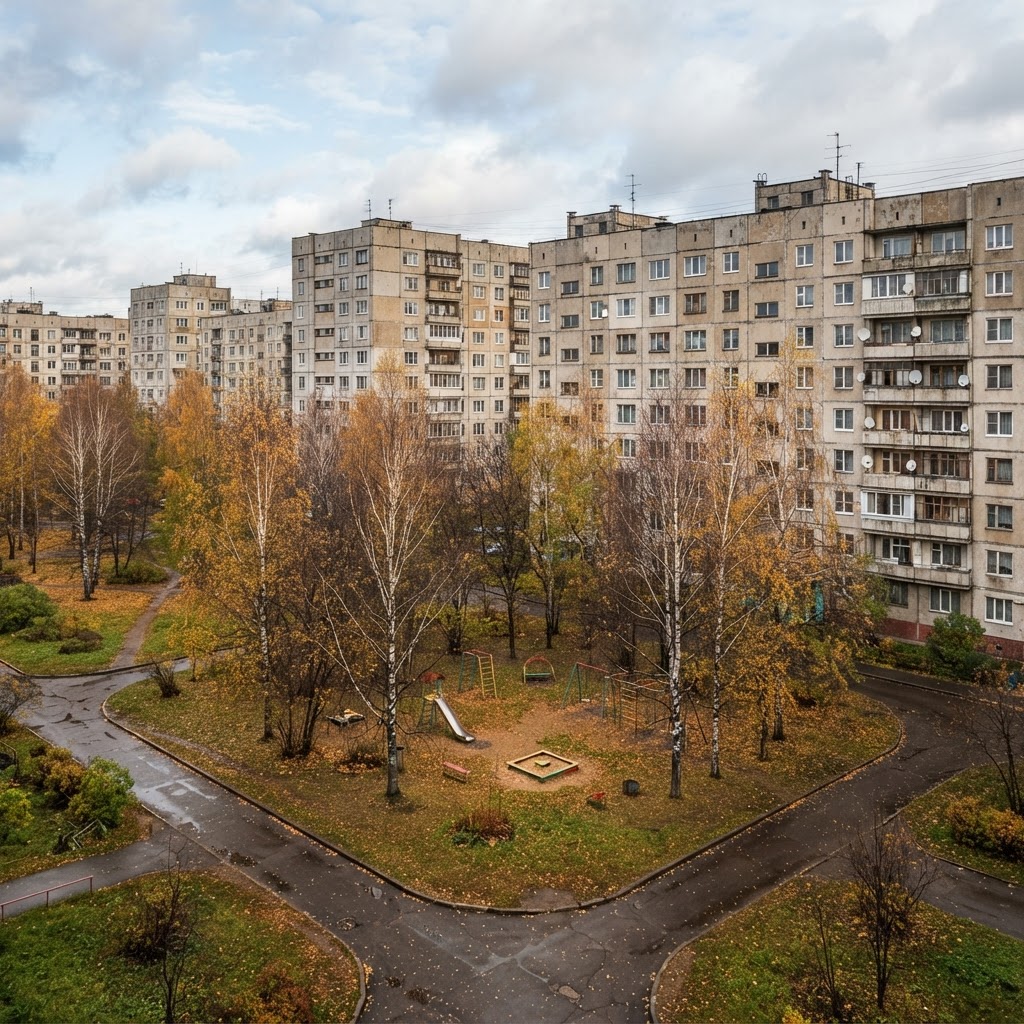
17. Prefabricated housing estates. The khrushchyovka in the USSR, the panelák in Czechoslovakia and the blok in Poland were built in their millions from factory-made concrete panels. They're not glamorous, but they housed generations of families.
Soviet Brutalist Buildings at a Glance
| Building | City | Completed |
|---|---|---|
| Lenin Museum | Tashkent | 1970 |
| "Flying Saucer" | Kyiv | 1971 |
| Palace of Concerts and Sports | Vilnius | 1971 |
| Spodek | Katowice | 1971 |
| Superjednostka | Katowice | 1972 |
| Ministry of Highways | Tbilisi | 1975 |
| Hotel Kazakhstan | Almaty | 1977 |
| Linnahall | Tallinn | 1980 |
| Buzludzha Monument | Buzludzha Peak, Bulgaria | 1981 |
| Karen Demirchyan Complex | Yerevan | 1983 |
| Hotel Salut | Kyiv | 1984 |
| Druzhba Sanatorium | Near Yalta | 1985 |
| Russian Academy of Sciences | Moscow | About 1990 |
Growing Up Among the Blocks
For most people in Poland in those years, home meant a flat in a concrete block. Rooms were small, ceilings were low and the layouts were almost identical from one estate to the next, so families made their flats their own with whatever they could find: a big wooden wall unit full of books and glassware, patterned rugs (sometimes hung on the wall!), lace curtains, houseplants on every windowsill and bold wallpaper.
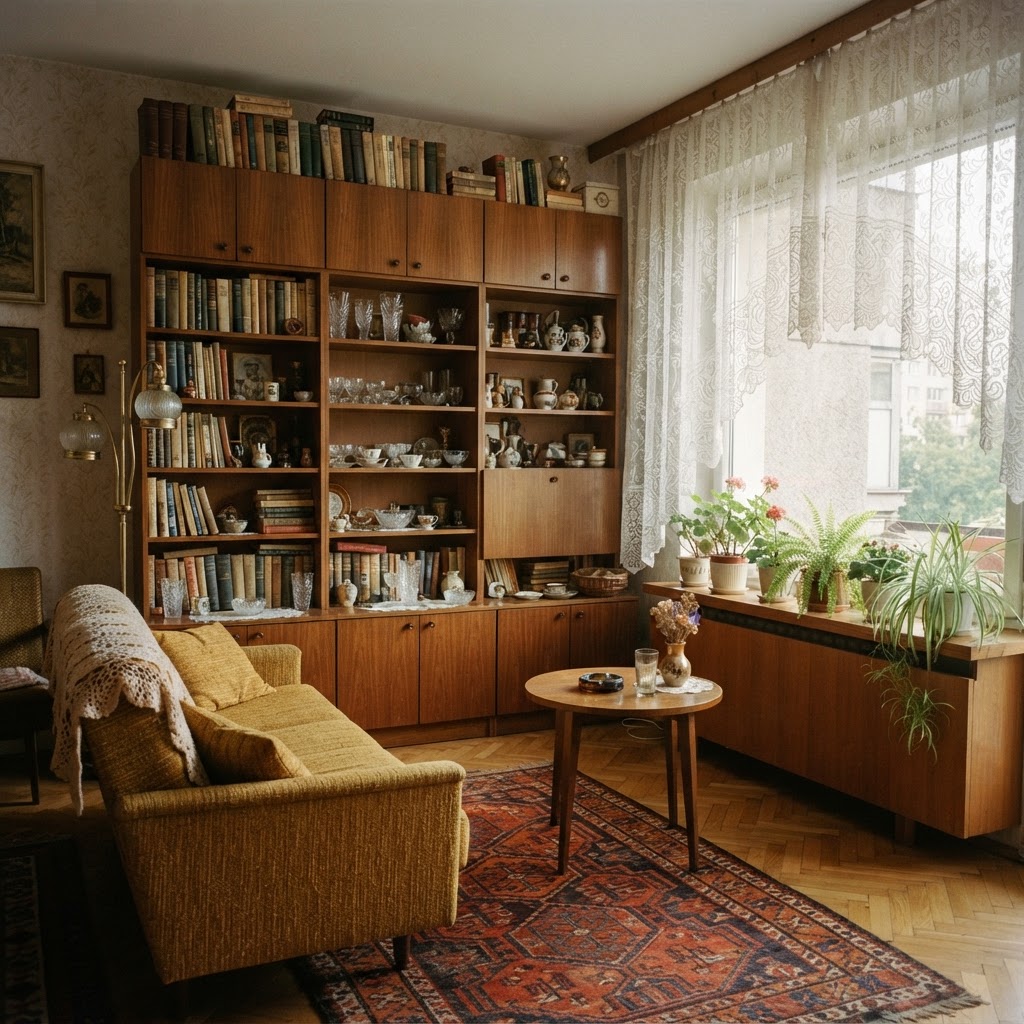
Looking back, those homes taught me a lot about design. When space is tight and choice is limited, personality comes from colour, texture, plants and treasured objects, a lesson that still applies to small studio apartment ideas today. And many of those old wall units and armchairs are now sought-after pieces of upcycled furniture.
Is Brutalist Architecture Depressing?
It depends on who you ask, and on the building. A grey estate in winter, with peeling paint and broken lifts, can feel bleak, and many people who lived through the era associate concrete with shortages and hardship. But at their best, Soviet brutalist buildings are bold, inventive and full of optimism about the future. Many are now being restored, listed and celebrated, while others are under threat of demolition.
Bringing Brutalist Style Into Your Home
You don't need to live in a concrete tower to enjoy brutalist design. The trick is to balance raw, solid materials with warmth and softness.
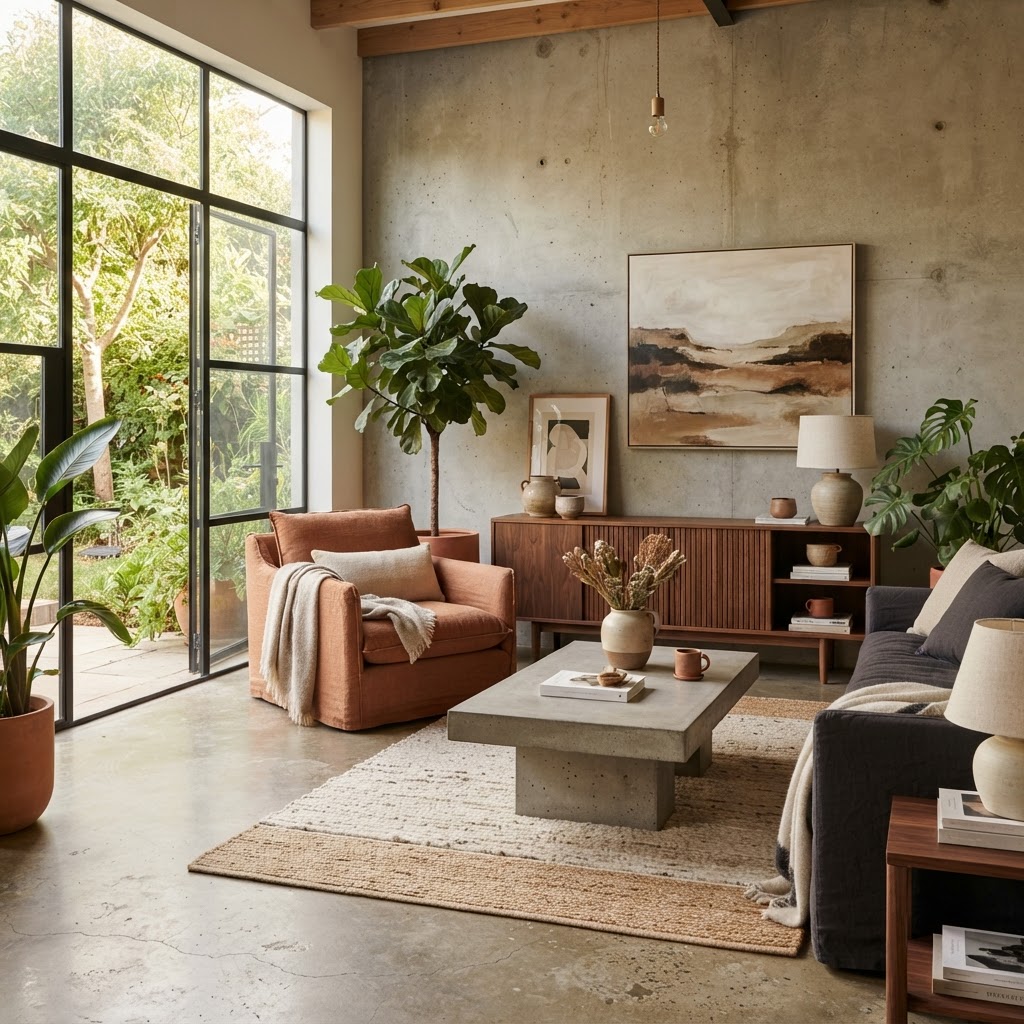
- Use concrete and stone. A concrete coffee table, a plaster or microcement wall, or chunky stone side tables bring a brutalist edge.
- Add warm wood. Oak, walnut and teak soften concrete beautifully, much like the calm natural palette of a Japandi office.
- Choose sculptural furniture. Heavy, geometric pieces and a sculptural chair echo brutalist forms.
- Bring in earthy colours. Warm terracotta, olive green, rust and mustard work well against grey.
- Fill it with plants. Big leafy plants and trailing greenery soften hard edges, as they did on every Polish windowsill.
If you're interested in architecture through the ages, Soviet Brutalism sits alongside the other types of architecture, and it's a fascinating contrast with the glamorous 1920s architecture styles and the moving buildings of kinetic architecture.
Frequently Asked Questions
What is Soviet brutalist architecture?
The bold, raw concrete architecture built across the Soviet Union from the 1960s to the 1980s, including ministries, hotels, sanatoriums, sports arenas and institutes with heavy, sculptural and often futuristic forms.
Is Soviet architecture brutalist?
Only partly. Soviet architecture also includes Constructivism in the 1920s, ornate Stalinist buildings from the 1930s to 1955, and plainer modernist buildings and prefabricated housing from the 1950s onwards.
Why did the Soviets use brutalist architecture?
After a 1955 decree against architectural "excesses," the state wanted cheap, fast, industrialised construction. Concrete was affordable and quick to build with, looked modern and suited large public buildings.
What is the most famous Soviet brutalist building?
Some of the best known are the "Flying Saucer" in Kyiv, the Ministry of Highways in Tbilisi, the Druzhba Sanatorium in Crimea and Linnahall in Tallinn.
Why is it called Brutalism?
The name is linked to the French béton brut, meaning raw concrete, rather than to the word brutal.
Is brutalist architecture depressing?
Some people find it bleak, especially when it's poorly maintained, while others love its bold, sculptural character. Many brutalist buildings are now being restored and celebrated.
What is a khrushchyovka?
A low-rise block of flats built from prefabricated concrete panels across the Soviet Union from the late 1950s, named after Nikita Khrushchev, who championed fast, low-cost housing.
Concrete Dreams
Soviet brutalist architecture tells the story of a time and a place: grand ambitions, tight budgets, everyday life and remarkable creativity, all cast in concrete. Having grown up surrounded by it, I look at these buildings with mixed feelings, but more and more with affection and admiration.
And if you'd like help creating a home with character, whatever your walls are made of, you can book a one-hour online interior design consultation with me.
About the author
Magda Callery is a UK interior designer and florist with more than 15 years' experience designing homes, pubs, restaurants and bars, and her expert commentary has featured in Homes & Gardens, The Mirror and The Spruce. Explore more of the interior design articles.
Continue reading

1920s Architecture Styles: 13 Styles of the Roaring Twenties
From Art Deco and the Bauhaus to Craftsman bungalows, Tudor Revival and British interwar semis, 13 architecture styles of the 1920s, how to recognise a 1920s house and how to bring the style home.


White Bed Furniture: 17 Ways to Style a White Bedroom
How to style white bed furniture: 17 ideas for walls, bedding and accents, the colours that suit white bedroom furniture best, the main styles, and how to keep it looking fresh.


Modern Sliding Doors: 17 Sliding Door Ideas for Every Room
From pocket doors and barn doors to steel-framed glass, wardrobe and patio doors, 17 modern sliding door ideas for every room, how the main types compare and how to choose the right one.