What Colour Is Mustard? Mustard Yellow Explained
What colour is mustard? A designer explains mustard yellow: where the name comes from, the shades and hex codes, how to mix it, the colours that go with mustard and how to use it at home.
By Magda Callery, interior designer and florist

Mustard is one of those colours everyone recognises but few people can describe exactly. Is it yellow? Is it brown? Is it a little bit green? The answer is all three, and that's exactly why it's so useful in interiors and fashion. A good mustard has the warmth of yellow without its sharpness, so it feels cosy, grown up and surprisingly easy to live with.
In this guide I'll explain what colour mustard is, where the name comes from, the different shades of mustard, its hex code, how to mix it, which colours go with mustard, and how I use mustard yellow in real rooms, from velvet sofas to painted walls.
What Colour Is Mustard?
Mustard is a dark, warm yellow with a brownish, slightly greenish undertone, named after the colour of prepared mustard. It sits between bright yellow and ochre on the colour wheel: deeper and duller than lemon or sunflower yellow, but brighter than tan or caramel.
What gives mustard its character is the small amount of black, brown or green "dirtying" the yellow. That muted quality is why it reads as sophisticated rather than childlike. In the US, the same shade is spelled "mustard color"; whichever spelling you use, the colour is the same.
| Question | Quick answer |
|---|---|
| Colour family | Yellow, with brown and green undertones |
| Warm or cool? | Warm |
| Light or dark? | Mid to dark |
| Hex code | #FFDB58 is the commonly listed "mustard"; interior mustards are usually deeper |
| Closest neighbours | Ochre, gold, saffron, honey and chartreuse |
| Complementary colour | Blue to violet, which is why mustard and navy look so good together |
Where Does the Name Come From?
The colour is named after the condiment, which gets its colour from ground mustard seeds and, in many recipes, turmeric. According to Wikipedia's entry on mustard, the first recorded use of "mustard" as a colour name in English was in 1886, a date taken from Maerz and Paul's classic A Dictionary of Color.
Mustard has had several big moments since. It was everywhere in the 1970s, on kitchen units, sofas and patterned wallpaper, and it came back strongly in the 2010s as part of the mid-century and retro revival. Today it's a staple of warm, earthy interior schemes.
Shades of Mustard
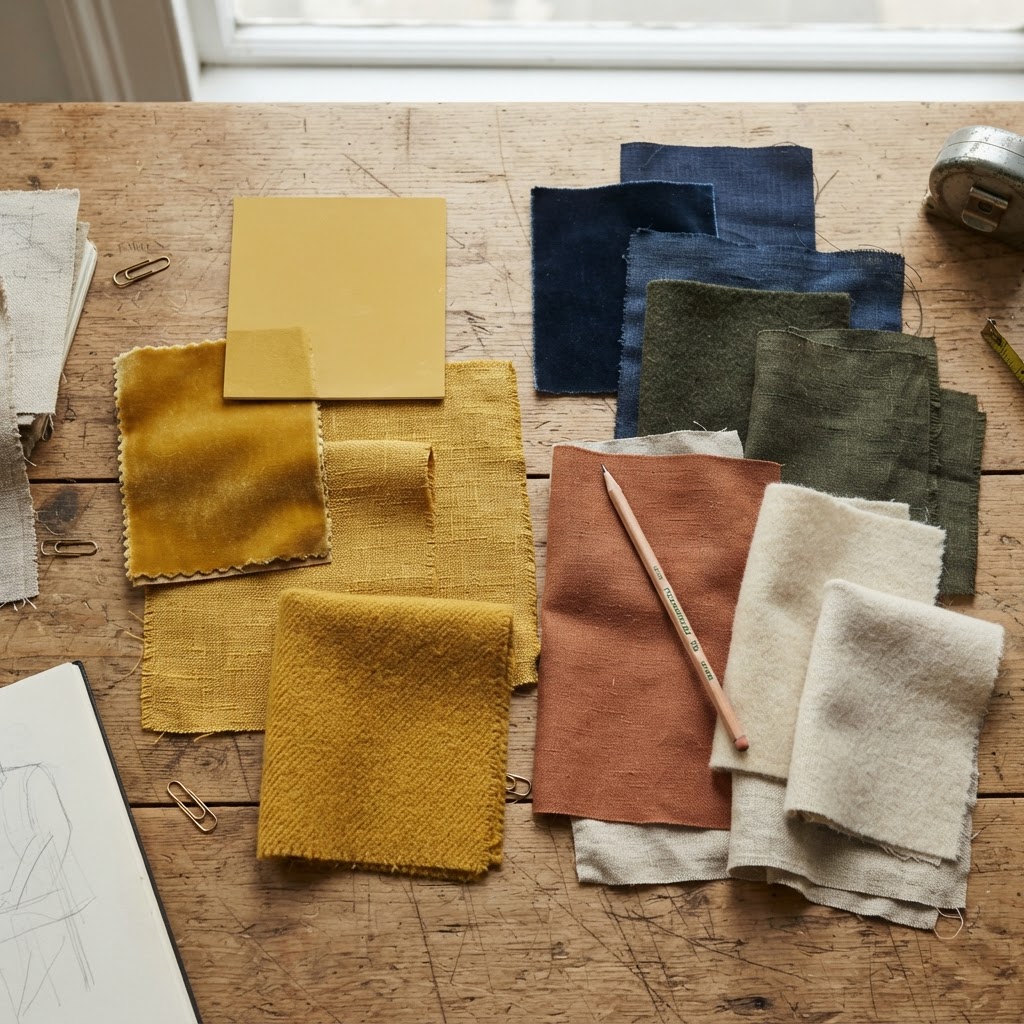
Not all mustards are the same. These are the families I use most, with approximate hex values for reference. Paint and fabric will always look different in real light, so treat them as a starting point rather than an exact match.
| Shade | What it looks like | Approximate hex | Best for |
|---|---|---|---|
| Classic mustard | The bright colour usually listed as "mustard" | #FFDB58 | Accents, children's rooms and graphics |
| Mustard yellow | Deeper, warmer and slightly brown | #E1AD01 | Sofas, cushions and feature walls |
| Dijon | Golden with a hint of green | #C49102 | Velvet, kitchens and dining rooms |
| Honey mustard | Soft, golden and warm | #EAAA00 | Bedrooms and living rooms |
| Ochre | Earthy, brown-leaning yellow | #CC7722 | Walls, rugs and pottery |
| Olive mustard | Yellow with a strong green undertone | #B5A642 | Paired with greens and natural wood |
In paint, mustard tones appear in most heritage ranges. Farrow & Ball's India Yellow (No. 66), for example, is a deep, earthy yellow often described as mustard, and it shows how much richer an interior mustard is than a printed swatch.
How to Make Mustard Colour
If you're mixing paint, watercolour or icing, you can make mustard from yellow in a few ways:
- Yellow plus a touch of brown. Start with a warm yellow and add raw umber or burnt sienna a little at a time.
- Yellow plus a tiny amount of black. This gives a cooler, greener mustard, so add it very sparingly.
- Yellow plus its complement. A touch of purple or violet dulls yellow towards mustard.
- Yellow ochre plus a little bright yellow. The easiest route for painters, as ochre is already most of the way there.
Always mix more than you think you'll need. Mustard is hard to match twice.
What Colours Go With Mustard?
Because mustard is warm, muted and fairly strong, it pairs best with colours that either calm it down or balance it with coolness.
| Colour | The effect | Where it works |
|---|---|---|
| Navy | The classic pairing; navy is close to mustard's complement, so each makes the other glow | Living rooms, studies and bedrooms |
| Charcoal and soft grey | Grey cools mustard and makes it look modern | Living rooms and kitchens |
| Teal and petrol blue | Rich, jewel-like and dramatic | Snugs and dining rooms |
| Sage and olive green | Earthy and natural, especially with wood | Kitchens, halls and bedrooms |
| Terracotta and rust | Warm, autumnal and relaxed | Living rooms and boho schemes |
| Blush and dusty pink | Soft and unexpectedly pretty | Bedrooms and children's rooms |
| Plum and aubergine | Deep, moody and luxurious | Dining rooms and bedrooms |
| Cream and warm white | Fresh and simple | Anywhere, as a calm background |
| Black | Graphic and bold | Accents, frames and lighting |
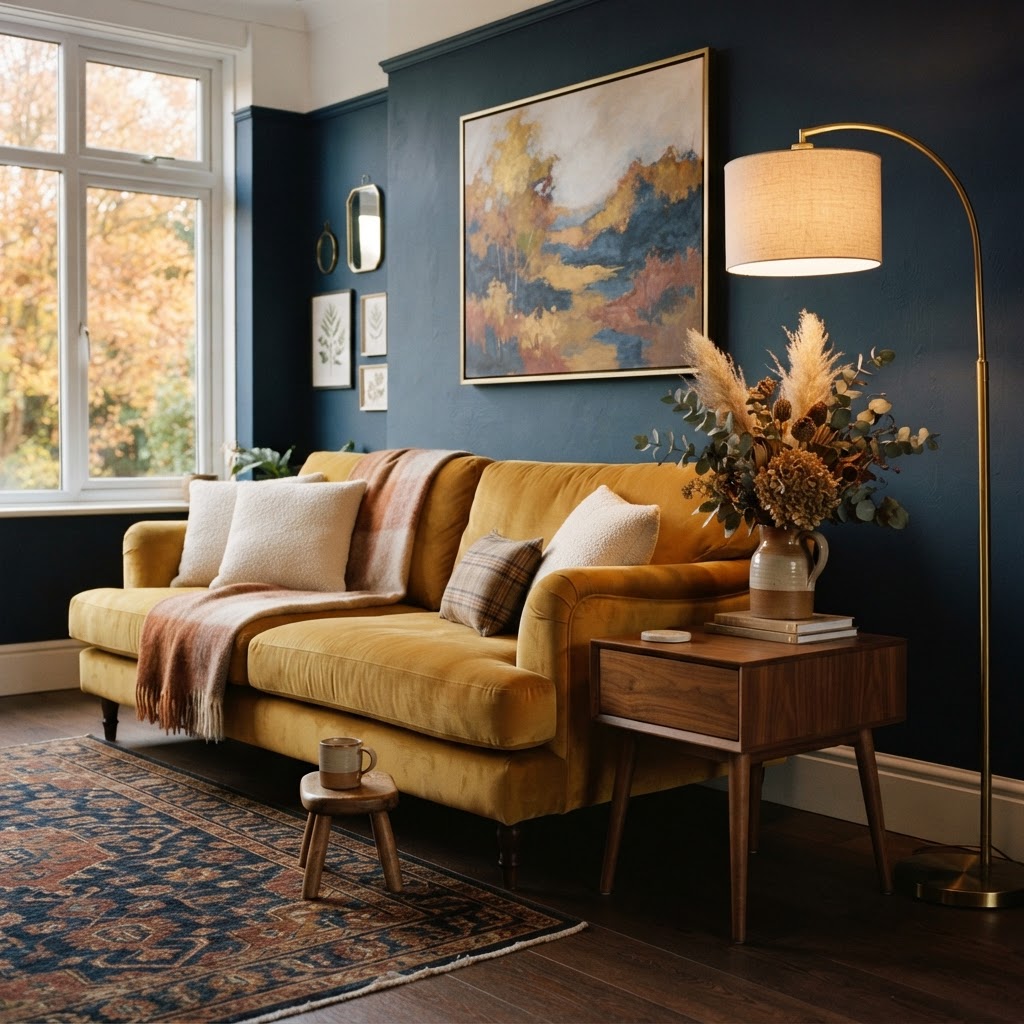
A deep, inky blue such as Dulux Ink Well is my favourite backdrop for a mustard velvet sofa, while warm, earthy terracotta and the softer sage greens build a relaxed autumn palette around it. If you prefer a calmer scheme, the cool, steadying effect of grey takes the heat out of mustard beautifully.
A simple rule: follow the 60/30/10 rule for building a colour palette. Make a calm neutral or deep blue your 60%, a supporting colour your 30%, and let mustard be the 10% accent until you're sure you love it.
How to Use Mustard Yellow in Your Home
Start with accents
The easiest way in is with cushions, throws, a lampshade, a vase or a print. Mustard accents warm up grey, white and blue rooms instantly, and they're easy to swap if you change your mind. It's also one of the most useful colours for autumn decorating, when a few mustard cushions and a throw make a room feel cosy in minutes.
Choose a mustard sofa or armchair
Mustard is a wonderful upholstery colour, especially in velvet, where the pile catches the light and makes the colour shimmer between gold and ochre. A mustard sofa against navy, teal or deep green walls is a classic for good reason. In a smaller room, a single mustard armchair has the same effect without dominating the space.
Paint a wall, or a whole room
Mustard walls feel enveloping and warm, especially in dining rooms, studies, hallways and snugs. Because it's a strong colour:
- Test large samples on several walls and look at them morning and evening.
- In north facing rooms, choose a warmer, browner mustard; greener mustards can look muddy in cool light.
- In south facing rooms, mustard glows golden all day, so you can go brighter.
- Paint below a dado rail or on lower walls if a full room feels too much.
- Colour drench a small room, including the woodwork, for a cocooning, contemporary look.
Use mustard in the kitchen
Mustard kitchen cabinets look striking with brass handles, wooden worktops and white or terracotta tiles. If that feels bold, a mustard island, a pair of bar stools or a run of open shelves painted inside gives the warmth without the commitment.
Bedrooms
Mustard isn't an obvious bedroom colour, but in softer, honeyed shades it's surprisingly restful. Try a mustard velvet headboard or bedspread with blush, cream or soft grey bedding, and layer in textured knits for the kind of cosy autumn bedroom that feels warm even on grey days.
Children's rooms and playrooms
Brighter, classic mustard is cheerful without the glare of primary yellow. It's lovely with grey, white and soft blue in a child's room, and it works in gaming rooms too, where a deep blue and mustard scheme looks grown up rather than garish.
Period homes
Mustard and ochre tones sat comfortably in Arts and Crafts and mid-century interiors, so they suit older houses well. In an Edwardian house, a mustard dining room with white woodwork and dark oak furniture is a lovely nod to the Edwardian interior design palette at its richest.
The Psychology of Mustard
Yellow is linked with optimism, energy and warmth, but bright yellow can feel overstimulating in large amounts. Mustard keeps the cheerfulness while adding the grounded, earthy qualities of brown. In practice, that means mustard rooms tend to feel:
- Warm and welcoming, especially in cool northern light.
- Cosy and enveloping, particularly in velvet and wool.
- Confident and creative, without being loud.
- Retro, thanks to its strong associations with the 1970s.
Mustard in Fashion and Flowers
Mustard is just as versatile in a wardrobe. A mustard jumper with jeans and a navy coat is an easy autumn outfit, and it flatters warm and olive skin tones particularly well. It's one of my favourite colours for adding warmth to chic casual outfits without wearing anything too bright.
As a florist, I also love mustard tones in flowers. Rudbeckias, achilleas, golden chrysanthemums and zinnias in ochre and gold all bring that colour to a vase, and they share much of the warm, sunny symbolism of other yellow flowers.
Frequently Asked Questions
What colour is mustard?
Mustard is a dark, warm yellow with brown and slightly green undertones, named after the colour of prepared mustard.
Is mustard yellow or brown?
Mustard is a shade of yellow, but it contains a small amount of brown or black, which makes it darker, duller and earthier than pure yellow.
What is the hex code for mustard?
The commonly listed hex code for mustard is #FFDB58. Deeper interior mustards are closer to #E1AD01 or #C49102.
What colour goes best with mustard?
Navy is the classic pairing, because blue sits opposite yellow on the colour wheel. Grey, teal, sage green, terracotta, blush pink, plum and cream also work well.
Is mustard a warm or cool colour?
Mustard is a warm colour, although greener mustards can look slightly cooler in north facing light.
Does mustard go with grey?
Yes. Grey cools mustard and makes it look modern, which is why mustard cushions and armchairs are so popular in grey living rooms.
Is mustard yellow still in style?
Yes. Mustard and other earthy yellows remain popular in warm, natural interior schemes, especially in velvet upholstery, paint and accessories.
How do you make mustard colour?
Mix a warm yellow with a little brown, a tiny touch of black or a small amount of purple, or start with yellow ochre and brighten it with yellow.
A Warm Colour Worth Trying
Mustard is warm, confident and far easier to use than most people expect. Start with a cushion or an armchair, pair it with navy, grey or green, and you'll soon see why designers keep coming back to it.
For more colour inspiration, explore the decorating section, and if you'd like help building a colour scheme for your own home, you can book a one-hour online interior design consultation with me.
About the author
Magda Callery is a UK interior designer and florist with more than 15 years' experience designing homes, pubs, restaurants and bars, and her expert commentary has featured in Homes & Gardens, The Mirror and The Spruce. Explore more of the decorating articles.
Continue reading


Mould on a Leather Sofa: How to Remove It Safely
How to remove mould from a leather sofa without damaging it: telling mould from fatty spew, identifying your leather type, a safe step by step method, what to avoid and how to stop mould coming back.


How to Remove Musty Smell From Wood Furniture
A step-by-step guide to getting rid of a musty smell in old wood furniture and drawers, with the methods that work, what doesn't, mould safety and how to stop it coming back.

Cost of Replacing a Garage Floor: 2026 Price Guide
What it really costs to replace a garage floor in the UK and US, with prices per square metre and square foot, cheaper alternatives, hidden costs and how long it takes.