
African Furniture: 17 Iconic Pieces and How to Style Them
From carved Akan stools and Senufo daybeds to headrests, mudcloth and Kuba cloth, 17 iconic African furniture pieces, the best African woods, and how to style and buy African furniture thoughtfully.
By Magda Callery, interior designer and florist

African furniture is some of the most beautiful and meaningful furniture in the world. A hand-carved stool, a low hardwood daybed or a chair upholstered in mudcloth brings warmth, texture and a sense of history that mass-produced furniture simply can't match. Many traditional pieces were carved from a single block of wood, and each one carries the marks of its maker and the culture it came from.
In this guide I'll share what African furniture is, 17 iconic pieces from across the continent, the main African woods used for furniture, how to style African pieces in a modern home, and how to buy them thoughtfully.
The quick answer: African furniture spans a huge range of traditions, from West African carved stools, Senufo daybeds and Dogon stools to Zulu and Shona headrests, Swahili chairs, Zanzibar chests, Ethiopian three-legged chairs and Moroccan leather poufs. Much of it is carved from single pieces of hardwood such as mahogany, iroko, wenge or African blackwood. In a modern home, one carved stool or bench, a few textiles such as mudcloth or Kuba cloth and a calm, earthy backdrop are all you need.
What Is African Furniture?
Africa is a continent of more than 50 countries and thousands of cultures, so there's no single African furniture style. Traditional pieces were often small, portable and carved from one piece of wood, and many had a ceremonial or personal meaning as well as a practical use. Stools, headrests, beds and chests were the most common forms, and many are as admired as sculpture today.
| Region | Signature pieces | Typical materials |
|---|---|---|
| West Africa | Akan stools, Senufo daybeds, Lobi and Dogon stools | Carved hardwood, brass |
| Central Africa | Bamileke beaded stools, Chokwe chairs, Kuba cloth | Wood, glass beads, raffia |
| East Africa | Swahili chairs, Zanzibar chests, Makonde carving, Jimma chairs | Hardwood, brass, African blackwood |
| Southern Africa | Zulu and Shona headrests, woven baskets | Carved wood, grass, palm |
| North Africa | Leather poufs, carved cedar, painted wood | Leather, cedar, brass |
17 Iconic African Furniture Pieces
Stools and seating
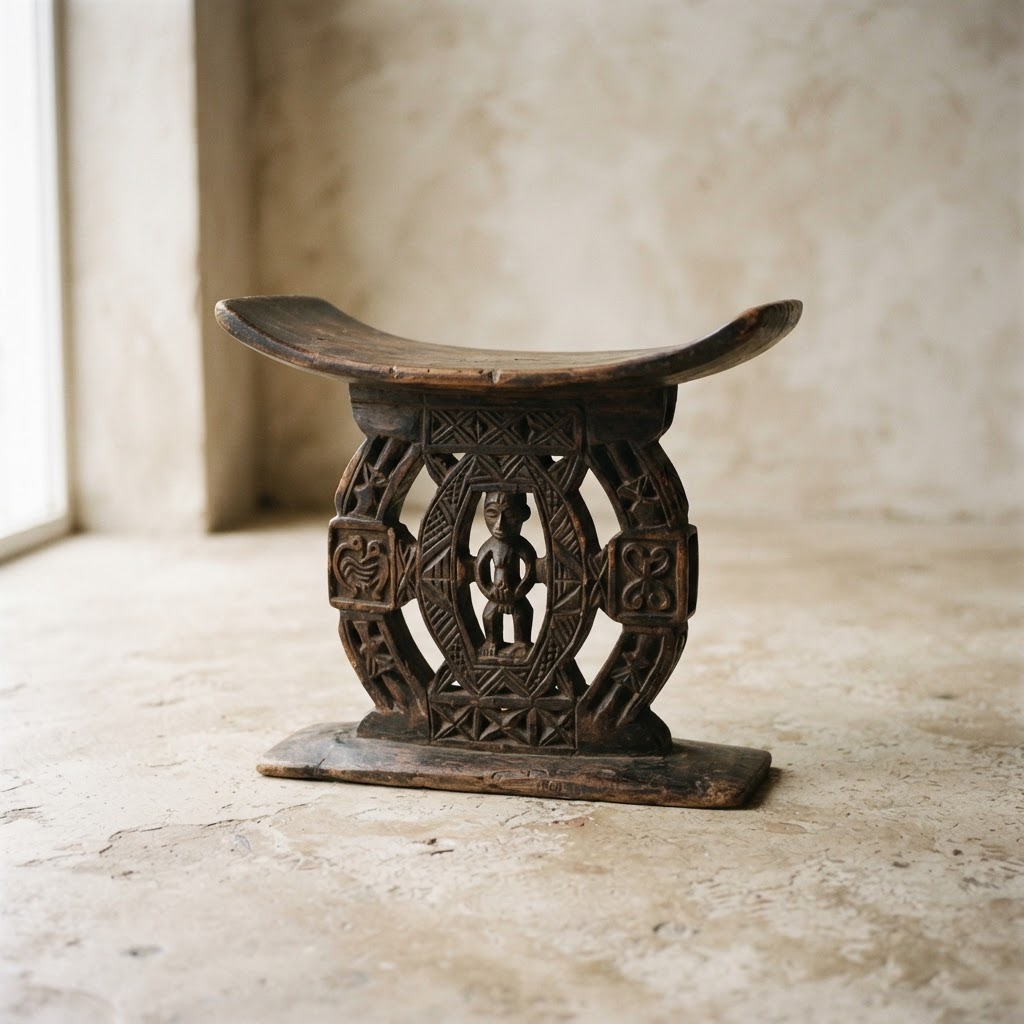
1. Akan stool. The curved-seat stools of the Akan and Asante peoples of Ghana are among the most famous pieces of African furniture. The Palmer Museum of Art at Penn State notes, in its catalogue entry for an Asante domestic stool, that "an individual's personal stool is so intimately associated with his or her spirit that only the owner would sit on it."
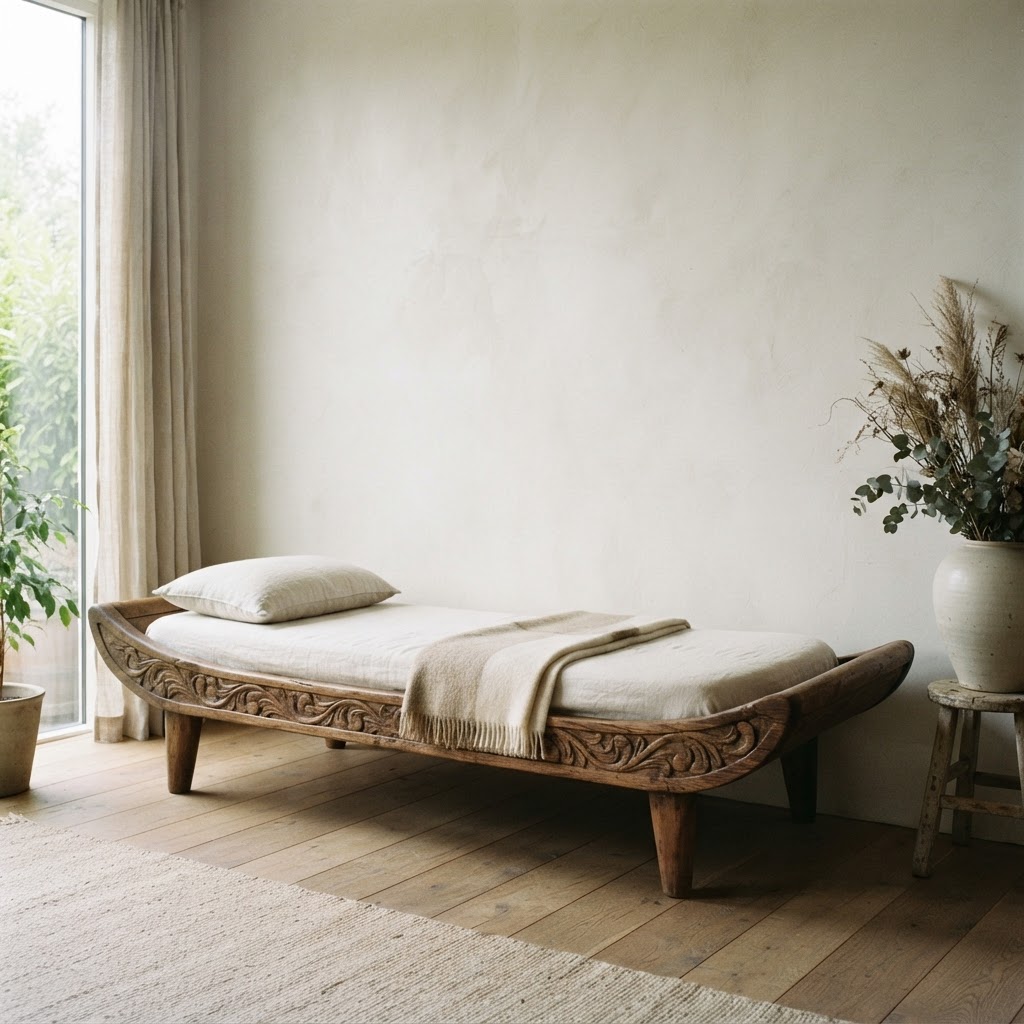
2. Senufo daybed. From Côte d'Ivoire, Mali and Burkina Faso, these long, low beds are carved from a single trunk with a gently curved surface and four short legs. Today they're loved as benches, coffee tables and display pieces.
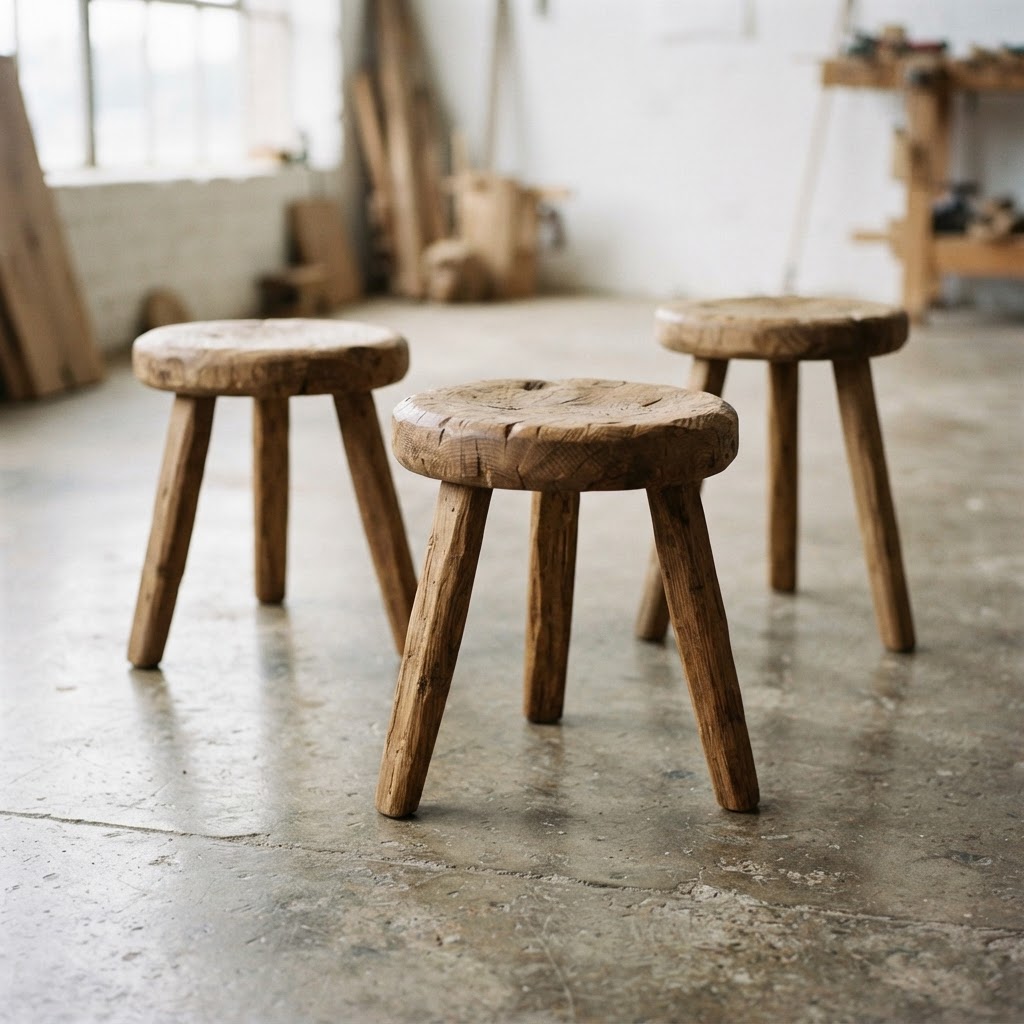
3. Lobi stool. Small, three-legged stools from Burkina Faso, often with a handle at one end so they can be carried. Their simple, hand-hewn shapes look wonderful in modern rooms.
4. Dogon stool. From Mali, Dogon stools often have a round seat supported by carved figures, and are among the most sculptural pieces of African furniture.
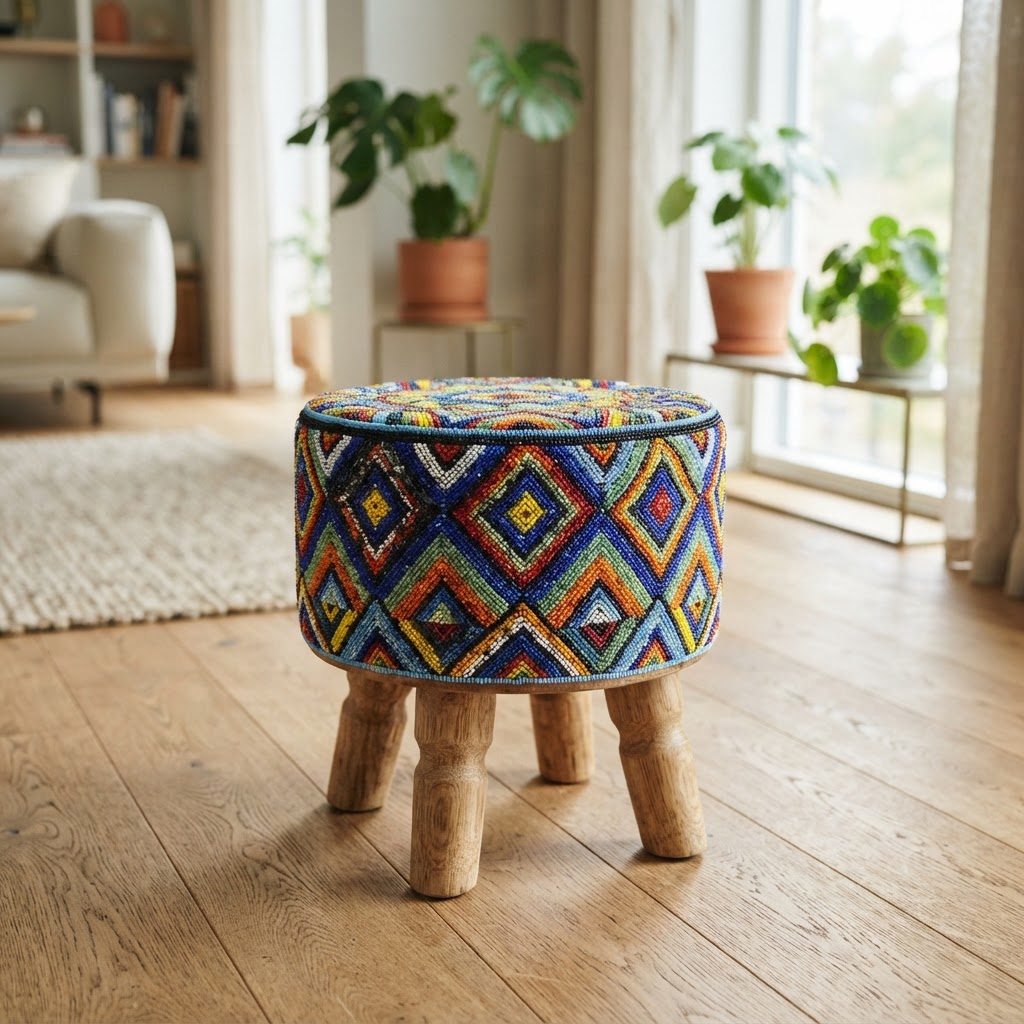
5. Bamileke beaded stool. From the Cameroon Grassfields, round wooden stools are encrusted with colourful glass beads in bold geometric patterns, and were once symbols of royal wealth.
6. Chokwe chair. The Chokwe of Angola carved chairs whose rungs and backs are decorated with small figures of people and animals, often telling stories of everyday life.
7. Swahili chair. On the East African coast, high-backed chairs with turned legs, woven seats and inlaid decoration, known as kiti cha enzi, were symbols of status in Swahili homes.
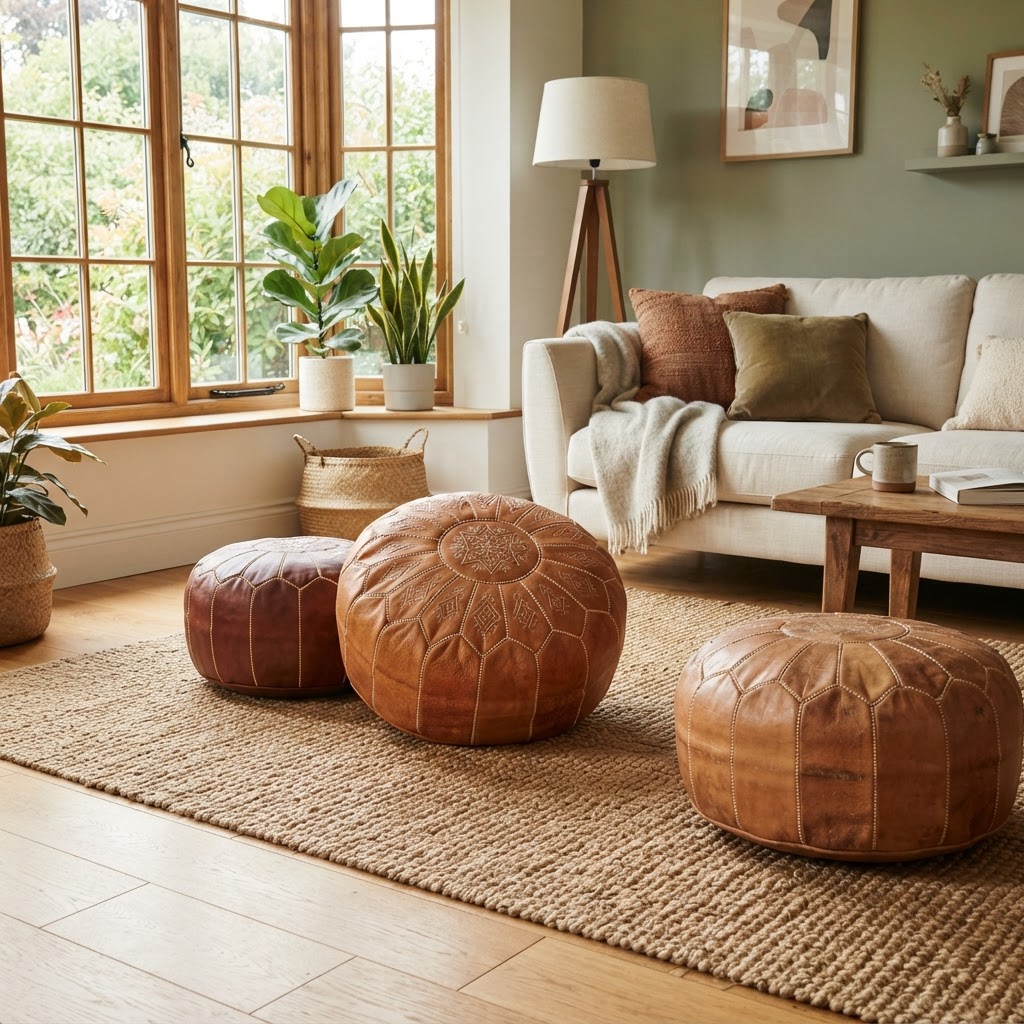
8. Moroccan leather pouf. Hand-stitched, embroidered leather poufs from Morocco are one of the easiest African pieces to live with, working as footstools, extra seats or side tables.
Headrests, chests and tables
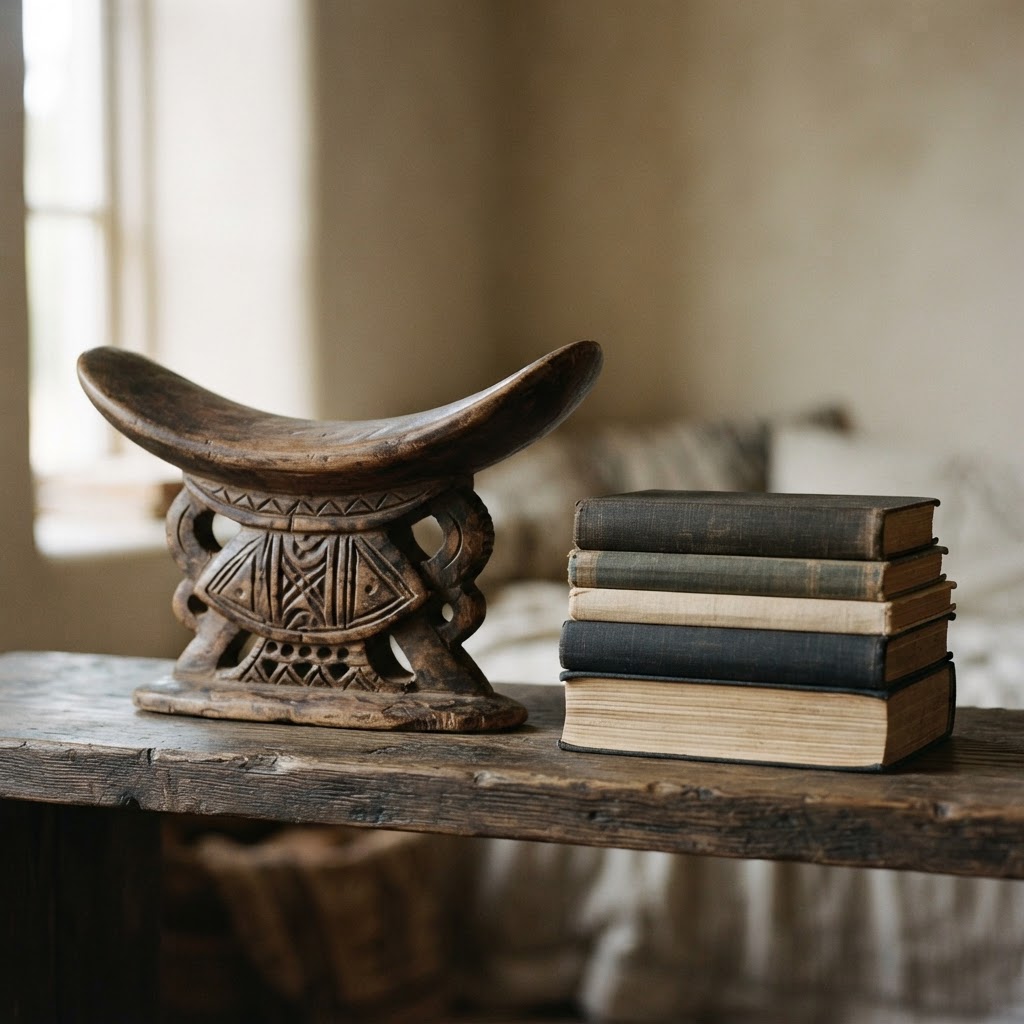
9. Headrests. Carved wooden headrests are found across much of the continent. The Horniman Museum's record of a Shona carved wooden headrest notes: "Traditionally, headrests were used among the Shona by mature men to protect the wearer's hairstyle while sleeping." Today, a headrest on a shelf or a side table is a beautiful small sculpture.
10. Zanzibar chest. Heavy wooden chests decorated with brass studs, corners and hinges were made on the Swahili coast for storing textiles and valuables. They make wonderful coffee tables and blanket boxes.
11. Jimma chair. From the Jimma region of Ethiopia, these low, three-legged chairs are carved from a single piece of wood, with a curved back that wraps around the sitter.
12. Makonde carving and African blackwood. The Makonde of Tanzania and Mozambique are celebrated for their carving in African blackwood. PlantZAfrica, from the South African National Biodiversity Institute, describes African blackwood as "heavy, dense, very hard and very durable, and one of the most valuable timbers in Africa," and notes that it "is widely exploited for its timber in many parts of Africa, where it is declining." That's why blackwood furniture is usually small: side tables, stools, bowls and carved panels.
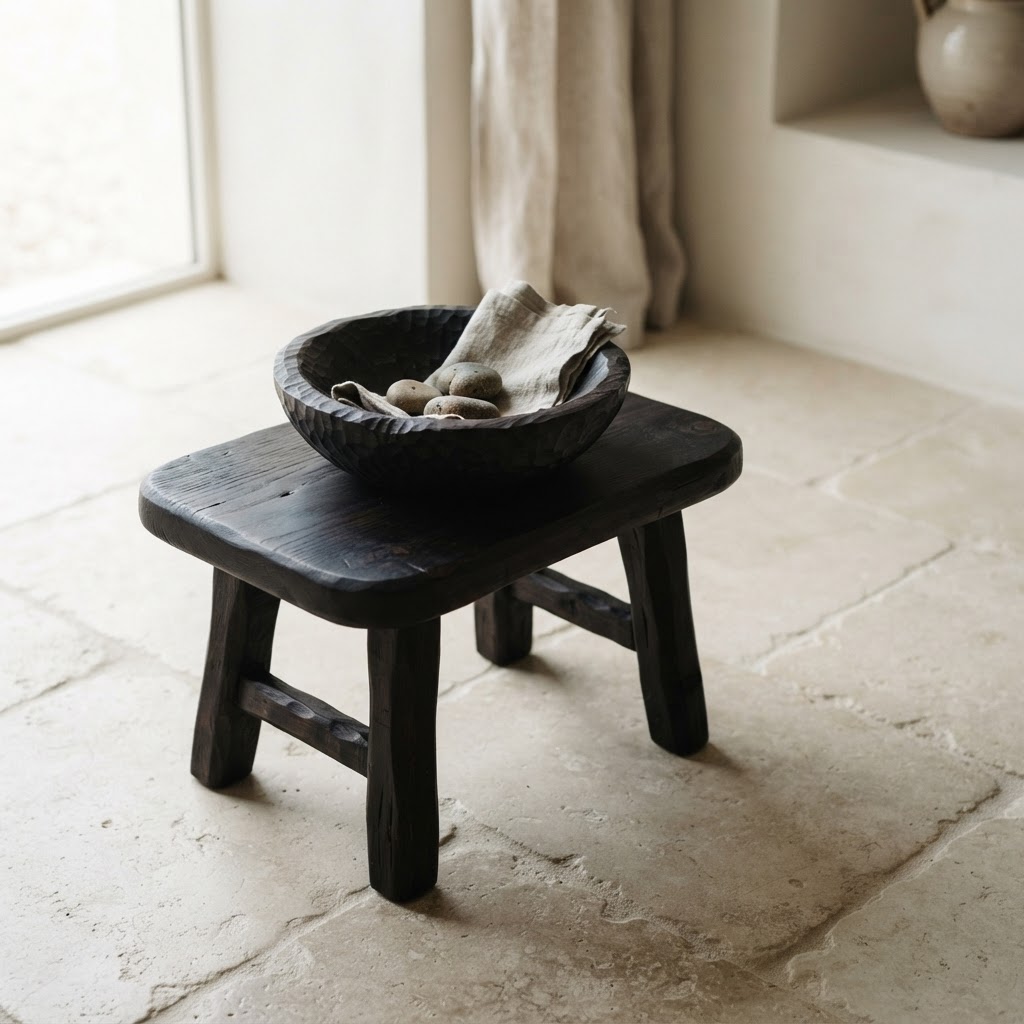
13. Grain mortar side tables. Old wooden grain mortars, once used to pound millet and maize, are often turned into side tables, plant stands and lamps. Their worn, rounded forms add instant character.
Textiles and modern African design
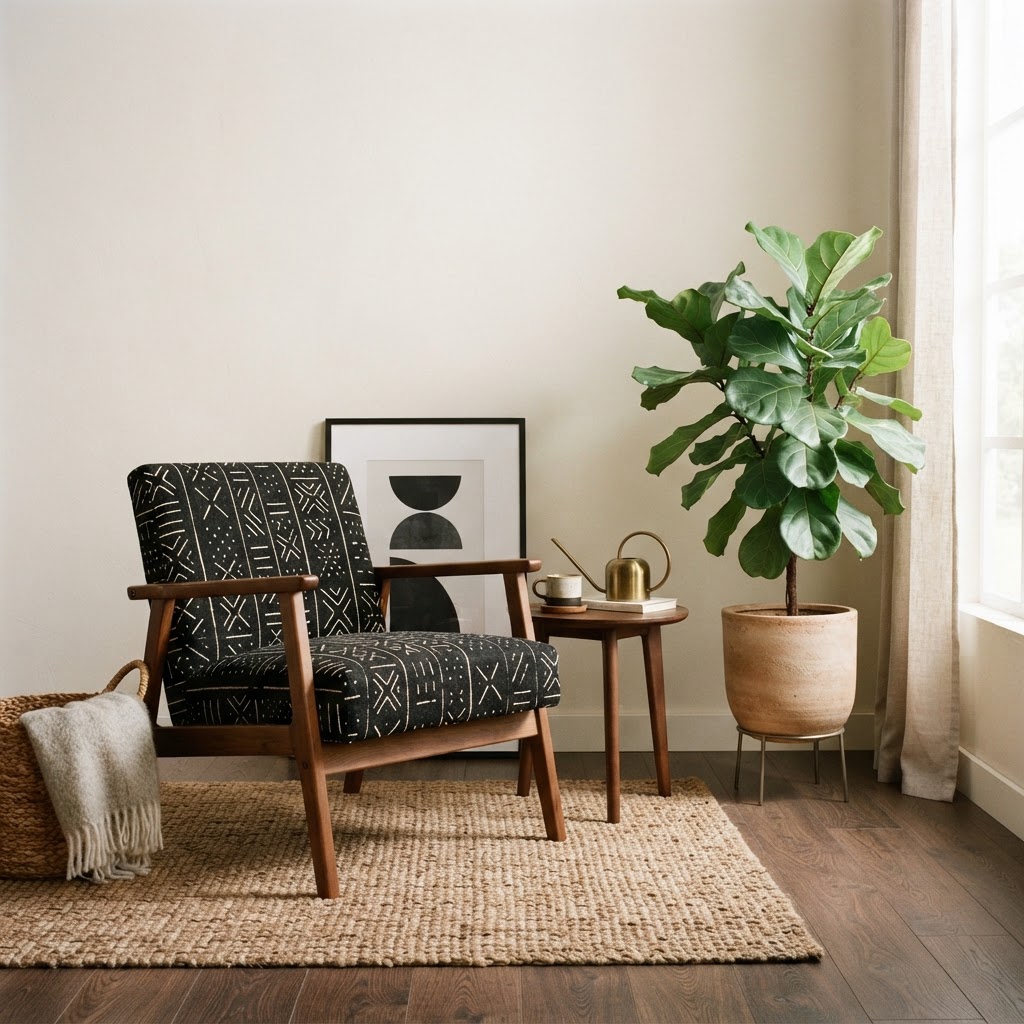
14. Mudcloth upholstery. Bògòlanfini, or mudcloth, is a handmade cotton cloth from Mali, dyed with fermented mud in bold black and white or earthy patterns. It's a wonderful fabric for cushions, ottomans and accent chairs.
15. Kuba cloth. Woven from raffia palm by the Kuba people of the Democratic Republic of the Congo, Kuba cloth has intricate geometric patterns and makes beautiful throws, cushions and framed wall art.
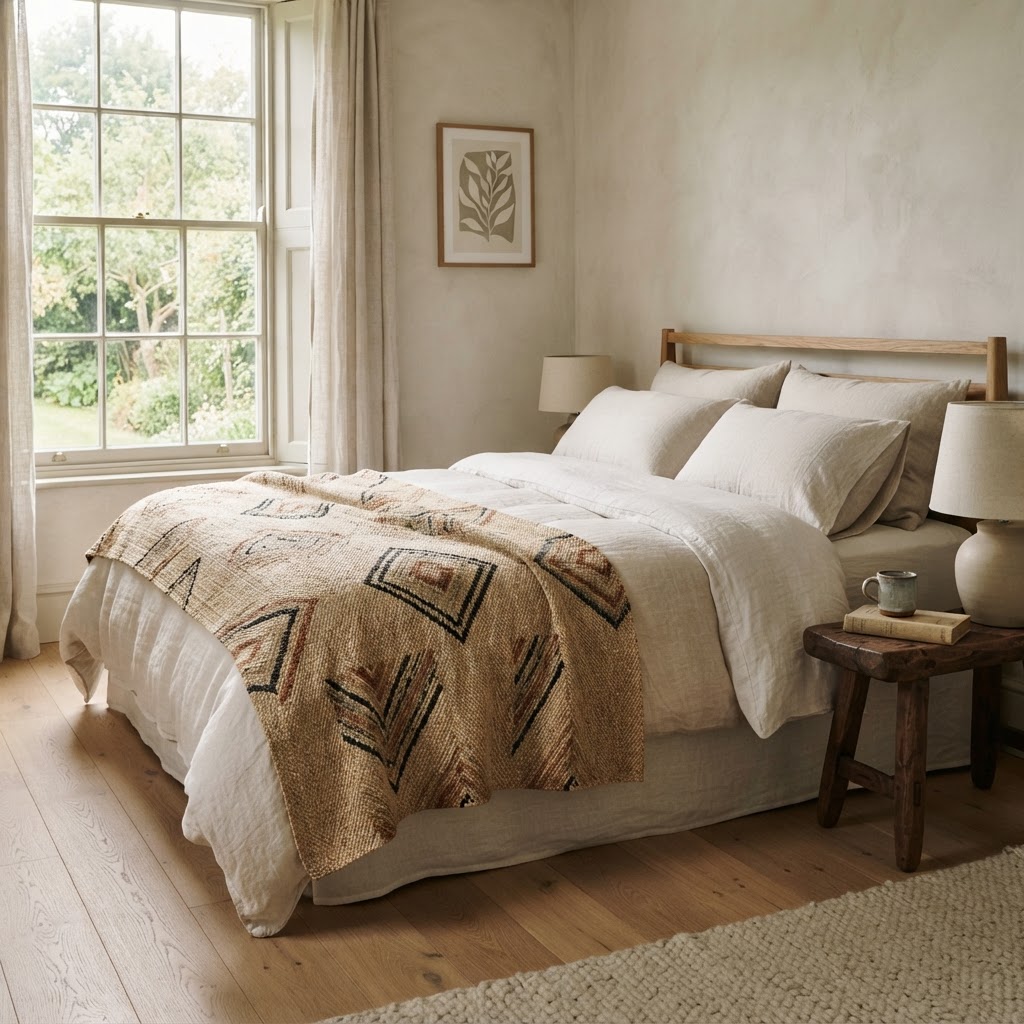
16. Woven baskets. Woven grass and palm baskets from Zimbabwe, South Africa, Rwanda and Ghana look striking grouped on a wall, and are wonderful for storage.
17. Modern African design. Contemporary African designers reinterpret traditional forms in sleek hardwoods, metal and woven fibres, creating furniture that feels both modern and rooted in craft.
African Woods for Furniture
| Wood | Look | Durability | Outdoor use | Best for |
|---|---|---|---|---|
| African mahogany (Khaya) | Warm reddish brown, interlocked grain | Moderate | Only with a good finish or under cover | Tables, cabinets, chairs |
| Sapele | Reddish brown with a striped figure | Moderate | Better under cover | Furniture, joinery, veneers |
| Iroko | Golden brown, darkening with age | High | Yes, often used as a teak alternative | Garden furniture, worktops |
| Wenge | Very dark brown with fine stripes | High | Rarely | Modern furniture, flooring |
| African blackwood | Almost black, very dense | Very high | Rarely, as it's too valuable | Small carvings, stools, instruments |
| Zebrawood | Pale with bold dark stripes | Moderate | No | Accent furniture and veneers |
Always look for timber from legal, well-managed sources, ideally with FSC certification, as several African hardwoods have been heavily logged.
Is African Mahogany Good for Outdoor Furniture?
African mahogany is a beautiful, stable wood, but it's only moderately durable outdoors. It can be used for garden furniture if it's sealed or oiled regularly and stored or covered in winter. For furniture that will stay outside all year, iroko is usually the better African choice, as it's naturally more resistant to rot and weather, much like teak.
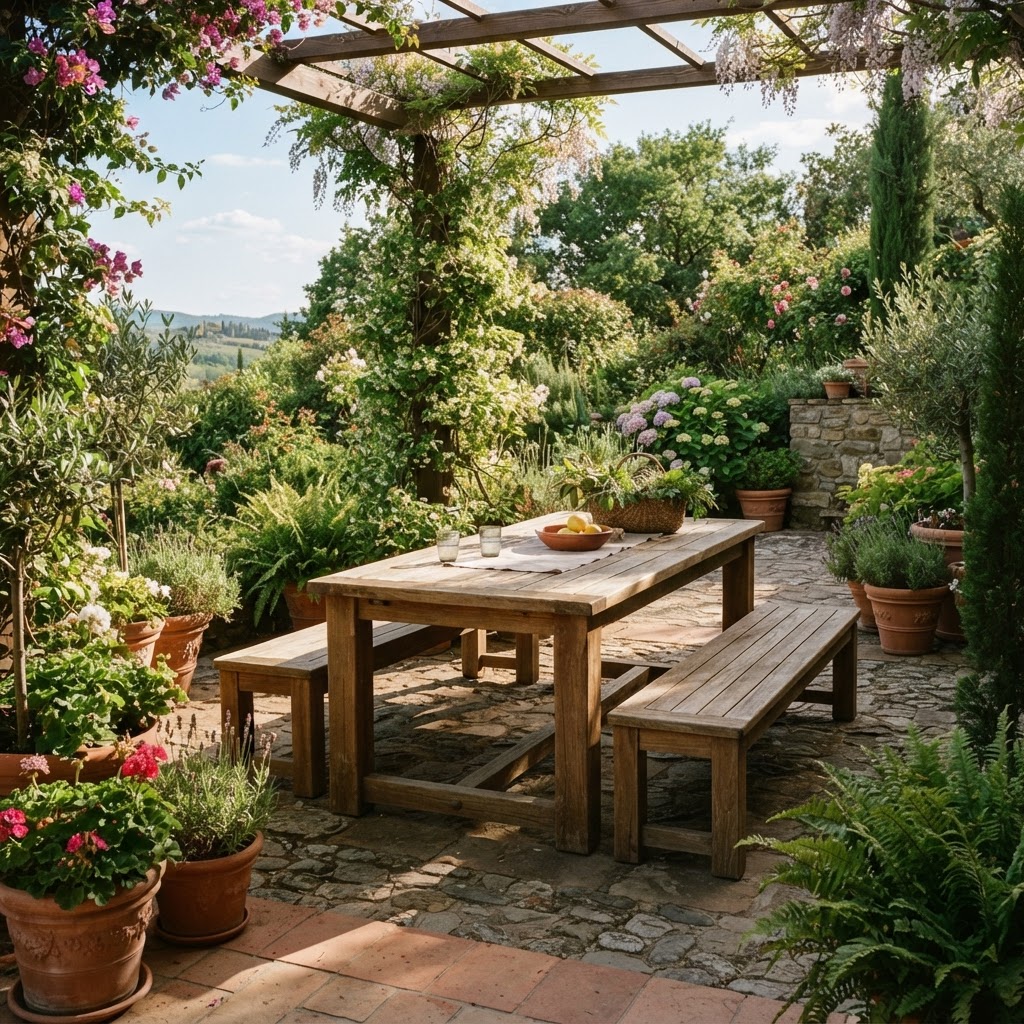
A hardwood bench or table pairs beautifully with a tiled outdoor dining table or a terrace dotted with garden statues.
How to Style African Furniture in a Modern Home
- Start with one statement piece. A carved stool, a Senufo bench or a Zanzibar chest makes more impact on its own than a room full of pieces. Many carved stools are true sculptural chairs, so give them space.
- Use an earthy palette. Warm terracotta, olive green, mustard, ochre and soft whites echo the natural colours of African wood and textiles.
- Layer textiles. Mudcloth cushions, a Kuba cloth throw and a woven or kilim rug add pattern and texture; the right rug for the living room ties it all together.
- Mix with modern pieces. Carved wood looks wonderful against a linen sofa, a brown couch or a clean-lined table.
- Bring in plants. Large leafy plants and woven baskets work well with African pieces, much like a relaxed tropical decor scheme.
- Keep it calm. Simple, natural rooms, like a pared-back Japandi office, let hand-carved wood stand out.
African textiles and carved wood also make a bedroom feel warm and grounded in winter, alongside other cosy autumn bedroom ideas.
How to Buy African Furniture Thoughtfully
- Be clear about what you're buying. Many pieces are newly made for the decor market, which is perfectly fine, but they should be sold honestly rather than as antiques.
- Ask about the maker. Fair trade co-operatives and makers' collectives make sure artisans are paid fairly.
- Check the timber. Look for legal, sustainably sourced wood, and be especially careful with rare species such as African blackwood.
- Ask for provenance on antiques. Genuine older pieces should come with a history of where they've been.
- Care for vintage wood. Old pieces may need a gentle clean; it's easy to remove a musty smell from wood furniture before bringing it indoors.
Vintage and reclaimed African pieces also sit beautifully alongside other upcycled furniture in a characterful home.
Common Mistakes to Avoid
| Mistake | Why it's a problem | What to do instead |
|---|---|---|
| Treating Africa as one style | It ignores the variety of cultures | Learn where each piece comes from |
| Too many themed accessories | The room looks like a stage set | Choose a few authentic, well-made pieces |
| Ignoring the timber source | Some hardwoods are overharvested | Buy legal, sustainable wood |
| Putting carved wood by a radiator | It can crack and split | Keep it away from direct heat |
| Leaving untreated wood outside | It weathers and rots | Use iroko or protect the wood with oil |
| Cluttering around a statement piece | Its shape gets lost | Give it space and a plain backdrop |
Frequently Asked Questions
What is African furniture?
Furniture made across the African continent, including carved stools, headrests, daybeds, chairs and chests, often carved from a single piece of hardwood and decorated with beads, brass or textiles.
What is an African stool used for?
Traditionally for sitting, but many stools also had ceremonial or personal meaning. In Akan culture, a personal stool was closely linked to its owner's spirit. Today they're used as seats, side tables and plant stands.
What is African blackwood furniture?
Furniture and carvings made from African blackwood, a very dense, almost black hardwood from East and Southern Africa. Because the wood is so valuable and slow growing, most blackwood pieces are small carvings, stools and side tables.
Is African mahogany good for outdoor furniture?
It can be, if it's sealed or oiled regularly and protected in winter. For furniture that stays outside all year, iroko is usually more durable.
What is mudcloth?
A handmade cotton cloth from Mali, known as bògòlanfini, dyed with fermented mud in bold, graphic patterns. It's popular for cushions, upholstery and throws.
How do you decorate with African furniture?
Choose one or two statement pieces, use an earthy palette, layer African textiles, mix with modern furniture and give each carved piece room to breathe.
What is a Senufo bed?
A long, low daybed carved from a single piece of wood by the Senufo people of West Africa, now popular as a bench, coffee table or display piece.
Furniture With a Story
African furniture brings craft, history and warmth into a home. Choose a piece you love, learn where it comes from, buy it thoughtfully and give it space, and it will become the heart of the room.
And if you'd like help bringing meaningful, handmade pieces into your home, you can book a one-hour online interior design consultation with me.
About the author
Magda Callery is a UK interior designer and florist with more than 15 years' experience designing homes, pubs, restaurants and bars, and her expert commentary has featured in Homes & Gardens, The Mirror and The Spruce. Explore more of the interior design articles.
Continue reading


Soviet Brutalist Architecture: 17 Iconic Examples
What Soviet brutalist architecture is, why the Soviets built in concrete, 17 iconic examples from Kyiv to Tbilisi and Katowice, and memories of growing up among the blocks in communist Poland.

1920s Architecture Styles: 13 Styles of the Roaring Twenties
From Art Deco and the Bauhaus to Craftsman bungalows, Tudor Revival and British interwar semis, 13 architecture styles of the 1920s, how to recognise a 1920s house and how to bring the style home.


White Bed Furniture: 17 Ways to Style a White Bedroom
How to style white bed furniture: 17 ideas for walls, bedding and accents, the colours that suit white bedroom furniture best, the main styles, and how to keep it looking fresh.