
Anemone Flower Meaning: Symbolism, Myth and Colors
The anemone flower meaning, the myth of Venus and Adonis, what each anemone colour symbolises, 13 types of anemone and how to care for them.
By Magda Callery, interior designer and florist
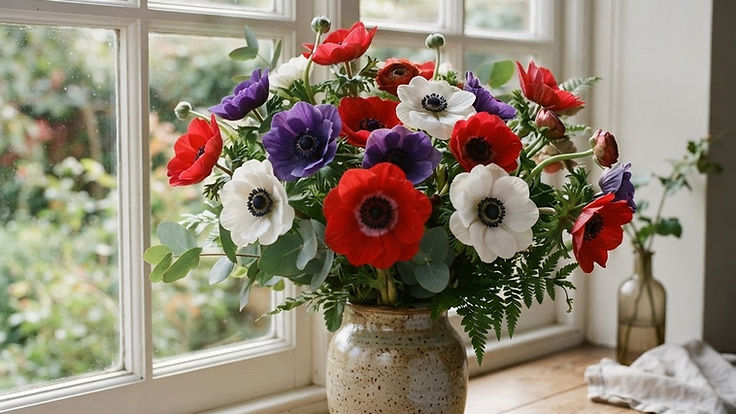
Anemones are some of the most striking flowers a florist can work with. Their silky, poppy-like petals in scarlet, violet, blush and white surround dark, velvety centres that look almost hand-drawn, and they bring a jewel-like intensity to spring bouquets. They also carry one of the oldest and most romantic stories in the language of flowers.
In this guide I'll explain the anemone flower meaning, where the name comes from, the myth behind it, what each colour symbolises, the main types of anemone, and how to care for them in a vase and in the garden.
The quick answer: the anemone is often called the windflower, from the Greek word anemos, meaning wind. It symbolises anticipation, protection, fragile love and the passing of time. In Greek and Roman myth it sprang from the blood of Adonis, so red anemones also represent love and loss, while in the Victorian language of flowers the anemone meant "forsaken." Today, anemones are popular in wedding and spring bouquets as a symbol of anticipation and new beginnings.
Where Does the Name Anemone Come From?
The name anemone is usually traced to the Greek word anemos, meaning wind, which is why anemones are also known as windflowers. One explanation is that the delicate petals are easily scattered by the wind; another is that some anemones open their flowers as spring breezes arrive.
The Myth of Venus and Adonis
The best-known anemone story comes from Ovid's Metamorphoses. Venus, the goddess of love, falls for the beautiful young hunter Adonis, who is killed by a wild boar. The National Gallery's notes on Titian's workshop painting of Venus and Adonis tell how Venus "mourns her lover's death and from his blood creates a beautiful but fragile flower" whose petals are "quickly scattered in the wind, which she calls anemone."
That's why the red anemone has long been linked with love, grief and the brevity of life, and why anemones appear in so many paintings of the myth.
Anemone Flower Meaning at a Glance
| Meaning | Where it comes from |
|---|---|
| Anticipation | The flowers close at night and open again in the morning, as if waiting |
| Fragile love | The myth of Venus and Adonis |
| Loss and remembrance | Adonis's death and the short life of the petals |
| Protection | Folk traditions in which anemones were carried to ward off illness and bad luck |
| Forsaken | The Victorian language of flowers |
| New beginnings | Their early spring flowering and modern wedding use |
Anemone Colors and Their Meanings
| Color | Meaning |
|---|---|
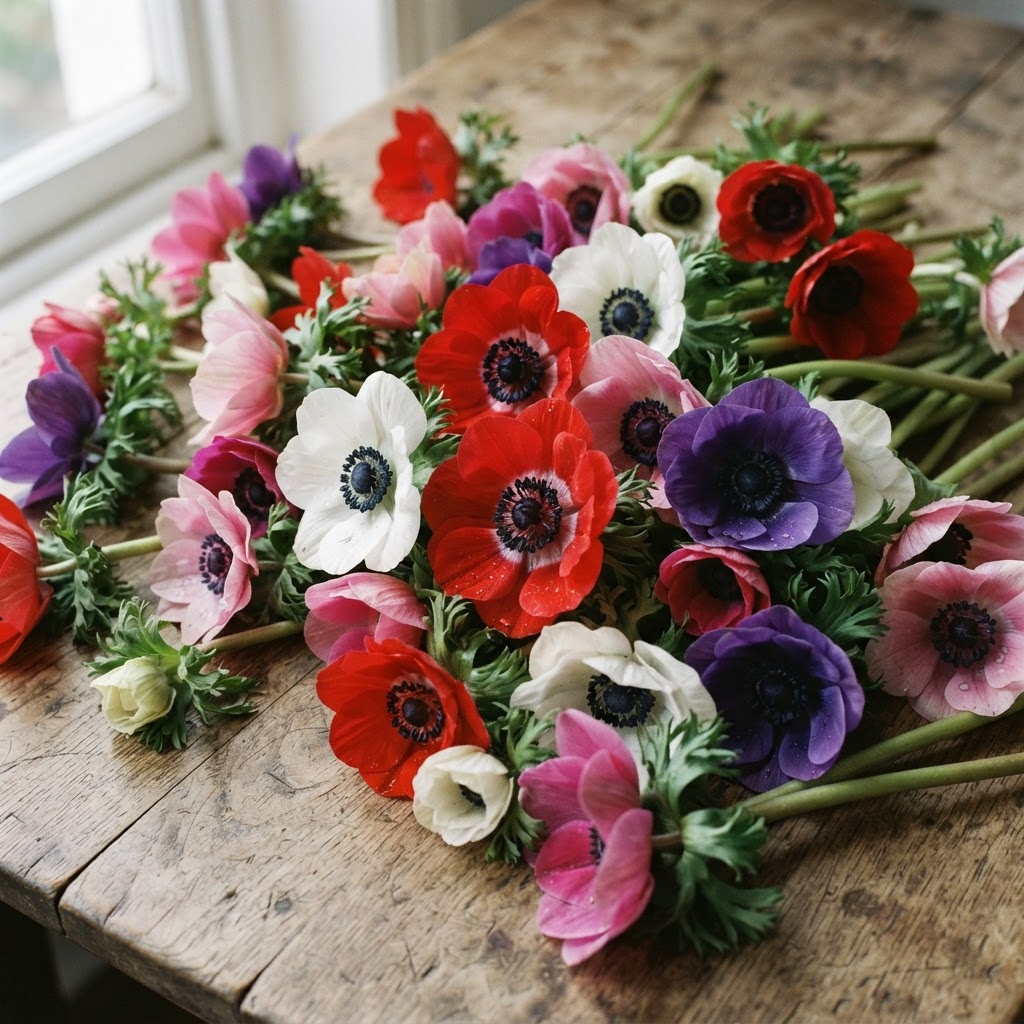
| Red | Love, passion, loss and remembrance |
| White | Sincerity, purity and new beginnings |
| Pink | Gentle love and anticipation |
| Purple and violet | Protection, dignity and devotion |
| Blue | Trust, calm and anticipation |
| Bicolour and panda (white with a black centre) | Modern elegance and contrast |
Anemones in History and Culture
- Ancient Greece and Rome. The flower of Adonis, associated with love, death and the changing seasons.
- Christian art. Red anemones sometimes appear in paintings of the Crucifixion and of saints, as a symbol of sacrifice.
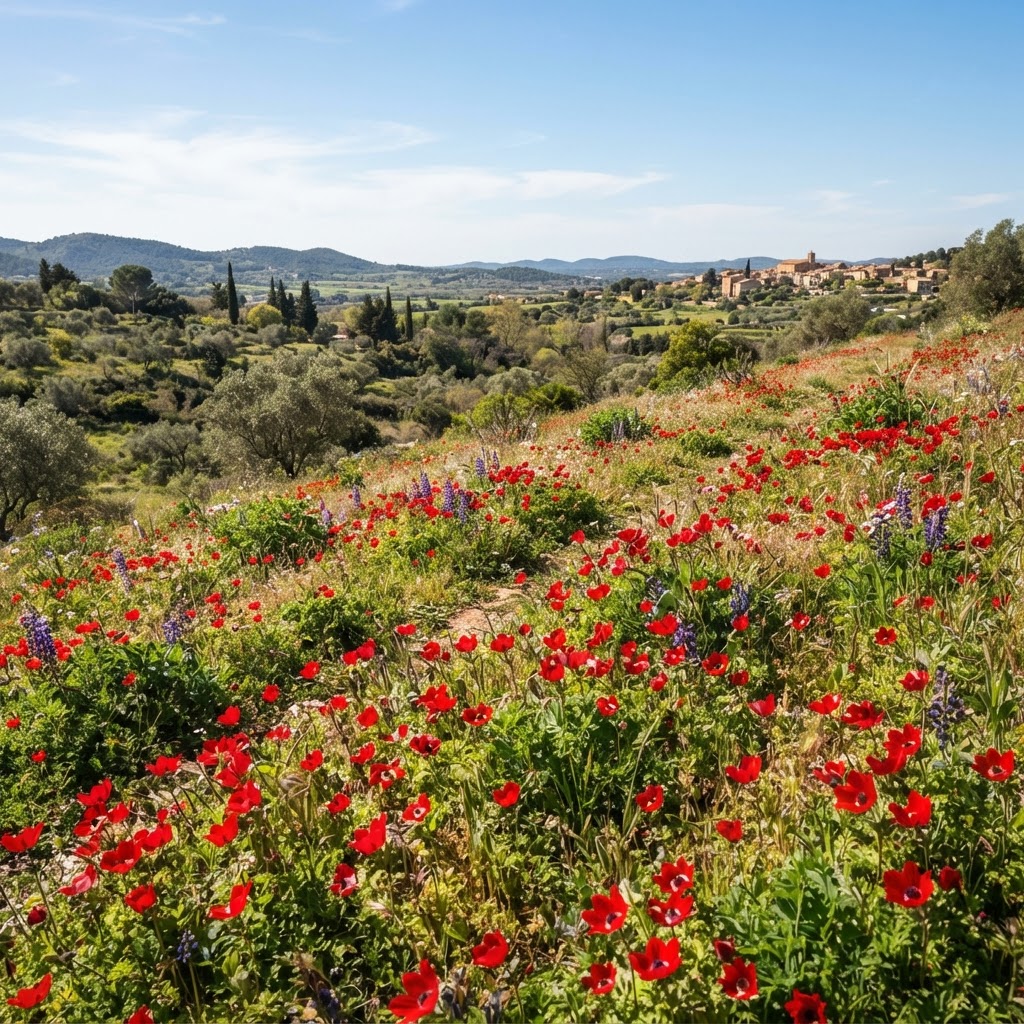
- The Holy Land. The crown anemone carpets hillsides in spring across the eastern Mediterranean, and some scholars suggest it may be among the "lilies of the field" of the Gospels.
- Israel. The red crown anemone, or kalanit, was chosen as Israel's national flower in 2013.
- Victorian England. In the language of flowers, the anemone meant "forsaken," so it was rarely given as a romantic gift.
- Art. Renoir, Matisse and many still-life painters loved anemones, and they appear in several famous flower paintings.
13 Types of Anemone
Spring anemones for cutting
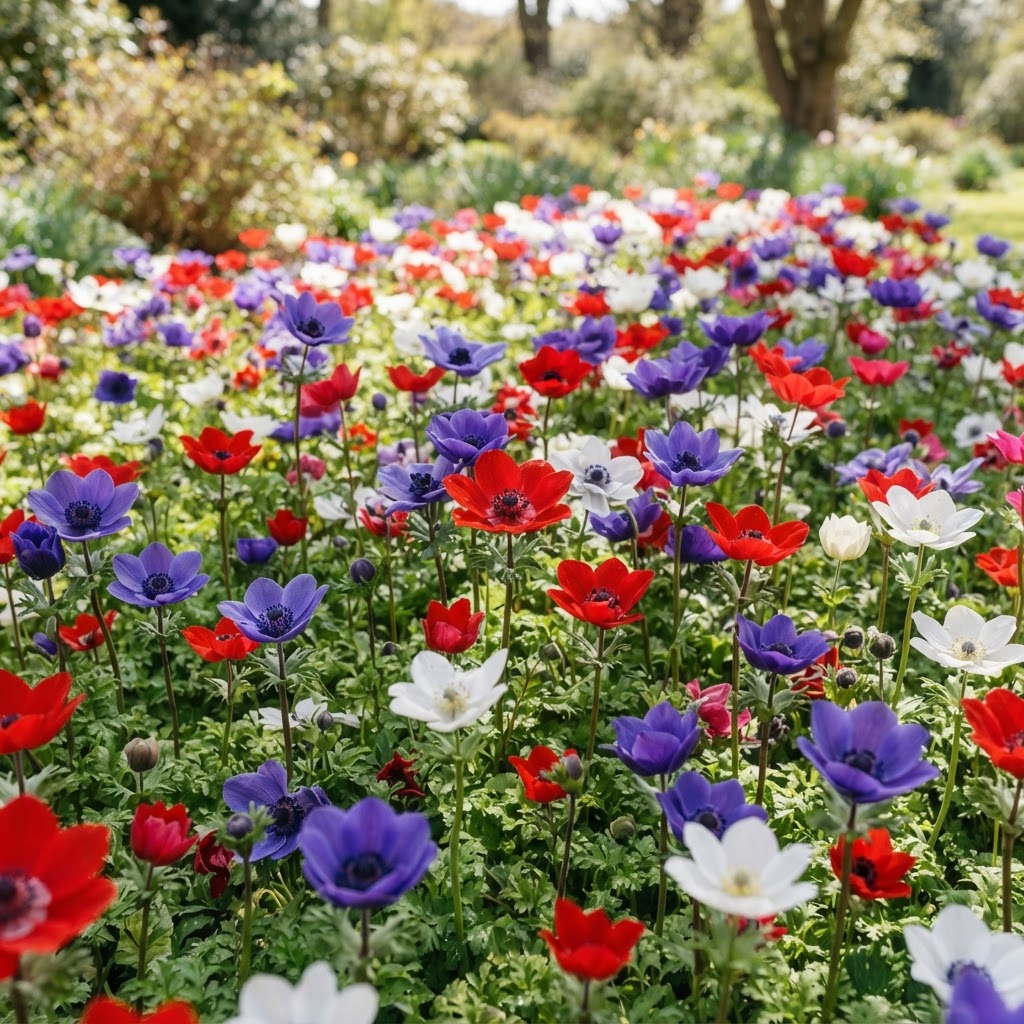
1. Anemone coronaria 'De Caen'. The classic florist's anemone, with single, poppy-like flowers in scarlet, blue, violet and white around dark centres.
2. 'St Brigid'. Semi-double and double crown anemones with frilly, layered petals.
3. 'Mistral' and 'Galilee' series. Florist-grown crown anemones with long stems and large, vivid flowers.
4. Panda anemone. A white crown anemone with a striking black centre, hugely popular in modern wedding bouquets.
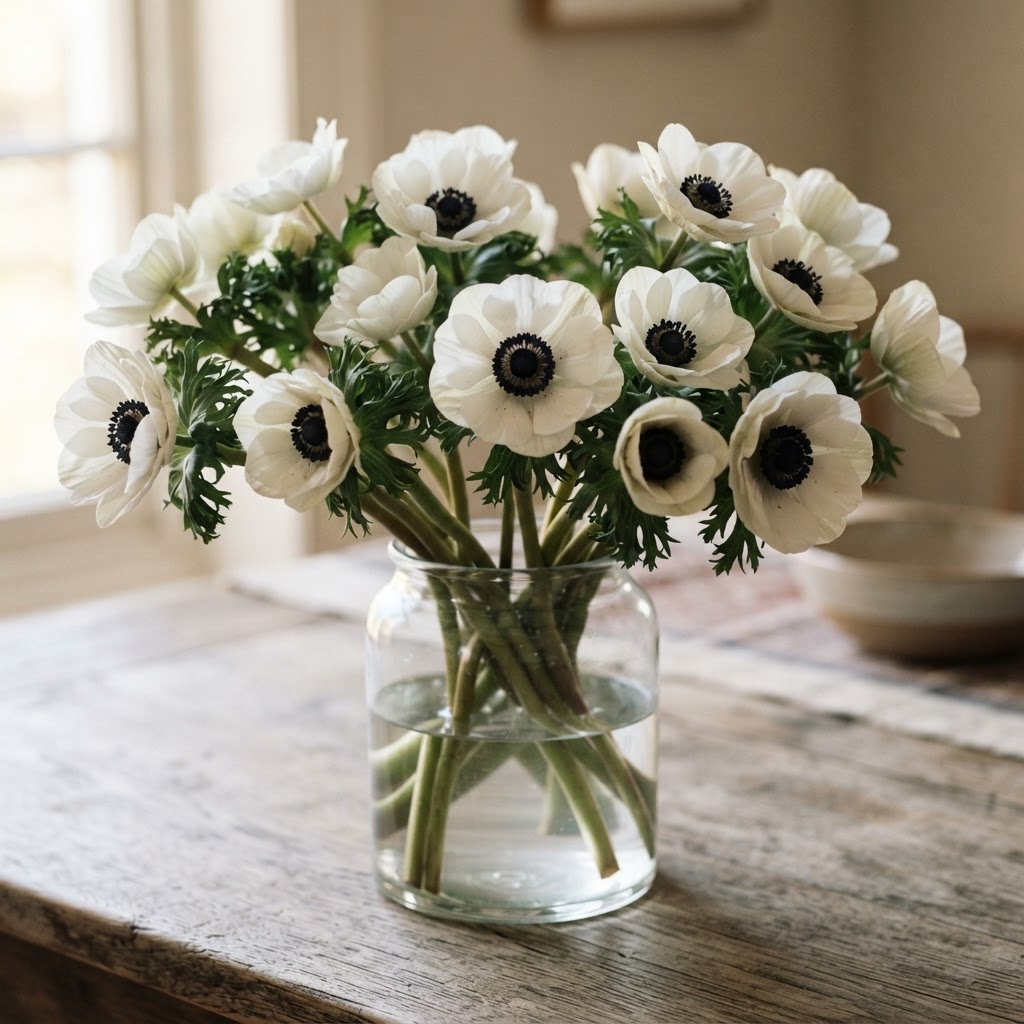
5. 'Sylphide'. Rich magenta-pink flowers with dark centres.
Woodland and spring garden anemones
6. Wood anemone (Anemone nemorosa). A native British woodland wildflower with white, starry flowers that carpet the ground in early spring.
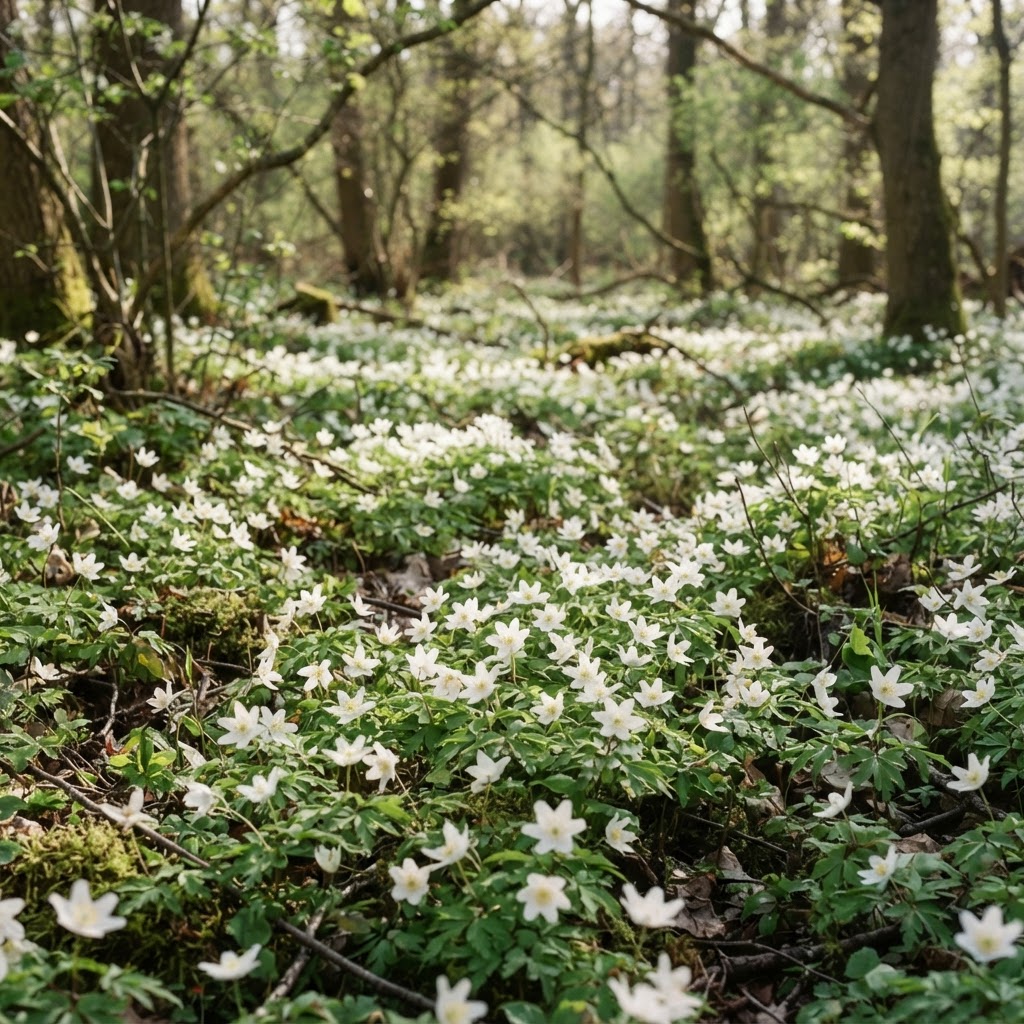
7. Anemone blanda. Low, daisy-like flowers in blue, pink and white, perfect for naturalising under trees.
8. Snowdrop anemone (Anemone sylvestris). Nodding, fragrant white flowers in late spring.
Japanese and autumn anemones
9. Anemone × hybrida 'Honorine Jobert'. A tall, elegant white Japanese anemone that flowers from late summer into autumn.
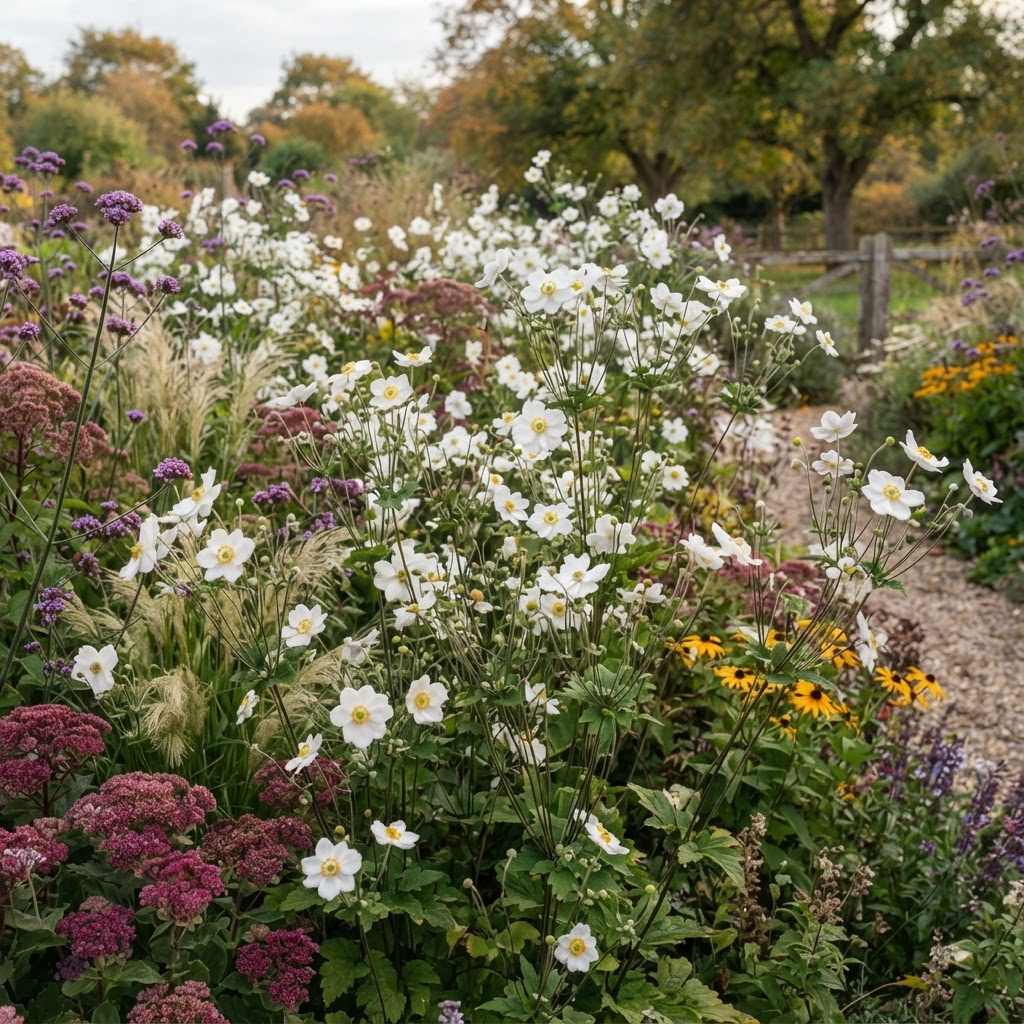
10. 'September Charm'. Soft pink Japanese anemones on graceful, branching stems.
11. 'Wild Swan'. White flowers with a lilac-blue reverse, flowering for months.
12. Anemone hupehensis 'Prinz Heinrich'. Deep magenta-pink flowers for late colour.
13. Pasque flower (Pulsatilla vulgaris). Once classed as an anemone, with silky purple bells and feathery seed heads around Easter.
Anemones in Bouquets and Weddings
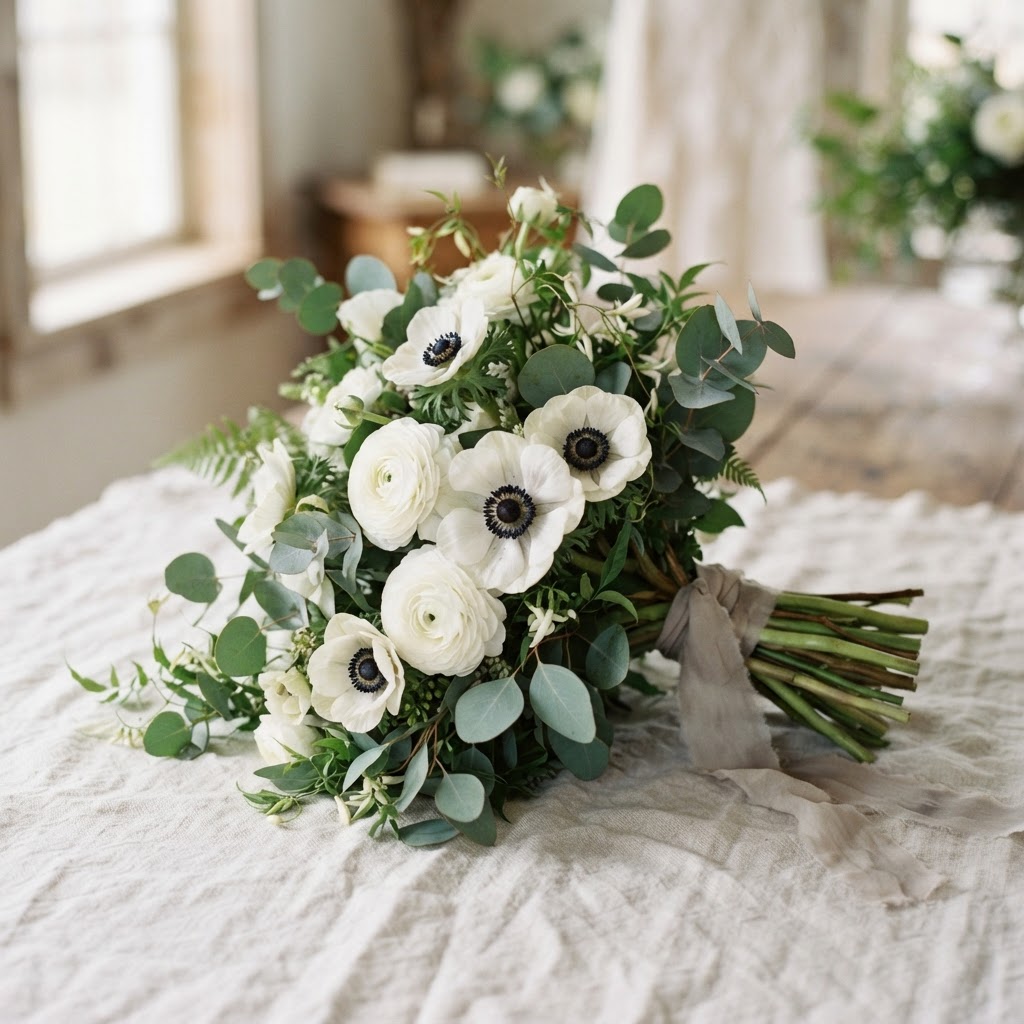
Anemones are a favourite of florists from winter to spring. Their dark centres add depth to pale bouquets, and white panda anemones look striking in modern, monochrome designs.
- Spring bouquets. Pair anemones with ranunculus, tulips, hellebores and greenery such as eucalyptus.
- Weddings. White anemones with roses and ranunculus suit winter and spring weddings.
- Winter displays. They're lovely in winter flower arrangements and even Christmas flower arrangements.
How to Care for Cut Anemones
- Buy them in bud, just as the colour appears.
- Recut the stems and put them into shallow, cool water.
- Expect movement. Anemones keep growing in the vase and turn towards the light, so they'll curve beautifully.
- Keep them cool and away from radiators.
- Top up the water daily. They're thirsty flowers.
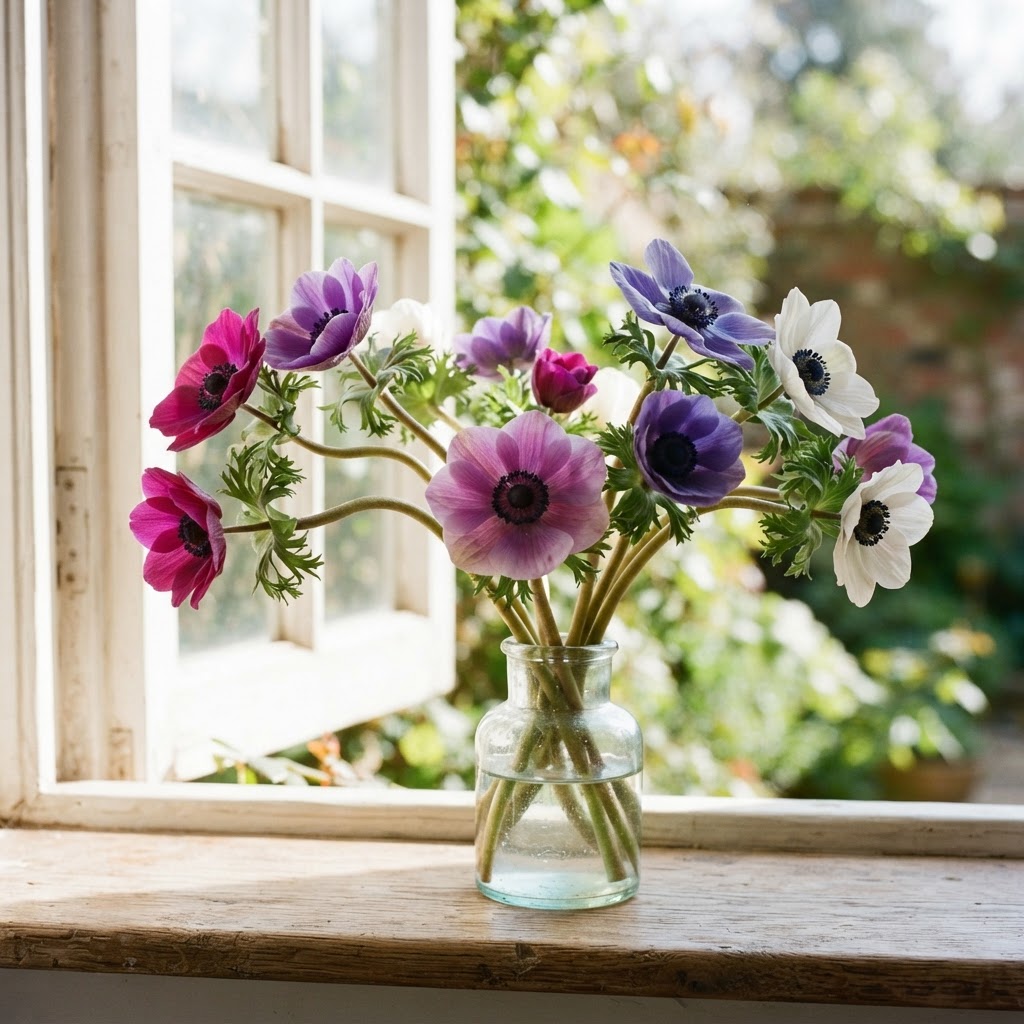
With good care, cut anemones last around a week. A single stem in a bud vase is one of the loveliest simple flower arrangements.
How to Grow Anemones
- Crown anemones. Soak the corms for a few hours before planting, then plant them about 5 cm deep in a sunny spot with free-draining soil. In cold areas, plant in spring or grow them under cover.
- Wood anemones and Anemone blanda. Plant in autumn under deciduous trees and shrubs, where they'll spread slowly.
- Japanese anemones. Plant in sun or part shade in moist soil. They take a while to settle, then spread happily.
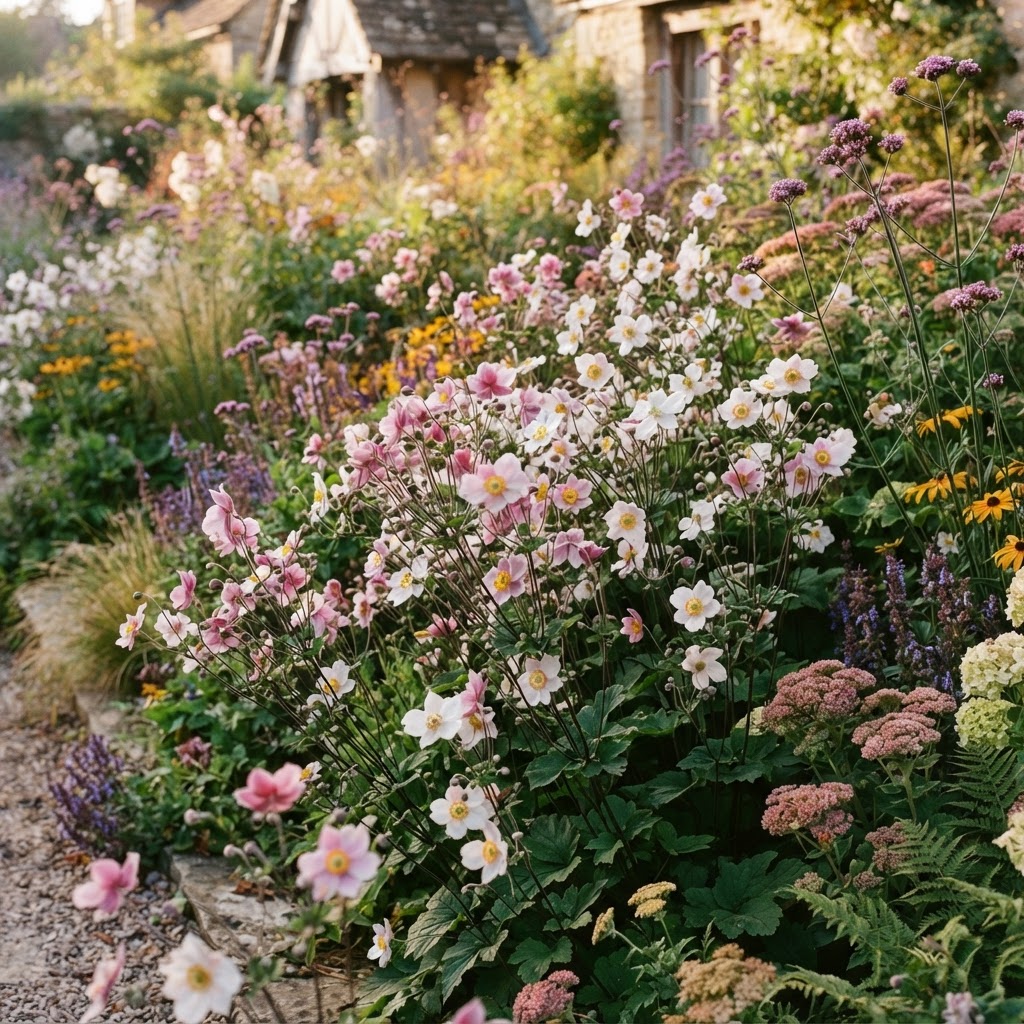
Japanese anemones bring late colour alongside asters and heirloom chrysanthemums, and pair well with other long-flowering flowers for landscaping.
A safety note: anemones belong to the buttercup family and are toxic if eaten, and the sap can irritate skin. Keep them away from pets and wear gloves when handling lots of stems.
Decorating With Anemones
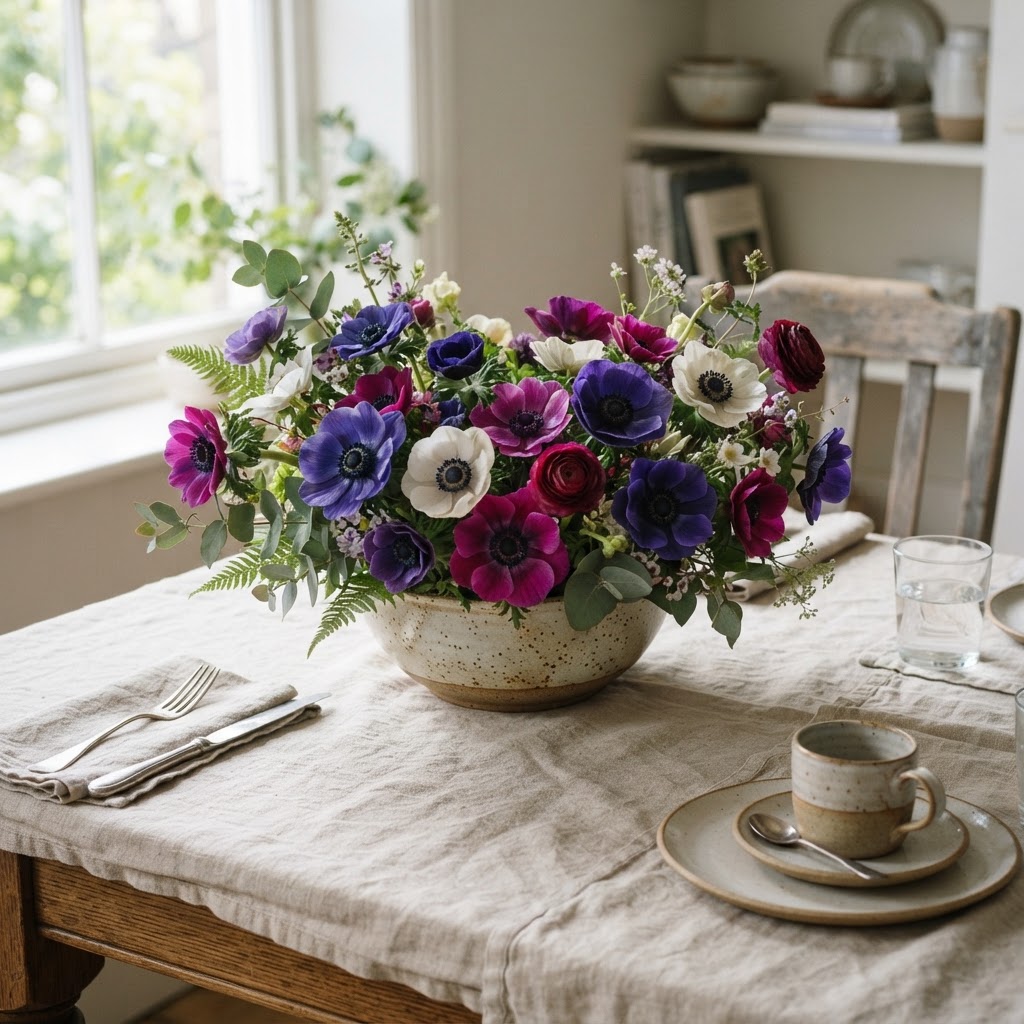
Anemones look wonderful in small groups in bud vases, low bowls and simple glass jars. Their jewel colours suit rich interiors, while white anemones look fresh and modern in calm, neutral rooms.
Anemones sit alongside other richly symbolic flowers: the lily flower meaning is tied to purity and renewal, yellow flowers meaning centres on joy and friendship, and the chrysanthemum, the November birth flower, stands for loyalty and long life.
Common Mistakes to Avoid
| Mistake | Why it's a problem | What to do instead |
|---|---|---|
| Buying fully open flowers | They fade quickly | Buy them in bud as the colour appears |
| Deep water | Stems can soften | Use shallow water and top up often |
| Placing by a radiator | Petals drop quickly | Keep them cool |
| Planting corms without soaking | Slow or patchy growth | Soak corms for a few hours first |
| Planting in heavy, wet soil | Corms rot | Choose free-draining soil |
| Forgetting they're toxic | Risk to pets | Keep them out of reach |
Frequently Asked Questions
What does the anemone flower symbolize?
Anemones symbolise anticipation, protection, fragile love and the passing of time. Red anemones are linked with love and loss through the myth of Adonis.
Why are anemones called windflowers?
The name is usually traced to the Greek word anemos, meaning wind, because the delicate petals are easily scattered by the wind.
What does a red anemone mean?
A red anemone stands for love, passion and remembrance, recalling the myth that it grew from the blood of Adonis.
What does a white anemone mean?
White anemones symbolise sincerity, purity and new beginnings, which is why they're popular for weddings.
Are anemones a good gift?
Yes, especially in spring. In the Victorian language of flowers they meant "forsaken," but today they're loved for their beauty and associated with anticipation.
How long do cut anemones last?
Around a week, if you buy them in bud, keep them cool and top up the water daily.
Are anemones poisonous?
Yes. Anemones are toxic if eaten, and their sap can irritate skin, so keep them away from pets and children.
A Flower Carried on the Wind
Few flowers carry as much story as the anemone. Whether you choose scarlet crown anemones for their myth, white pandas for a wedding or Japanese anemones for autumn borders, they bring beauty and meaning wherever they bloom.
And if you'd like help bringing flowers and meaningful details into your home, you can book a one-hour online interior design consultation with me.
About the author
Magda Callery is a UK interior designer and florist with more than 15 years' experience designing homes, pubs, restaurants and bars, and her expert commentary has featured in Homes & Gardens, The Mirror and The Spruce. Explore more of the flowers & garden articles.
Continue reading


Most Fragrant Roses: 17 Best Scented Roses to Grow
17 of the most fragrant roses, from English shrub roses and hybrid teas to old roses and climbers, plus the types of rose scent and how to grow for fragrance.


Flowers That Bloom at Night: 17 Plants for a Moon Garden
17 flowers that bloom at night, from moonflower and evening primrose to nicotiana and queen of the night, plus how to plan a fragrant moon garden.

Sunflower Varieties: 19 Types of Sunflowers to Grow
19 sunflower varieties to grow, from giant and branching sunflowers to red, white, dwarf and pollen-free types, plus how to grow and cut sunflowers.